Research Type
ResearcherNotes
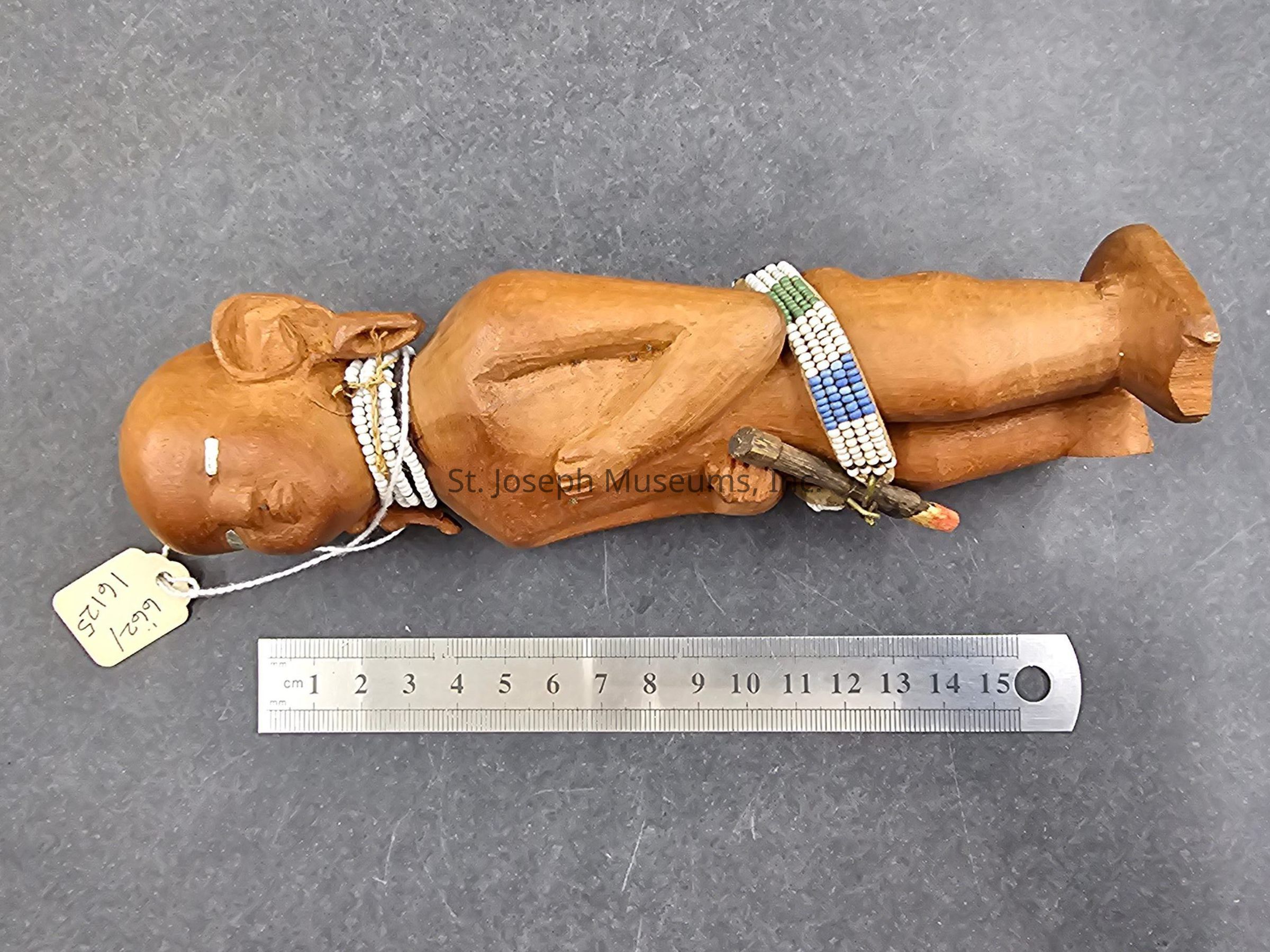
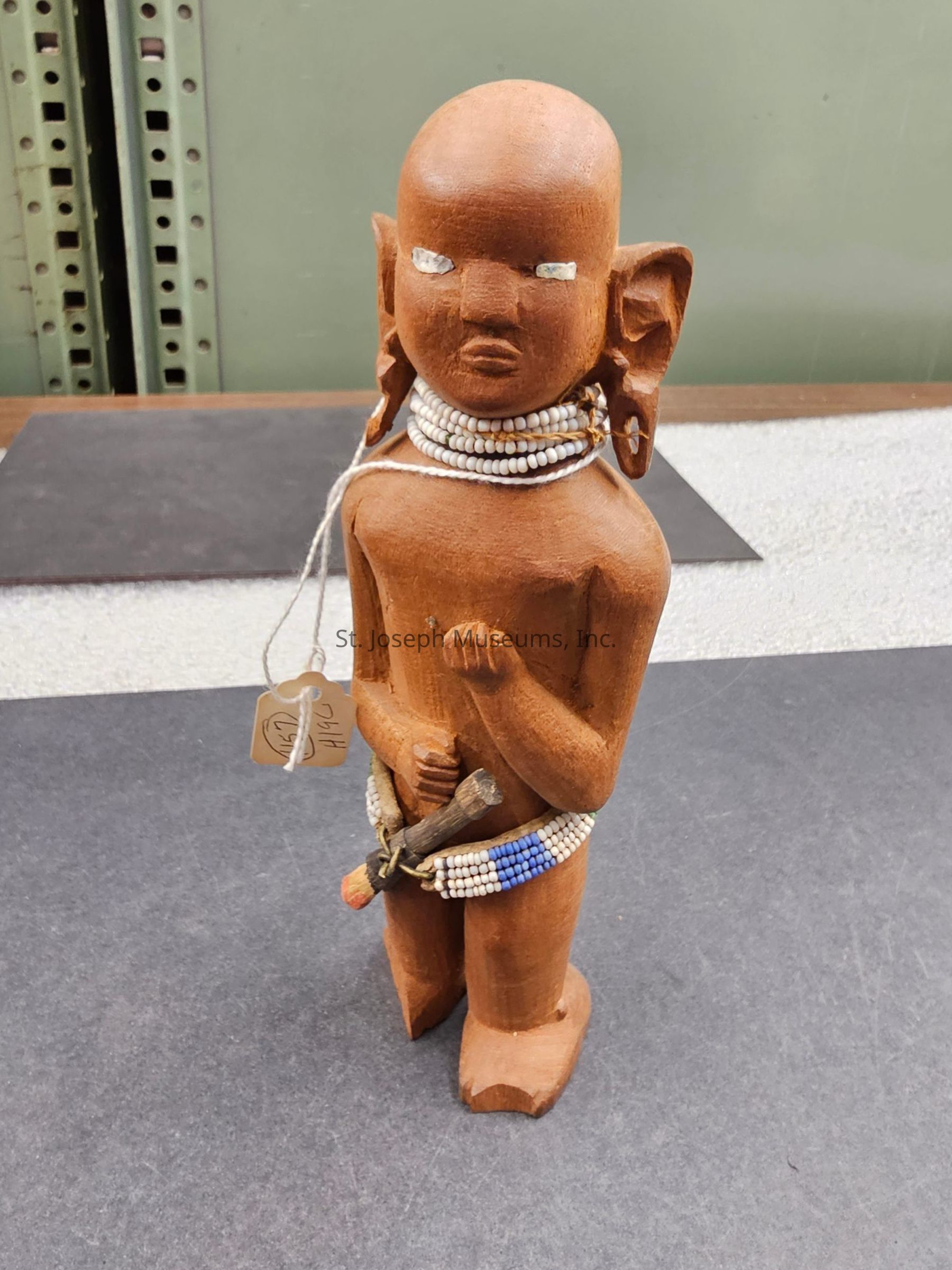
This doll was likely carved by the Kamba people of Kenya. The carvings of this nature, that show figures from local everyday life, have been a staple of the curio trade of the Kamba people since 1910s. One man, Mutisya Mung, produced the first Kenyan carvings to foreign visitors and found that the market was huge for carvings of this nature. As he began selling his art to foreign visitors, a large economy focused around these carvings developed.
This specific carving depicts a Maasai warrior. Ear lobe stretching is a common body modification completed by the Maasai people, men and women. While ear piercing is and was common in almost every community in Kenya, the reasons and actual process of piercing varied.Research Type
ResearcherNotes
Maasai beading:
The Maasai Tribe, in present day Kenya and Tanzania, are a semi-nomadic pastoralist tribe. They live mostly by herding cattle and cows remain a significant symbol to their culture. The Maasai are one of the more readily recognizable tribes, as their indigenous lands are close to nature preserves and safari lands and thus come in steady contact with tourists.
Beadwork is a ritual and a duty in the Maasai community; it is expected that every girl will learn beadwork. The elaborate beadwork worn by the Maasai, both men and women, is more than just decorative - it represents beauty, tradition, strength, and social status. Certain colors represent specific aspects of life and there are assigned designs that are worn only for certain life milestones, ritual ceremonies, or depending on your social status and role in the community. Just by looking at the beadwork worn by Maasai people, one can read the story of their life. Maasai have been creating beadwork and jewelry for hundreds of years, but the more recognizable small, glass beads have only been used since the 19th century, when trade with Europeans was firmly established. Before that, the Maasai women used local materials to create their art.
Red Beads: for bravery, unity. Represents the blood of the cows that sustain the people
White beads: for peace, purity, health. Represents the milk of the cows that sustain the people
Blue beads: for energy and the sky. Represents the rain that falls from the sky that is good for the cows
Orange and Yellow beads: for hospitality. Represents the orange gourds out of which milk is served to guests and the yellow animal hides lain across the guest beds
Green beads: for health and the land. Represents the grass the cows eat
Black beads: for the people and the struggles they must endure