Name/Title
Evergreen Huckleberry (Vaccinium ovatum)Entry/Object ID
2021.1.48 BScope and Content
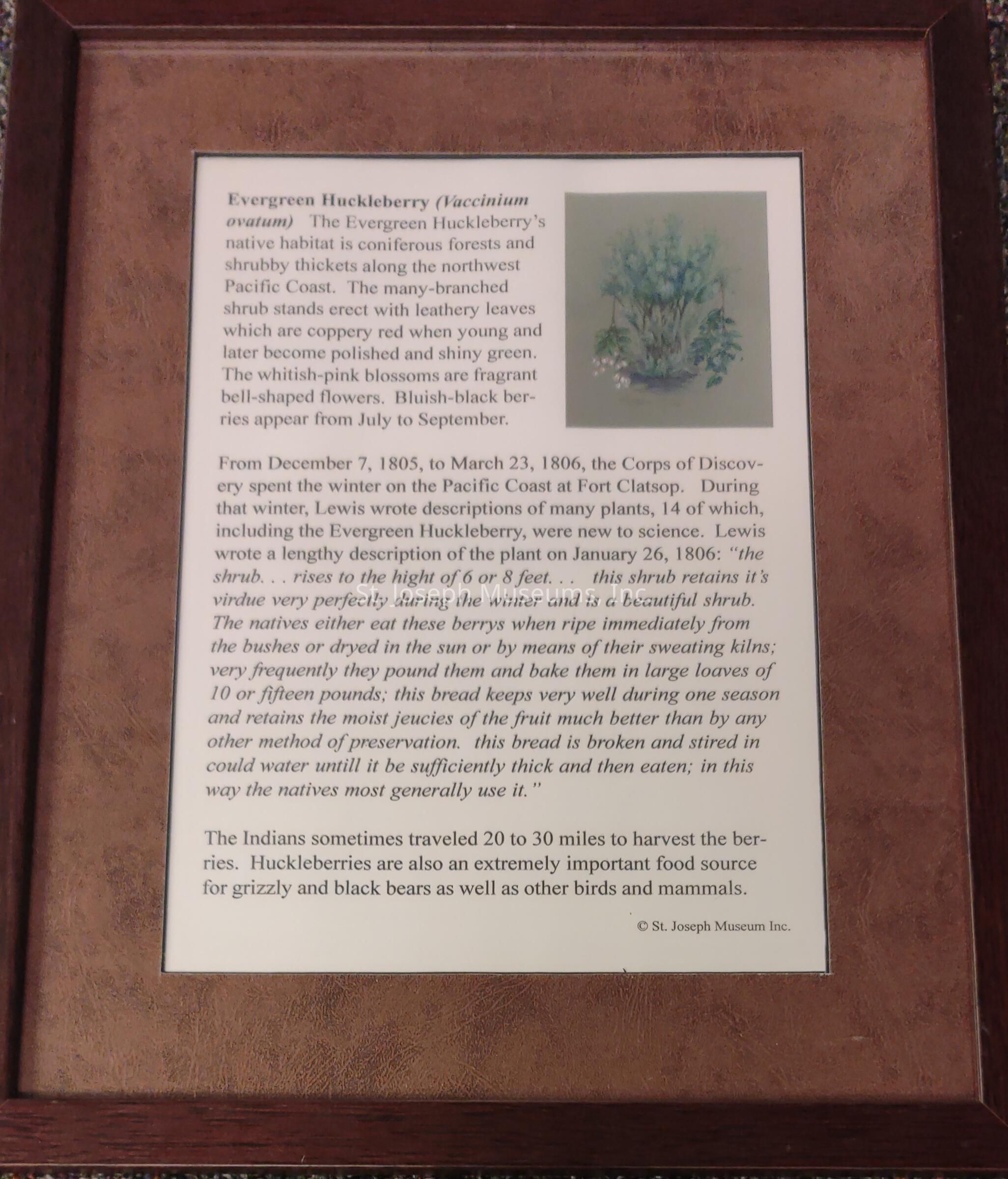
Evergreen Huckleberry (Vaccinium ovatum) plant description, framed.
The Evergreen Huckleberry's native habitat is coniferous forests and shrubby thickets along the northwest Pacific Coast. The many-branched shrub stands erect with leathery leaves which are coppery red when young and later become polished and shiny green. The whitish-pink blossoms are fragrant bell-shaped flowers. Bluish-black berries appear from July to September.
From December 7, 1805, to March 23, 1806, the Corps of Discovery spent the winter on the Pacific Coast at Fort Clatsop. During that winter, Lewis wrote descriptions of many plants, 14 of which, including the Evergreen Huckleberry, were new to science. Lewis wrote a lengthy description of the plant on January 26, 1806; "the shrub... rises to the hight of 6 or 8 feet... this shrub retains it's virdue very perfectly during the winter and is a beautiful shrub. The natives either eat these berrys when ripe immediately from the bushes or dryed in the sun or by means of their sweating kilns; very frequently they pound them and bake them in large loaves of 10 or fifteen pounds; this bread keeps very well during one season and retains the moist jeucies of the fruit much better than by any other method of preservation. this bread is broken and stired in could water untill it be sufficiently thick and then eaten; in this way the natives most generally use it."
The Indians sometimes traveled 20 to 30 miles to harvest the berries. Huckleberries are also an extremely important food source for grizzly and black bears as well as other birds and mammals.Context
Originally designed by the St. Joseph Museum in the fall of 2004. Titled "Botanical Wonders of the Uncharted West. The Recorded Flora of the Lewis & Clark Expedition."Collection
Lewis and ClarkLexicon
LOC Thesaurus for Graphic Materials
Botanical drawings, Expeditions & surveysArchive Items Details
Title
Evergreen Huckleberry (Vaccinium ovatum)Creator
Mary L. FletcherDate(s) of Creation
2004Subjects
Plants, Watercolor paintingsParts
Count
2Parts
Watercolor of plant and descriptive label, both framed.Condition
Overall Condition
Very GoodProvenance
Notes
"Botanical Wonders of the Uncharted West" visually depicts how well Lewis followed Jefferson's instructions. In recognition of this achievement, The S. Joseph Museums, Inc. commissioned accomplished artist Mary Fletcher to create fifty (50) selected paintings of flora documented by the Corps during their Journey. These framed watercolor originals are accompanied by similarly framed labels, generated by former Head of Research Jackie Lewin, which describe the corresponding plants with appropriate quotations from the Journals. This collection makes available for study and appreciation plants that were new to Lewis and Clark, but which Native Peoples already recognized as valuable sources of food, medicine, and tools. Some of these still remain a mystery to many, but all will enjoy their beauty, their diverse uses, and their accomplished renderings.