Person
Tori ZiegerNotes
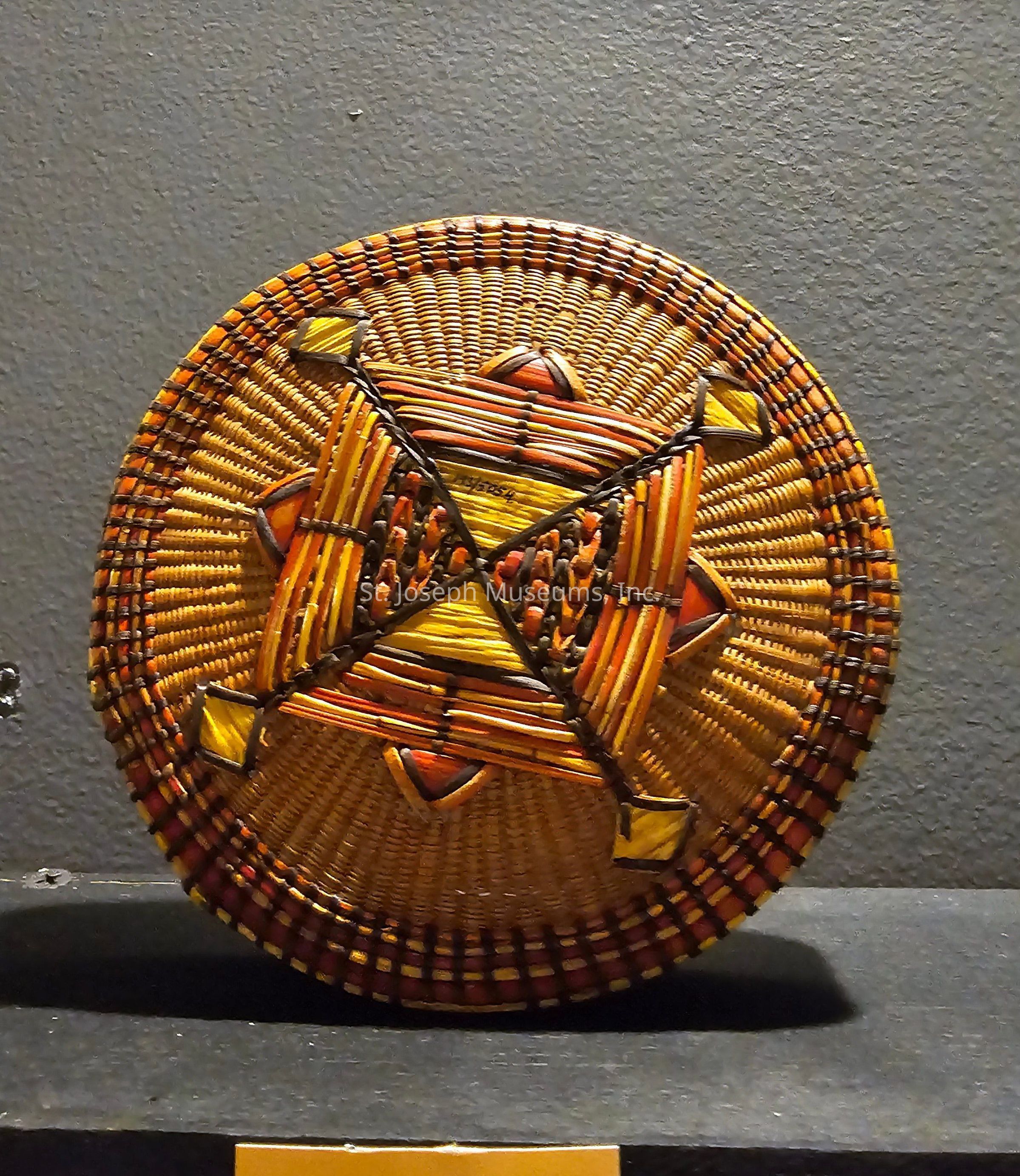
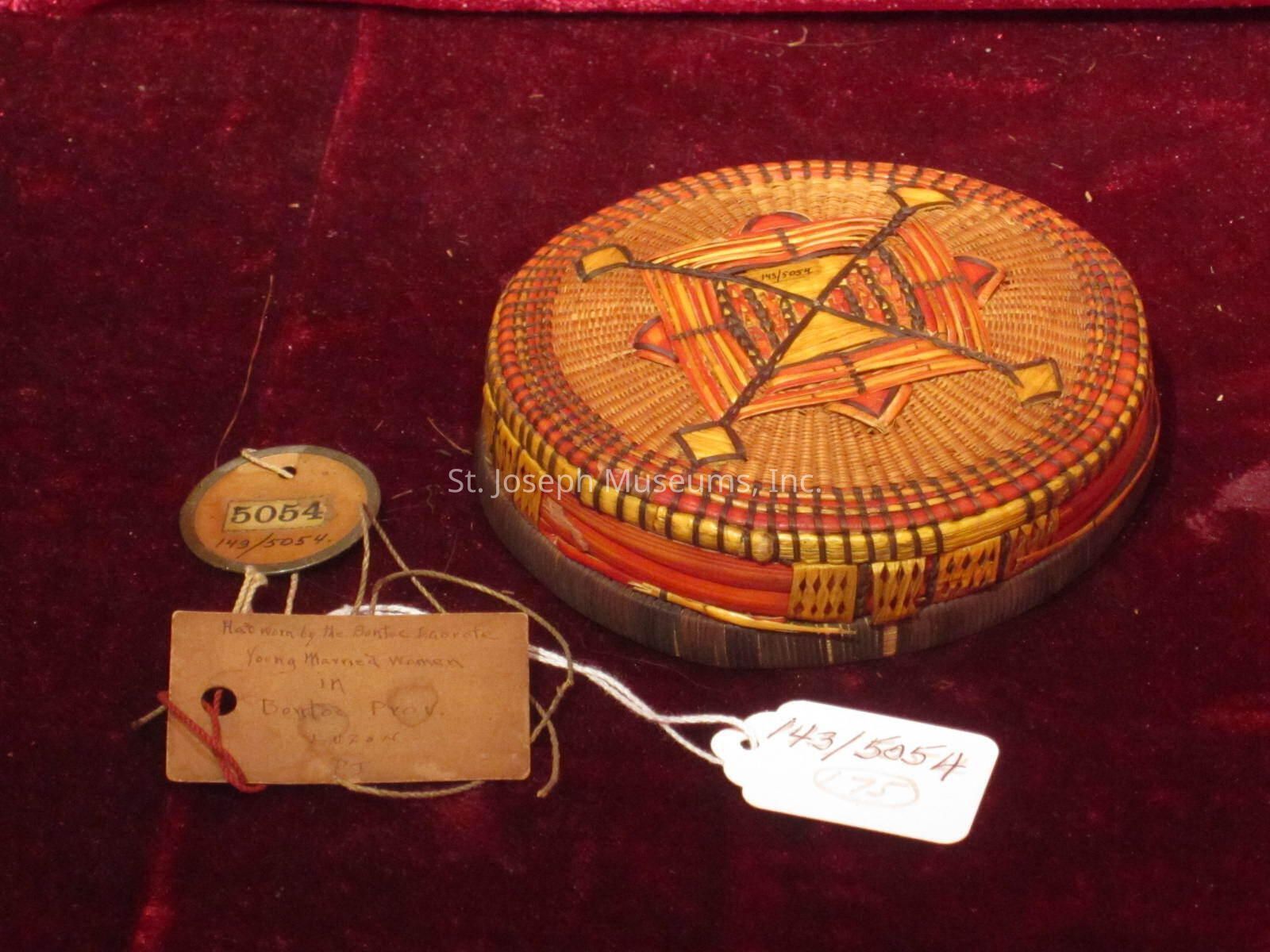
This head gear is called a suklang, or a falaka, and is common in the Philippines, particularly in the highland regions. These hats would be primarily worn by men on the back of the head. The hats would then be held in place with a cord that would go around the forehead. While these hats could be used as a symbol of their marital status (single men had very ornate versions while married men wore very simple versions), this hat could also function as a pocket. Men could keep small objects like tobacco and pipes in their suklang. Various tribes in the Philippines also have very distinct styles of the suklang.
*note - original notations in index indicate this is a woman's hat, but no other sources seem to corroborate that. Person
Tori ZiegerNotes
Located in the ocean in Southeast Asia, the Philippines is an archipelago of over 7000 individual islands. While the islands have been populated for over 30,000 years, the concept of a unified archipelago and the name “The Philippines” itself did not exist prior to Spanish colonization in 1521. Before European “discovery”, the people living in what would eventually be called the Philippines lived in individual tribes or groups. There was no sense of a single, unifying culture that covered all of the islands. As early as the 11th century, Chinese scholars and traders were making regular stops at these islands and a large number of Chinese individuals migrated to the islands, drawn by the wealth of natural resources and land. When Ferdinand Magellan landed in the Philippines in 1521, he claimed all the islands in the name of the Spanish king, King Philip II, and named the islands after him. Over the next 50 years, the Spanish sent more and more expeditions with the goal of establishing secure and numerous Spanish settlements on the islands. The largest barrier to the Spanish taking complete control was bringing the highly individual and disparate groups of people under a centralized authority. Spain remained the dominant political power in the Philippines for the next 300 years. Revolts, protests, and armed clashes broke out in 1896, with the goal of an independent Philippino nation. While violence and civil unrest continued for several years, the initial push for independence was not successful. It was not until the Spanish defeat by the United States in the Spanish-American War in 1898 that a semblance of independence was obtained. Despite the declaration of independence, the treaty terms that ended the war between Spain and the United States ceded political control of the islands to the United States, which quickly established a military rule. Revolutionaries in the Philippines refused to acknowledge the United States takeover and initiated an armed conflict that came to be known as the Philippine-American War. This war formally ended in 1902, though independence was not achieved. The US retained political control over the island for the next 40 years, with the promises of a more relaxed government, more autonomy for the island, and independence by 1945. This promise was disrupted when Japan invaded the islands during World War II. The Philippines were finally granted independence in 1946, after the United States defeated Japan in WW2, though the United States continued to have a military presence on the islands, with several military bases being set up after independence. Independence did not quell the political unrest in the country; the country saw political assassinations, coups, terrorist attacks, and rebellions well into the 21st century.