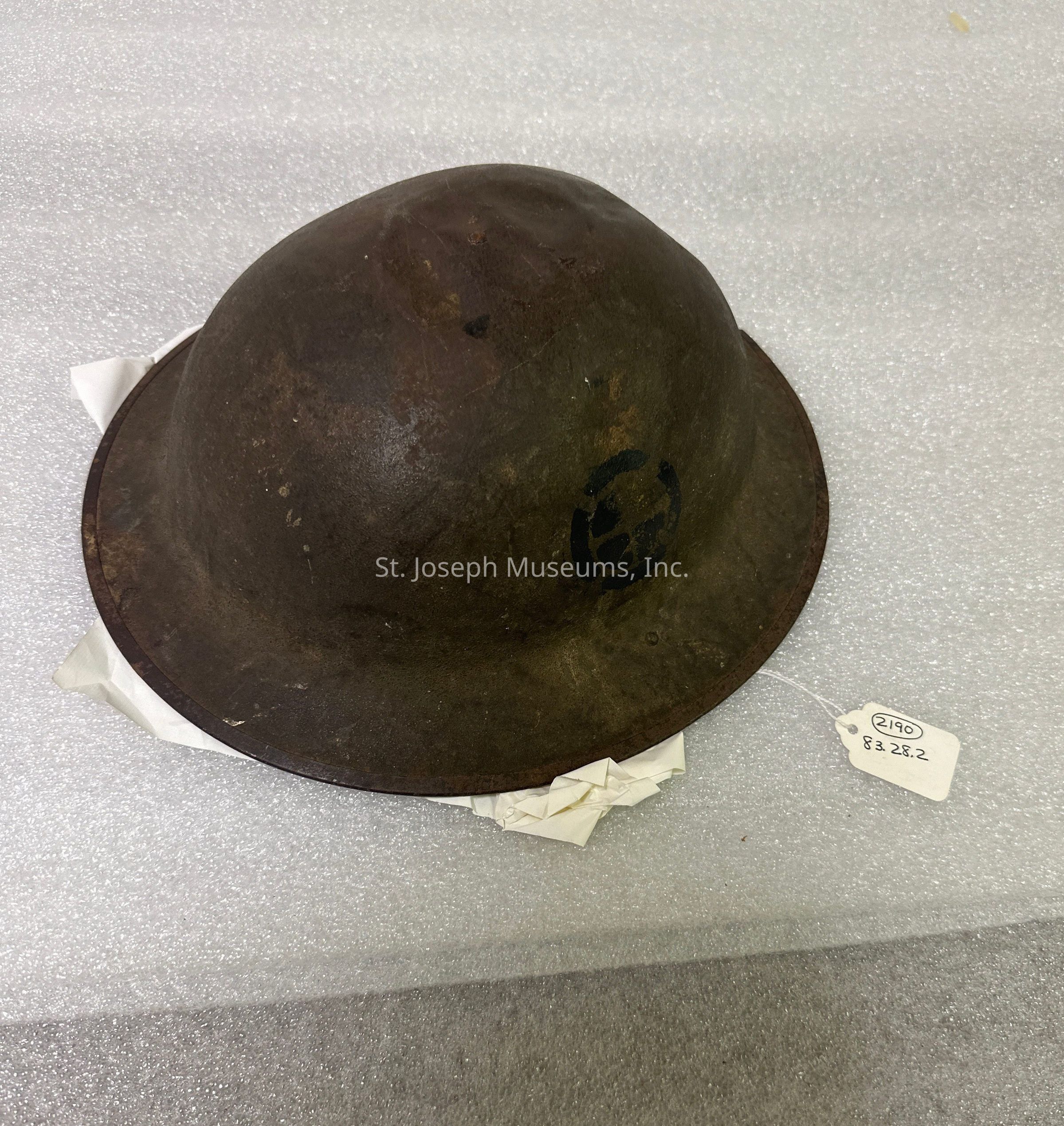
Notes
This is likely a U.S. Model 1917 helmet, commonly called the "Doughboy" helmet. Upon entering World War I in 1917, the United States lacked a modern steel combat helmet. The military chose to model their new helmets after the British Mark I "Brodie," as they could be manufactured quickly and cheaply. The shallow, wide-brimmed design offered protection against shrapnel and debris falling from above, a common occurrence in the trenches, but left the wearer vulnerable on the sides and back of the head. Millions of these helmets were produced in a short time by a variety of American manufacturers. They were typically painted with an olive-drab mixture that included sawdust to reduce glare. The symbol likely indicates that the wearer was part of the 35th Infantry Division, a National Guard unit from Kansas and Missouri. The 35th saw action during the Meuse-Argonne Offensive and most notably included Captain Harry S. Truman.