Name/Title
Helmet, MilitaryEntry/Object ID
2016.35.30Description
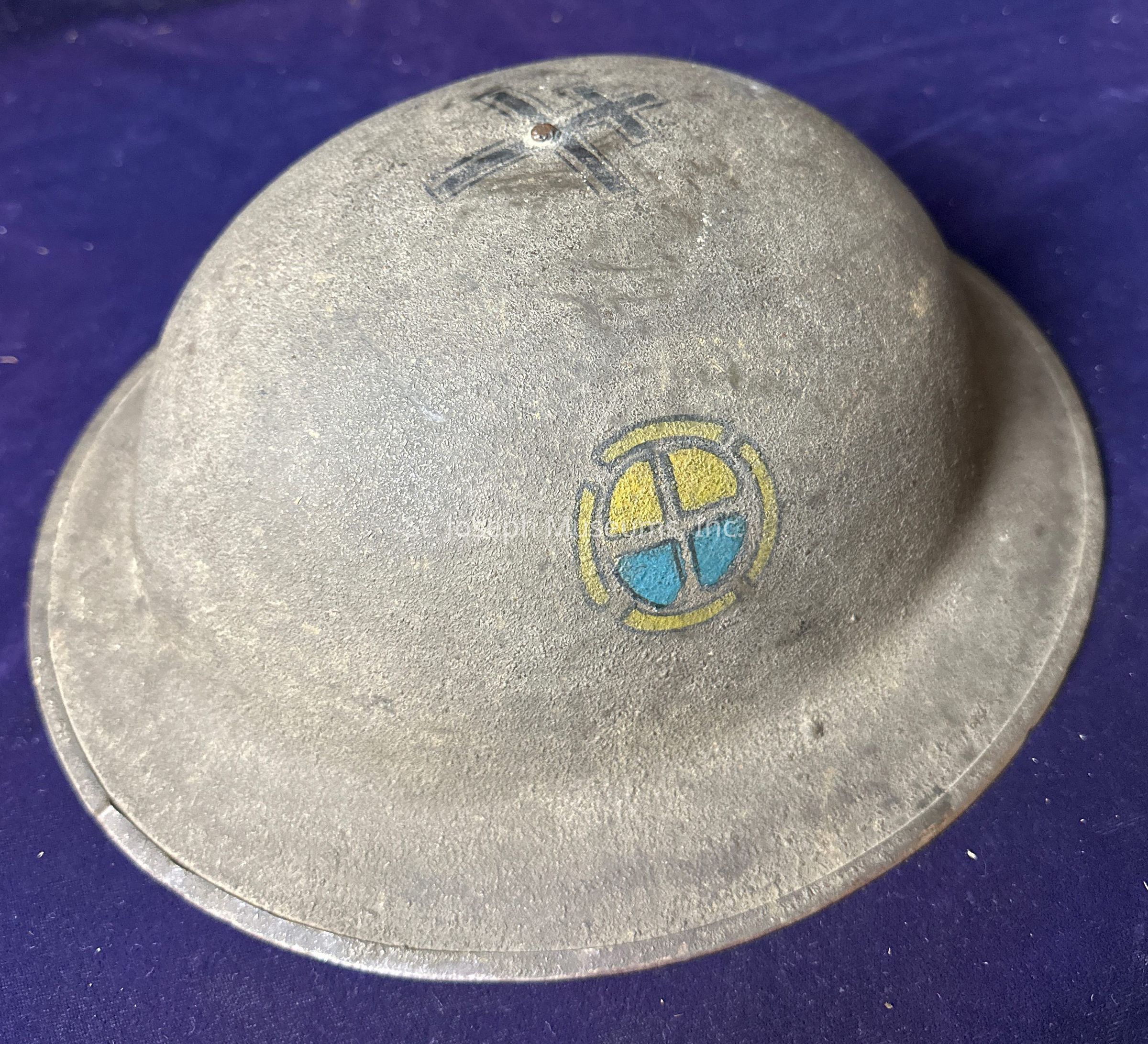
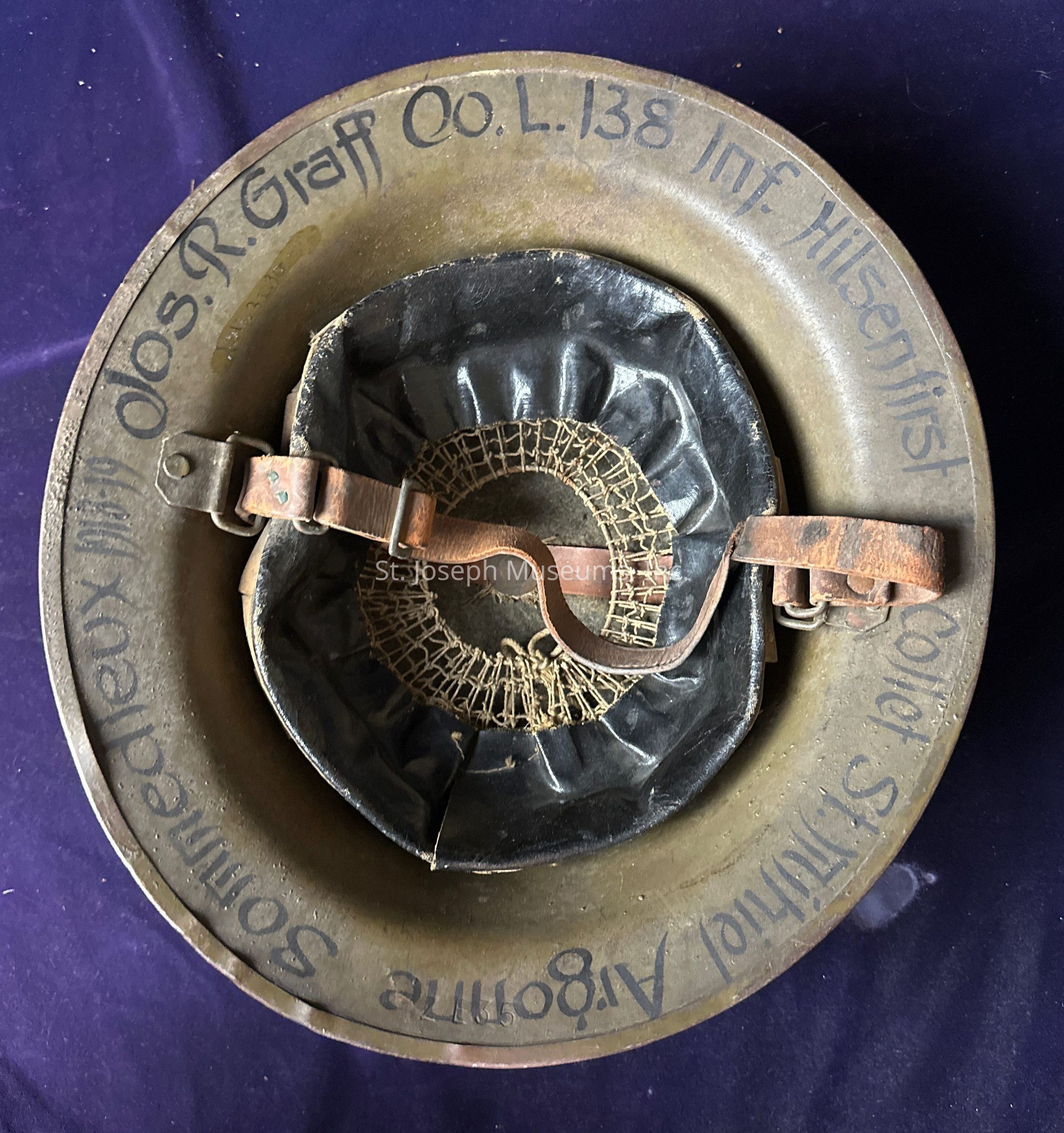
Helmet, military/Dark greenish brown metal on outside, inside leather and netting/ Round military helmet, comes to a lip on the edges. Symbol on both sides, four part yellow circle, inside the circle are four triangles pointing inwards toward each other, the top two are yellow, the bottom two are blue. Lining all shapes is a black stroke. On top of the helmet is a black double cross. Interior of helmet is made up of black and brown leather, with brown chin strap. Inside that is white netting./ In black ink lining the entire inside lip of the helmet "1918-19 dos. R. Graff Co. L. 138 inf. Hilsefirst Le Collet St. Mihiel Aronne Sommedieux."/ 13.5"x12"x6"Collection
WORLD WAR ILexicon
Nomenclature 4.0
Nomenclature Secondary Object Term
Helmet, MilitaryNomenclature Primary Object Term
HelmetNomenclature Sub-Class
HeadwearNomenclature Class
ClothingNomenclature Category
Category 03: Personal ObjectsDimensions
Height
6 inWidth
12 inLength
13-1/2 inResearch Notes
Notes
This is likely a U.S. Model 1917 helmet, commonly called the "Doughboy" helmet. Upon entering World War I in 1917, the United States lacked a modern steel combat helmet. The military chose to model their new helmets after the British Mark I "Brodie," as they could be manufactured quickly and cheaply. The shallow, wide-brimmed design offered protection against shrapnel and debris falling from above, a common occurrence in the trenches, but left the wearer vulnerable on the sides and back of the head. Millions of these helmets were produced in a short time by a variety of American manufacturers. They were typically painted with an olive-drab mixture that included sawdust to reduce glare. The yellow and blue symbol likely indicates that the wearer was part of the 35th Infantry Division, a National Guard unit from Kansas and Missouri. The 35th saw action during the Meuse-Argonne Offensive and most notably included Captain Harry S. Truman.