Name/Title
"Historia" magazineEntry/Object ID
Q1430.634.247ADescription
Vol 1 P. 247A
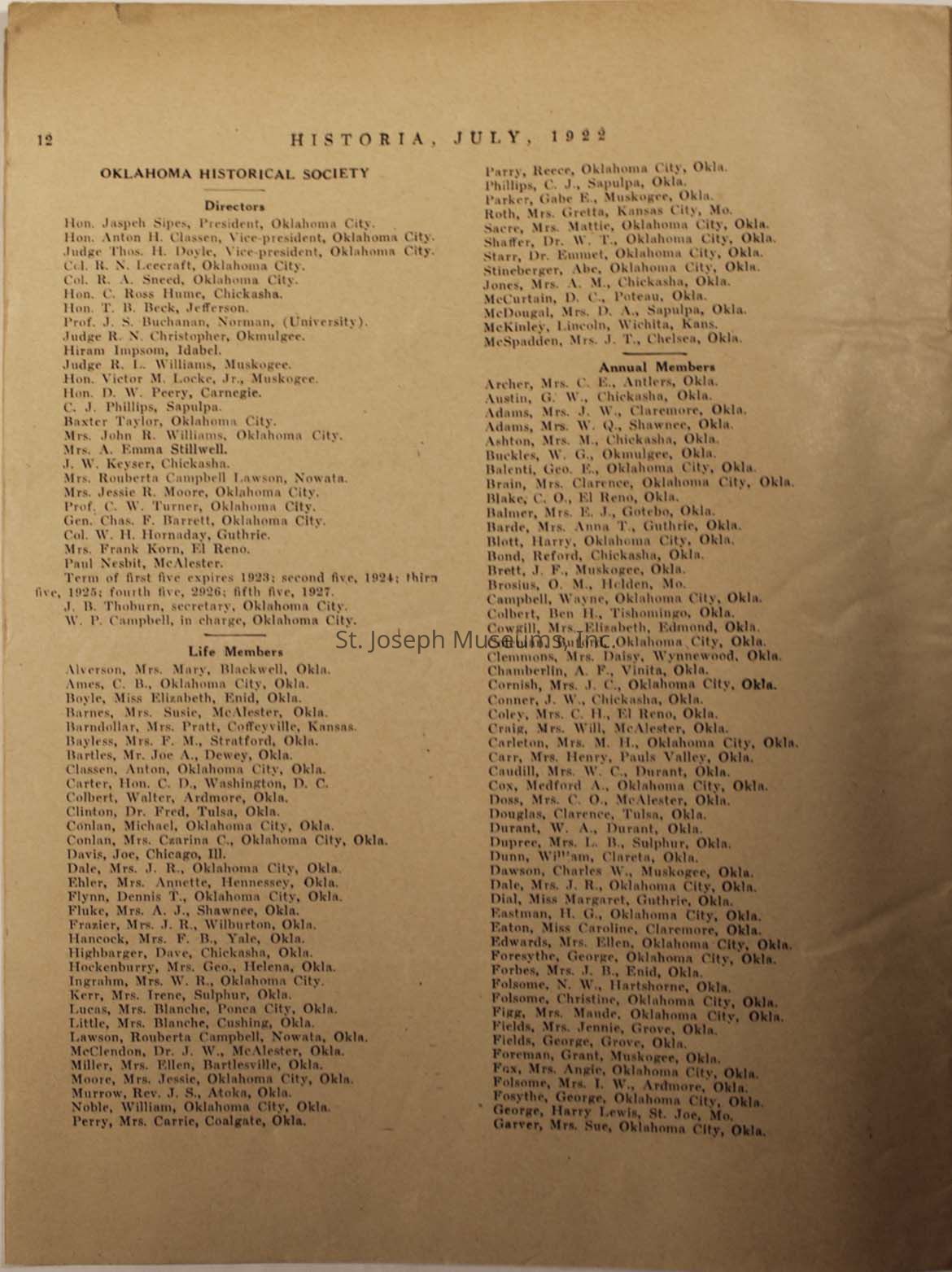
Copy of the 16-page "Historia" magazine printed by the Oklahoma Historical Society. Includes a note of Harry George's membership on page 12.
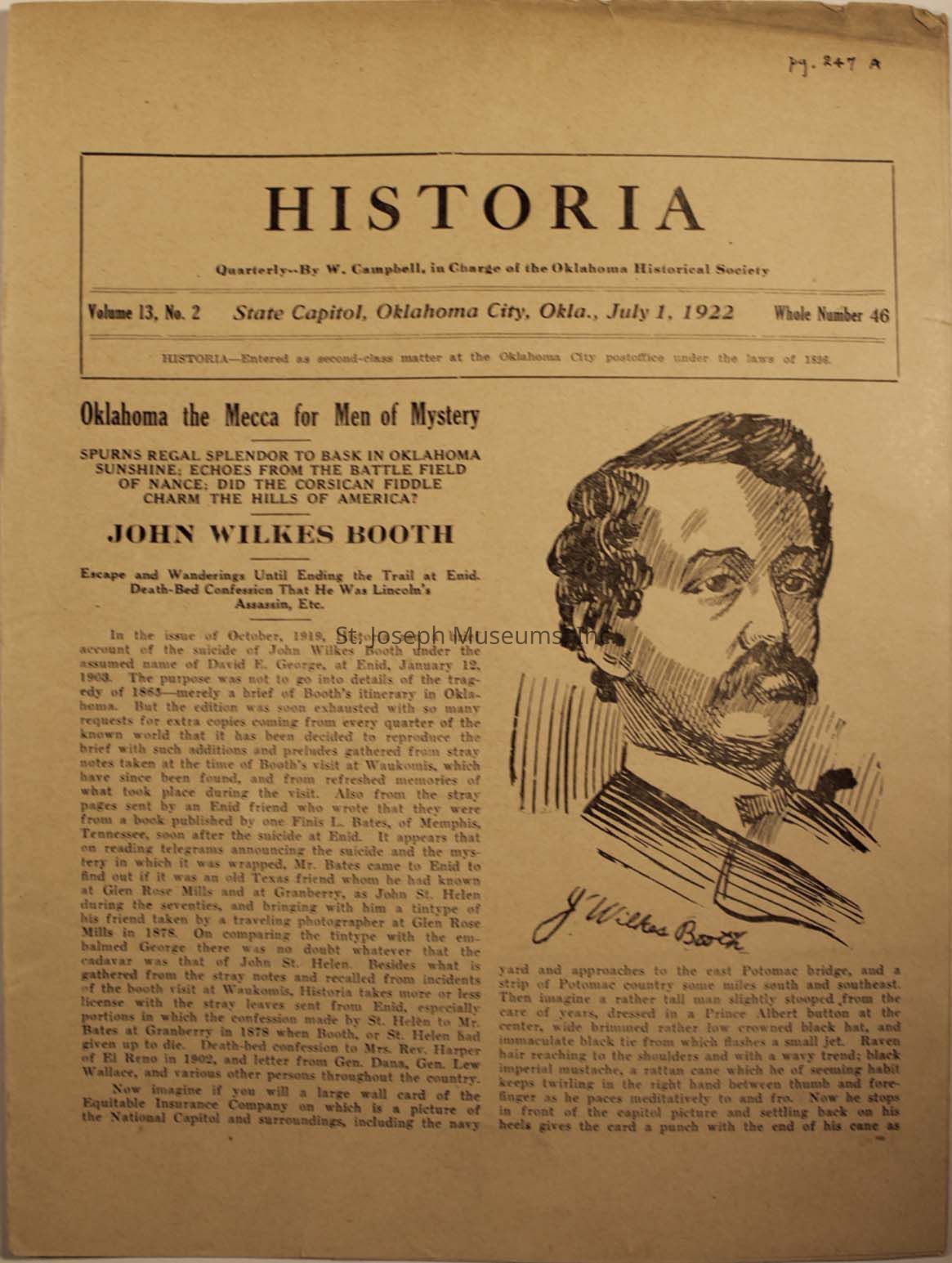
Page 1: features an illustration of John Wilkes Booth and discusses him as a figure of mystery, mentioning Oklahoma as the "Mecca for Men of Mystery." Several dramatic headlines suggest topics like Booth's escape, wanderings, and a death-bed confession.
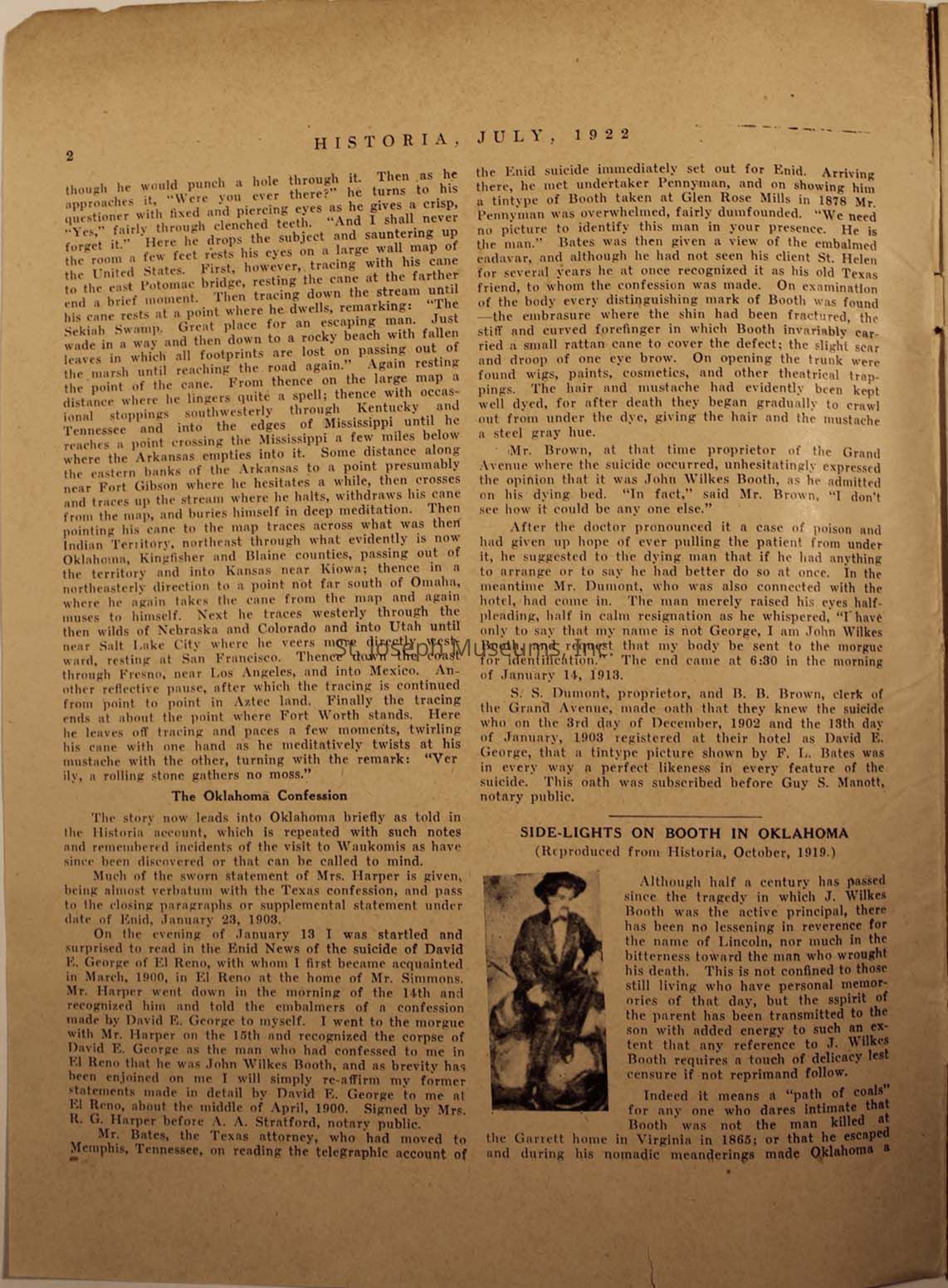
Page 2: The main content includes a narrative regarding travels across the United States, incorporating vivid descriptions of landscapes and locations like the Potomac Bridge and Arkansas swamps. It transitions into a tale titled "The Oklahoma Confession," discussing events surrounding an individual named David E. George and a connection to John Wilkes Booth.
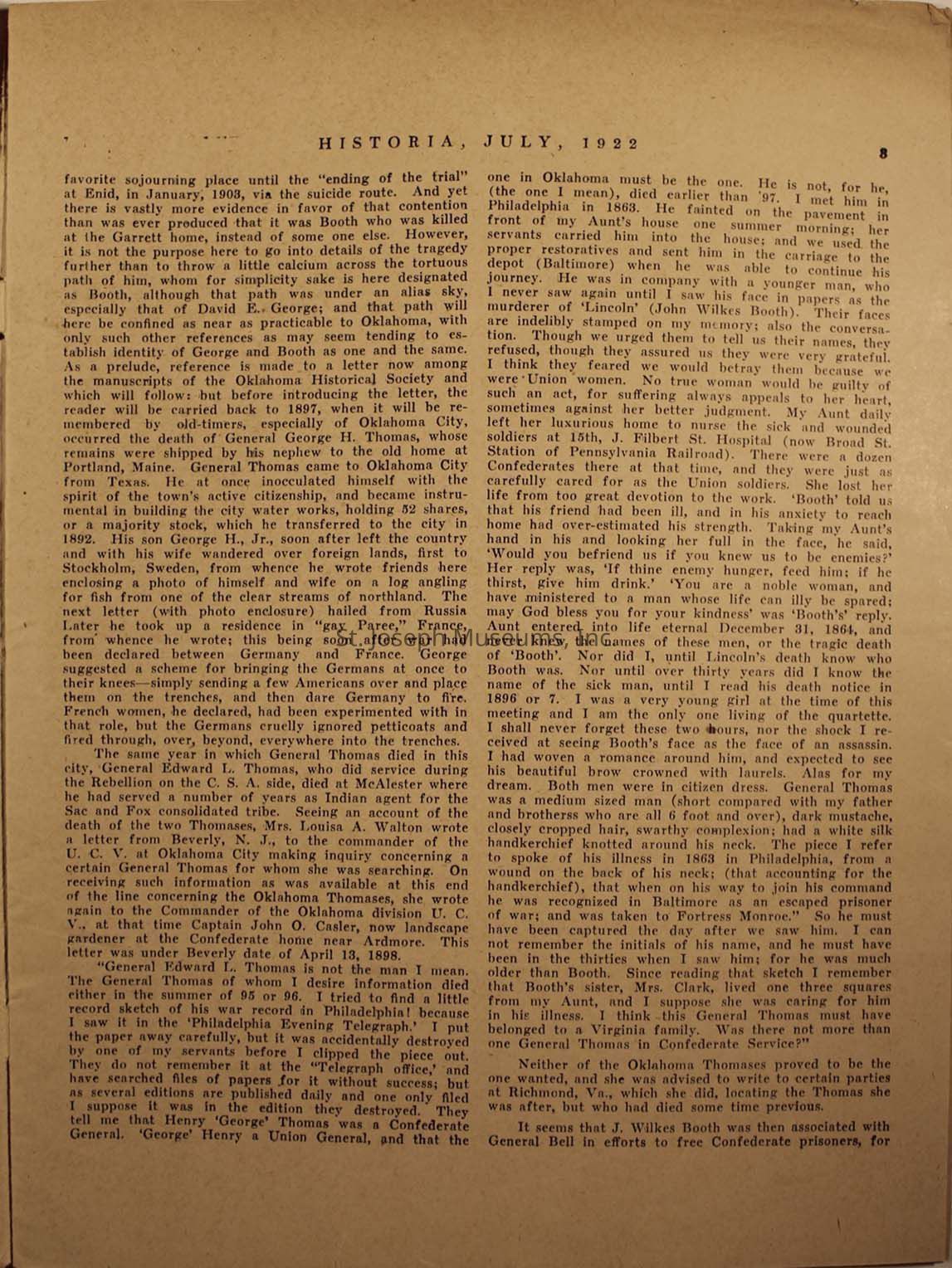
Page 3: the text discusses historical events related to the ending of a trial at Enid, Oklahoma, and the tragic death of David E. George. The narrative weaves through accounts of soldiers from different wars, reflections on identities, and the implications of historical figures such as "Booth." The page includes personal anecdotes and historical references, providing an insightful historical and personal context to the events.
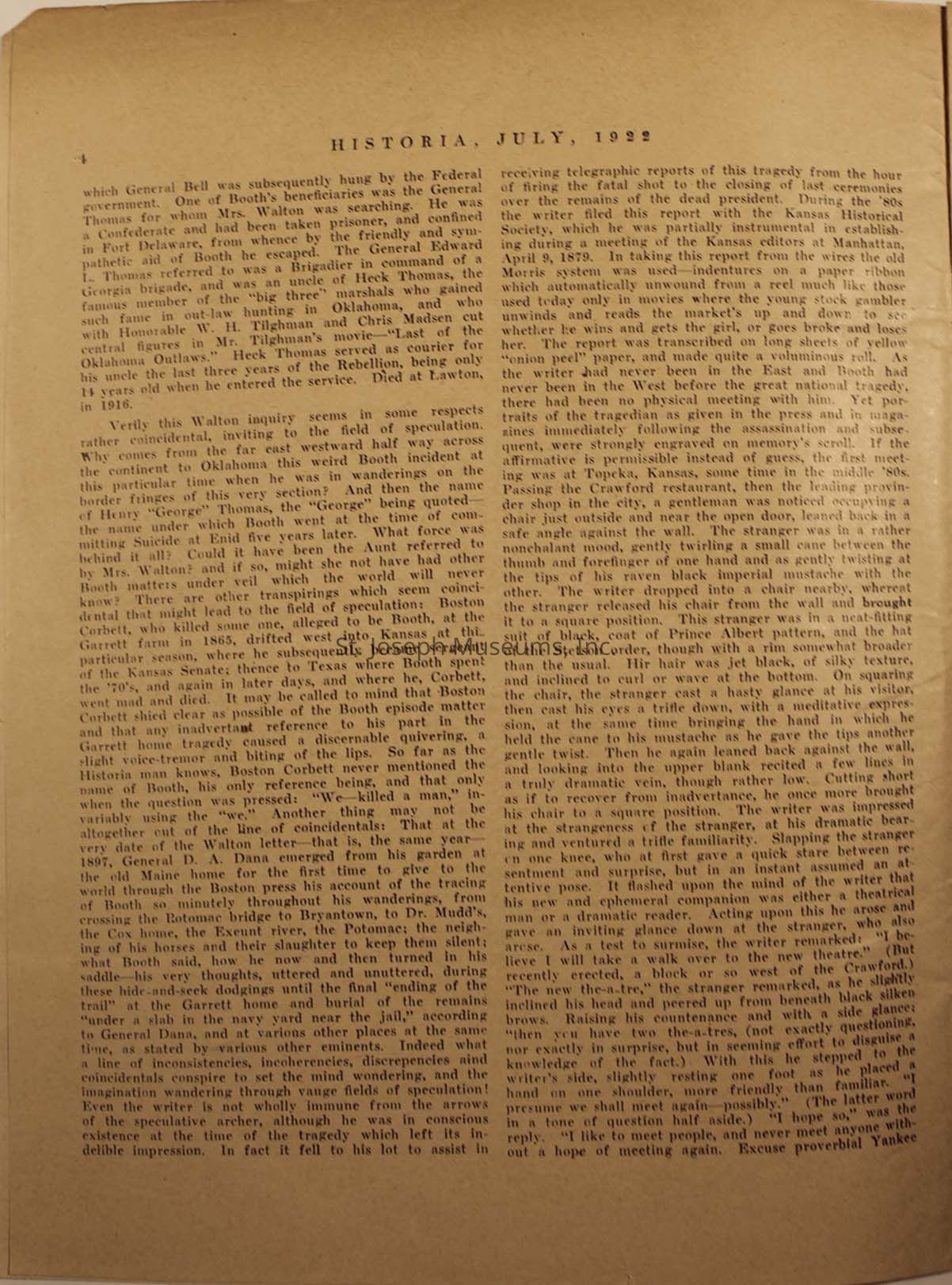
Page 4: The page contains columns of dense text discussing various historical figures and events, with references to General Edward and Heck Thomas. The narrative includes anecdotes and detailed accounts, such as a mysterious figure recognized in Kansas and various inquiries linked to Booth-related incidents.
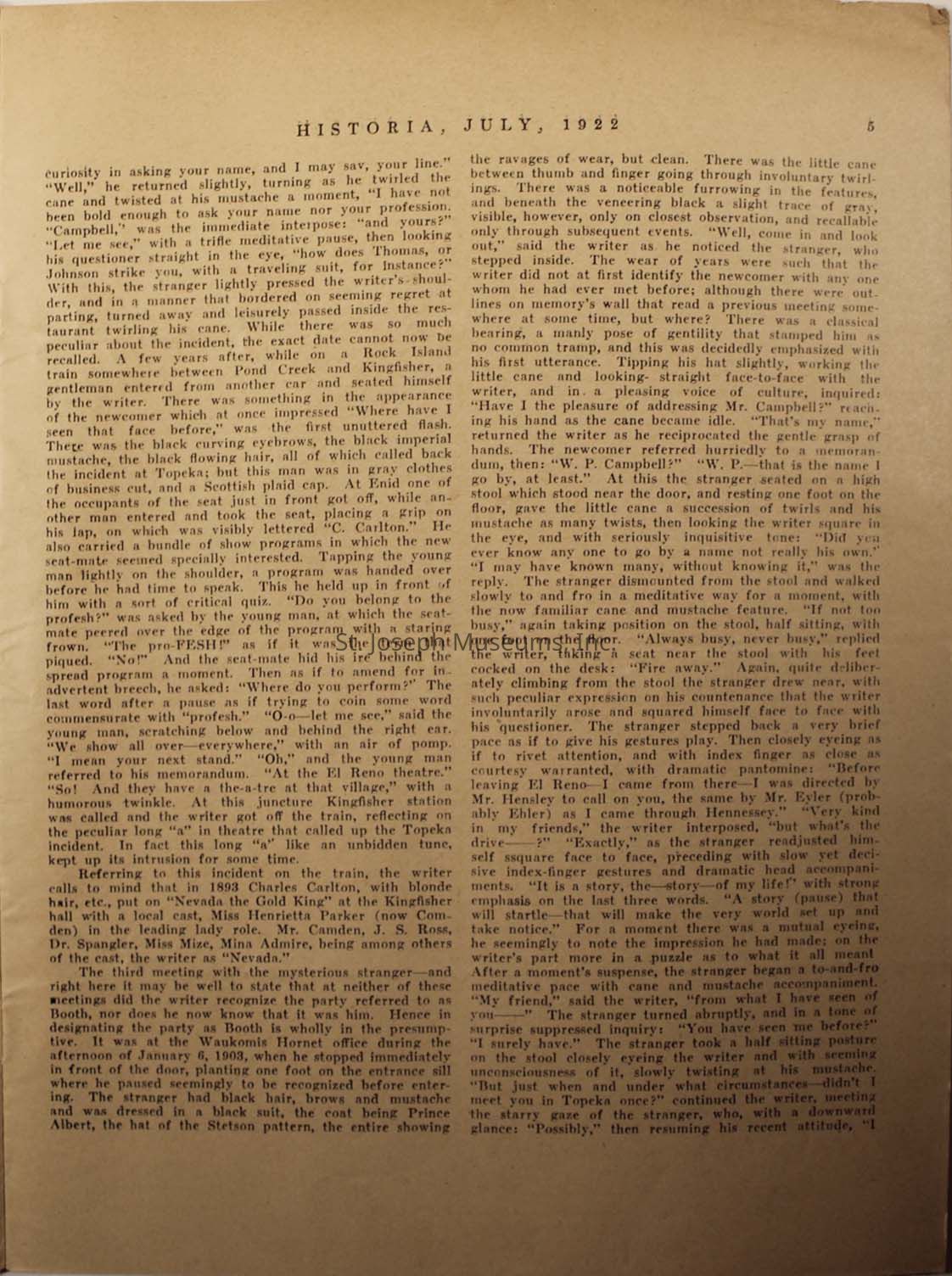
Page 5: The text discusses encounters, observations, and dialogues involving characters such as Mr. Campbell and references locations such as Pond Creek and Kingfisher.
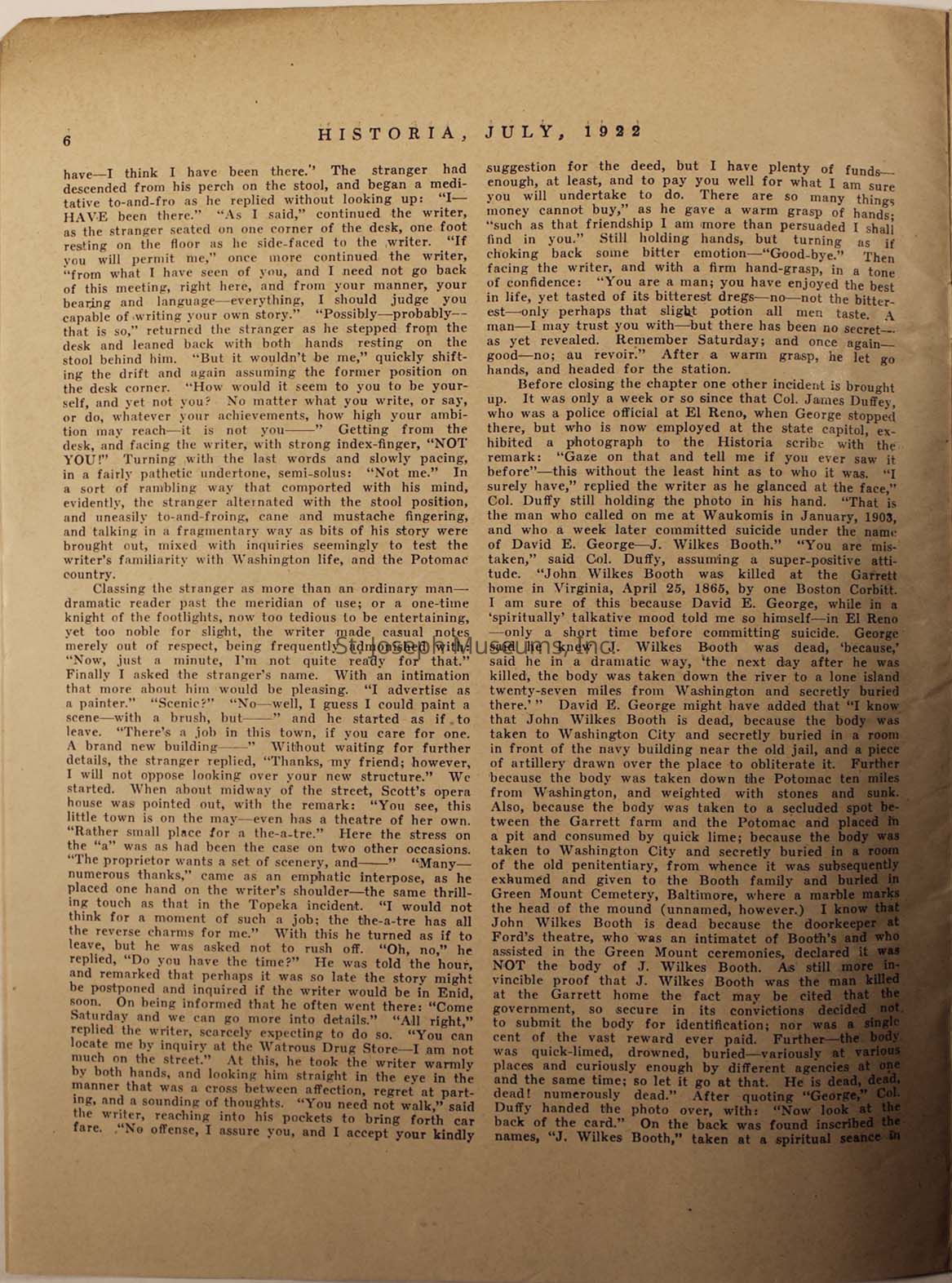
Page 6: The page references to J. Wilkes Booth and his alleged appearance in diverse scenarios post-assassination of Lincoln; it includes discussions on scenes, architecture, and attempts to identify Booth, suggesting a tale or debate on historical events and identities intertwined with personal anecdotes and dramatic descriptions.
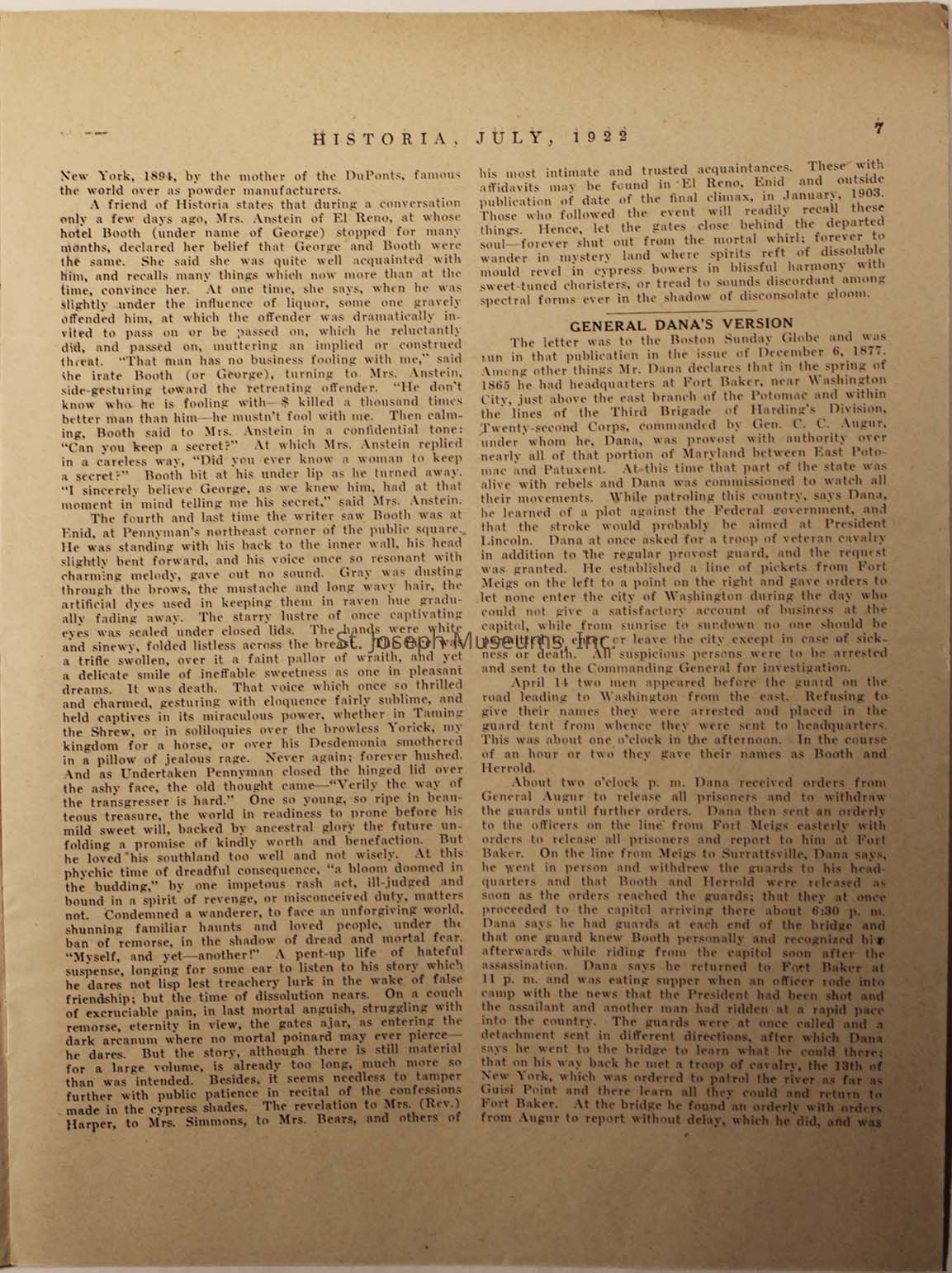
Page 7: The page discusses a conversation involving Mrs. Anstein of El Reno, recalling her belief that George and Booth were the same. It includes dialogue about secret-keeping and the nature of various acquaintances. The second section is labeled "General Dana's Version," referencing a letter published in the Boston Sunday Globe on December 6, 1871.
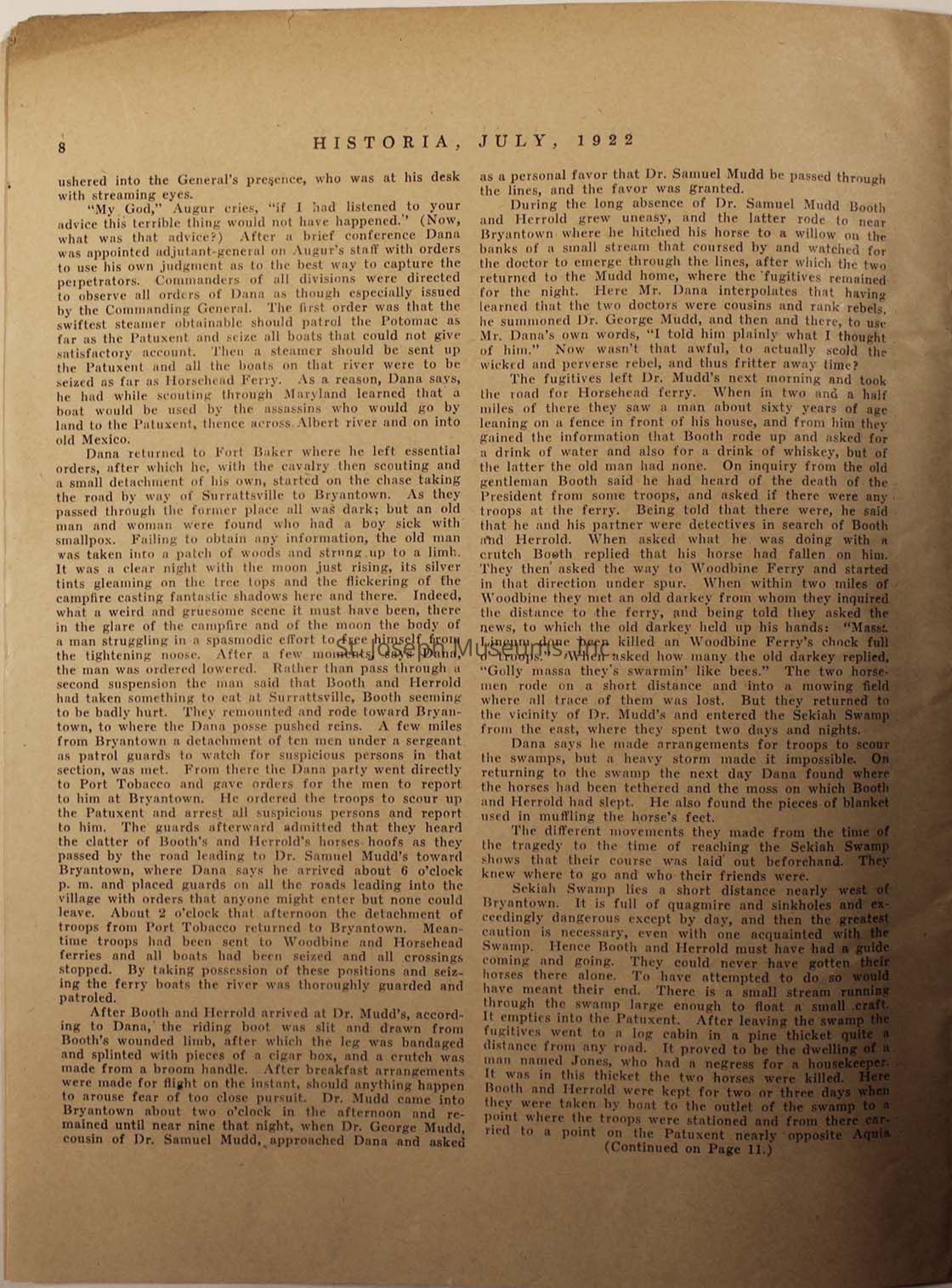
Page 8: The page contains a historical narrative about events related to Dr. Samuel Mudd and the aftermath of the assassination of a notable figure. The text details military orders, strategic movements, and interactions between various individuals and groups following the event. Characters such as Augur, Dana, Booth, and Herrold are mentioned, with a focus on strategies to capture the perpetrators and prevent their escape.
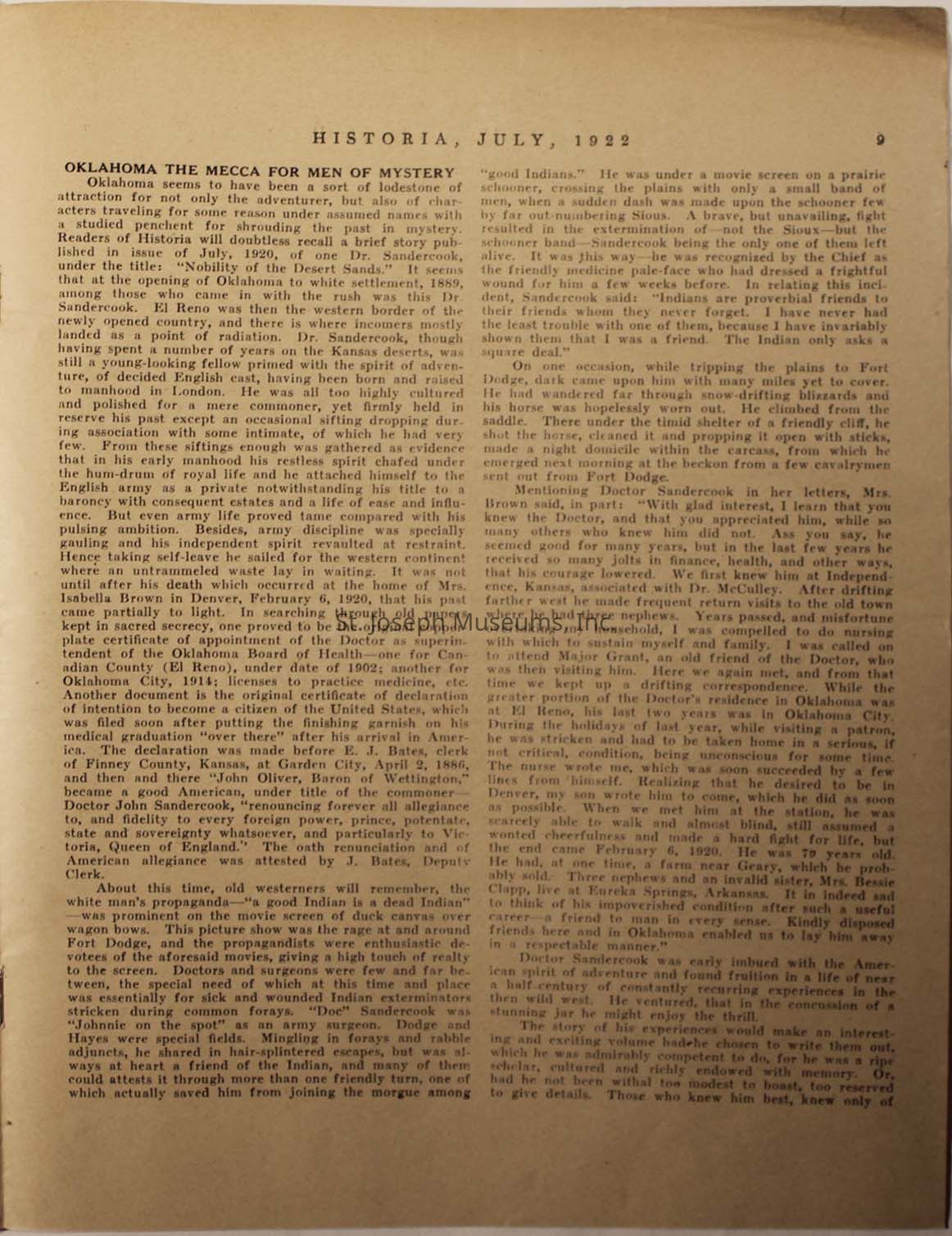
Page 9: The publication features an article titled "Oklahoma the Mecca for Men of Mystery." The text discusses the allure of Oklahoma, particularly for adventurers and characters adopting assumed names, highlighting historical anecdotes from the state's past. It introduces Dr. Sandercock, a character associated with Oklahoma's settling period, mentioning his encounters with Native Americans and his significant role in the early history of the state.
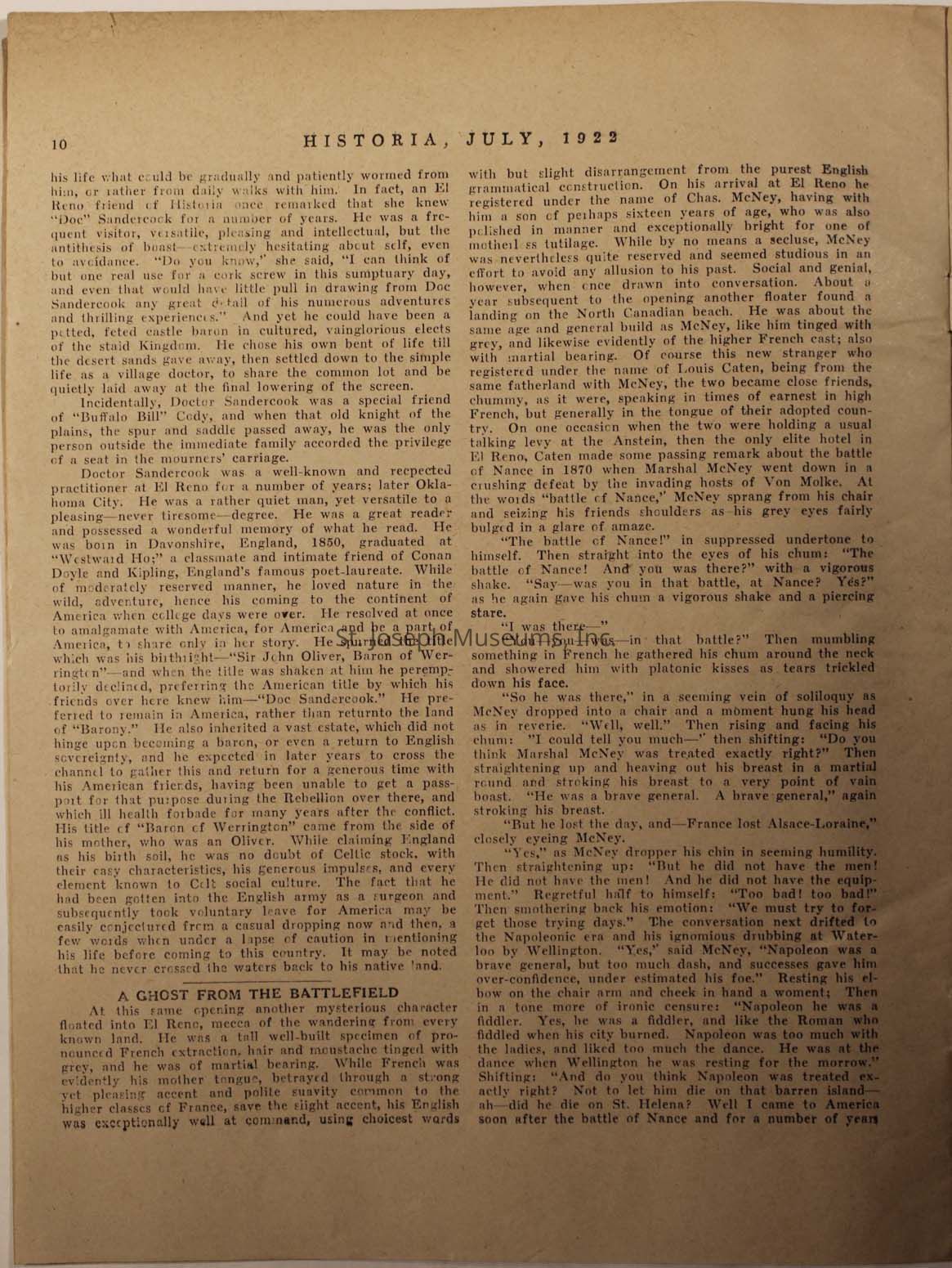
Page 10: The text discusses several themes. One recounts the life and traits of a person named Doc Sandercock, described as a versatile and intellectual frequent visitor. It highlights his English background, a penchant for staying private, and moments of refusal of grand titles like "Barony." Another section "FROM THE BATTLEFIELD," recounts a mysterious French character by the name of Charles McNey and his sixteen-year-old son.
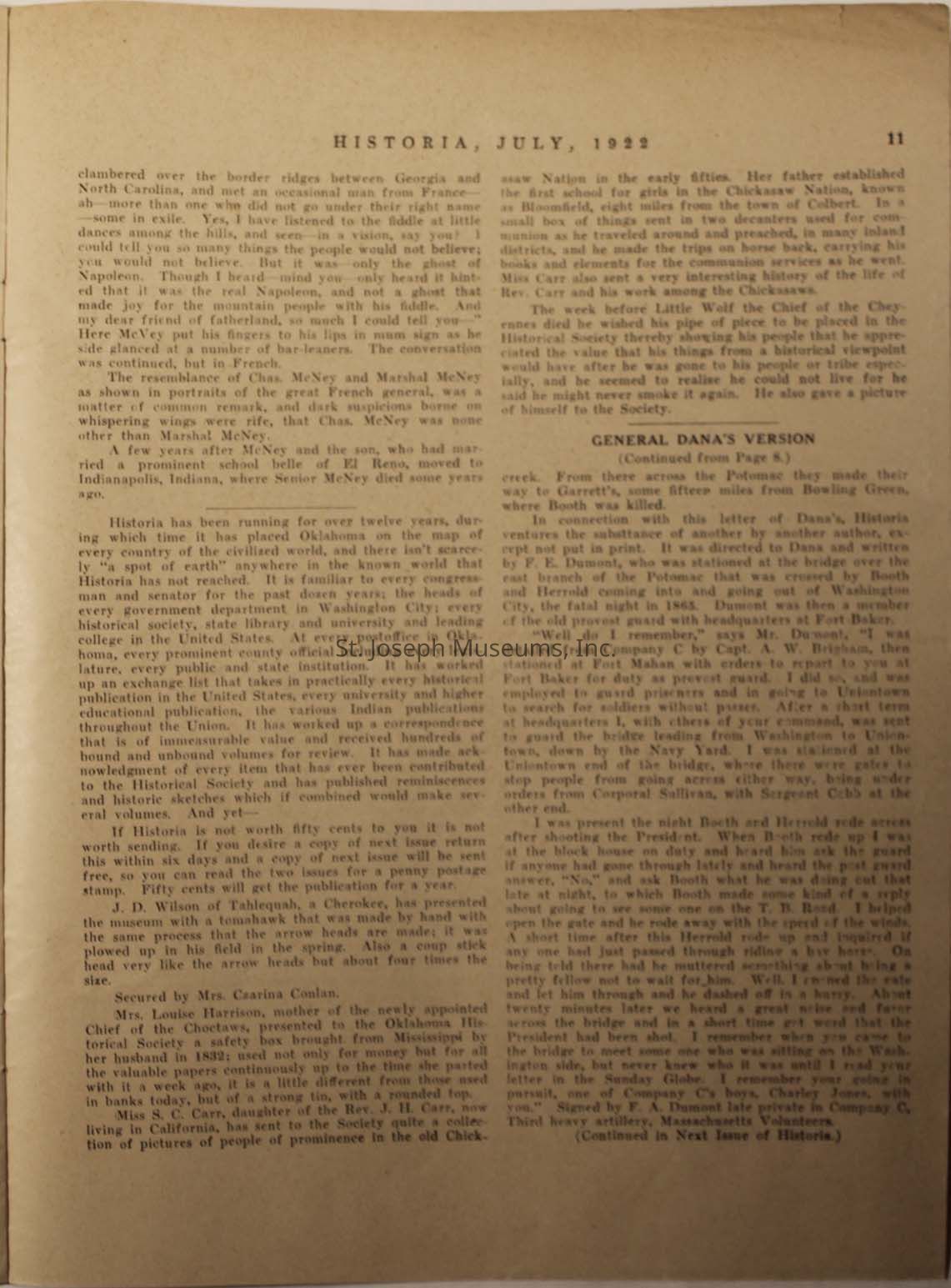
Page 11: The content discusses various topics, including the activities of Charles McNey and his family's resemblance, the value and reach of "Historia" in educating people about Oklahoma and historical events, and a section called "General Dana's Version." It highlights personal stories, historical anecdotes, and the significant influence of this newsletter in disseminating knowledge about historical events and figures.
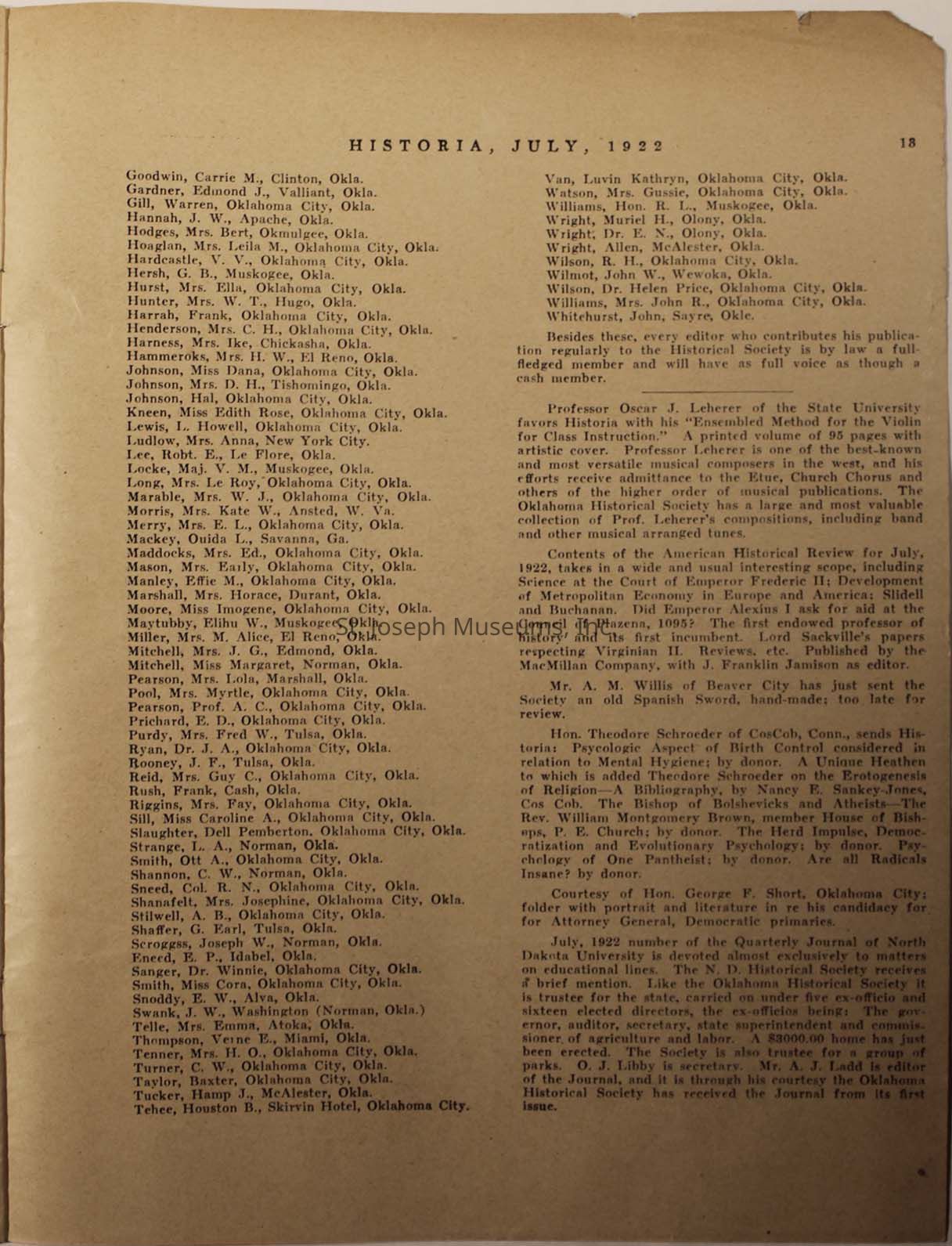
Page 12-13: The page titled "Oklahoma Historical Society" lists names divided into sections including Directors, Life Members, and Annual Members, followed by names and locations largely from different cities in Oklahoma, as well as other states like Kansas and Illinois, detailing the society's membership and leadership during that year. This information continues onto the following page followed by announcements and informational text. It mentions a contribution by Oscar J. Lehrer from the State University favoring the "Ensemble Method for the Violin Class Instruction," along with reviews of academic works and publications such as "The Quarterly Journal of North Dakota University" and other scholarly resources.
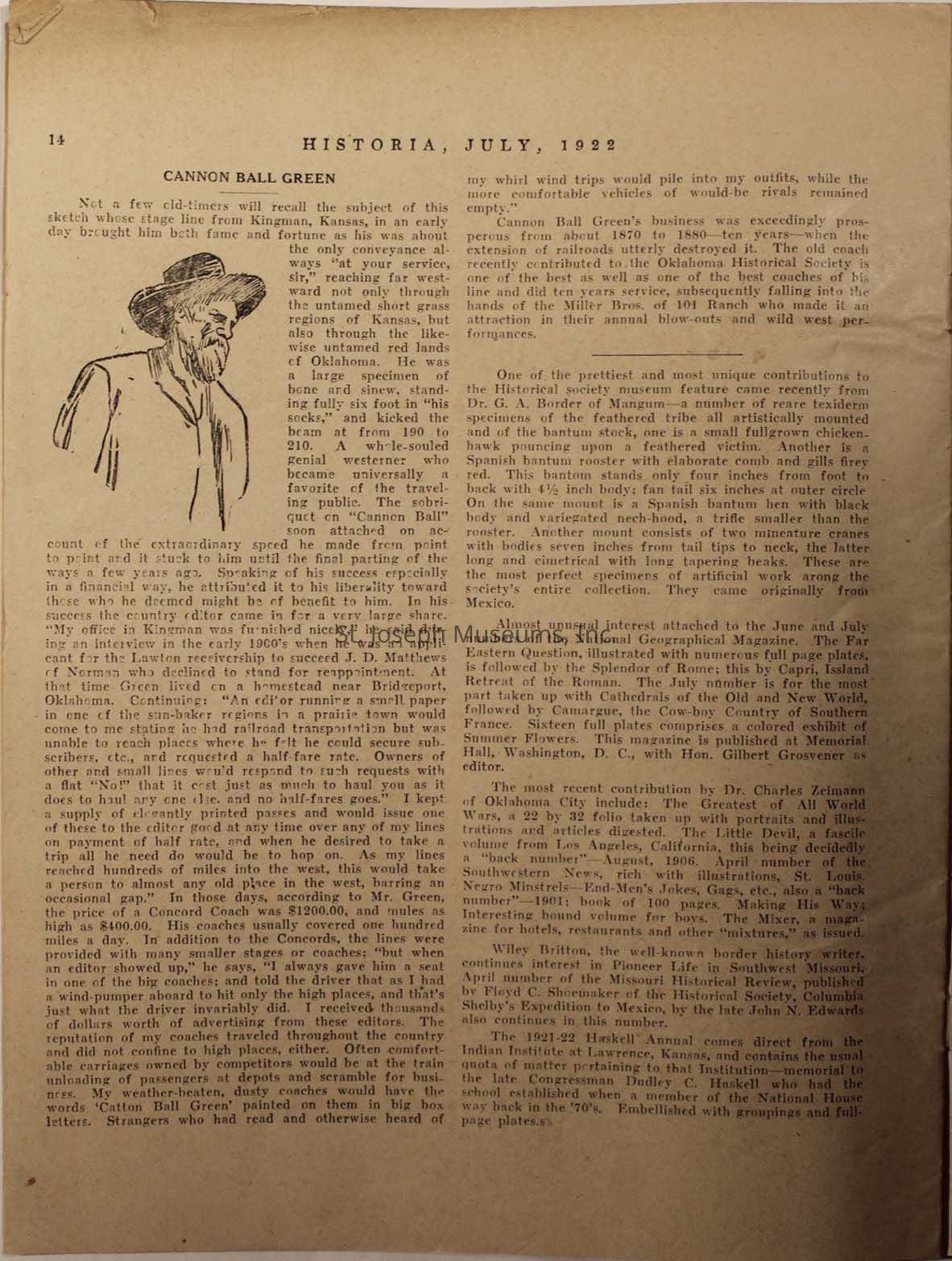
Page 14: Text on Cannon Ball Green, a coachman known for his swift service across Kansas and Oklahoma. An illustration of Cannon Ball Green, featuring a bearded man in a hat, accompanies the text. The document describes his popularity among travelers for his reliability and speed, recounting anecdotes and details of his operations. It also includes mentions of contributions to historical societies and various publications, alongside discussions of exhibitions featuring rare specimens and artistic works.
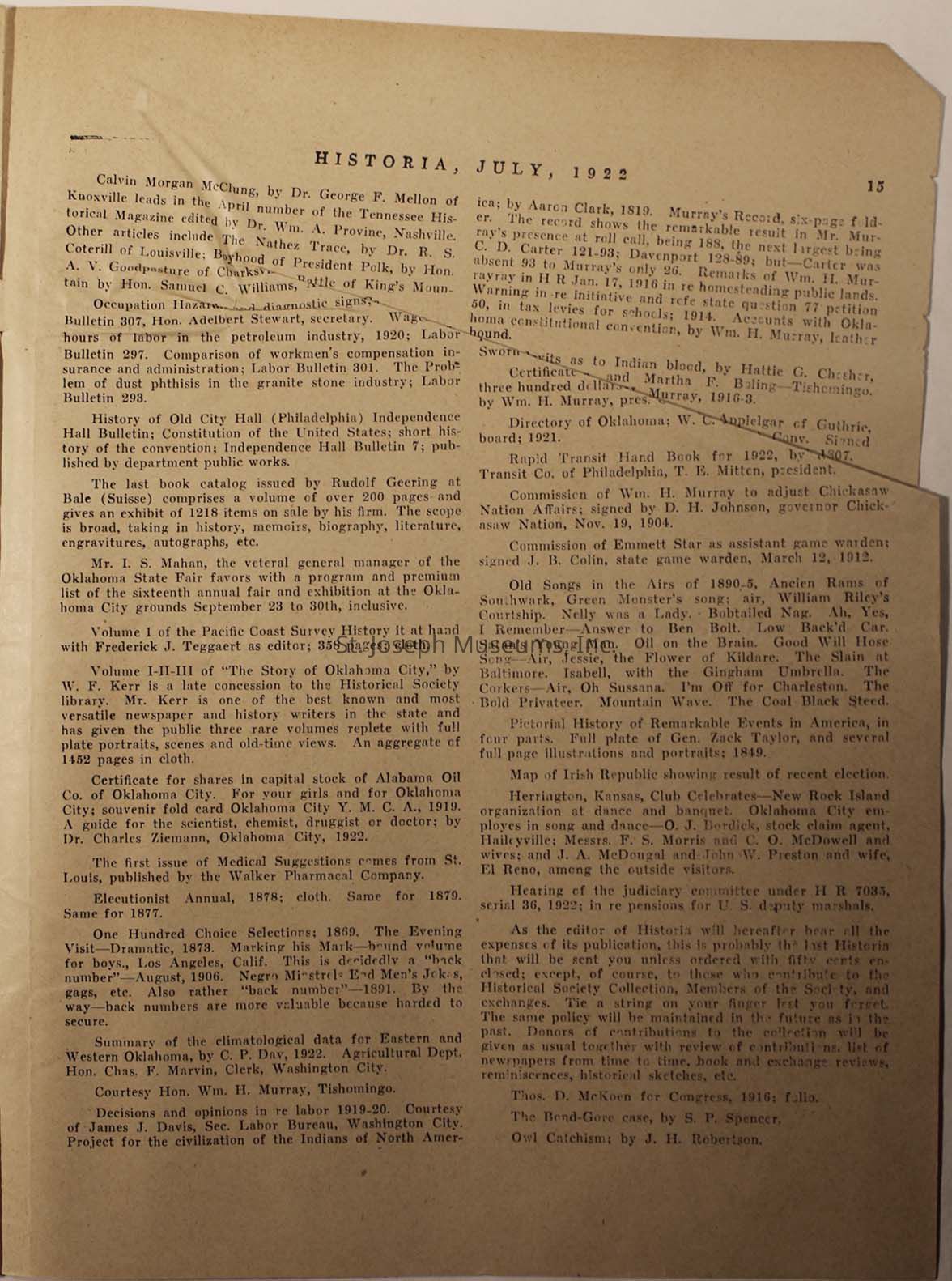
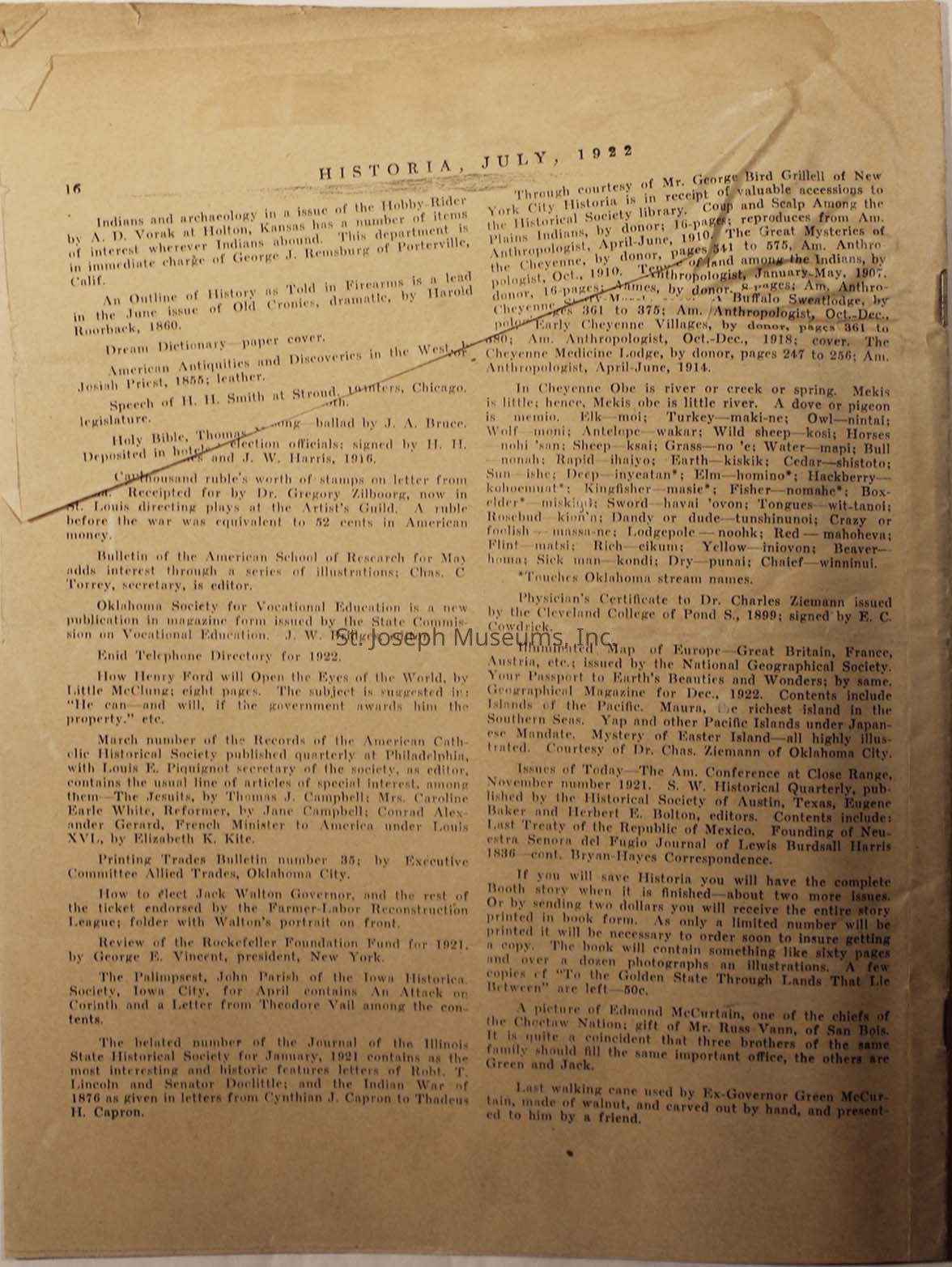
Page 15 - 16: These pages contain a collection of brief summaries and announcements about various publications, documents, and historical notes. It mentions individuals such as Calvin Morgan McClung and Dr. George F. Mellon, and topics ranging from labor issues in the petroleum industry to certificates for shares in capital stock of Alabama Oil Co. The document discusses several book releases, including a list of late book catalogs and new volumes about history and culture. Additionally, the second page includes various articles and sections such as "Dream Dictionary," discussions on Indians and archaeology, and reviews of publications like "An Outline of History as Told in Firearms." There is mention of the American Catholic Historical Society, records of the Mormon Church, and the Rockefeller Foundation Fund for 1921. Additional paragraphs discuss publications and societies relevant to history and archaeology, and there is mention of maps and guides.Subject
Oklahoma City, Oklahoma
Oklahoma Historical SocietySubject Person/Organization
Harry L. George Collection