IMPLEMENT

Object/Artifact

-

St. Joseph Museums

Name/Title

IMPLEMENT

Entry/Object ID

606/13649

Description

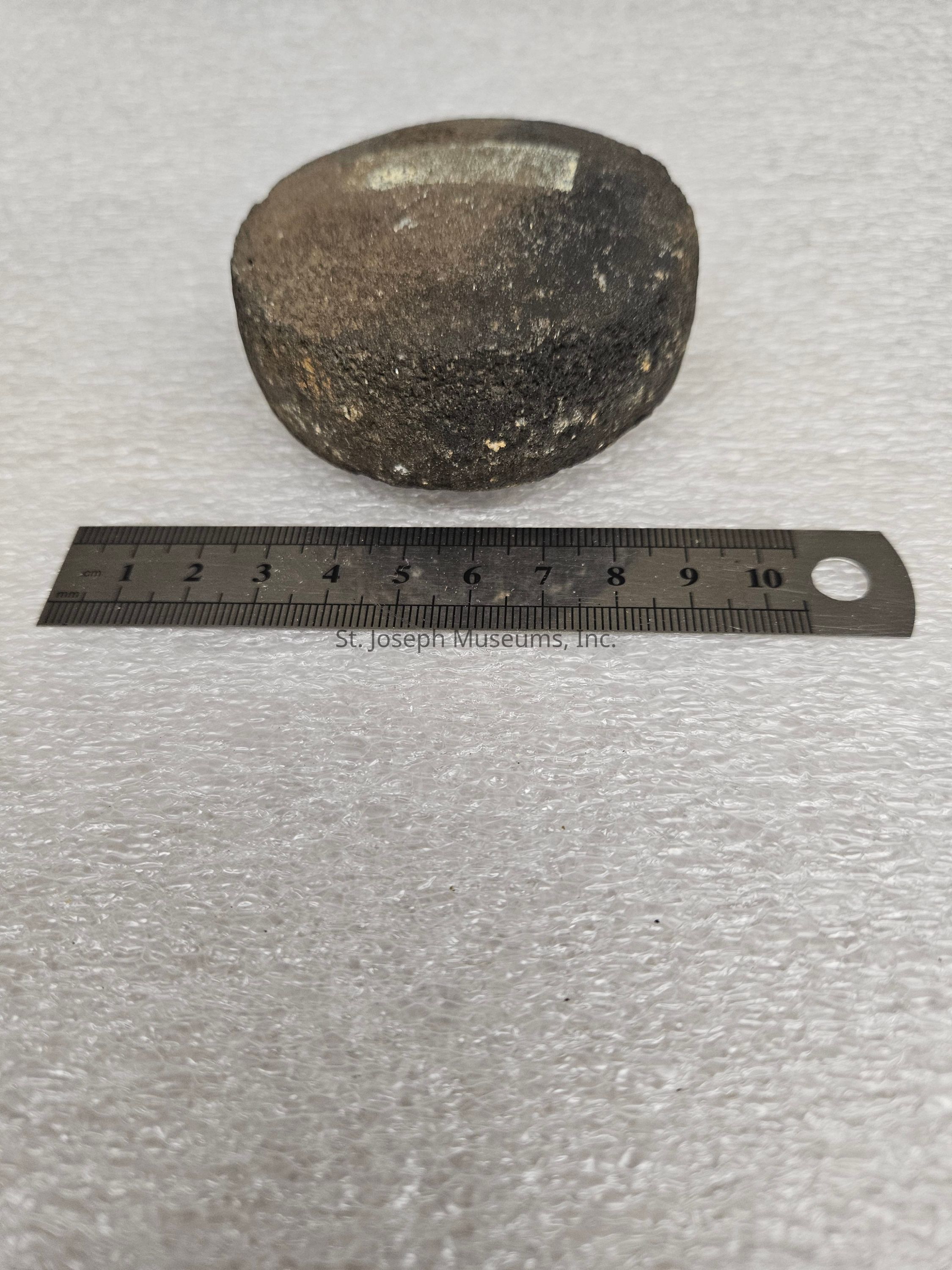
DISC SHAPED/CATALOG SAYS "GRINDER".

Collection

ARCHAEOLOGY, ETHNOGRAPHIC/POLYNESIA

Made/Created

Place

Region

Polynesia

Continent

Oceania

Ethnography

Cultural Region

State/Province

Hawai'i

Culture/Tribe

Hawai'ian
Polynesian

Lexicon

Legacy Lexicon

Object Name

IMPLEMENT

Parts

Count

1

Material

VOLCANIC MATERIAL

Condition

Overall Condition

Good

Interpretative Labels

Label Type

Cultural/Historical Context

Label

Native Hawaiians descend from the Polynesian people that migrated from Marquesas Islands and Tahiti. The Native Hawaiian culture is somewhat unique in that it was a matriarchal society, with rank and status descending through the mother’s line rather than through the males of the family. Native Hawaiians were excellent cloth makers, with particular skill in using feathers to make skirts, leis, capes, etc. Since they were an island people, the Native Hawaiians invented and utilized many tools to help them take advantage of the natural resources that surrounded them. While shell tools are present in the continental United States, the use of shell as tools in Hawaii is significantly higher. Lava stone, called basalt, also features prominently in their tool use. Archaeologists also find quite a lot of tools and artifacts that were used in fishing.
Research Notes

Person

Tori Zieger

Notes

This is likely an ‘ulu maika, or a bowling stone. A game piece. From BYU-Hawaii website: ‘Ulu maika is a game of distance and accuracy. This individual sport would be played on a kahua (prepared site/course). There are 2 known ways of playing ‘ulu maika. The first way is to roll the stone between 2 sticks inserted into the ground several inches apart. The opponents would stand at a distance of 30-40 yards on both sides of the sticks. The second way to play this game is to see who can bowl their maika the furthest (Hiroa, 1957). ‘Ulu maika is a skilled sport. Other oral traditions recite that ‘ulu maika was used to settle disputes and challenges.