Iroquois Glenberry Style Beaded Hat
Object/Artifact

-

St. Joseph Museums

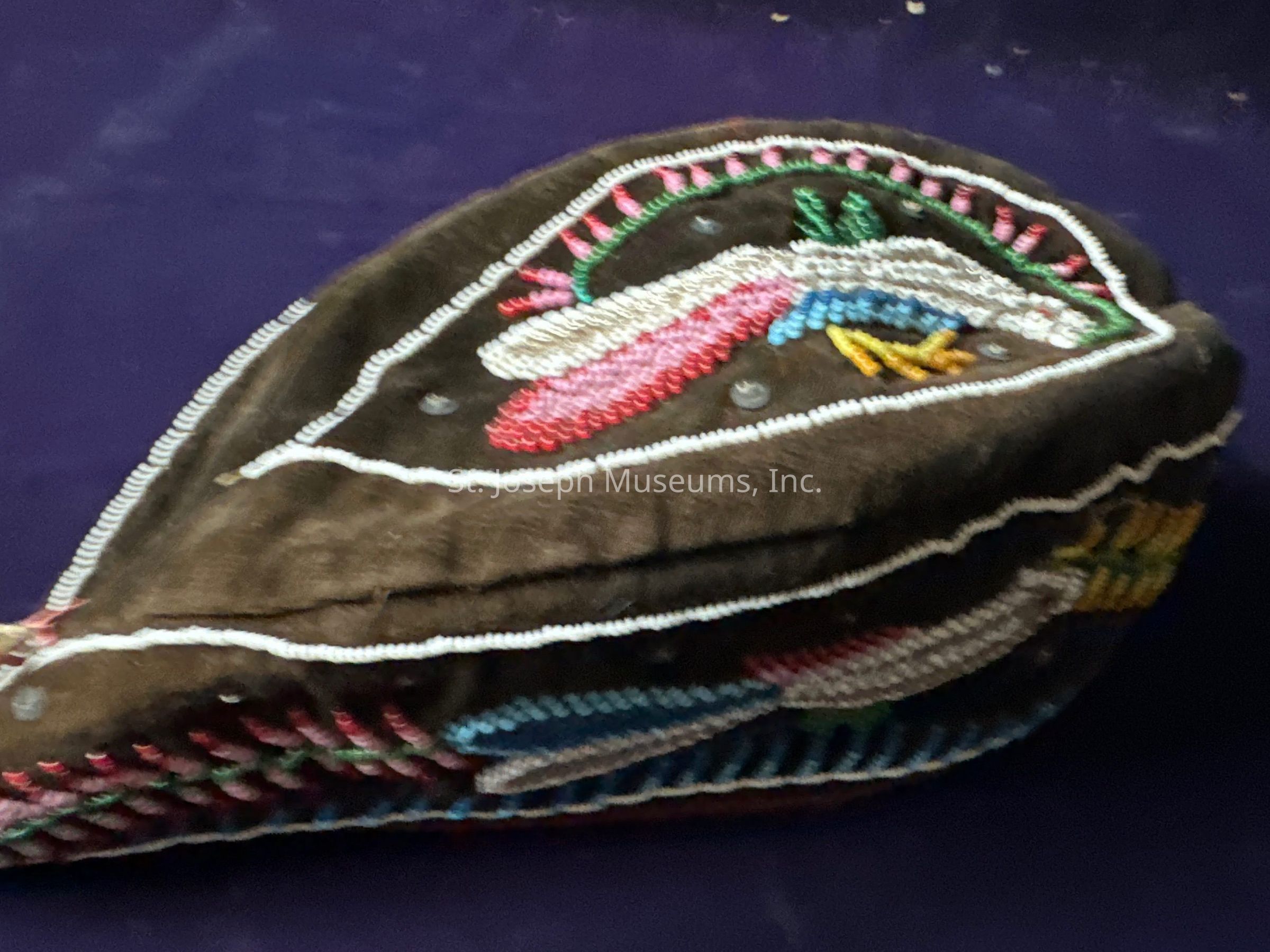
Taken from cite of water damage, Max Morgan 5/11/23
Taken from cite of water damage, Max Morgan 5/11/23
Name/Title

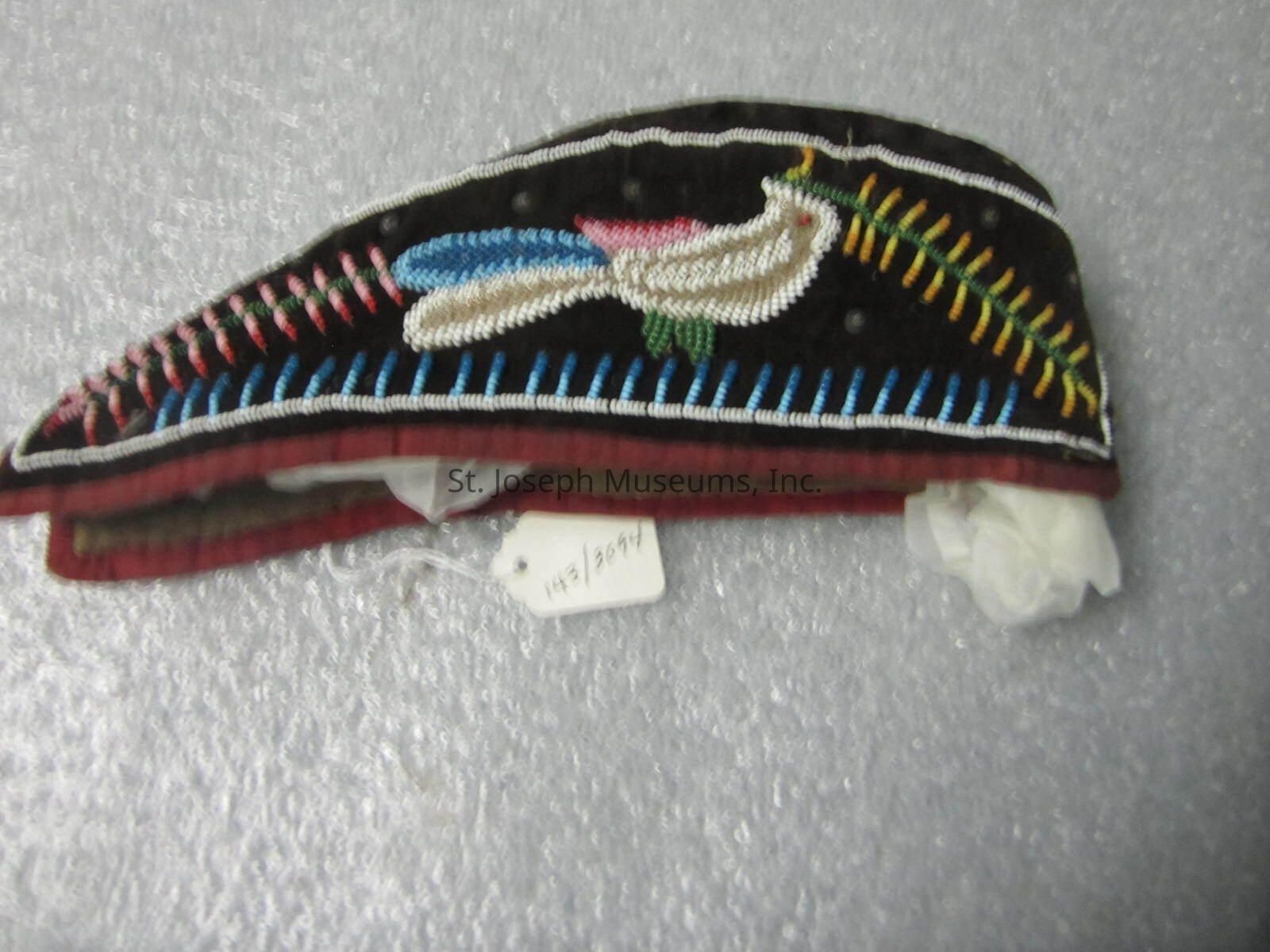
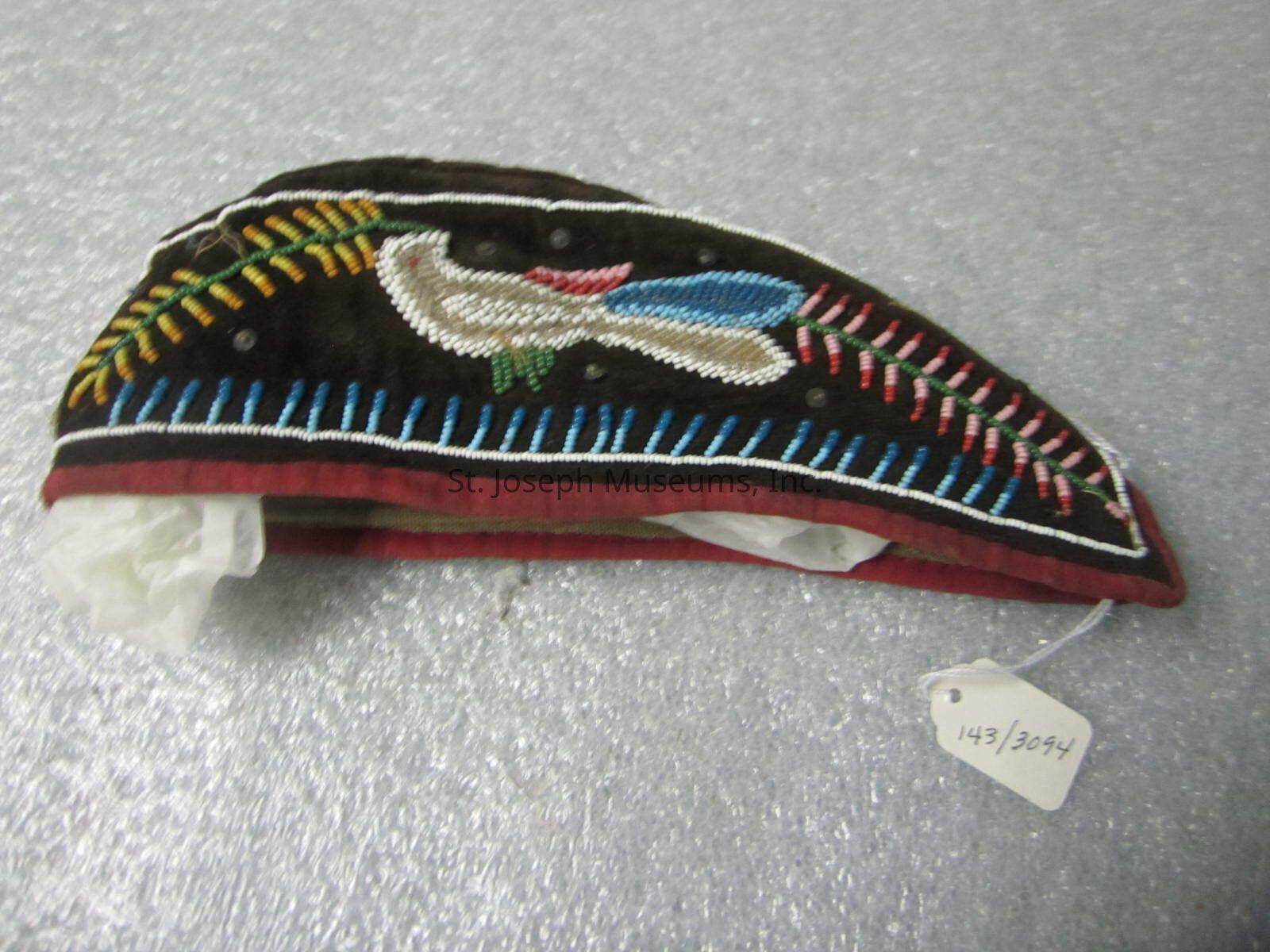
Iroquois Glenberry Style Beaded Hat

Entry/Object ID

143/3094

Description

GLENGARRY CAP/BEADED BIRD DES

Collection

NATIVE AMERICAN

Made/Created

Date made

1850 - 1890

Place

Continent

North America

Ethnography

Cultural Region

State/Province

New York

Culture/Tribe

Iroquois
Native American, First Nation

Lexicon

Nomenclature 4.0

Nomenclature Primary Object Term

Cap

Nomenclature Sub-Class

Headwear

Nomenclature Class

Clothing

Nomenclature Category

Category 03: Personal Objects

Dimensions

Depth

4-1/4 in

Length

11-1/2 in

Dimension Notes

Folded

Parts

Count

1

Material

VELVET

Condition

Overall Condition

Good

Provenance

Notes

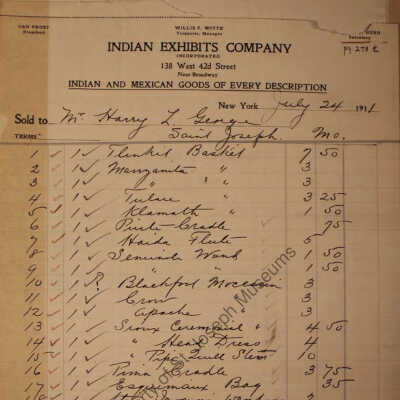
INDIAN EXHIBITS CO., NEW YORK, NY HLG LEDGER VOL. I, p. 273e, item # 21 INVOICE DATE 7/24/1911

Research Notes

Research Type

Scholar

Person

Gerry Biron

Date

Apr 29, 2011

Notes

19th Century Iroquois and Wabanaki Beaded Hats Interactions between nineteenth century Wabanaki, Haudenosaunee and Euro Americans influenced the arts of Native America and prompted innovative changes, including creative innovations in fashion that appealed to Victorian sensibilities. Native imaginations were spurred by the emerging tourist economy that developed in the early nineteenth century around Niagara Falls and the tribes nearest the Falls, such as the Tuscarora and the Seneca, developed a wide range of items which they sold to area travelers. These ideas spread quickly throughout the northeast by way of long standing intertribal trading networks that had been in place for centuries. During this period both the Haudenosaunee and Wabanaki developed a number of hat styles that captivated both Victorian men and women. Of these the Glengarry cap or bonnet, which was derived from traditional Scottish Highland dress, was perhaps the most popular design. Art historian Ruth Phillips wrote that this style “illustrated yet another type of inter-cultural configuration. Here the overall form is derived from a European rather than a Native prototype, one made familiar by military uniforms worn by British soldiers in Canada. By dressing her sons up in Scottish costume in the 1850s, Queen Victoria started a fashion for Glengarrys as children’s wear in Britain and the colonies” (Phillips 1990:29). It’s certainly an oversimplification to think of this material simply as “tourist art” because these items were used by Native people as well. Charles E. Hanson wrote that “[t]he Glengarry was enthusiastically adopted by many Highlanders about 1800 to supplant the traditional flat blue bonnet. It was a compact and comfortable piece of head gear, its dark blue color enlivened by hanging ribbons at the back and a bright red pom-pom on the top. Glengarry bonnets were just as popular among the traders [as] their employers… Thousands of Glengarries were also purchased and worn by the Indians of southern Canada and the Great Lakes region. No doubt they received varying degrees of embellishment with ribbon work, colored quills and beads…” (Hanson 1977:7). Hudson Bay Company trade ledgers indicate that large quantities of these hats were imported for the Indian trade. Iroquois and Wabanaki craftswomen transformed many of these into colorful items that were richly embroidered with beads, moosehair and ribbon work and they were quite popular in the second and third quarters of the nineteenth century.