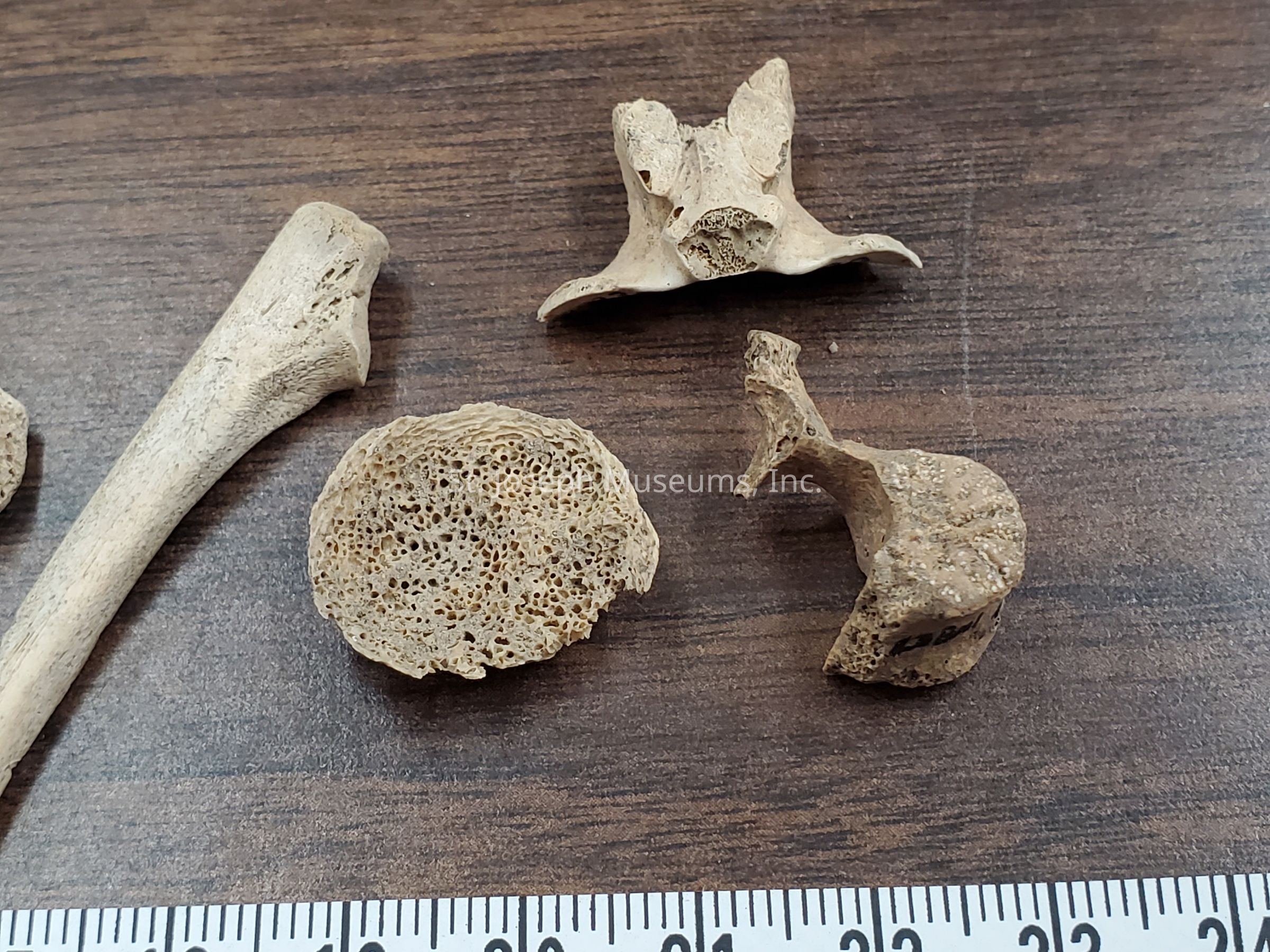
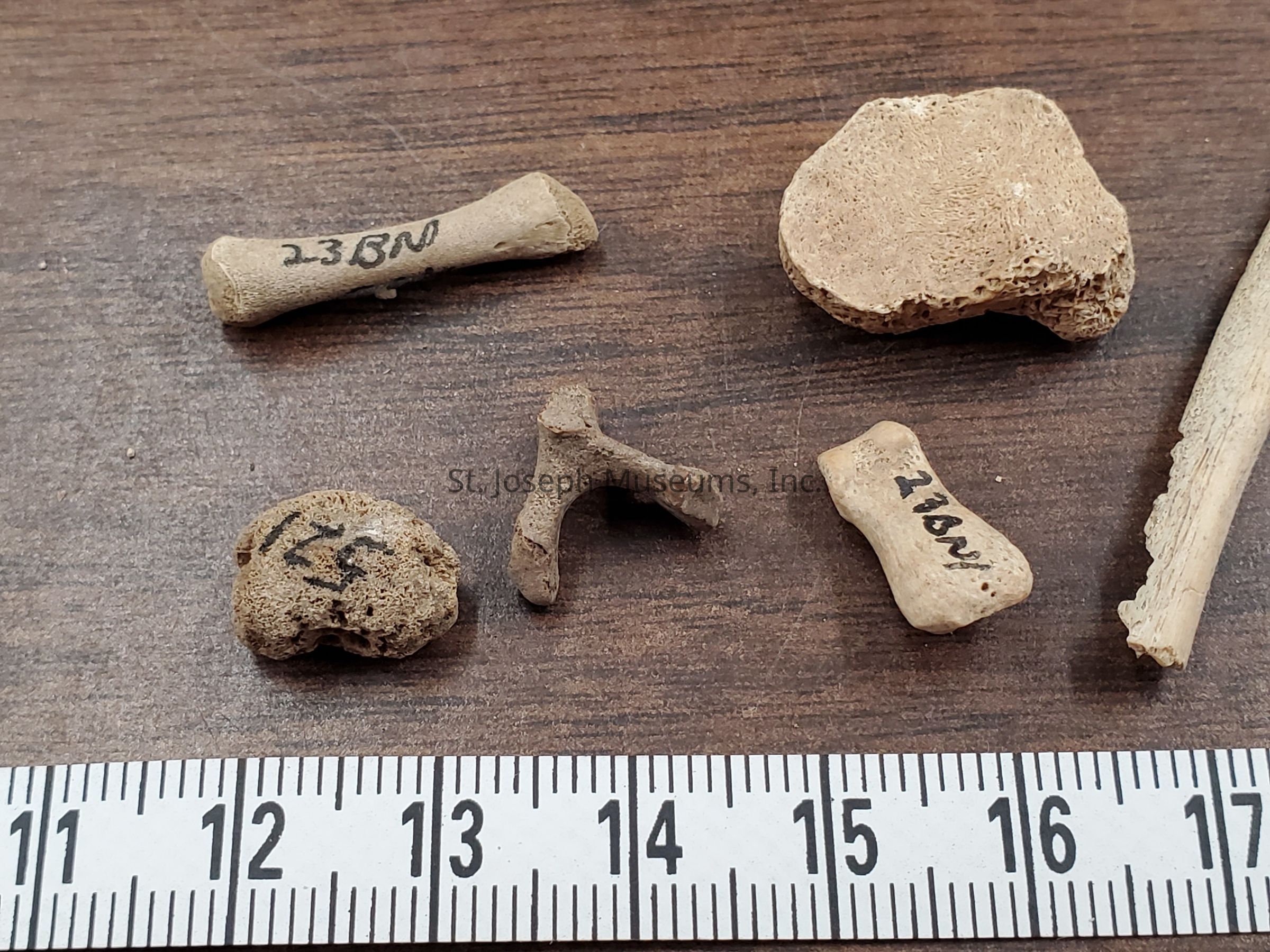
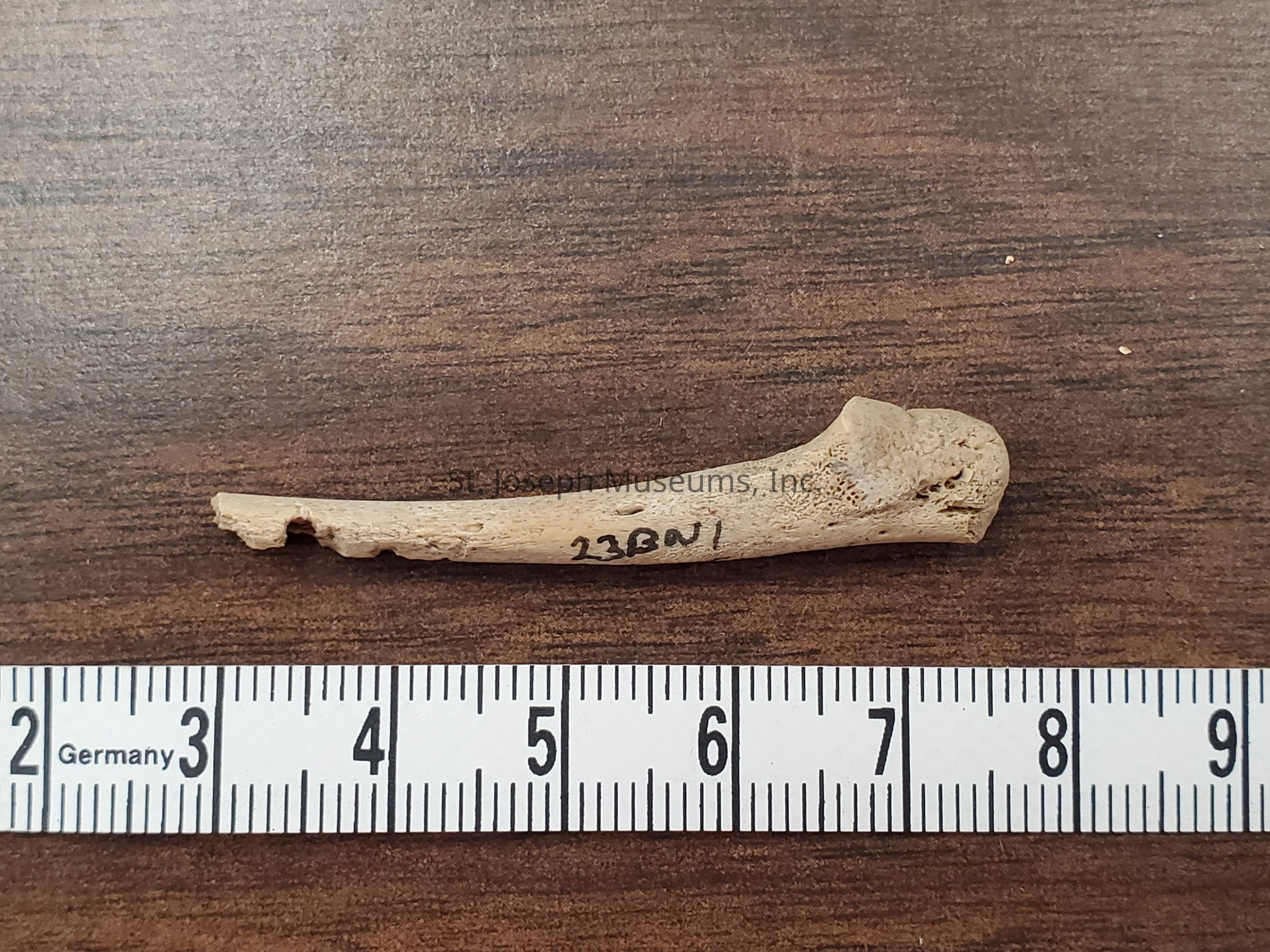
23BN1
Human skeletal remains
Originally from bag 01.15.370
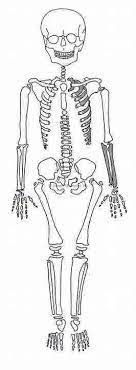
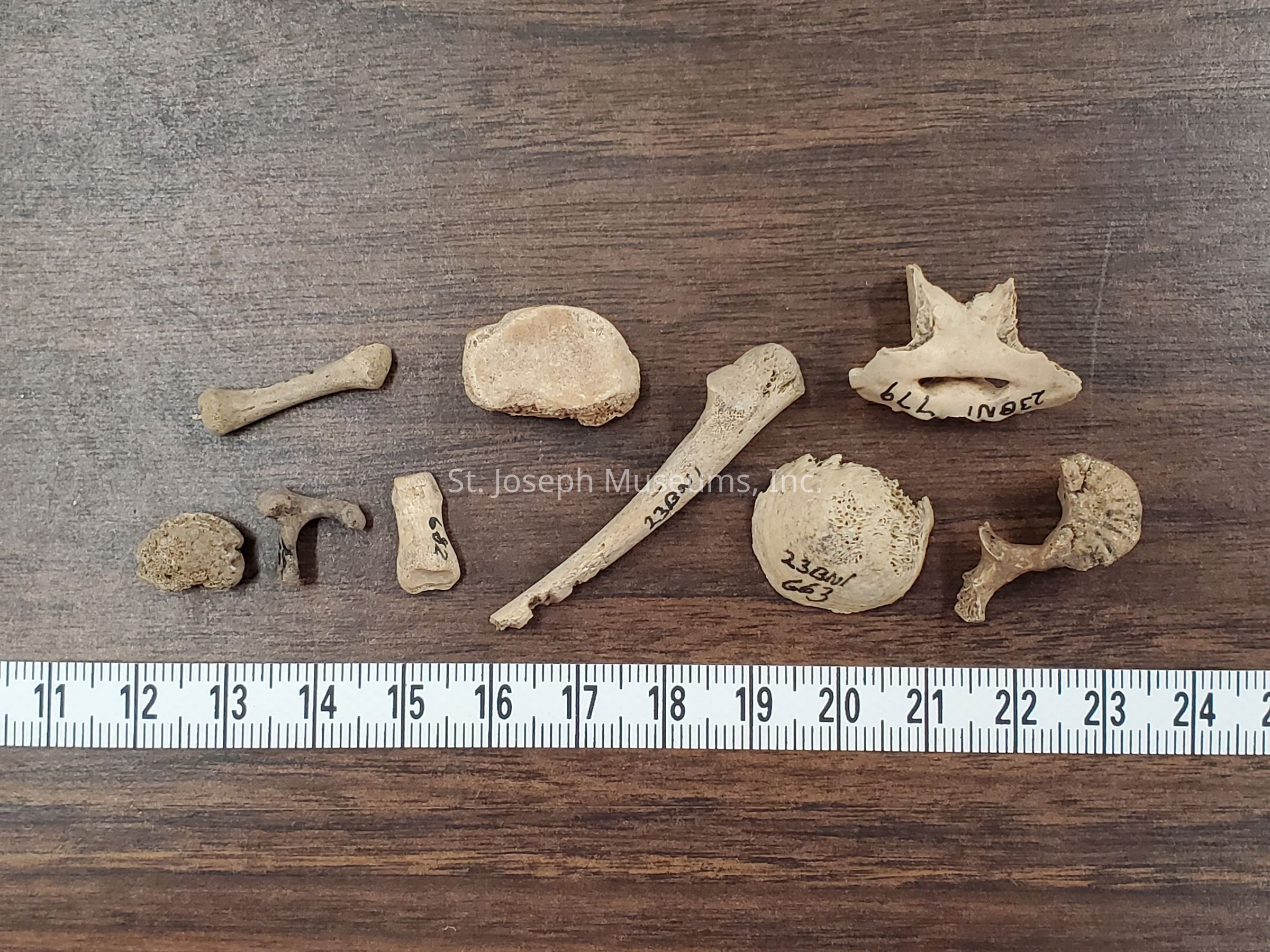
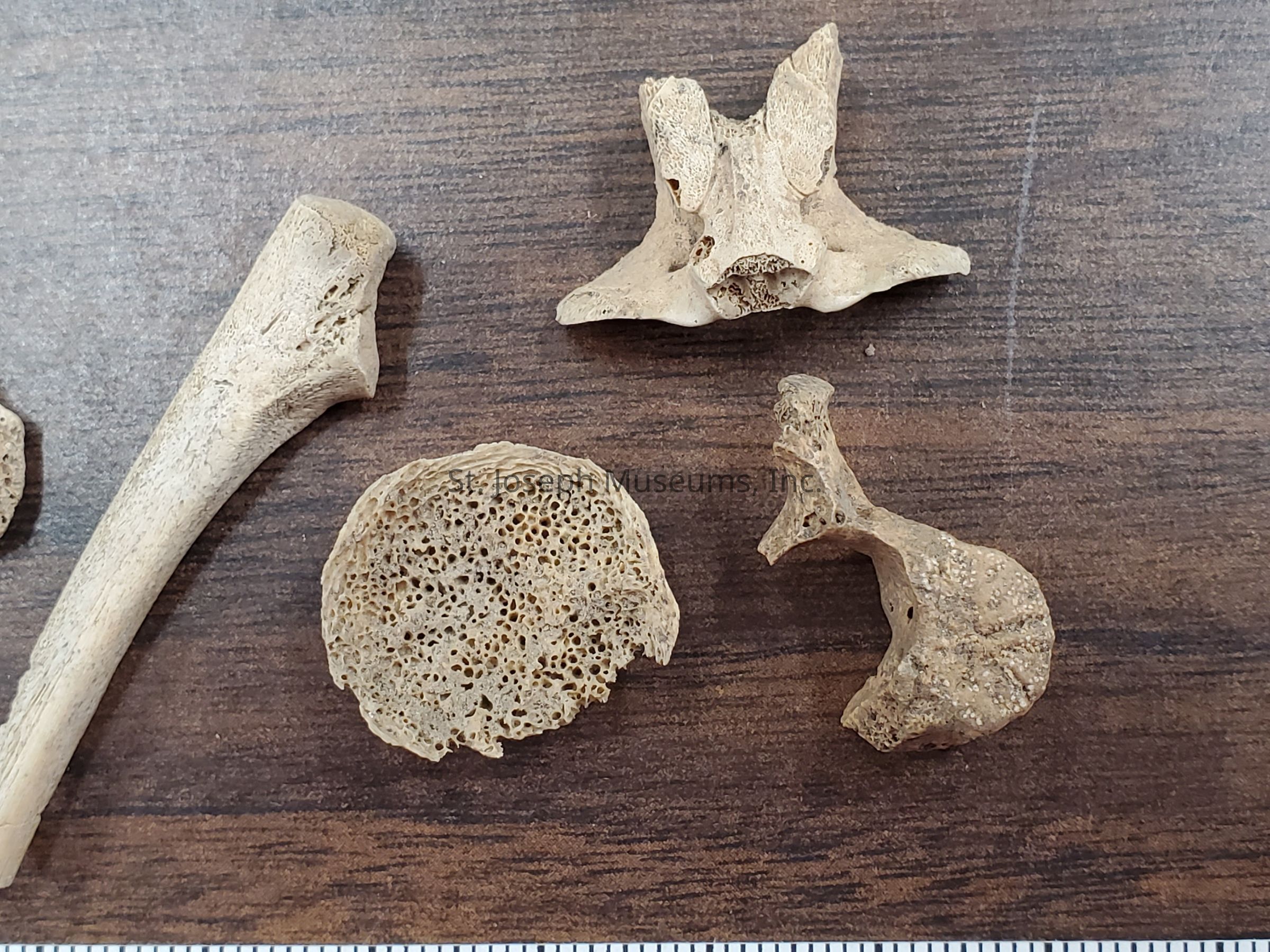
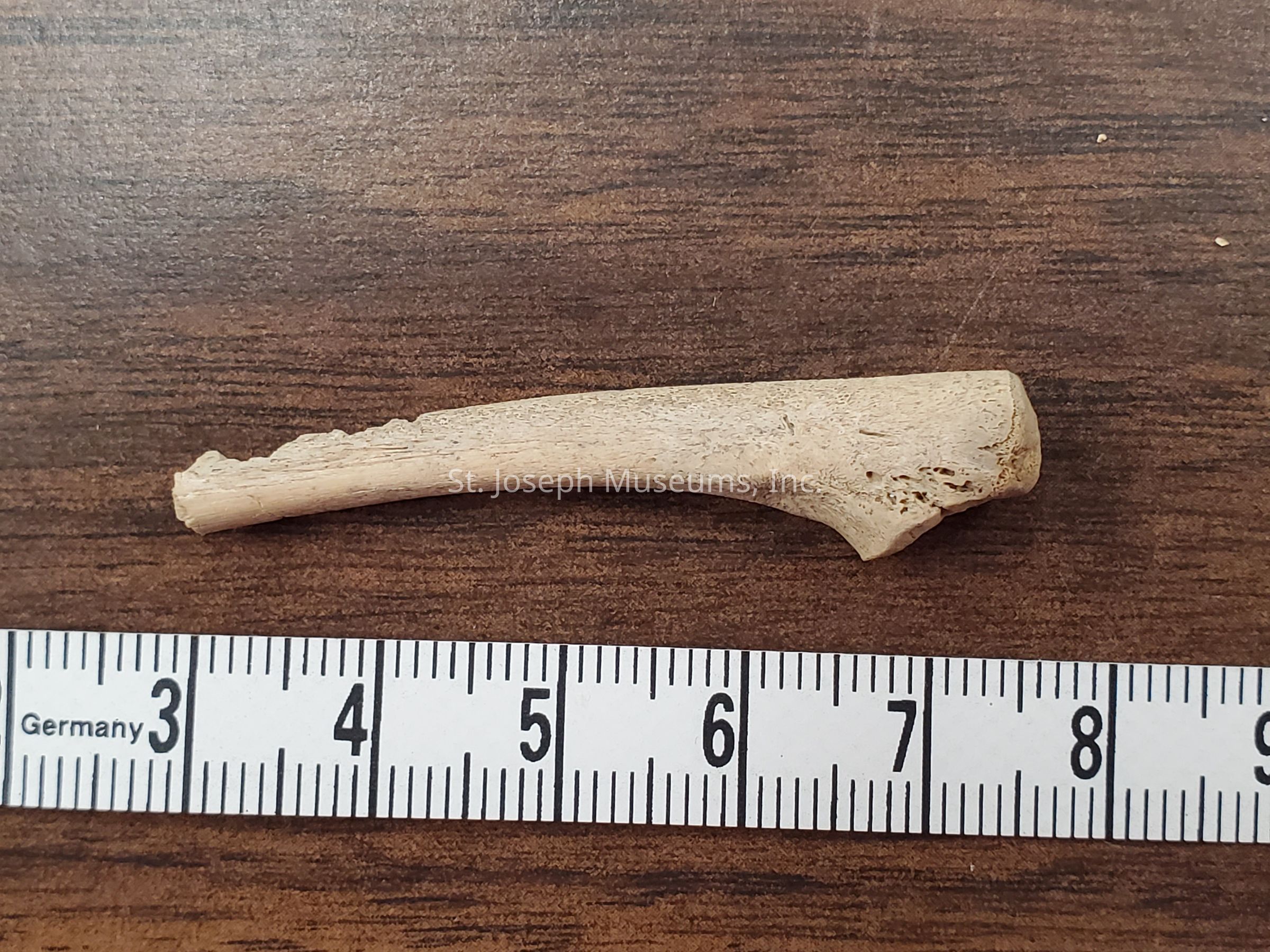
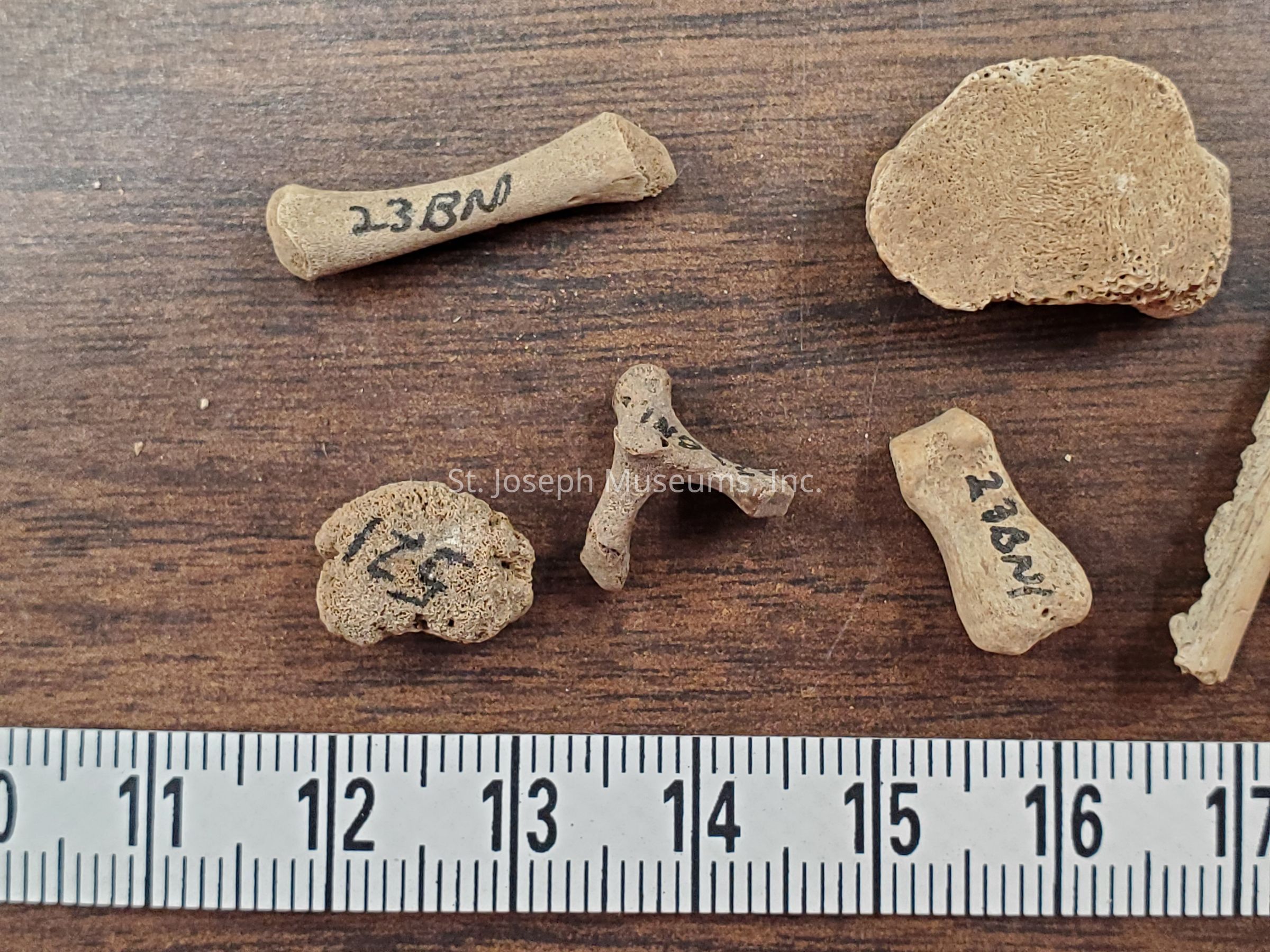
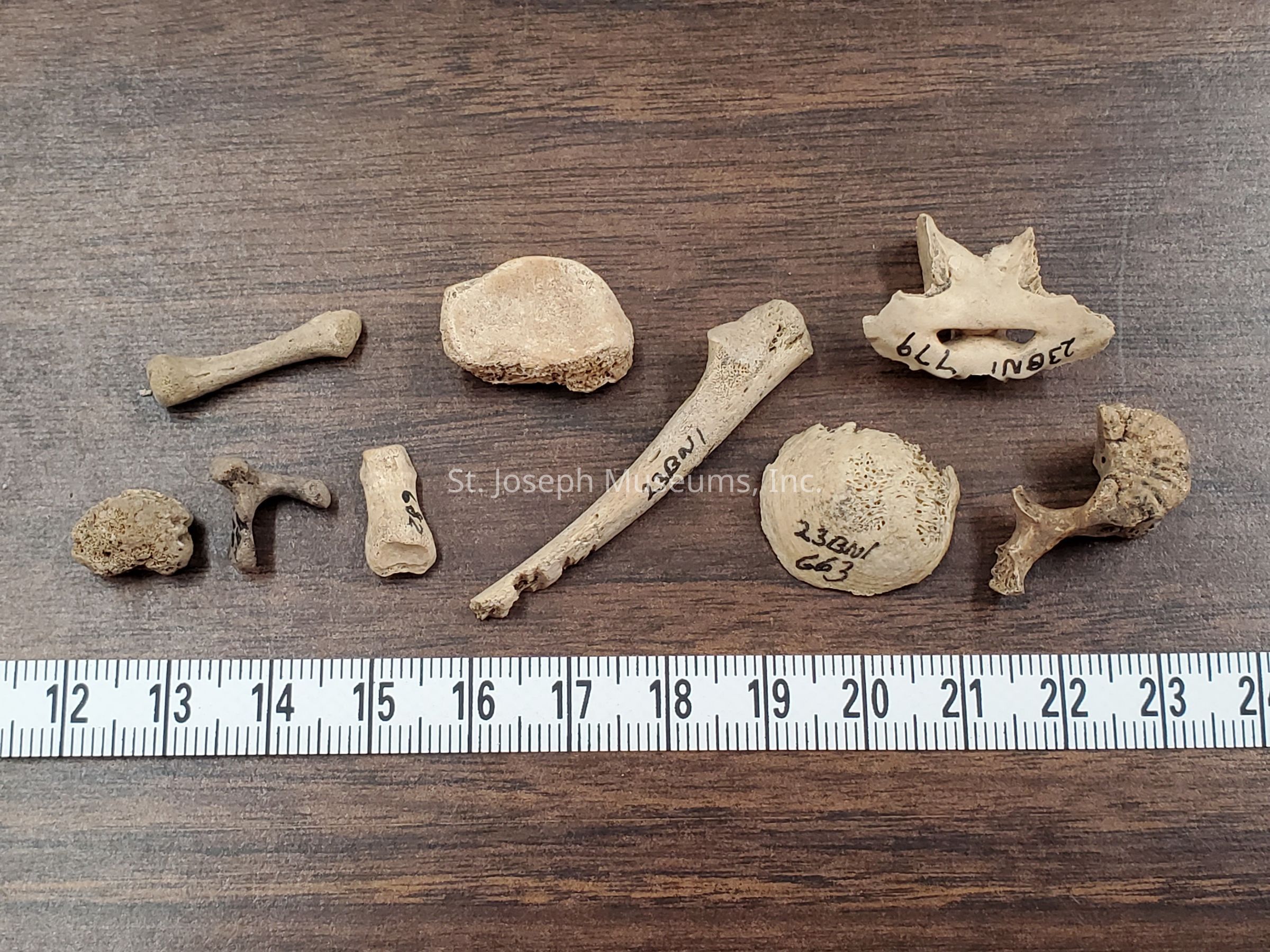
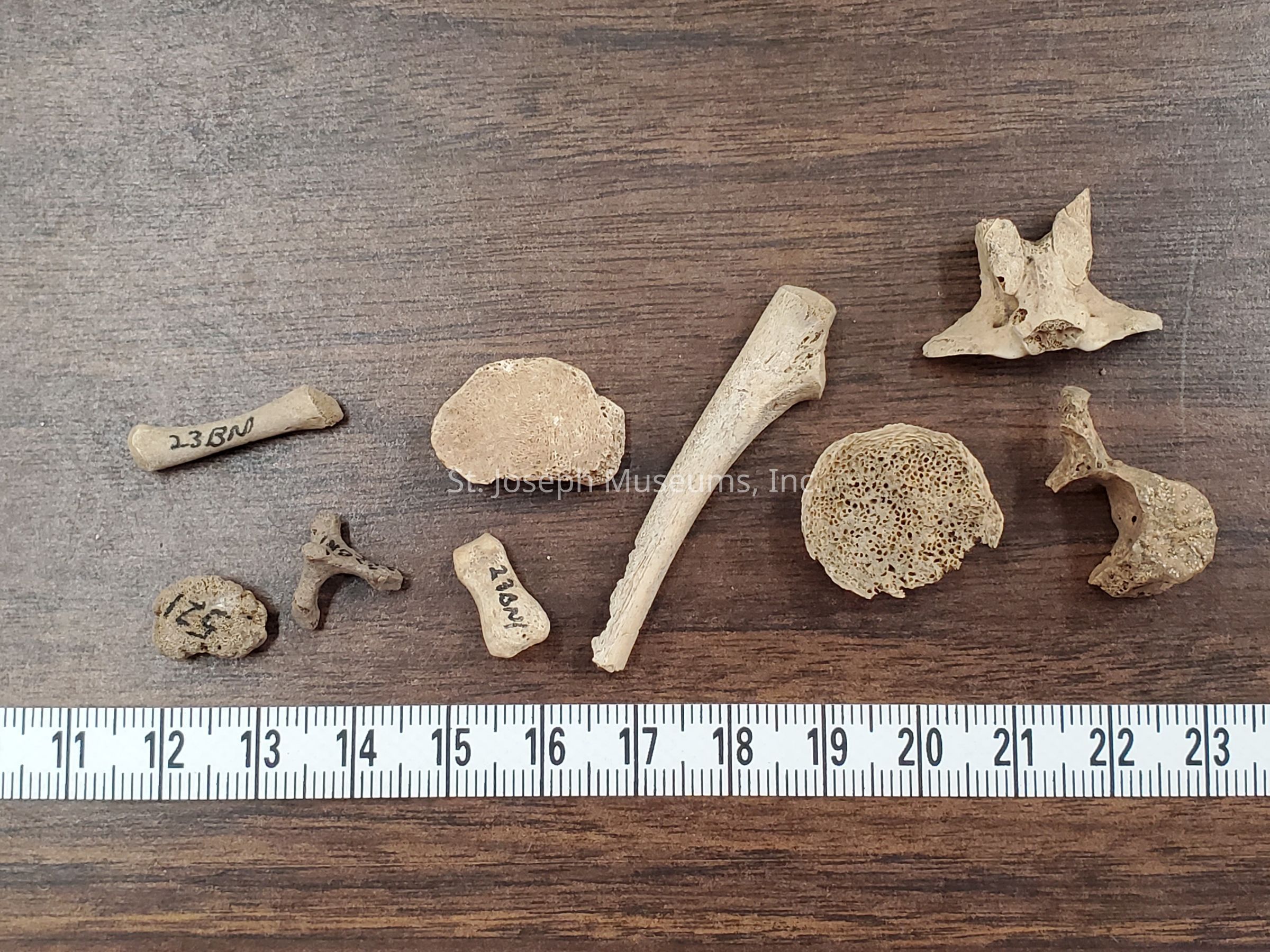
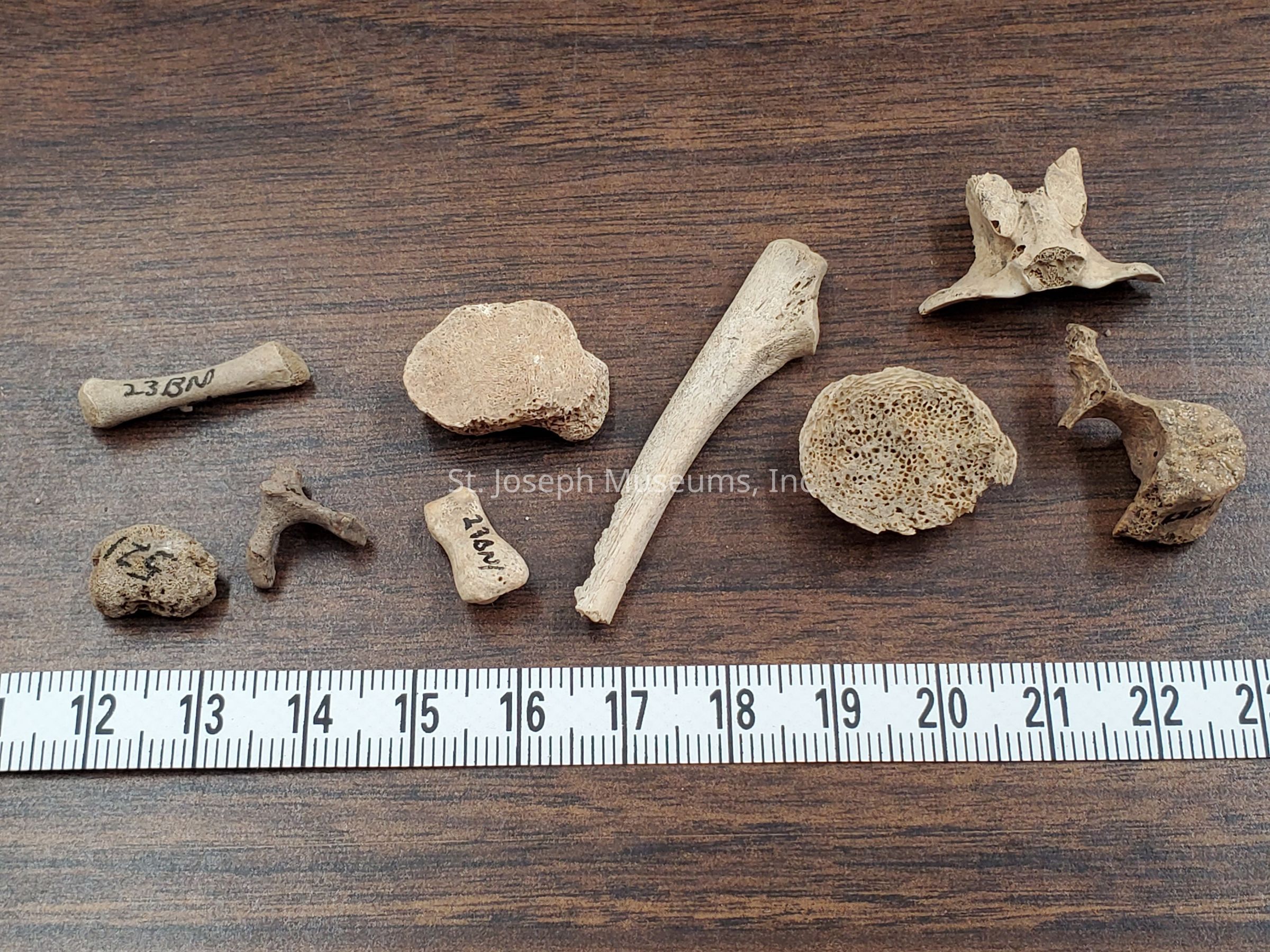
Includes sphenoid (12 weeks old or less), ulna (measurements cannot be taken due to proximal end missing; shows cut marks on proximal end, current measurement 4.8mm), unfused epiphysis (tibia?), several unfused vertebrae (minimum 4-5 months fetal development due to presence of center of vertebral body and unfused neural arch), un ID long bone, phalanx,
Collection
23BN1
Ethnography
Culture/Tribe
Kaw Nation
Native American
Material
Bone
Relationships
Related Entries
Notes
01.15.370
Provenance
Notes
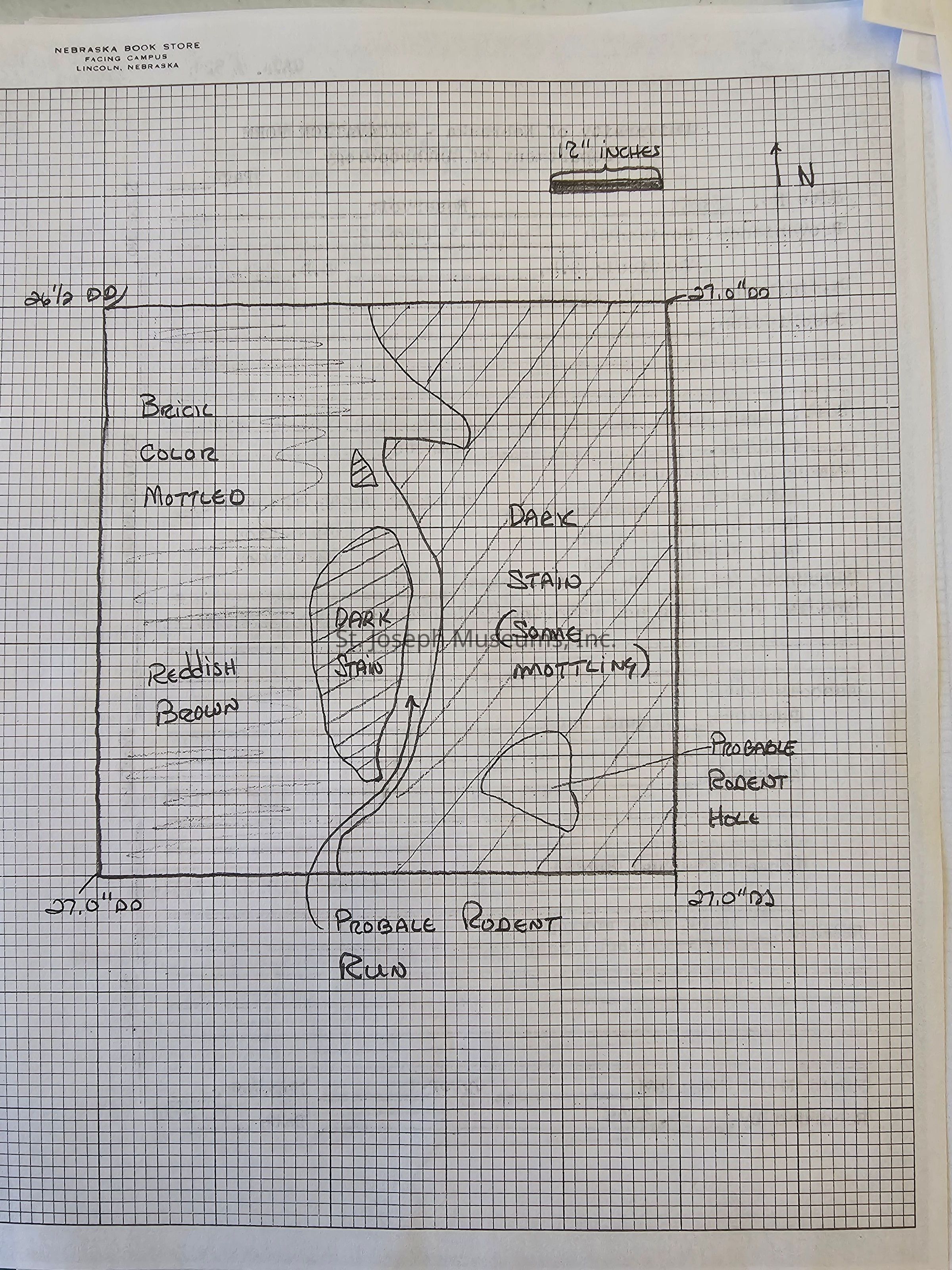
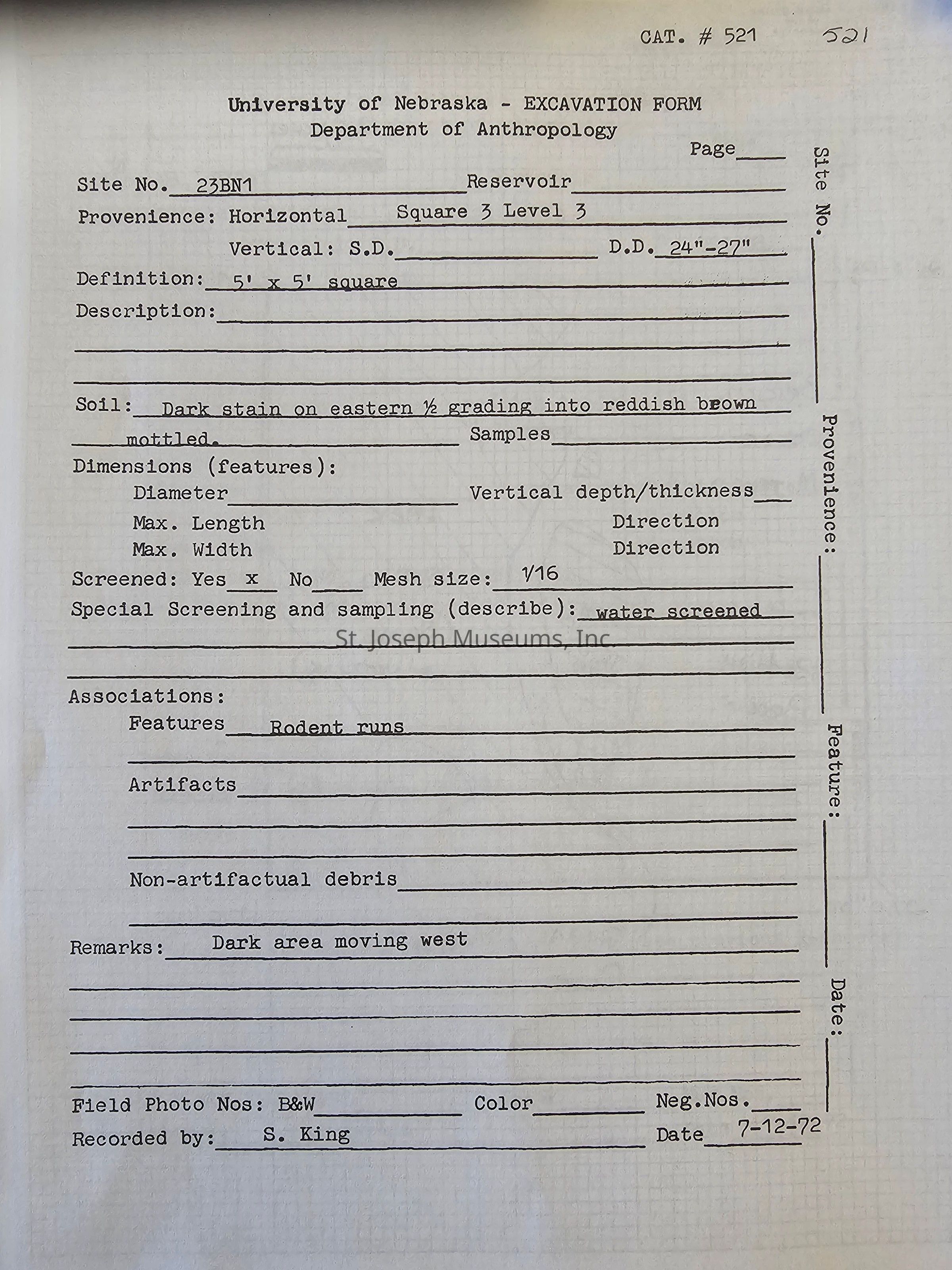
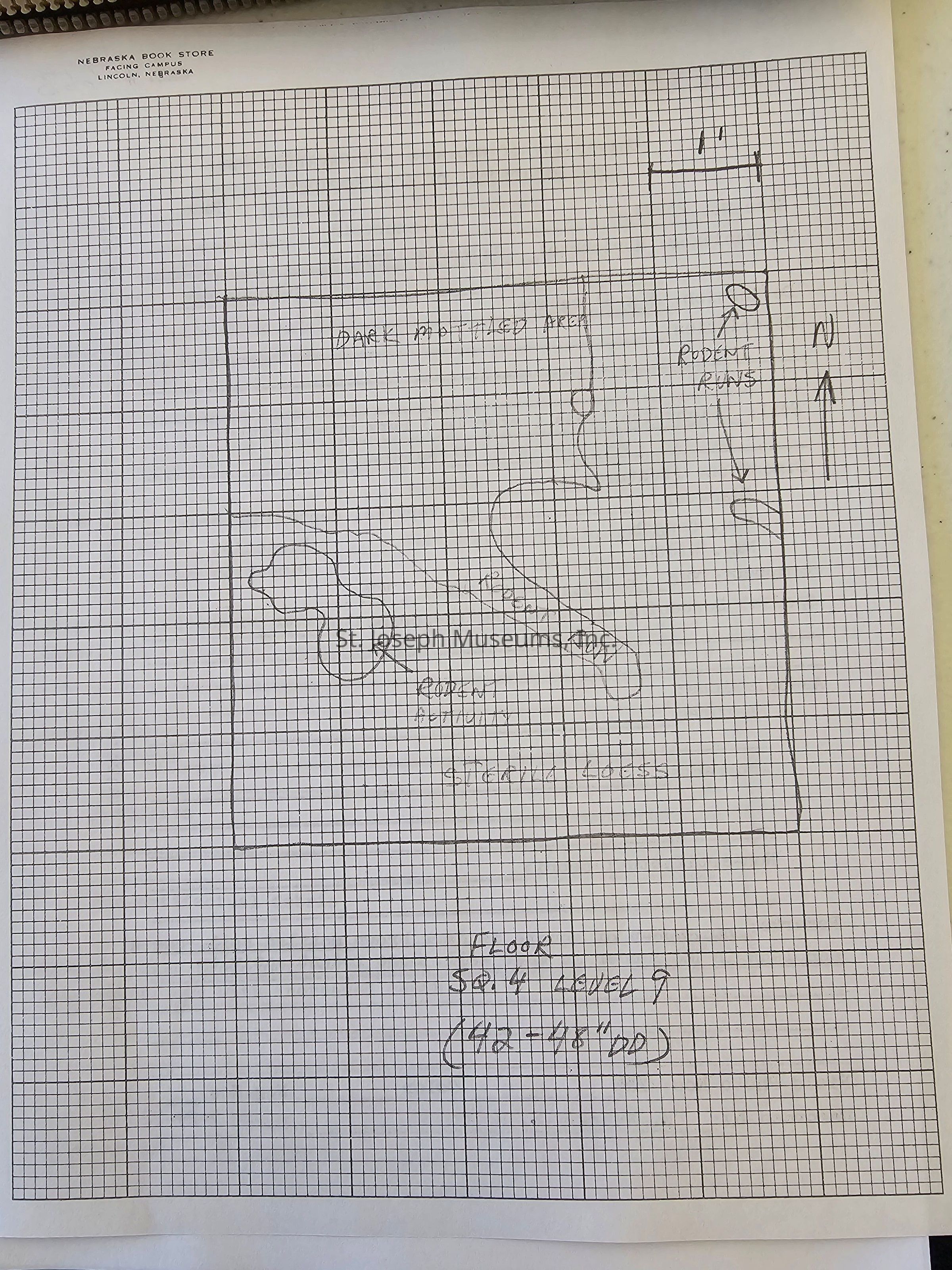
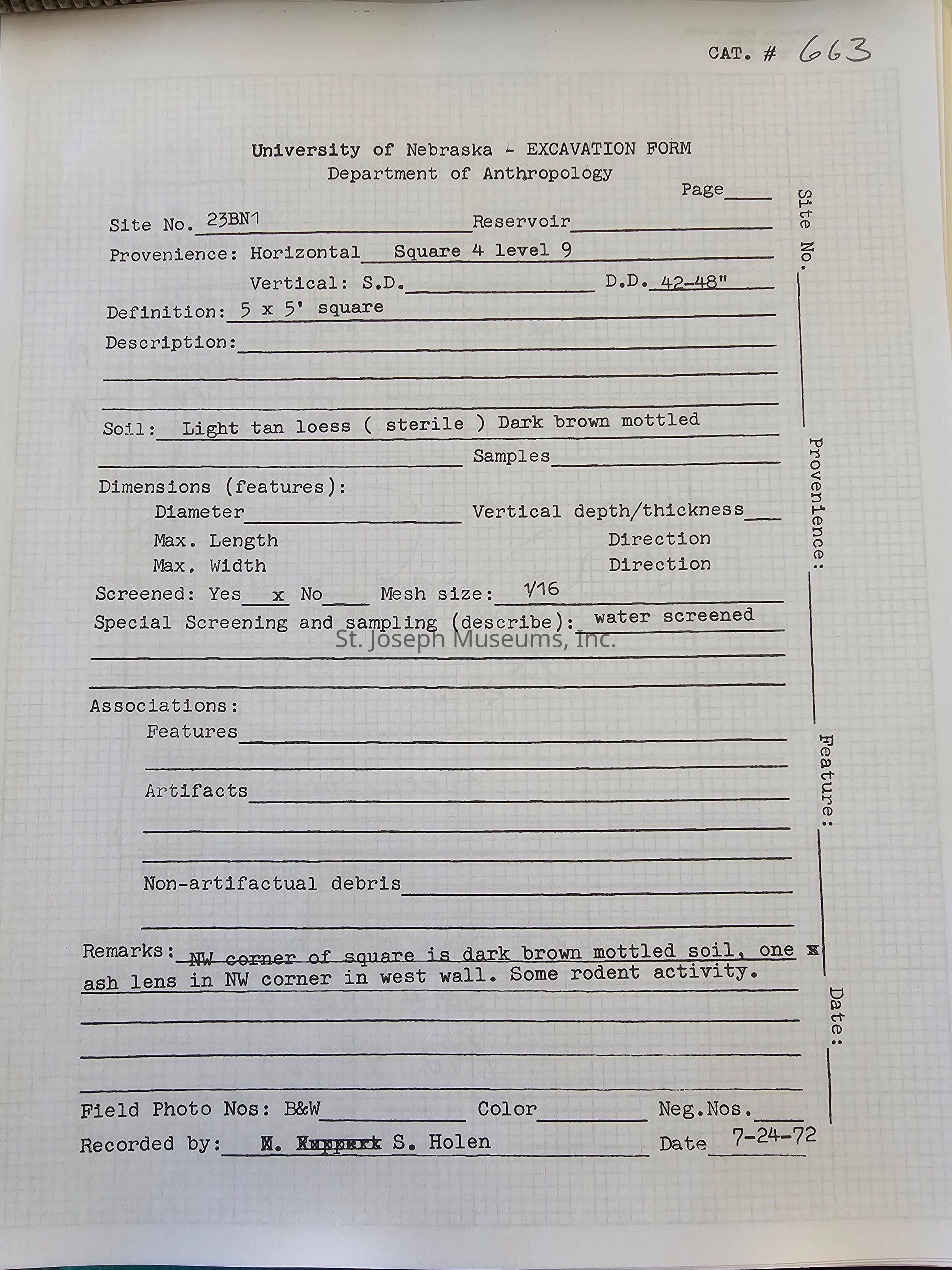
The King Hill Site (23BN1) is located in a residential area of the city of St. Joseph, Missouri. The archaeological site is situated on top of a high, west facing bluff overlooking the Missouri River Valley. It was excavated by members of the St. Joseph Chapter of the Missouri Archaeological Society and the Summer Field School of the University of Missouri - Columbia over a 10 day period in the summer of 1966 under a cooperative agreement with the St. Joseph Museum. Work was continued in the fall of that year and into the next by the St. Joseph Chapter. Additional work was conducted at the site by the University of Nebraska.
Pottery and limited trade goods in the upper levels indicate a late Oneota, early historic occupation, possibly by the Kansa tribe, about AD 1700. The site was placed on the National Register of Historic Sites in 1968 and a preliminary report was issued that same year. In 1972 further excavations, funded by the National Science Foundation, were undertaken by the University of Nebraska-Lincoln. The Missouri Field School and the University of Nebraska excavations were directed by Dr. Dale R. Henning" (Cutler and Blake 1982).
Information gathered from: http://users.stlcc.edu/mfuller/kinghill.html