Name/Title
Life Magazine, 1959Entry/Object ID
AM1991.1.129AHScope and Content
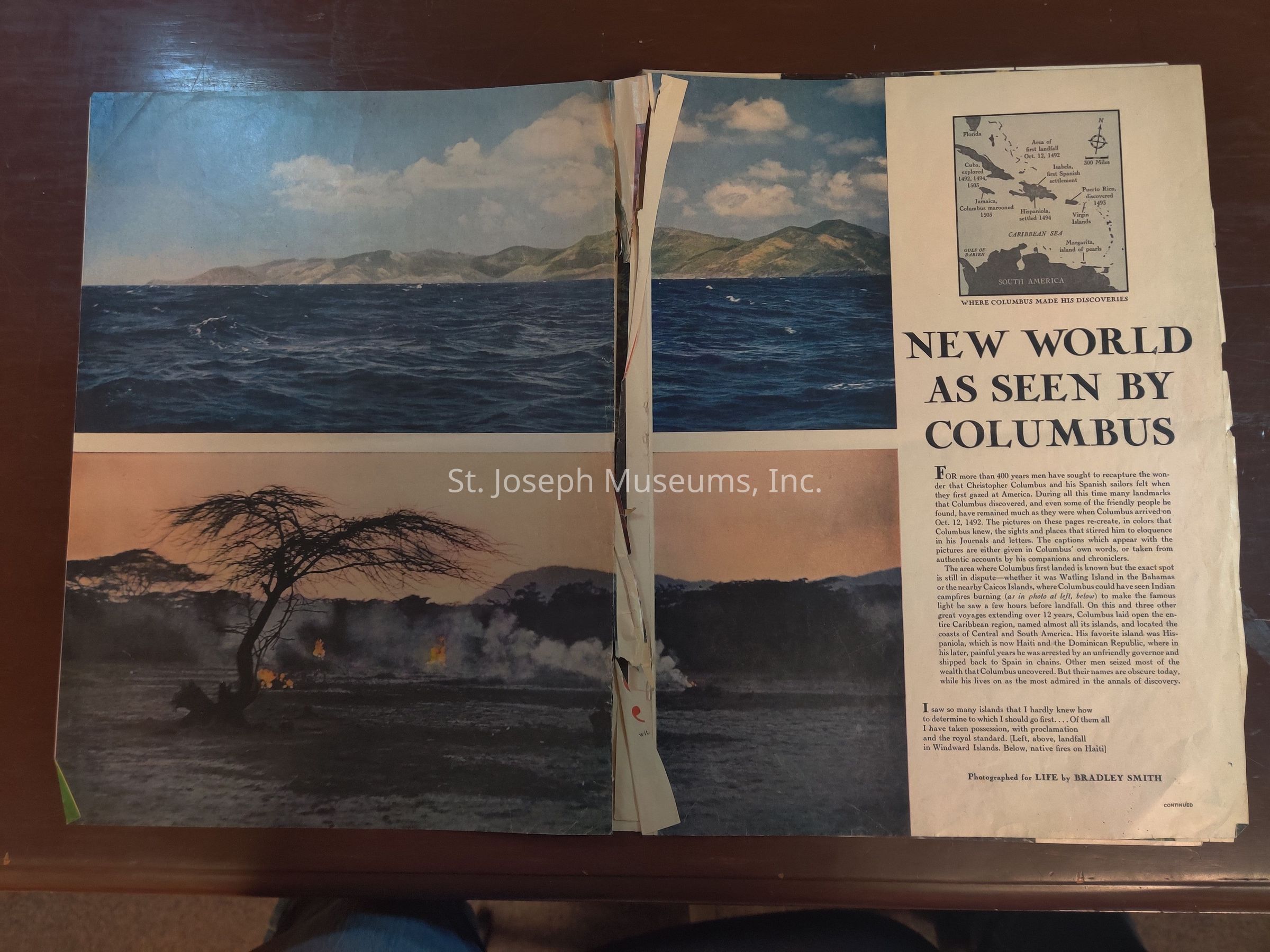
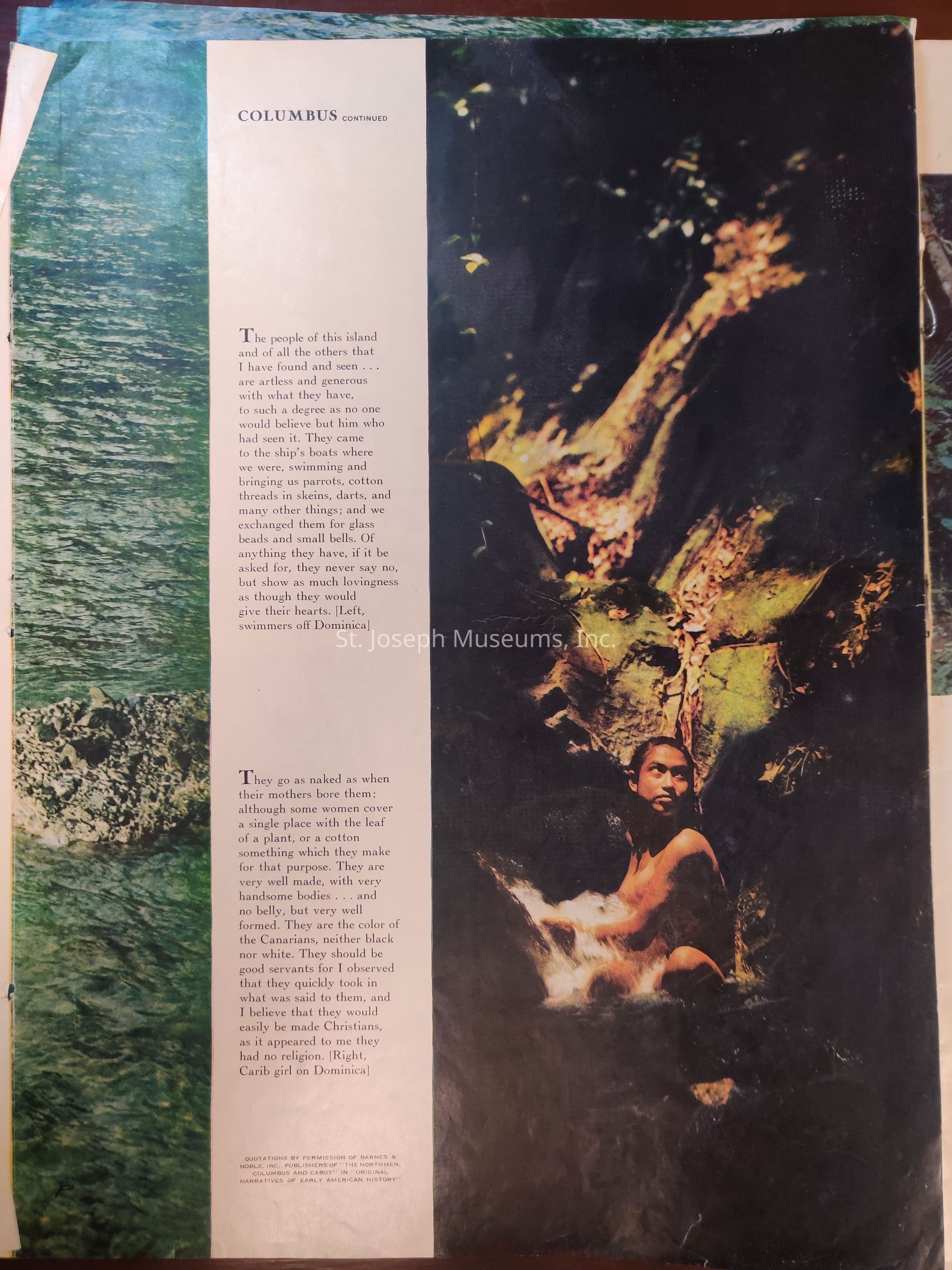
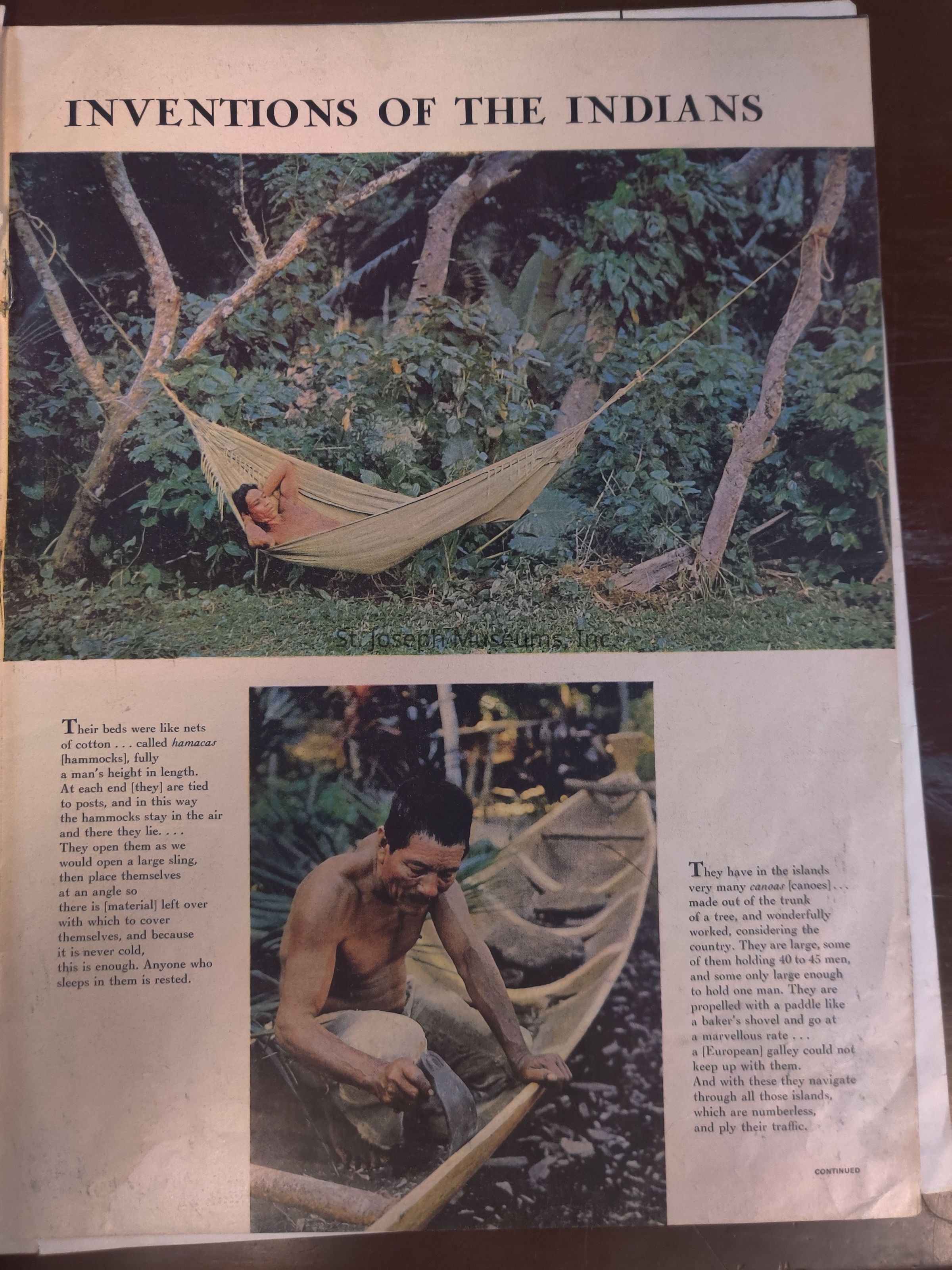
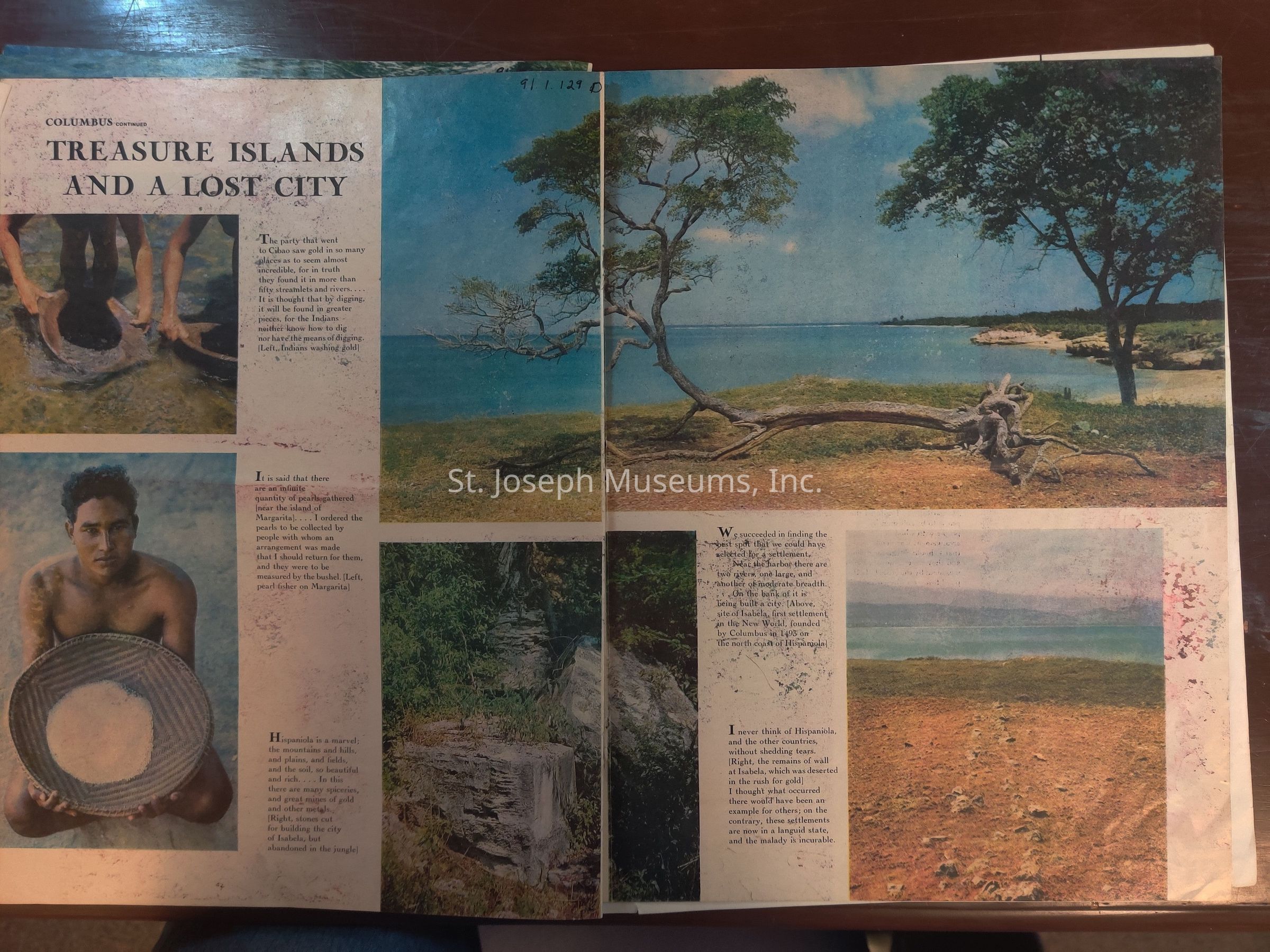
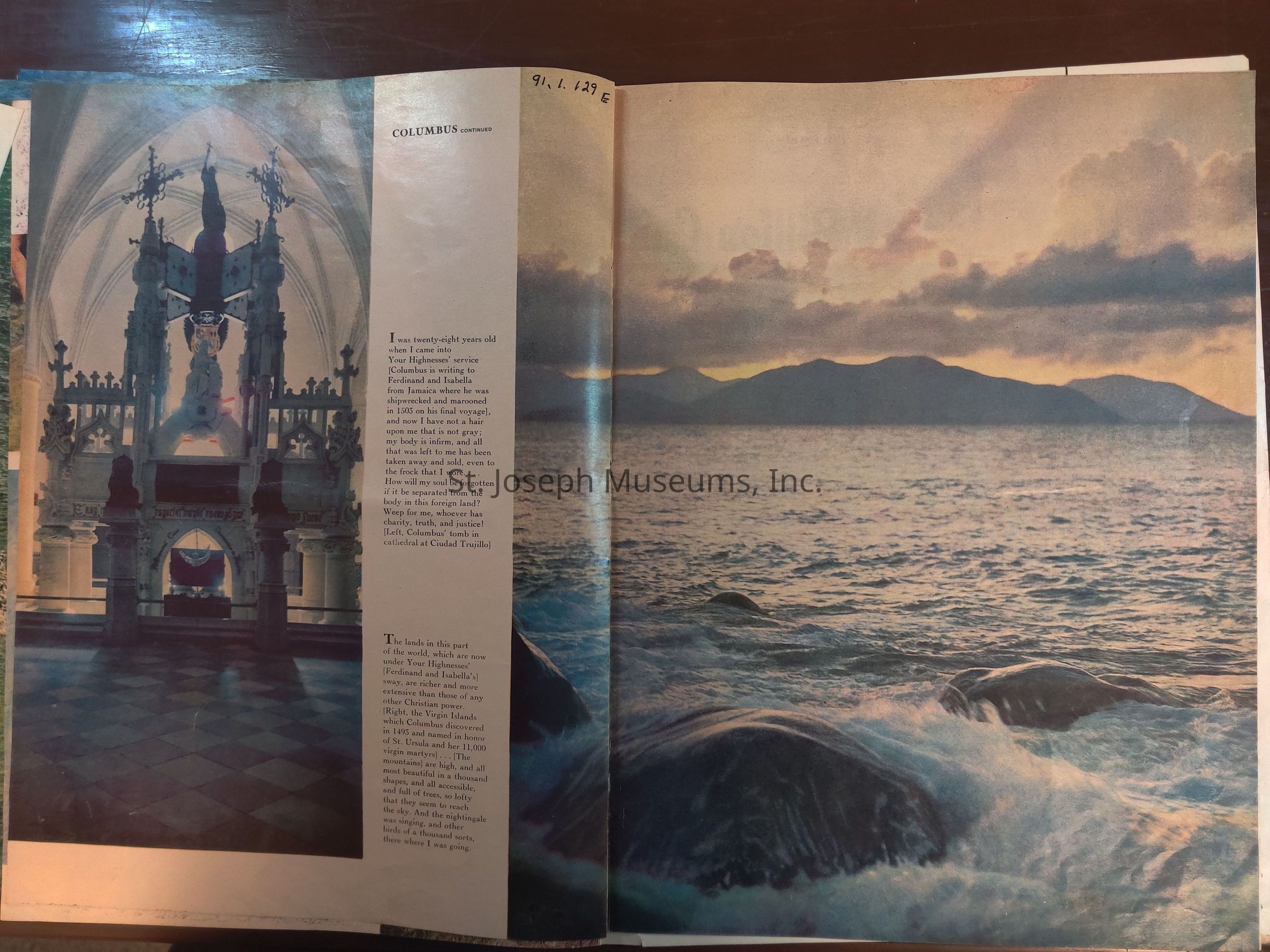
Life Magazine, 1959. New World as Seen by Columbus. This is the title of an article in Life Magazine, 1959. During all this time many landmarks that Columbus discovered, and even some of the friendly people he found, have remained much as they were when Columbus arrived on October 12, 1492. The pictures on these pages re-create, in colors that Columbus knew, the sights and places that stirred him to eloquence in his journals and letters.
The captions which appear with the pictures are either given in Columbus' own words or taken from authentic accounts by his companions and chroniclers.
Columbus laid open the entire Caribbean region, named almost all its islands, and located the coasts of Central and South American his favorite island was Hispaniola, which is now Haiti and the Dominican Republic.
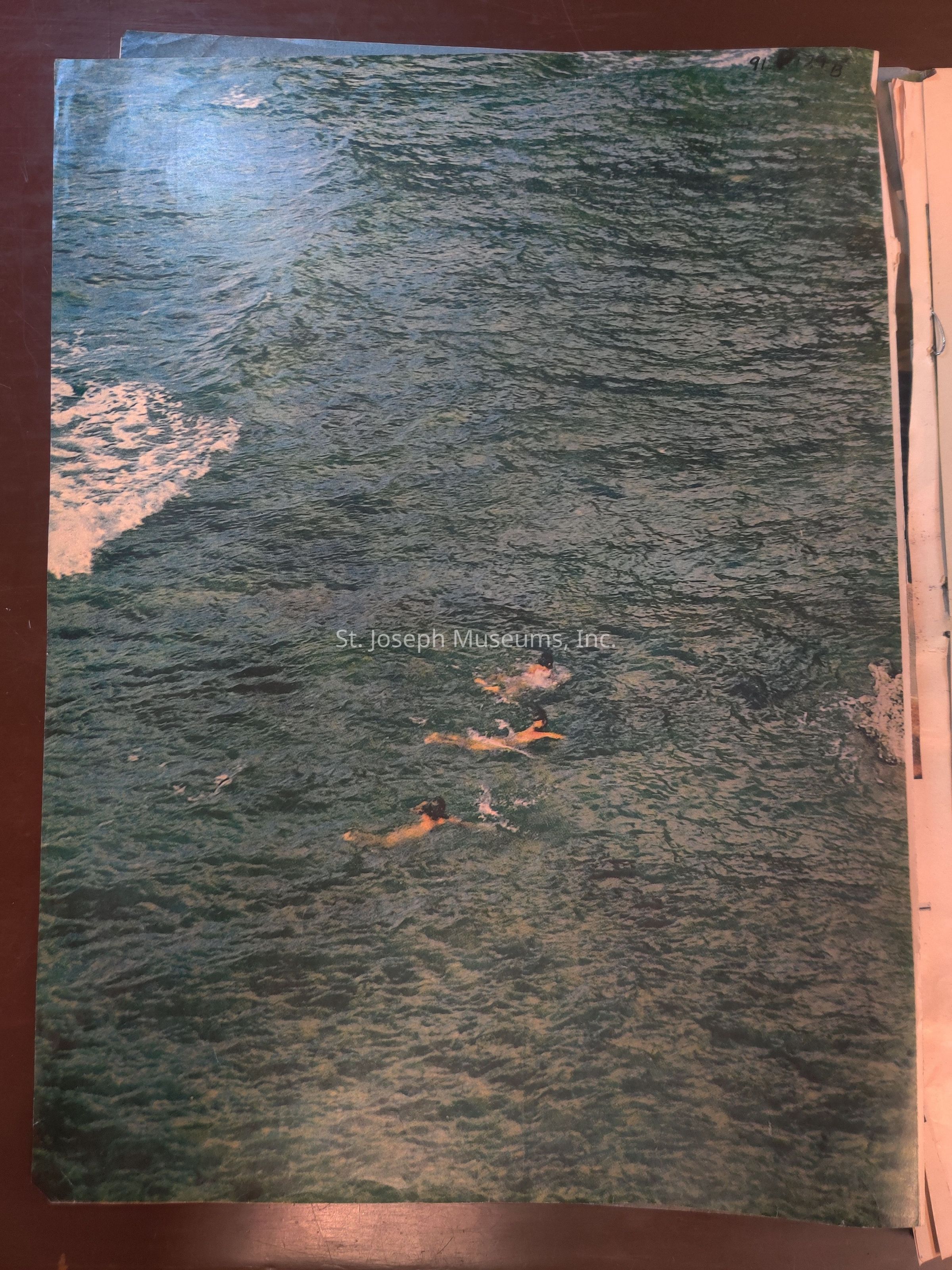
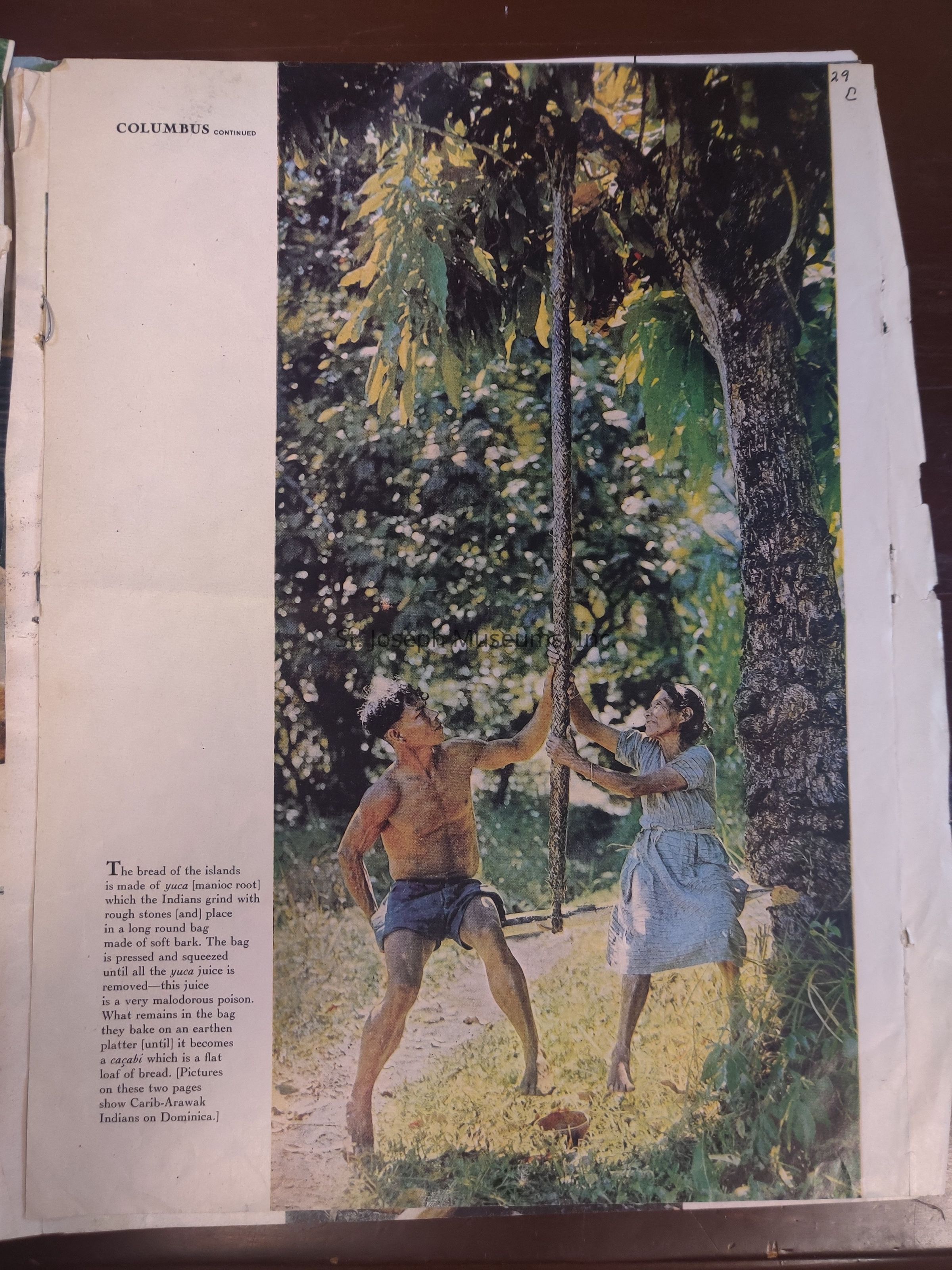
Some of the pictures are: of swimmers off Dominica, Indians on Dominica washing gold and other metals. The remains of wall at Isabella which was deserted in the rush for gold on Hispaniola.
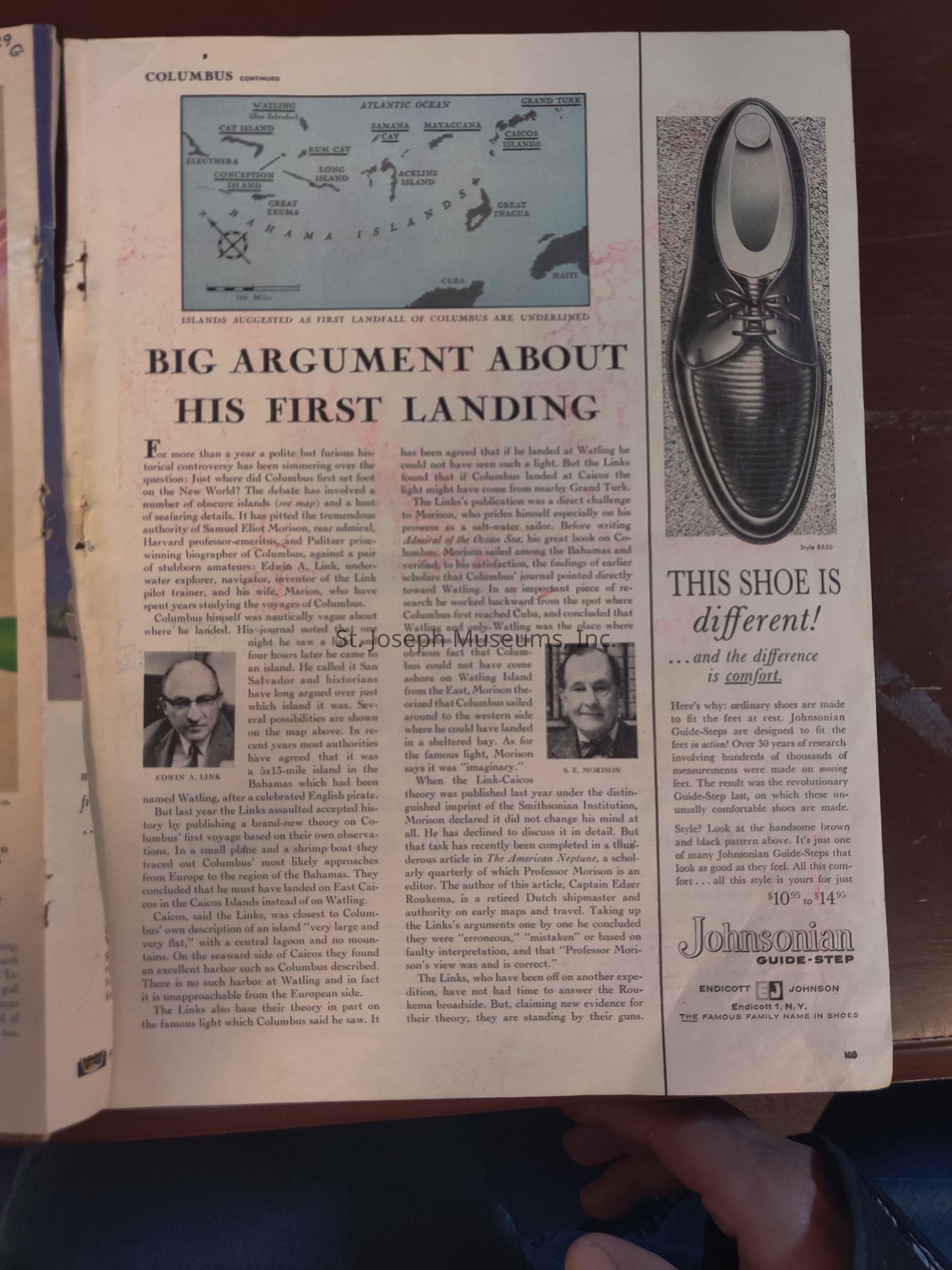
The last page of the article is about the big argument about his first landing. Columbus himself was nautically vague about where he landed. His journal noted that one night he saw a light and four hours later he came to an island. he called it San Salvador and historians have long argued over just which island it was.
In recent years most authorities have agreed that it was a 5x13-mile island in the Bahamas which had been named Watling, after a celebrated English pirate.
The Links assaulted history by publishing a brand-new theory on Columbus first voyage based on their own observation. In a small plane and a shrimp boat they traced out Columbus' most likely approaches from Europe to the region of the Bahamas. They concluded that he must have landed on East Caicos in the Caicos Islands instead of on Watling, Caicos, said the Links, was closest to Columbus' own description of an island "very large and very flat," with a central lagoon and no mountains. On the seaward side of Caicos they found an excellent harbor such as Columbus described. There is no such harbor at Watling and in fact it is unapproachable from the European side. The Links also base their theory in part on the famous light which Columbus said he saw. It has been agreed that if he landed at Watling he could not have seen such a light. But the Links found that if Columbus landed at Caicos the light might have come from nearby Grand Turk .
This was in contradiction to Morison who prides himself as a salt-water sailor. When the Link-Caicos theory was published under the distinguished imprint of the Smithsonian Institution, Morrison declared it did not change his mind. Morrison declined to discuss it in detail but the task was completed in article in "The American Neptune, a scholarly quarterly of which Professor Morison is an editor. The author of this article, Captain Edzer Roukema, is a retired Dutch shipmaster and authority on early maps and travel. Taking up the Links's arguments one by one he concluded they were "erroneous," "mistaken" or based on faulty interpretation, and that "Professor Morison's view was and is correct.".
In this article the Links, who have been off on another expedition, had not had time to answer,Lexicon
Nomenclature 4.0
Nomenclature Tertiary Object Term
MagazineNomenclature Secondary Object Term
PeriodicalNomenclature Primary Object Term
SerialNomenclature Sub-Class
Other DocumentsNomenclature Class
Documentary ObjectsNomenclature Category
Category 08: Communication ObjectsSearch Terms
Columbus, Caribbean, Dominican Republic, Watling, Caicos, Bahamas, San Salvador, Life Magazine, Columbus Discovery of AmericaRelationships
Related Person or Organization
Person or Organization
Professor E. MorisonPerson or Organization
Edwin A. LinkPerson or Organization
Marion LinkPerson or Organization
Christopher Columbus