Research Type
ResearcherPerson
Tori ZiegerNotes
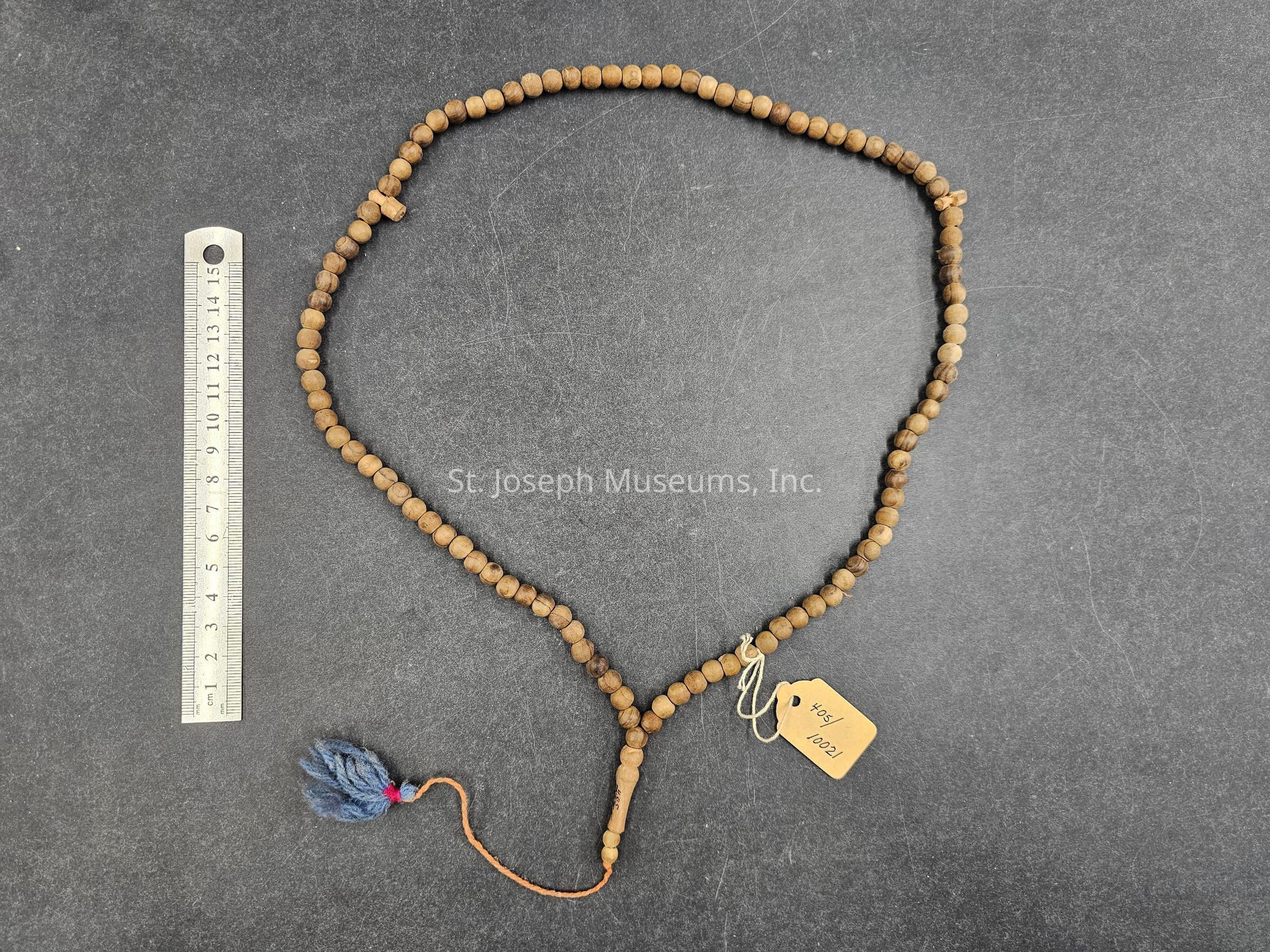
Misbaha, or prayer beads, are used by Muslims during dhikr, a type of prayer. Dhikr often involves repeating a phrase or the name of Allah a specific number of times, which is then counted on the misbaha. Misbaha traditionally are composed of 99 beads for longer dhikrs and 33 beads for shorter dhikrs, though there are other configurations that are much more rare. The material used for the beads vary; each individual Muslim can choose the tactile and visual experience that suits them. The larger beads spaced throughout the strand are called muadhdhin and are spaced at regular intervals in order to help track the dhikr without losing focus. On a 99 bead misbaha like this one, the muadhdhin are placed every 33 beads. Joining the two ends of the beaded strand is the alif, also known as the imam bead. These are distinctive beads used as the starting and ending point of counting. The name comes from the Arabic letter alif, which symbolizes unity.