Name/Title
Missouri Life Articles 1. First Battle of Black Regiment 2. OzarksEntry/Object ID
9999.BHF.336Scope and Content
Missouri Life Articles
1. First Battle of Black Regiment
2. Ozarks
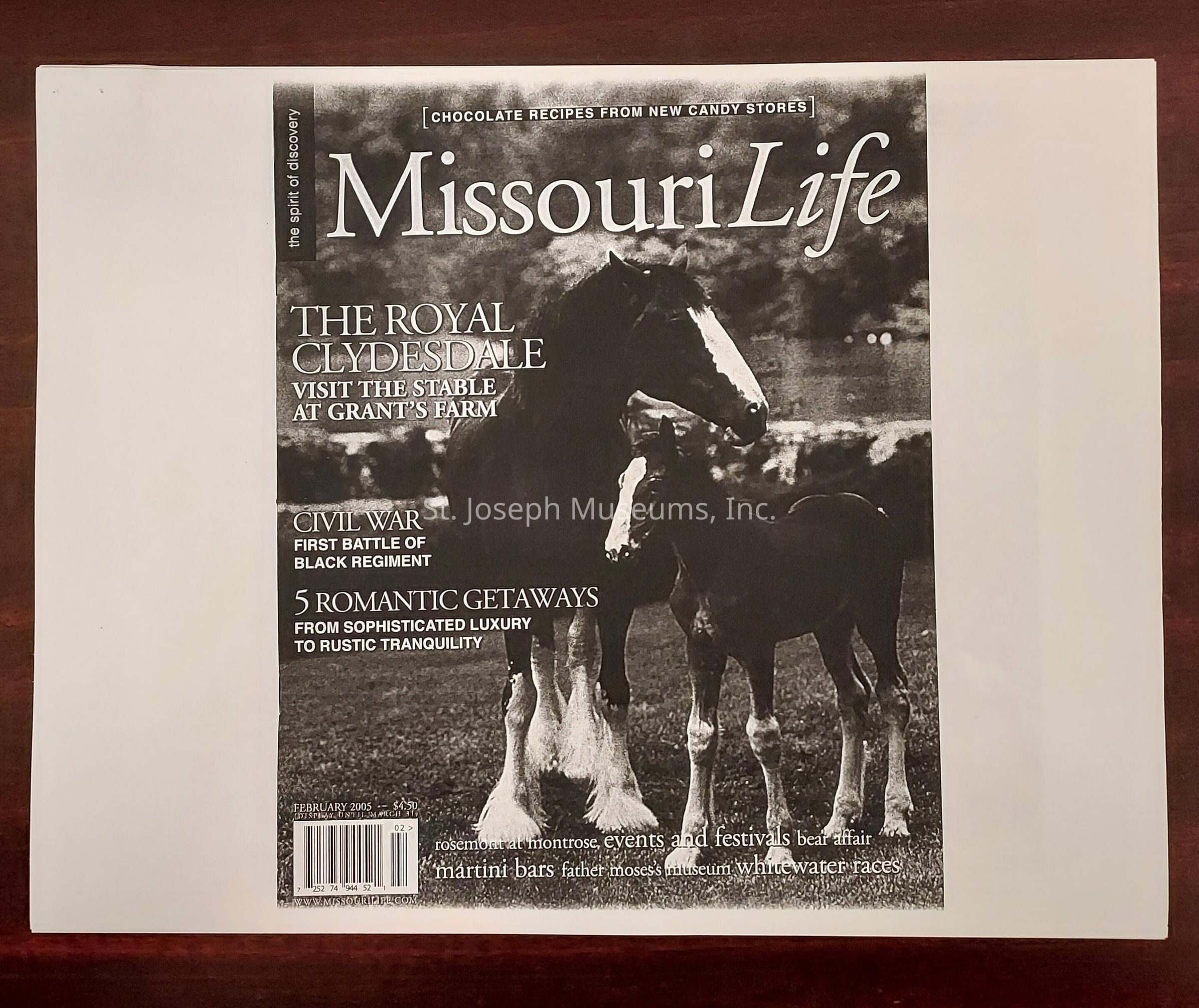
From the Missouri Life magazine February 2005 issue is the photocopy article about the Missouri's battle of Island Mound was the first Civil War combat for any black regiment.
It is late fall 1862. Union soldiers chasing Confederates was nothing new, but this regiment was unique. It was the First Kansas Colored Volunteers; a new regiment composed primarily of escaped slaves. They we stationed at Fort Lincoln near present day Fulton, Kansas, to protect the border of Missouri from rebel guerrillas.
On October 27, 230 men from the regiment arrived at the vacant farm of John Toothman, a well-known guerrilla leader. The troops fortified the farm with logs and named it Fort Africa. They were ready to fight those who would deny them freedom.
Senator James H. Lane from Kansas started the First Kansas Colored Volunteers when President Lincoln passed the Second Confiscation Act in July 1862. This authorized blacks to be recruited as laborers or for any military or naval service for which they may be found competent.
The aptitude of the men for acquiring the drill had already made their progress more than equal to anybody of white men so new to the service.
Inequality was already institutionalized in the regiment. There were no black officers, and pay was less than white soldiers. Sometimes they received no pay until July 1863.
No written accounts from the black soldiers themselves exist; most were illiterate--it was illegal to teach slaves to read--and reporters only interviewed the white officers. Colonel C. K. Holiday, adjutant general for Kansas summed up the record of the First Kansas Colored Volunteers at the end of 1864. "Through suffering severe losses and fighting at great disadvantage owing to the merciless treatment they were sure to receive if taken as prisoners of war, yet they faltered not, but with a steadiness and a gallantry worthy of themselves and the cause, have earned an honorable reputation among defenders of the Union".
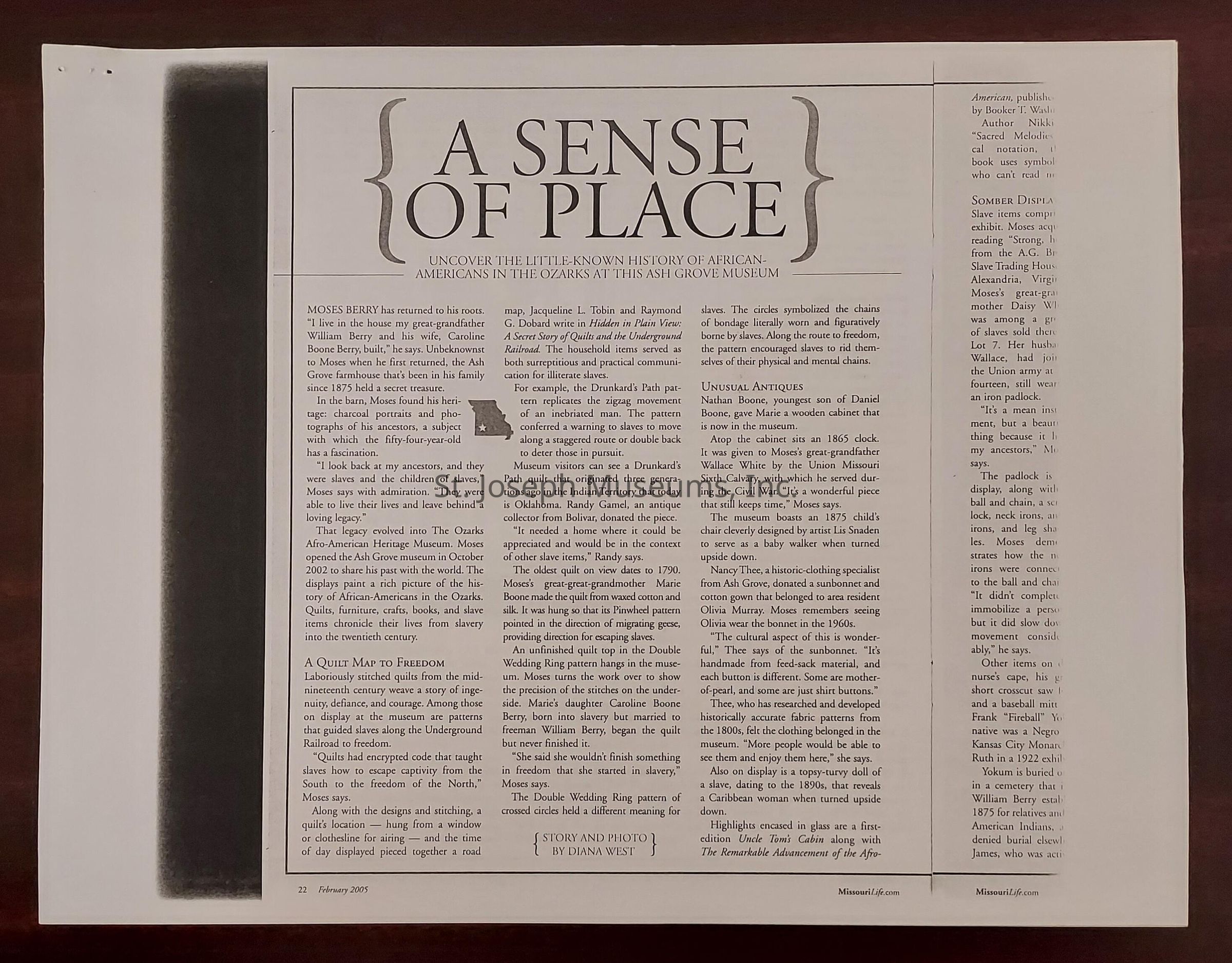
A Sense of Place
Moses Berry has returned to his roots. He lives in the house of his great-grandfather William Berry and his wife, Caroling Boone Berry, built. Unbeknownst to Moses when he first returned, the Ash Grove farmhouse that's been in his family since 1875 held a secret treasure. In the barn, Moses found his heritage: charcoal portraits and photographs of his ancestors, a subject with which the fifty-four-year-old had a fascination. His ancestors were slaves and the children of slaves. They were able to live their lives and leave behind a loving legacy.
The legacy evolved into The Ozarks Afro-American Heritage Museum. He opened the museum in October 2002 to share his past with the world. He has on display Quilt maps to freedom. He also has unusual antiques and items from the Civil War.
Moses Berry lives on his ancestral family farm at Ash Grove where his great-grandfather established a cemetery for those denied burial elsewhere.
The Black World History Museum at St. Louis is one of only two U.S. wax museums dedicated to African Americans. The St. Louis Museum, opened in 1997.Collection
Black ArchivesLexicon
LOC Thesaurus for Graphic Materials
SlavesSearch Terms
Civil War, Black Soldiers, Freedom Quilts, Black HistoryRelationships
Related Person or Organization
Person or Organization
ToothmanPerson or Organization
Senator James H. LanePerson or Organization
Colonel C. K. HolidayPerson or Organization
Moses BerryPerson or Organization
William BerryPerson or Organization
Caroline Boone Berry