Research Type
ResearcherNotes
Jewelry is an almost ubiquitous method of outward signaling that humans have been doing for hundreds of thousands of years. The material from which the jewelry is made often signals the wealth of the individual, while the style, type, and placement of the jewelry can indicate inclusion in a group as well as be outward expressions of individual style. Specific jewelry also carries a symbolic purpose in the form of charms and sigils; some pieces were thought to give the wearer positive energy, protection from curses, or honor a specific ancestor/deity/spirit.
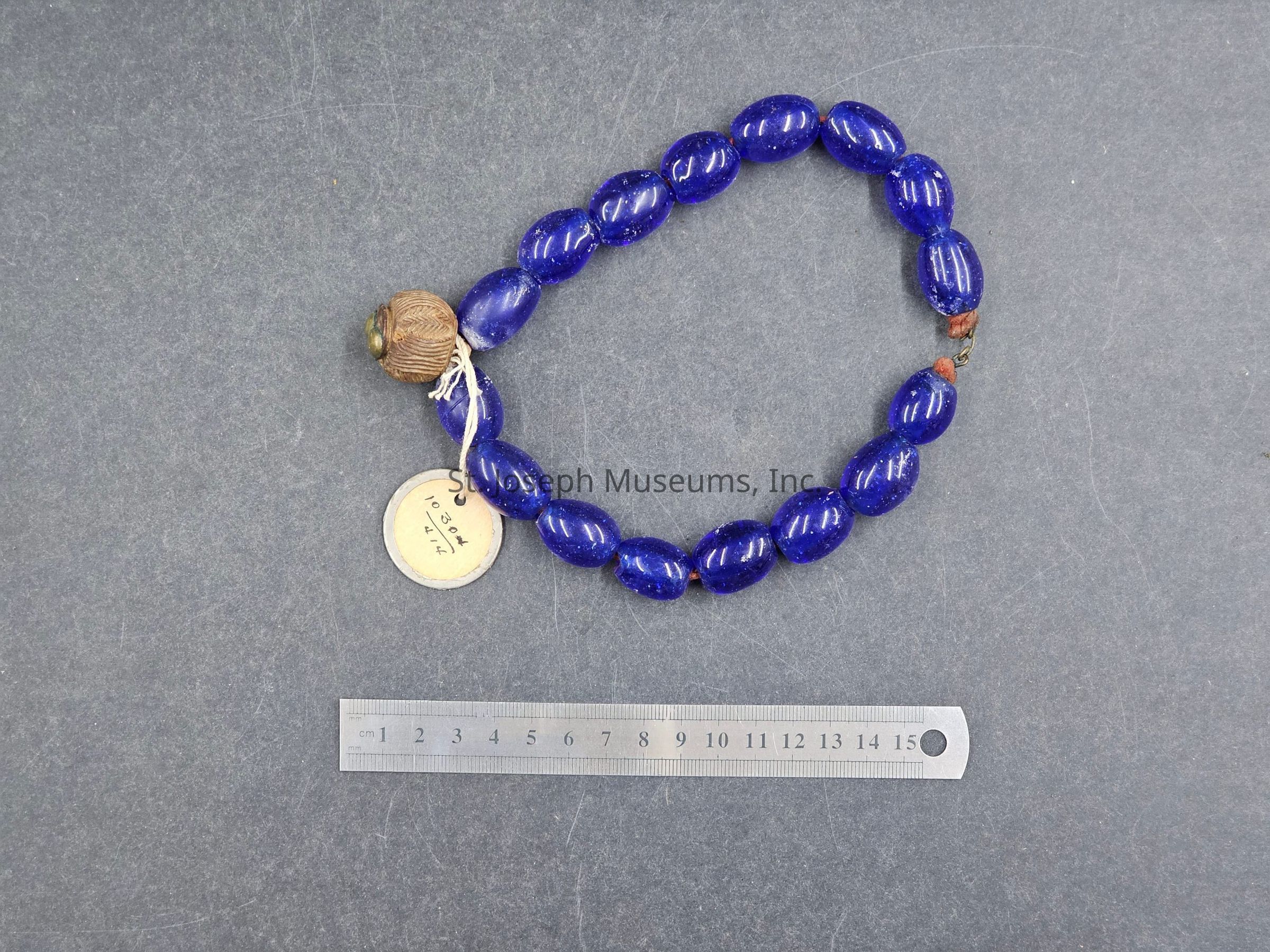
This necklace is created from blue glass beads and a carved nut pendant (with two brass nails). The carved nut would have been indigenous to Africa (likely) but the beads would have been trade goods - the person creating the necklace would have traded with the Europeans to receive these beads. Into the late 19th to early 20th century, however, there are reports of factories being built on the West Coast of Africa were these glass beads could be created from European glass right on the continent. This allowed production to belong to the African people themselves rather than relying on Europeans importing the beads.