Name/Title
Newspaper article from the Cedar Rapids Evening GazetteEntry/Object ID
Q1430.634.463CDescription
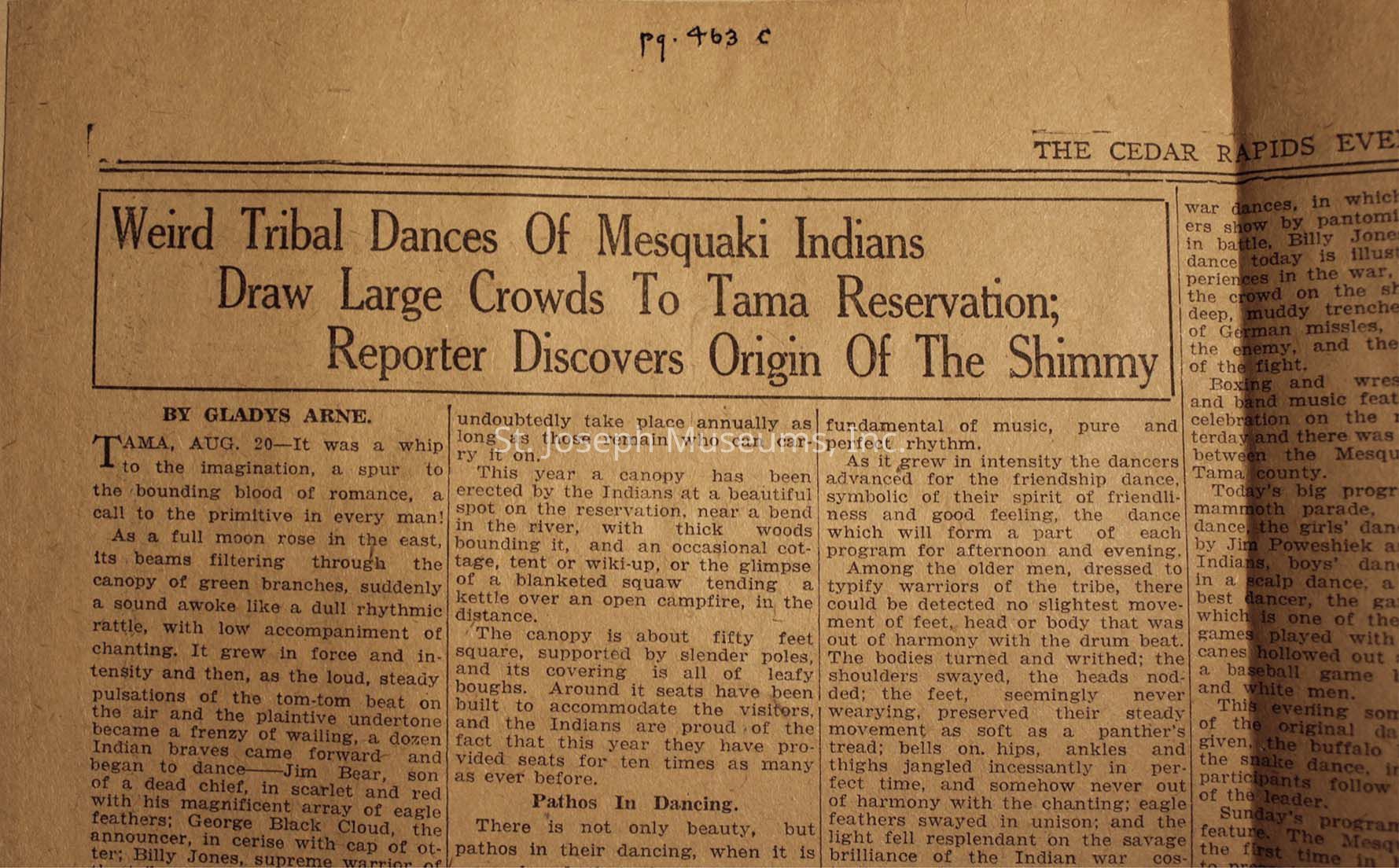
A seven-column Newspaper article from the Cedar Rapids Evening Gazette entitled "Weird Tribal Dances of Mesquaki Indians Draw Large Crowds to Tama Reservation; Reporter Discovers Origin Of The Shimmy." Vol I pg. 463C
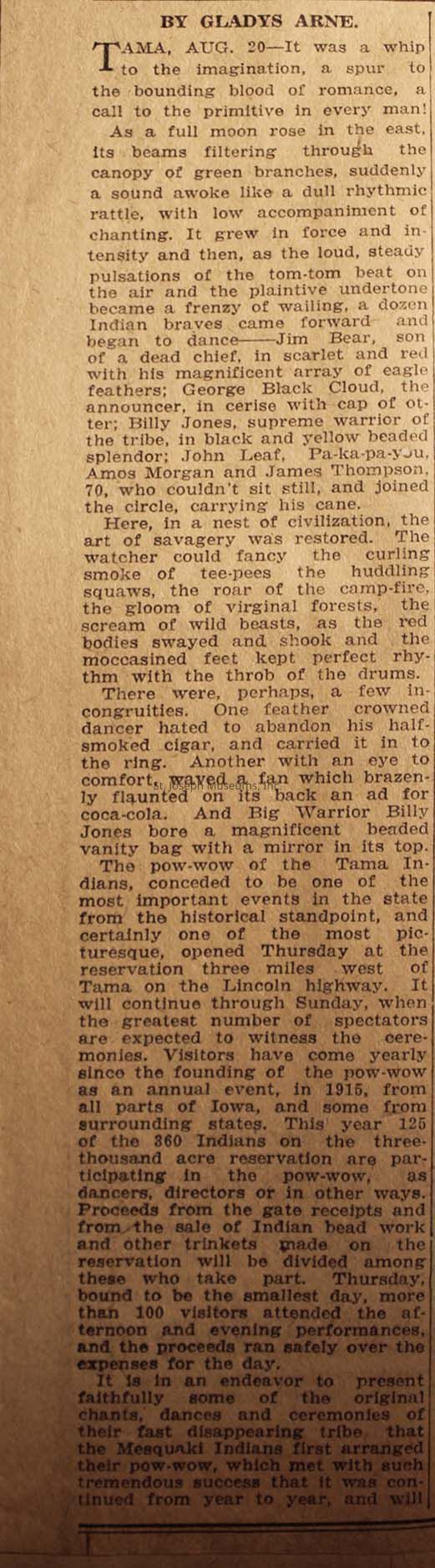
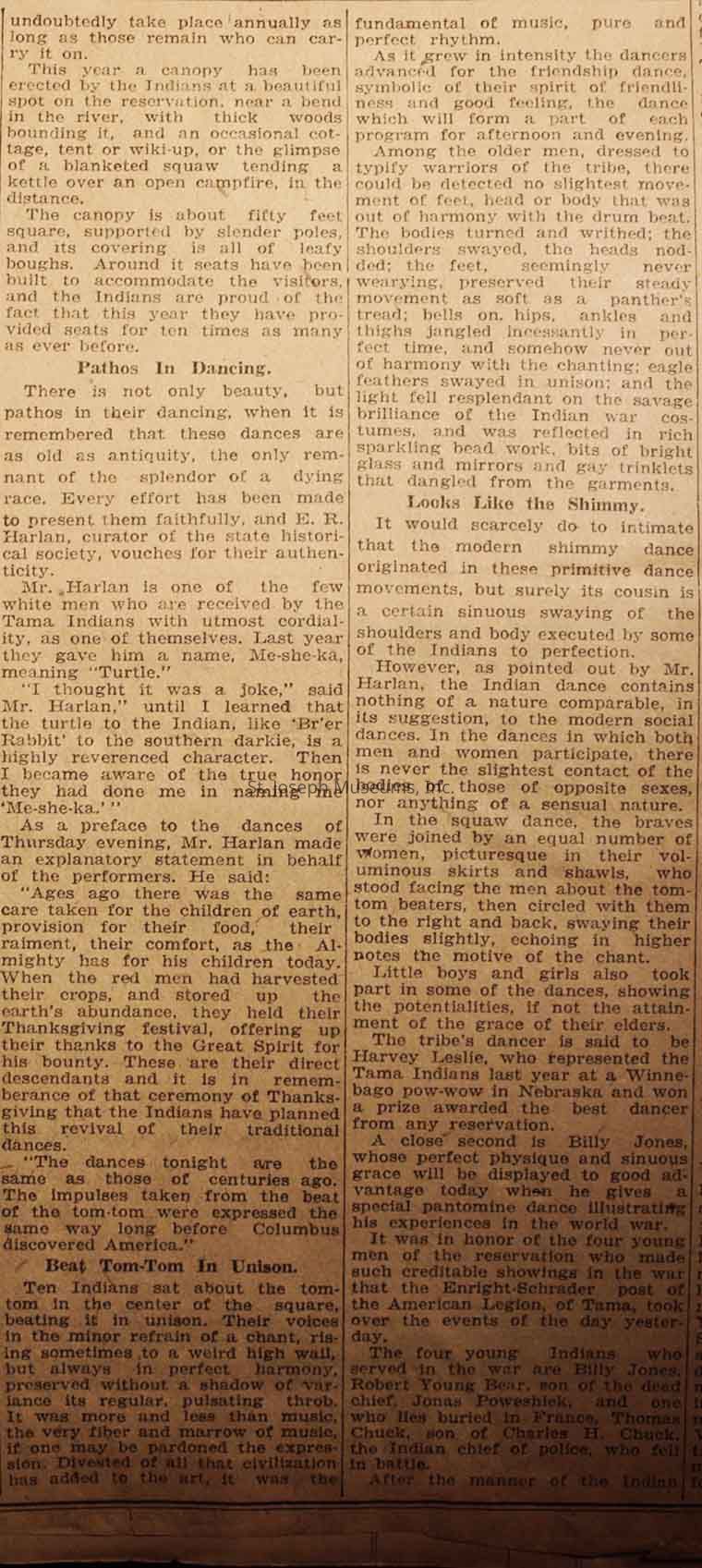
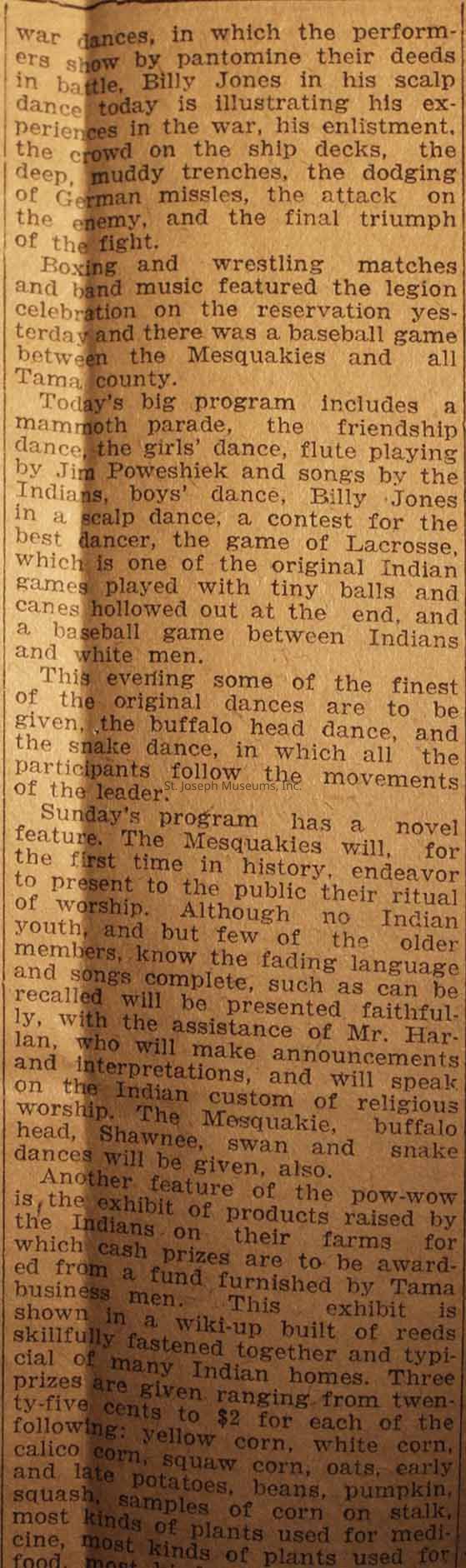
The first picture is a partial of the the start of the article displaying the title and author Gladys Arne. Following are larger full prints of the 7 columns for better readability.
The newspaper clipping, dated August 20, describes a pow-wow event of the Tama Indians. Rhythmic sounds and chanting emerge, increasing in intensity until a lively gathering of Indian braves begins to dance. Characters such as Jim Bear, George Black Cloud, and others are named, showcasing the vibrant cultural expressions with their colorful attire and ceremonial roles. The article highlights the event's setting amidst nature, where the art of savagery is revived with vivid imagery of forests and wildlife. Despite some incongruities, like modern items carried by participants, the pow-wow is portrayed as both a significant historical and picturesque event, attended by numerous visitors since its inception as an annual occurrence in 1915. The piece emphasizes the preservation of traditional chants, dances, and ceremonies by the Mesqwaki Indians, ensuring their cultural practices continue to thrive and draw spectators from various regions.
Pathos In Dancing
The event takes place annually, with the setting described as a decorated canopy amidst nature. The dances, characterized by their historical significance and pathos, are performed with great authenticity, symbolizing the essence of a fading culture. Mr. Harlan, recognized by the Tama Indians, provides insights into the event's history.
Looks Like The Shimmy
The dances are said to be rhythmic expressions, predating European discovery, and are marked by a distinct absence of sensuality, differing from modern dance styles like the shimmy. The article notes the involvement of men, women, and children, emphasizing the cultural richness and grace inherited from elders. The article highlights Billy Jones performing a scalp dance, illustrating wartime experiences through pantomime, including enlistment and triumph in battle. It mentions activities like boxing, wrestling, band music, and a baseball game between the Mesquakies and Tama County. The event includes a parade, friendship, girls' and boys' dances, flute playing, a dance contest, lacrosse, and a baseball game between different groups. Products raised by Indians, such as corn, potatoes, and squash, are exhibited for cash prizes funded by Tama businessmen, showcasing traditional farming and medical practices.
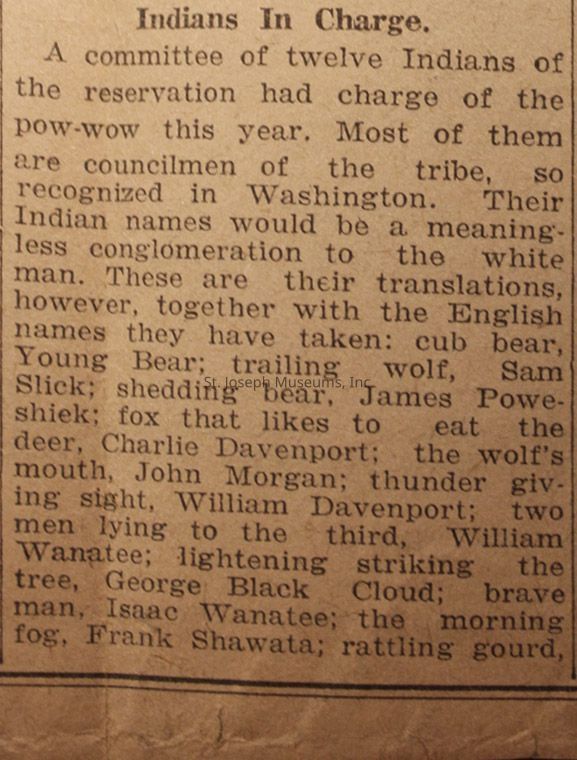
Indians In Charge
"Indians In Charge," is a committee of twelve Native Americans from a reservation who managed a pow-wow for the year. It states that most of these individuals are tribe councilmen recognized in Washington. It explains that their Indian names might seem perplexing to non-natives, so it provides translations along with their English counterparts. These include names like Cub Bear (Young Bear), Trailing Wolf (Sam Slick), Shedding Bear (James Poweshiek), Fox That Likes to Eat the Deer (Charlie Davenport), The Wolf's Mouth (John Morgan), Thunder Giving Sight (William Davenport), Two Men Lying to the Third (William Wanatee), Lightening Striking the Tree (George Black Cloud), Brave Man (Isaac Wanatee), The Morning Fog (Frank Shawata), and Rattling Gourd.
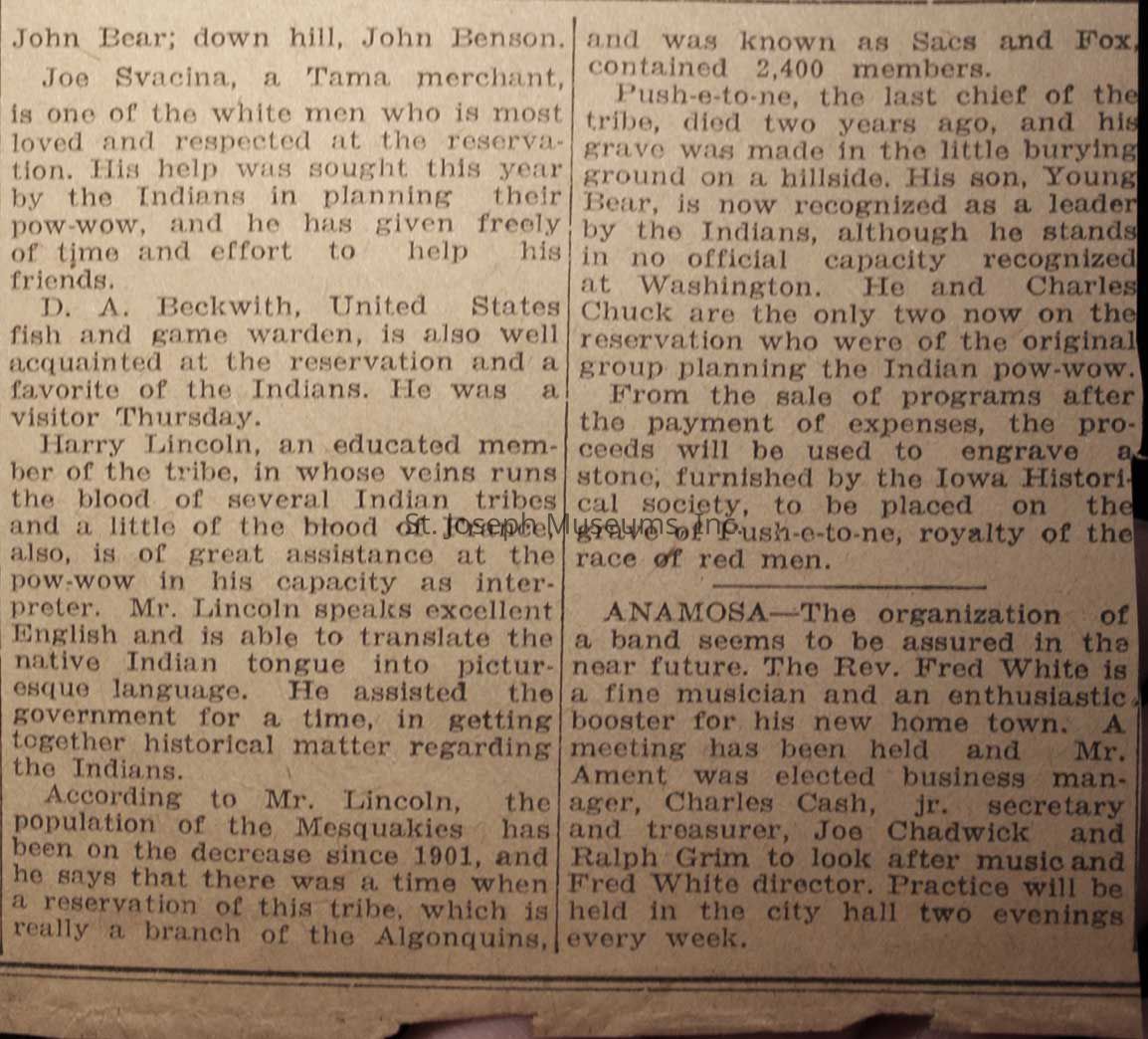
The article concludes, discussing various individuals connected to a Native American reservation and their efforts in planning a pow-wow. Joe Svacina, a respected Tama merchant, is highlighted for his supportive role. D.A. Beckwith, a U.S. fish and game warden, is noted as a visitor and favorite among the Indians. Harry Lincoln, an educated tribe member, assists as an interpreter due to his proficiency in English and knowledge of Indian languages. The population impact and historical aspects of the Mesquakies, a branch of the Algonquins, are mentioned. The article also refers to Young Bear, a leader recognized by the tribe, and fundraising for a memorial stone for Push-e-to-ne, the last chief. Additionally, an update on Anamosa's band formation, led by Rev. Fred White, is included.Subject
Cedar Rapids Evening Gazette
Cedar Rapids, Iowa
Meskwaki -- Mesquaki
Sac & Fox
DanceSubject Person/Organization
Harry L. George Collection