Name/Title
Newspaper article from the Kansas City StarEntry/Object ID
Q1430.634.469ADescription
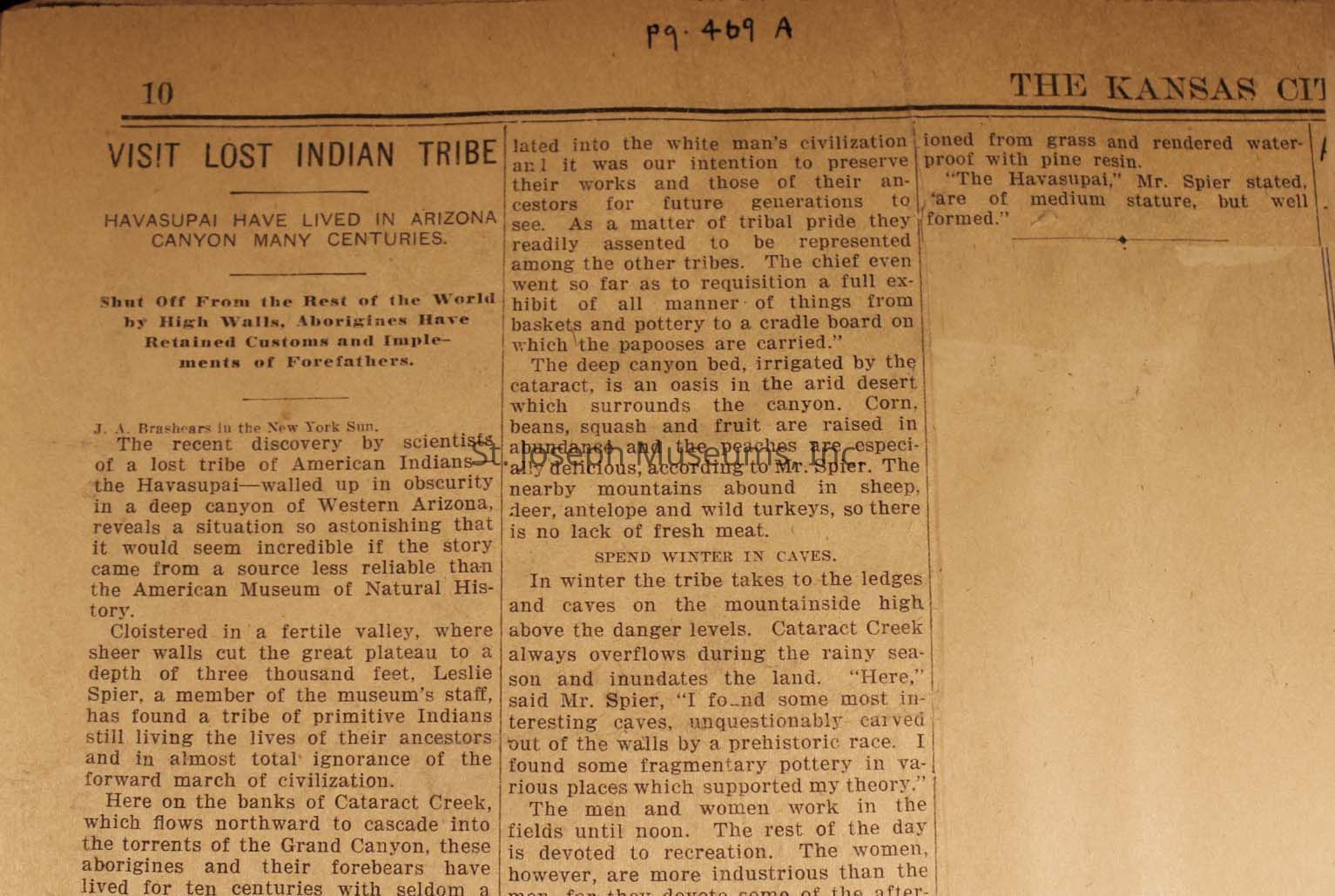
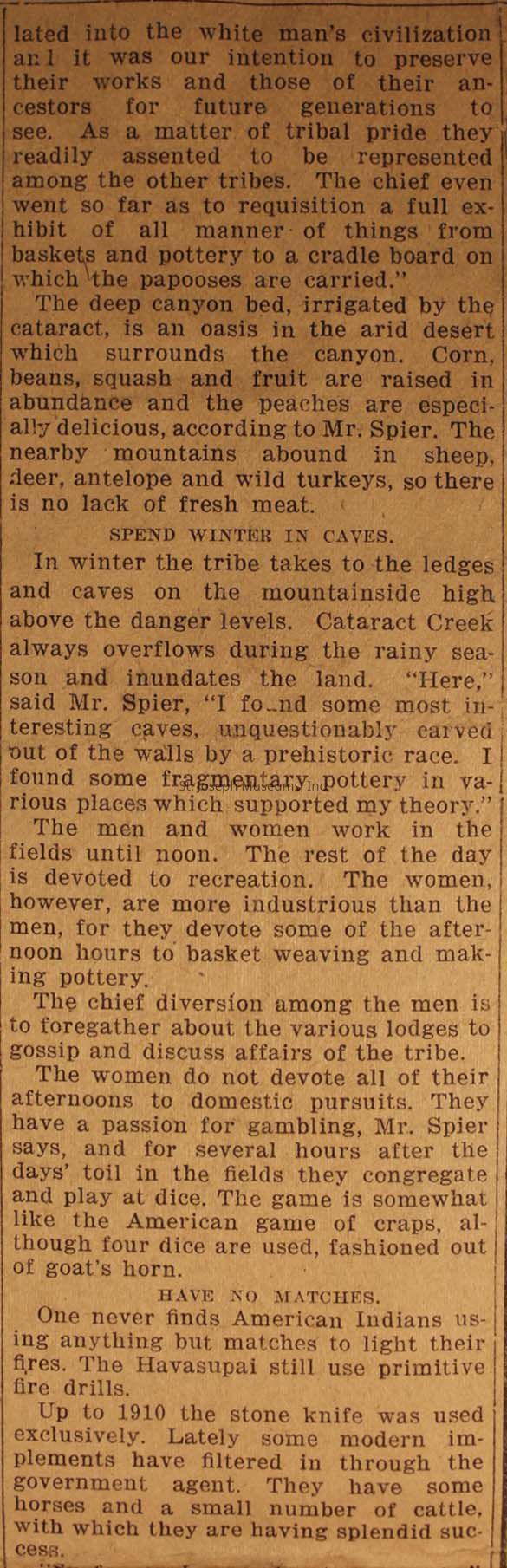
Newspaper article from the Kansas City Star entitled "Visit Lost Indian Tribe" and is about the Havasupai. Vol I pg. 469A
A photo of page 10 of the 2-plus column Newspaper article from the Kansas City Star. Below the main heading reads 'Havasupai Have Lived In Arizona Canyon Many Centuries'
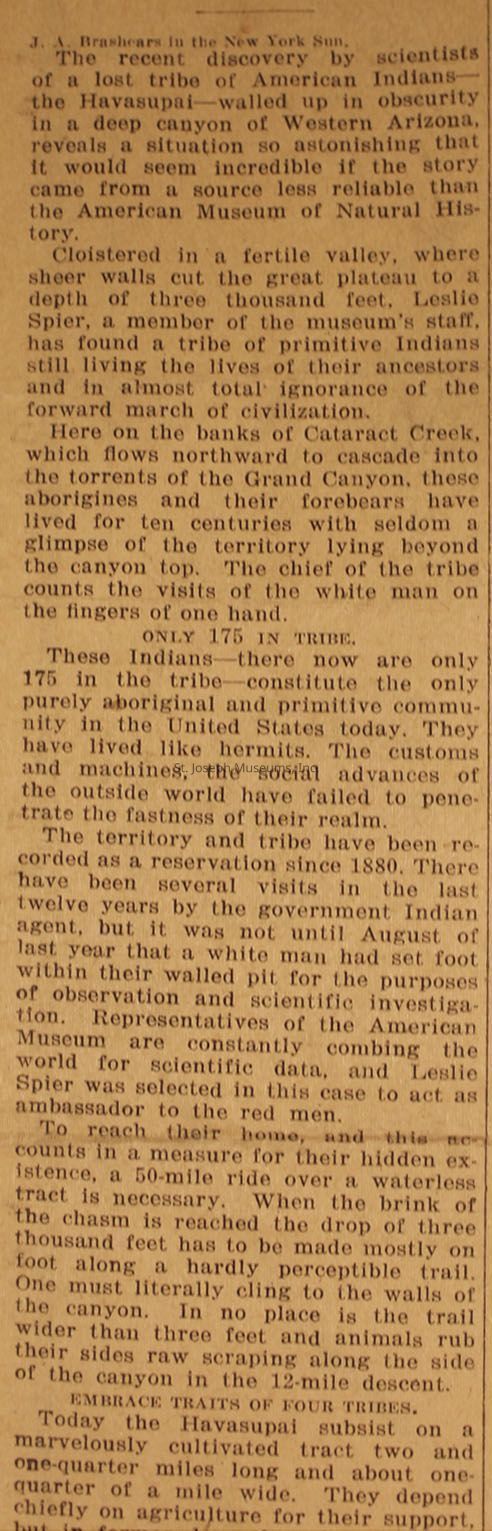
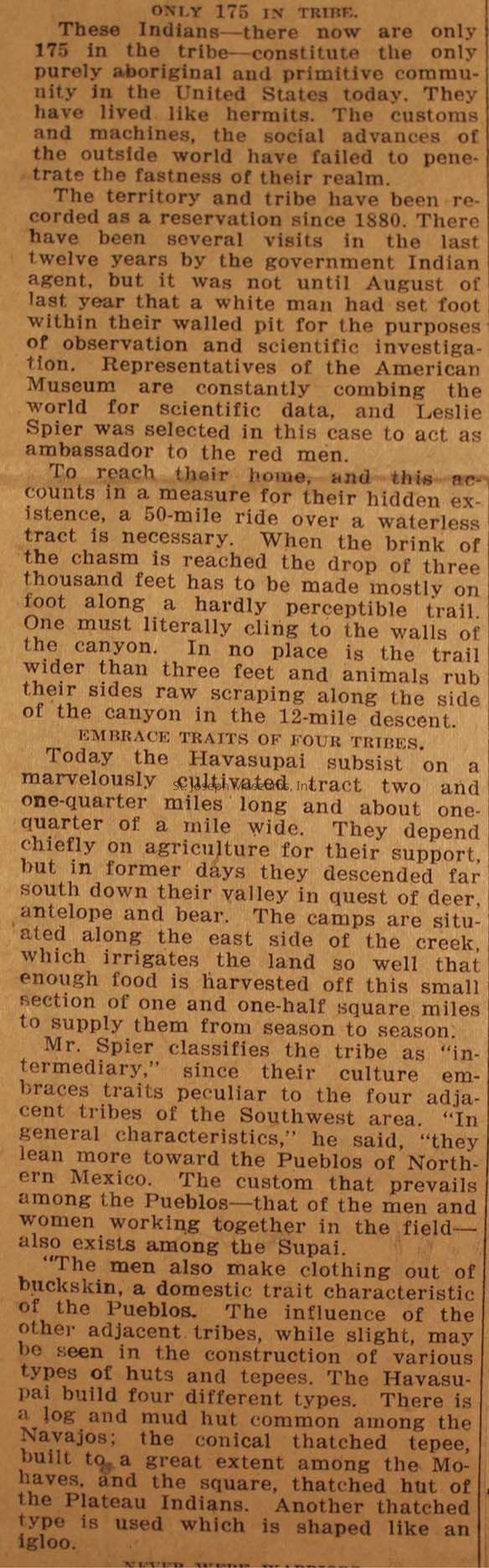
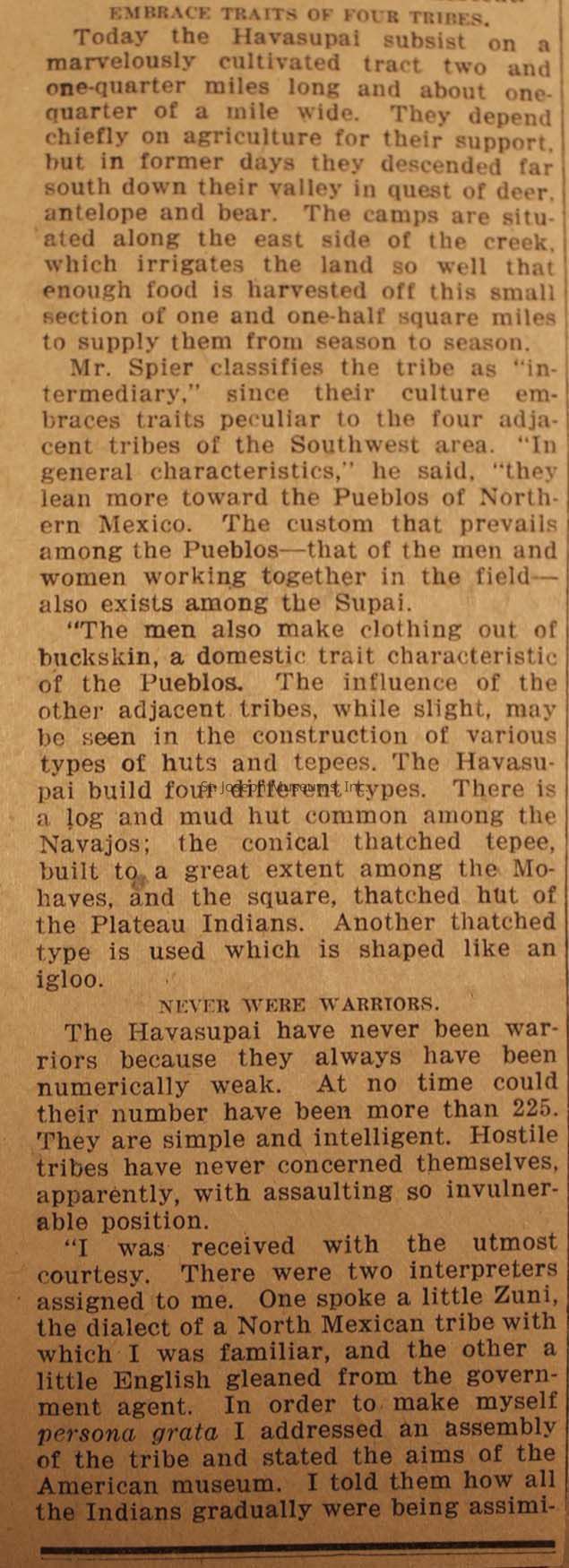
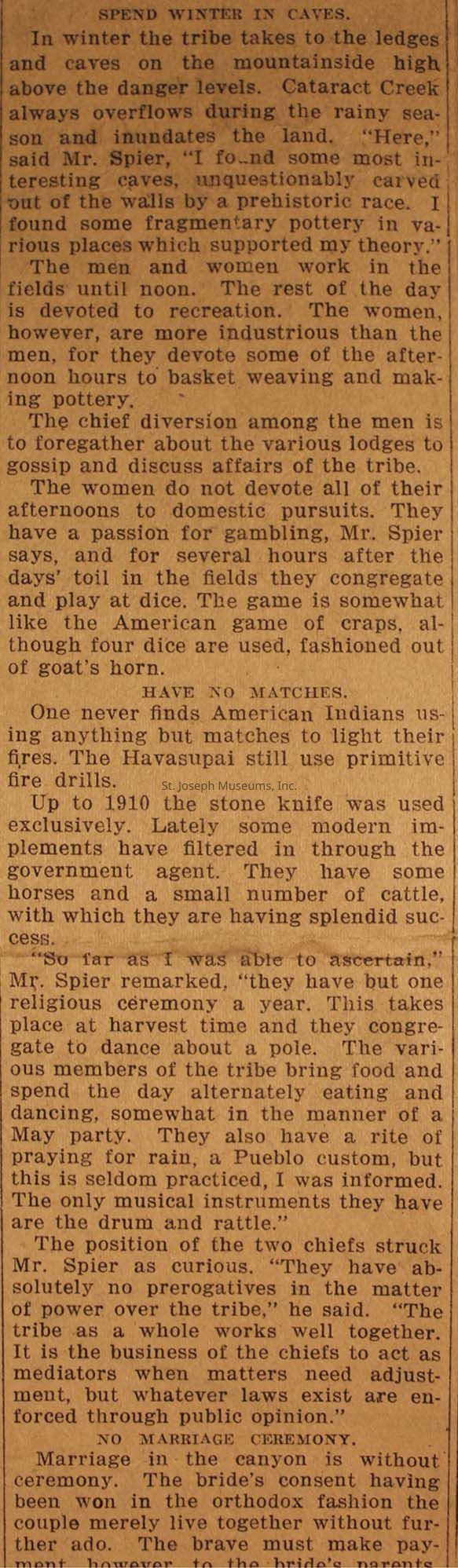
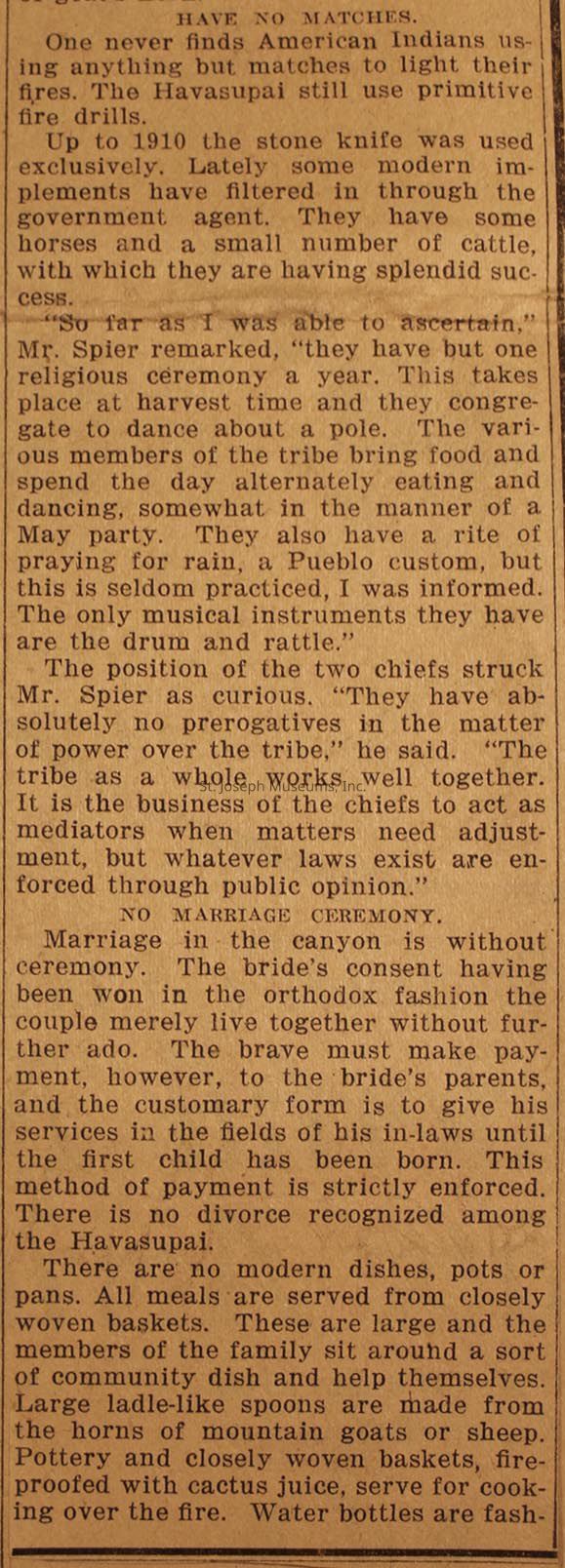
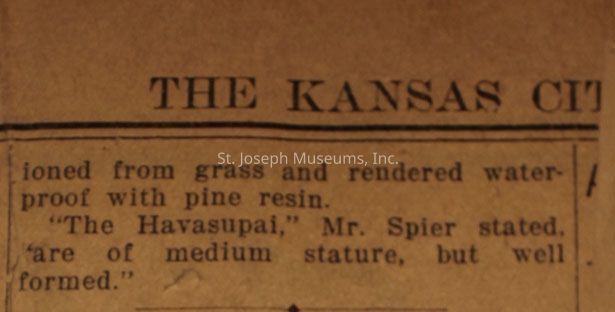
'Shut Off From the Rest of the World by High Walls, Aborigines Have Retained Customs and Implements of Forefathers.' The columns are enlarged in further pictures to make reading easier.
The newspaper article reports on the discovery by scientists of a tribe of American Indians known as the Havasupai, living in isolation in a deep canyon of Western Arizona. The article describes the tribe as being cloistered in a fertile valley surrounded by sheer canyon walls thousands of feet high, which have kept them in relative obscurity from the outside world.
ONLY 175 IN TRIBE
There are only 175 people in this tribe, who are described as living like hermits, with their customs untouched by modern social advances. The territory was recorded as a reservation since 1880, and government visits have been rare. To access their home, a challenging journey involving a 50-mile ride and a steep descent into the canyon is required. The article highlights their isolated lifestyle, living like hermits with customs unaffected by outside advancements. It mentions their reservation status since 1880 and rare visits from outsiders, including a white man sent for observation and scientific investigation.
EMBRACE TRAITS OF FOUR TRIBES
The Havasupai maintain traditional agricultural practices and traits from four tribes, on a narrow cultivated tract. Classified as intermediary, their culture features traits from four surrounding tribes, and they construct various types of huts and tepees. Previously hunters of deer, antelope, and bears, they now focus on farming, irrigating their lands efficiently. Havasupai men craft buckskin clothing, a Pueblo tradition, and their diverse architecture reflects influences from adjacent tribes, constructing varied huts such as log and mud huts like the Navajos, conical thatched tepees, and igloo-shaped structures.
NEVER WERE WARRIERS
Historically, the tribe has never engaged in warfare, being numerically small and generally unthreatening, characterized by simplicity and intelligence. The writer describes their respectful reception, facilitated by two interpreters, and shared with the tribe the goals of the American museum, noting the gradual assimilation of native tribes into modern society.
SPEND WINTER IN CAVES
The newspaper article titled details the lifestyle of a tribe that spends winters in mountain caves to avoid flooding from Cataract Creek. The article describes how men and women work in fields until noon, then engage in recreational activities. Women are industrious, focusing on basket weaving and pottery, while men gather to discuss tribal affairs. Gambling is a popular pastime, with a dice game similar to craps.
HAVE NO MATCHES
The tribe uses primitive fire drills instead of matches, and until 1910 relied on stone knives, though modern tools are now used. The Havasupai have horses and cattle, and engage in a single annual religious ceremony involving dance and communal eating at harvest time, while rain prayers are rare. They have occasional religious ceremonies and use drums and rattles for music.
NO MARRIAGE CEREMONY
Chiefs act as mediators without power over the tribe, relying on public opinion for law enforcement. Marriage lacks a formal ceremony, involving service payment to the bride’s parents. Meals are served in woven baskets, using spoons made from animal horns, with pottery and baskets for cooking and water storage.Subject
Kansas City Star
Kansas City, Missouri
Havasupai
ArizonaSubject Person/Organization
Harry L. George Collection