Name/Title
Newspaper article from the Kansas City StarEntry/Object ID
Q1430.634.460ADescription
A multi-column newspaper article from the Kansas City Star entitled "$30,000 Worth of Indian Baskets" and is about Harry George and his collection. Vol I pg. 460A
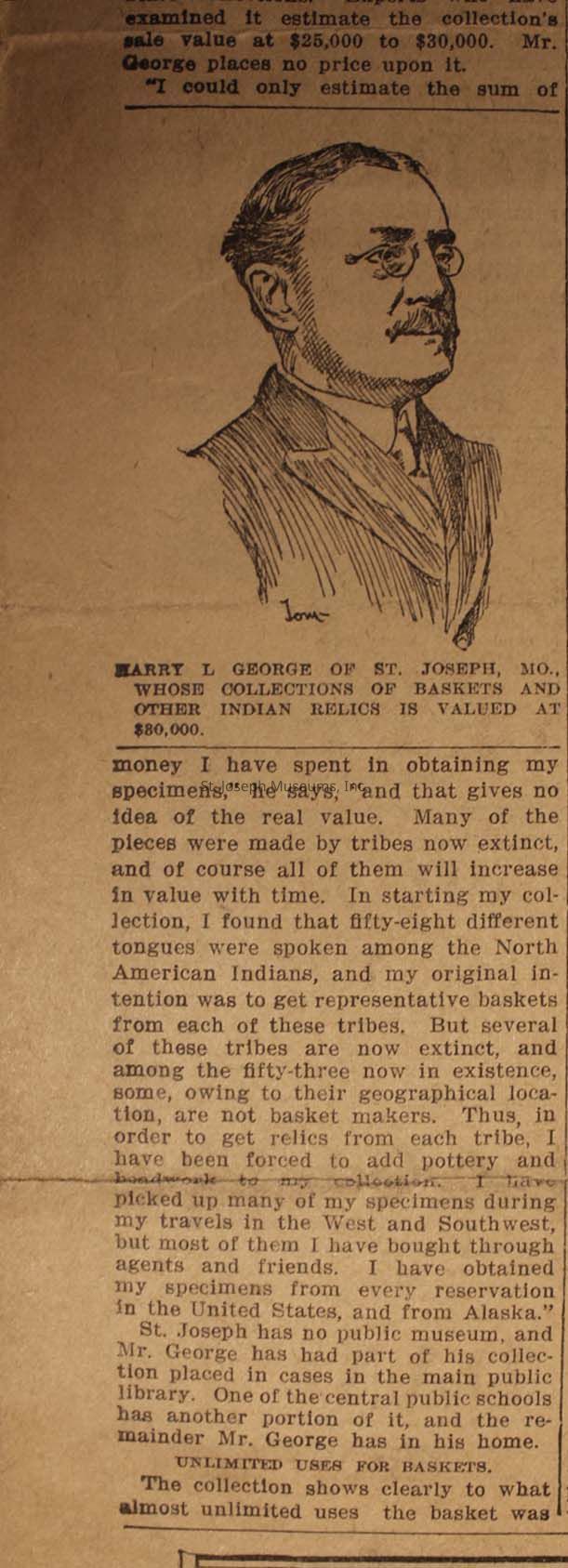
Considered one of the finest in existence, Harry L. George, a wealthy broker, began collecting baskets after discovering a rare piece he bought ten years prior. As original Indian arts and crafts were fading, he assembled a private collection recognized as one of the most complete in the U.S., surpassing many government and state collections. The image contains an illustration of the man from St. Joseph, Missouri, known for his valuable collection of baskets and other Indian relics estimated to be worth $80,000. The text explains that many pieces in his collection were made by now-extinct tribes, emphasizing their increasing value over time. George's intention was to gather baskets from each tribe, but due to some tribes' extinction and geographical constraints, he included pottery and other items in his collection. The newspaper clipping describes the use and cultural significance of basketry among “uncivilized” peoples, highlighting their utility in daily life for holding water, food, and other essentials, while also serving special ceremonial roles, as demonstrated by the intricate and varied baskets crafted by the Pomo tribe of Northern California highlighting their use in daily life, religious ceremonies, and as indicators of wealth and status; it details Mr. George’s collection of ceremonial basketry, including unique witch baskets and items used by the Hopi in Arizona, underscoring the profound artistry and cultural heritage embedded in these woven pieces.
A GAMBLING BASKET, TOO
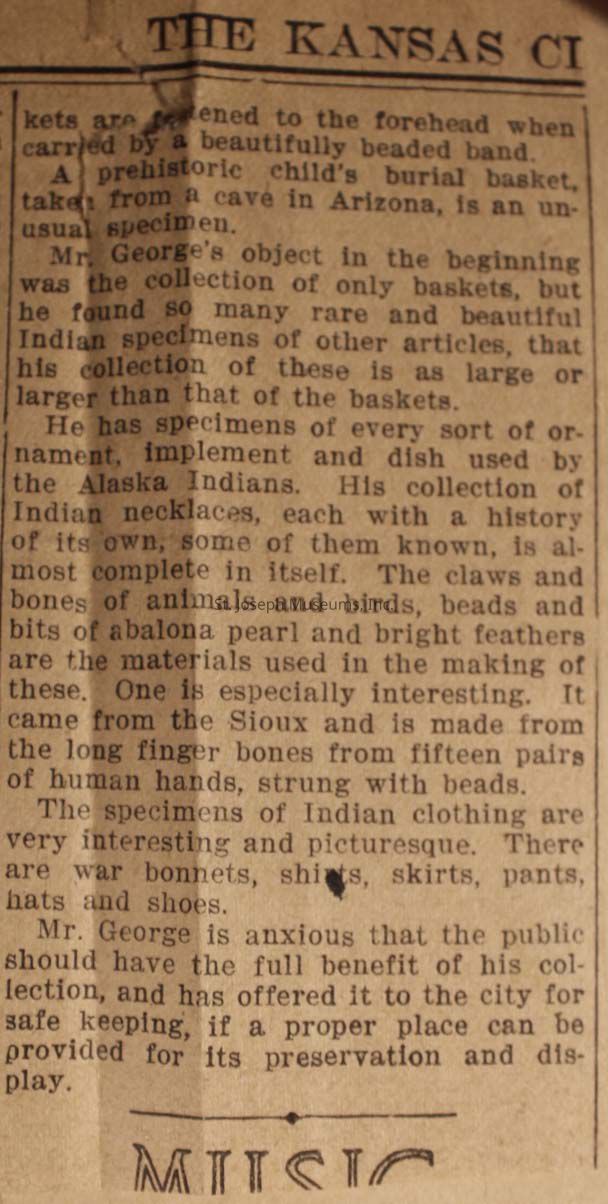
This section discusses the significance and craftsmanship of various Native American baskets, including religious baskets made by Hopi Indians for ceremonial use, and Hupa Indians' unique ceremonial baskets, which are highly valuable due to their uniqueness. It mentions a gambling basket with peach stones used for dice by women, baskets used in social etiquette, and cooking baskets made from split cedar roots. Furthermore, the collection boasts intricate Indian necklaces made from materials like claws, bones, beads, abalone pearl, and bright feathers, with a unique necklace crafted from Sioux finger bones strung with beads. The article also mentions Indian clothing, including war bonnets, shirts, skirts, pants, hats, and shoes, all contributing to the collection’s cultural richness.
A CHILD'S BURIAL BASKET
Mr. George's extensive collection of Native American artifacts, including a prehistoric child's burial basket from Arizona, various ornaments, implements, and dishes used by Alaska Indians, and an array of Indian necklaces crafted from diverse materials such as animal claws, bones, beads, abalone pearl, and feathers. Among these, a particularly interesting piece from the Sioux, made from human finger bones strung with beads, stands out. Additionally, his collection includes vivid specimens of Native American clothing like war bonnets, shirts, skirts, pants, hats, and shoes. Mr. George is keen on sharing his collection for public benefit and has offered it to the city, provided a suitable place for its preservation and display can be arranged.
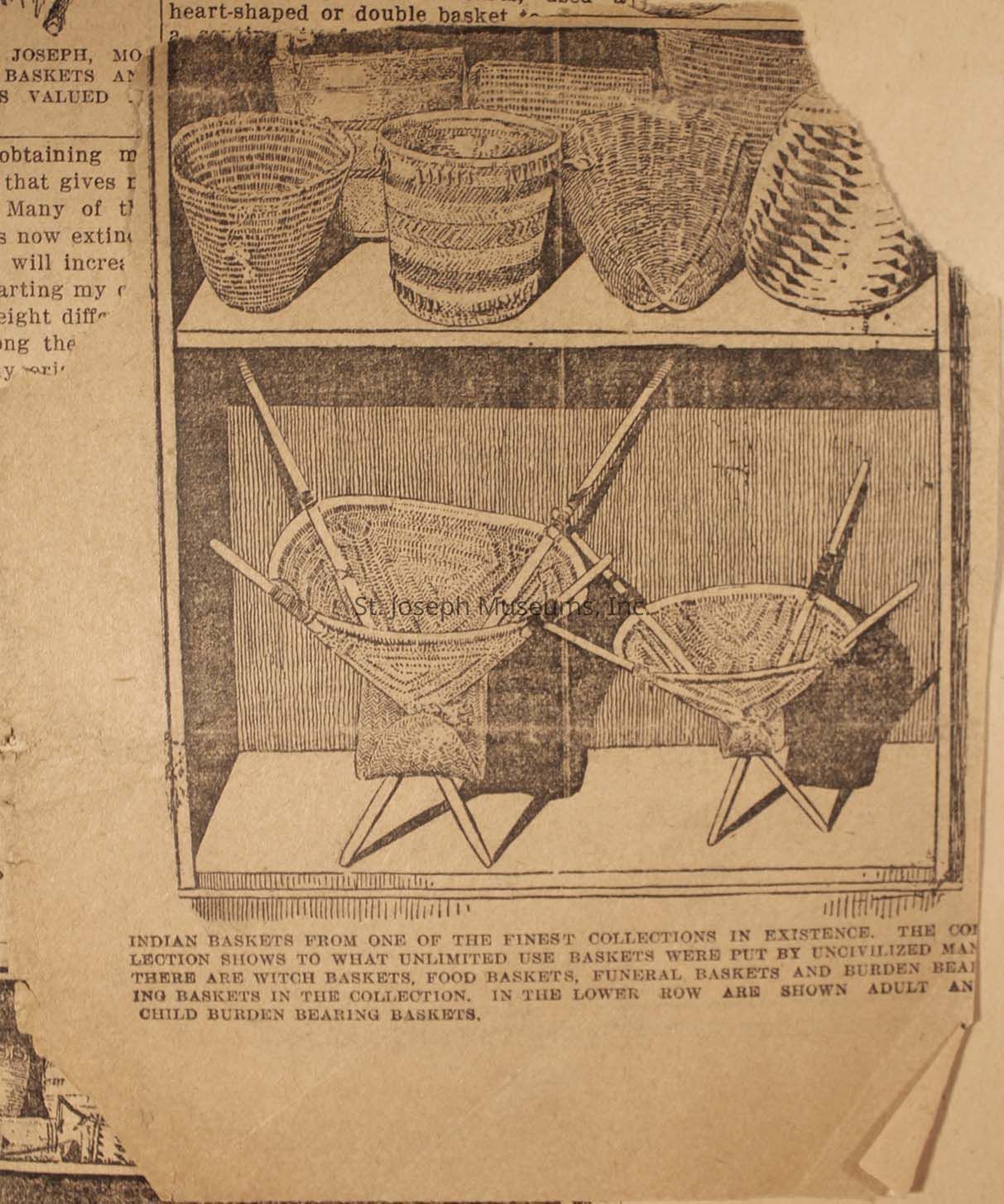
The end of the article depicts an illustration of the collection of intricately woven Indian baskets, which are part of a renowned collection. In the top section, a variety of baskets with different patterns and shapes are displayed on a shelf, while the bottom section shows larger baskets with distinct handles designed for burden-bearing purposes, including an adult and child basket. The text underneath emphasizes the multifaceted uses of these baskets by highlighting categories such as witch baskets, food baskets, funeral baskets, and burden-bearing baskets, demonstrating theirSubject
Kansas City Star
Kansas City, MissouriSubject Person/Organization
Harry L. George Collection