Name/Title
Newspaper Article from the St. Joseph GazetteEntry/Object ID
Q1430.634.461ADescription
Newspaper article from the St. Joseph Gazette entitled "St. Joseph Is the Home of a Most Beautiful Private Collection of Examples of Art and Industry Among the American Indians" and is about Harry George and his collection. Vol I pg. 461A
The single article is dissected into 14 sections.
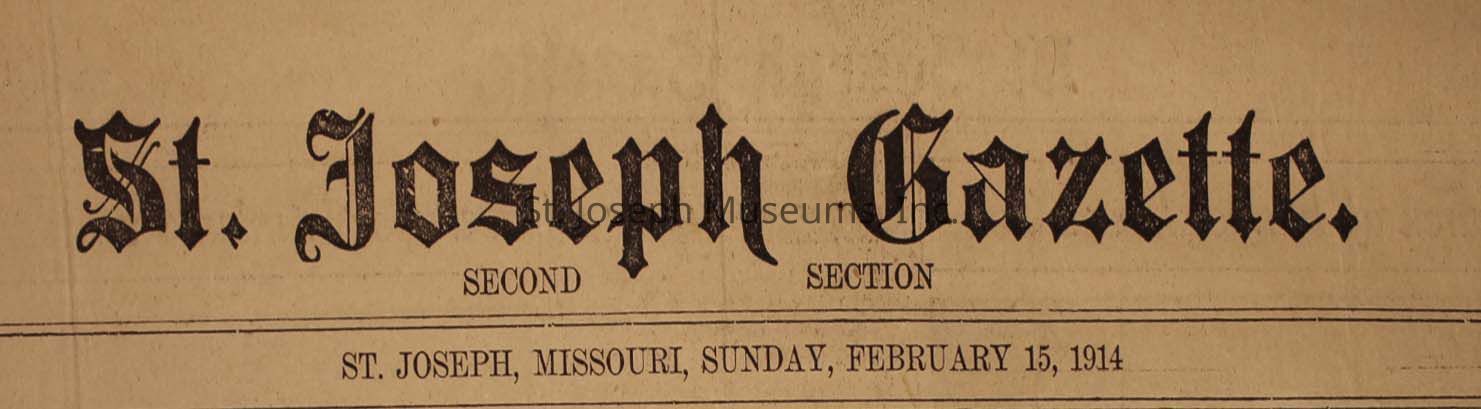
1.)It starts out the heading of the St. Joseph Gazette, SECOND EDITION, FEBRUARY 15, 1914
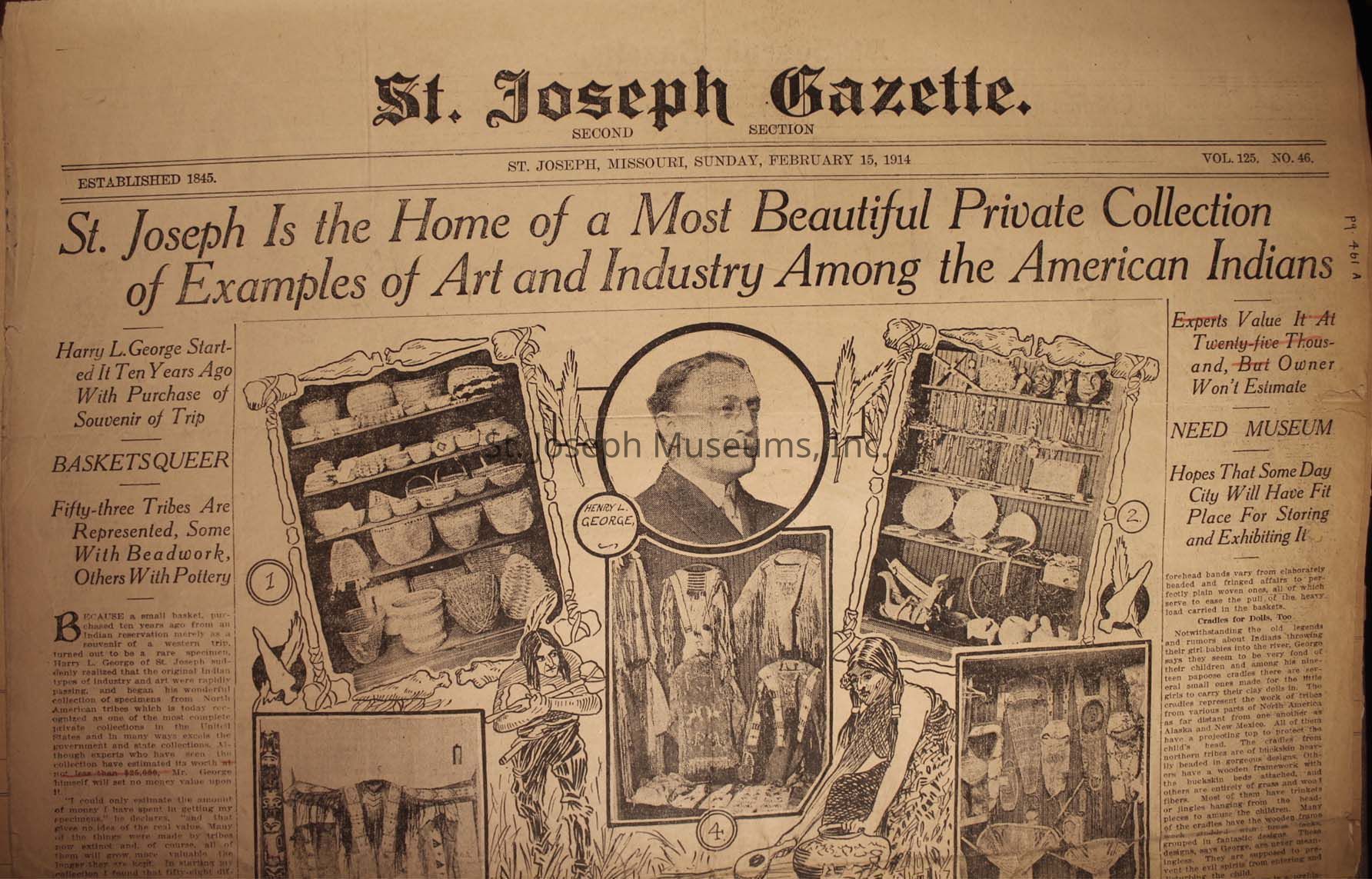
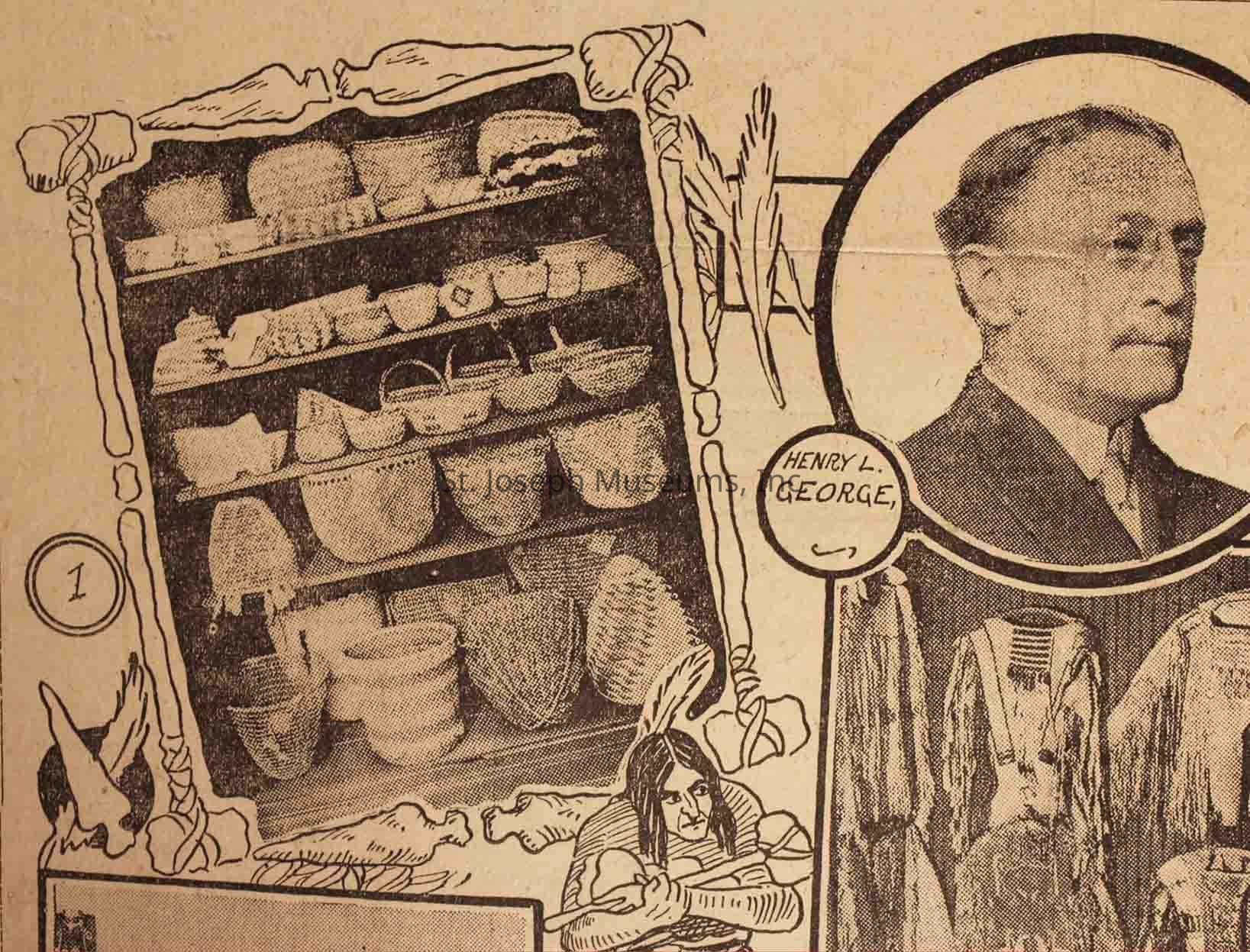
It then repeats the heading and the top half of the page of the article. The article discusses Harry L. George, who began collecting ten years prior and amassed various tribal artifacts, including beadwork and pottery from fifty-three tribes. The page features illustrations of baskets, pottery, and other items alongside a portrait of Henry L. George.
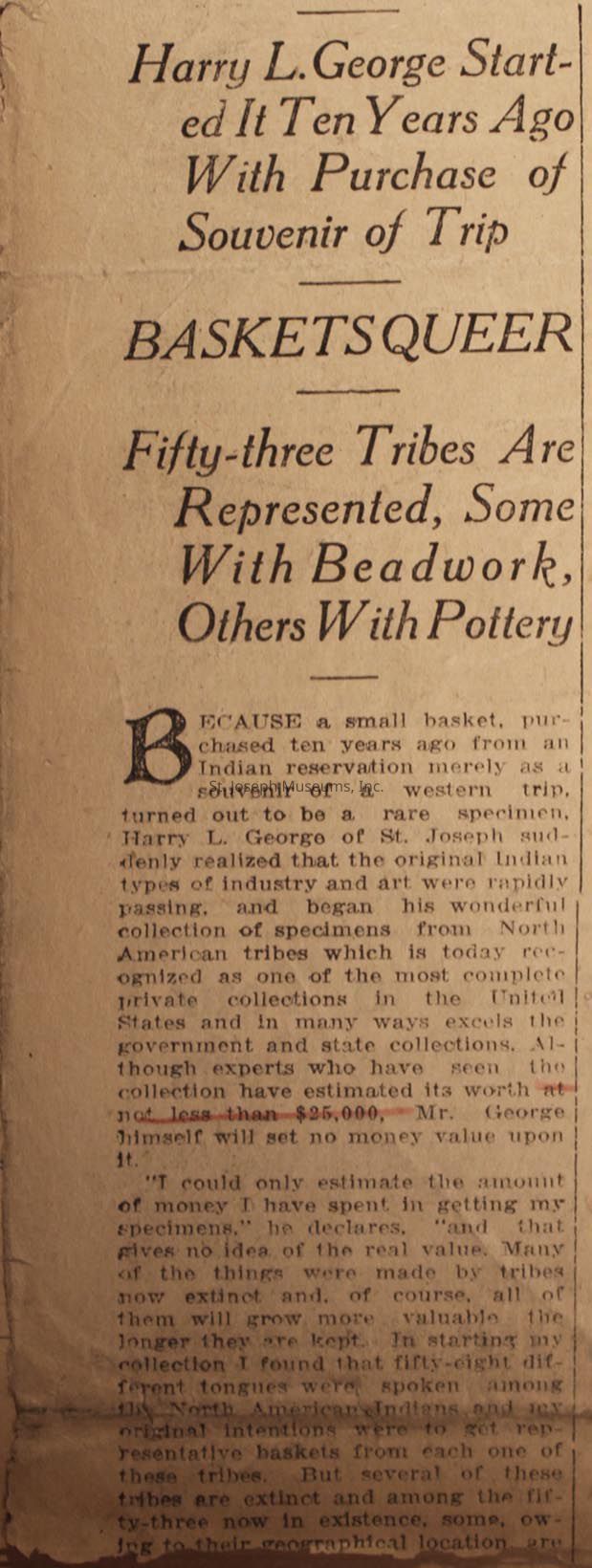
2.)Next, the left side of the page is enlarged to make the sub-title and the composition of the article easier to read. The article highlights his growing collection, now encompassing specimens from fifty-three tribes, including beadwork and pottery, and recognizes its significance as one of the most comprehensive private collections in the United States. Experts estimate its value at no less than $25,000. The collection's importance is underscored by the extinction of several tribes, making these artifacts increasingly valuable.
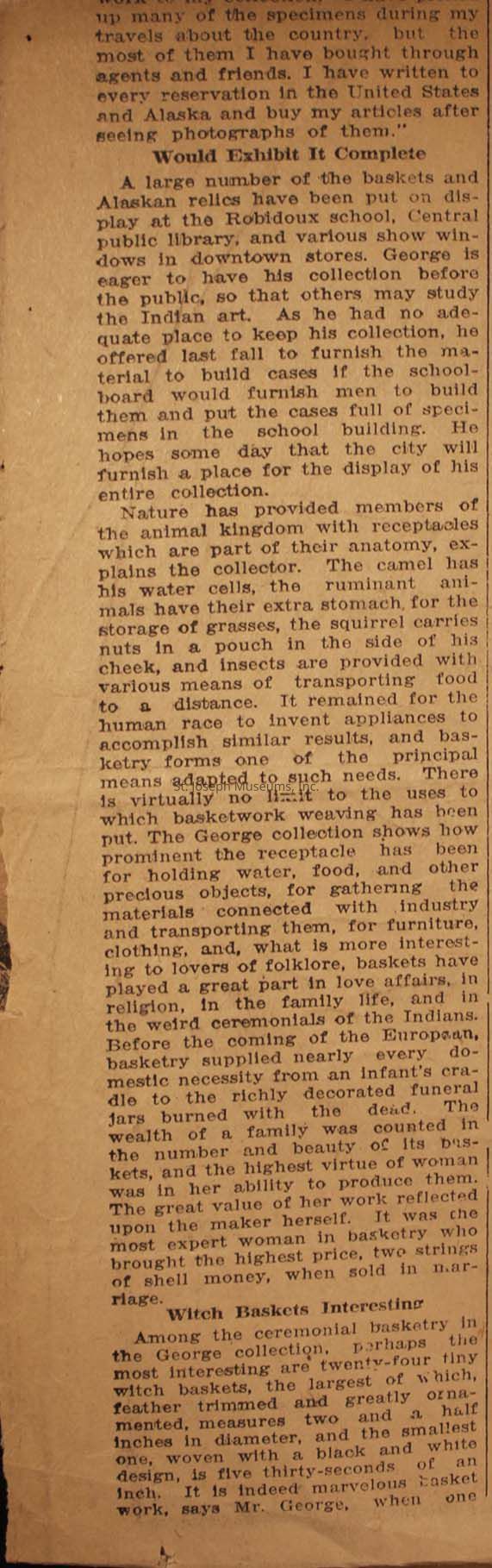
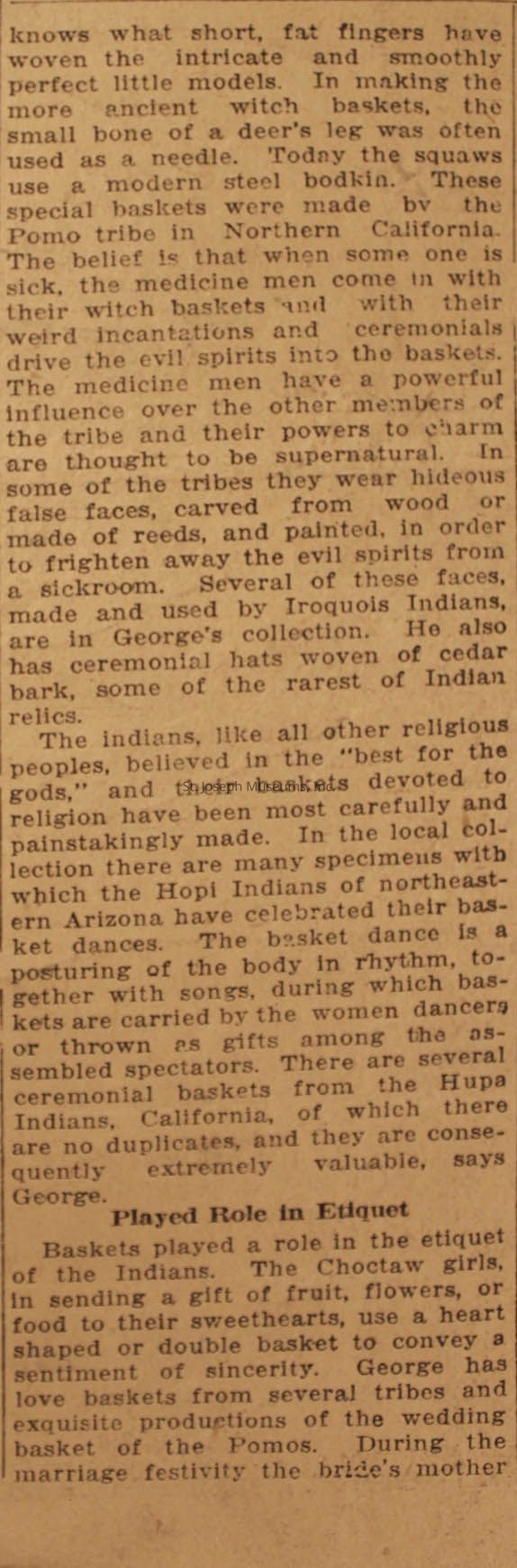
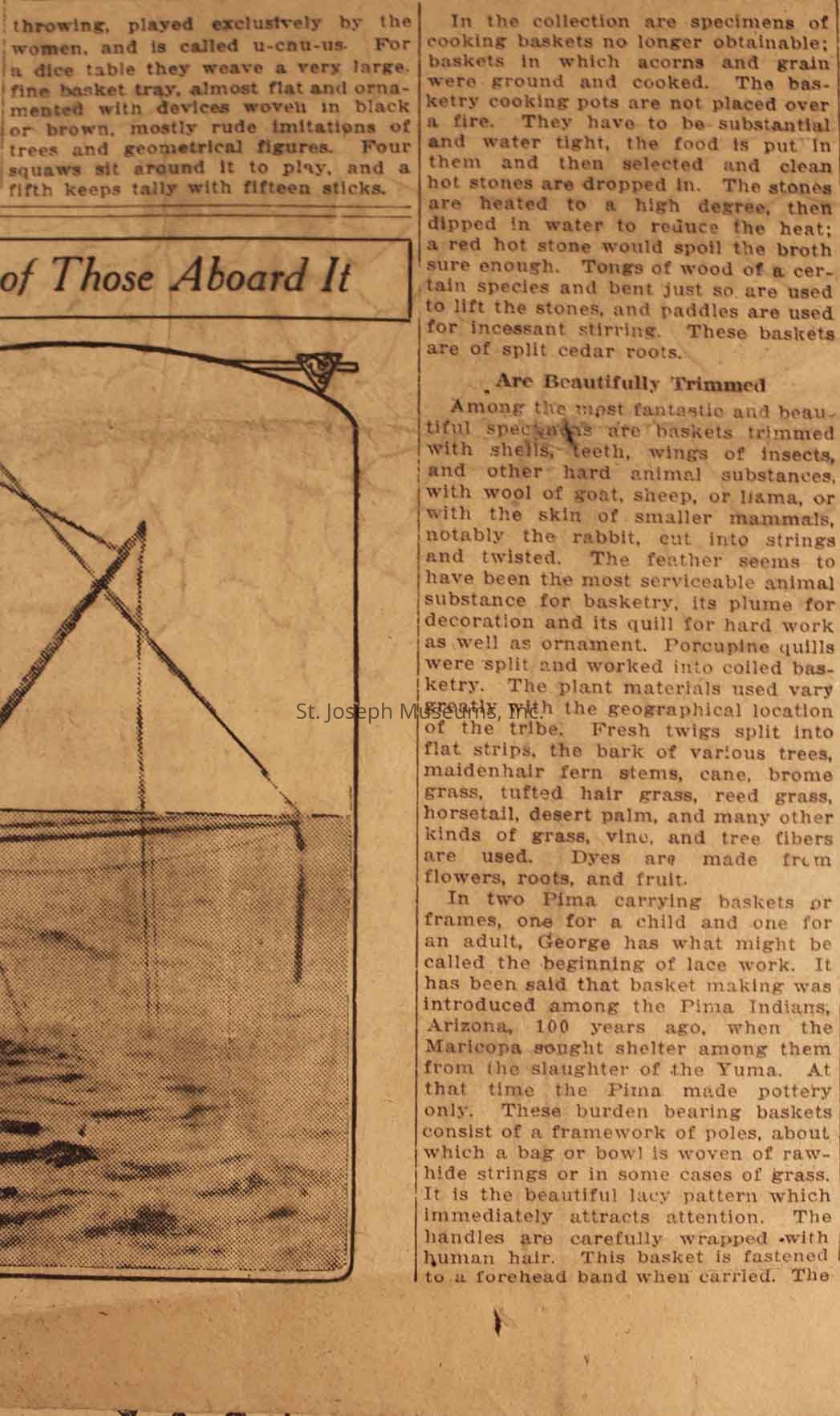
3.)The next 4 slides that feature the article further explains how nature provides animals with natural storage mechanisms, contrasting it with human-made inventions like basketry, highlighting its historical and cultural significance, especially in Indian ceremonies. Witch baskets, part of the George collection, are particularly emphasized for their intricate designs and cultural importance. It notes the use of traditional materials like deer bones and the transition to modern tools, describing the baskets' ceremonial roles in driving away evil spirits with help from medicine men. The text also mentions hideous false faces used by the Iroquois and ceremonial hats made of cedar bark in George's collection. It reflects on the religious and cultural significance of baskets, emphasizing careful craftsmanship, especially the Hopi’s basket dances and the Choctaw’s use of baskets in courtship rituals, making them highly valuable.
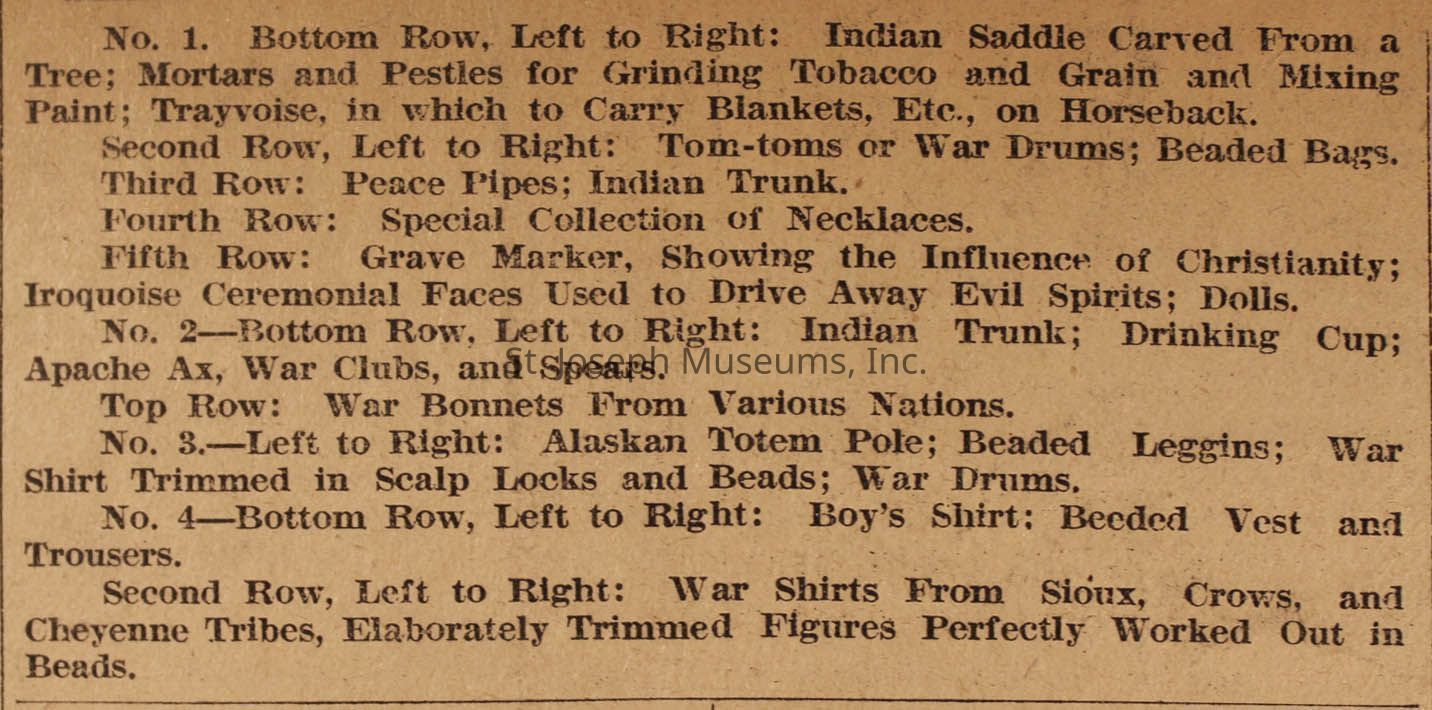
4.) The following two sections display a list of the items in the pictures, starting with
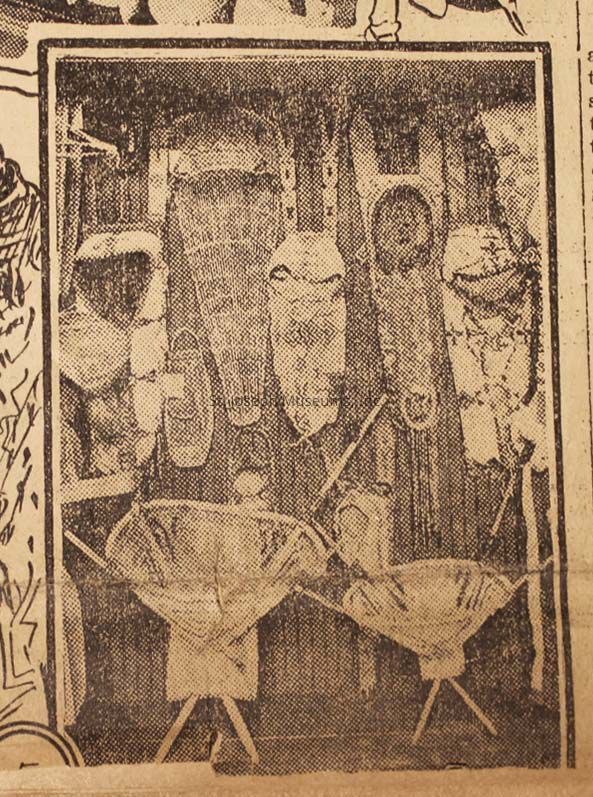
No. 1, the bottom row lists an Indian saddle carved from a tree, mortars and pestles for grinding tobacco and grain and mixing paint, and a tray used for carrying blankets on horseback. The second row features tom-toms or war drums and beaded bags, while the third row includes peace pipes and an Indian trunk. The fourth row displays a special collection of necklaces. In the fifth row, there is a grave marker showing Christian influence, Iroquois ceremonial faces to ward off evil spirits, and dolls.
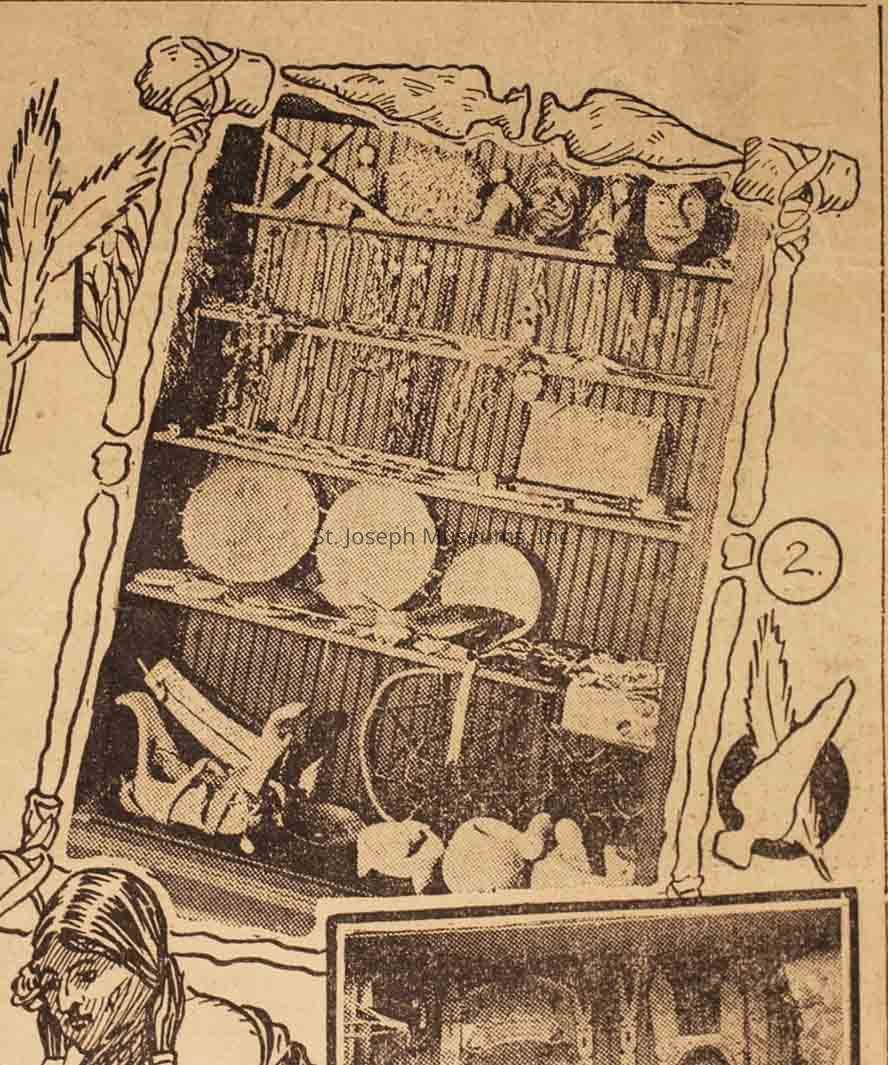
No. 2 describes the bottom row with an Indian trunk, drinking cup, an Apache ax, war clubs, and spears, with the top row showing war bonnets from various nations.
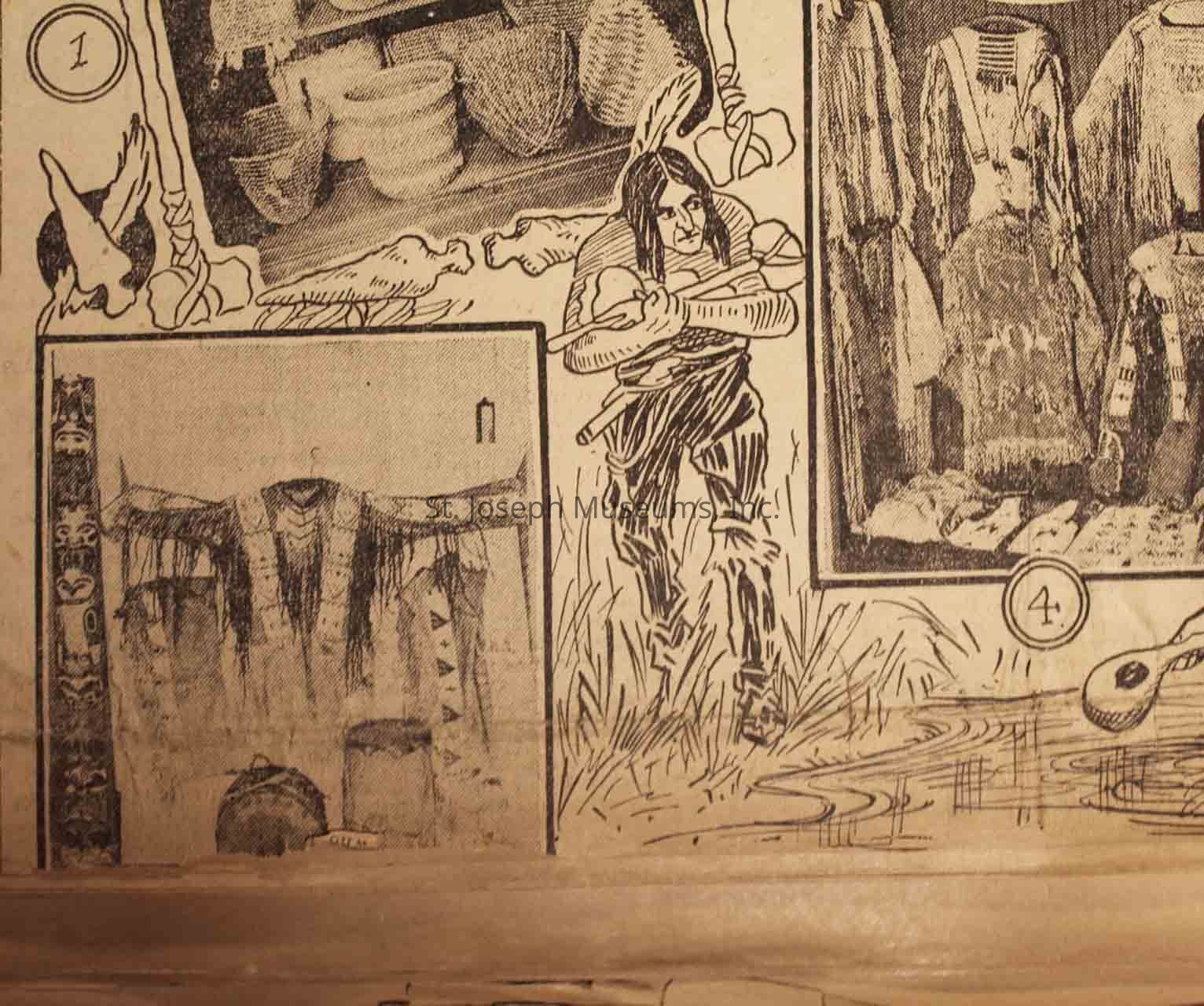
No. 3 describes, from left to right, an Alaskan totem pole, beaded leggings, a war shirt trimmed in scalp locks and beads, and war drums.
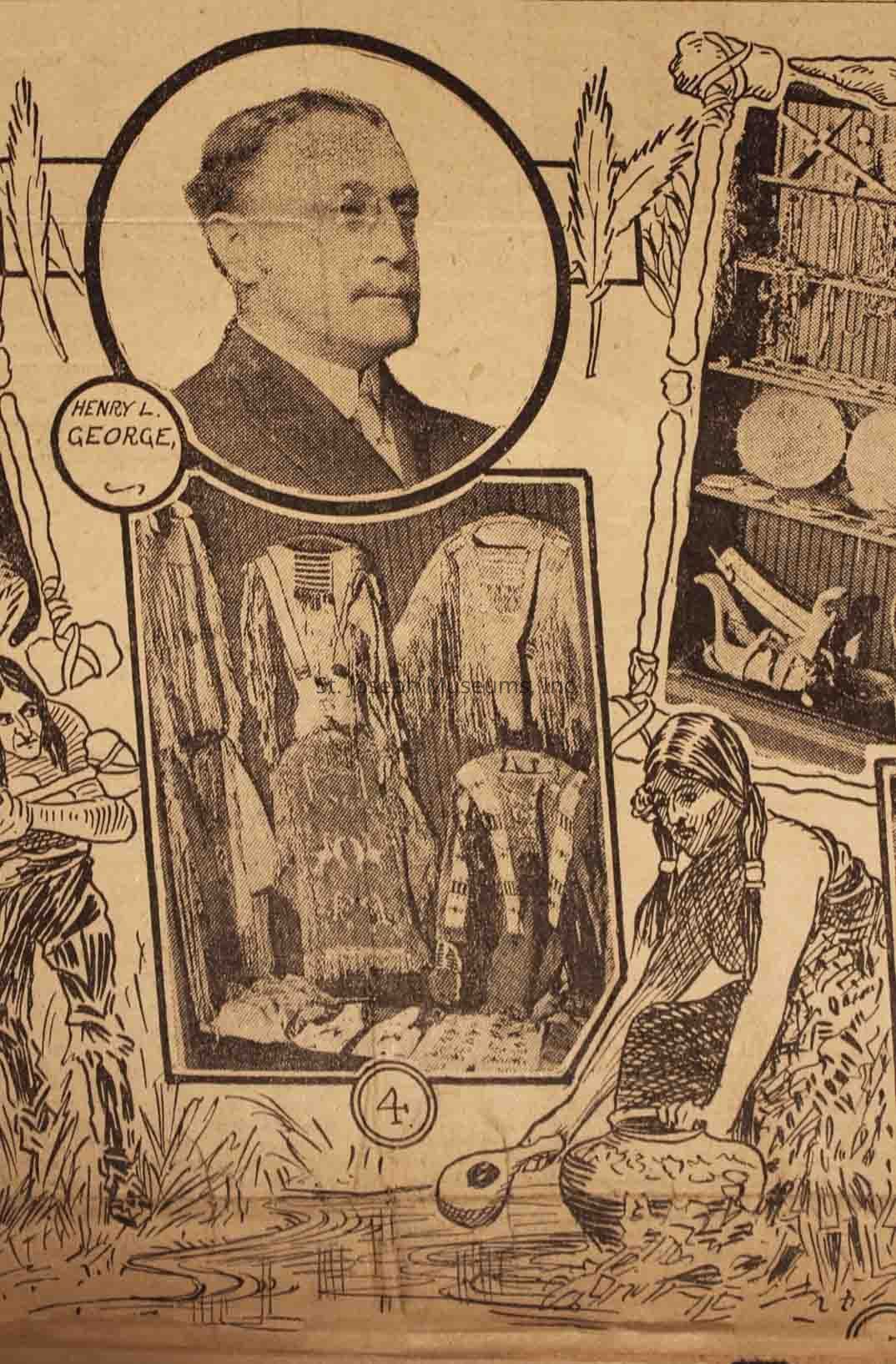
No. 4 describes shirts, vests and trousers. War shirts of the Sioux, Crows, and Cheyenne.
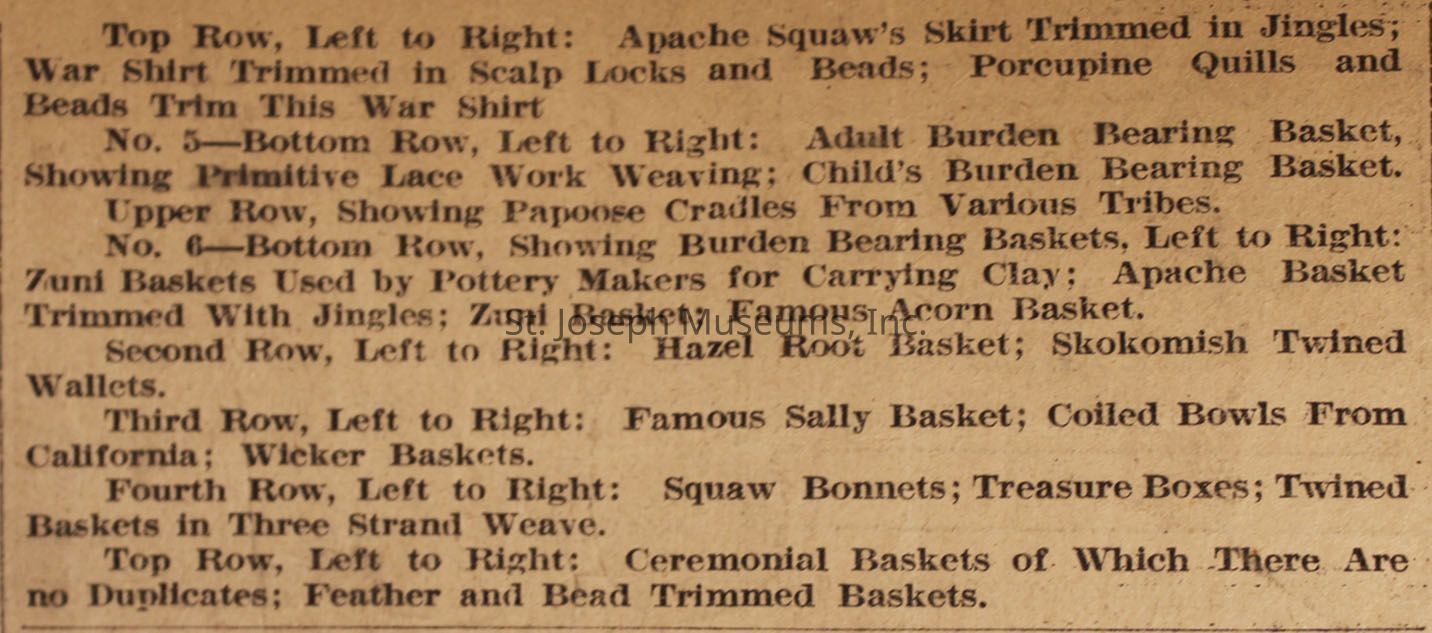
The next page continues an accounting of the articles detailing various traditional Native American items organized by rows. In the top row, items like an Apache squaw's skirt with jingles and a war shirt adorned with scalp locks, porcupine quills, and beads are listed.
No. 5 The bottom row includes burden bearing baskets, showcasing primitive lace work weaving from children and adults. The second row highlights baskets such as Hazel Root and Skokomish twined wallets. The third row features famous items like Sally baskets and coiled bowls from California, alongside wicker baskets. In the fourth row, there are squaw bonnets, treasure boxes, and twined baskets in a three-strand weave. The text notes ceremonial baskets with feather and bead trims, indicating their uniqueness and cultural significance.
No. 6 Famous Sally baskets, Squaw baskets, Skokomish twined wallets and feather and bead trimmed baskets.
5.) The next page finalizes the article It mentions the use of materials like wool, porcupine quills, and feathers, detailing the intricate and artistic designs that incorporate local resources such as grass, tree bark, and roots. The article seems to focus on both the practical and decorative aspects of these baskets.
6.) Finally, the last 5 photos are close-ups of the top of the page that display some of the contents of Georg's collection, and correspond to the listed items under 4.)Subject
St. Joseph Gazette
St. Joseph, MissouriSubject Person/Organization
Harry L. George Collection