Research Type
ResearcherNotes
Jewelry is an almost ubiquitous method of outward signaling that humans have been doing for hundreds of thousands of years. The material from which the jewelry is made often signals the wealth of the individual, while the style, type, and placement of the jewelry can indicate inclusion in a group as well as be outward expressions of individual style. Specific jewelry also carries a symbolic purpose in the form of charms and sigils; some pieces were thought to give the wearer positive energy, protection from curses, or honor a specific ancestor/deity/spirit.
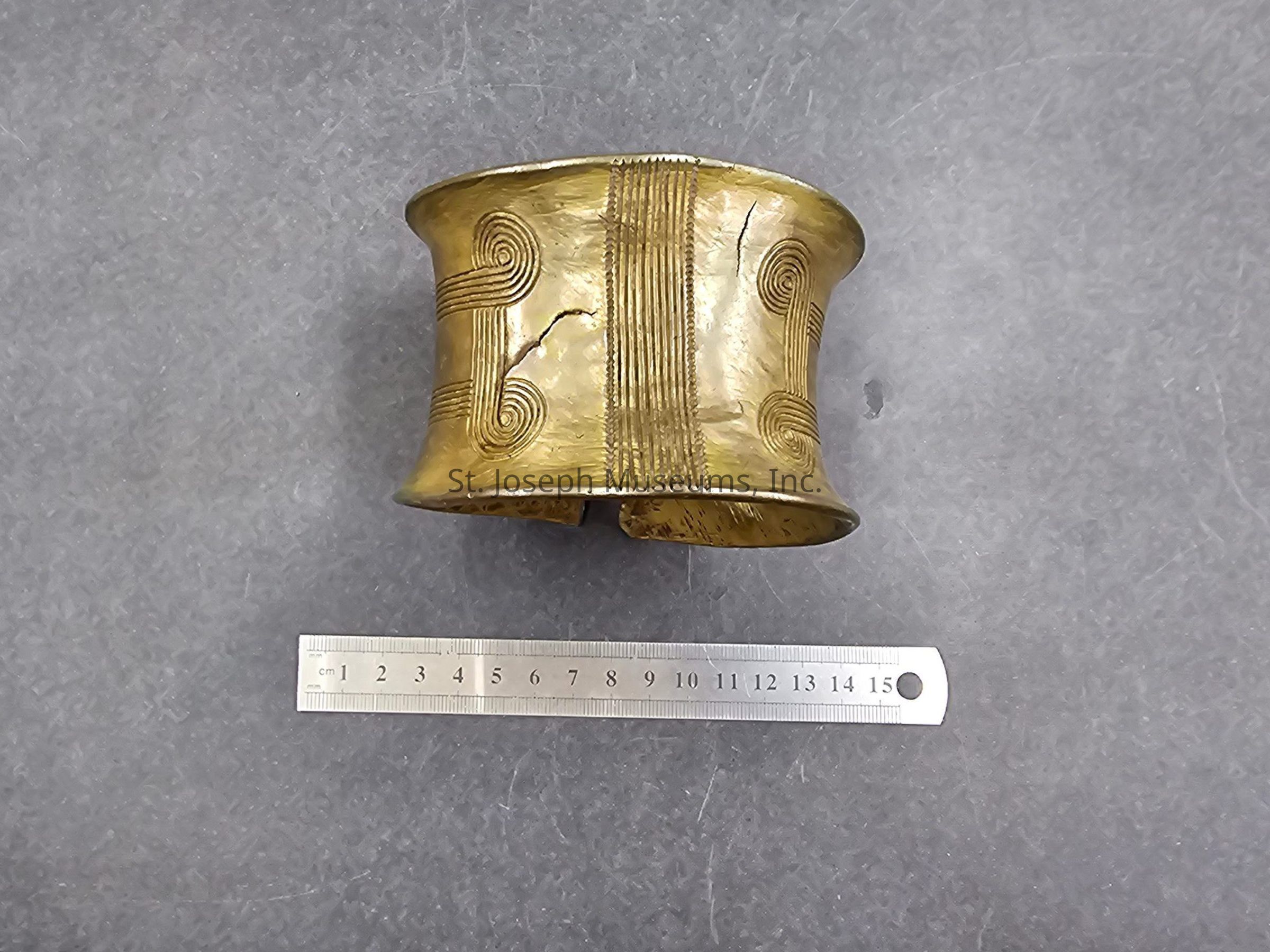
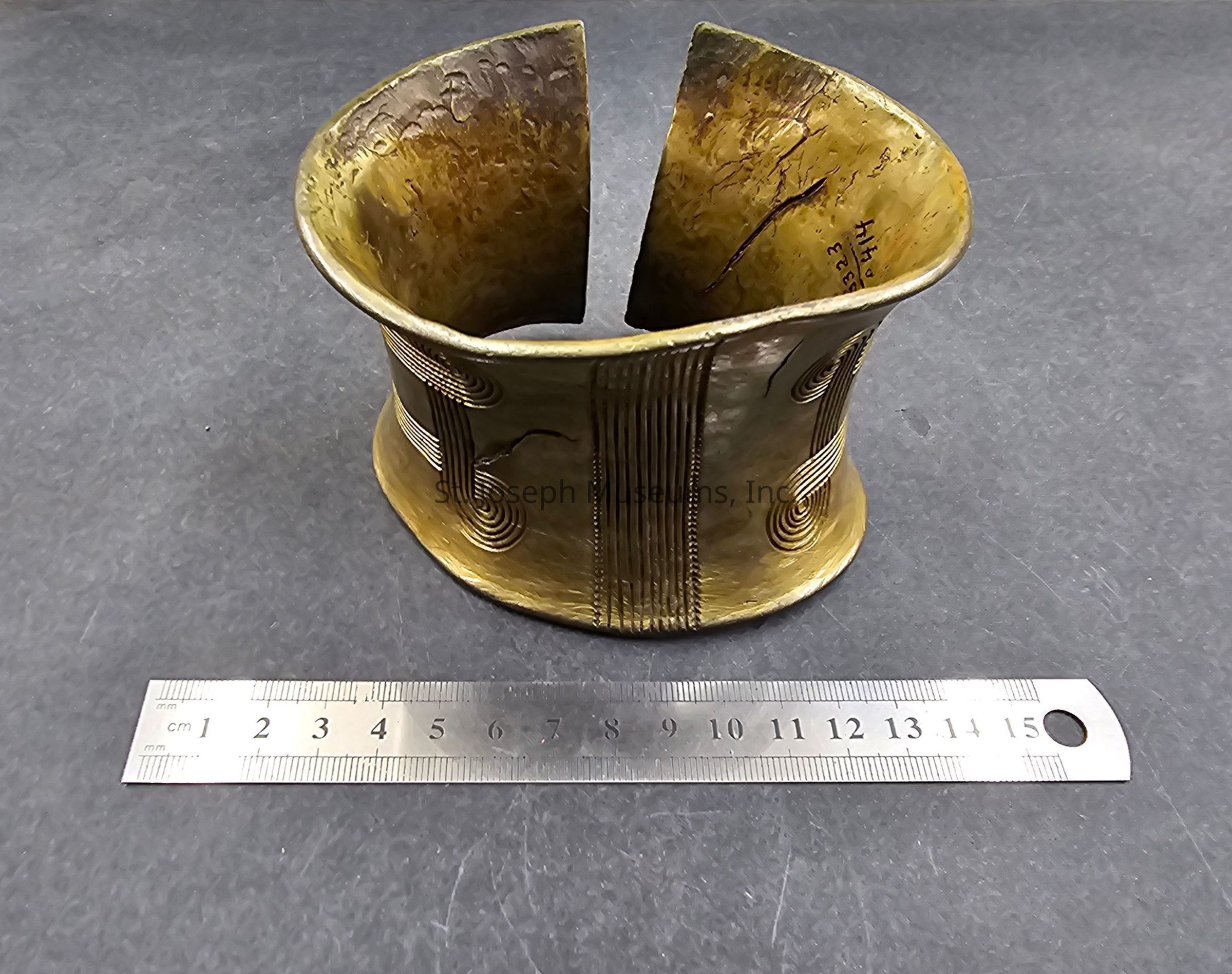
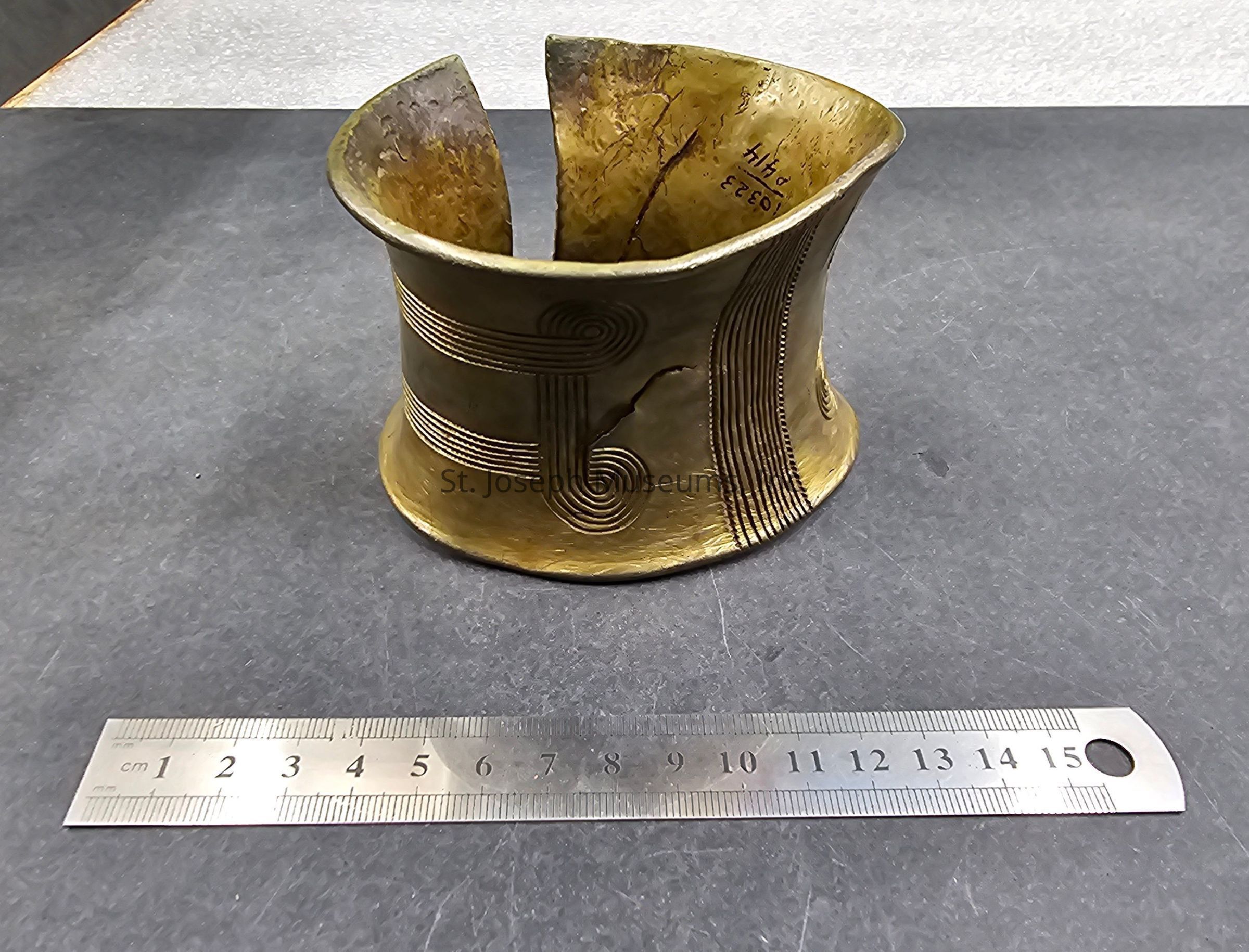
These brass pieces were likely worn around the upper arm or ankle as jewelry. This style of jewelry is found widely throughout Cameroon and Gabon. Ornamentation was used in very specific ways - the color, shape, design, material, and placement of jewelry all had complex symbols that served as indicators to the community at large. Most commonly associated with displays of wealth, jewelry could also indicate marital status, tribal affiliation, specific beliefs, serve as protection against spirts, etc.
While it is likely that this piece is ornamental, it is possible that it was used instead as manilla, or currency. Manilla would be worn on the body (usually as a necklet or armlet) and used in trade. The composition, style, and weight of the manilla would depend on what you could purchase and where it was accepted.