Name/Title
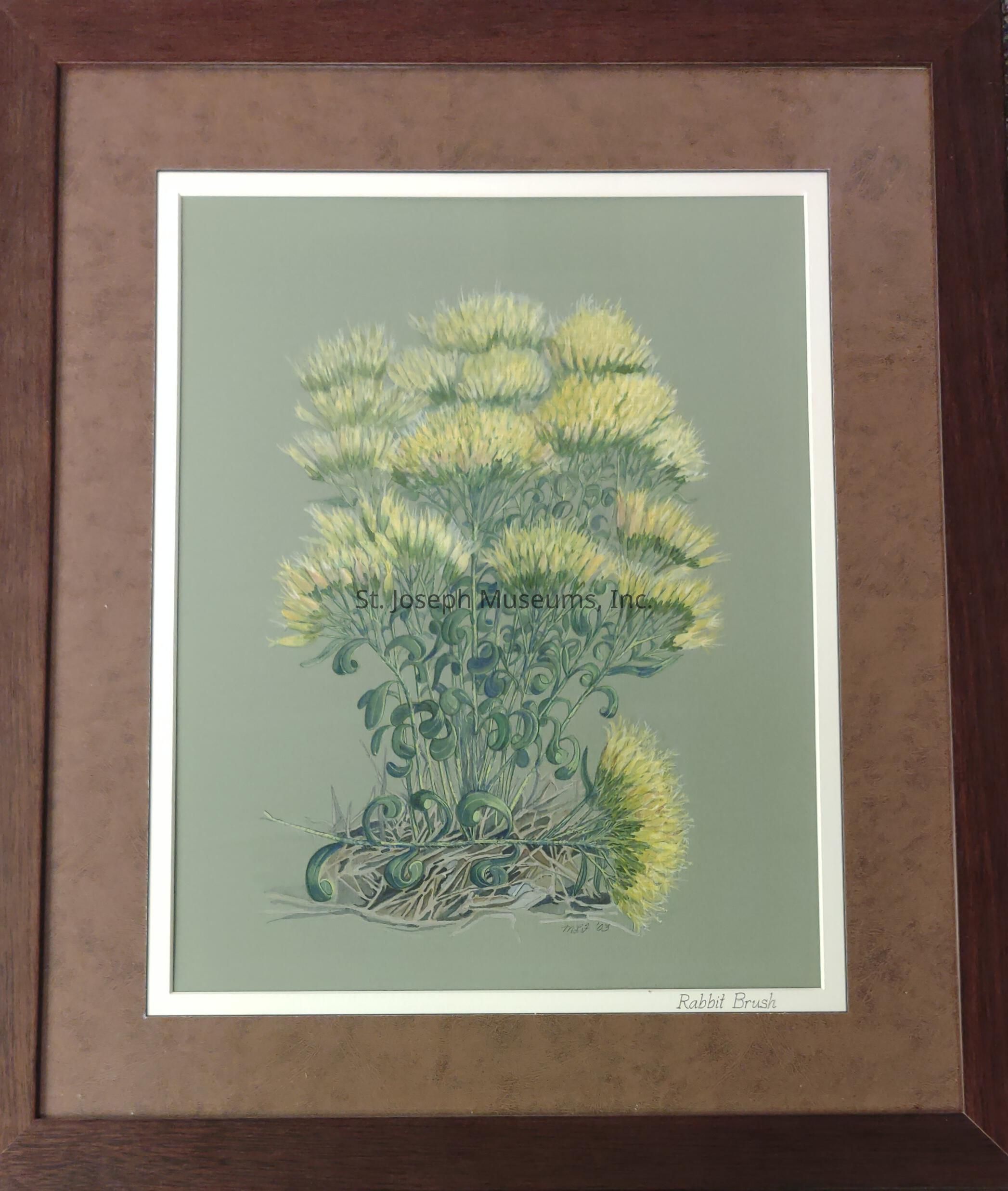
Rabbit Brush (Chrysothamnus viscidiflorus) WatercolorEntry/Object ID
2021.1.34 AScope and Content
Rabbit Brush (Chrysothamnus viscidiflorus) Watercolor, framed.
Also known as Low Rabbit Brush, Green Rabbit Brush, Douglas Rabbitbrush and Yellowbrush, Chrysothamnus viscidiflorus is a shrub of less than three feet tall that is native to dry plains from British Columbia and Montana, south to New Mexico, Arizona, and eastern California. It is one of the most widely distributed shrubs of western North America. The yellow blossoms appear from August through October. In the fall and early winter the plant is an important grazing food for livestock. Rabbit Brush is also thought to be a source of rubber and possibly a valuable source for resins for polymer plastics.Context
Originally designed by the St. Joseph Museum in the fall of 2004. Titled "Botanical Wonders of the Uncharted West. The Recorded Flora of the Lewis & Clark Expedition."Collection
Lewis and ClarkLexicon
LOC Thesaurus for Graphic Materials
Botanical drawings, Expeditions & surveysArchive Items Details
Title
Rabbit Brush (Chrysothamnus viscidiflorus) WatercolorCreator
Mary L. FletcherDate(s) of Creation
2004Subjects
Plants, Watercolor paintingsParts
Count
2Parts
Watercolor of plant and descriptive label, both framed.Condition
Overall Condition
Very GoodProvenance
Notes
"Botanical Wonders of the Uncharted West" visually depicts how well Lewis followed Jefferson's instructions. In recognition of this achievement, The S. Joseph Museums, Inc. commissioned accomplished artist Mary Fletcher to create fifty (50) selected paintings of flora documented by the Corps during their Journey. These framed watercolor originals are accompanied by similarly framed labels, generated by former Head of Research Jackie Lewin, which describe the corresponding plants with appropriate quotations from the Journals. This collection makes available for study and appreciation plants that were new to Lewis and Clark, but which Native Peoples already recognized as valuable sources of food, medicine, and tools. Some of these still remain a mystery to many, but all will enjoy their beauty, their diverse uses, and their accomplished renderings.