Name/Title
Raspberry (Rubus occidentalis)Entry/Object ID
2021.1.54 BScope and Content
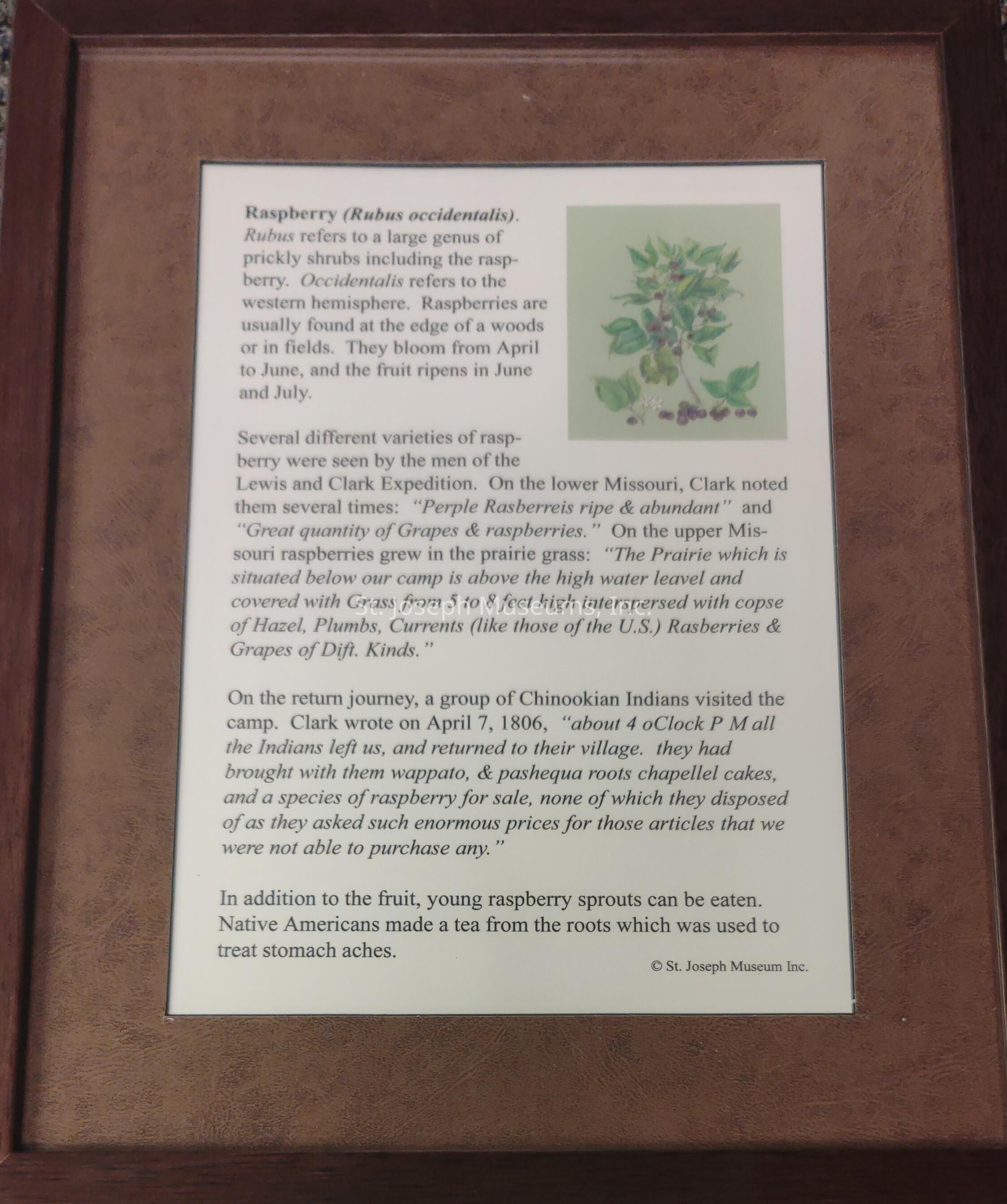
Raspberry (Rubus occidentalis) plant description, framed.
Rubus refers to a large genus of prickly shrubs including the raspberry. Occidentalis refers to the western hemisphere. Raspberries are usually found at the edge of a woods or in fields. They bloom from April to June, and the fruit ripens in June and July.
Several different varieties of raspberry were seen by the men of the Lewis and Clark Expedition. On the lower Missouri, Clark noted them several times: "Perple Rasberreis ripe & abundant" and "Great quantity of Grapes & raspberries." On the upper Missouri raspberries grew in the prairie grass: "The Prairie which is situated below our camp is above the high water leavel and covered with Grass from 5 to 8 feet high interspersed with copse of Hazel, Plumbs, Currents (like those of the U.S.) Rasberries & Grapes of Dift. Kinds."
On the return journey, a group of Chinookian Indians visited the camp. Clark wrote on April 7, 1806, "about 4oClock P M all the Indians left us, and returned to their village. they had brought with them wappato, & pashequa roots chapellel cakes, and a species of raspberry for sale, none of which they disposed of as they asked such enormous prices for those articles that we were not able to purchase any."
In addition to the fruit, young raspberry sprouts can be eaten. Native Americans made a tea from the roots which was used to treat stomach aches.Context
Originally designed by the St. Joseph Museum in the fall of 2004. Titled "Botanical Wonders of the Uncharted West. The Recorded Flora of the Lewis & Clark Expedition."Collection
Lewis and ClarkLexicon
LOC Thesaurus for Graphic Materials
Botanical drawings, Expeditions & surveysArchive Items Details
Title
Raspberry (Rubus occidentalis)Creator
Mary L. FletcherDate(s) of Creation
2004Subjects
Plants, Watercolor paintingsParts
Count
2Parts
Watercolor of plant and descriptive label, both framed.Condition
Overall Condition
Very GoodProvenance
Notes
"Botanical Wonders of the Uncharted West" visually depicts how well Lewis followed Jefferson's instructions. In recognition of this achievement, The S. Joseph Museums, Inc. commissioned accomplished artist Mary Fletcher to create fifty (50) selected paintings of flora documented by the Corps during their Journey. These framed watercolor originals are accompanied by similarly framed labels, generated by former Head of Research Jackie Lewin, which describe the corresponding plants with appropriate quotations from the Journals. This collection makes available for study and appreciation plants that were new to Lewis and Clark, but which Native Peoples already recognized as valuable sources of food, medicine, and tools. Some of these still remain a mystery to many, but all will enjoy their beauty, their diverse uses, and their accomplished renderings.