Name/Title
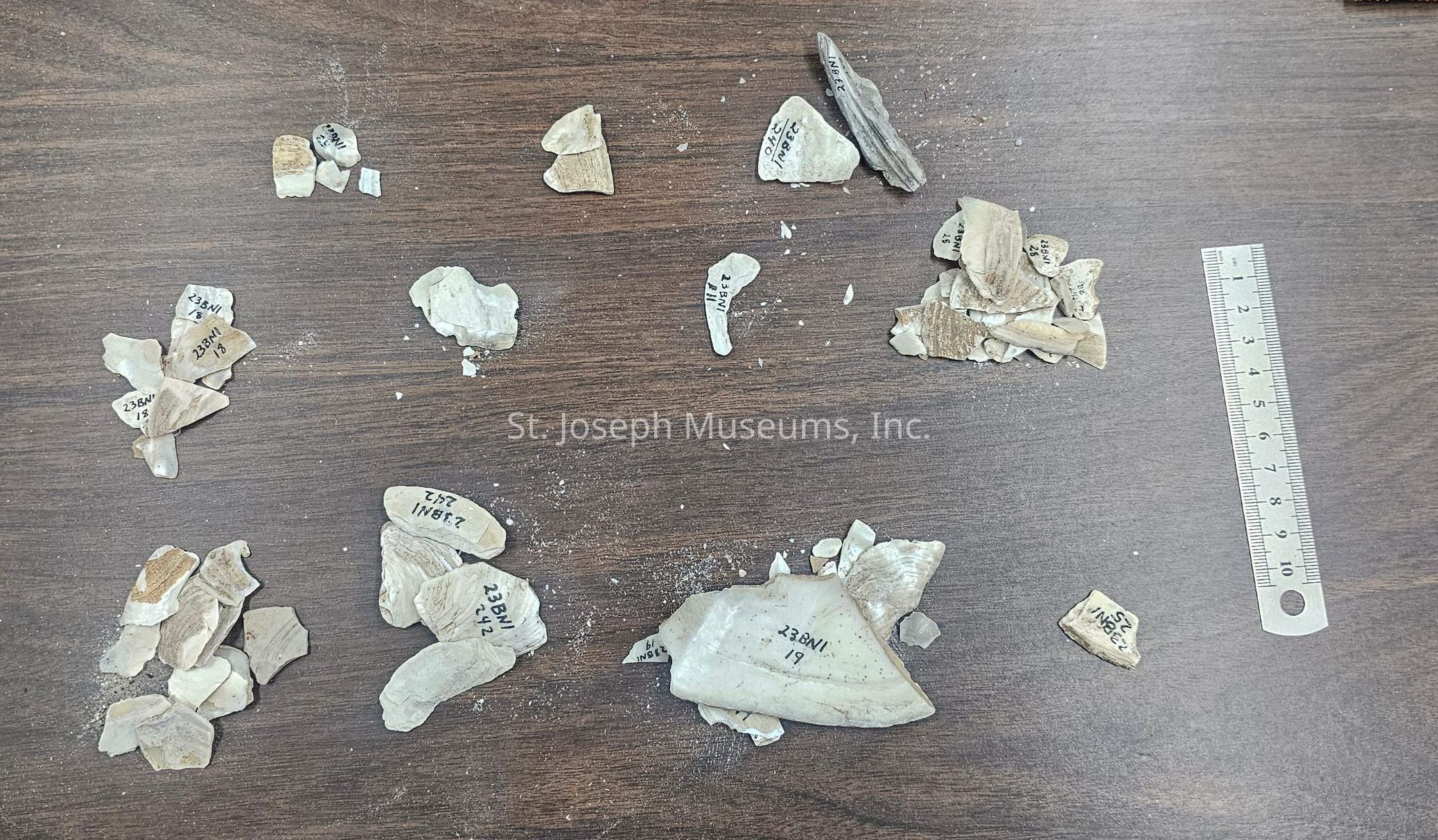
Sacks of ShellsEntry/Object ID
2001.15.381Description
9616
23BN1
Henning 1966 Dig
Sq FF
Sacks of Shells
Count 11
270 - Henning; Sorted Shell; Unid. Mussel; Sq FF
28 - Henning; Sq FF; Shell; Unid Mussel
240 - Henning; Sq FF; G.L. #4; Bag 1/2; Shell; Unid Mussel
242 - Henning; Junc. EE and FF; Shells (sorted); Unid Mussel
28 - Henning; Sorted Shells; "Miscellaneous Goodies"; Square FF; Level 5; 7/1/66; Powers and Sigstad; #26 and 27 inside; Bag 1 of 2; Bag 6 of 7; Unid Mussel
19 - Henning; Sq FF; General Level 5; 24-30"; Bag 5 of 7; 7/1/66; Powers and Sigstad; Shell
25 - Sq FF; Level 7; 36' to 42"; Sorted Shells' Page, Baker, Henning; 7/2/66; Bag 2/2; Unid Mussel
25 - Sq FF; General Level 5; 7/1/66; Powers, Henning; Bag 2 of 7; Unid Mussel; Sorted Shells
11 - Henning; Sq FF; Level 5; 7/1/66; Powrs and Sigstad; Bag 7 of 7
276 - Henning; West Trench; Test at Junction of EE and FF; 7/3/66; 4 of 4 bags; Unid Mussel; Shell
18 - Henning; Sq FF; 7/1/66; General Level 5; 24"-30"; Powers and Sigstad; ShellCollection
23BN1Ethnography
Culture/Tribe
Kaw Nation
Native American
Notes
See "Weblinks" for more information on Kaw NationLexicon
Search Terms
Archaeological, Shell, King Hill, 23BN1Provenance
Notes
The King Hill Site (23BN1) is located in a residential area of the city of St. Joseph, Missouri. The archaeological site is situated on top of a high, west facing bluff overlooking the Missouri River Valley. It was excavated by members of the St. Joseph Chapter of the Missouri Archaeological Society and the Summer Field School of the University of Missouri - Columbia over a 10 day period in the summer of 1966 under a cooperative agreement with the St. Joseph Museum. Work was continued in the fall of that year and into the next by the St. Joseph Chapter. Additional work was conducted at the site by the University of Nebraska.
Pottery and limited trade goods in the upper levels indicate a late Oneota, early historic occupation, possibly by the Kansa tribe, about AD 1700. The site was placed on the National Register of Historic Sites in 1968 and a preliminary report was issued that same year. In 1972 further excavations, funded by the National Science Foundation, were undertaken by the University of Nebraska-Lincoln. The Missouri Field School and the University of Nebraska excavations were directed by Dr. Dale R. Henning" (Cutler and Blake 1982).
Information gathered from: http://users.stlcc.edu/mfuller/kinghill.html