Research Type
CuratorPerson
Sara WilsonDate
Mar 12, 2022Notes
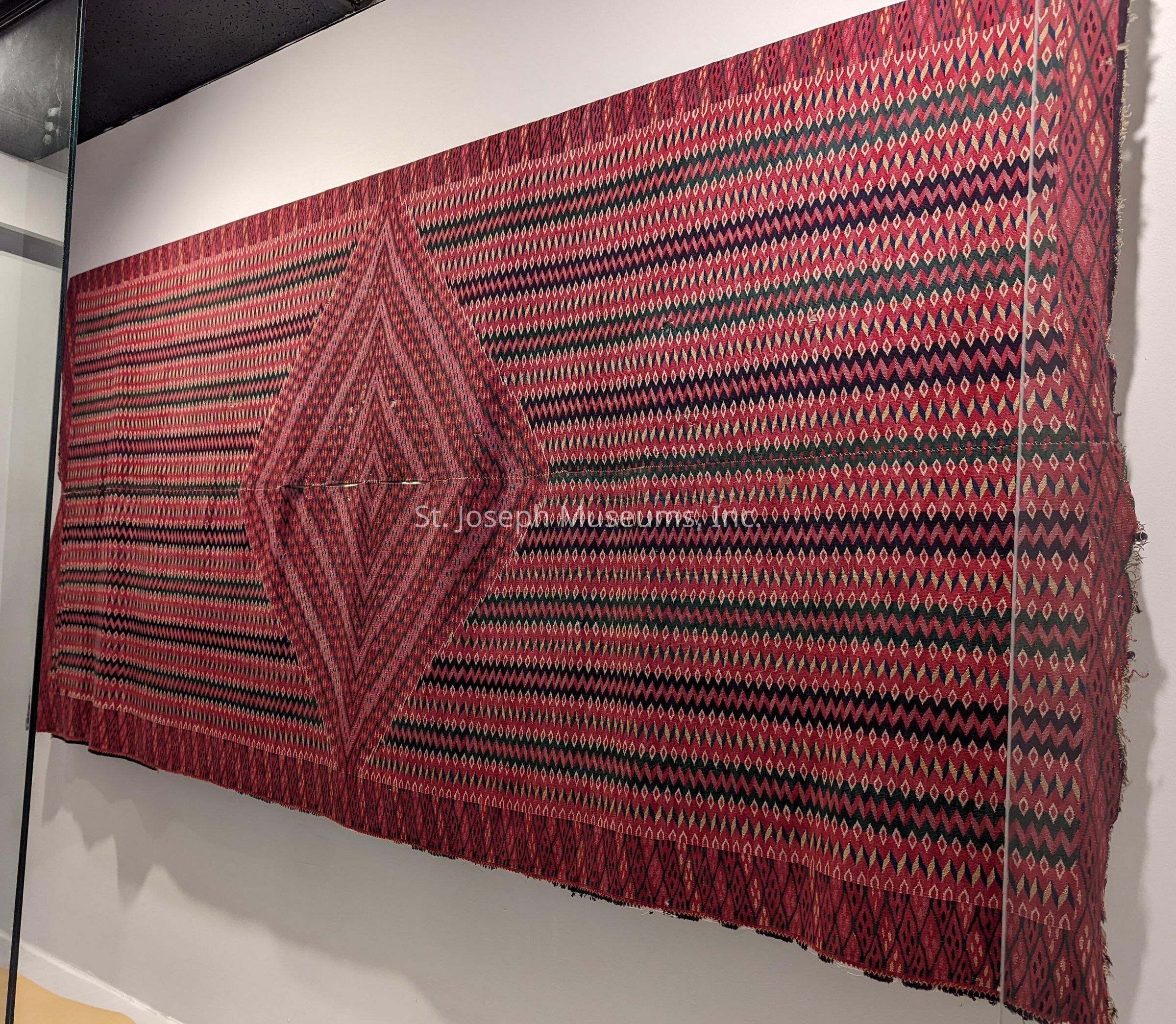
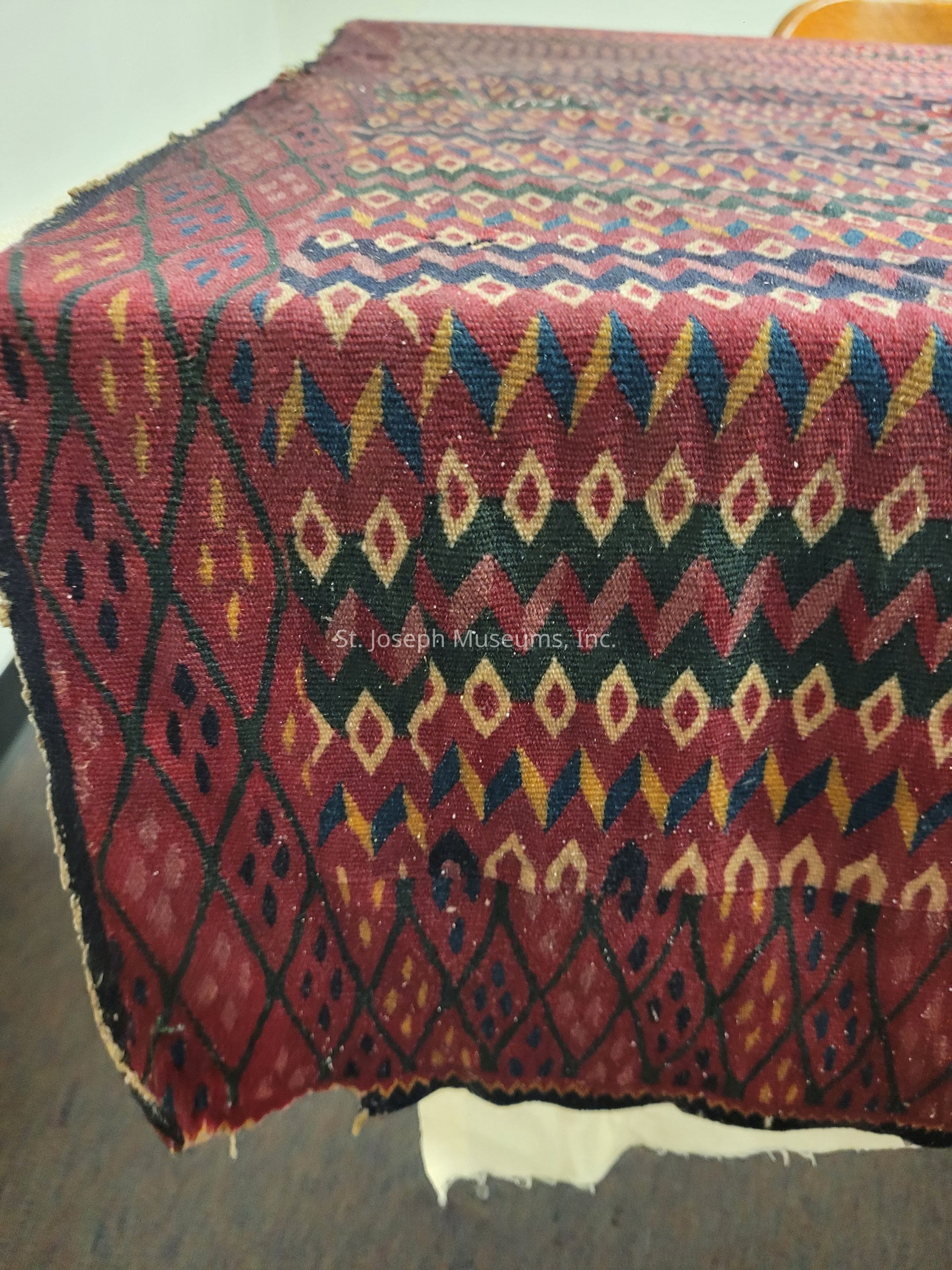
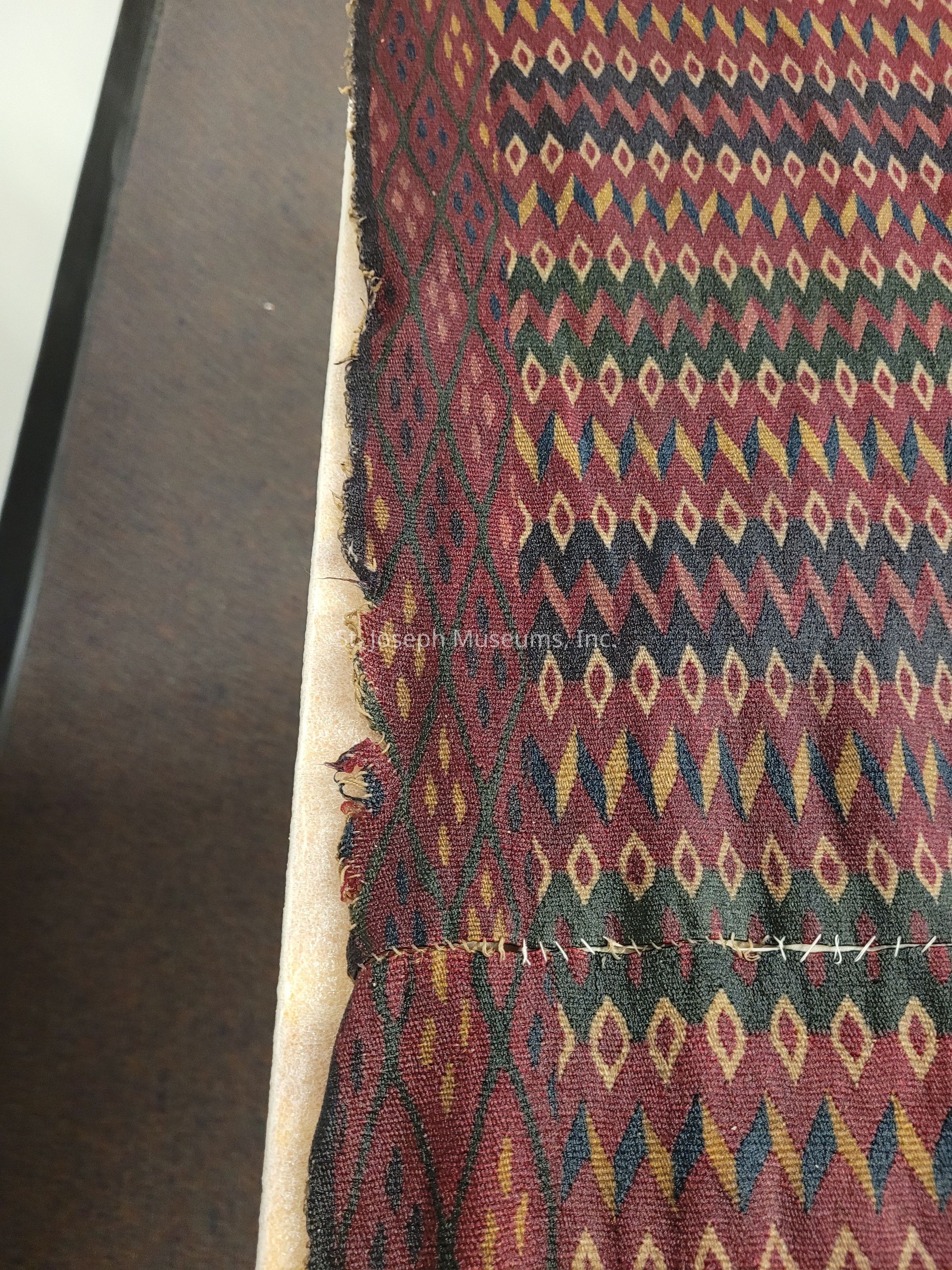
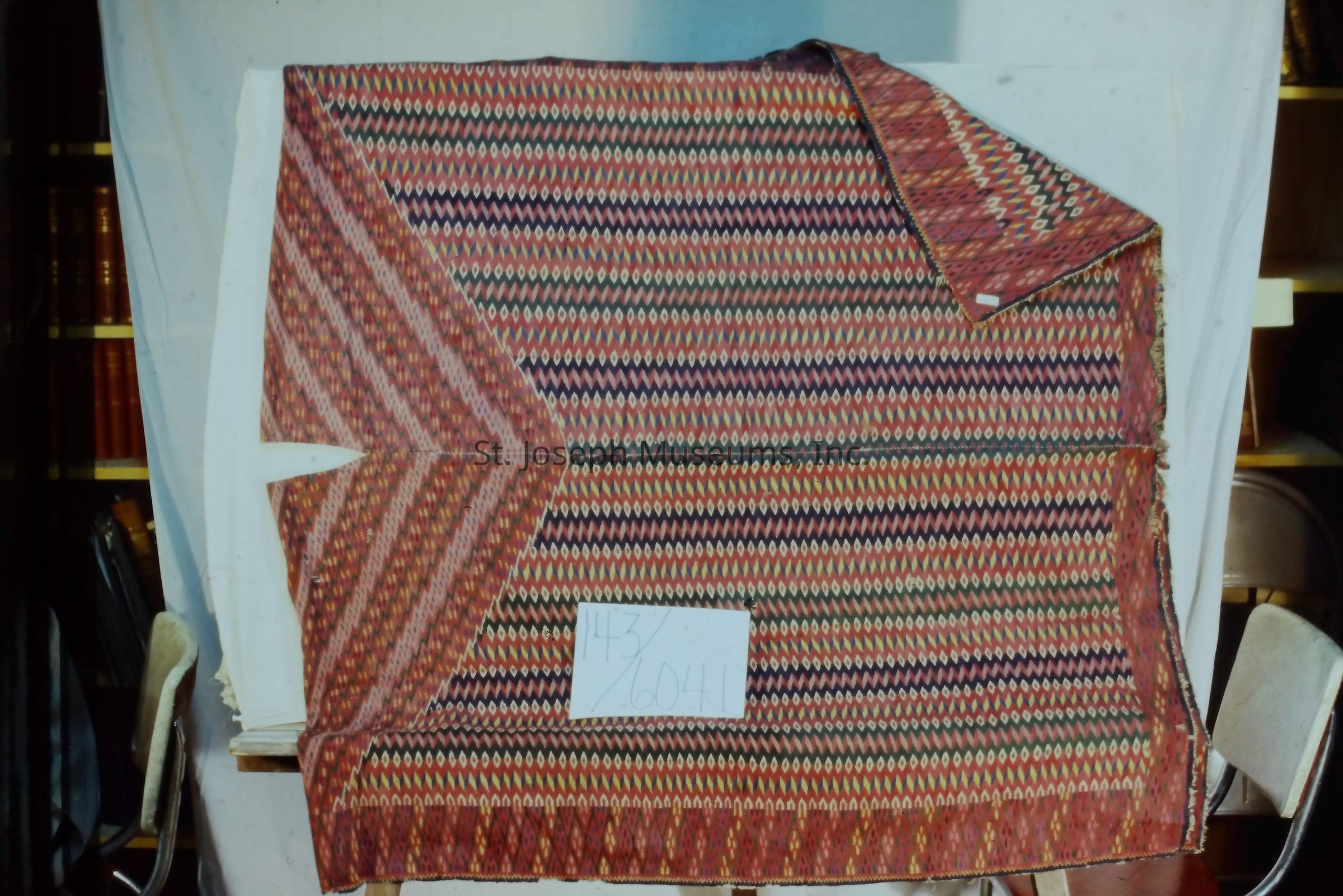
Nineteenth-century Mexican Saltillo serape.
The Saltillo serapes of northern Mexico were among the most flamboyant textiles woven in North America during the eighteenth and nineteenth centuries. In their time, the period from 1750 to 1850, they were a prestigious symbol worn by Spanish colonial gentlemen. Saltillos were woven all over “New Spain” but they take their generic name from the town of their supposed birthplace, Saltillo, in the present state of Coahuila. The textile took on nationalist overtones after Mexico’s independence from Spain in 1821. Horse culture and its accoutrements, from fine horse to fine serape, became distinctively Mexican as well as the epitome of male fashion. The prized outer garment could be worn over one shoulder, wrapped and draped like a shawl during the day, or could serve as a blanket at night. A neck slit permitted it to be worn as a poncho. As the Spanish cult of the horse became entrenched in the New World, the serape took on another identity, rolled and tucked behind the saddle.
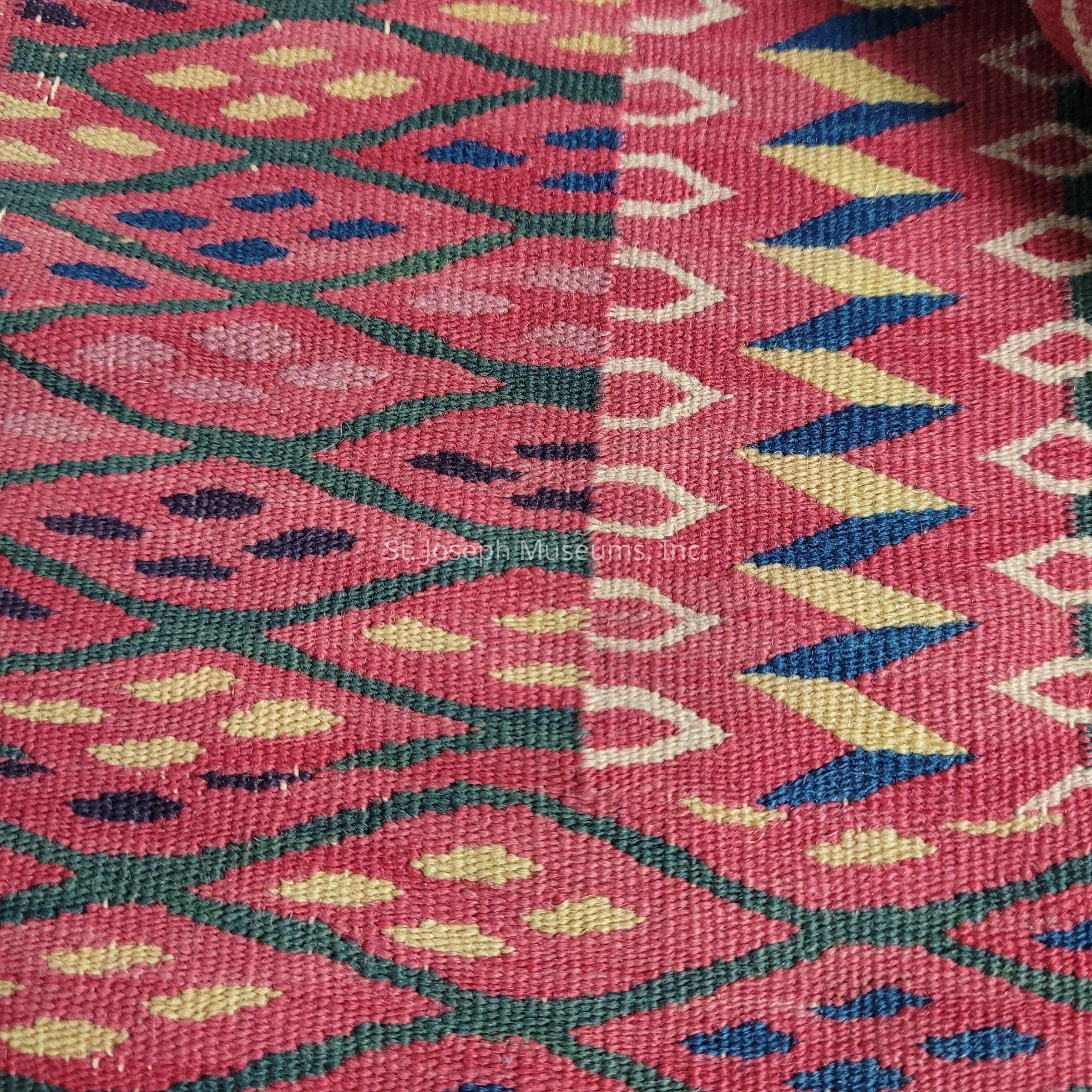
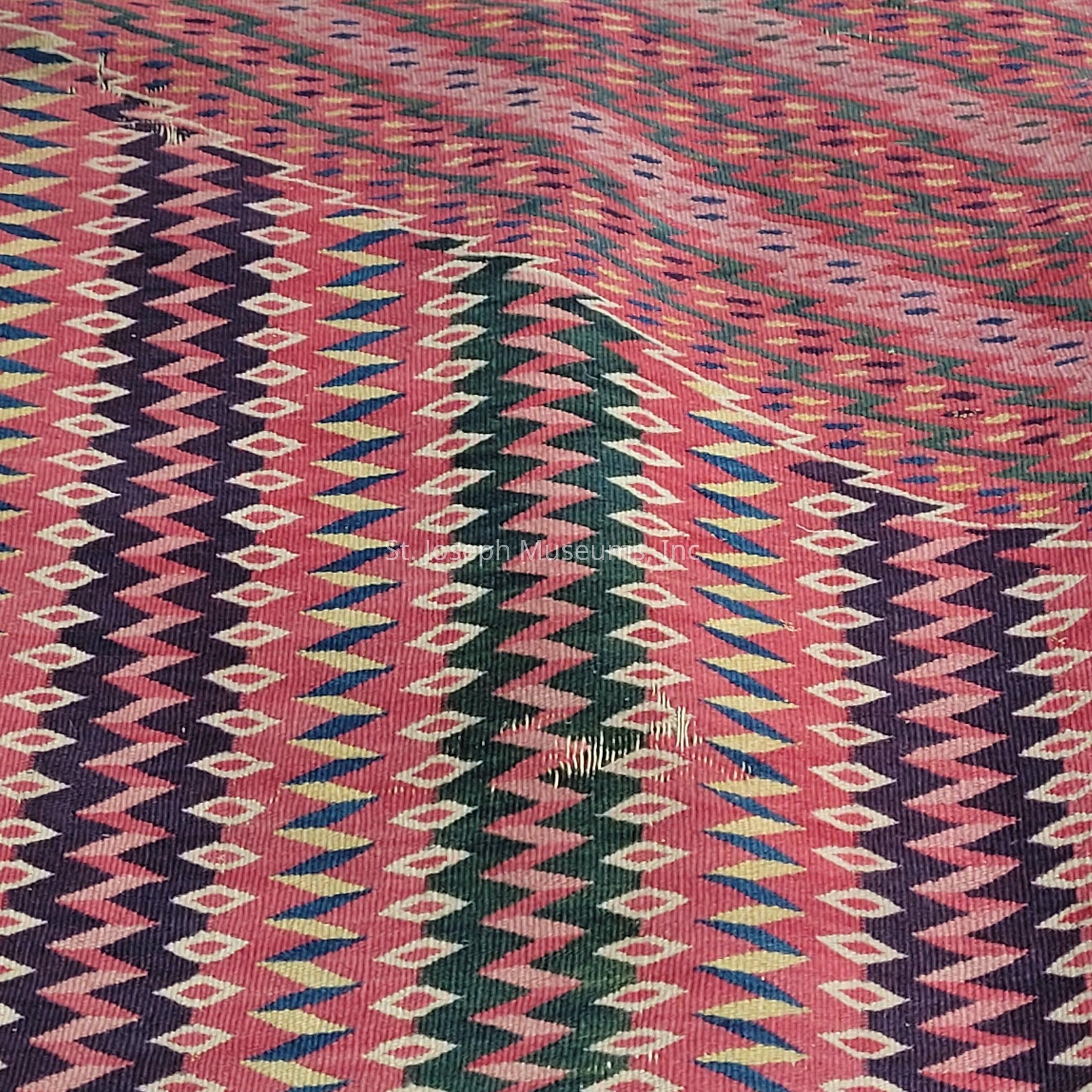
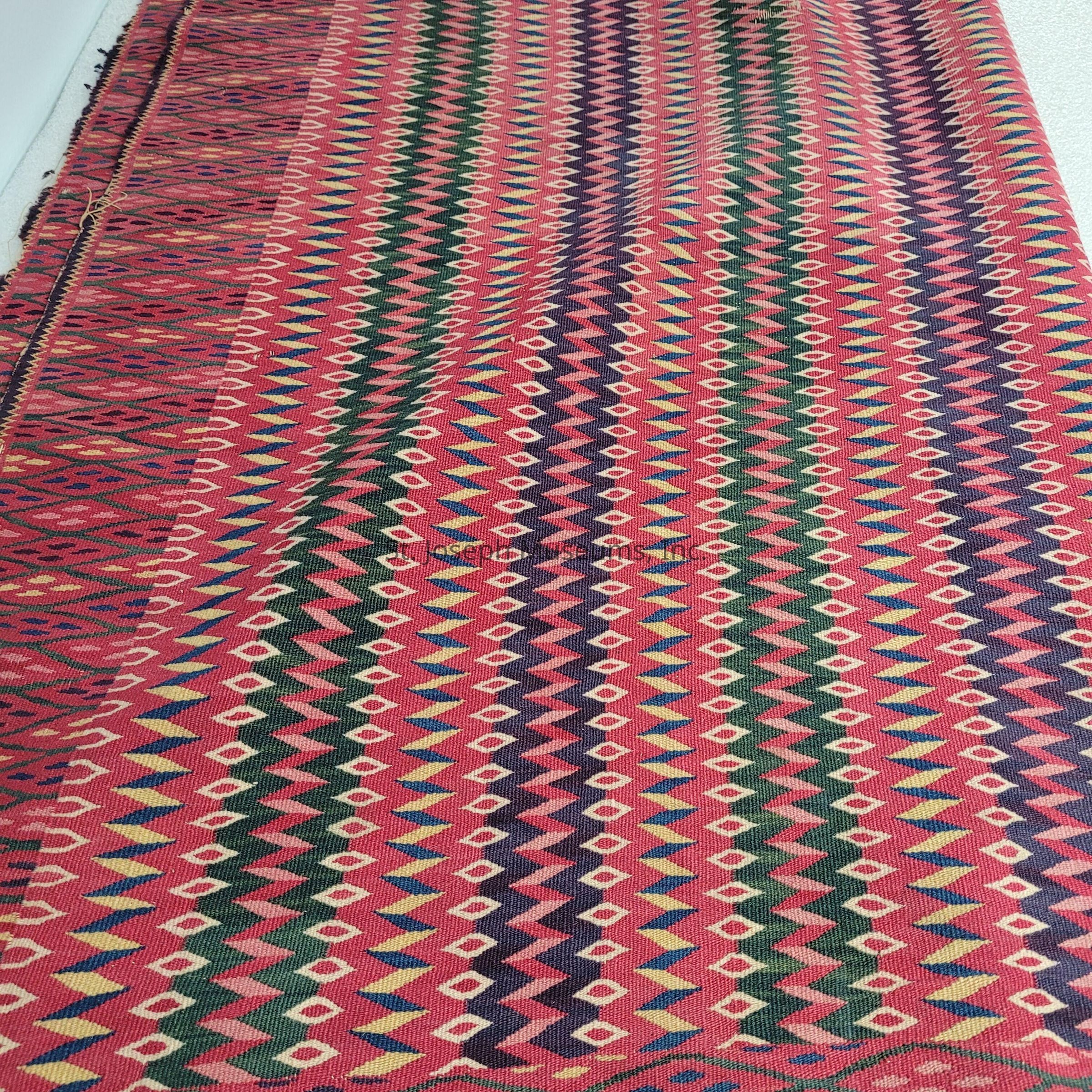
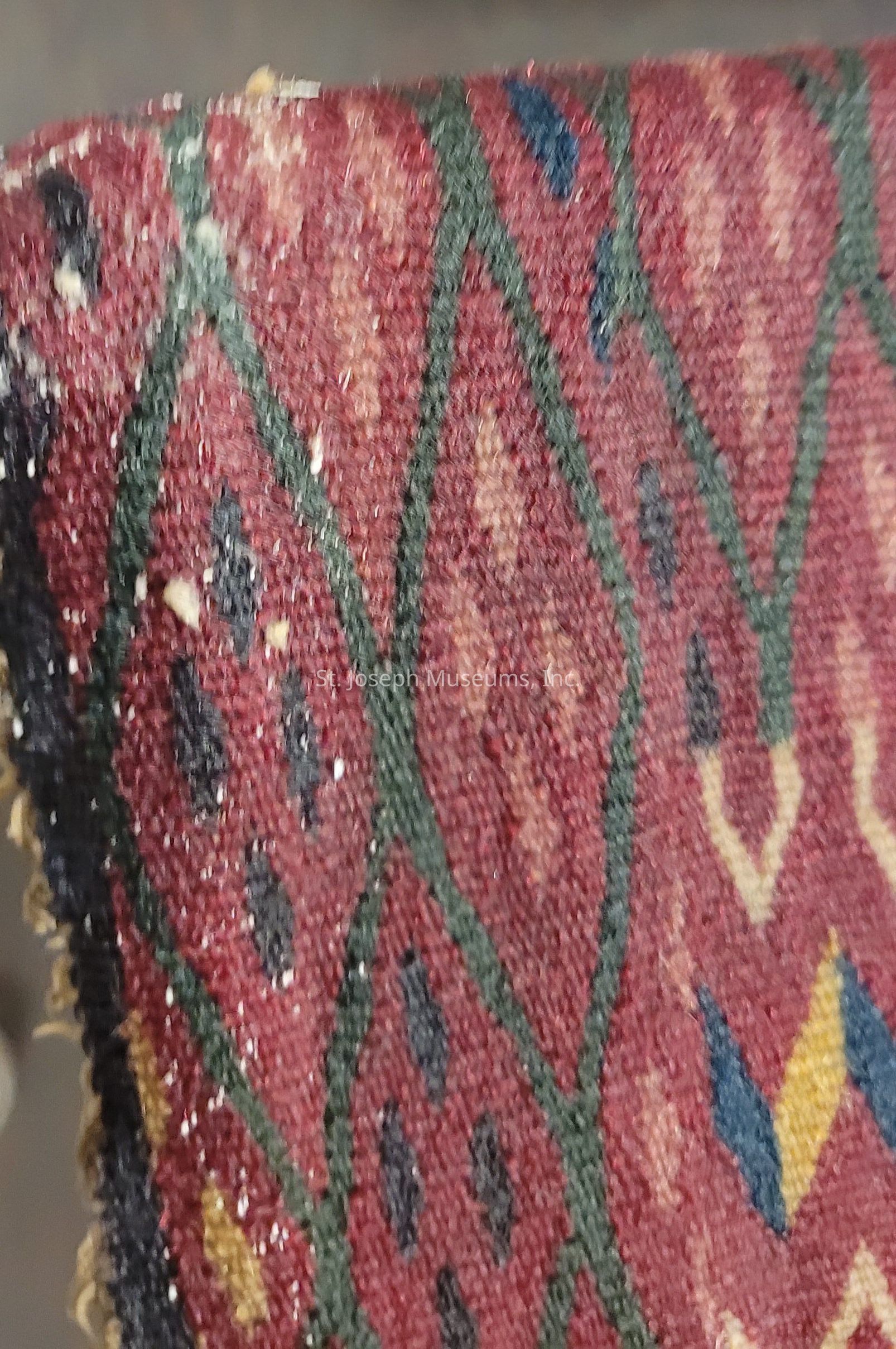
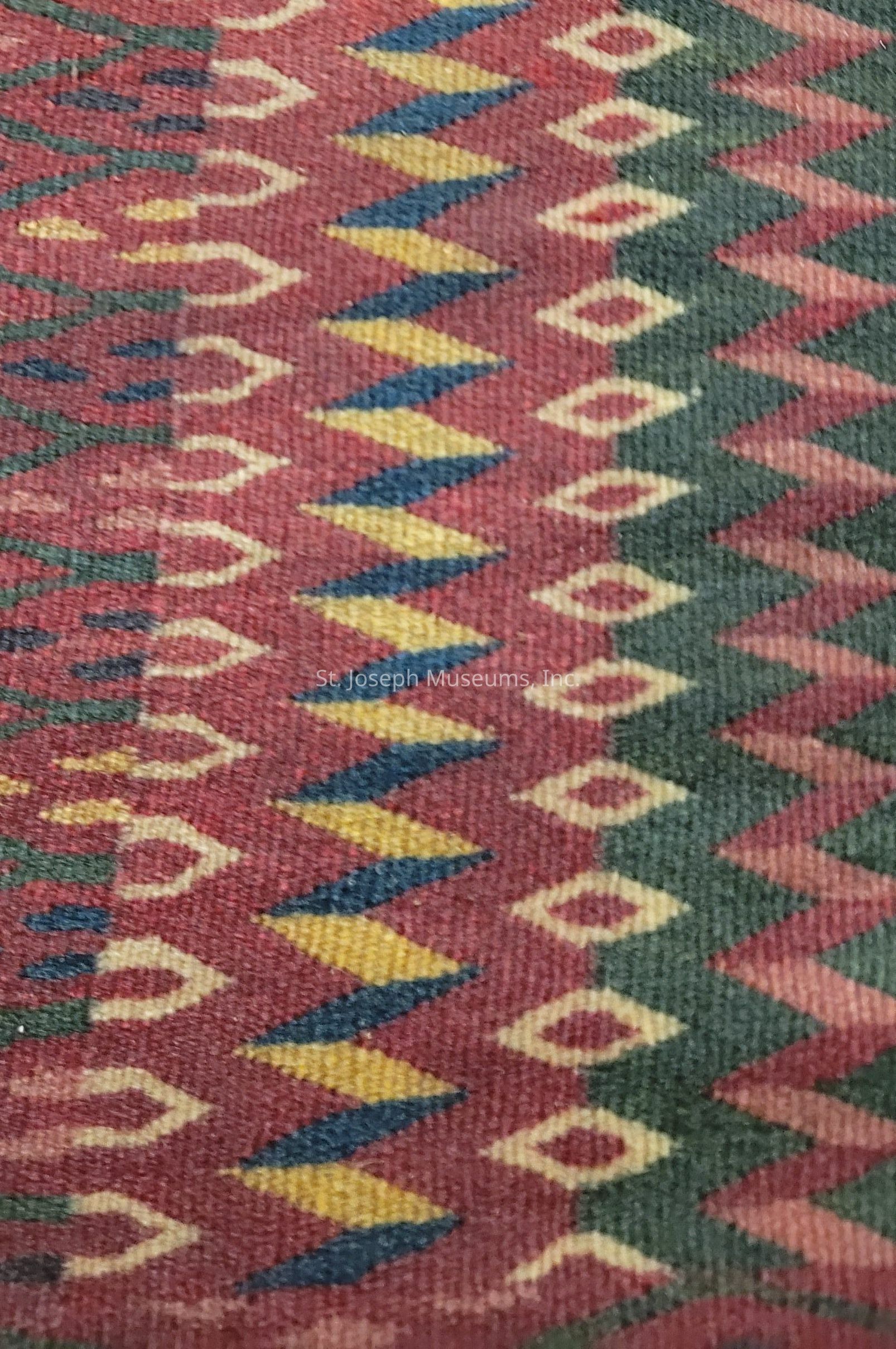
Saltillos were produced by a combination of Spanish and native Indian labor. Woven of cotton and wool in two panels with distinctive design structures, a serape required as much as two years to weave and was an expensive purchase. The unique workmanship of hand-woven serapes preserved their high value past the mechanization of wool weaving. They were made by traditional craft as late as 1850. Each Classic Saltillo possesses three distinct elements: the outside border; the field containing either a vertical mosaic, diagonal grid, or a spot repeat; and the all-important center, which contains either a concentric diamond or a scalloped round center. As in this example, Classic Saltillos are woven in stunning spectrums of combined vegetal and other natural dyes in combinations of blue (indigo), red (cochineal) and (Brazil wood) yellow and green.Notes
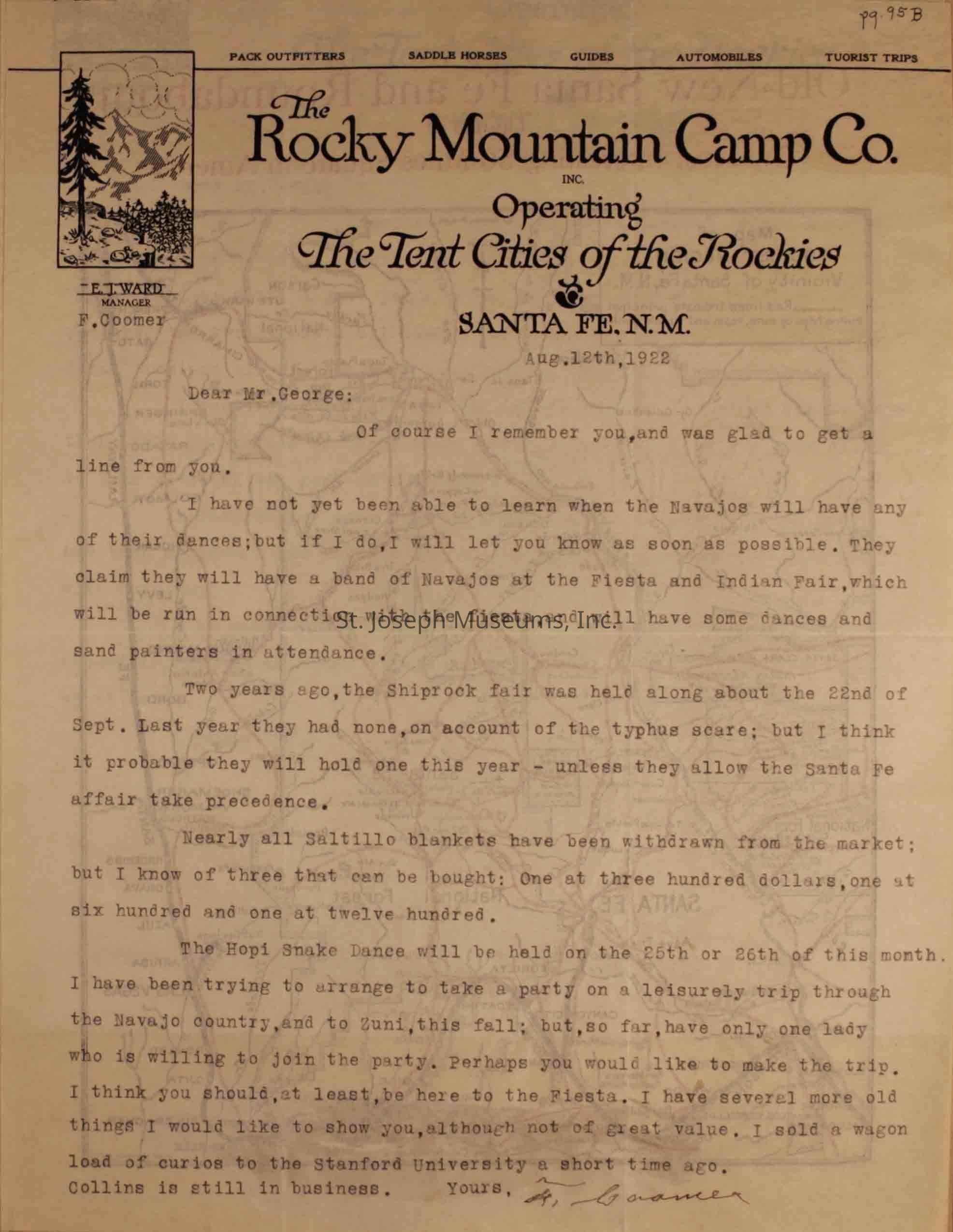
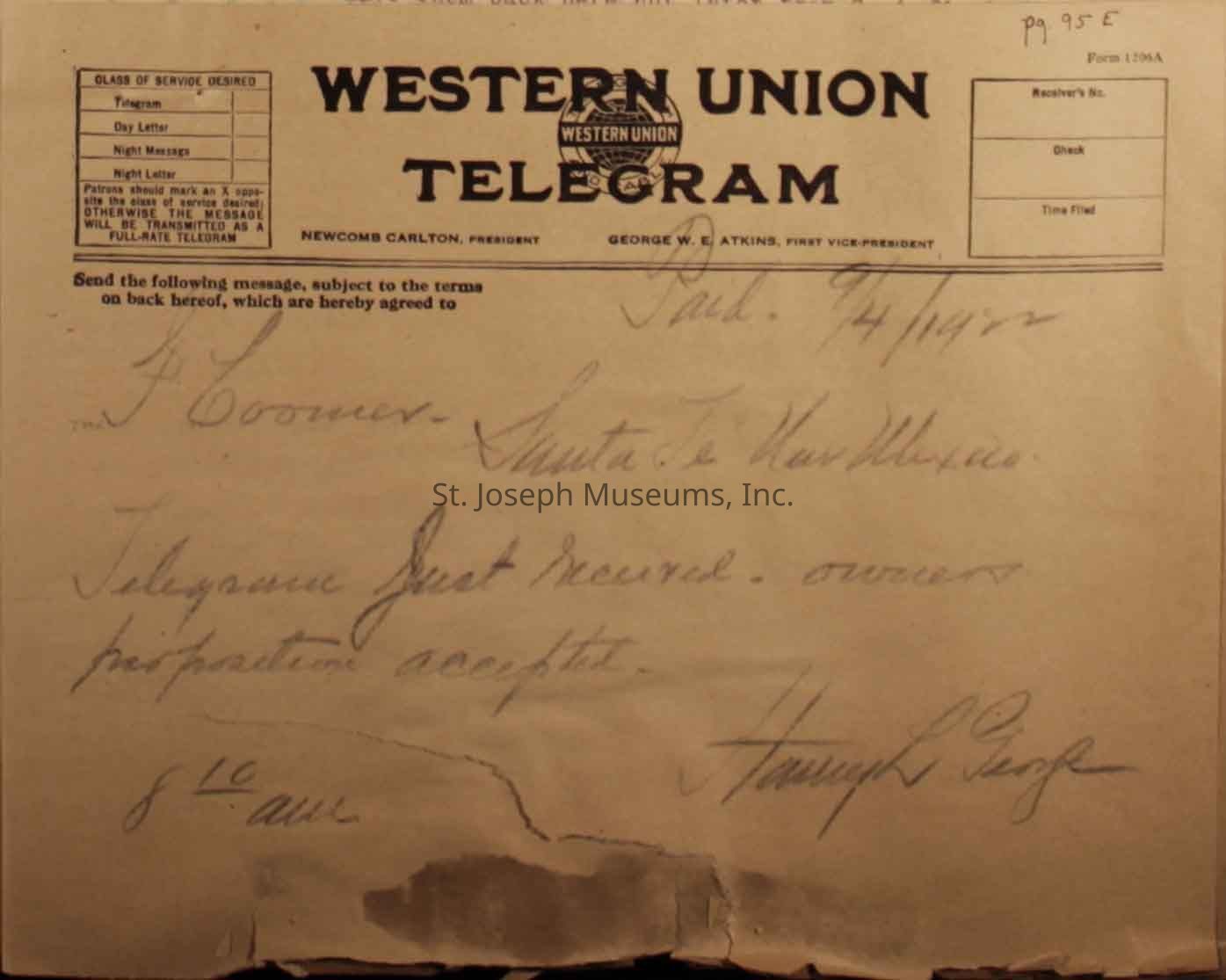
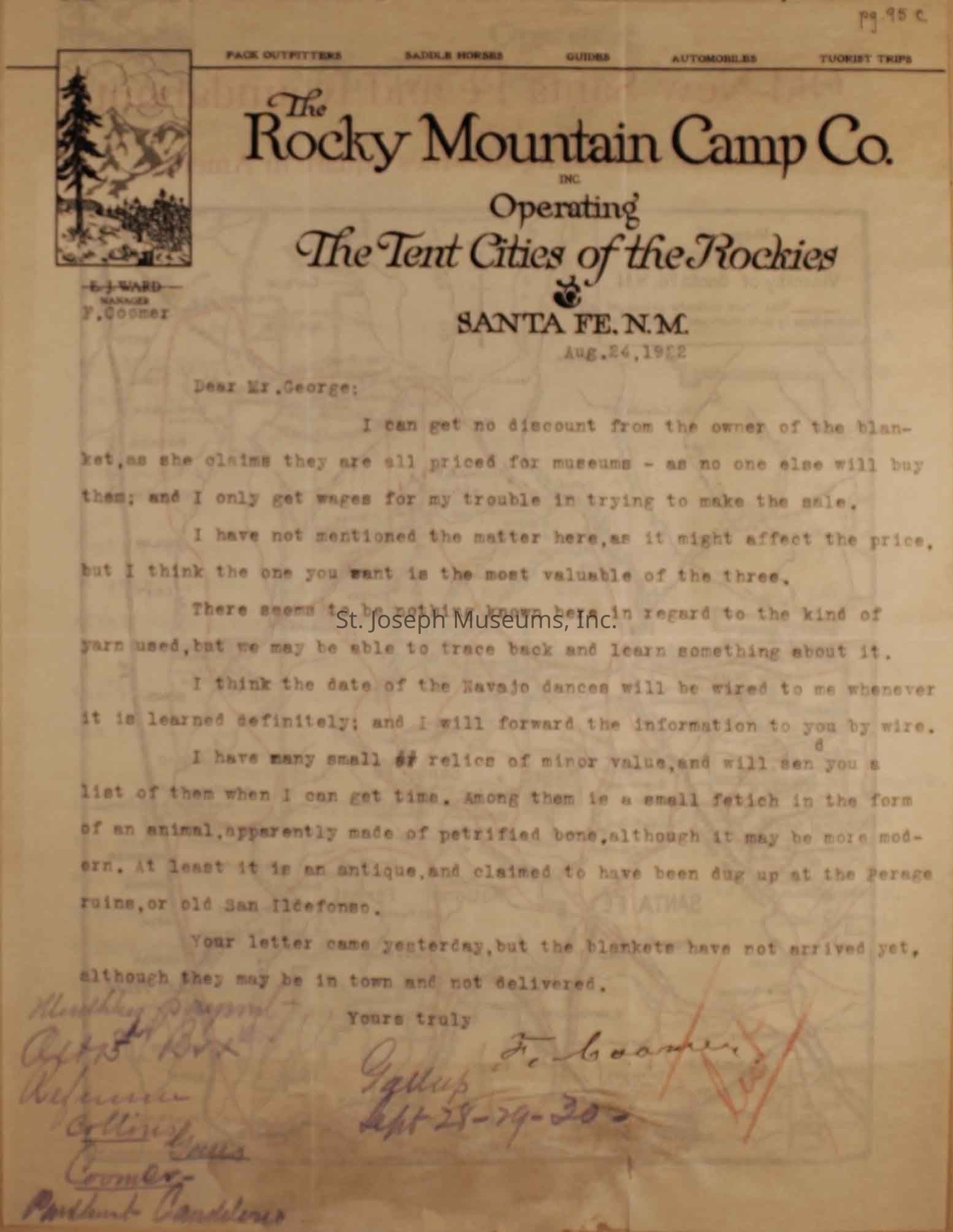
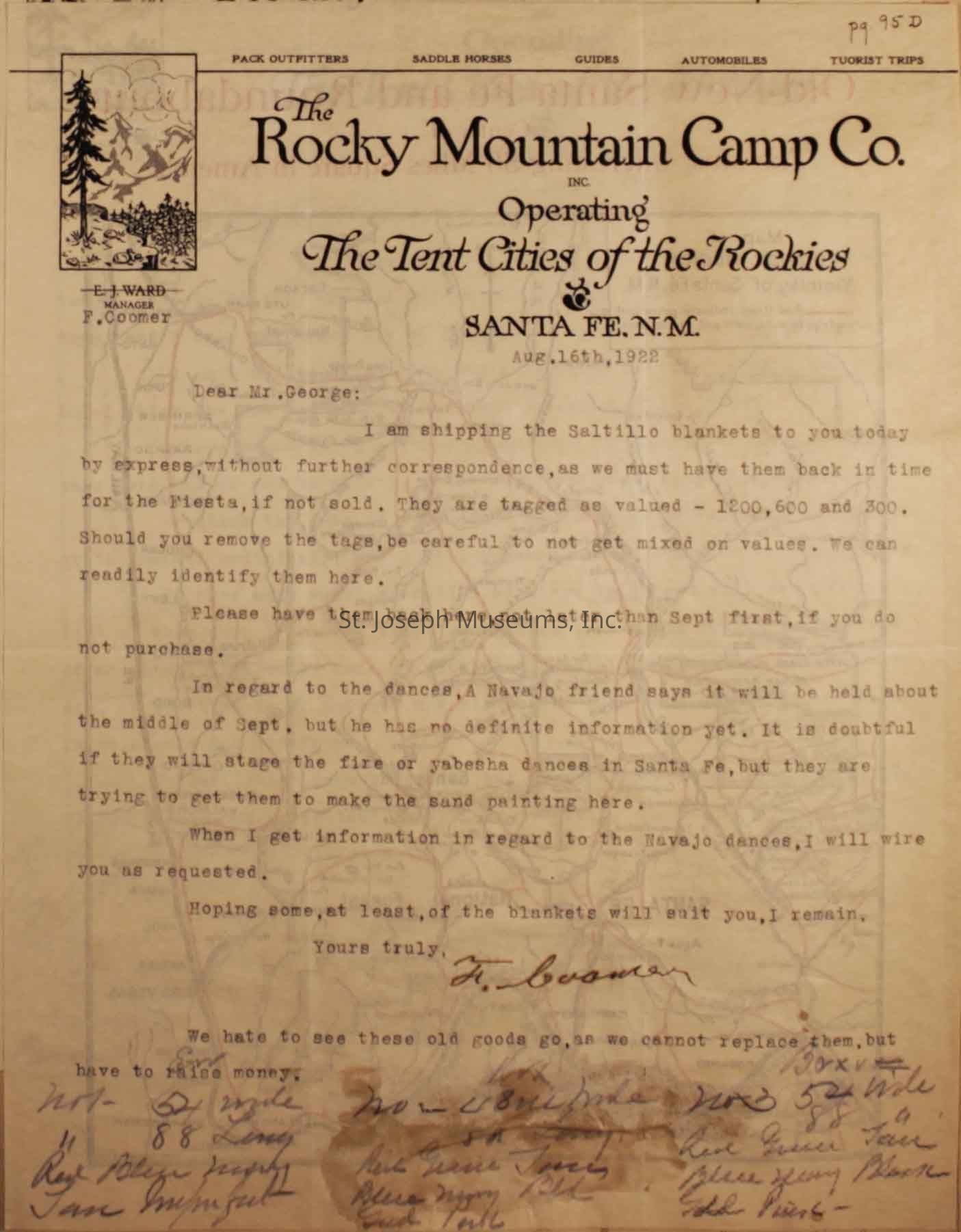
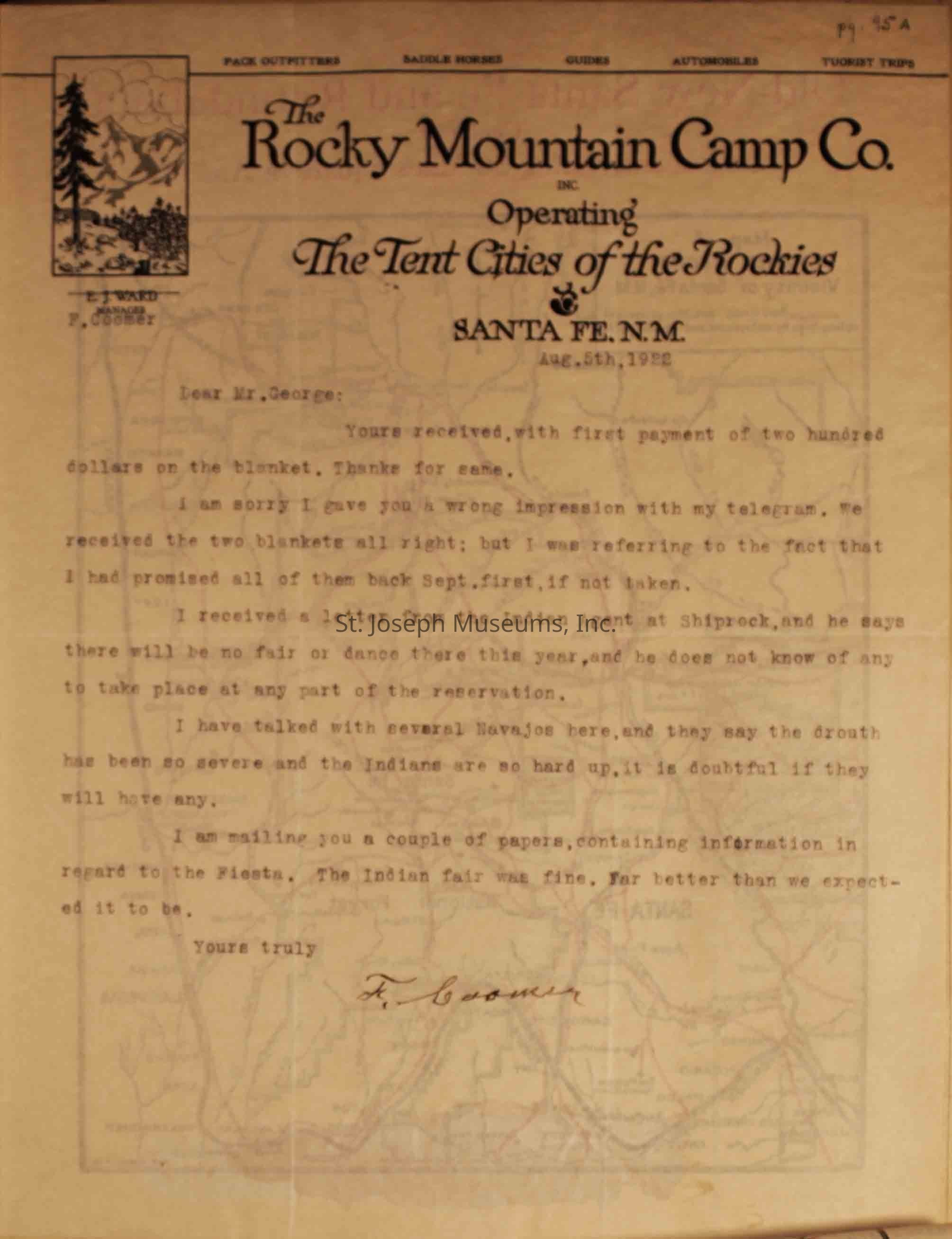
Check Harry George Ledger letters from F. Comer to Harry George in 1922.