Research Type
ResearcherNotes
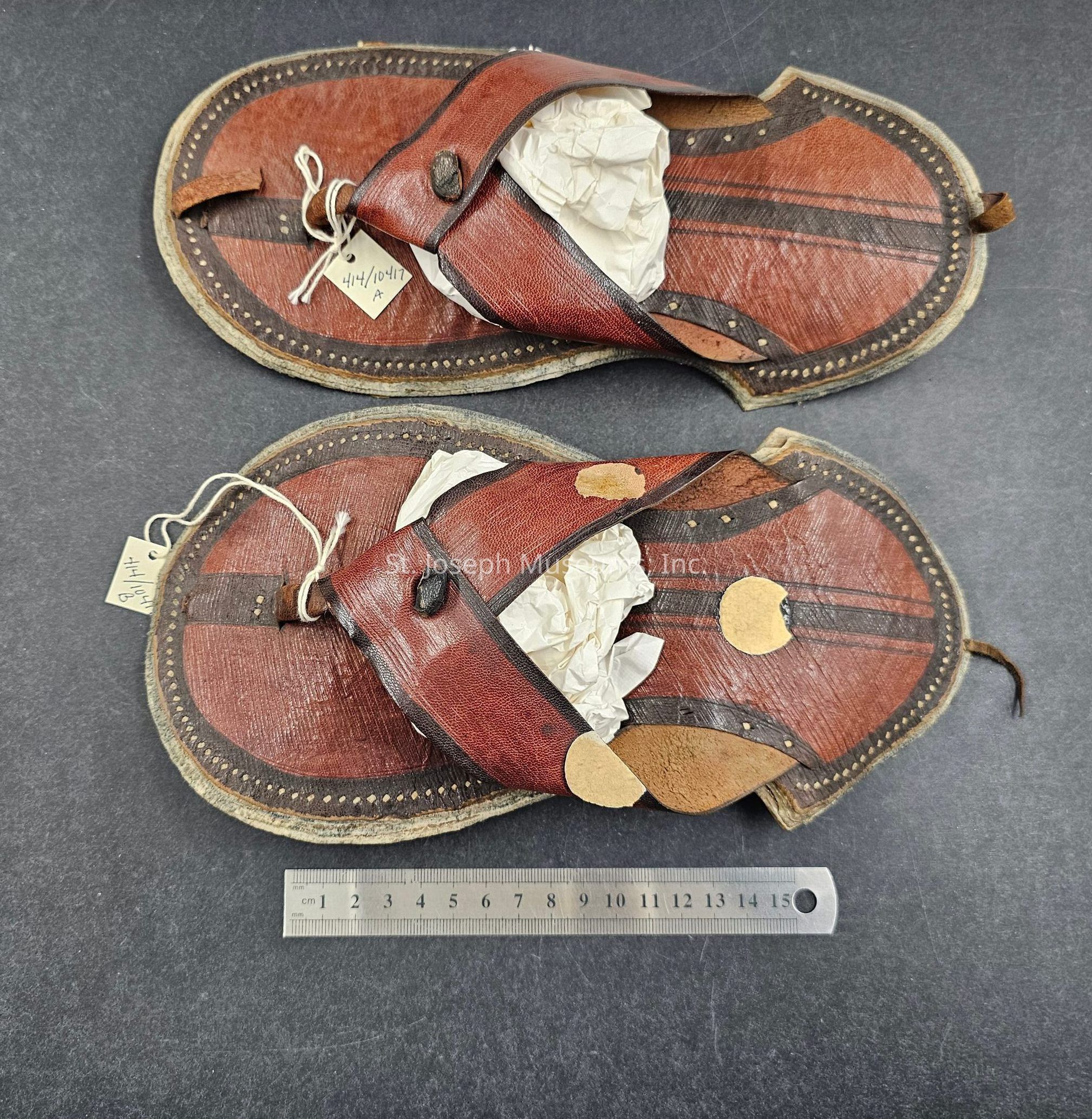
These sandals are made from dyed leather. The Hausa people of Nigeria are particularly known for their leatherwork and trade networks. While museum records indicate that these shoes were collected in Cameroon, it is not impossible to think they were created by the Hausa people. When finding similar shoes in other museum collections, all but one were attributed to the Hausa people. Traditional tanning methods during pre-colonial times were labor intensive. The art of leatherwork was done by specialized guilds, where artisans would transform raw hides into high-quality leather used to make clothing, footwear, accessories, bags, saddles, etc. Animal hides from cattle, goats and sheep were used with tannins extracted from bark and leaves that were used to cure the hides. Leather was of significant social importance to the Hausa, symbolizing social status and identity. Leatherworking skills and knowledge were passed down through generations.