Shirt
Name/Title
ShirtEntry/Object ID
2018.3.162Description
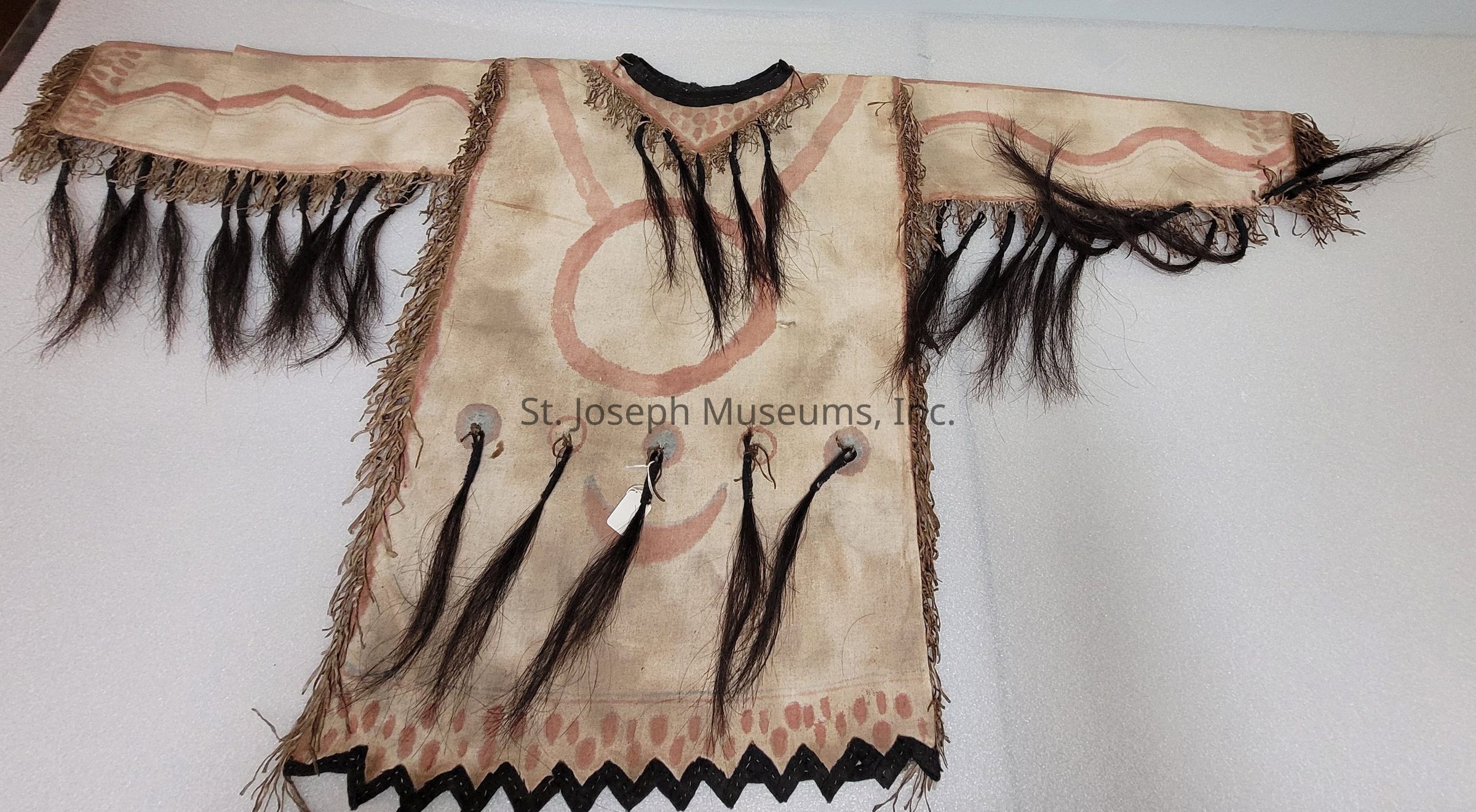
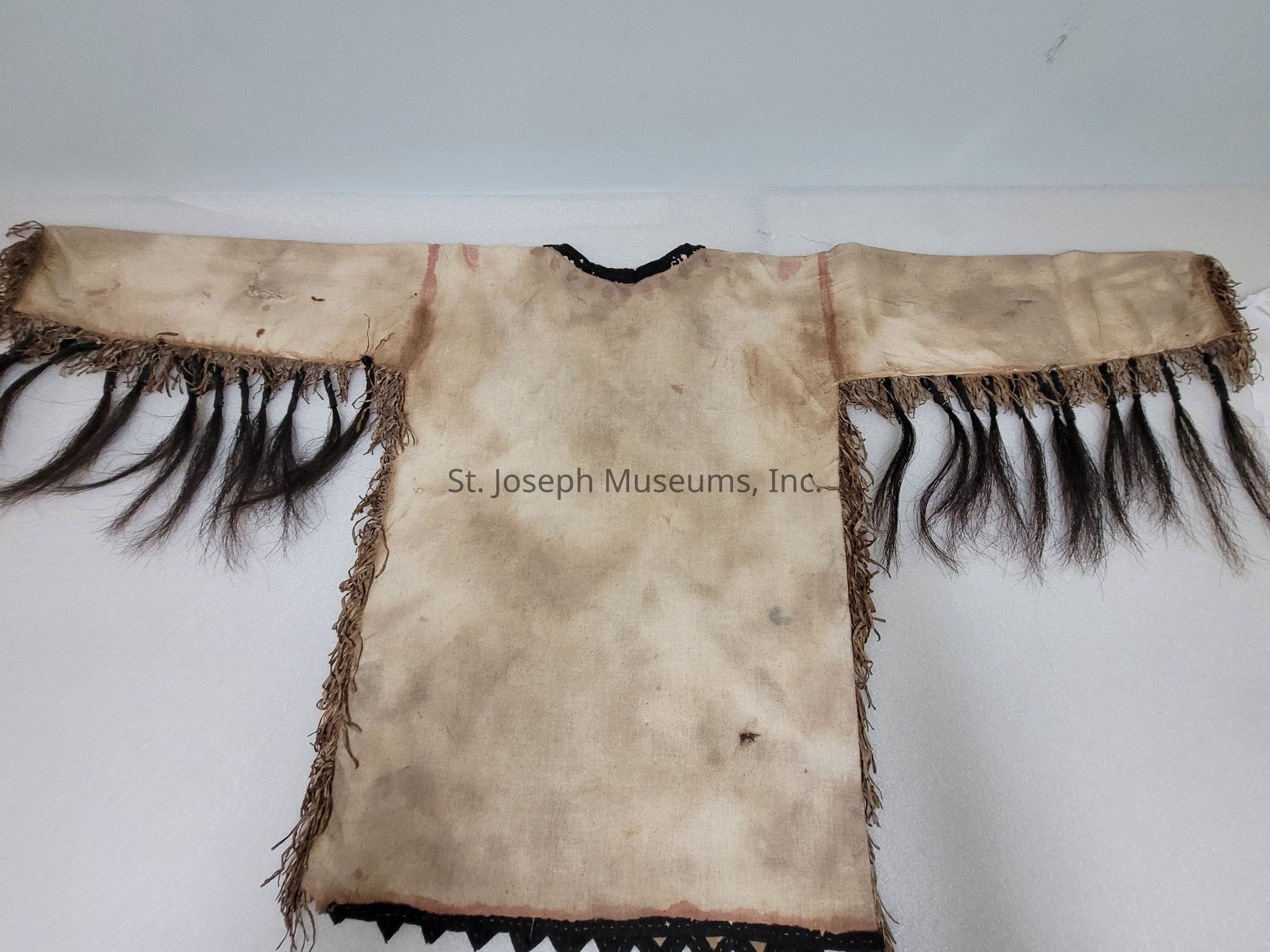
Property C55: Ceremonial Ghost Dance Shirt. Object: ceremonial shirt, Artist/Maker: Sioux Lakota, Title/Model: Ceremonial Ghost Dance Shirt, Date/Region: ca. 1890, Sioux Lakota, Medium/Technique: muslin, leather fringe, felt edging, tied horse hair tassels / handmade, Edition/Series: unique, 1of 1, Size: 31.5" H x 61.5" W, Condition: good - age appropriate wear and staining, Signature/Inscriptions: n/a, Exhibitions/Literature: n/a, Description/Notes: Long sleeved, muslin ceremonial ghost dance shirt with leather fringed seams, felt edging and horsehair tassels decorated with painted circles, dots, lines and waves in red paint. Ghost Dance shirts were worn during ceremonial dances and were thought to protect the wearers from oppression by white settlers and to repel piercings from bullets or arrows. The original Ghost Dance Shirt, which resided in the Kelvingrove Museum in Glasgow, Scotland was a relic believed to have been worn by a Sioux warrior killed in the 1890 Wounded Knee Massacre. The shirt was made of cotton with eagle, raven and owl feathers hanging around the neck and was full of bullet holes. The shirt was returned by the museum to the Lakota people in 1998.Collection
NATIVE AMERICANEthnography
Culture/Tribe
Oceti Sakowin
Native American