Label Type
Cultural/Historical ContextLabel
Ancient China is divided into distinct dynasties, each ruled over by a specific family. The guiding principle for the government of ancient China was called the Mandate of Heaven. The Mandate of Heaven was a philosophy that established whether rulers had the right to rule China. The rulers of ancient China were given vast amounts of power, but they had a moral obligation to use it for the good of their people. If a ruler did not do this, then the country would experience natural disasters. These natural disasters would be a sign to the peasants that the ruler lost the blessing of the gods to rule, and thus it was allowed to overthrow the existing government and install a new dynasty. Each dynasty saw specific achievements and major events. The Zhou dynasty (1046 BCE-256 BCE), for example, saw the formalization of their writing system and the rise of such important philosophers like Confucious, Lao-Tzu, and Sun-Tzu. The Qin Dynasty (221 BCE-206 BCE) began construction on the Great Wall of China. Shi Huangdi, the first emperor of the Qin dynasty, built for himself an enormous tomb which he filled with over 8,000 terracotta warriors to serve him in the afterlife. The Han Dynasty (206 BCE-220 CE) saw the invention of paper, established Confucianism as the exclusive philosophy of the government (a practice that has continued through to modern times), opened the Silk Road which opened trade routes to the rest of Asia and into Europe. The Sui Dynasty (589-618 CE) built the Grand Canal, enlarged the Great Wall, standardized coins across the country, built the army to its largest size, and encouraged the development of literature. The famous story Legend of Hua Mulan is thought to have been written during this time. The Tang Dynasty (618-907 CE) is considered the Golden Age of China, where the country saw an elongated period of peace, during which art, culture, and innovation could flourish. During this time, China also saw its first and only female monarch - Wu Zetian. The Song Dynasty (960 - 1279 CE) saw massive strides in artistic forms, characterized by large landscape paintings. Paper money was used for the first time, movable type was invented to make books and literature widely available and easier to print, traditional Chinese pottery was refined and the quintessential blue and white “China” was made popular, and public schooling was made available to all during this time. The Song Dynasty ended when the Mongols, led by Kublai Khan conquered the area, who established the Yuan Dynasty. There were only two more imperial dynasties that followed, and in 1911 the Republic of China was established.Label Type
Cultural/Historical ContextLabel
Foot binding, while being limited geographically to China, is still a side effect of the globalized systems of patriarchy that began with the advent of sedentary permanent villages in Mesopotamia. For millennia, beauty standards imposed on women by society have led to severe body modification with often painful results. This is not to say that men are not held to painful and sometimes impossible to achieve beauty standards, rather the historical evidence shows that women have been subjected to far more of these socially acceptable (and sometimes socially unacceptable, like female genital mutilation) body modifications that permanently and painfully alter the body in a plethora of ways. These body modifications, regardless of the time period or geographic location, are not just symbols of beauty and fashion. These severe body modifications supported and mandated women’s roles in society and the expectations of them.
Corsets, which permanently altered the shape of the rib cage, caused the spine to come out of alignment, restricted the lower lobes of the lungs, and led to atrophy (weakening) of the stomach and back muscles and compression on abdominal organs, highlighted society’s expectations of weak and subjugated women. Corsets made it difficult for women to take complete breaths, which led to an increased chance of fainting, and limited the movement of women. Corsets were also tied to the patriarchy as symbols of beauty - a woman with a small waist was more likely to attract suitors. For women in the 18th and 19th century who could not own property, earn money, and legally belonged to the men in her life, the inability to attract a husband had real, life-altering effects on the quality of their lives.
Neck coils worn by women in Africa and Southeast Asia result in the appearance of a very long and graceful neck. The coils do this by deforming the collar bones and compressing the ribs so that shoulders are pushed down further away from the head, which results in the appearance of a longer neck. These neck rings are linked to higher blood pressure, decreased circulation to the brain, lower respiratory function, and an increased risk of compression fractures in the upper back. When the neck rings were removed, the women were incapable of fully holding their heads up without the support of the rings. These rings have made the people who have elongated necks, specifically the Kayan tribe in Indonesia, more likely to be exploited by outsiders. When colonization reached the country in the early 20th century, British colonizers would kidnap or “purchase” Kayan women to take them on tour with the circus in his exhibited “freak” show. They were also at risk from neighboring enemy tribes; Kayan women were often captured and sold to government officials who would also display them in carnivals and county fairs. In the later 20th century, after a civil war in the country, the Kayan people were forced to flee to Thailand from Burma. The government officials required the Kayan people to settle in very specific areas, then offered money to the Kayan women to resume the practice of neck elongation as a way to promote tourism to those regions.
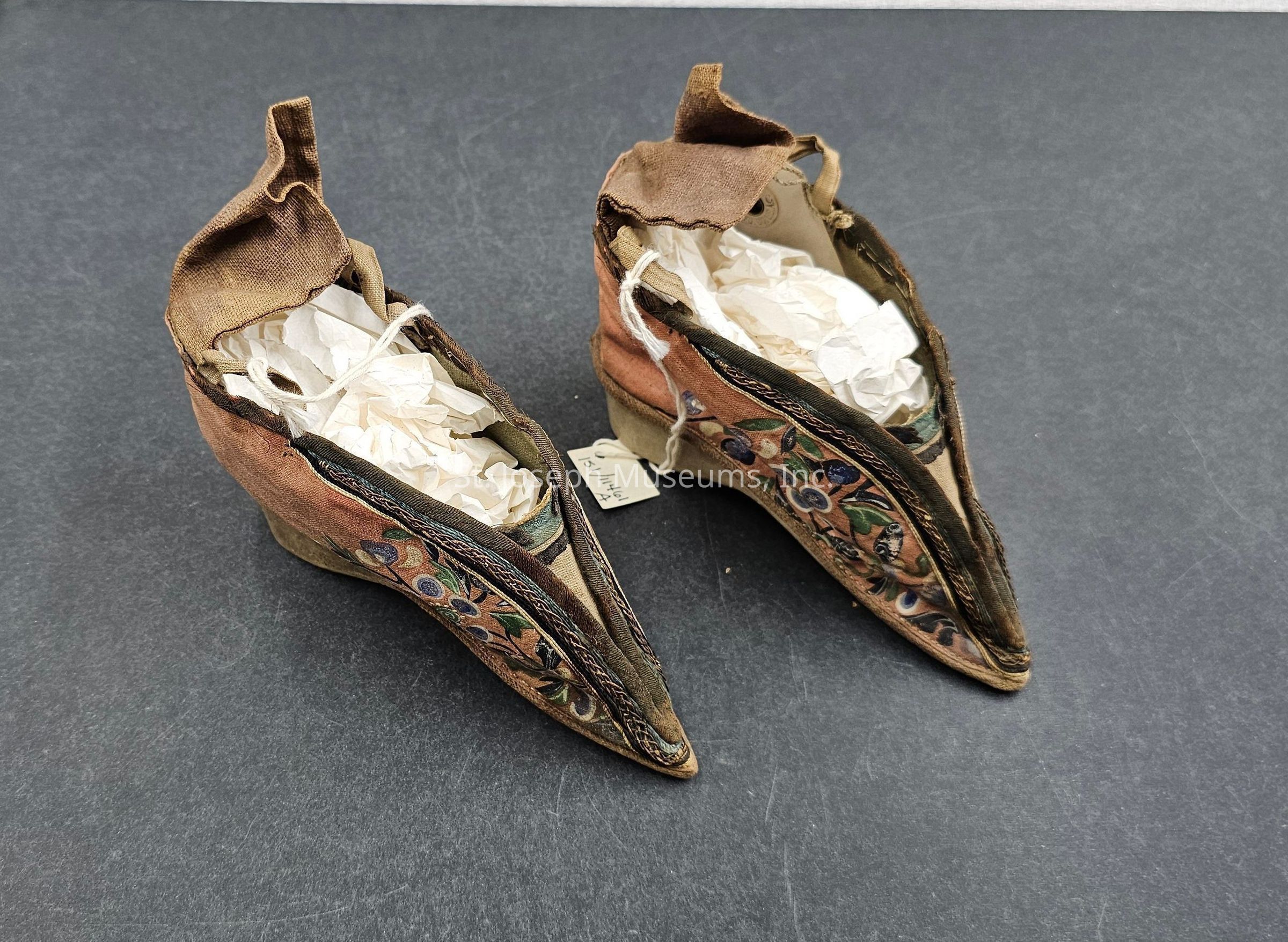
Foot-binding in China has a similar societal impact on women. The small feet that women in China were pressured to create by breaking bones in their feet and permanently altering the shape of their feet created a society in which women were forced to stay at home, limited the activities they could do for work, and made it impossible for women to walk or stand for long periods of time. In China, women’s ideal role in society was to be a mother, take care of the home, and be highly accomplished at hand arts like sewing. With their feet bound, women had little choice but to fulfill these roles. Like with corseted waists, women in China were evaluated as potential wives based on the size of their feet. Should feet be larger than 5 inches long, the likelihood of women finding a husband shrank to almost zero. Like Victorian England, women in China could not legally own property. Even with a bound foot that was longer than 5 inches, the woman still experienced all of the physical limitations brought on by foot binding, so even if women were allowed to work for their own money and independence, foot binding made it almost impossible for women to even leave the house, much less accomplish anything that could help them support themselves. Physically, women were often unable to lift their body weight out of a chair or out of bed without assistance creating a society where women were economically, politically, and physically reliant on men for their help and support.
These beauty standards not only highlighted the very different societal expectations between men and women, but also enforced class distinctions and wealth discrepancies. These body modifications were usually only possible if the family was wealthy which further isolated the lower classes from “acceptable” society.