Name/Title
Speech - Amateurs In WineEntry/Object ID
Q2022.21.296Scope and Content
A four-page document of the speech Dr. Wilbur P. McDonald gave on 22 April 1985 to the "American Viticulture/Enology Delegates". There are some handwritten edits which will be shown in parenthesis.Context
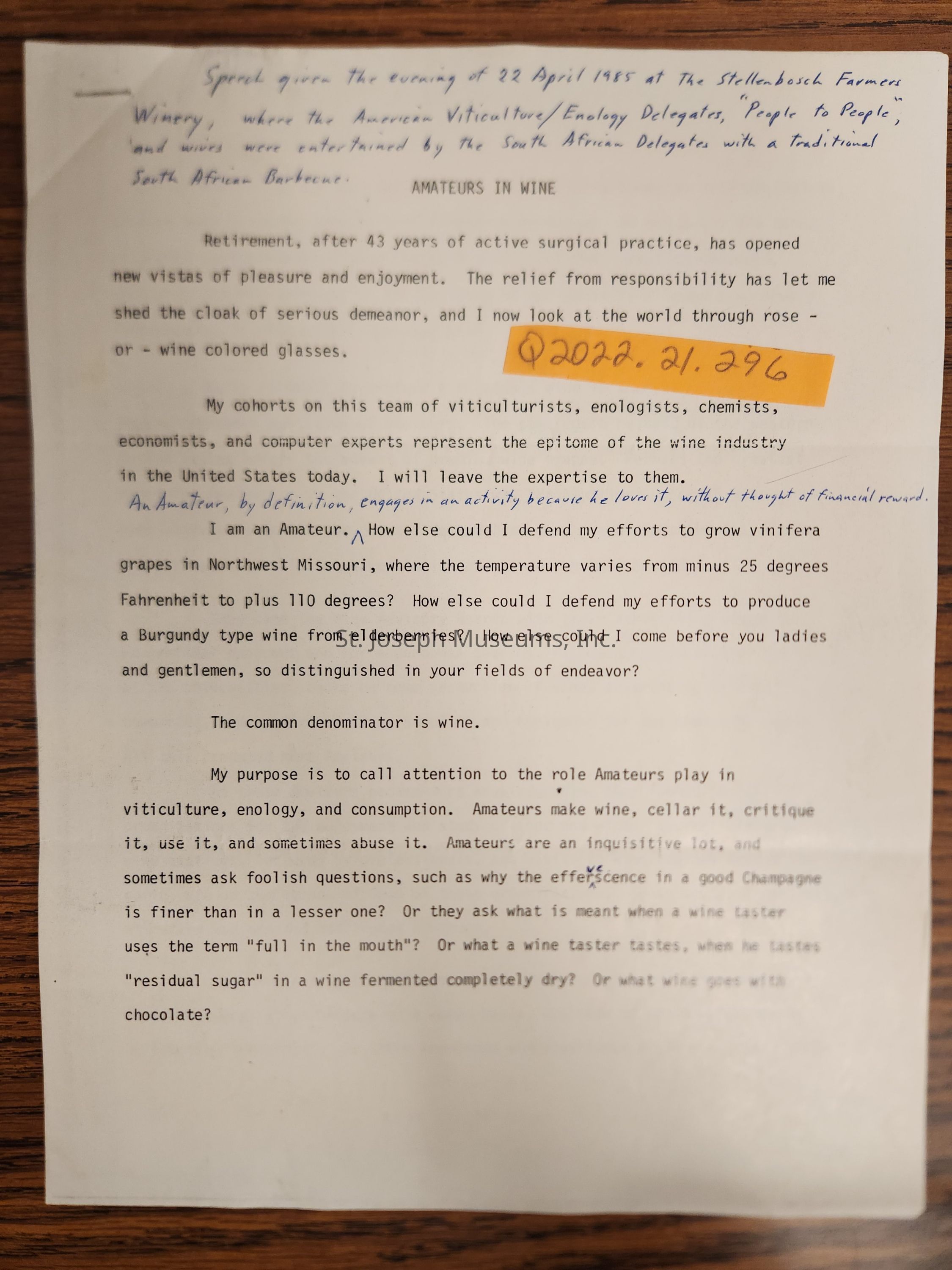
(Hand written in blue ink at the top of page 1 reads " Speech given the evening of 22 April 1985 at the Stellenbosch Farmers Winery, where the American Viticulture/Enology Delegates, 'People to People', and wives were entertained by The South African Delegates with a traditional South African Barbecue.)
AMATEURS IN WINE
Retirement, after 43 years of active surgical practice, has opened new vistas of pleasure and enjoyment. The relief from responsibility has let me shed the cloak of serious demeanor, and I now look at the world through rose - or - wine colored glasses.
My cohorts on this team of viticulturists, enologists, chemists, economiists, and computer experts represent the epitome of the wine industry in the United States today. I will leave the expertise to them.
I am an Amateur. ^ (AnAmateur, by definition, engages in an activity because he loves it, without thought of financial reward.) How else could I defend my efforts to grow vinifera grapes in Northwest Missouri, where the temperature varies from minus 25 degrees Fahrenheit to plus 110 degrees? How else could I defend my efforts to produce a Burgundy type wine from elderberries? How else could I come before you ladies and gentlemen, so distinguished in your fields of endeavor?
The common denominator is wine.
My purpose is to call attention to the role Amateurs play in viticulture, enology, and consumption. Amateurs make wine, . . . . . Amateurs are an interesting lot, and . . . . . ? Or they ask what is meant when a wine taster uses the term "full in the mouth"? Or what a wine taster tastes, . . . "residual sugar" . . . ? Or what wine goes with chocolate?
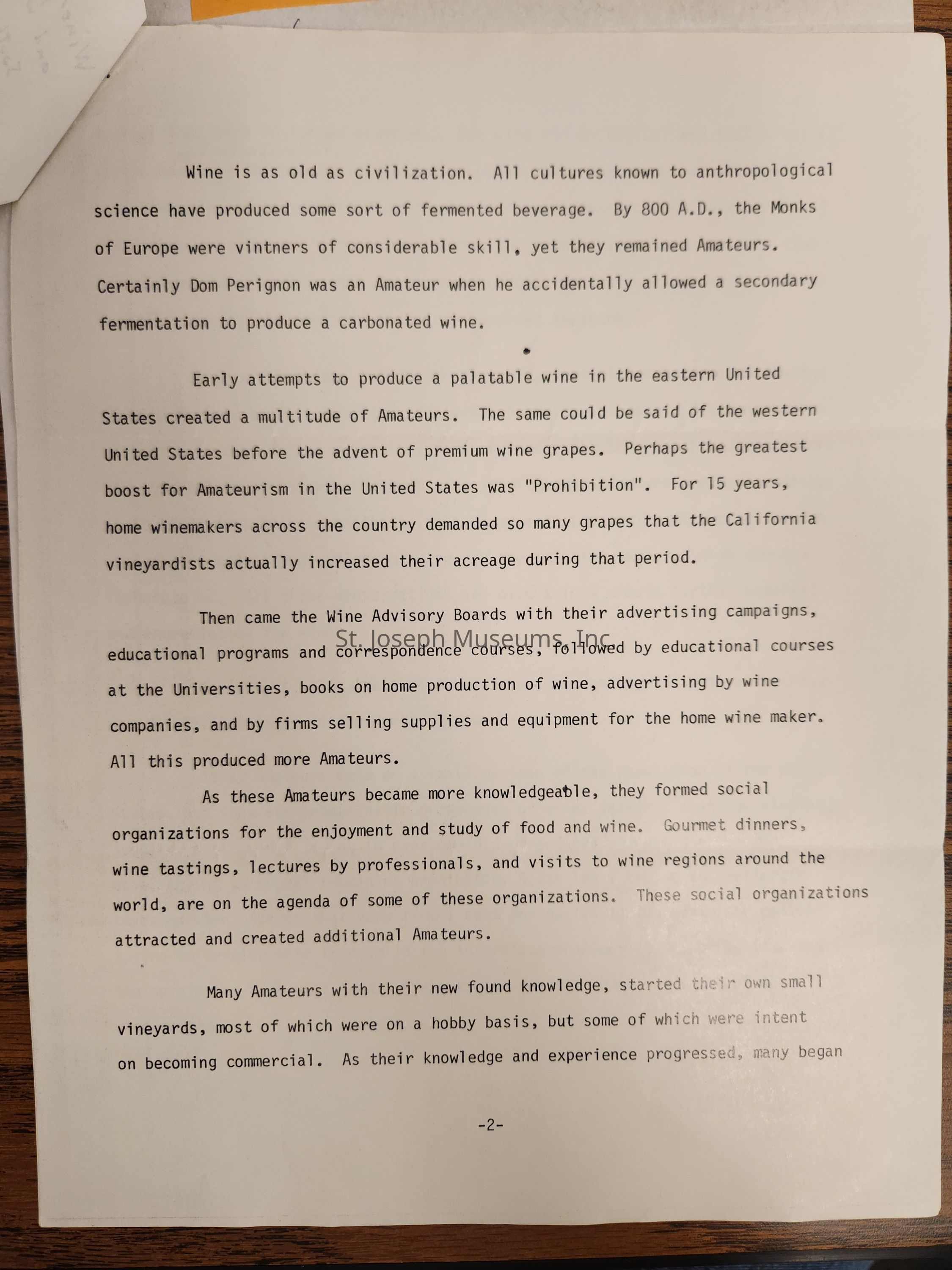
Wine is as old as civilization. All cultures . . . . have produced some sort of fermented beverage. . . . the Monks . . . were vinters . . . yet they remained Amateurs. . . . Dom Perignon was an Amateur when he accidently . . . produced a carbonated wine.
Early attempts to produce a palatable wine in the eastern United States created a multitude of Amateurs. (and) . . . the western . . . before the advent of premium wine grapes. . . . the greatest boost . . . was "Prohibition". . . . California vineyardists . . . increased their acreage . . .
Then came the Wine Advisory Board with their . . . campaigns, programs and . . . courses. . . at the Universities, books. . . . advertising. . ., and . . firms selling supplies and equipment. . . . All this produced more Amateurs.
. . . these Amateurs . . . , . . formed social organizations . . . Gourmet dinners, wine tastings, lectures . . . , and visits to wine regions . . . . These social organizations attracted and created additional Amateurs.
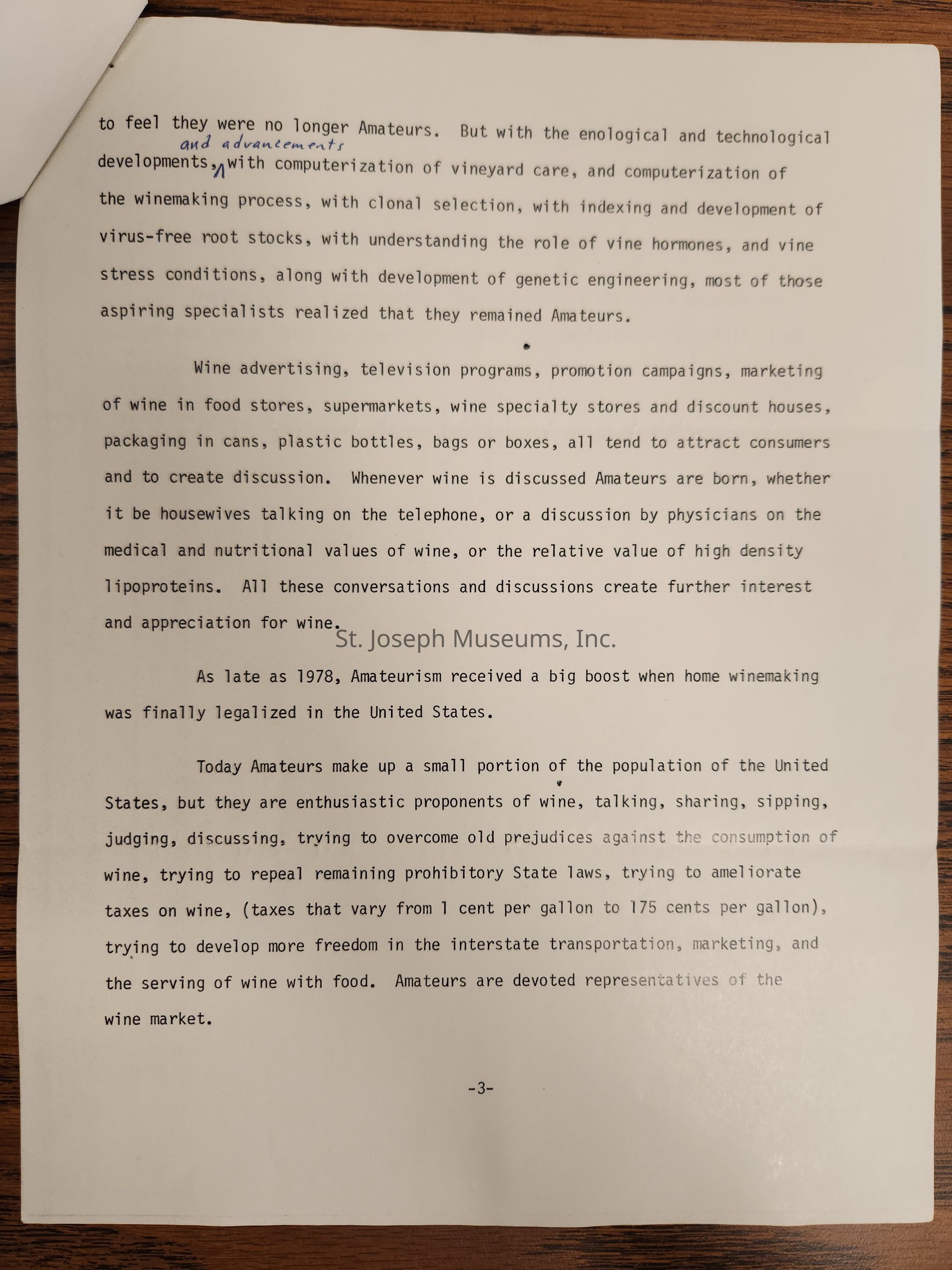
Many Amateurs . . . ., started their own vineyards . . . on a hobby basis, . . . some . . . intent on becoming commercial. . . . . many began to feel they were no longer Amateurs. But, with . . enological and technical developments, ^ (and advancements) computerization . . . , . . clonal selection, . . indexing and development, . . understanding . . vine hormones, and . . . stress conditions, . . . . genetic engineering, most . . . realized that they remained Amateurs.
Wine advertising, television programs, promotion campaigns, marketing . . in food stores, supermarkets . . . . . . . . . all tend to attract consumers and to create discussion. Whenever wine is discussed Amateurs ar born, . . . . . . All these conversations and discussions create further interest and appreciation for wine.
As late as 1978, Amateurism received a big boost when home winemaking was finally legalized in the United States.
Today Amateurs make up a small portion of the population of the United States, but they are enthusiastic proponents of wine, talking, sharing, sipping, . . . , . . . , . . . , . . . , . . . , . . . , . . . , and the serving of wine with food. Amateurs are devoted representatives of the wine market.
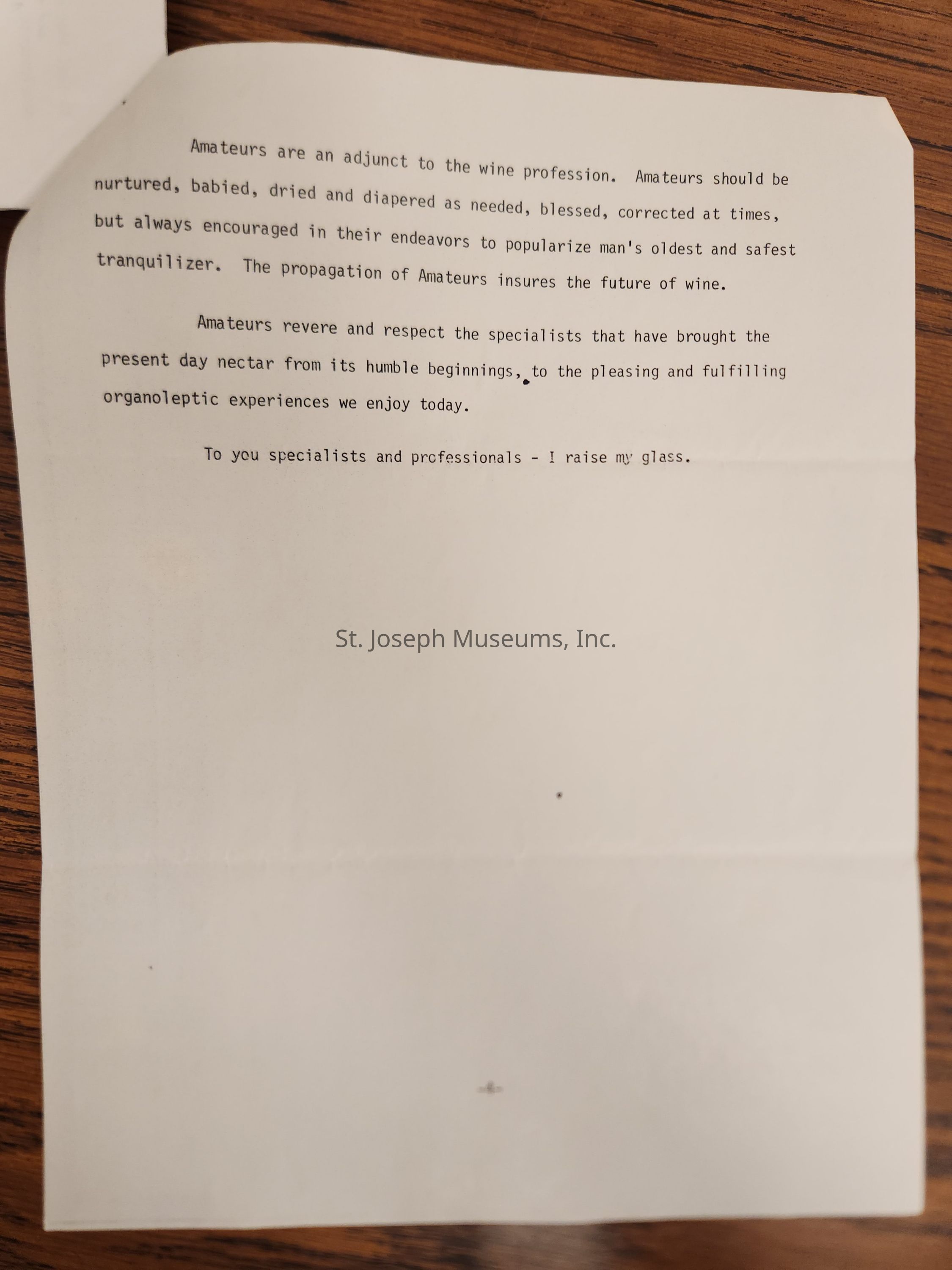
Amateurs are an adjunct to the wine profession. Amateurs should be nurtured, . . . . , . . . . , . . . . , . . . . , but always encouraged in their endeavors to popularize man's oldest and safest tranquilizer. The propagation of Amateurs insures the future of wine.
Amateurs revere and respect the specialists that have brought he present day nectar from its humble beginnings, to the pleasing and fulfilling organoleptic experiences we enjoy today.
To you specialists and professional - I raise my glass.Lexicon
Nomenclature 4.0
Nomenclature Primary Object Term
SpeechNomenclature Sub-Class
Literary WorksNomenclature Class
Documentary ObjectsNomenclature Category
Category 08: Communication Objects