SPOON

Object/Artifact

-

St. Joseph Museums

Name/Title

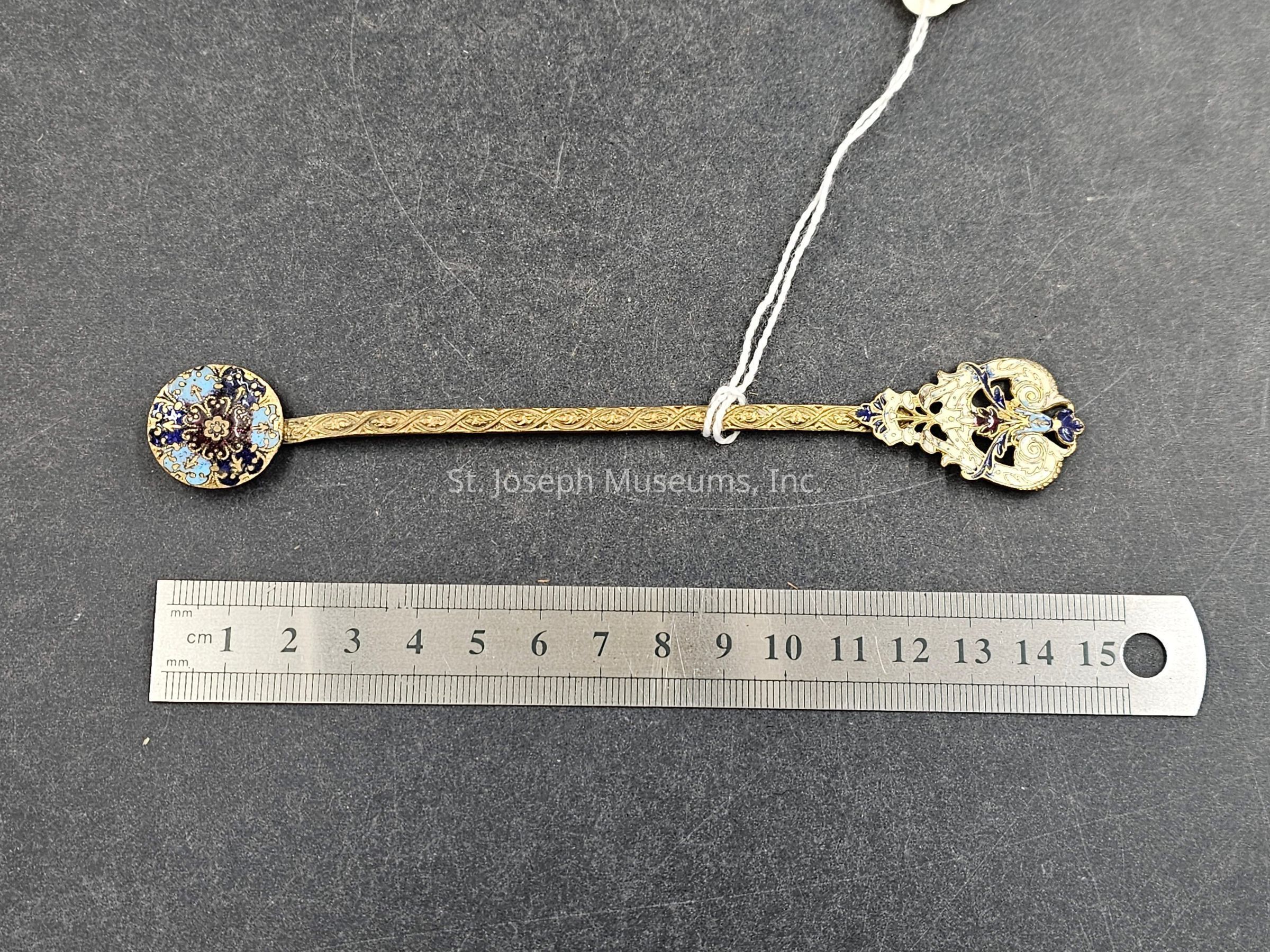
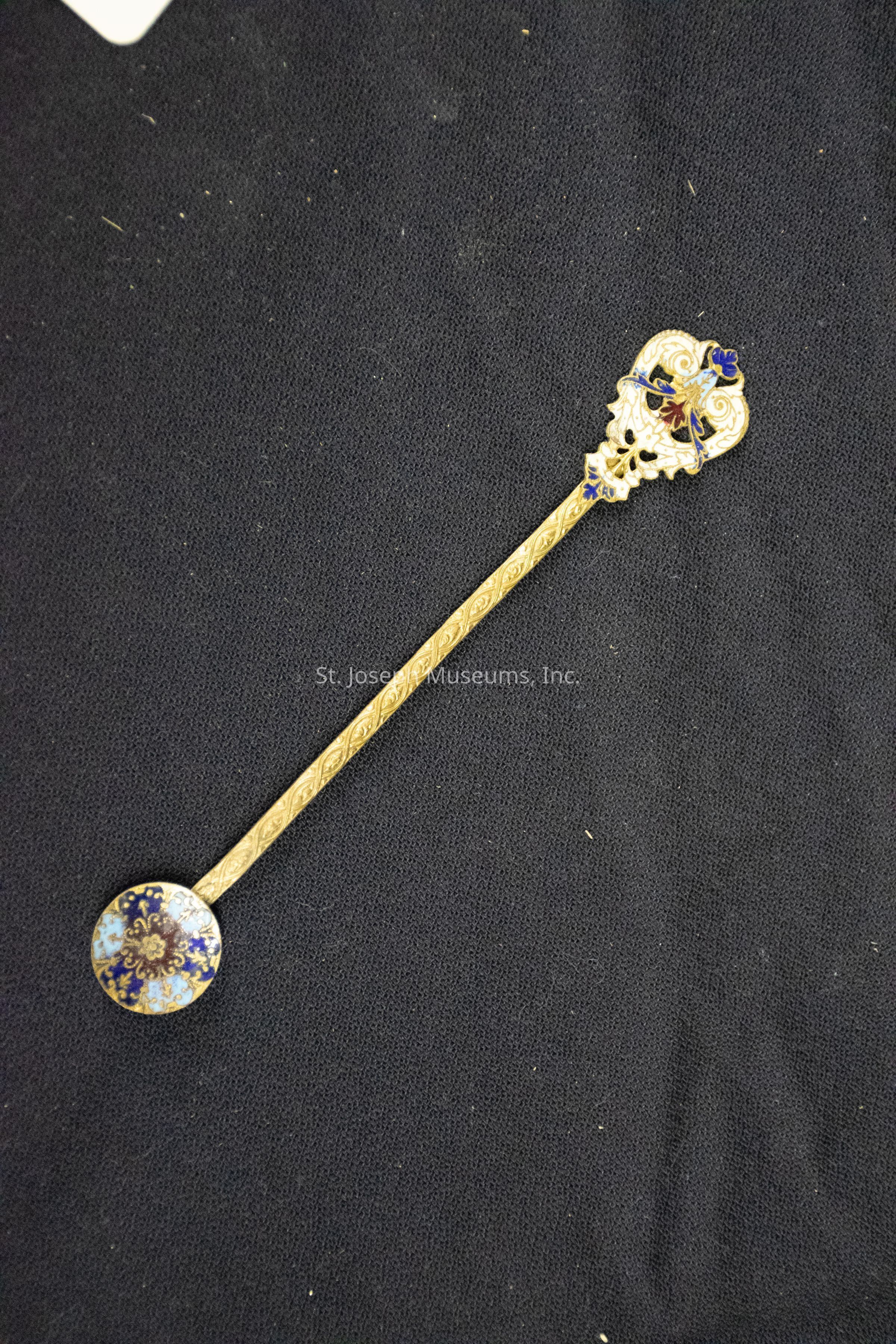
SPOON

Entry/Object ID

252/5088

Description

STEM CONNECTING DISC & HEART SHAPED PIECE/GOLD/RED/BLUE/ French Champleve Spoon, brass

Collection

ETHNOGRAPHIC/FRANCE

Made/Created

Time Period

19th Century

Place

Continent

Europe

Ethnography

Cultural Region

Country

France

Culture/Tribe

French

Lexicon

Legacy Lexicon

Object Name

Spoon

Dimensions

Length

6 in

Parts

Count

1

Condition

Overall Condition

Good

Interpretative Labels

Label Type

Cultural/Historical Context

Label

The history of what is now modern day France can be traced back to 600 BCE, when the Greeks settled the colony of Massalia (which would remain continually inhabited and is now called Marseille). When the Greeks left the area a couple hundred years later, several Celtic tribes moved into the area. This begins a long history of tribal occupation, with the modern country broken into several, independent clans. This will continue until the area is conquered by Julius Caesar in 52 BCE. The Romans would remain in control of this land for the next 450 years. In the fourth century CE, the Germanic tribe known as the Franks began to migrate out of northern Europe. It is from this tribe that France got its modern name. In 509 CE, Clovis I united all of the Frankish tribes under his leadership, The Frankish Empire continued for several hundred years. In 768 CE, Charlemagne would become King of the Franks, expanding the Frankish Empire and introducing what would eventually be known as the feudal system to the lands he controlled. The following centuries would see France grow to a world power and be home to such famous individuals as Joan of Arc, Marie Antoinette, and Napoleon.
Research Notes

Research Type

Researcher

Person

Tori Zieger

Notes

Literally translated as “raised field”, champlevé enameling gets its name from the method in which enamel is added to a metal surface. While champlevé enameling became popular in the 12th century in Belgium and Germany, the main center of production was in Limoges, France. A large number of church items were created in Limoges and using the champlevé style. Production of their famous champlevé enameled items came to a halt in 1370 when the city was put under siege by the English during the Hundred Years War. Hundreds of years later, this style saw a resurgence of popularity, particularly with the invention and creation of Fabergé eggs. This style continues into the 21st century with surprisingly little changes to the overall technique.