Name/Title
Stone PointsEntry/Object ID
2001.15.2476Description
23BN1
Originally held in a bag labeled:
"Points. Recorded, measured etc by John Ludwickson"
Bag labeled "Sq 3, Projectile points. 629, 630, 1253-1266"
Contains smaller bags:
Bag 580
Sq 3, Level 11
48"-51"
Proj. Points
1257, 1258
Bag 610
Sq 3, Level 16
63"-66"
Proj. Points
1259
Bag 531
Sq 3, Level 6
33"-36"
Proj. Points
1254, 1255
Bag 504
Sq 3, Level 1
Proj. Points
1251, 1252
Bag 573
Sq 3, Level 10
45"-48"
Proj. Point
1256
Bag 667
Sq 3, Level 19
72"-78"
Proj. Point
1261
Bag 525
Sq 3, Level 4
Proj. oints
1253
Bag 682
Sq 3, Level 23
96"-102"
Proj. Point
1264
Bag 674
Sq 3, Level 20
78"-84"
Proj. Point
1262
Bag 627
Sq 3, Level 18
69"-72"
Proj point
1260
Bag 681
Sq 3, Level 22
90"-96"
Proj point
1263
Bag 685
Sq 3, Level 24
102"-108"
Proj point, drill
1265, 1266
Bag 584
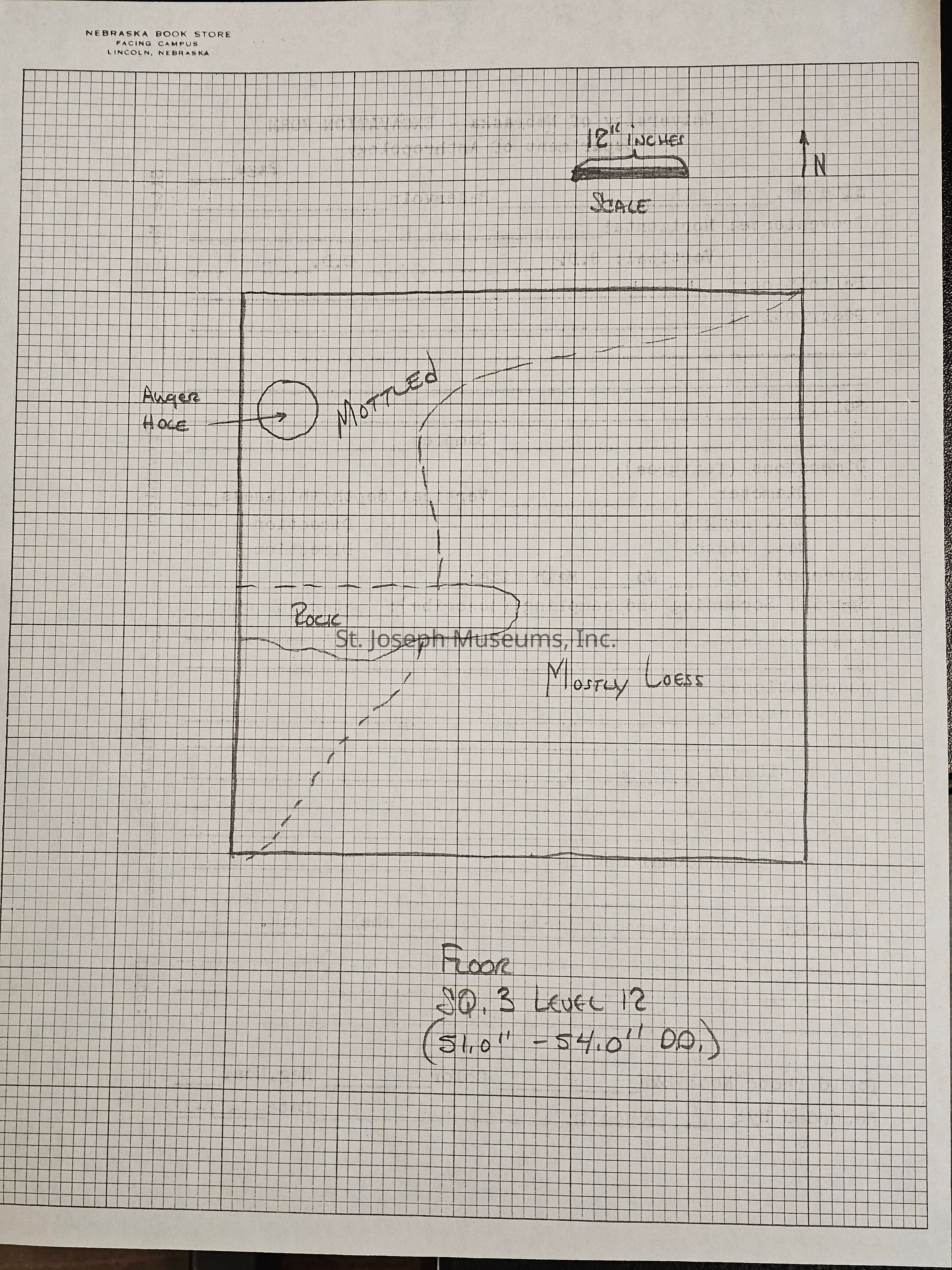
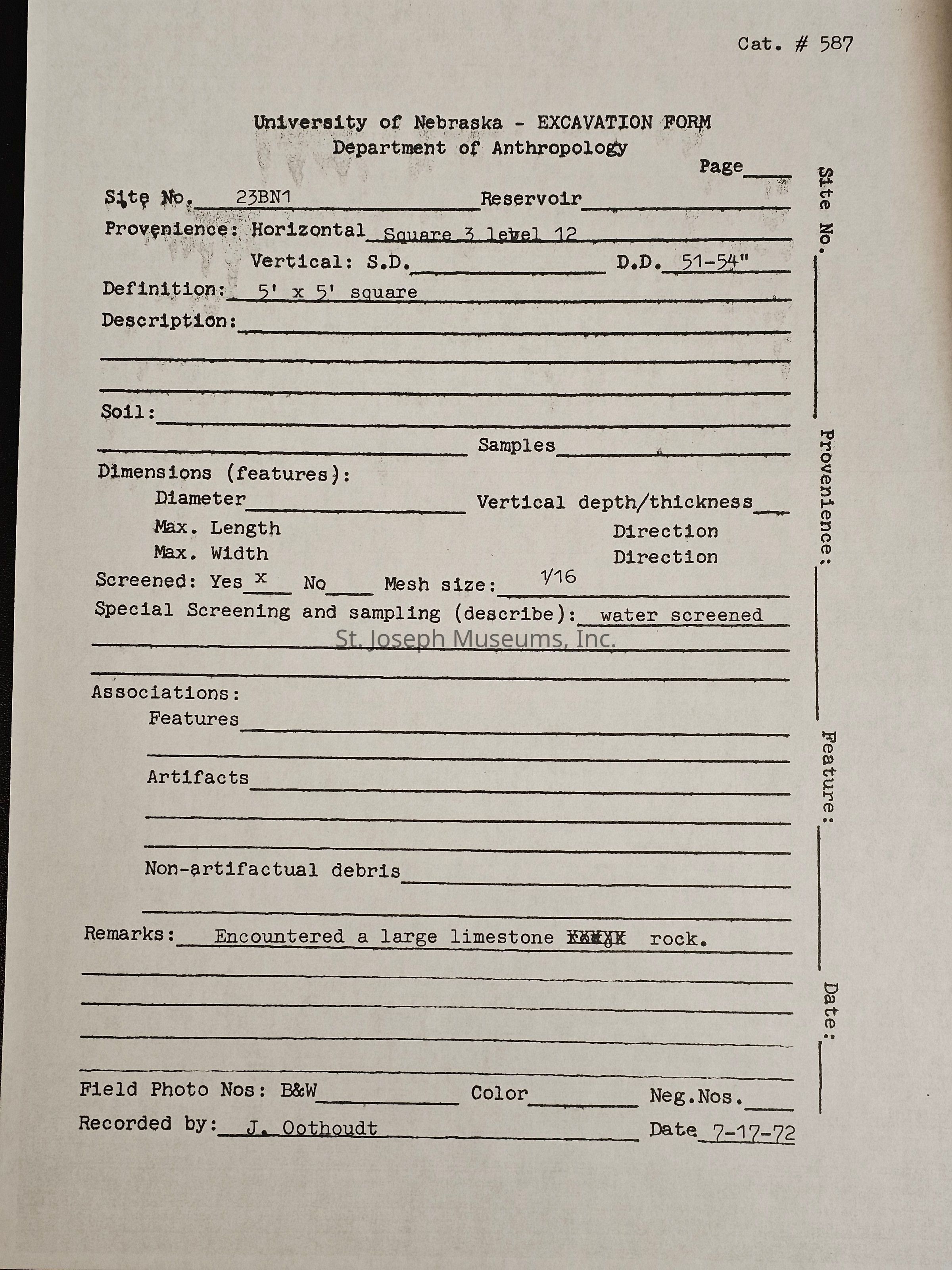
Sq 3, Level 12
51"-54"
Proj point
629
Bag 604
Sq 3, Level 15
60"-63"
Proj point
630Collection
23BN1Ethnography
Culture/Tribe
Kaw Nation
Native American
Notes
See "Weblinks" for more information on Kaw NationLexicon
Search Terms
Archaeological, 23BN1, King Hill, Lithics, FragmentProvenance
Notes
The King Hill Site (23BN1) is located in a residential area of the city of St. Joseph, Missouri. The archaeological site is situated on top of a high, west facing bluff overlooking the Missouri River Valley. It was excavated by members of the St. Joseph Chapter of the Missouri Archaeological Society and the Summer Field School of the University of Missouri - Columbia over a 10 day period in the summer of 1966 under a cooperative agreement with the St. Joseph Museum. Work was continued in the fall of that year and into the next by the St. Joseph Chapter. Additional work was conducted at the site by the University of Nebraska.
Pottery and limited trade goods in the upper levels indicate a late Oneota, early historic occupation, possibly by the Kansa tribe, about AD 1700. The site was placed on the National Register of Historic Sites in 1968 and a preliminary report was issued that same year. In 1972 further excavations, funded by the National Science Foundation, were undertaken by the University of Nebraska-Lincoln. The Missouri Field School and the University of Nebraska excavations were directed by Dr. Dale R. Henning" (Cutler and Blake 1982).
Information gathered from: http://users.stlcc.edu/mfuller/kinghill.html