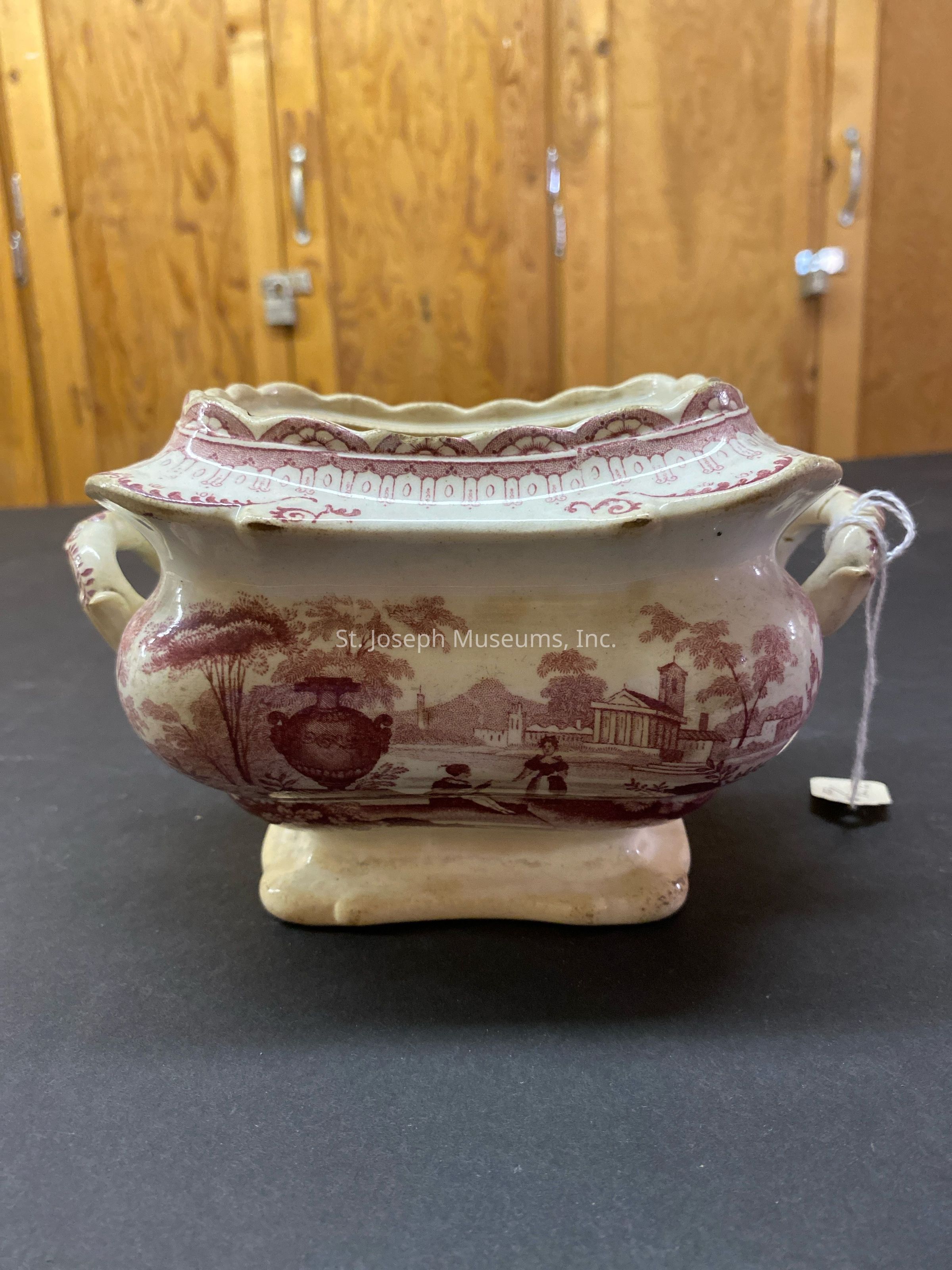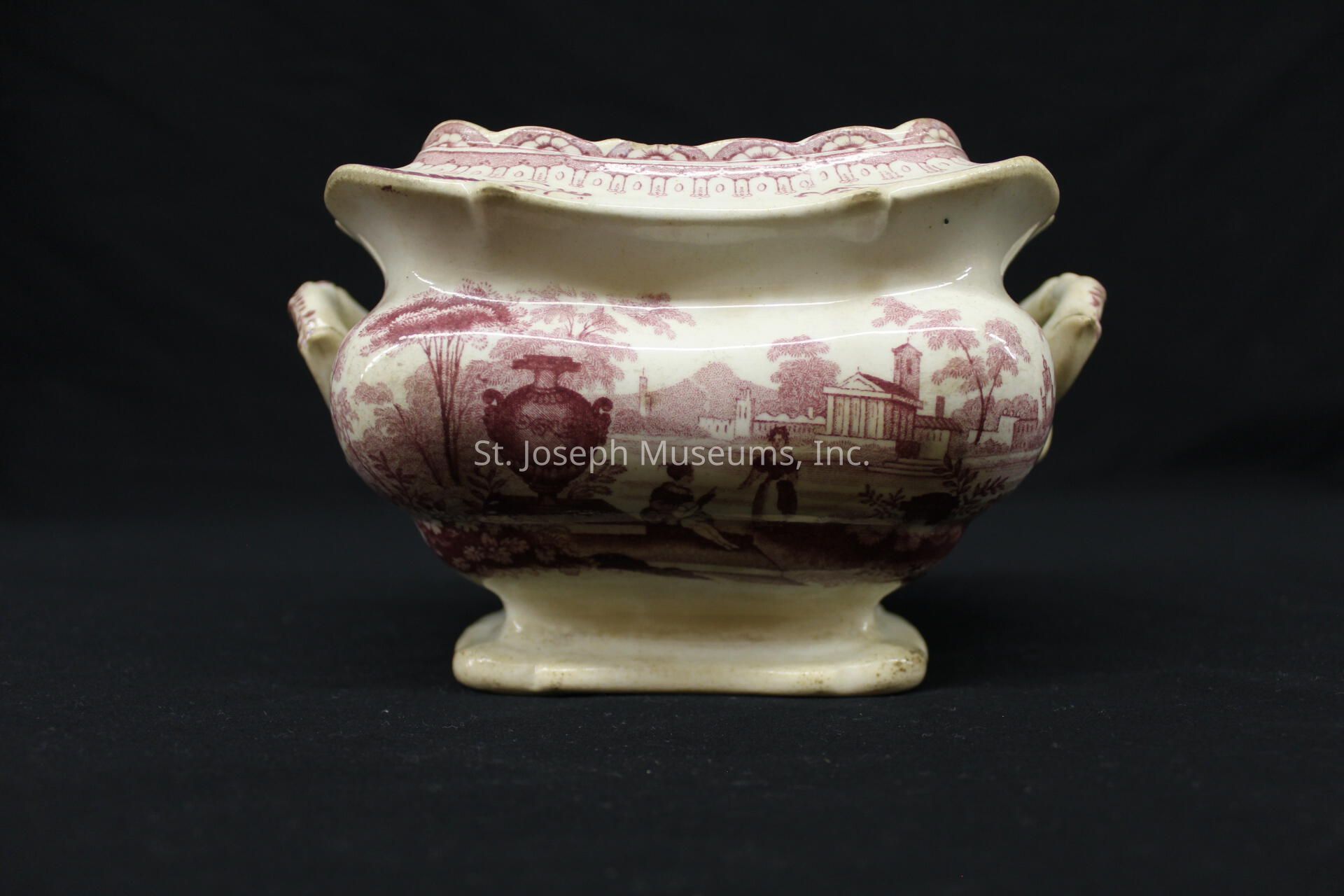
Ceramic sugar bowl with handles and scalloped edges. Red and white design. Scene features a large urn in the foreground, with two women nearby and and buildings and trees in the background.
Collection
CERAMICS
Made/Created
Artist
Thomas Mayer
Date made
1826 - 1835
Place
Continent
Europe
Notes
Verify year by checking stamp on bottom of item.
Ethnography
Cultural Region
Country
England
Continent
Europe
Culture/Tribe
British
Inscription/Signature/Marks
Notes
Need to check the bottom for inscription and marks.
Lexicon
Nomenclature 4.0
Nomenclature Secondary Object Term
Bowl, Sugar
Nomenclature Primary Object Term
Bowl, Serving
Nomenclature Sub-Class
Serving Vessels
Nomenclature Class
Food Service T&E
Nomenclature Category
Category 04: Tools & Equipment for Materials
Parts
Count
1
Material
China
Condition
Overall Condition
Good
Research Notes
Research Type
Researcher
Person
Tori Zieger
Notes
Red and white transferware print. The large urn in the foreground is a signature aspect of the CANOVA print created by Thomas Mayer and used c1826-1835. Transferware refers to pottery whose pattern is created by transferring the print from a copper plate to a specially sized paper, then to the pottery itself. This method of creation was in response to the growing need of more affordable tableware for a growing British middle class. Transferware pottery was originated in Staffordshire, England, where over 90% of British transferware was created between its inception and the late 20th century. Thomas Mayer was a prolific manufacturer of transferware, operating between the years of 1826-1838 at other companies. In 1838, he started T&J Mayer with his brother.