Research Type
ResearcherPerson
Tori ZiegerNotes
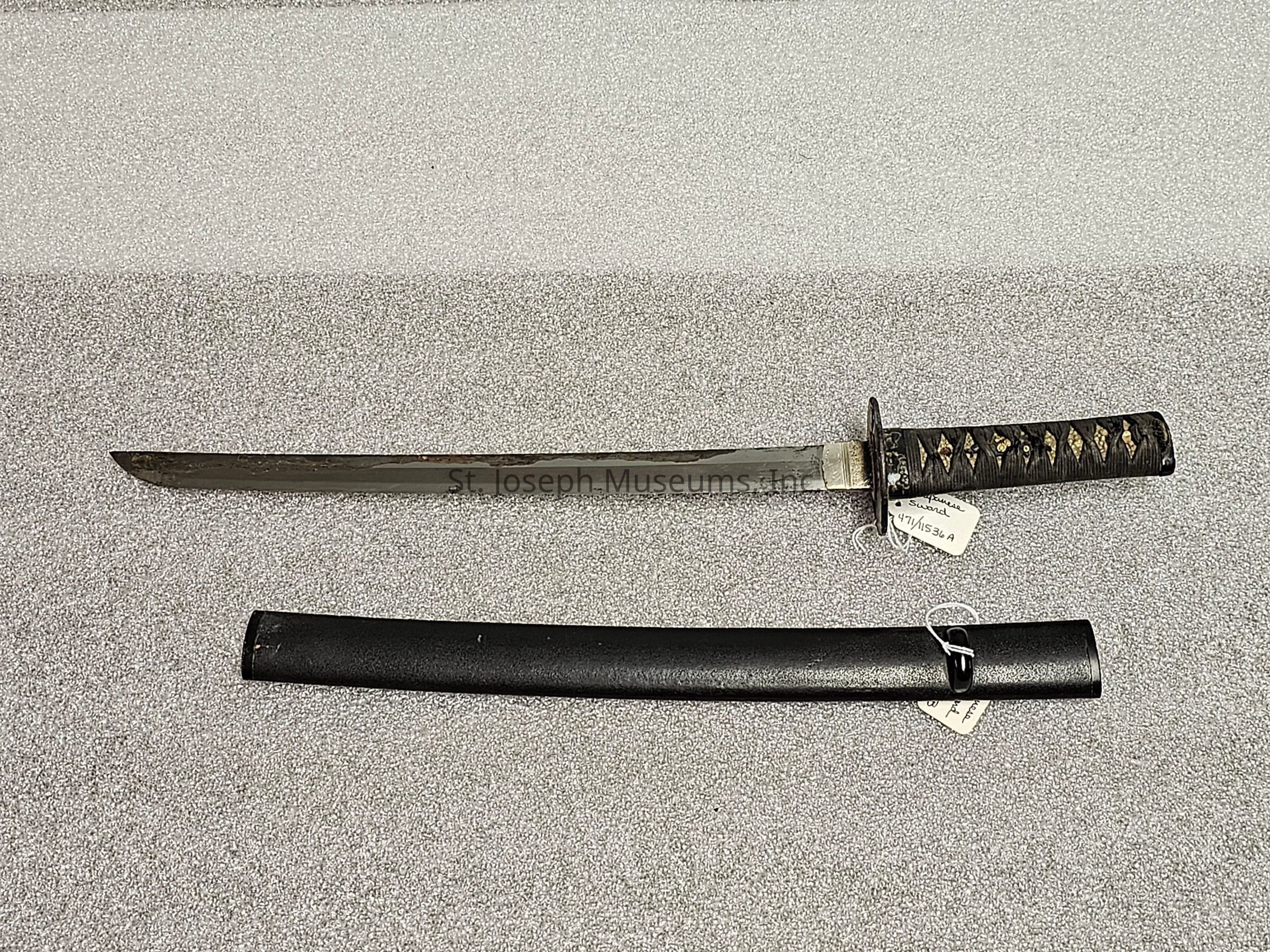
The raised dragon design under the braided silk (called tsuka ito) is called a menuki. These ornamental mini sculptures are usually important to the owner of the sword. They are often flowers, nature symbols, animals, personal symbols, or in the case of this nihonto, a dragon. Menuki are functional and ornamental - they are for design but they also hide the tang holes (mekugi) and provide improved grip on the sword.
The silk braiding, called tsuka ito, covers the hilt (tsuka) of the nihonto. The process of wrapping tsuka ito around the tsuka is called tsuka-make. There are multiple ways to wrap the tsuka ito, each style of wrapping serves as ornamentation as well as to improve the grip on the sword.
The white, bumpy material under the tsuka ito is samegawa, or same. This material, usually of stingray or shark skin, serves to improve the grip on the sword.Research Type
ResearcherPerson
Tori ZiegerNotes
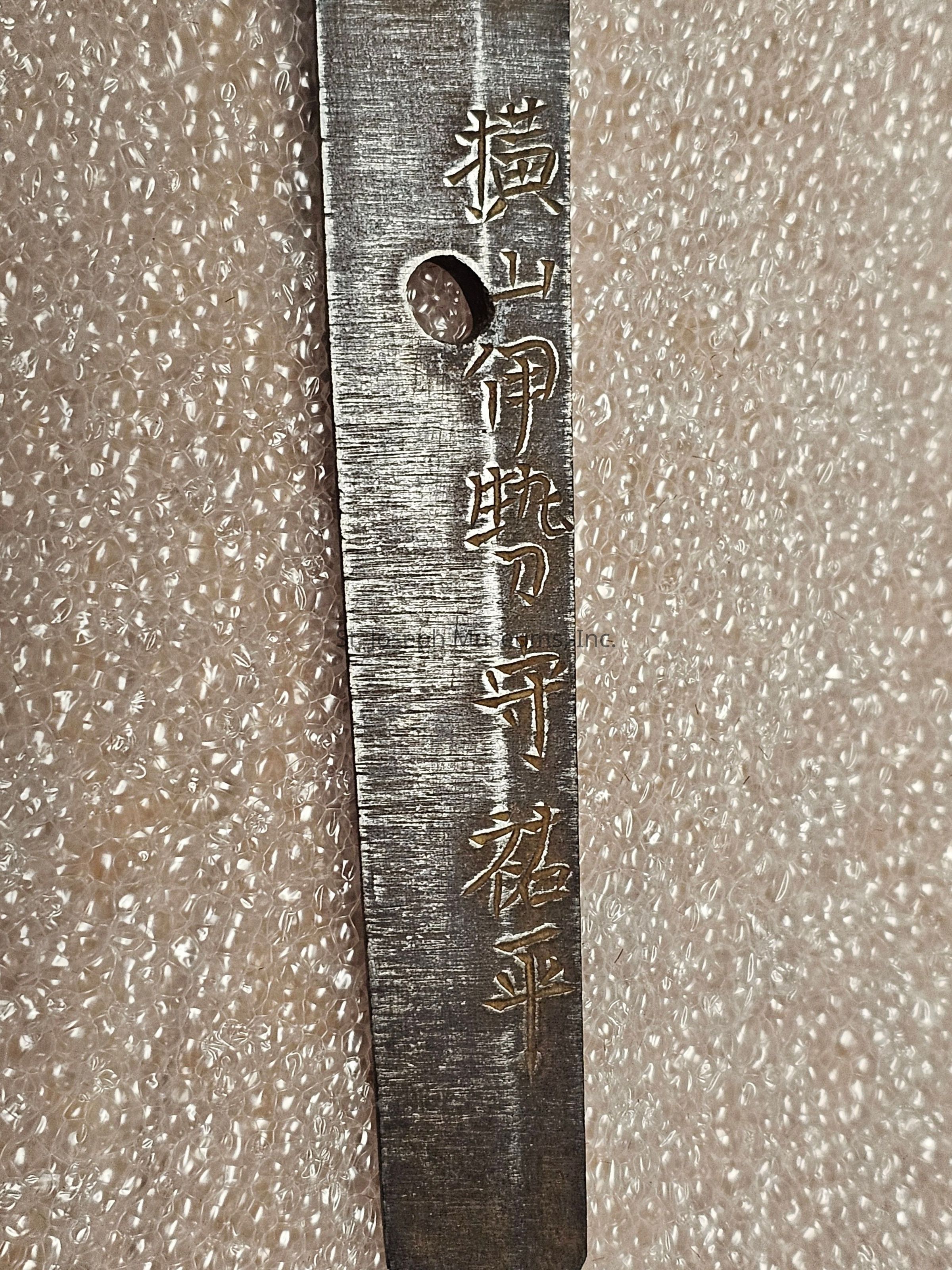
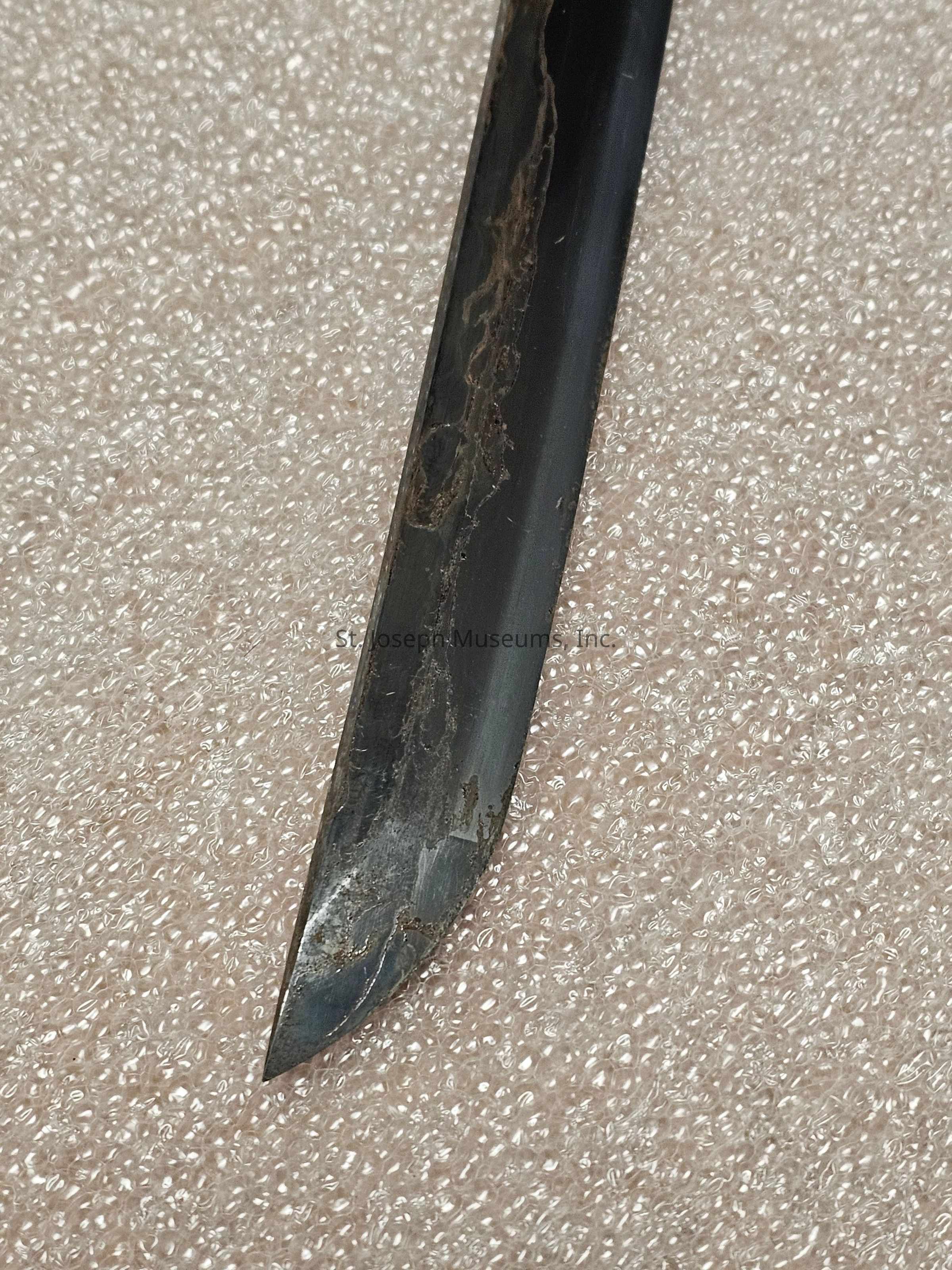
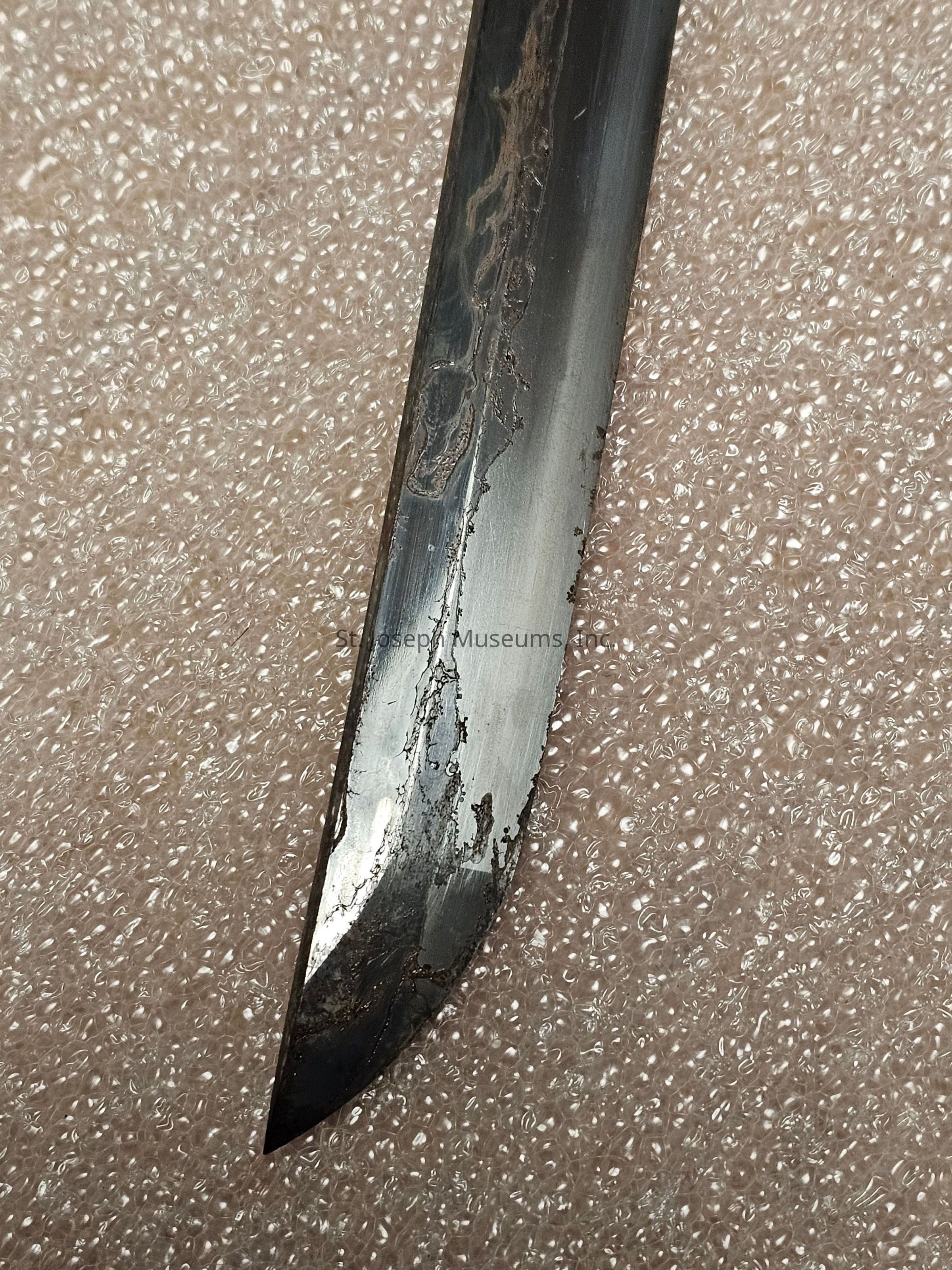
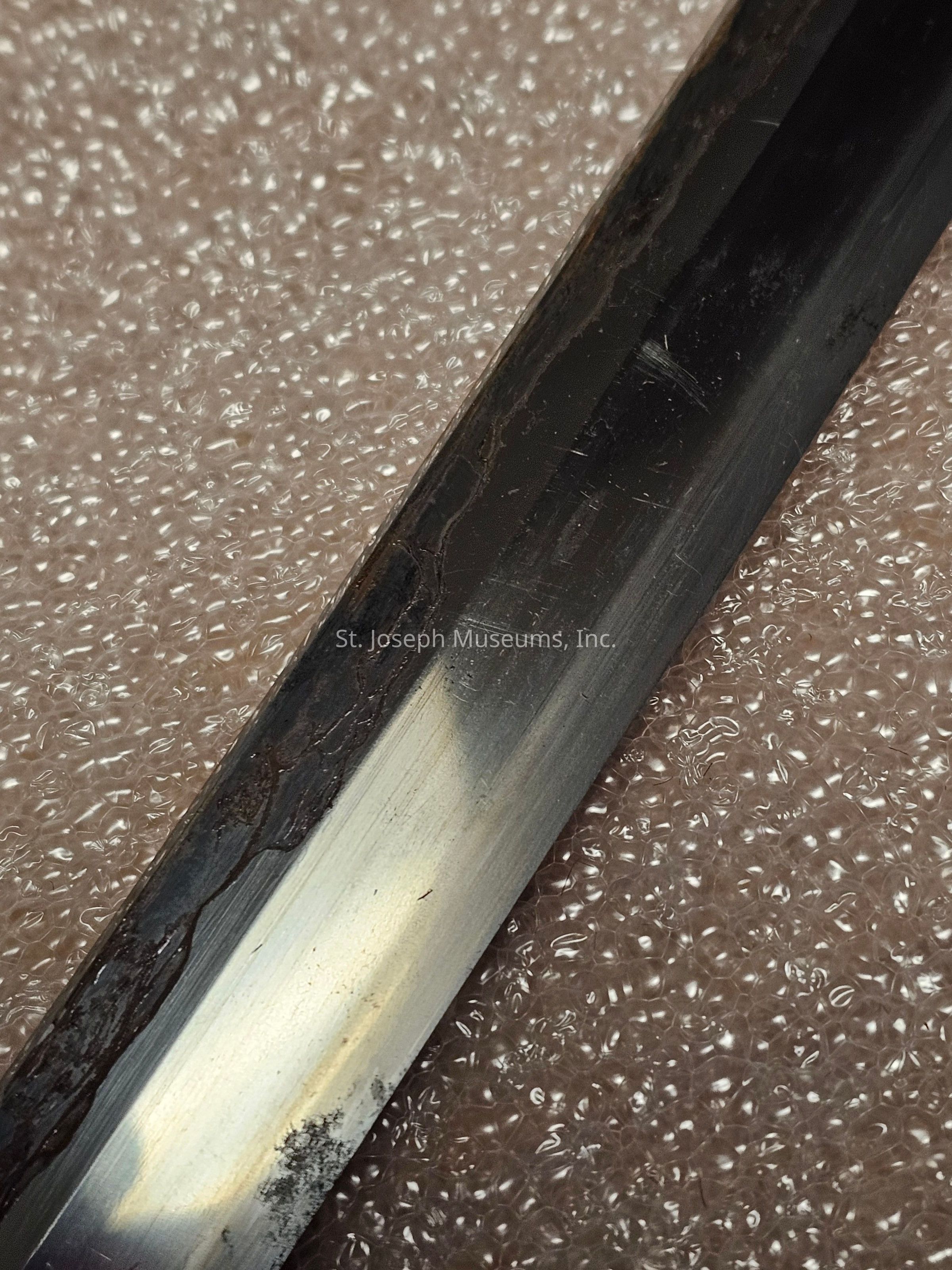
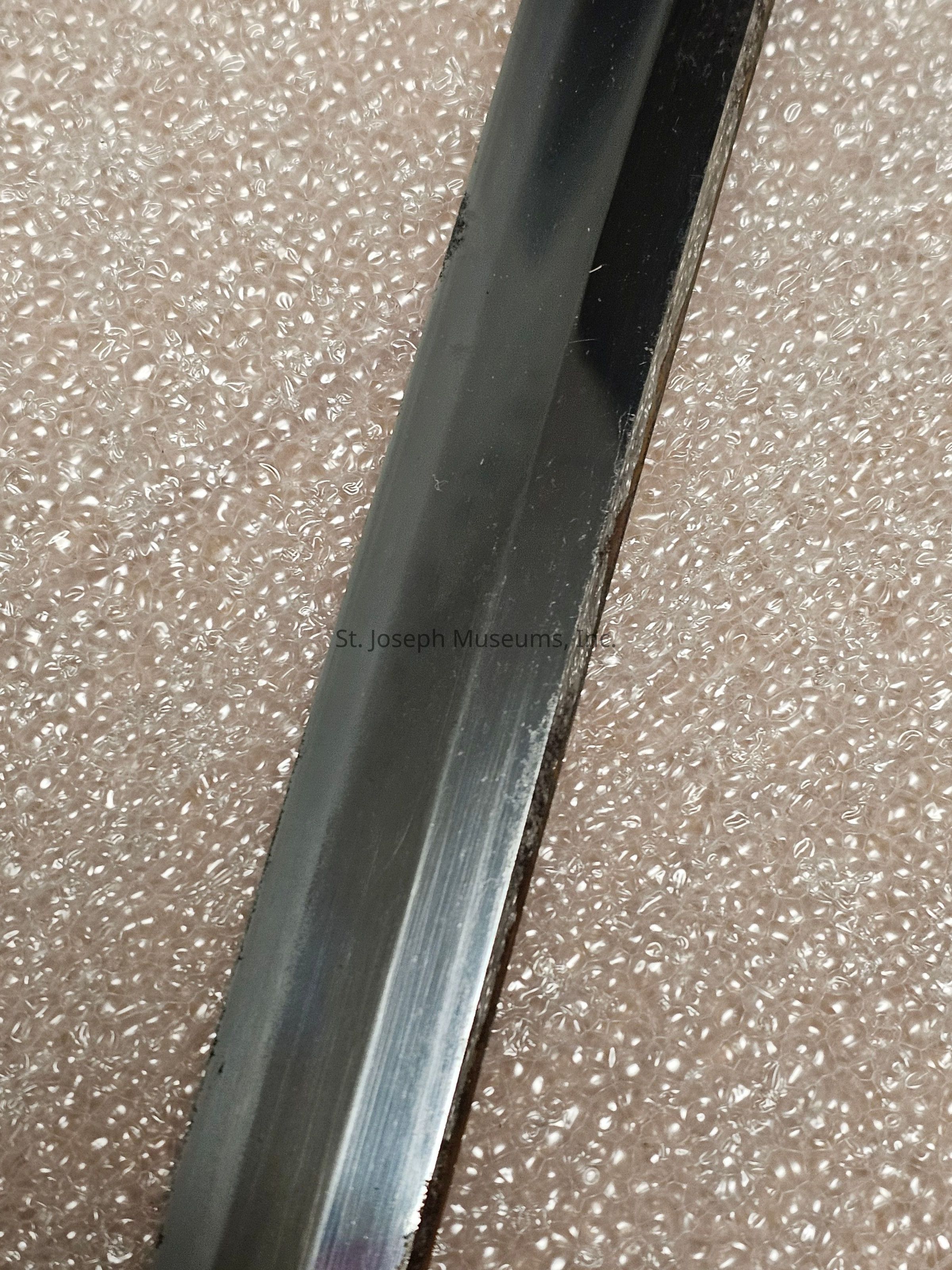
Yokoyama Ise-no-kami Sukehira, the swordsmith who created this blade, was a swordsmith during the Bunka Era (1804-1818) in the Bizen Province of Japan. Bizen was particularly known for the quality of the swords produced in the region and was one of the first regions in the area to begin creating swords from iron. These swords were created by master swordsmiths, who flocked to Bizen Province and established workshops and schools for hundreds of years, which helped continue to tradition of excellence. One of the most influential schools was the Osafune School, which was established in the early 13th century. The swordsmiths that attended this school produced a style of blade referred to as the Bizen Osafune school of blades. These blades had distinctive features, like an elaborate hamon, a well defined hada, and a long and graceful kissaki. These features all created blades that were known for their superior strength caused by exceptional tempering process and for their superior cutting ability and balance. The school declined in prominence after a flood destroyed the region in the late 16th century. In the 1630s, however, the Yokoyama family helped resurrect the school and the Bizen-den tradition of creating swords.
Yokohama Sukehira was of that family that revitalized swordsmithing in Osafune and Bizen Province. In 1788, he moved to the Satsuma Province and studied under another sword master, Motohira. Upon returning to Bizen province, he created blades that combined traditional Bizen techniques with the Soshu techniques learned under Motohira, creating a new signature style that is well sought after.Research Type
ResearcherPerson
Tori ZiegerNotes
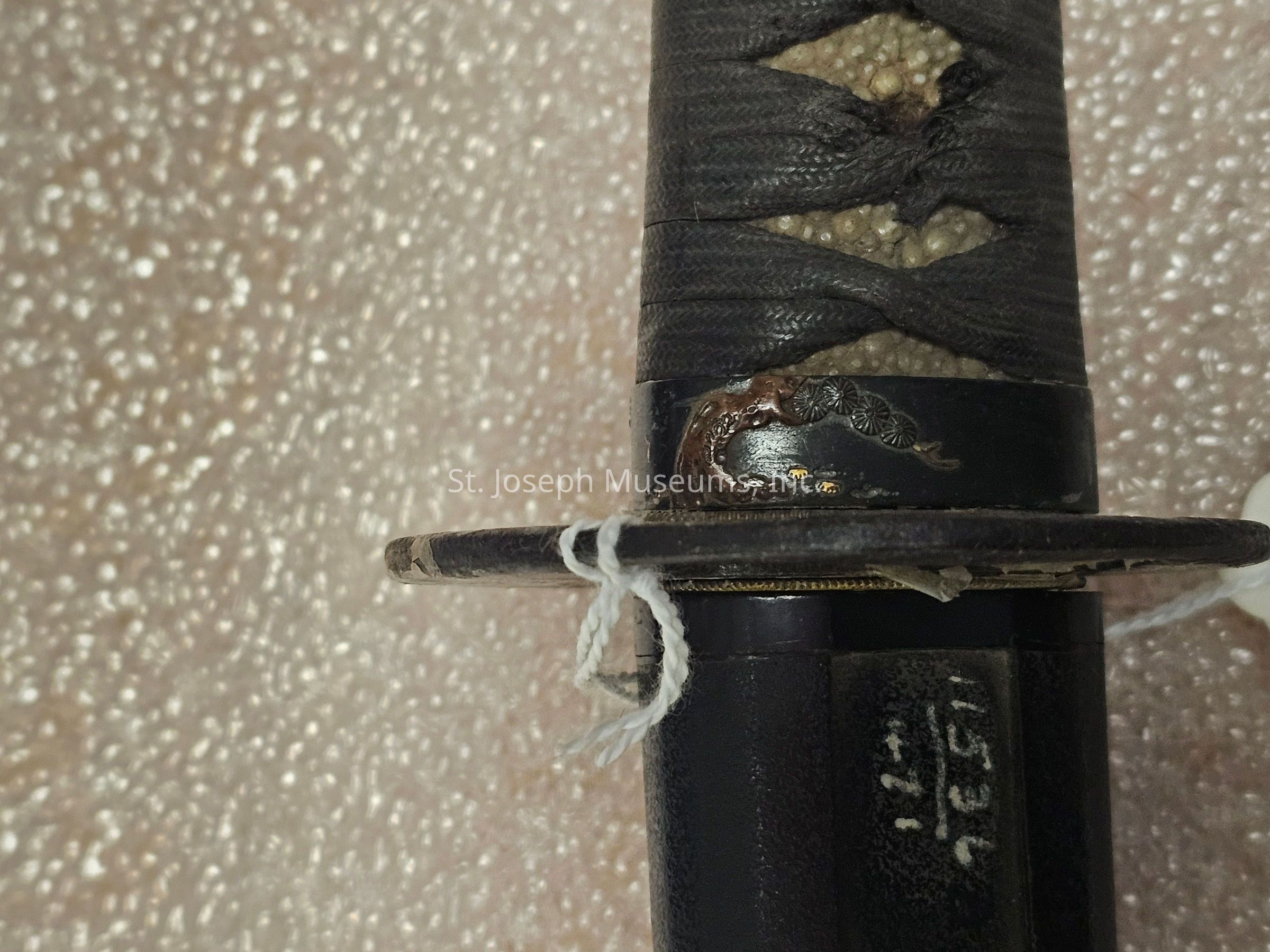
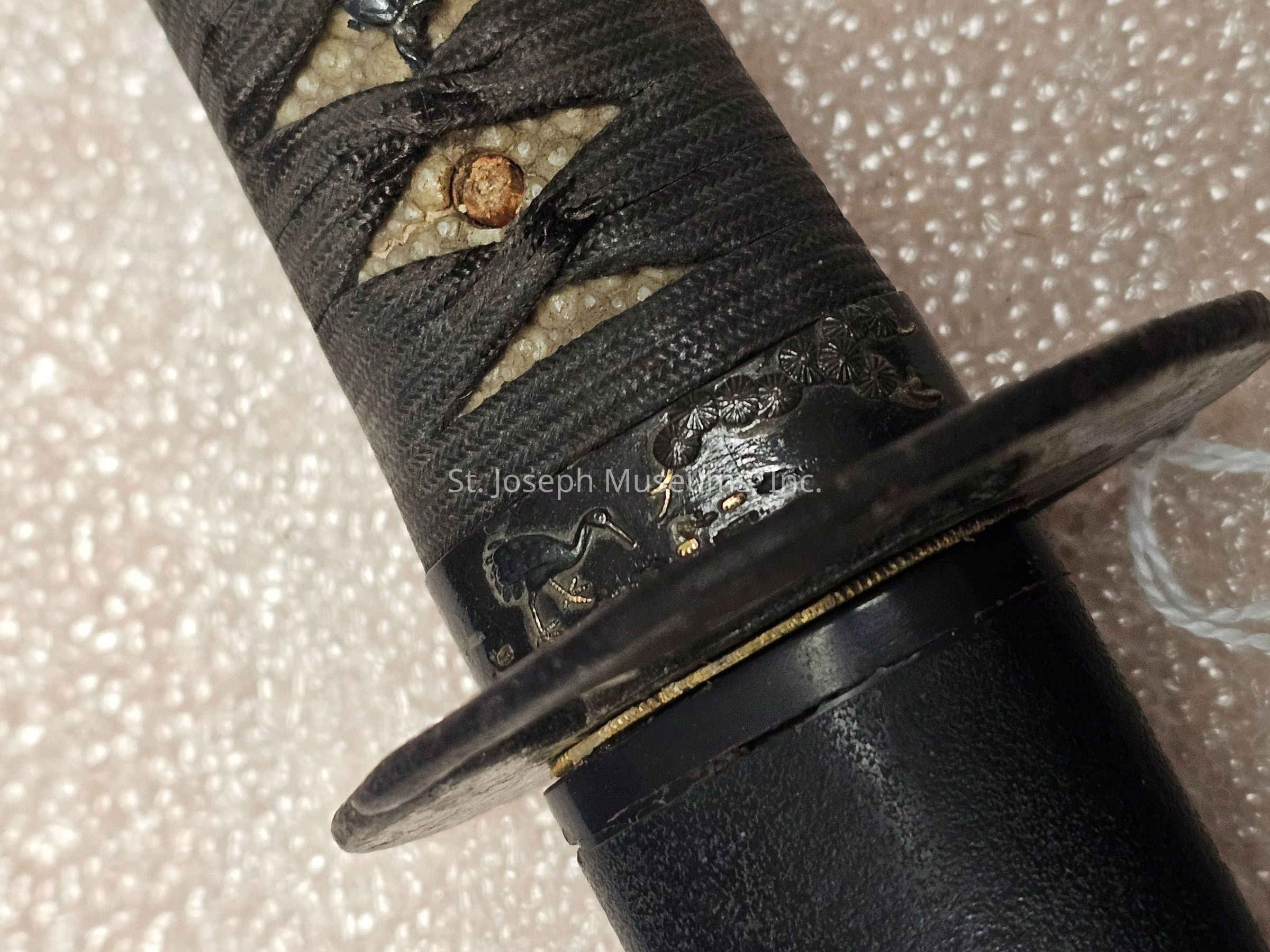
This nihonto displays several distinct symbols, all of which had either personal meaning to the owner of the sword or encompassed well wishes, desires, outcomes. The fuchi show a chrysanthemum tree on one side and a bird (possibly a crane) and another chrysanthemum tree. The branching chrysanthemum image is called edagiku and is commonly associated with longevity. The crane (tsuru) image symbolizes longevity and luck.
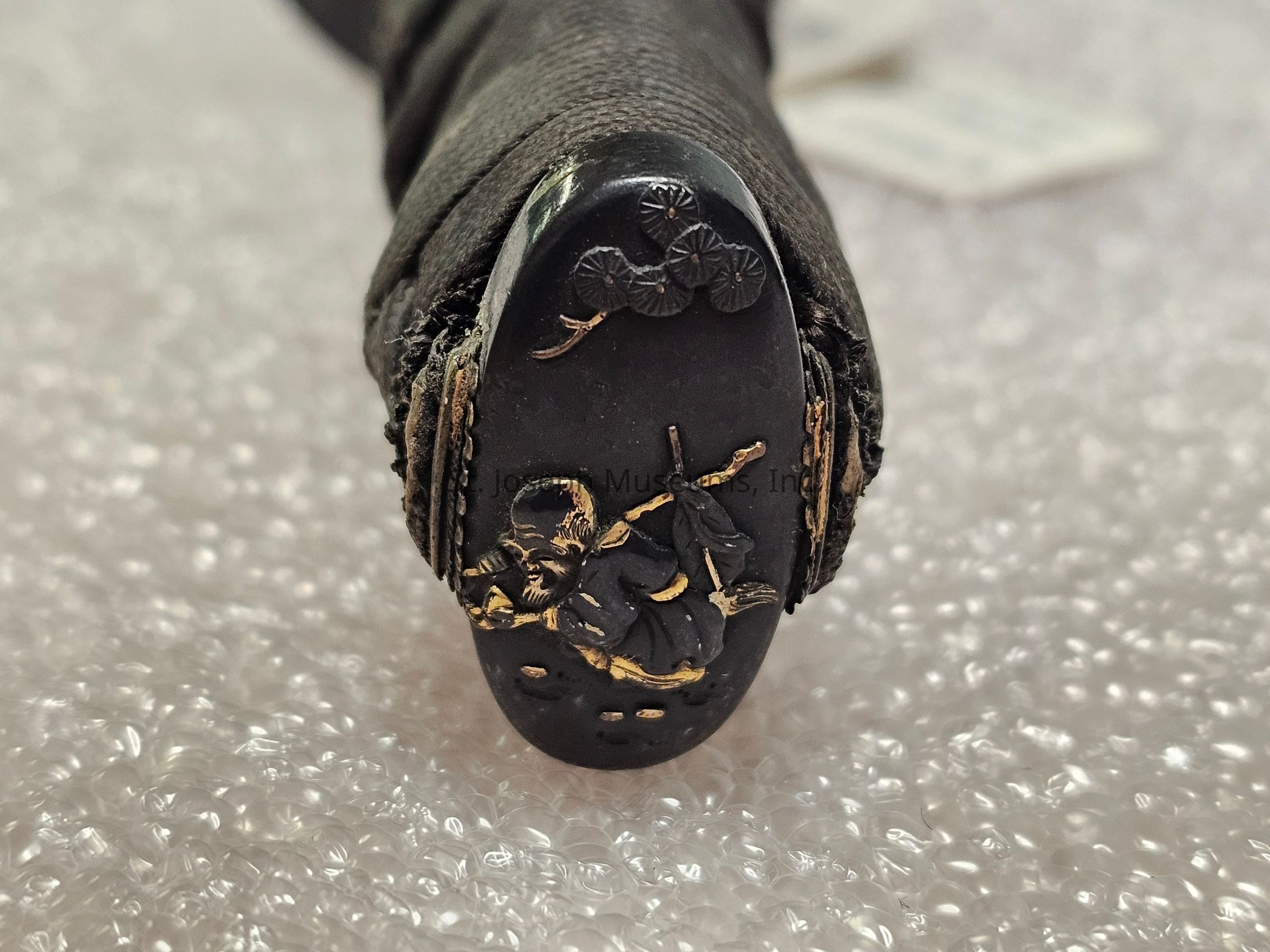
The kashira depicts an anthropomorphic figure and edagiku. The figure is an old man carrying a staff or carrying pole. The depiction of humans on nihonto carry symbolic meanings as well and can represent mythological or historical people/stories.
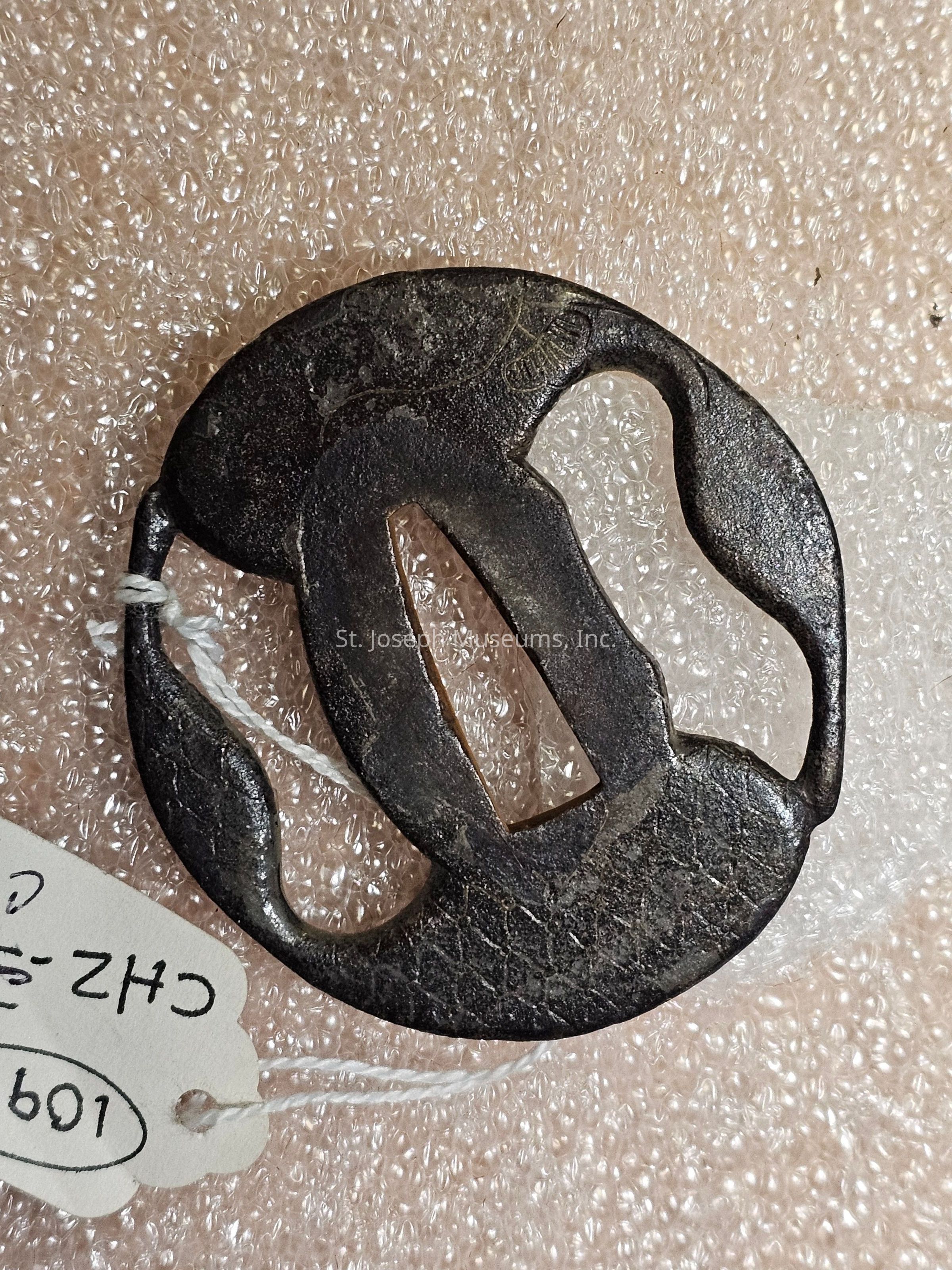
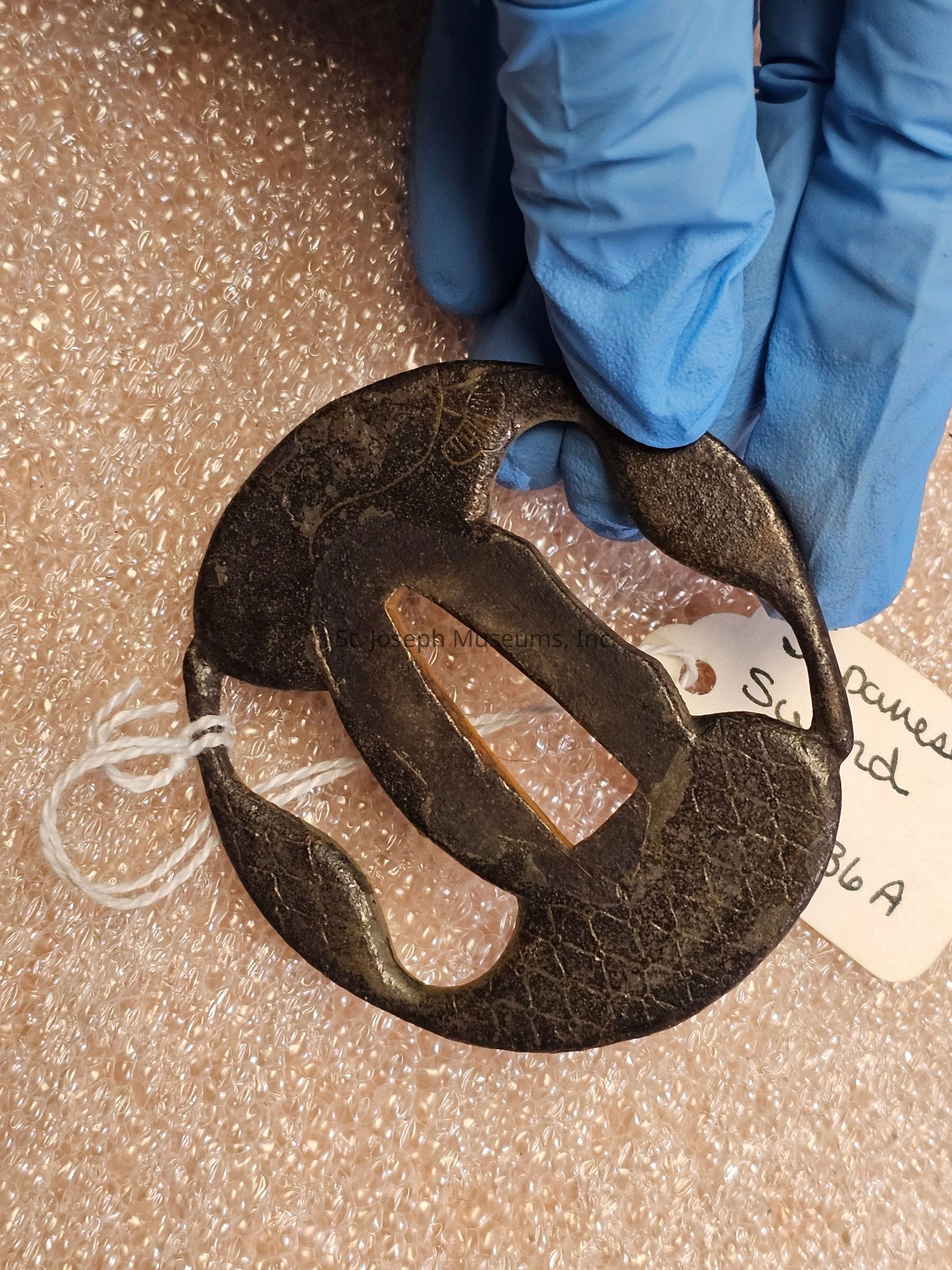
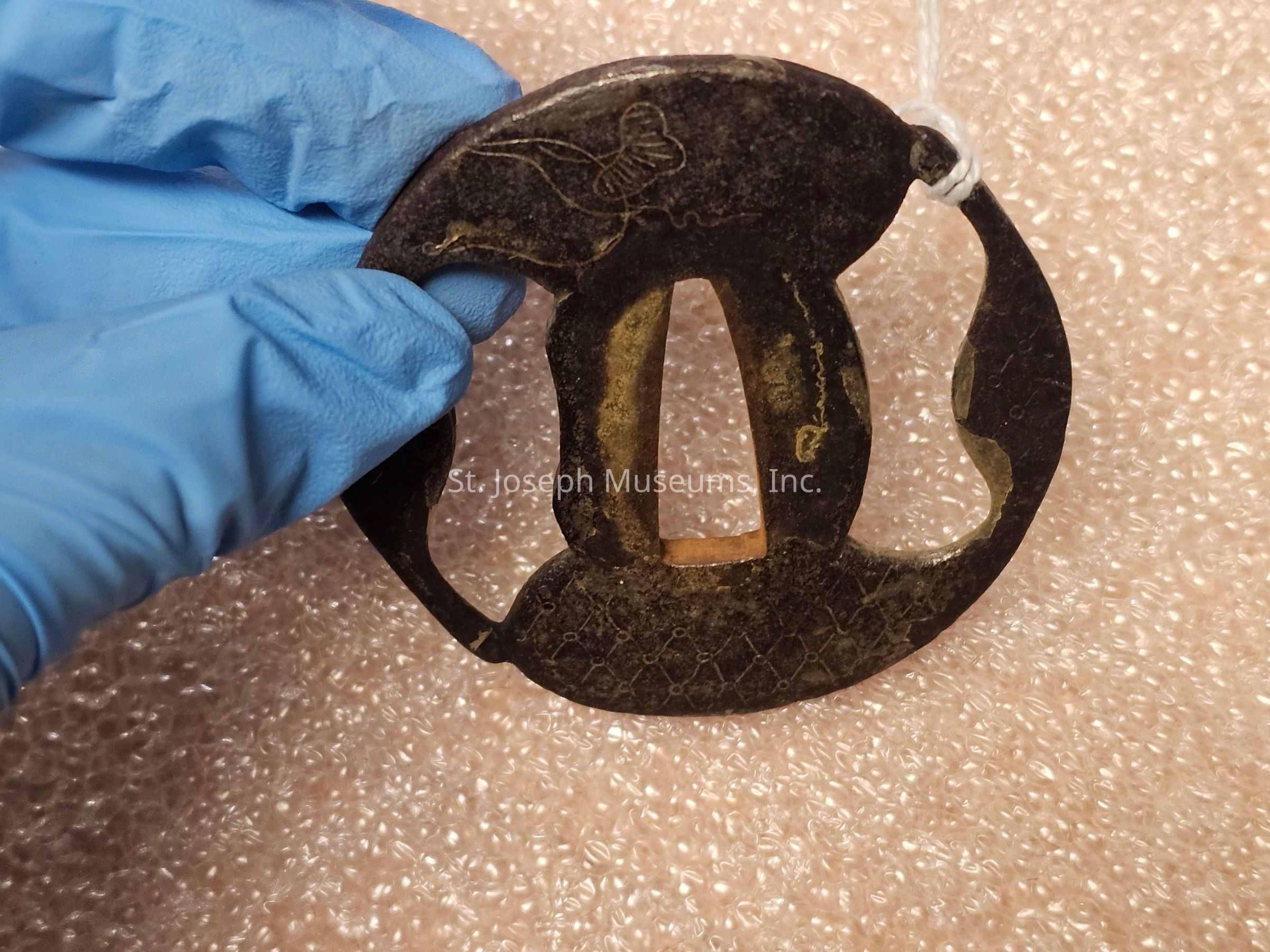
The tsuba depicts a leaf image and a geometric pattern, both also have symbolic meanings.