Research Type
ResearcherNotes
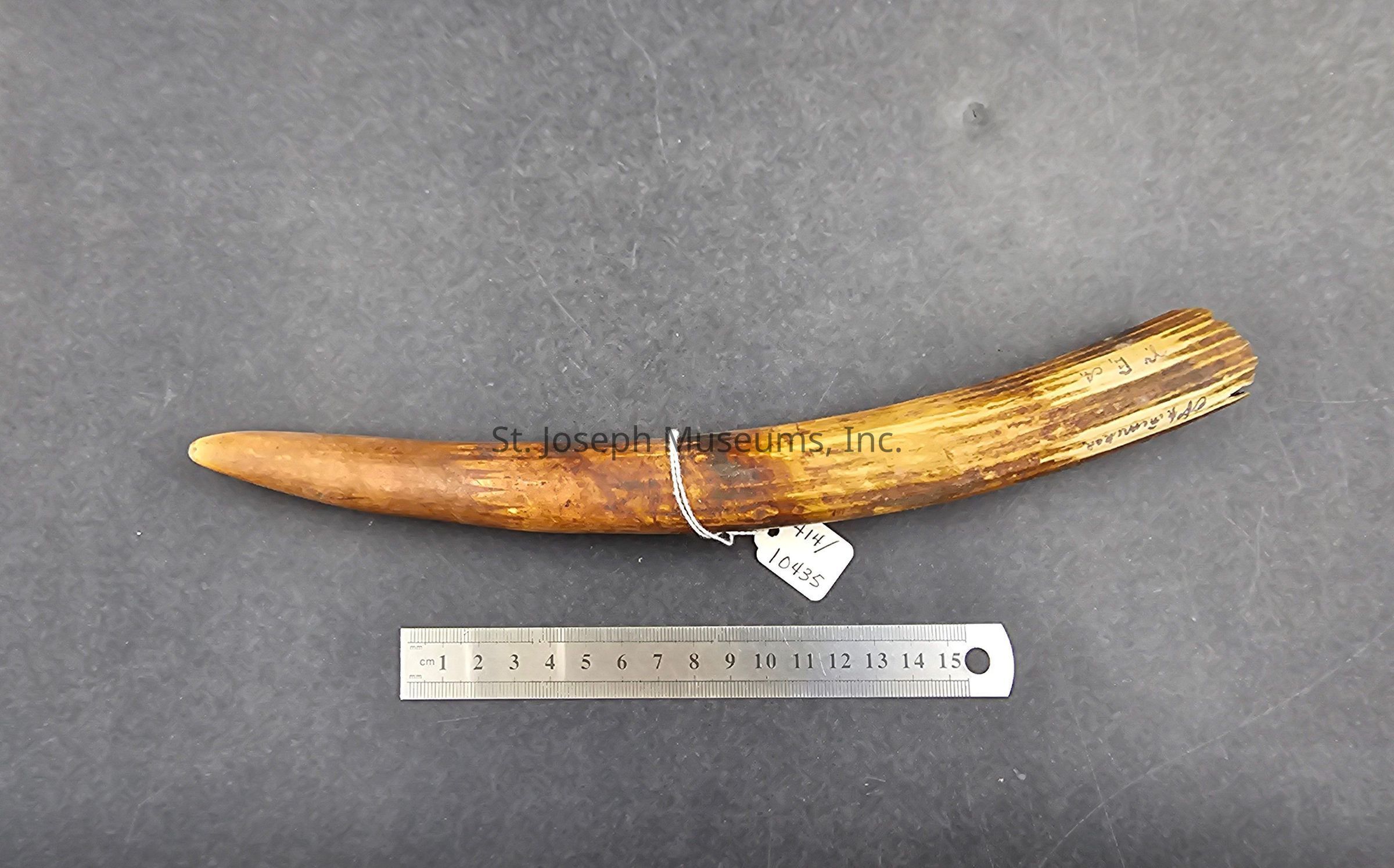
Ivory was a significant export item for African kingdoms, as it was highly sought after around the world. The structure of African ivory in particular makes it a highly desirable material for art, as it can be incised, cut, carved, chiseled, etc from almost any angle without weakening the overall structure.
The historical use of ivory in Africa was limited, usually to individual of high status. The hunting of elephants was limited to highly trained and specialized hunters (it is thought that the Dahomey Amazons were first formed as elite elephant hunters) and ivory carving was controlled and limited to certain occupations.
In Cameroon specifically, where this object was collected, ivory is of profound significance. Elephant tusks are specifically reserved for the Fon (king) and the Kwifon (a powerful secret society). The elephant tusk is representative of the king's connection with the ancestral world and highlights his role as the living link between ancestors and gods. Tusks were used as horns to announce the arrival of the Fon in certain ceremonies.