Underground Railroad

Name/Title

Underground Railroad

Entry/Object ID

9999.BHF.213

Scope and Content

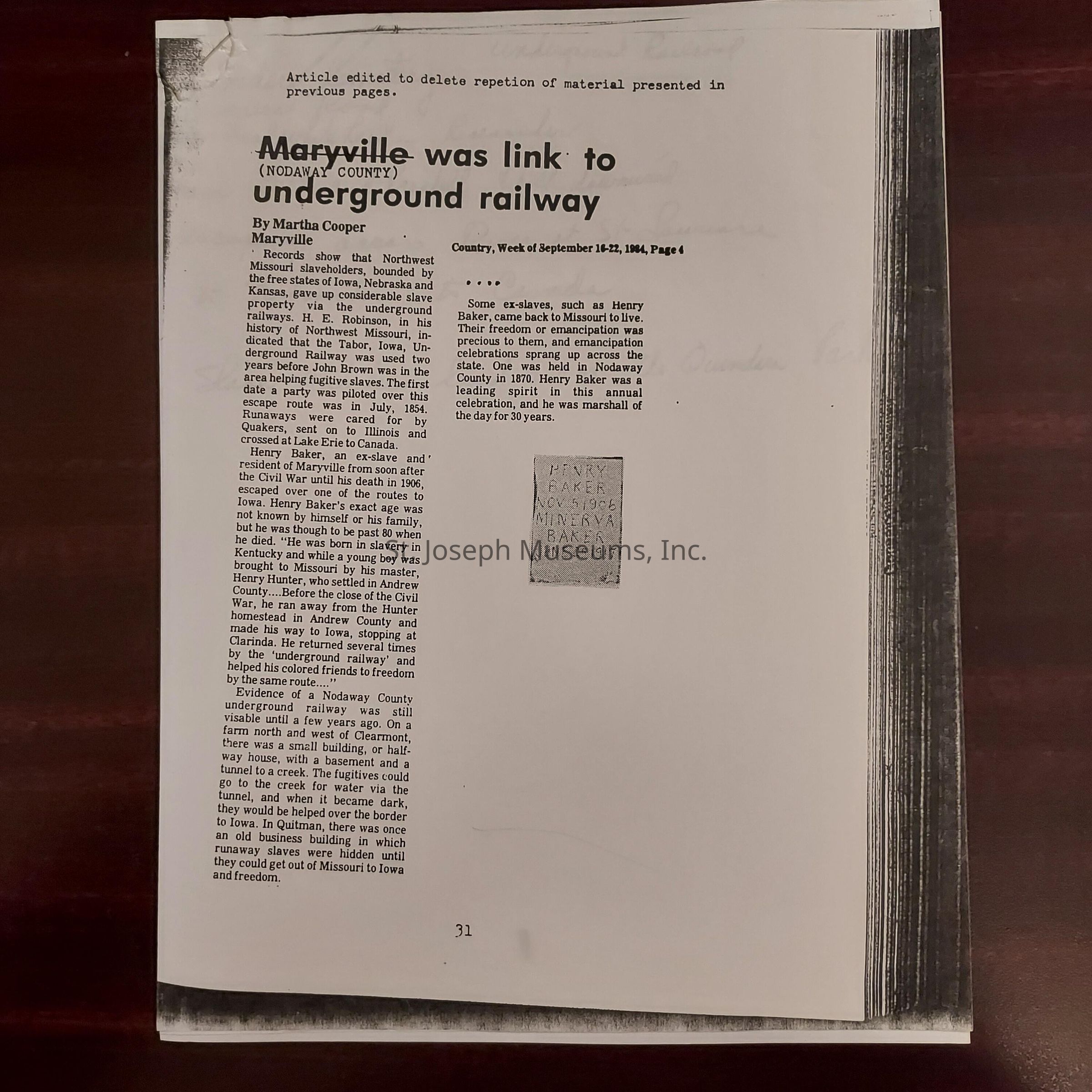
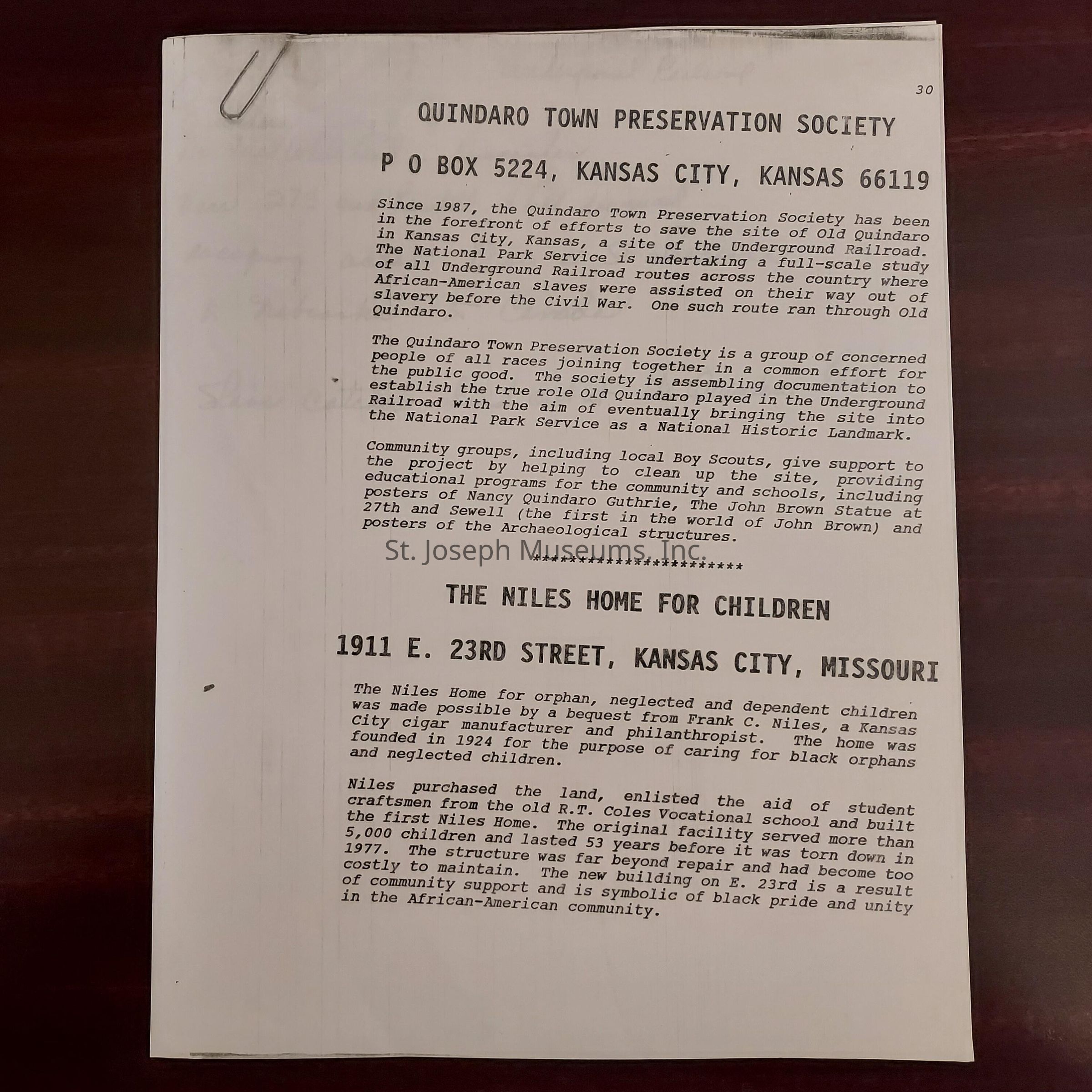
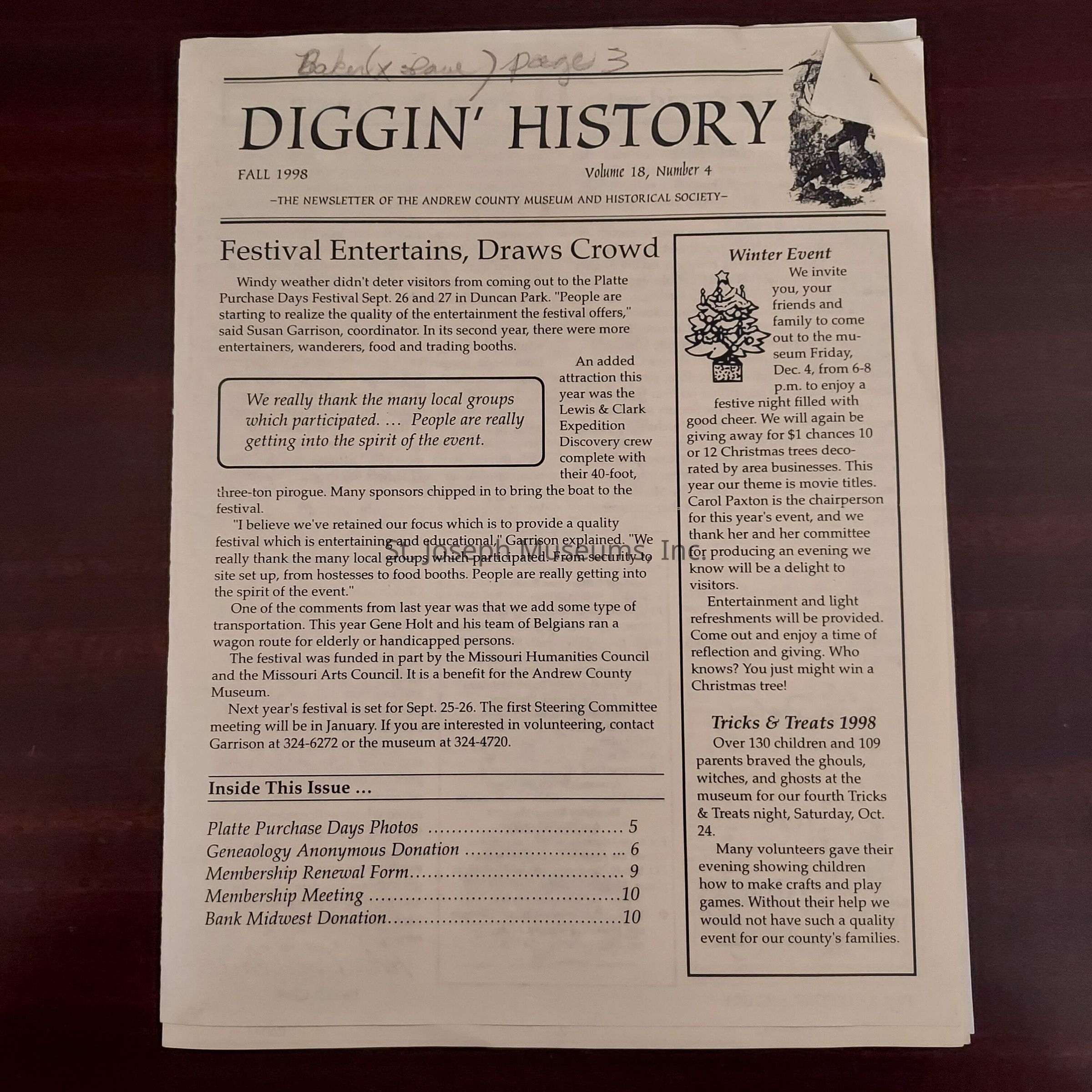
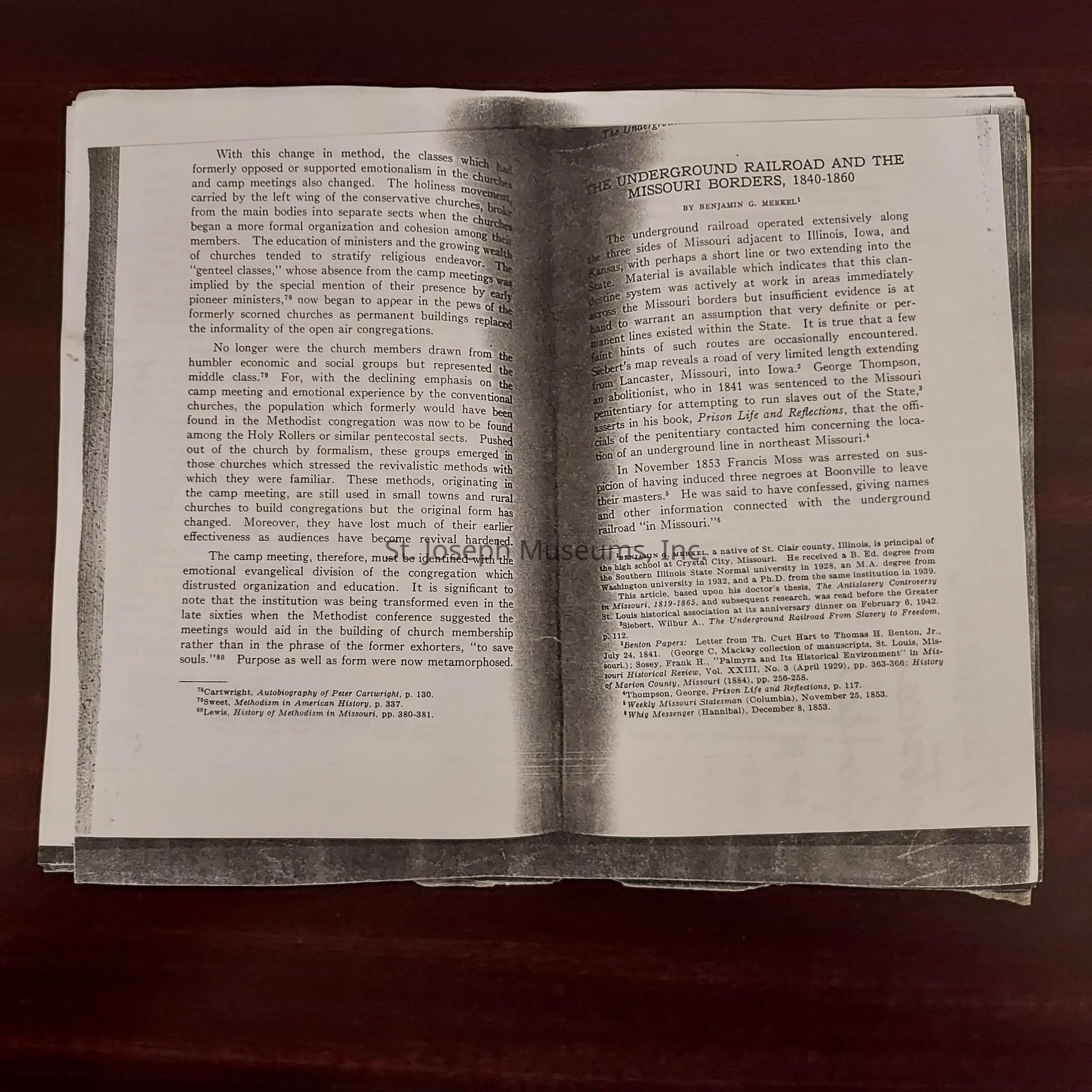
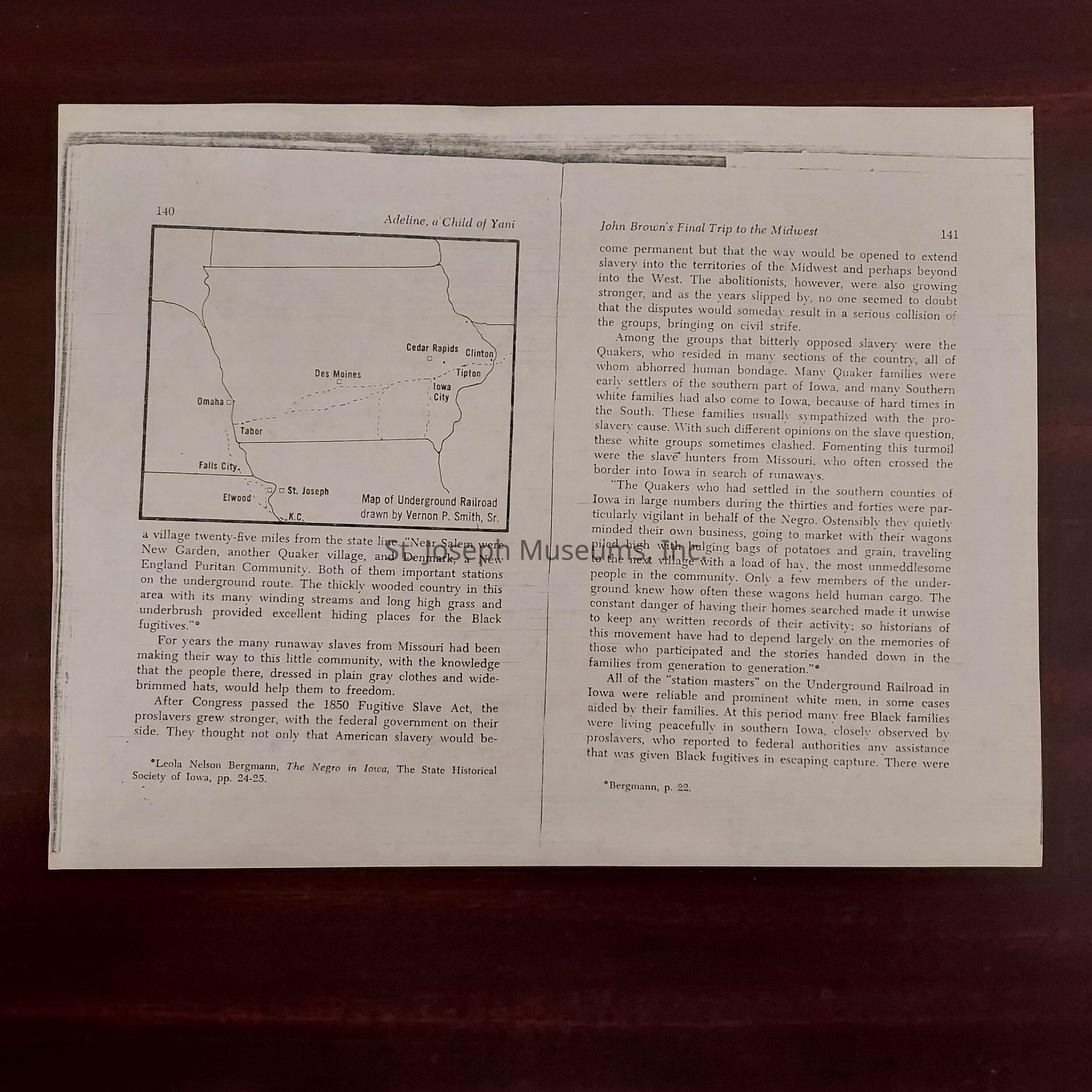
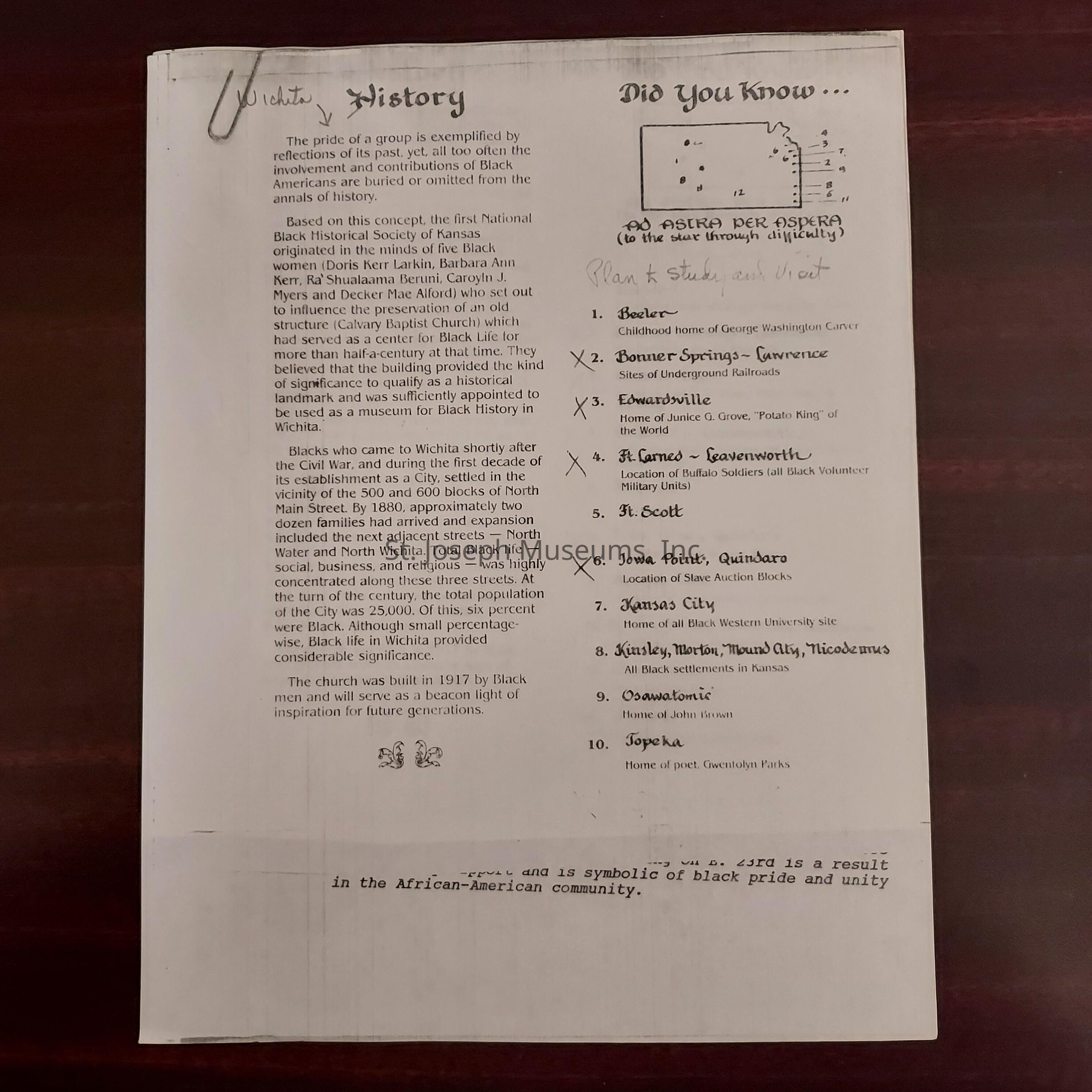
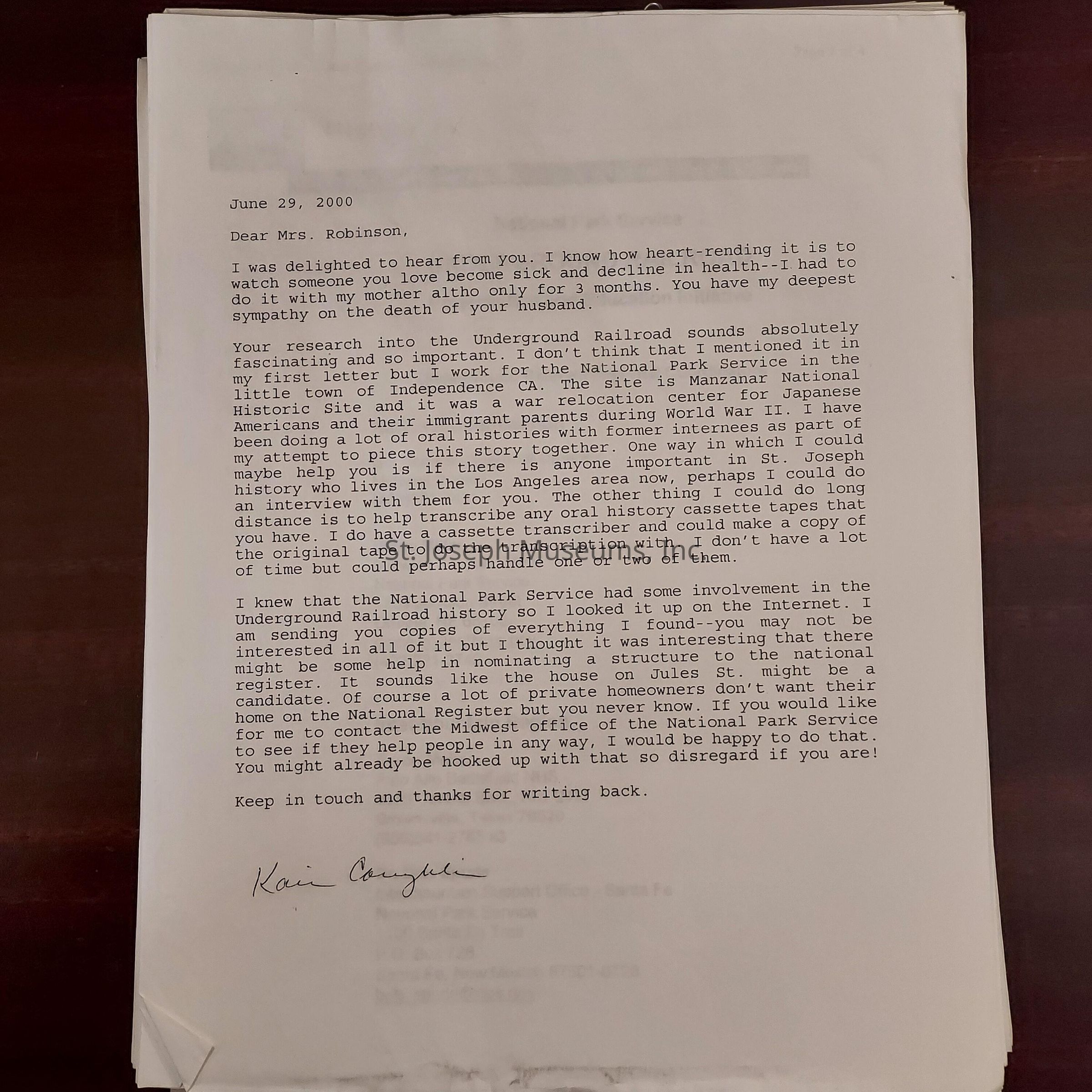
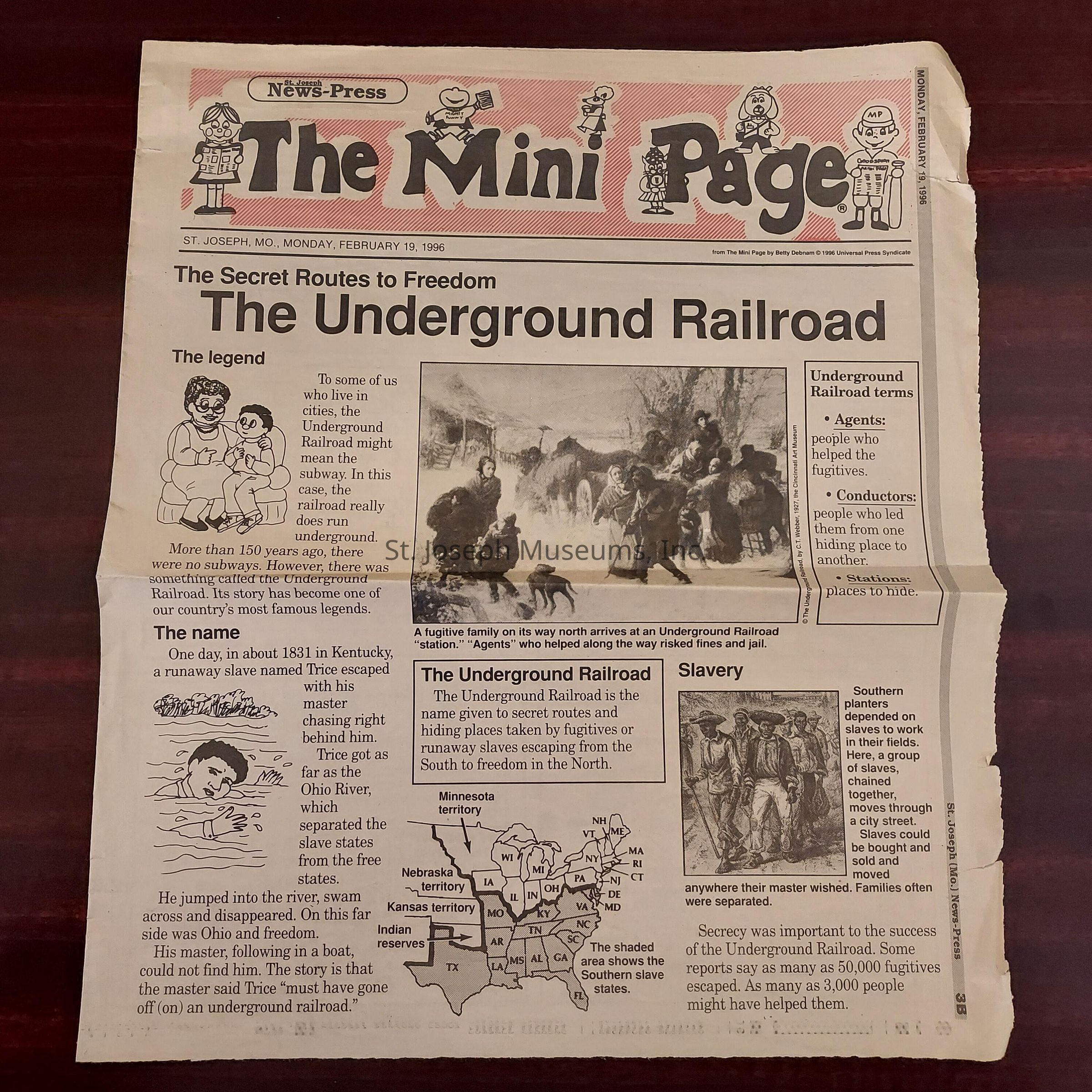
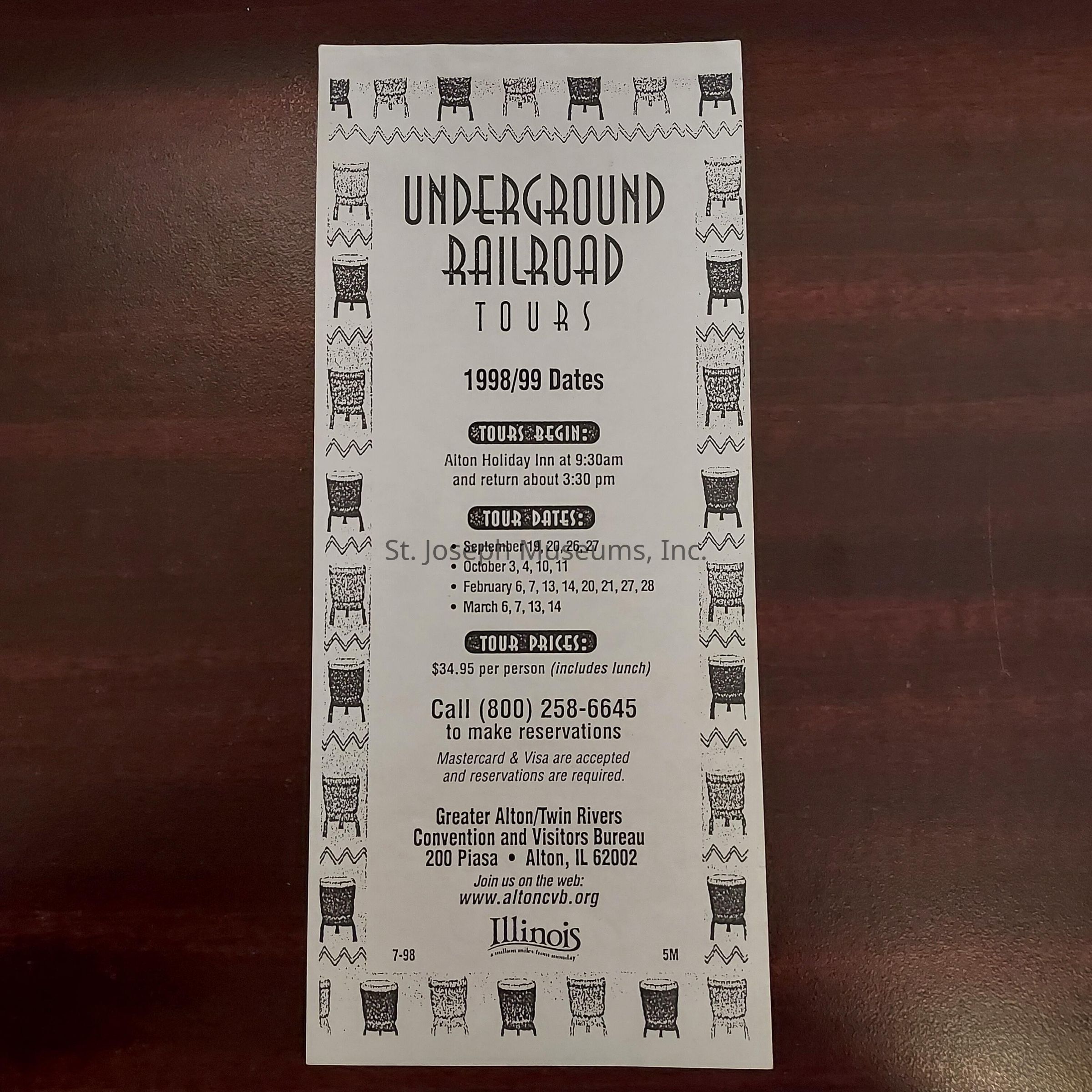
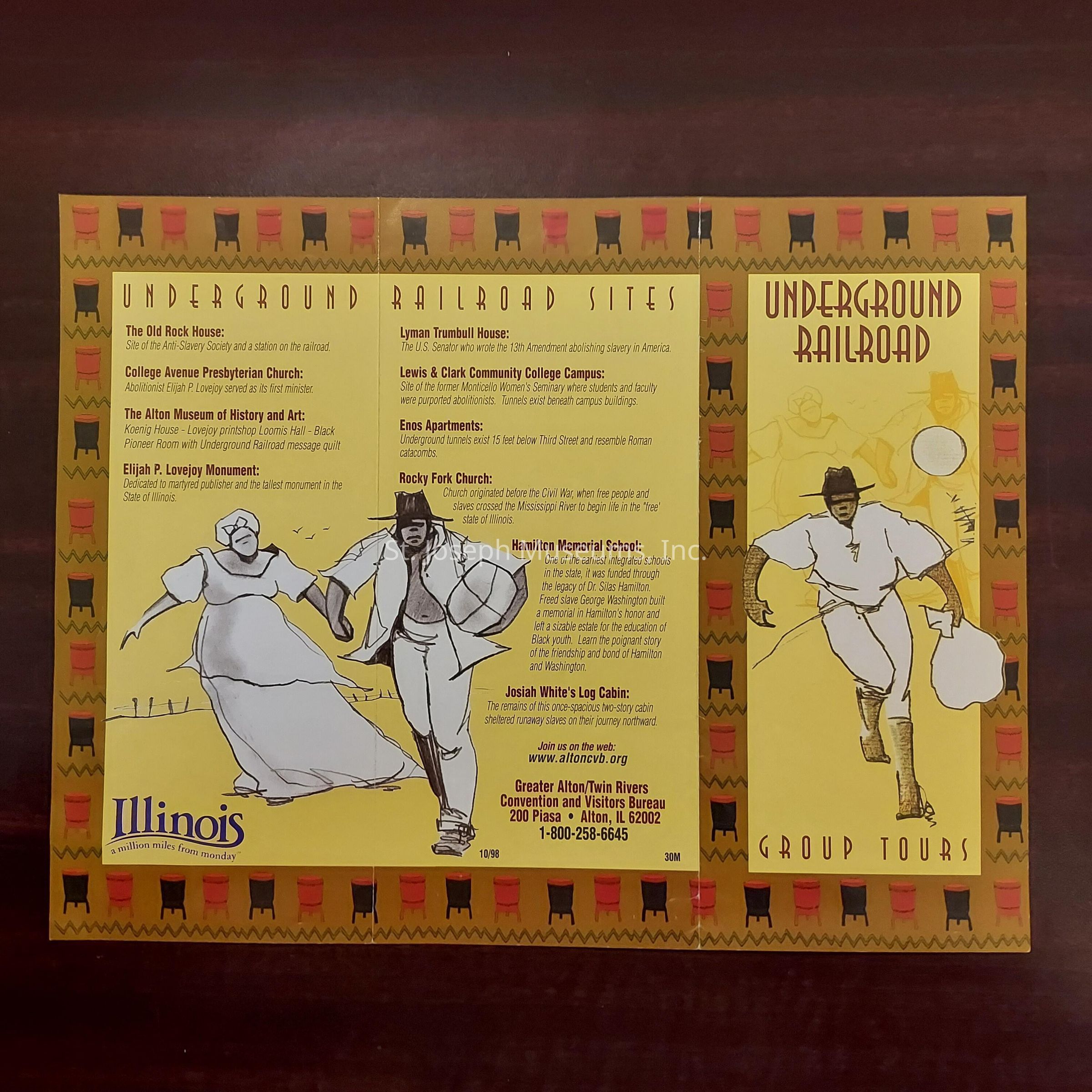
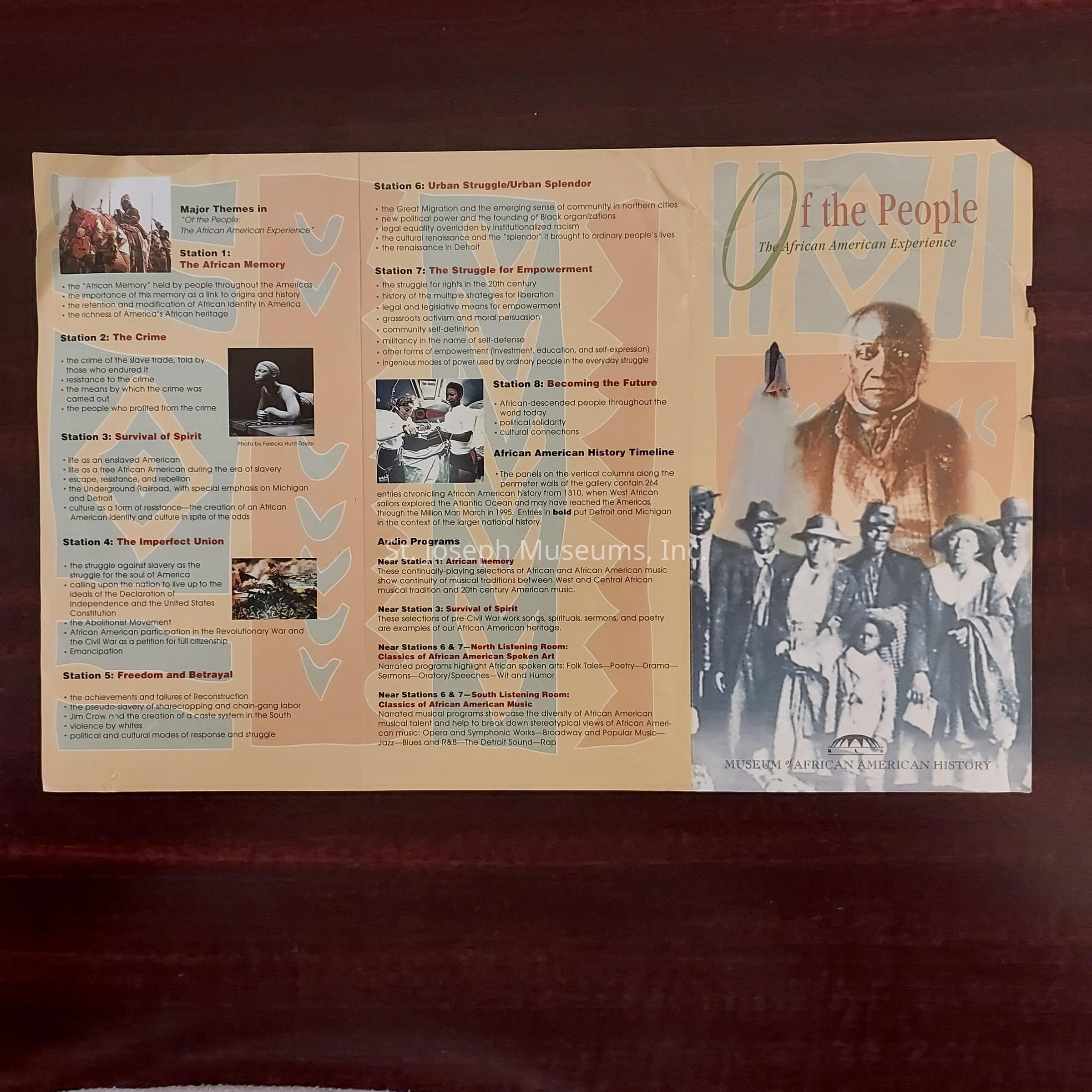
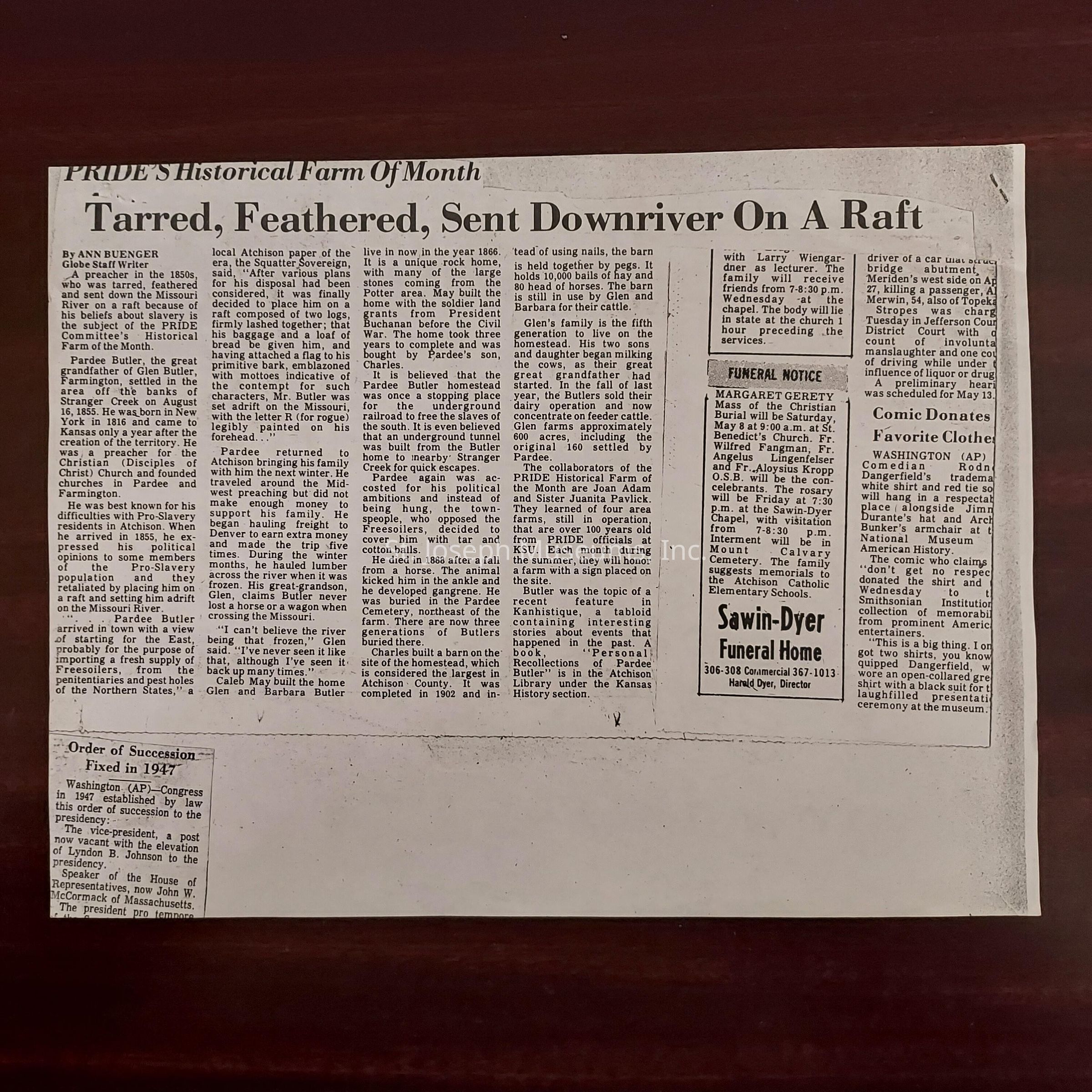
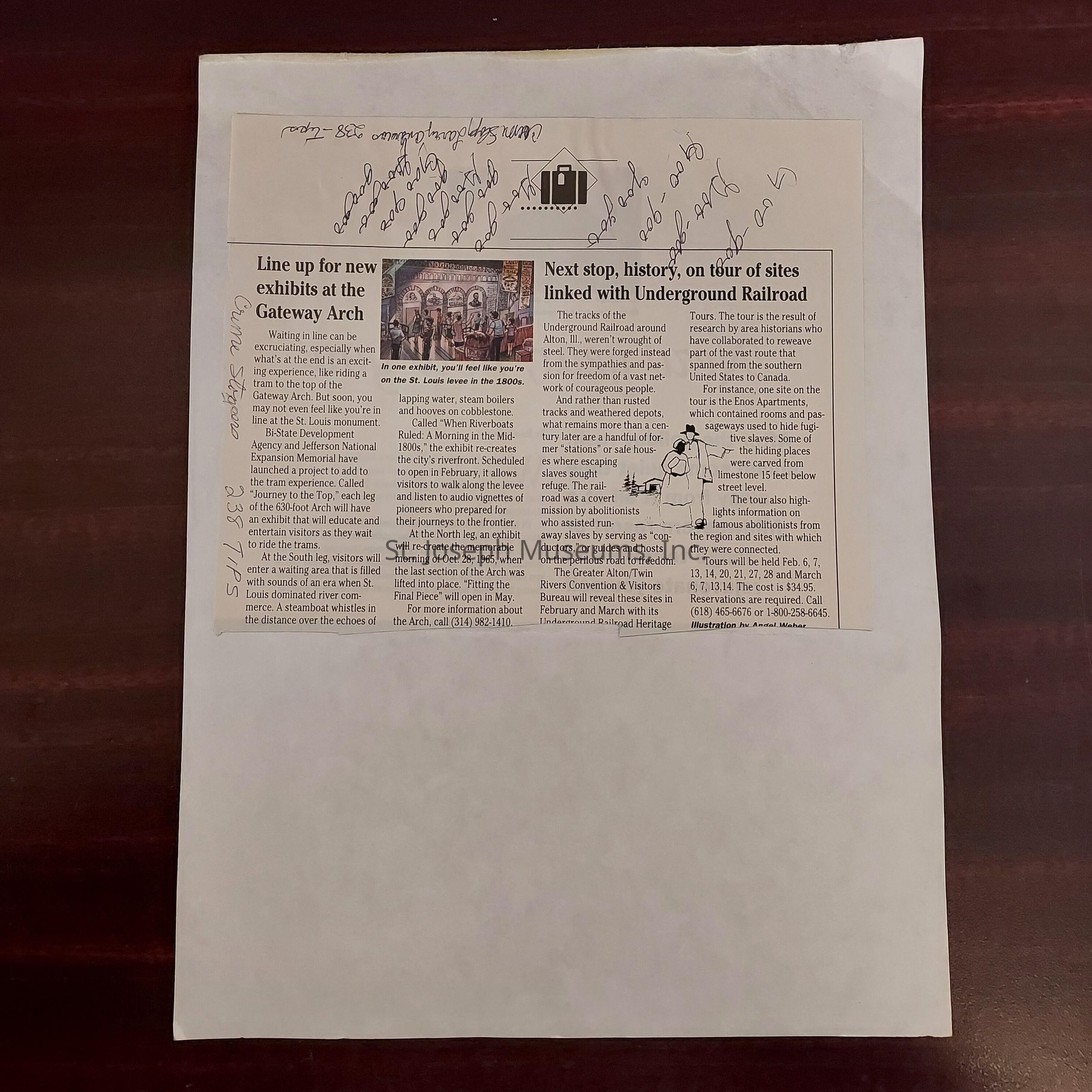
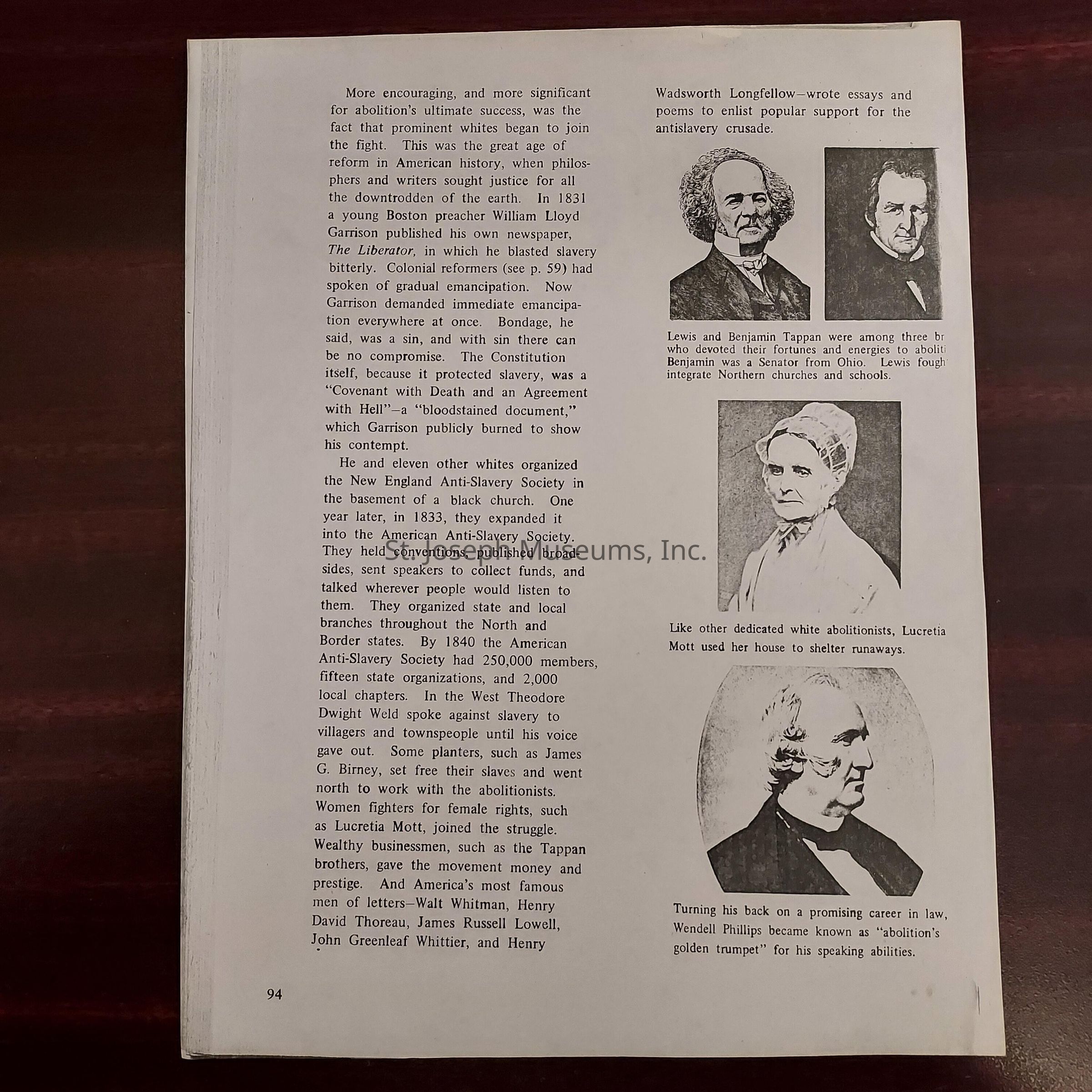
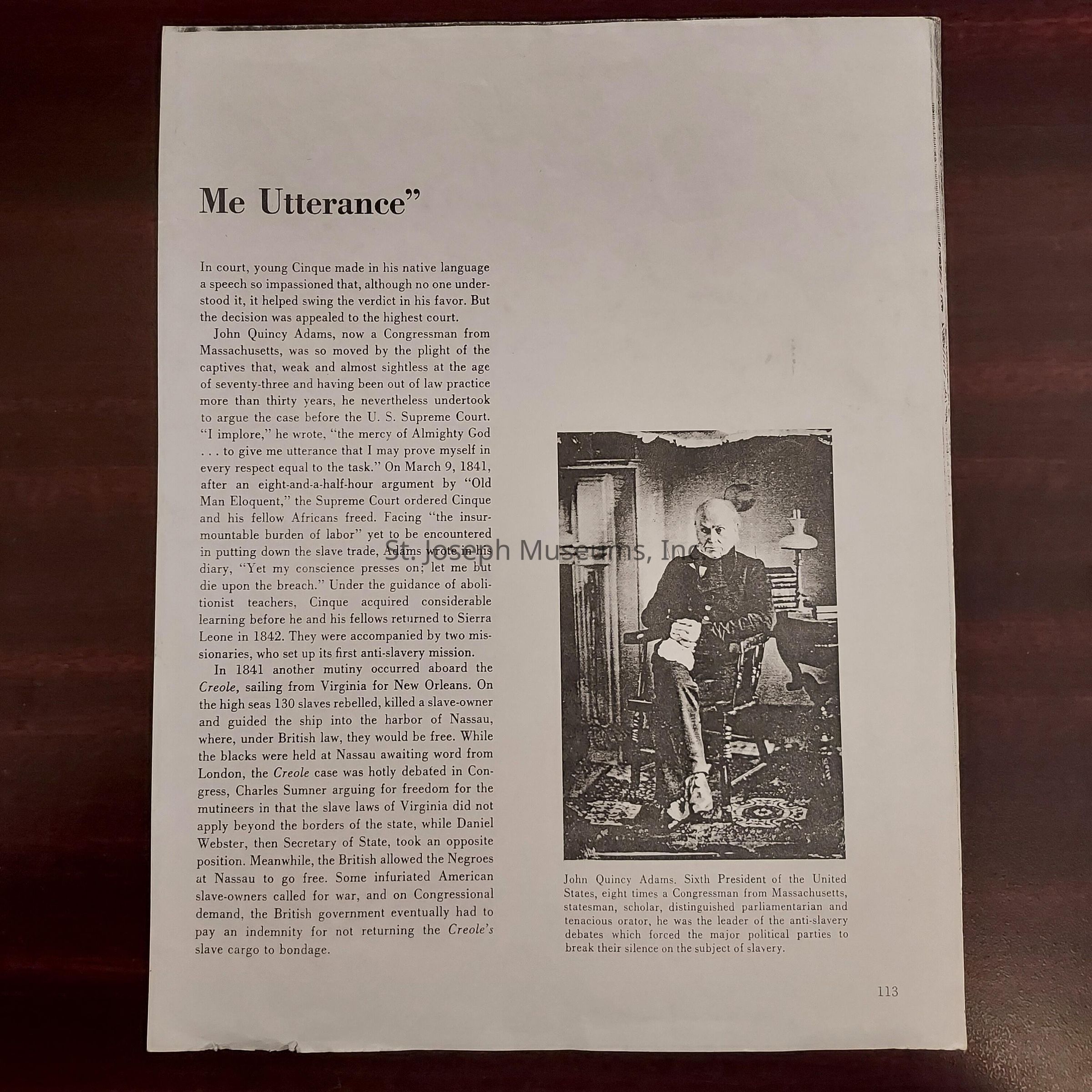
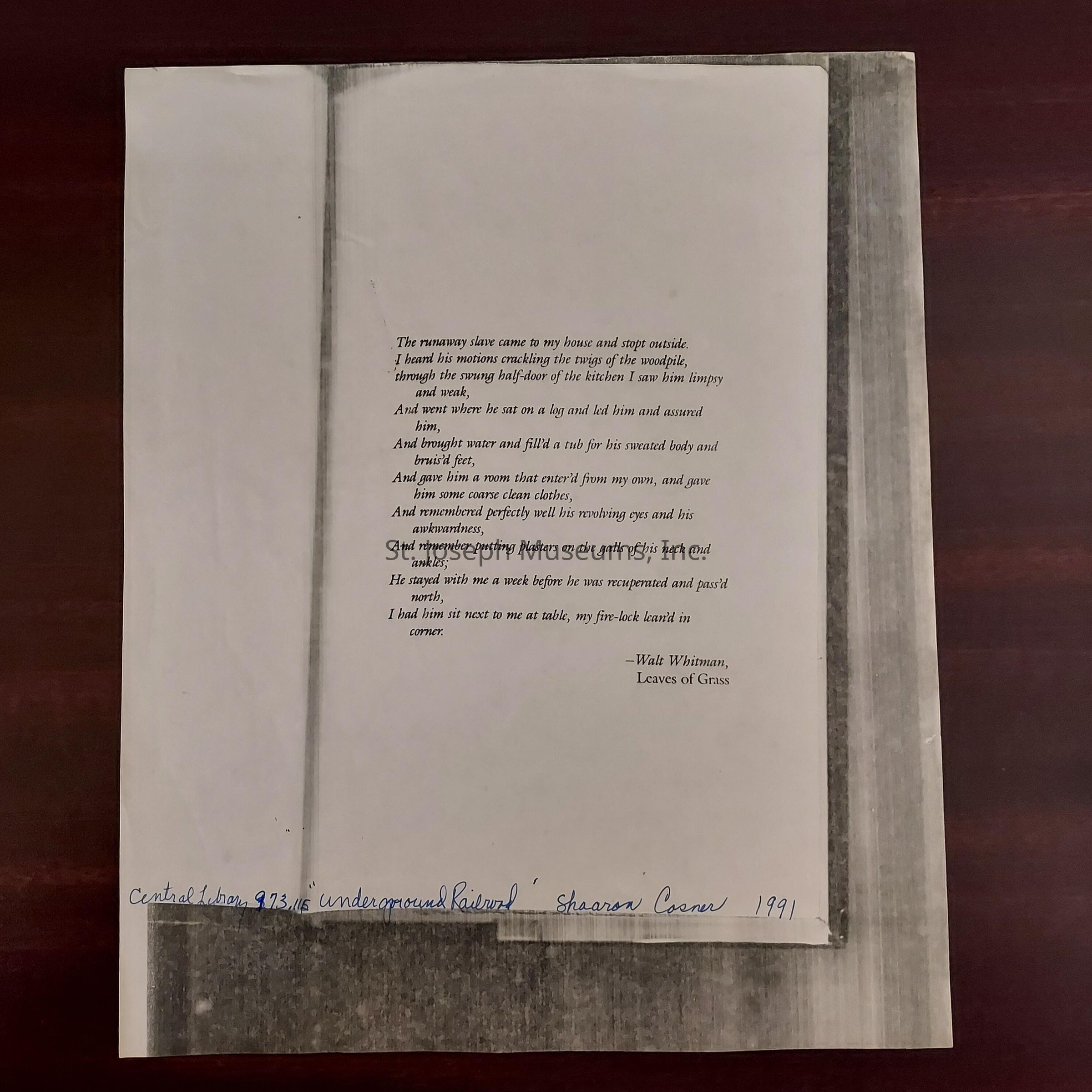
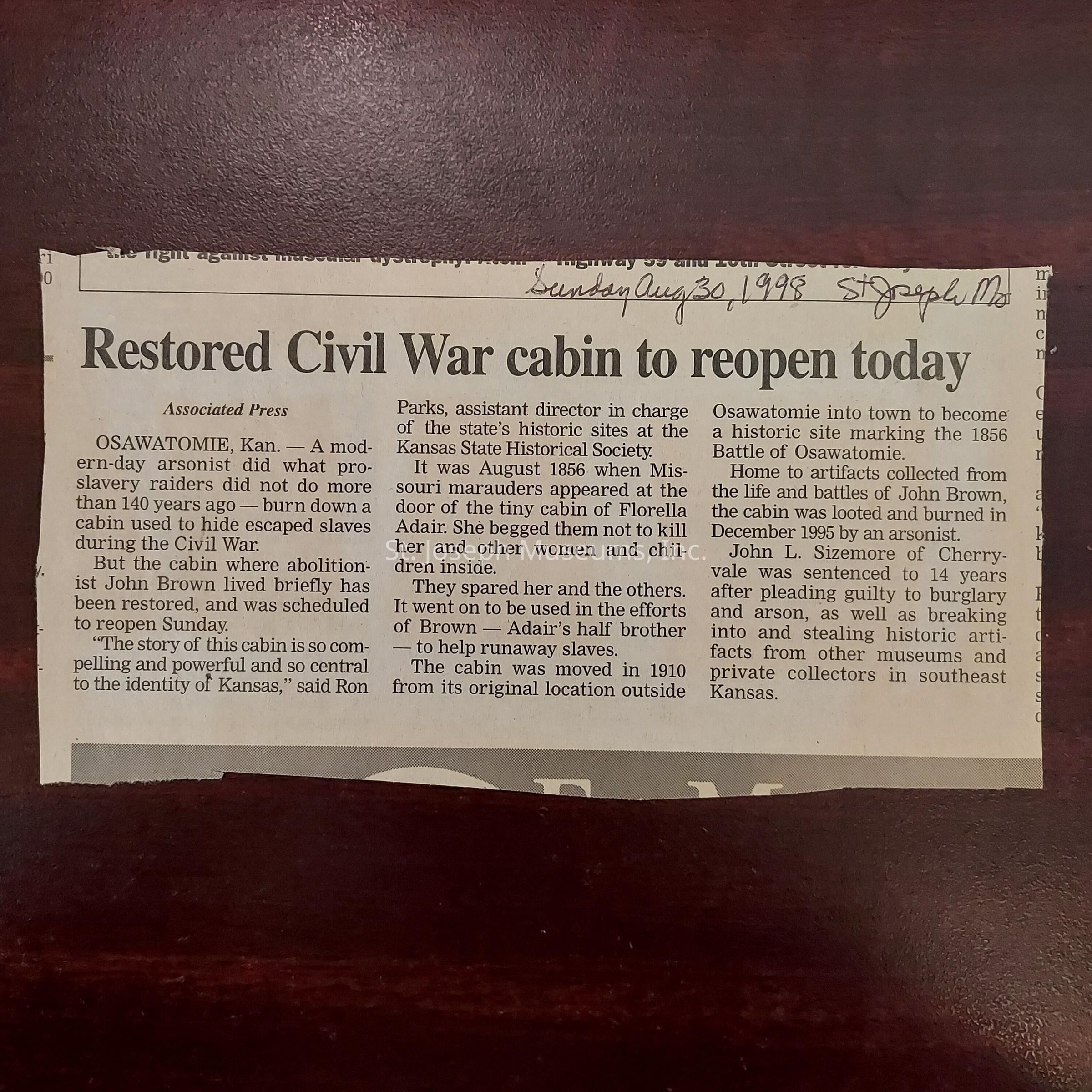
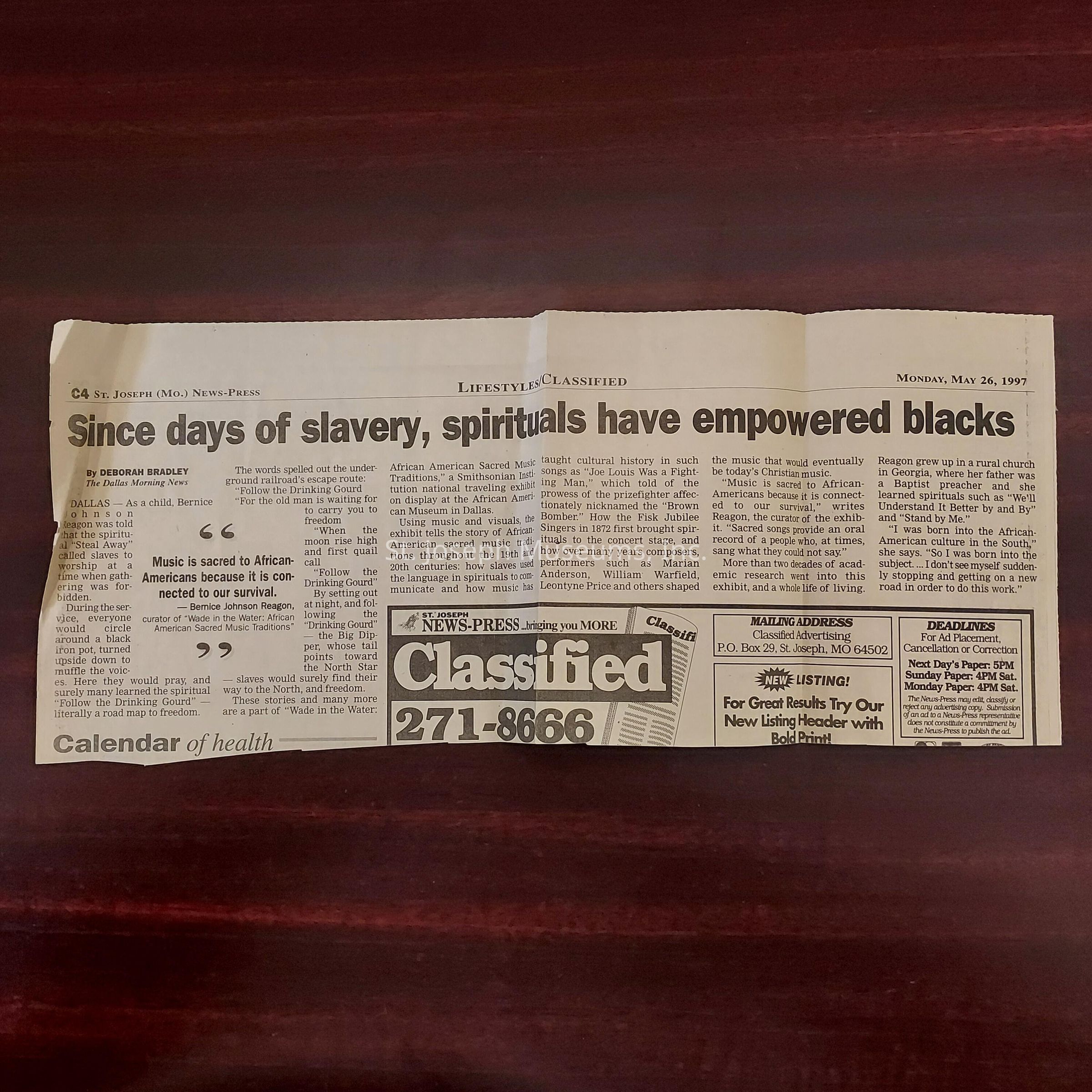
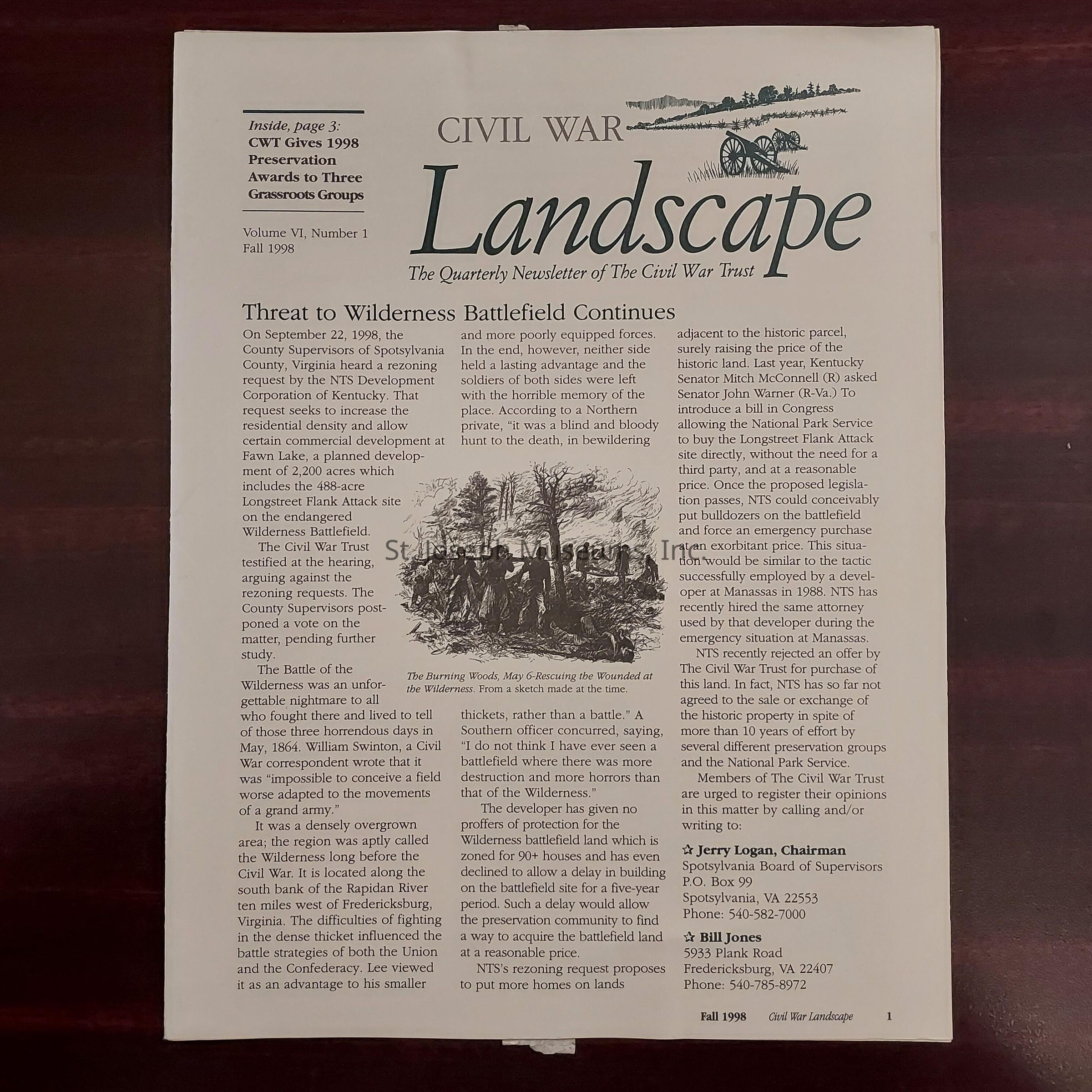
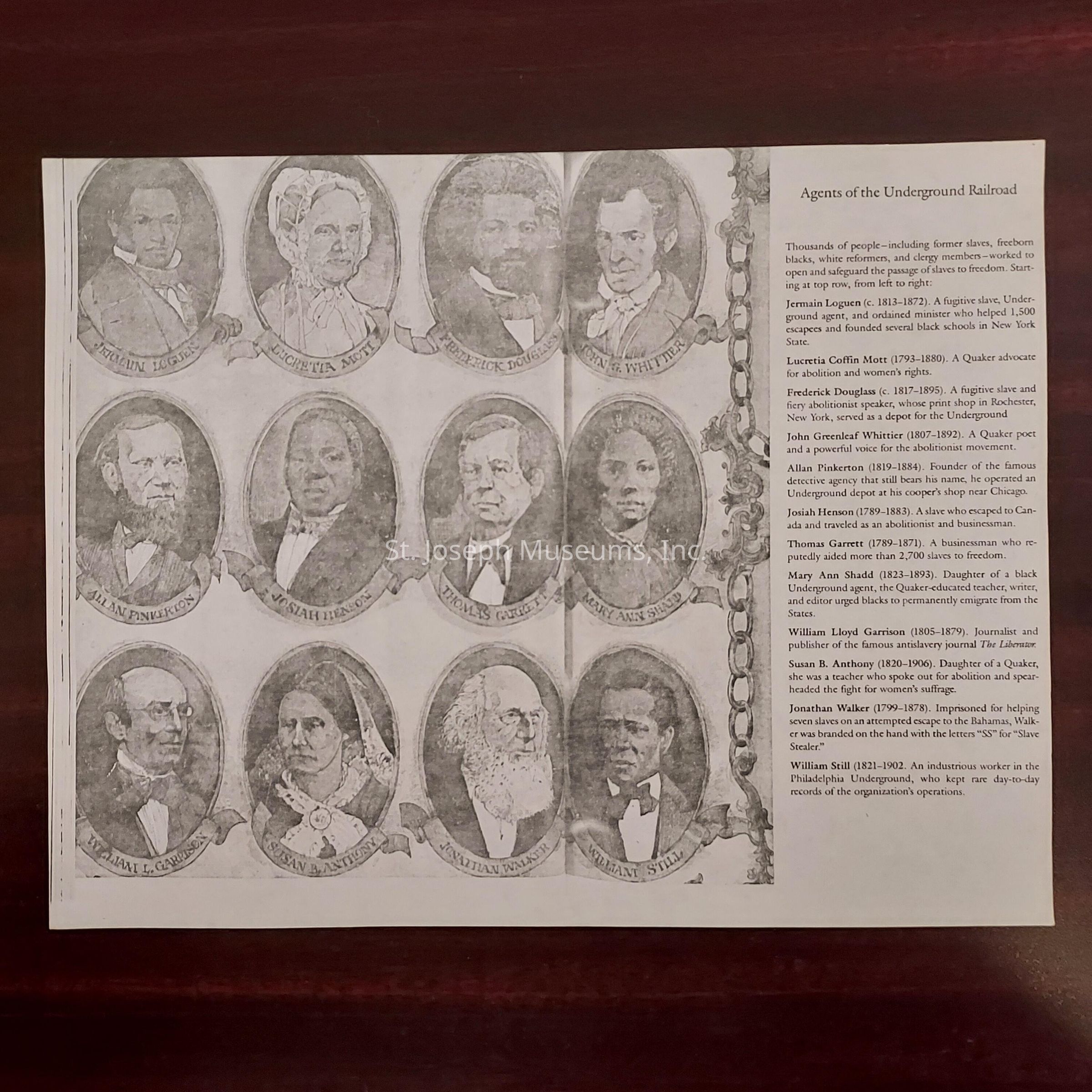
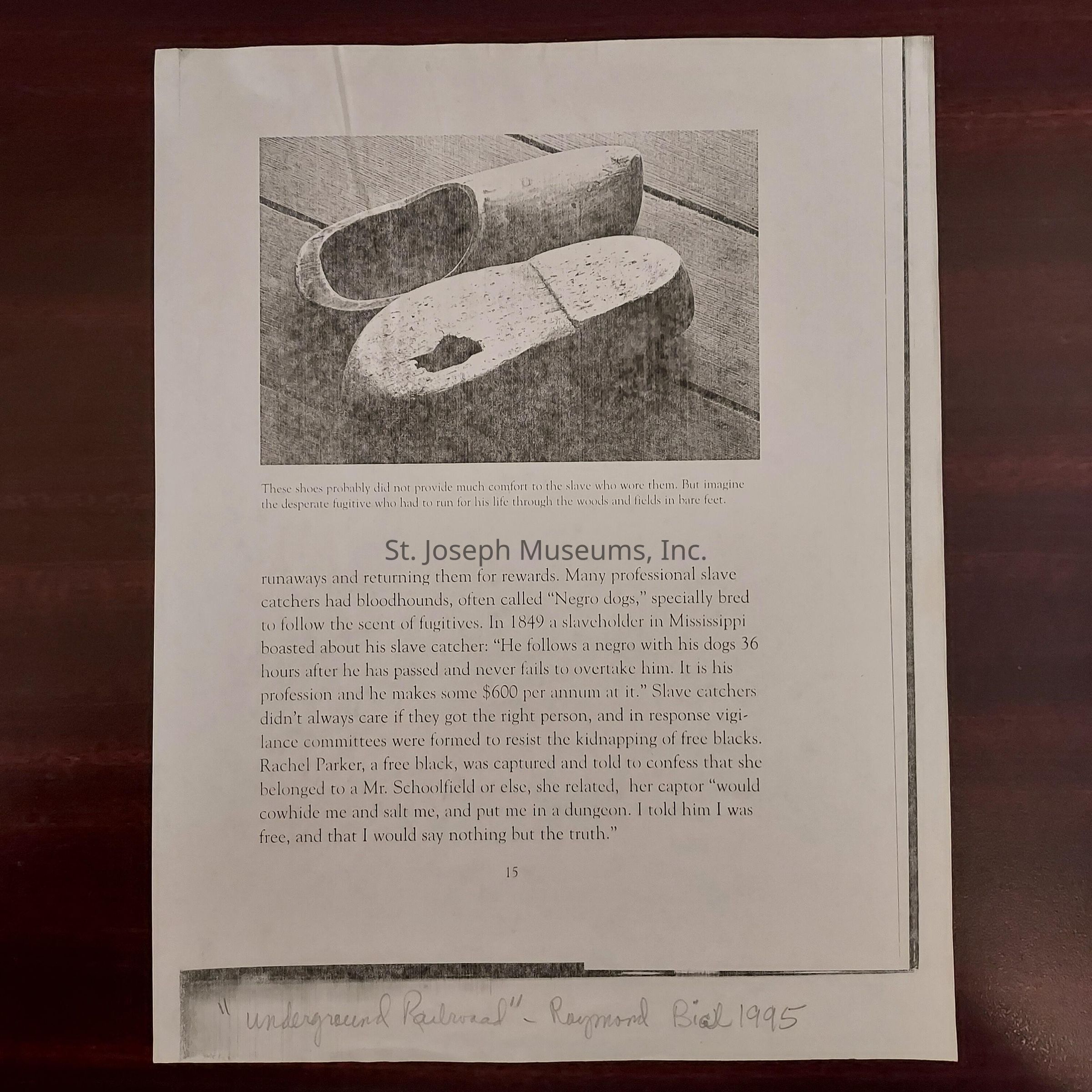
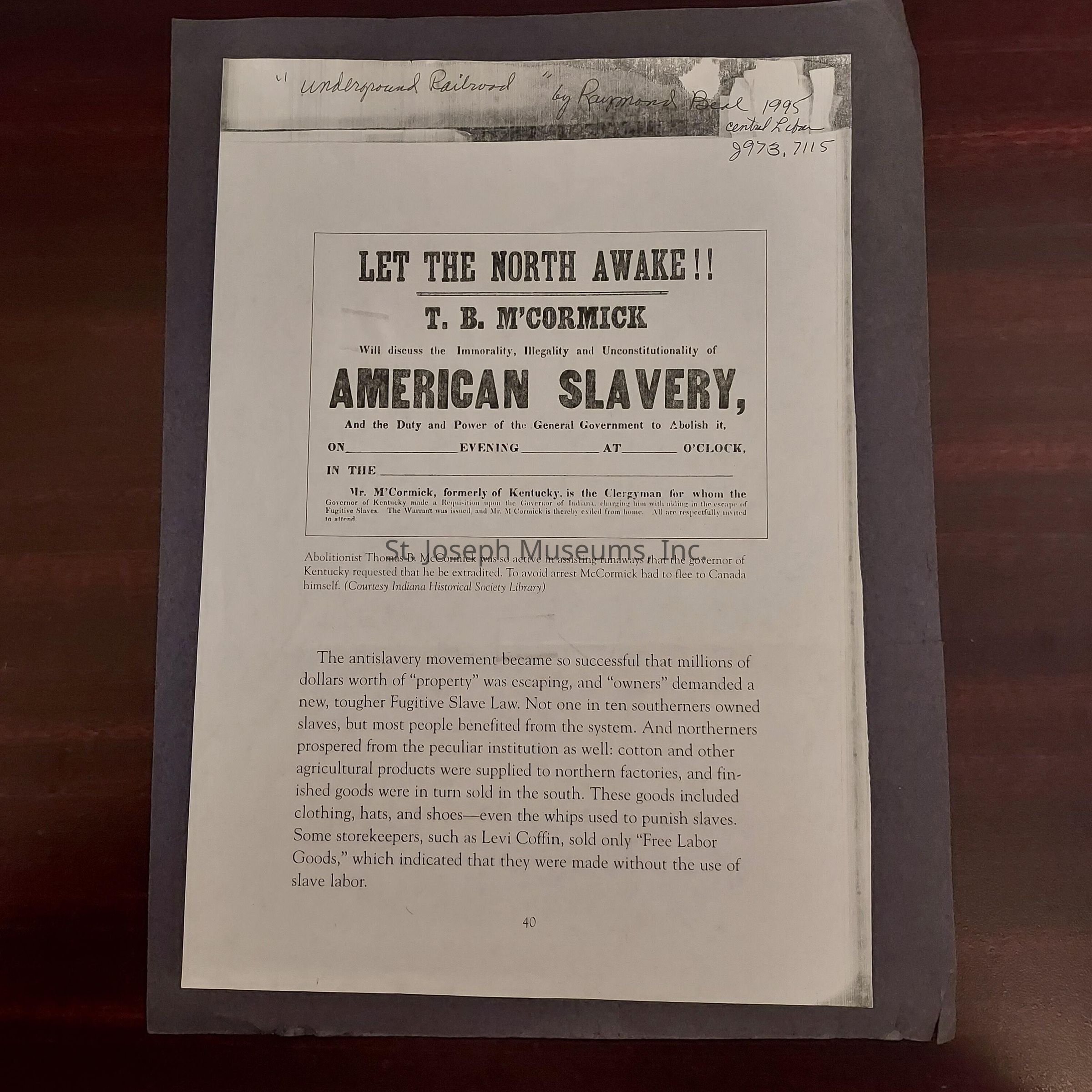
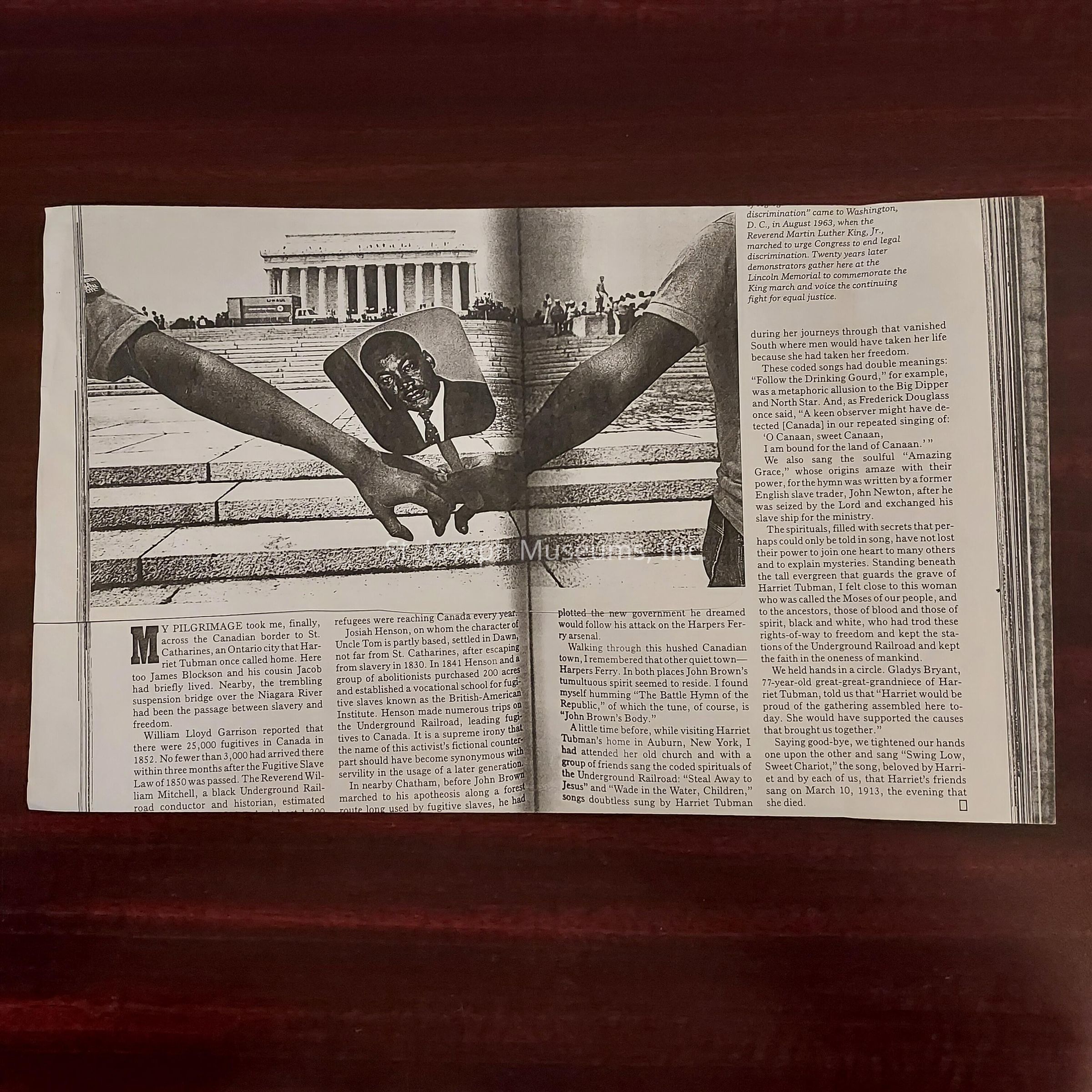
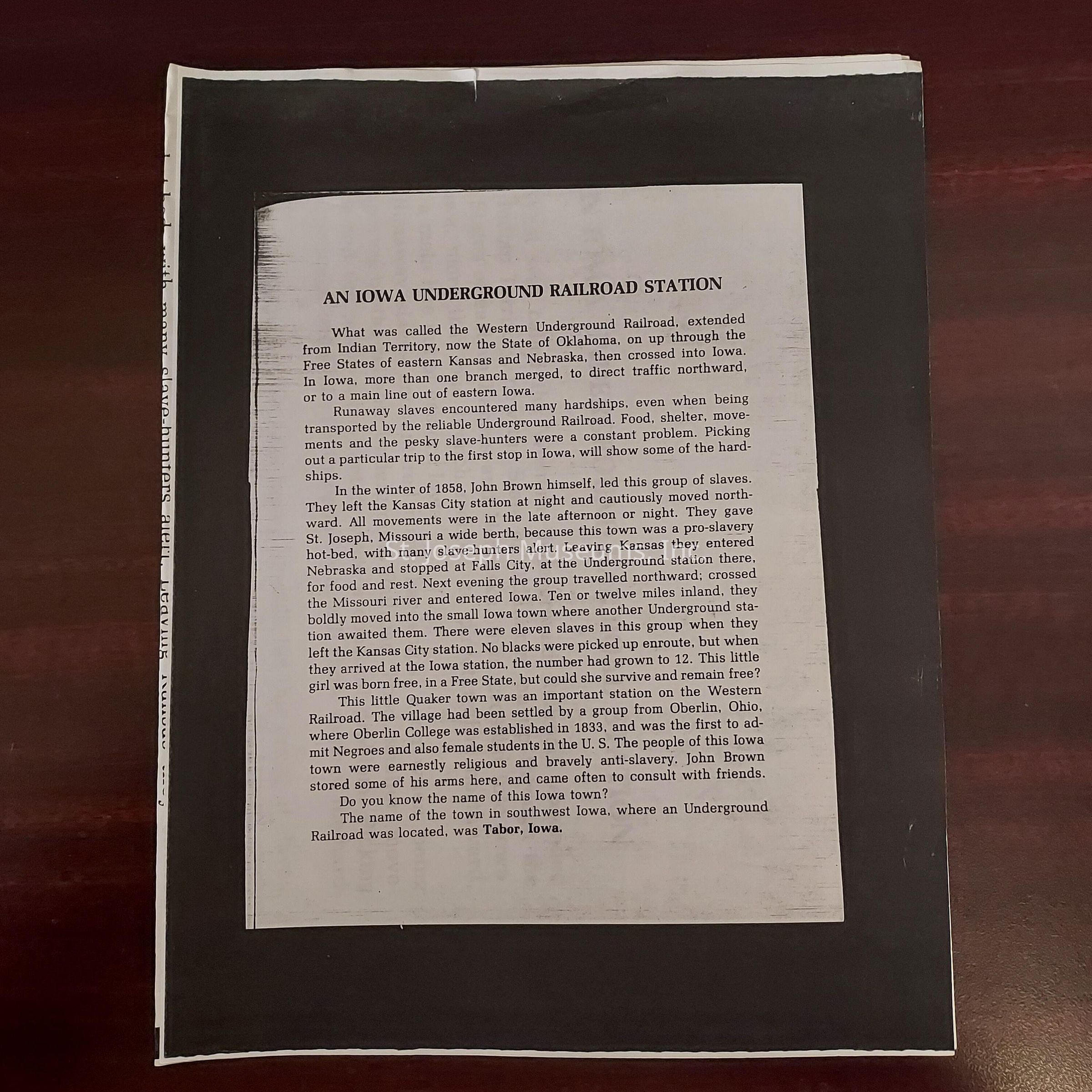
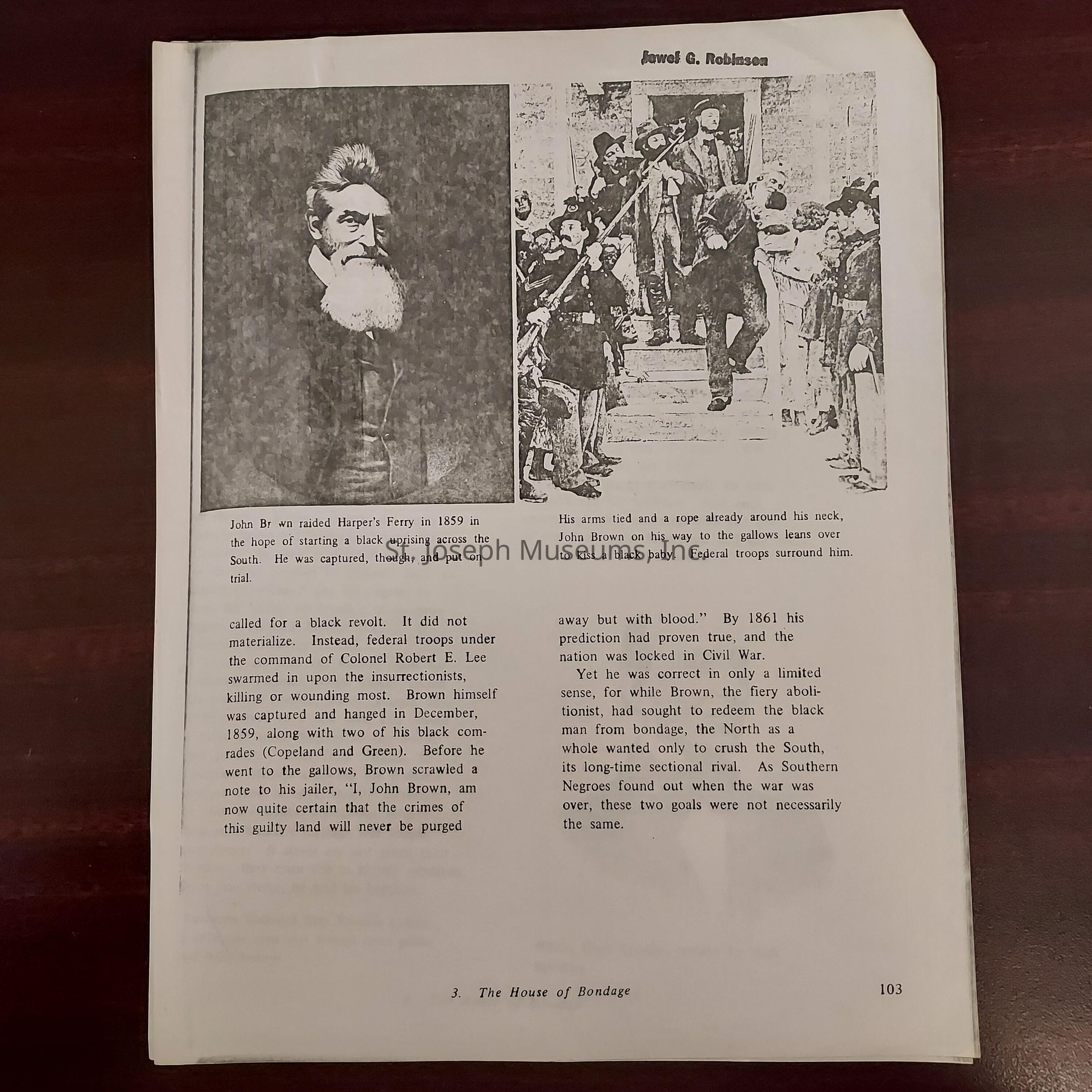
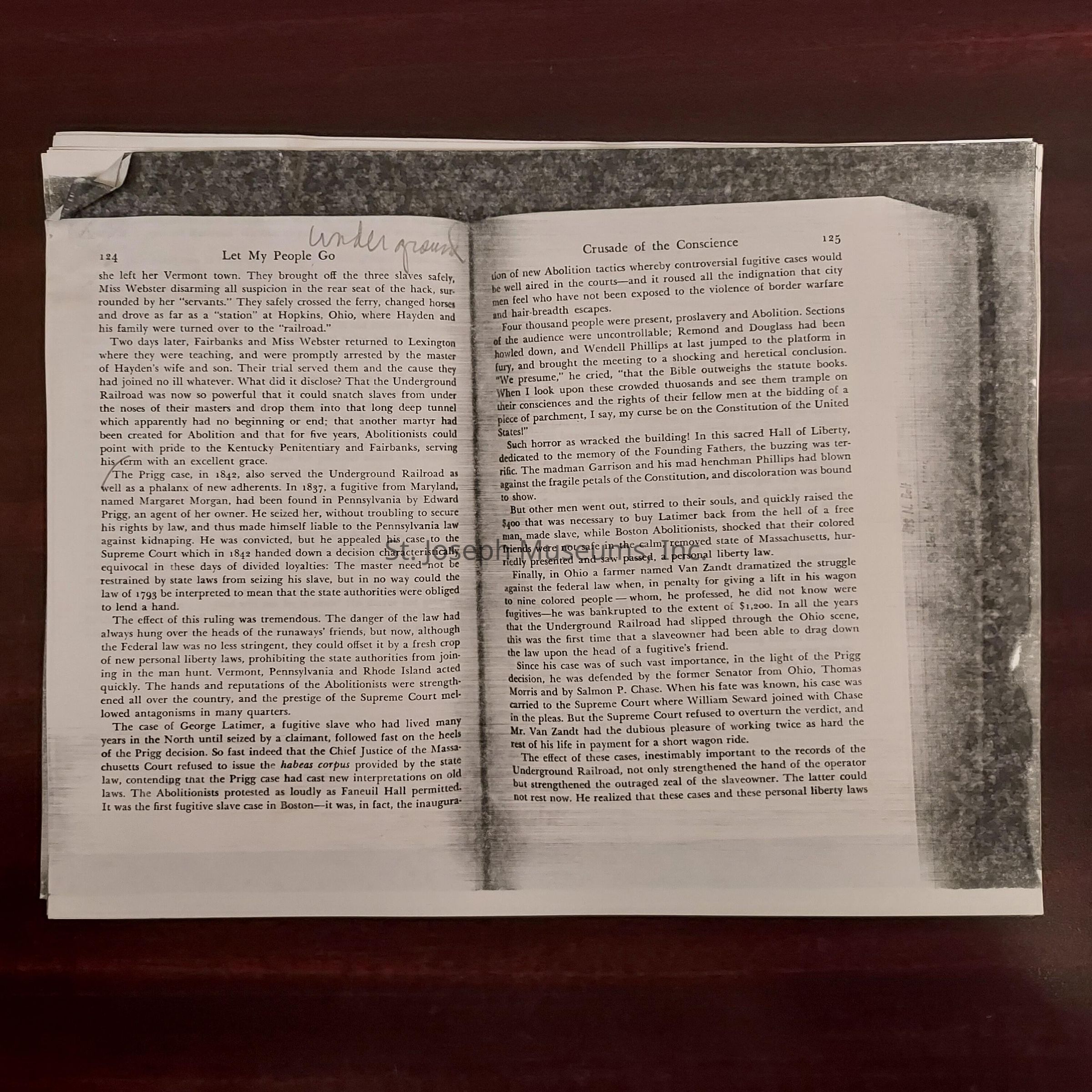
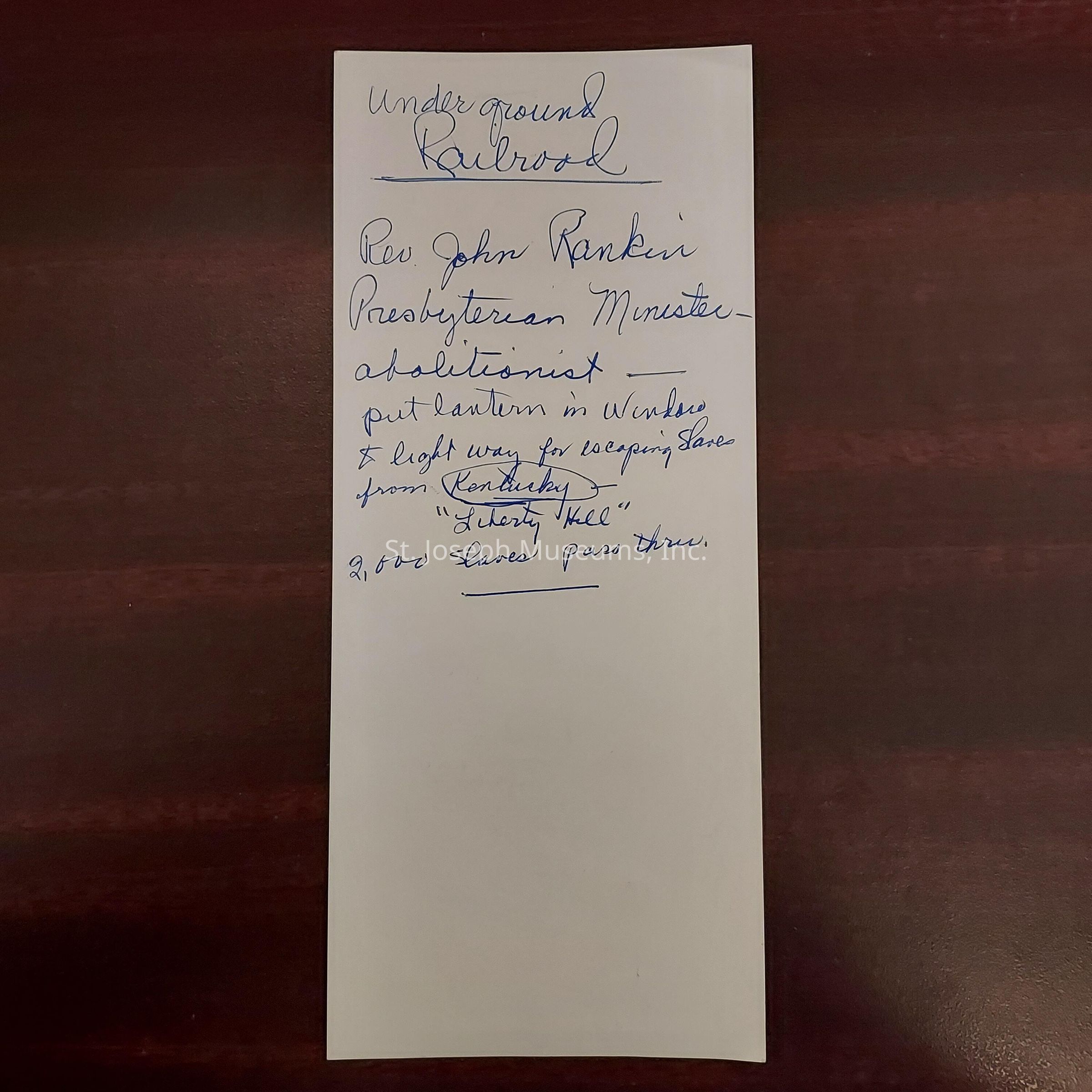
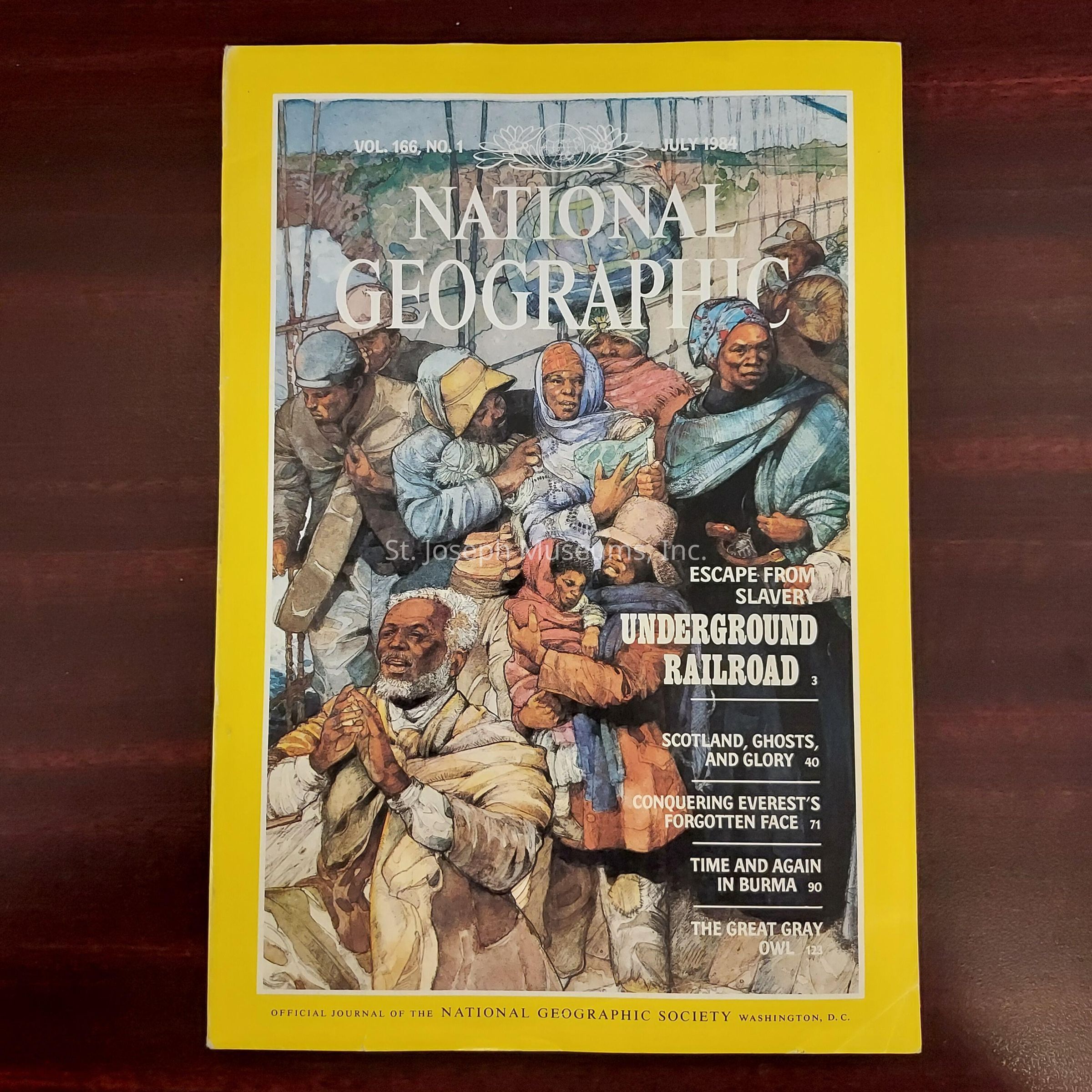
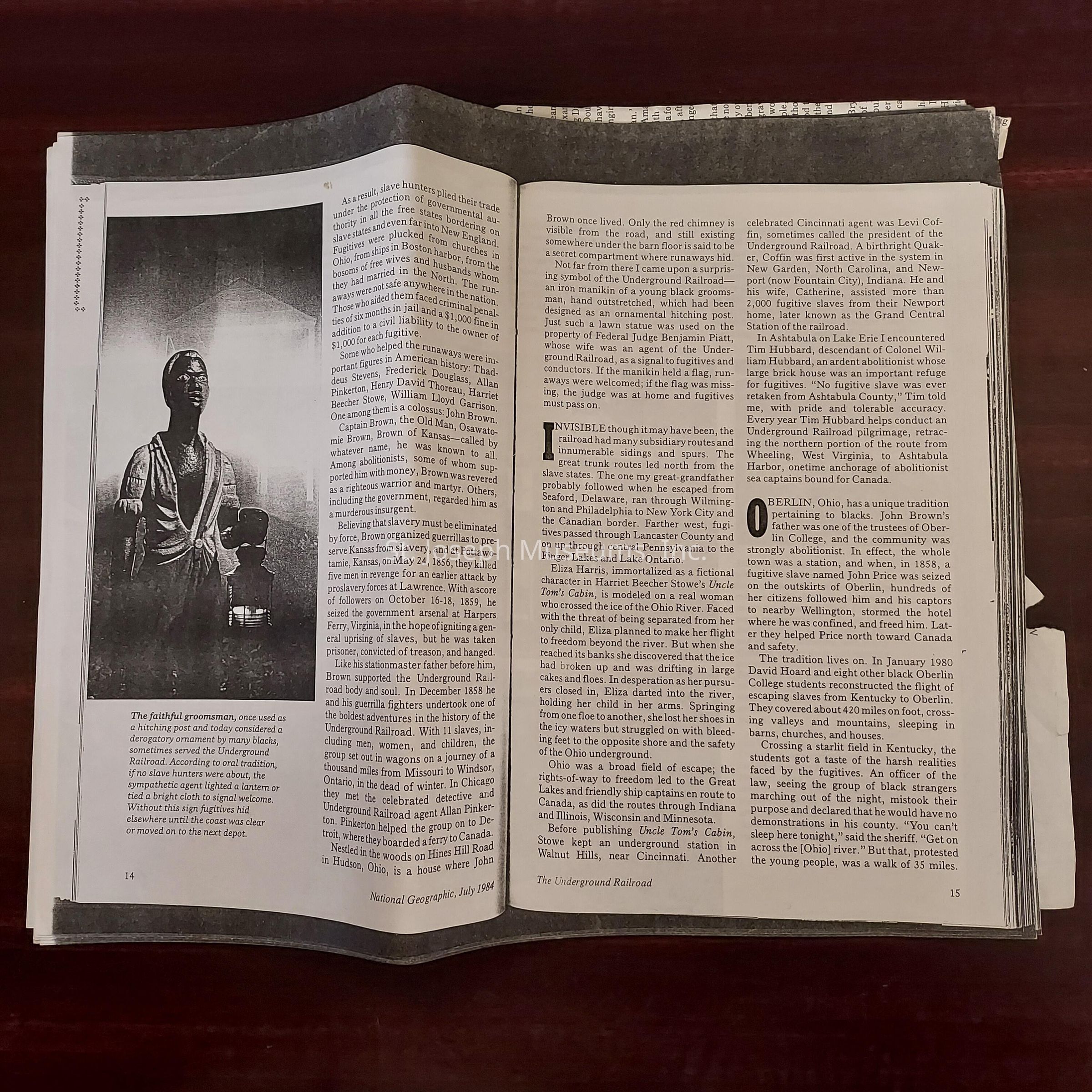
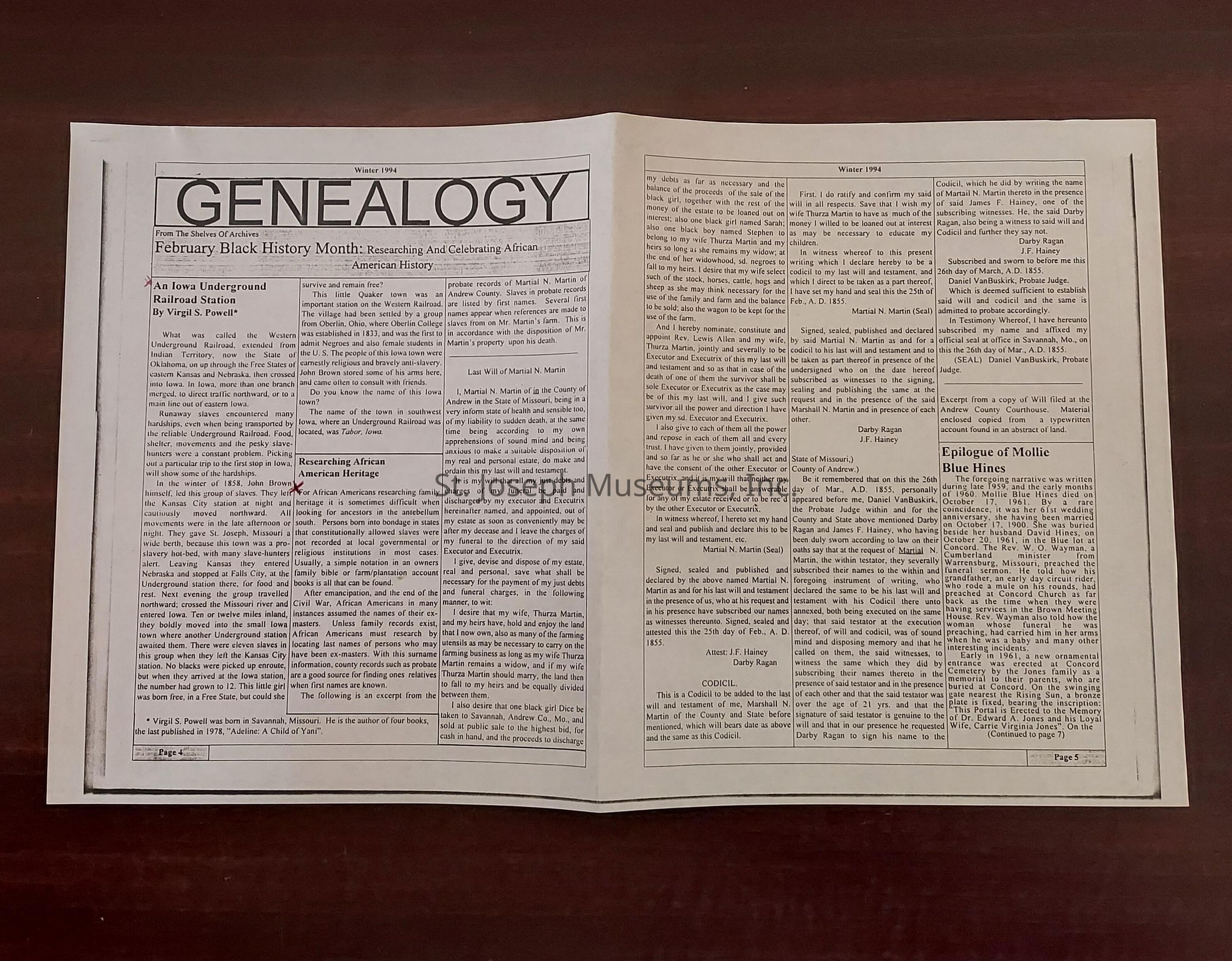
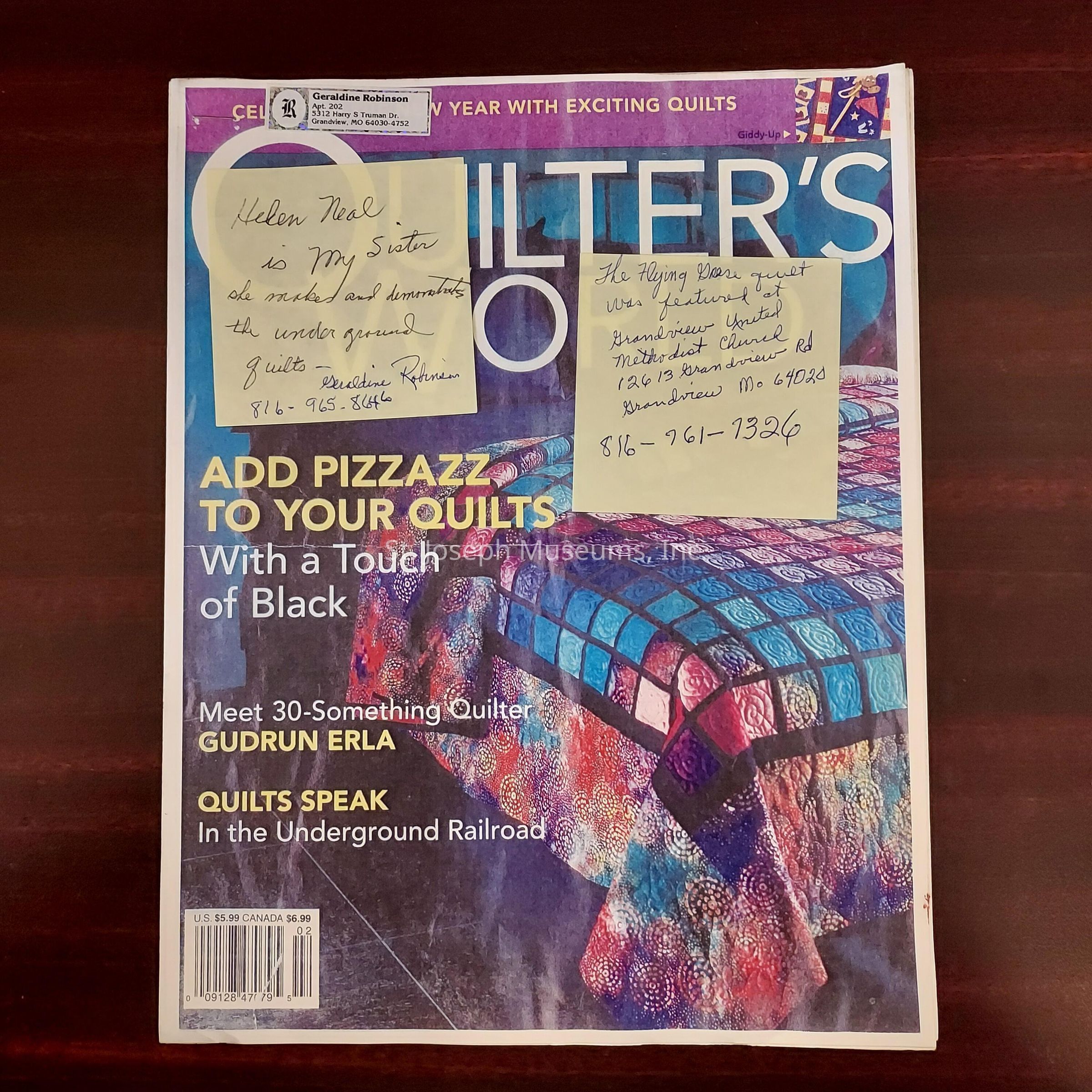
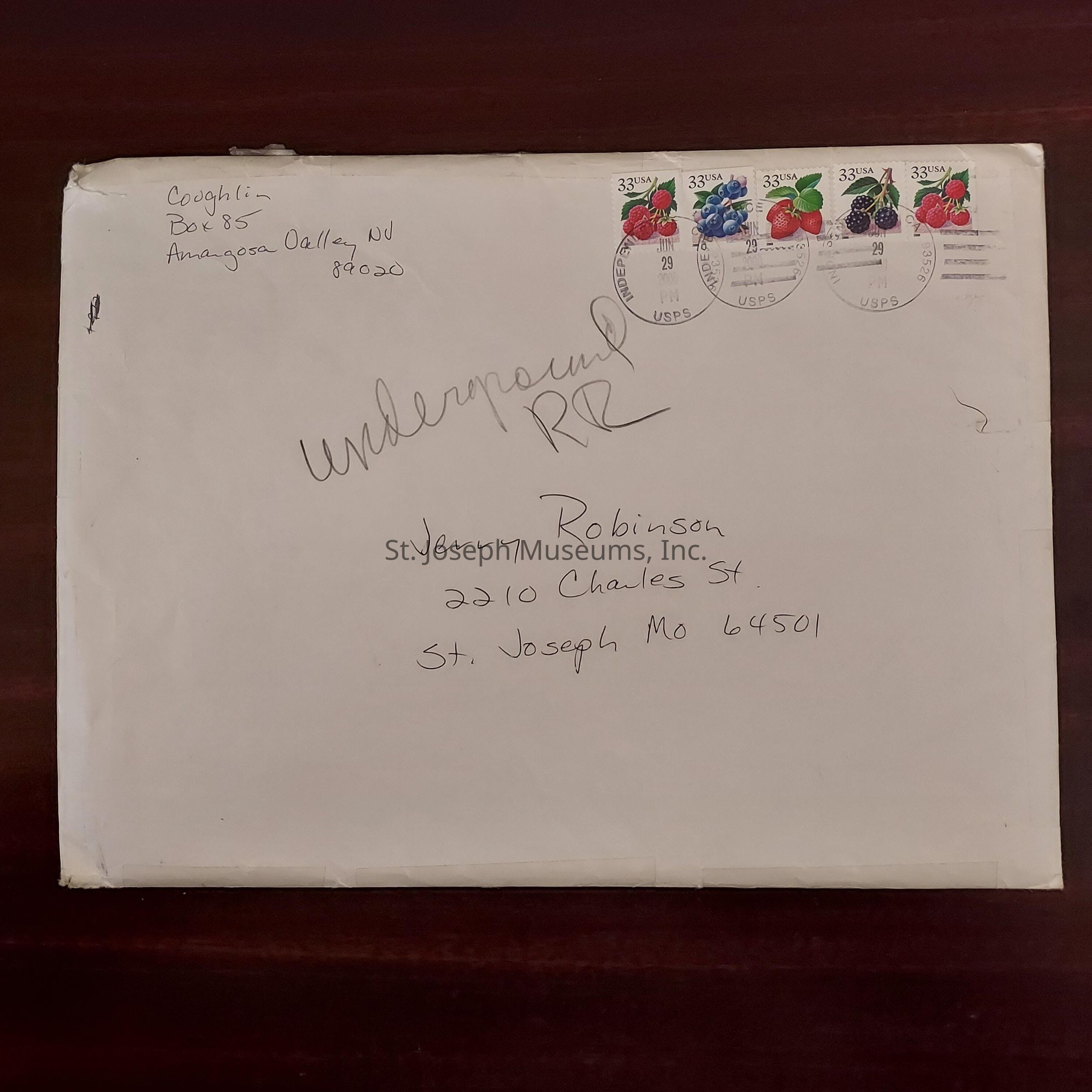
Underground Railroad. The first article in this folder is about Maryville was link to underground railway by Martha Cooper Maryville, County. Week of September 16-22 1964. In the Diggin' History , Vol 18, Number 4 Fall 1998 there is an article about Abram Baker. who was the father of C. B. L. Baker, the Negro inventor of St. Joseph. He is the oldest ex-slave resident of the Platte Purchase having come to Platte county 73 years ago (1881). A photocopy of the Diggin" History with no date has an article circled. July 22, 1898 Ex-Slaves Delegates The following delegates were appointed by Mayor Charles F. Booher of this city to attend the Ex-Slaves Convention to be held in St. Joseph, August 24-27. Mrs. Rafe Kirtley, Mrs. Adaline Warren, Mrs. William Gill, Mrs. Austin Samuels, Abram Baker, Caesar Finley, Austin Waldron, Henry Williams, William Gray, James Carriger, Henry Wagner, and Peter Holt. Underground Railroad hand written notes: Quindora Cemetery Quindora Road Dr. Fred Whitehead-Researcher Near 27 and Paratell and hill downward escaping across River at St. Lawrence to Nebraska to Canada. Slave catchers laid out at the Quindora Park. A typed sheet from the Quindaro Town preservation Society in Kansas City, Kansas had been in the forefront of efforts to save the site of Old Quindaro Underground Railroad. Community groups give support to the project . There are posters of Nancy Ouindaro Guthrie, the John Brown Statue at 27 and Sewell. Wichita History-The first National Black Historical Society of Kansas sent five black women out to influence the preservation of an old structure Calvary Baptist Church which had served as a center of Black life for more than half a -century. The church was built in 1917 by Black men. There is a photocopy of an article on an Iowa underground railroad station. It was called the Western Underground Railroad. It extended from Indian Territory, now the State of Oklahoma, on up through the Free States of eastern Kansas and Nebraska, then crossed into Iowa. In Iowa, more than one branch merged, to direct traffic northward or to a main line out of eastern Iowa. The book Underground Railroad by Charles Blockson. The book copied pages were from the Central Library. The story was about John Brown and others. Bethany, Joplin, Potosi, and Kansas City have been confirmed by written records as stations on Missouri's Underground Railroad. Photocopies from Missouri Historical Review #37 1942-1943 are about Underground Railroad and the Missouri Borders 1840-1860, by Benjamin G. Merkel. A letter from Mrs. Robinson was written to the National Park System inquiring about the Underground Railroad. They sent her copies of everything they found. That information is attached to the letter. There is an envelope Addressed to Jerry Robinson from Coughlin of Amargosa Valley NV. It contained the Underground Railroad information . Greater Alton/Twin Rivers Convention and Visitors Bureau in Alton IL has brochures about the Underground Railroad Sites in Illinois. On the back of the brochure are stories of slaves and the underground railroad. News-Press The Mini Page February 19, 1996 is a story about the underground railroad. The underground railroad is the name given to secret routes and hiding places taken by fugitives or runaway slaves escaping from the South to freedom in the North. There is a picture of Harriet Beecher Stowe, James Avery, Frederick Douglass, Levi Coffin and Harriet Tubman. Museum of African American History located in Detroit Michigan has a brochure in this file. Atchison Globe staff writer Ann Buenger wrote a story titled "Tarred, Feathered, Sent Downriver On a Raft". Pardee Butler, the great grandfather of Glen Butler, Farmington, settled in the area off the banks of Stranger Creek on August 16,1855. He was best known for his difficulties with Pro-Slavery residents in Atchison. He expressed his political opinions to some members of the Pro-Slavery population and they retaliated by placing him on a raft and setting him adrift on the Missouri River. Pasted on a sheet of paper is an article. It is about history, on tour of sites linked with Underground Railroad. The railroad was a covert mission by abolitionists who assisted runaway slaves by serving as conductors, or guides and hosts on the perilous road to freedom. This Greater Alton/Twin Rivers Convention & Visitors Bureau will reveal these sites in February and March. There is a photocopy of a page of a book or magazine the tells that when more whites began to join the fight the abolition's success was more significant. . There are pictures of Lewis and Benjamin Tappan, Lucretia Mott, and Wendell Phillips. There IA a photocopy picture of John Quincy Adams in a photocopy of a story about how he on March 9, 1841 how he gave an 8 1/2 hour argument that caused the supreme Court to free Cinque and his fellow Africans. Walt Whitman wrote a poem Leaves of Grass. it was about a runaway slave. A photocopy appears in this file. It was photocopied by Sharon Cosner, 1991 from Unground Railroad book from the Central Library. St. Joseph News-Press August 30, 1998, A modern-day arsonist burned down a cabin used to hide escaped slaves during the Civil War. The cabin where abolitionist John Brown lived briefly has been restored and was scheduled to reopen Sunday. The cabin was moved in 1910 from its original location outside Osawatomie into town to become a historic site marking the 1856 Battle of Osawatomie. News-Press May 26, 1997, Since days of slavery, spirituals have empowered blacks is a story by Deborah Bradley. Following the Drinking Gourd was an unground railroad's escape route. The African American Museum in Dallas has an exhibit that tells the story of African American sacred music tradition throughout the 19th and 20th centuries how slaves use the language in spirituals to communicate and how music has taught cultural history in such songs as "Joe Louis Was a Fighting Man" which told of the powers of the prizefighter affectionately nicknamed the "Brown Bomber". Music is sacred to African Americans because it is connected to their survival. Civil War Landscape Fall 1998 Quarterly Newsletter of the Civil War Trust: Tansy Howard Blumer, Editor. There is an article about the underground railroad. The History Channel will air its story of the Underground Railroad in February 1999. Photocopies of pages of a book "Make Free"? on page 96 sentences are underlined. A favorite device was to stow fugitives under the floor of a shed, and nail down the boards that had been taken up to admit them. A gristmill had a refuge, as dusty as it was safe, up under the peak of the roof. Straw-stacks and woodpiles often incorporated shelters walled up with rails or notched logs, sometimes reached by tunnels. Houses in town had attics reached only by ladders or by narrow stairs that went up out of cupboards, and separate cellars or sub-cellars accessible only by trap doors. Henry Brown was successfully smuggled to freedom, thanks to a wooden crate. Listed are the Agents of the Underground Railroad, Loguen, Jermain, Mott, Lucretia, Douglas, Frederick, Whittier, John, Pinkerton, Allan, Henson, Josiah, Garrett, Thomas, Shadd, Mary Ann, Garrison, William, Anthony, Susan B., Walker, Johathan, Still, William. There pictures are also photocopied. There are notes about the Underground railroad stations listed on the back of a church bulletin. Iowa, Tabor, Cedar Rapids, Lewis, Iowa City, Earham, Desmoines, Grinnell, Keoduk, Missouri, Kansas City?, St. Joseph? Kansas City, Quindaro, Leavenworth and Elwood. Photocopy of a few pages of a play "To Cross a River" Presented at Summer Theater Missouri Western State College. Photocopy of page from Underground Railroad Raymond Bial, 1995. There is a picture of shoes that have holes in the bottom. These shoes probably did not provide much comfort to the slave who wore them, but imagine the desperate fugitive who had to run for his life through the woods and fields in bare feet. Underground Railroad, by Raymond Bial Central Library. This photocopy is pasted on black construction paper. It is a notification of a meeting held by T. B. M'Cormick to help abolish slavery. Newspaper story about some of the slaves who escaped to Canada. The story mentions Harriet Tubman, James Blockson, Jacob Blockson, Josiah Henson, and others. The article also tells the story of the coded songs that had double meanings. A photocopy of a page in a book was about the Underground Railroad in Tabor, Iowa. There is also a photocopy page of the story in large print. Two pages of photocopy is about abolition and the drift towards Civil War. On one page is a picture of William Lloyd Garrison, crusader for black liberation and on the other page is a picture of John Brown who raided Harper's Ferry in 1859 in the hope of starting a black uprising across the South. He was captured, though and put on trial. The other picture is him with his arms tied and a rope already around his neck, John Brown on his way to the gallows leans over to kiss a black baby. Federal troops surround him. Photocopies of pages from the book Underground Railroad are from the chapter "Let My People Go", Chapter 5. Various paragraphs are marked in these pages. A front of a postcard has the message KNEA-Von, Black Archives, St. Joe., MO. There is a picture of a black athlete on the front. On the back of First Street Trolley St. Joseph Missouri brochure are notes on Underground Railroad, Rev. John Rankin Presbyterian Minister abolitionist---Put lantern in window and light way for escaping slaves from Kentucky "Liberty Hall" and 2,000 slaves pass through. National Geographic July 1984 Underground Railroad. The story starts on page 3. There is also photocopies of the pages of the story. Winter, 1994 Genealogy, February Black Month, In this paper was a story about an Iowa underground railroad station. and a story about researching African American heritage. There are two photocopies. One the regular and the other enlarged. February , 2007 In a magazine Quilter's World is a story and picture of Helen Neal holding a quilt made by Katie Rentie who was Helen Neals grandmother. Helen Neal is the sister of Geraldine Robinson. The quilt was made during the Great Depression. The quilts had secret codes in them. Slave owners never suspected that quilts identified safe houses or provided warnings or instruction to fugitives. Also there in a a picture of a quilt featuring a Jacob's ladder with a star block to remind people to travel north to Canada to reach freedom.

Collection

Black Archives

Lexicon

LOC Thesaurus for Graphic Materials

Slavery

Search Terms

Black History, Underground Railroad

Legacy Lexicon

Object Name

File, Folder

Condition

Overall Condition

Good

Maintenance

Maintenance History

Date

Jul 9, 2013

Relationships

Related Person or Organization

Person or Organization

John Quincy Adams

Person or Organization

Susan B. Anthony

Person or Organization

James Avery

Person or Organization

Abraham Baker

Person or Organization

C. B. L. Baker

Person or Organization

Raymond Bial

Person or Organization

Charles Blockson

Person or Organization

Ann Bluenger

Person or Organization

Tansy Howard Blumer

Person or Organization

Charles F. Booher

Person or Organization

Deborah Bradley

Person or Organization

John Brown

Person or Organization

Glen Butler

Person or Organization

Pardee Butler

Person or Organization

James Carriger

Person or Organization

Levi Coffin

Person or Organization

Cooper, Martha

Person or Organization

Sharon Cosner

Person or Organization

Frederick Douglas

Person or Organization

Caesar Finley

Person or Organization

Thomas Garrett

Person or Organization

William Garrison

Person or Organization

Gill, Mrs. William

Person or Organization

William Gray

Person or Organization

Josiah Henson

Person or Organization

Peter Holt

Person or Organization

Rafe Kirtley

Person or Organization

Joe Lewis

Person or Organization

Jermiah Loquen

Person or Organization

T. B. McCormick

Person or Organization

Benjamin G. Merkel

Person or Organization

Lucretia Mott

Person or Organization

Nelen Neal

Person or Organization

Wendel Phillips

Person or Organization

Allan Pinkerton

Person or Organization

Nancy Quindaro

Person or Organization

Katie Rentie

Person or Organization

Geraldine Robinson

Person or Organization

Mrs. Austin Samuels

Person or Organization

Mary Ann Shadd

Person or Organization

William Still

Person or Organization

Harriet Beacher Stowe

Person or Organization

Benjamin Tappan

Person or Organization

Lewis Tappan

Person or Organization

Harriet Tubman

Person or Organization

Henry Wagner

Person or Organization

Waldron, Austin

Person or Organization

Walker, Johathan

Person or Organization

Warren, Adaline

Person or Organization

Whitehead, Fred Dr.

Person or Organization

Whitman, Walt

Person or Organization

Whittier, John

Person or Organization

Henry Williams