Research Type
ResearcherPerson
Tori ZiegerDate
Dec 12, 2025Notes
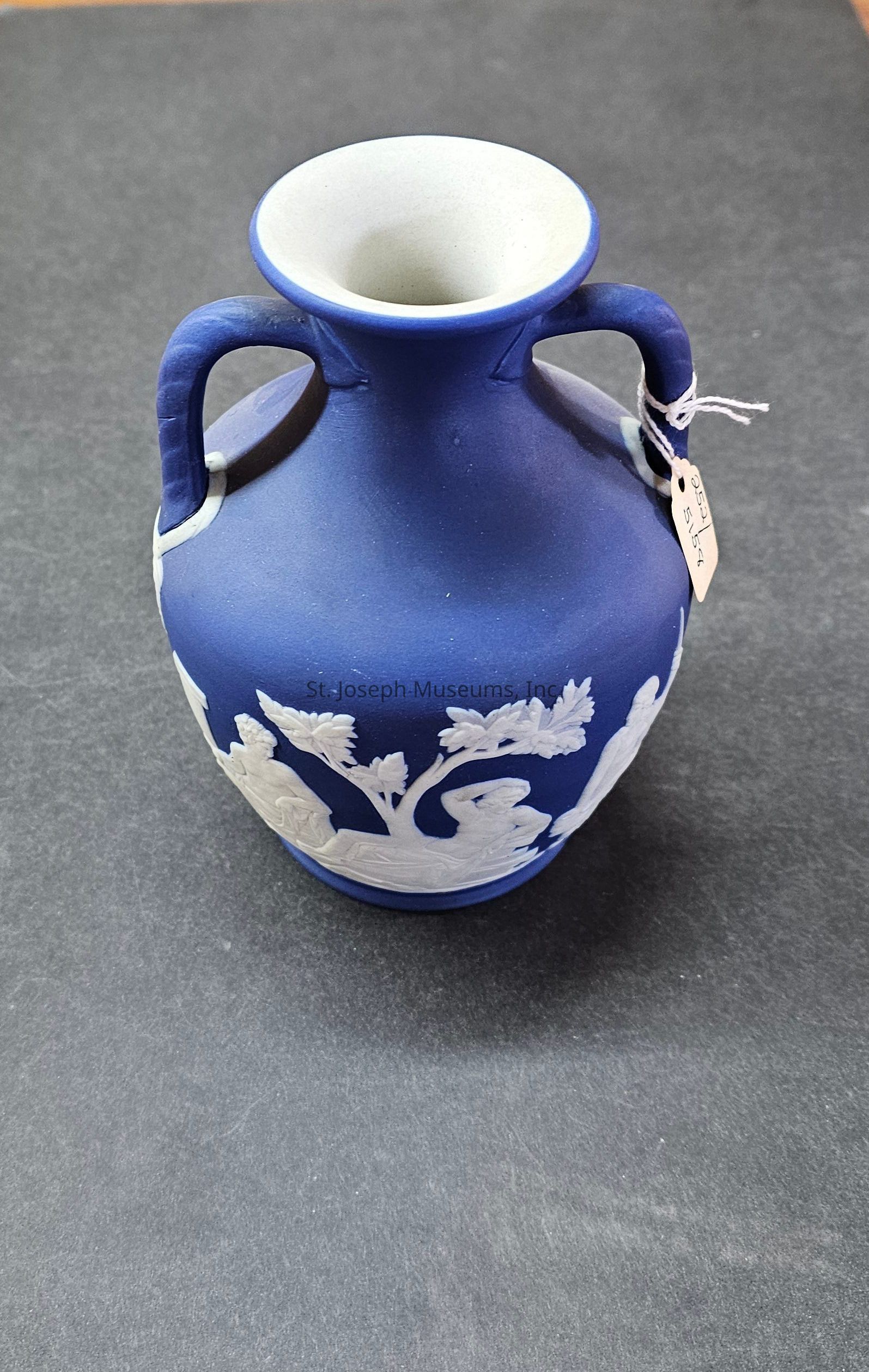
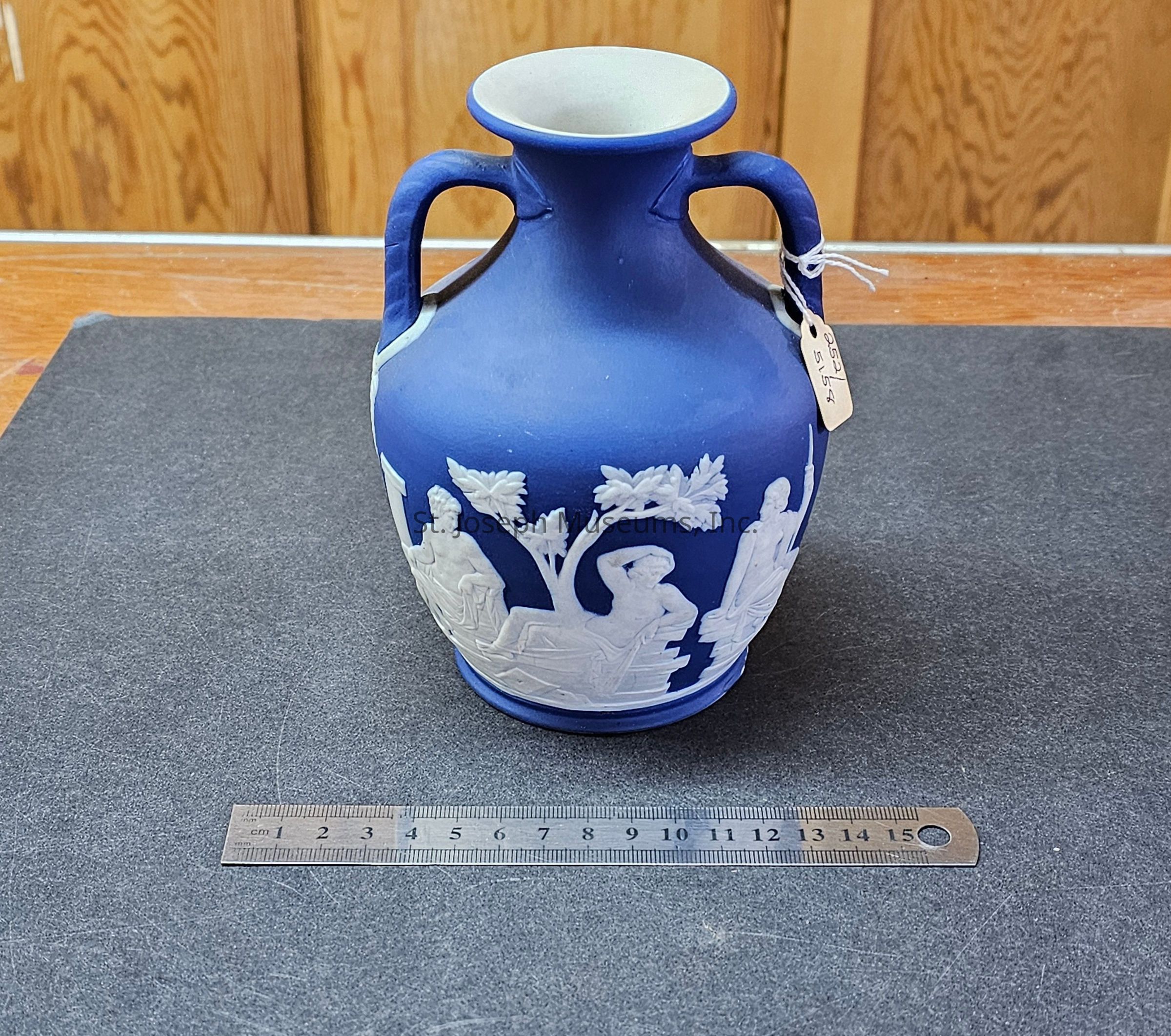
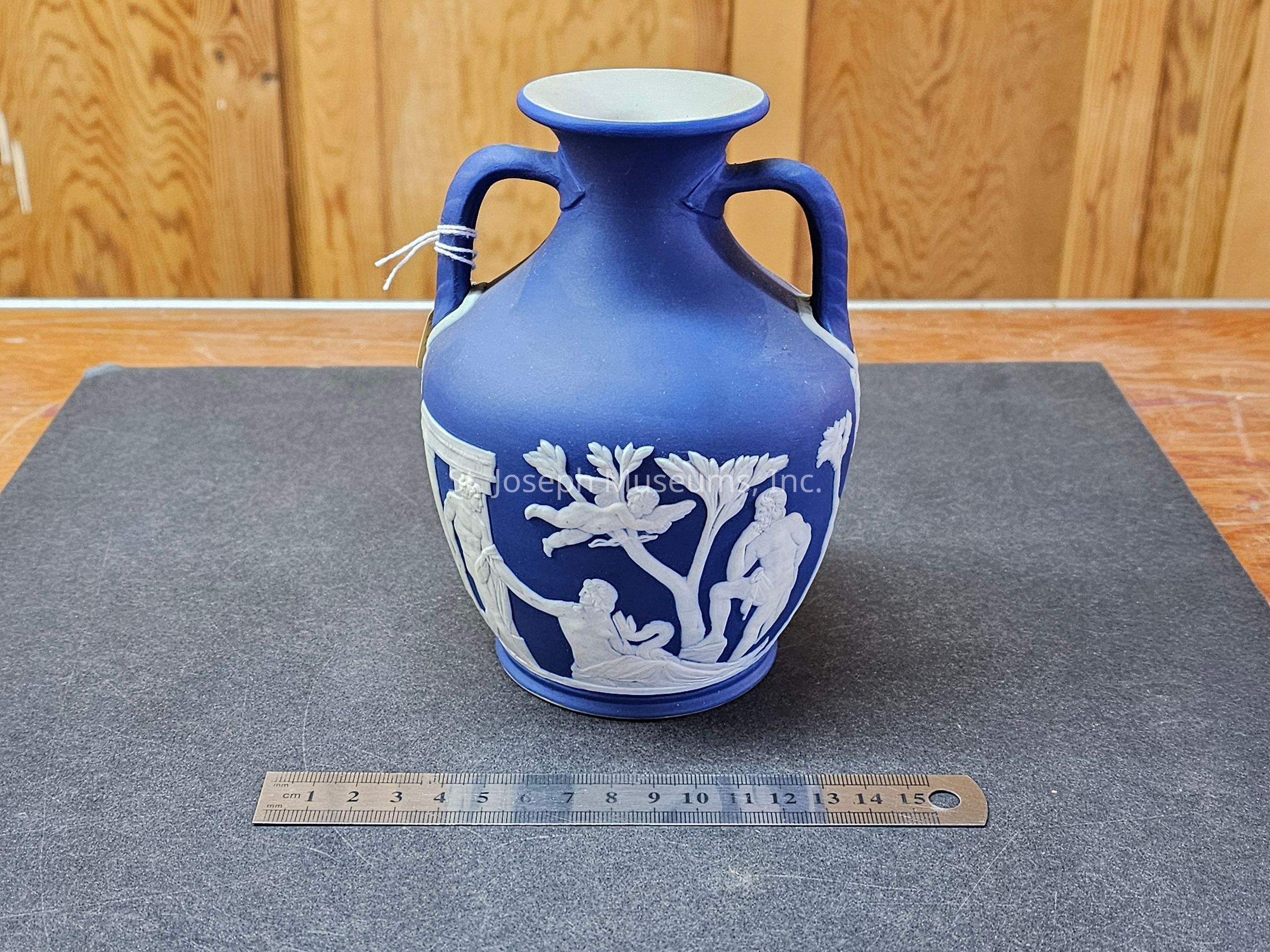
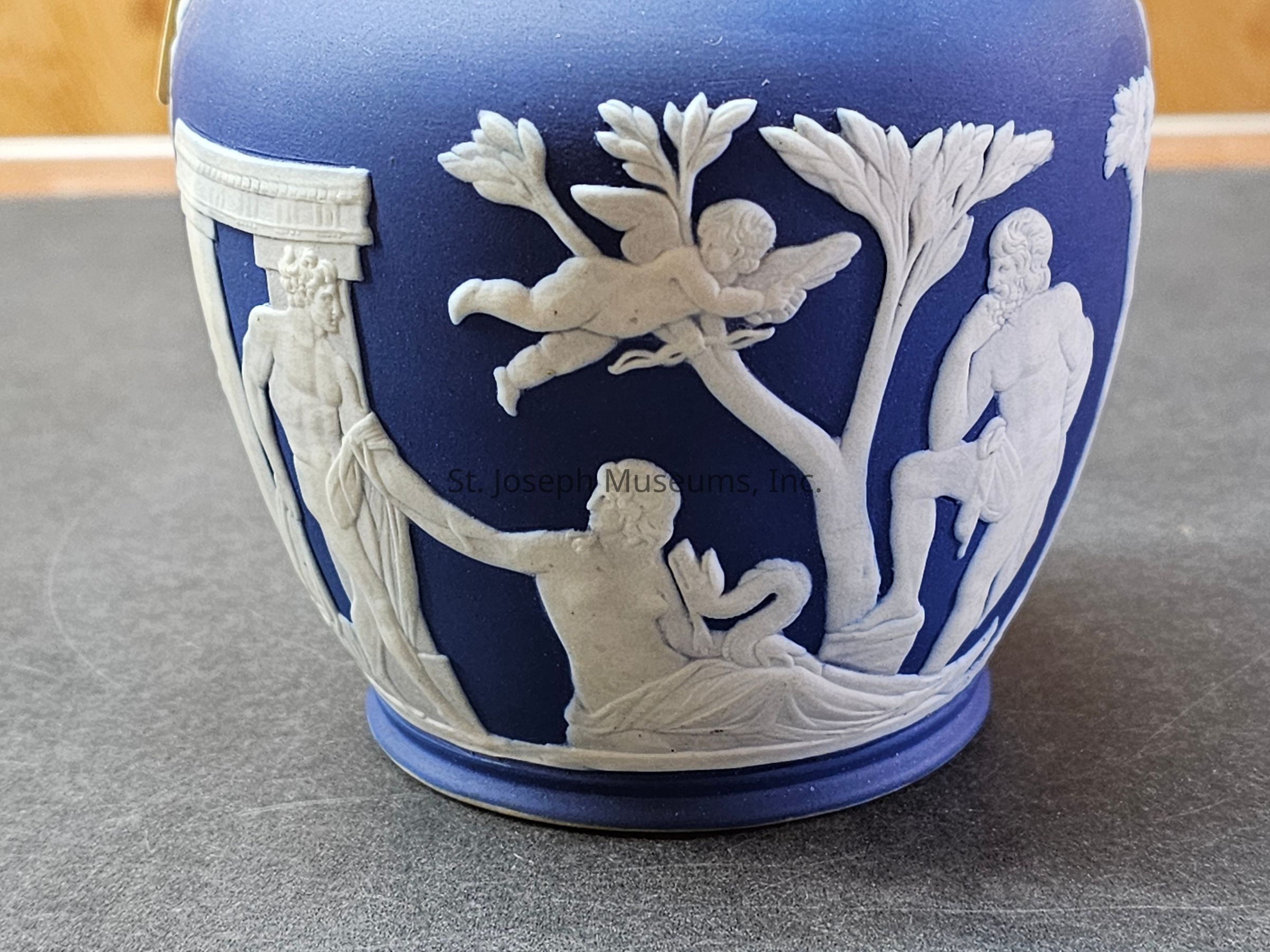
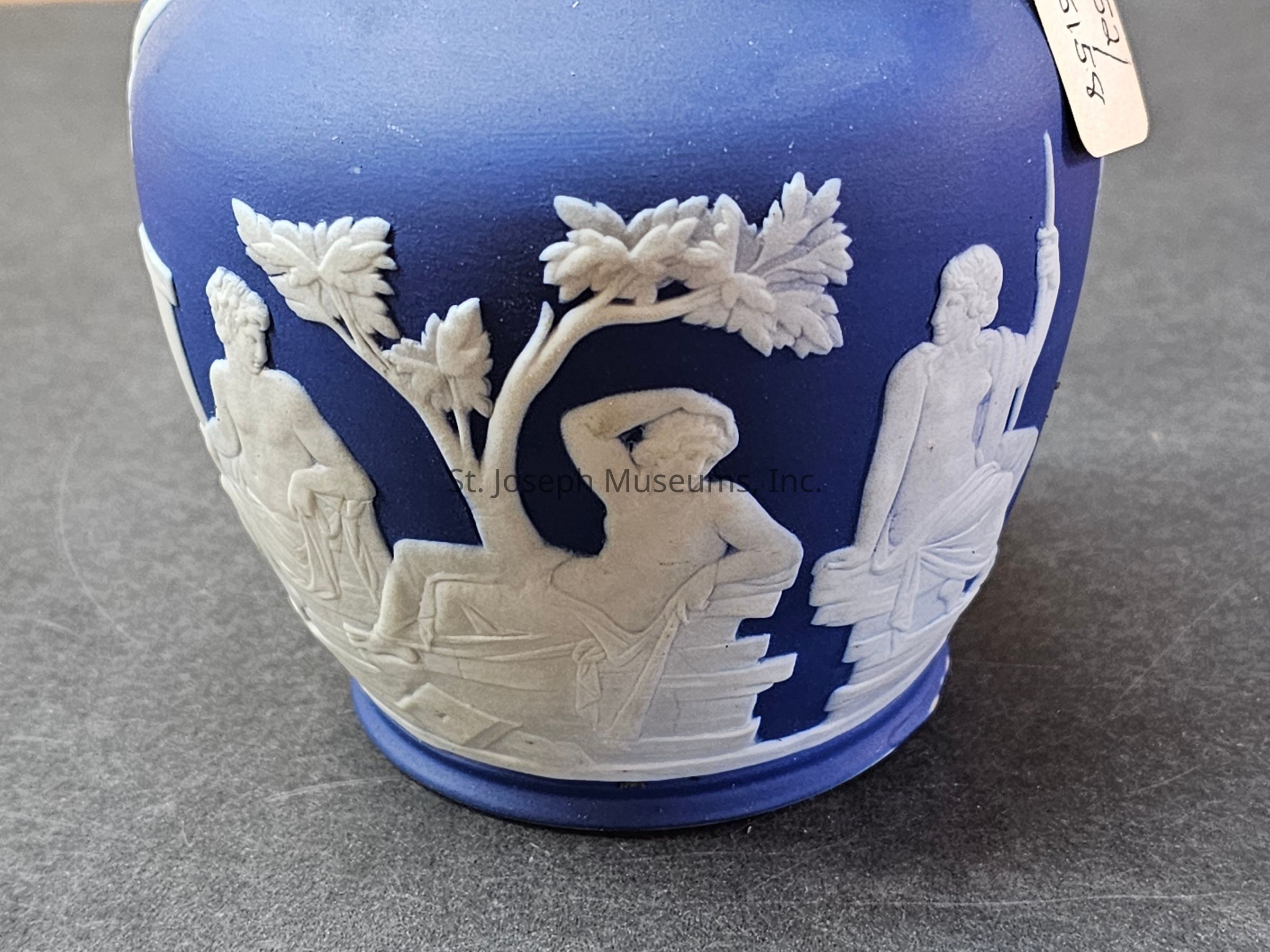
This vase is arguably Josiah Wedgewood's most famous print and is a copy of what is known as the Portland Vase. Created between the years of 1 and 25 CE in Rome (though some sources have it as early as 25 BCE), the Portland Vase is a cameo vase and one of the most famous examples of the ancient vases housed in the British Museum. It is not known exactly when or where the original vase was discovered; the earliest record of the vase is around the year 1600 and it is thought to have been discovered in the Monte del Grano Mausoleum - recent studies have shown that this find location is "probable", though they have no way to definitively know for sure. Monte del Grano is a tomb located along the Appian Way in Rome. The tomb itself is the third largest in Rome, after only the mausoleums of Hadrian and Augustus. The individuals who were buried in this tomb were thought to have been Emperor Alexander Severus, who reigned from 222-235, and his mother, Julia Mamea, however archaeological evidence found within the mausoleum puts the date over 100 years earlier, during the reign of Hadrian. The vase was said to have been found inside the sarcophagus. The vase depicts several figures in various poses. While it is widely accepted that one figure is Eros (Cupid), the identity and interpretation of what the vase ultimately depicts is not known. Some theories include the myth of Peleus and Thetis, a historical account of Augustus, stories of Dionysus (Bacchus) and Ariadne, and various stories surrounding Marc Antony and Alexander the Great.
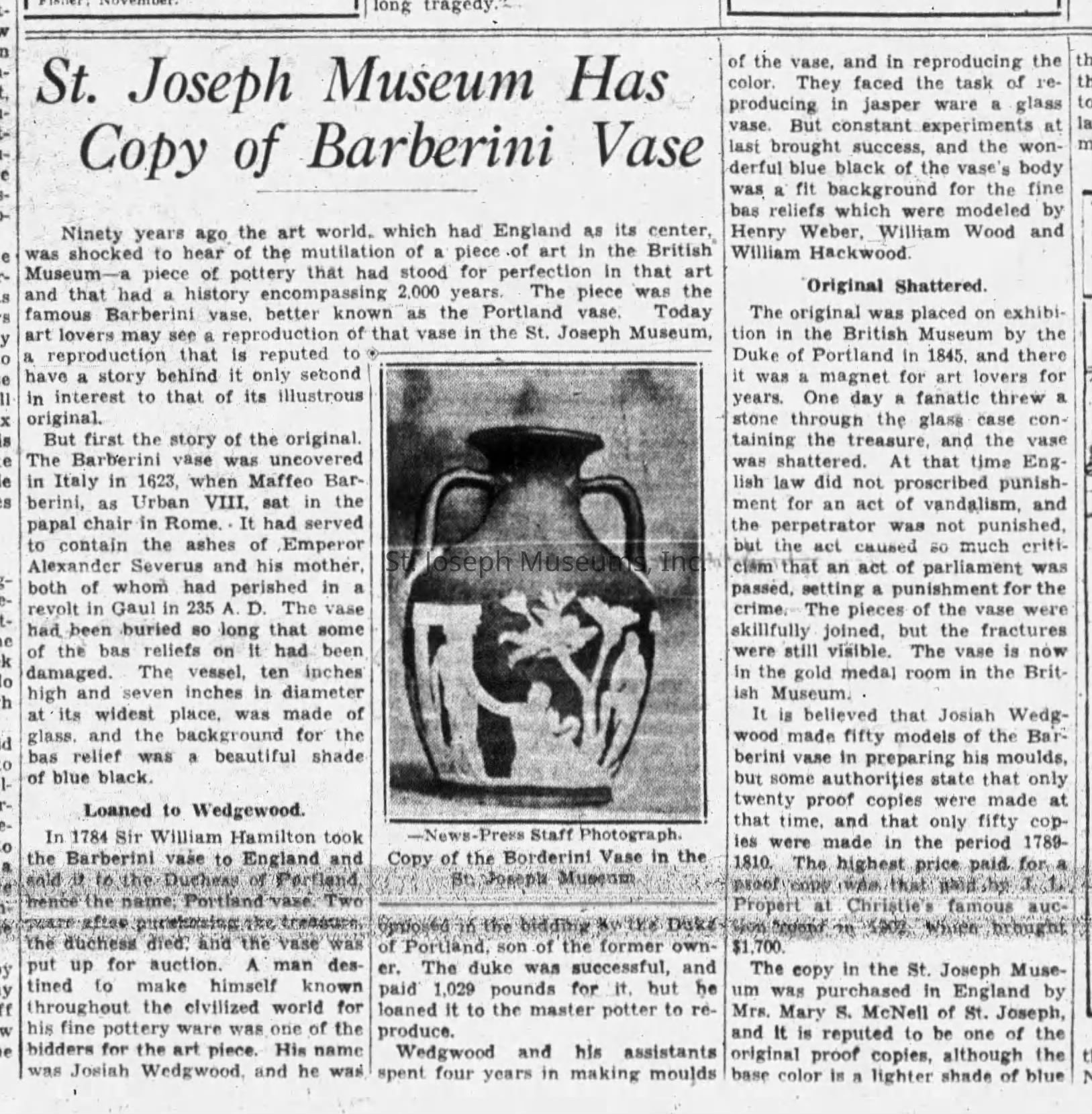
In 1626, the vase became a part of the collection of the Barberini family, to which Pope Urban VIII belonged, where it remained until 1778 when it was purchased by the British ambassador to Naples. During this time, the vase was known as the Barberini Vase. While this powerful Roman family held possession of the vase, it became a "must-see" tourist attraction in Rome. Multiple antiquarian books were written about it/had it featured. Already artists were created casts, rubbings, and sketches of the vase.
In 1784, the vase was sold to Margaret Cavendish-Harley, the Dowager Duchess of Portland (and the wealthiest woman in Britain at the time), and the vase became known as the Portland Vase. It was loaned to Josiah Wedgwood in the late 1780s and Wedgewood spent about four years attempting to recreate the vase (though he used Jasperware as his medium instead of glass). By 1790, he had succeeded in making about 50 first edition copies of the vase. Wedgwood presented his creations in exhibits, the first of which was so popular that they restricted access to only 1900 individuals. Touring public showrooms in London with Wedgwood's copies increased the fame and notoriety of the vase. These first edition statues can be found in multiple museum collections around the world, notably the Victoria and Albert Museum in England, the Fitzwilliam Museum on Cambridge, the British Museum, and the Indianapolis Museum of Art. The collection of these first editions showcase an incredible achievement in art. While the finished first editions are visible, museums also showcase some of the trial vases to show the process through which Wedgwood had to go to achieve his ultimate product. This achievement of Wedgwood's became his last ultimate achievement in glass/ceramics and became so synonymous with his work that the image of the vase and one of the scenes was adopted as the logo of Wedgewood manufactory from 1878.
In 1810, the vase was given as a permanent loan to the British Museum. In 1845, a man by the name of William Lloyd (though this is thought to be a pseudonym), suffering from paranoia brought on by a week long drinking binge, threw another sculpture on top of the case in which the Portland Vase was displayed, smashing the case and the vase. The trial of Lloyd further increased the notoriety of the vase.
The British Museum restorer was able to reconstruct the vase with a high degree of success, though he left out 37 small fragments. Due to aging and discoloration of the resin, the vase underwent several other conservation attempts, none of which were successful in incorporating all of the glass fragments. The final restoration was completed between June 1988 and October 1989, after the vase was put on display for a short amount of time. This restoration managed to use almost every fragment of the original vase. The reconstructed vase can be seen on display in the British Museum.