Research Type
ResearcherNotes
From American History Museum:
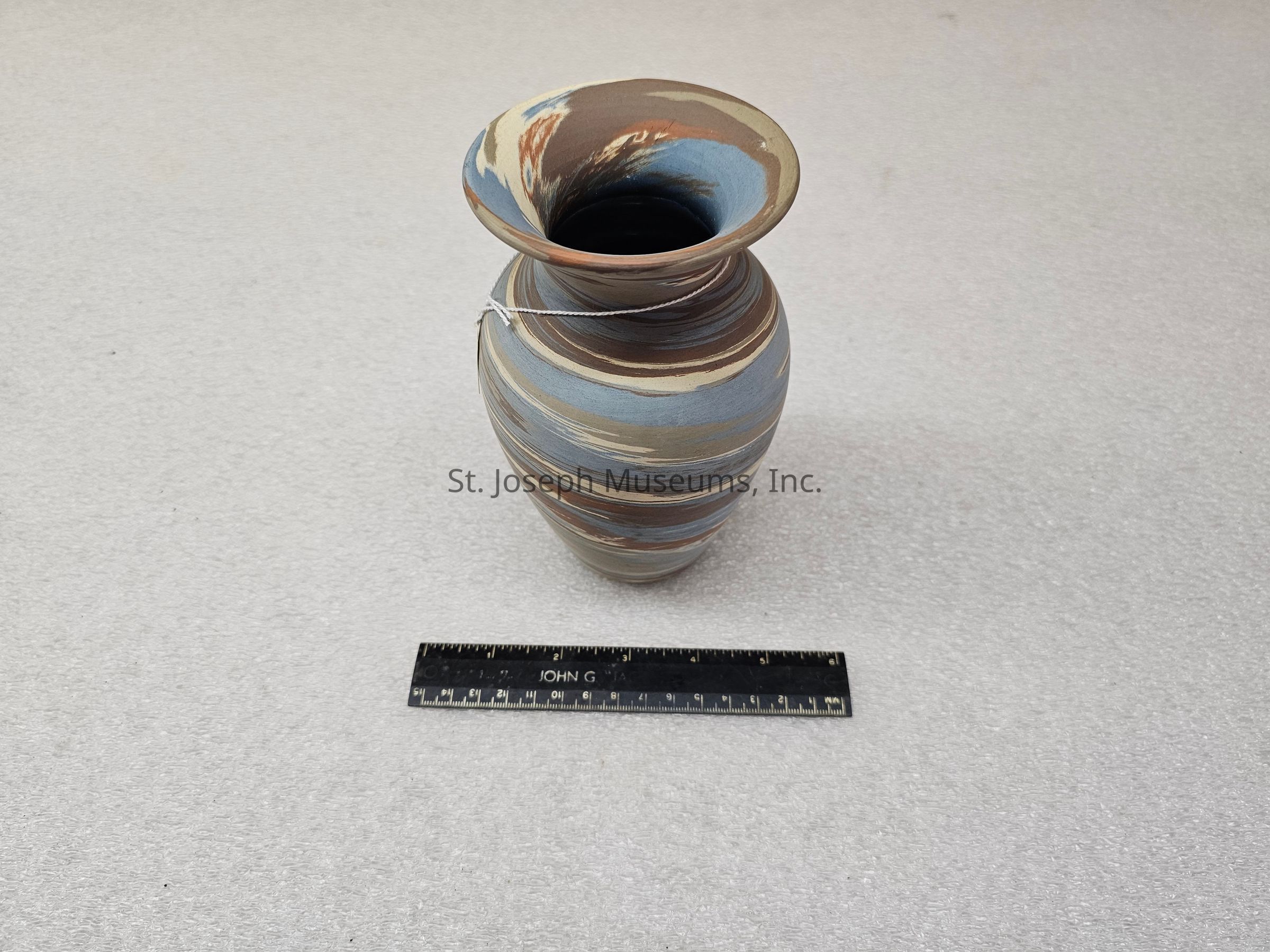
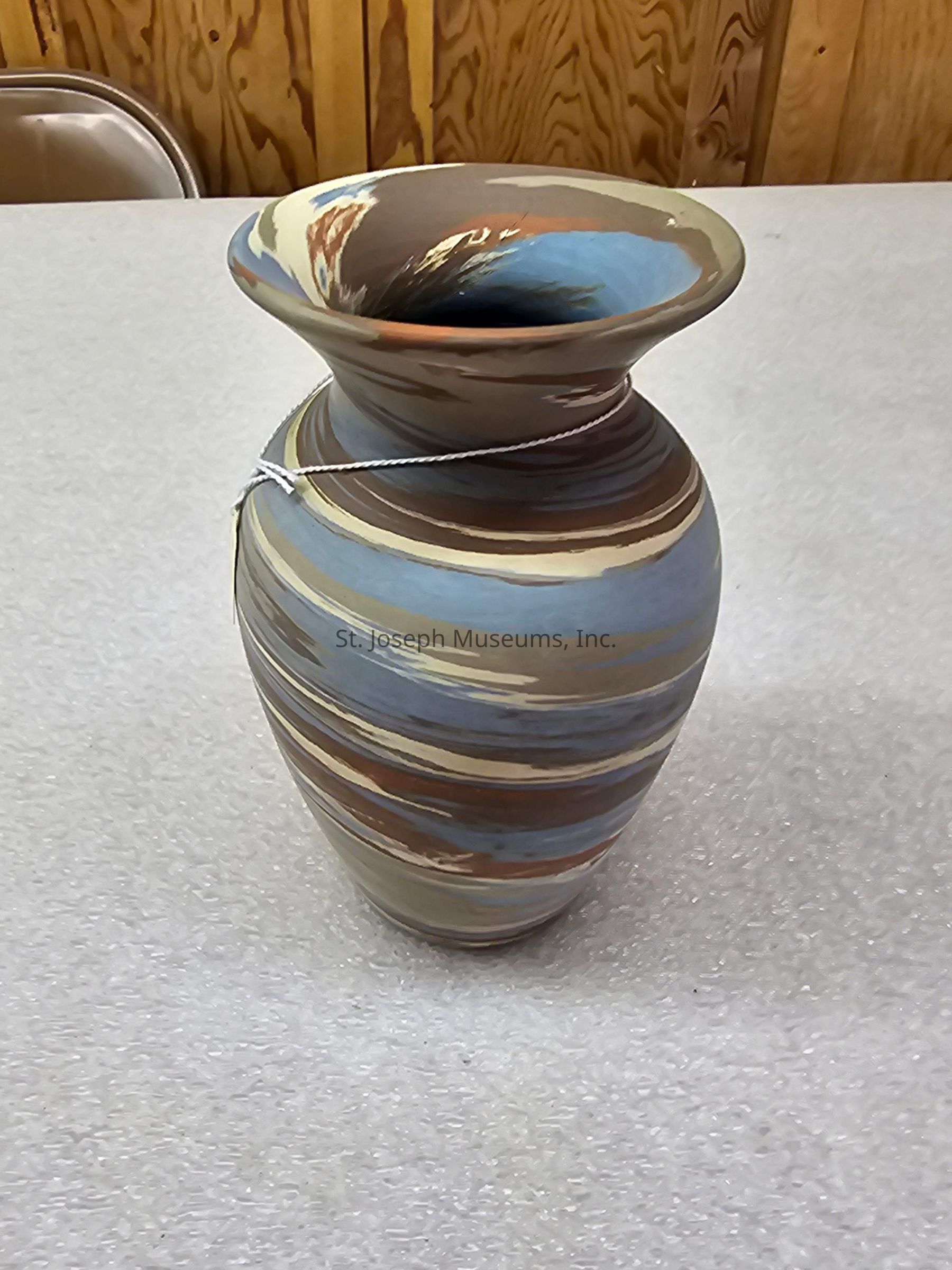
Niloak Pottery (the name comes from “kaolin” spelled backwards) was formed in 1909 in Benton, Arkansas, by Charles Dean Hyten, who had operated Hyten Pottery after his father’s death. The distinguishing technique of Niloak Pottery was the swirling of different-colored Arkansas clays over classically-shaped bodies, using the force of the pottery wheel. This marbling technique was first developed at the Ouachita Pottery in Hot Springs, Arkansas (Evans 1987:372), and Niloak’s version was labelled Mission Ware and used blue, red, white, gray, brown, and beige clays. Patented in 1928, the line was popular, and output expanded to 75,000 pieces per year (Evans 1987:191). The factory became a tourist destination, and Hyten demonstrated the swirling technique around the country. Sales suffered during the Depression, and a less expensive line in solid and dripped colors was developed. The firm was sold in the mid-1930s, and some marbleized Niloak ware continued to be produced up to 1946. C.D. Hyten died in 1944.Notes
From the American History Museum:
About the Arts and Crafts Movement:
Beginning in England in the early 1880s, the Arts and Crafts movement spread across the United States and Europe by the late 1880s. It celebrated the importance of beauty in everyday objects and urged a reconnection to nearby nature. The movement resisted the way industrial mass production undermined artisan crafts and was inspired by the ideas of artisan William Morris and writer John Ruskin. Valuing hand-made objects using traditional materials, it was known for a color palette of earth tones. Its artistic principles replaced realistic, colorful, and three-dimensional designs with more abstract and simplified forms using subdued tones. Stylized plant forms and matte glazes echoed a shift to quiet restraint in household décor. The Arts and Crafts movement also embraced social ideals, including respect for skilled hand labor and concern for the quality of producers’ lives. The movement struggled with the tension between the cost of beautiful crafts and the limited number of households able to afford them. Some potters relied on practical products such as drain tiles to boost income or supported themselves with teaching or publications. Arts and Crafts influence extended to other endeavors, including furniture, such as Stickley’s Mission Style, and architecture, such as the Arts and Crafts bungalow, built widely across the United States. American Arts and Crafts pottery flourished between 1880 and the first World War, though several potteries continued in successful operation into the later 20th century.