VASE

Object/Artifact

-

St. Joseph Museums

Name/Title

VASE

Entry/Object ID

264/5202

Description

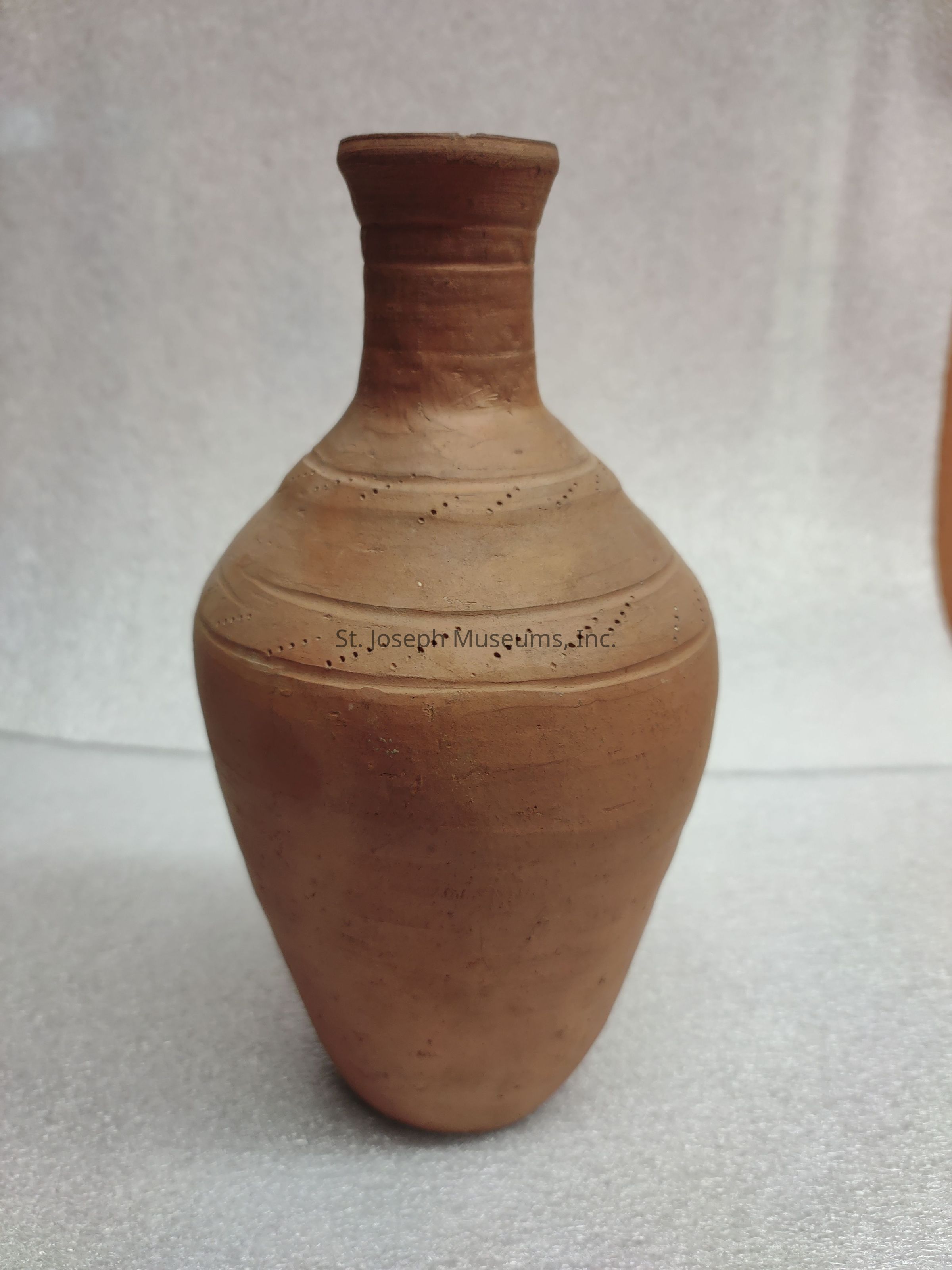
Clay vessel, simple designs. Two rows of stippling in multiple diagonal lines, horizontal lines etched around vase.

Collection

ETHNOGRAPHIC/HAITI

Made/Created

Place

Region

Caribbean

Ethnography

Cultural Region

Country

Haiti

Culture/Tribe

Haitian

Lexicon

Nomenclature 4.0

Nomenclature Primary Object Term

Vase

Nomenclature Sub-Class

Horticultural Containers

Nomenclature Class

Household Accessories

Nomenclature Category

Category 02: Furnishings

Parts

Count

1

Material

CLAY

Condition

Overall Condition

Good

Interpretative Labels

Label Type

Cultural/Historical Context

Label

Overall interpretation: Prior to European contact in 1492, Haiti was populated by an indigenous people called the Taino. When Christopher Columbus’ ship Santa Maria sank off the coast of Haiti, one of the Taino chieftains allowed Columbus to leave behind 39 sailors. Upon Columbus’ return, he left behind even more Spaniards and eventually created the first permanent Spanish colony on the island, bringing in even more Europeans. Eventually, the Europeans began to initiate violence against the Taino people. By 1504, the last Taino chieftain was deposed, with the Spaniards taking control of the island (including the many gold mines). The Taino people were enslaved and less than 25 years after Columbus landed on the island, only 32,000 Taino people survived. At the time of first European contact, as many as one million Taino people lived in Haiti.
Research Notes

Person

Tori Zieger

Notes

The island nation of Haiti has an incredibly deep history. The nation itself was first populated with the indigenous people called the Taino, then controlled by the Spaniards. As the Spanish took control of the island, they began to import enslaved Africans to work on plantations. The country was ceded to the French in 1697, who continued to transport enslaved individuals from Africa to the island. In 1801, Toussaint Louverture (a former enslaved person turned resistance military leader) started a slave rebellion that resulted in the independence of Haiti from the French, which is the first example of a slave rebellion successfully resulting in the independence of a country. Throughout this complicated history, the distinct groups of people created a unique and diverse cultural landscape. By studying pottery styles and other artifacts, archaeologists can pinpoint what cultural group was living in a specific location in a given time. This knowledge helps add humanity and individualization to the people who lived in Haiti hundreds of years ago, as we learn more and more about their culture and way of life.