Research Type
CuratorPerson
Sara WilsonDate
Mar 12, 2022Notes
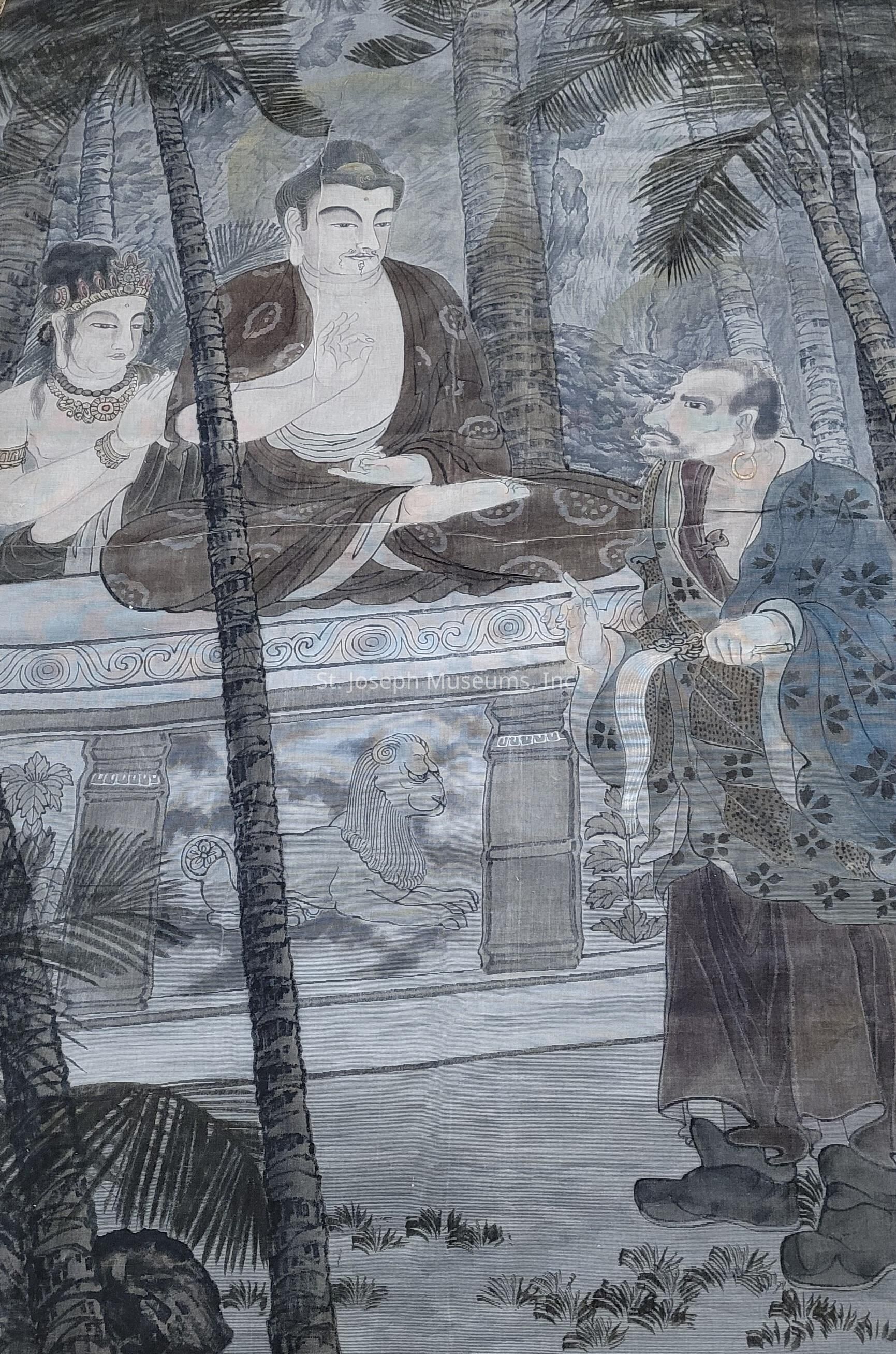
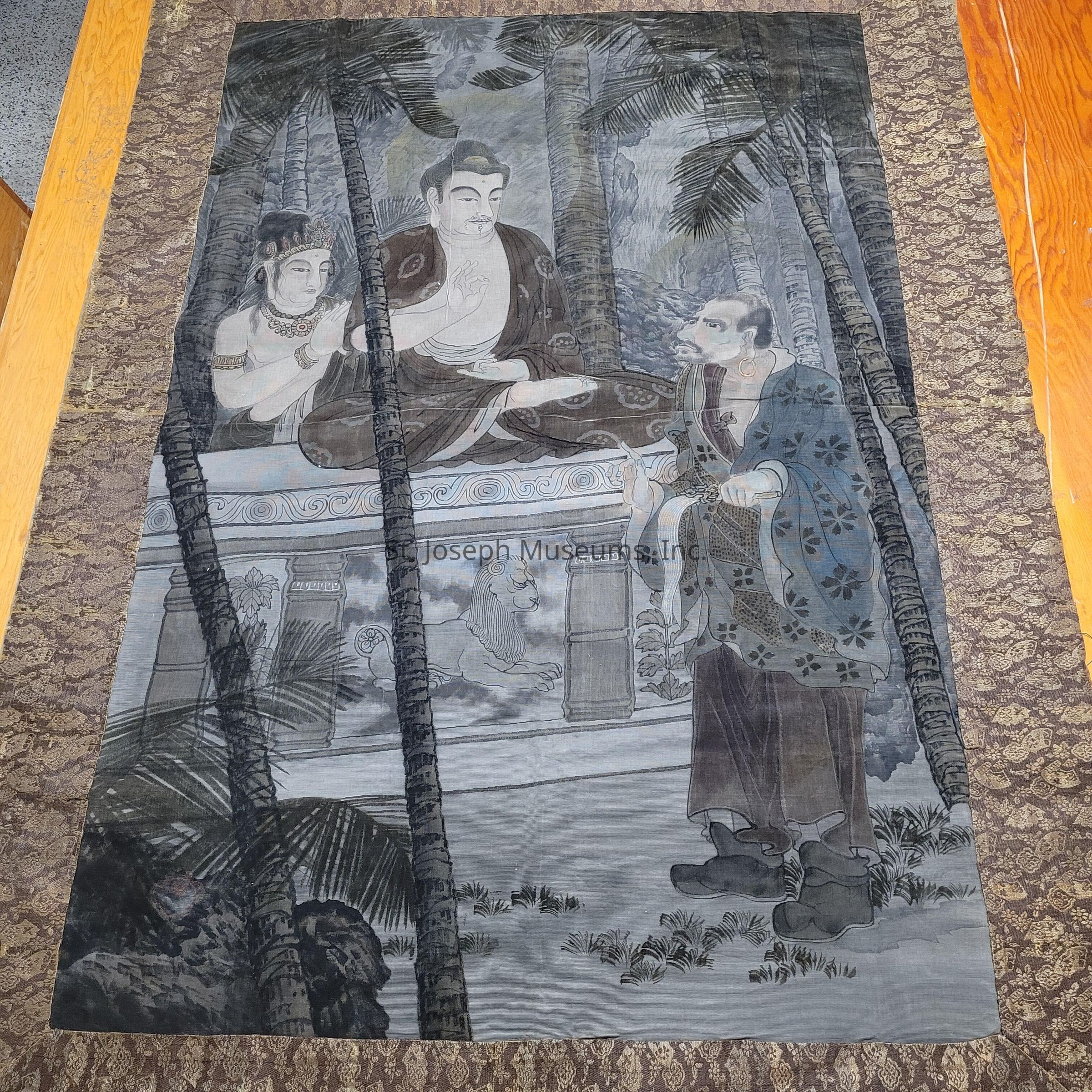
One after another, the bodhisattvas seek to outdo one another in their understanding of nonduality. Manjusri declares that all have spoken well, but even their examples of nonduality remain dualistic. Then Manjusri asks Vimalakirti to offer his teaching at the entrance into nonduality.
Sariputra remains silent, and Manjusri says, "Excellent! Excellent, noble sir! This is indeed the entrance into the nonduality of the bodhisattvas. Here there is no use for syllables, sounds, and ideas."Research Type
CuratorPerson
Sara WilsonDate
Mar 12, 2022Notes
Silence
The Vimalakīrti-nirdeśa "offers us two dramatic and contrasting moments of silence. The first of these [is] the silence of Śāriputra", who is rendered silent during an exchange with a goddess:
Śāriputra abandons speech too quickly, after all. He has been asked a question in a particular context [...] to refuse to speak at such a point is neither an indication of wisdom, nor a means of imparting wisdom, but at best a refusal to make progress [...] Śāriputra's failed silence is but a contrastive prelude to Vimalakīrti's far more articulate silence.[26]
Vimalakīrti remains silent while discussing the subject of emptiness with an assembly of bodhisattvas. The bodhisattvas give a variety of answers on the question what non-duality is. Mañjuśrī is the last bodhisattva to answer, and says that "by giving an explanation they have already fallen into dualism". Vimalakīrti, in his turn, answers with silence. [27][a]
With this emphasis on silence the Vimalakīrti-nirdeśa served as a forerunner of the approach of the Ch'an/Zen tradition, with its avoidance of positive statements on 'ultimate reality':
The Zen tradition is avowedly the Buddhism of Vimalakirti's silence—a claim that is explicitly reinforced by the practice of silent meditation.[29]
But it does not mean that language is to be discredited completely:
Language is not, according to any Mahāyāna school, to be abandoned at the outset; it is not, whatever its limitations, a useless or a wholly misleading cognitive vehicle. To adopt an aphasia or cognitive quietism from the start would be pointless, and, as the Goddess notes, contrary to the practice of the Buddha himself, who uttered an enormous number of words during his career. But of course the episode gets its point precisely from the fact that Buddhist literature is replete with a rhetoric of silence—with episodes of especially significant silence—and indeed, as we discover a mere two chapters later in this very sutra.[26]Person
Tori ZiegerNotes
This tapestry depicts a scene from the Vimalakīrti Sūtra, a Buddhist sacred text specific to the Mahayana sect of Buddhism. Mahayana Buddhism still teaches that humans are in a cycle of rebirth until they achieve nirvana, or enlightenment. The biggest difference between Mahayana Buddhism and Theravada Buddhism (the other major sect) is that practitioners of Mahayana Buddhism do not place as much emphasis on achieving nirvana; rather the focus is on gaining wisdom and knowledge and to care for other individuals by spreading happiness and compassion.
In Buddhist traditions, sutras are important writings that help teach the fundamental principles and teachings of Buddhism. Originally they were the written records of the oral teachings of Gautama Buddha, the founder of Buddhism, however there are sutras now from many important teachers. The Vimalakīrti Sūtra is one such example; this is the sutra of Vimalakīrti. Vimalakīrti was a “lay person” (not a deity or mythic leader) but still taught people of all statuses about Buddhism and achieving enlightenment. Vimalakīrti is often considered the second most enlightened individual after only Buddha himself. The Vimalakīrti Sūtra is often very popular in modern times due to its emphasis on the equality of women and the enlightenment of common people (not just Buddhist priests).