Name/Title
Wild Black Cherry (Orunus serotina)Entry/Object ID
2021.1.53 BScope and Content
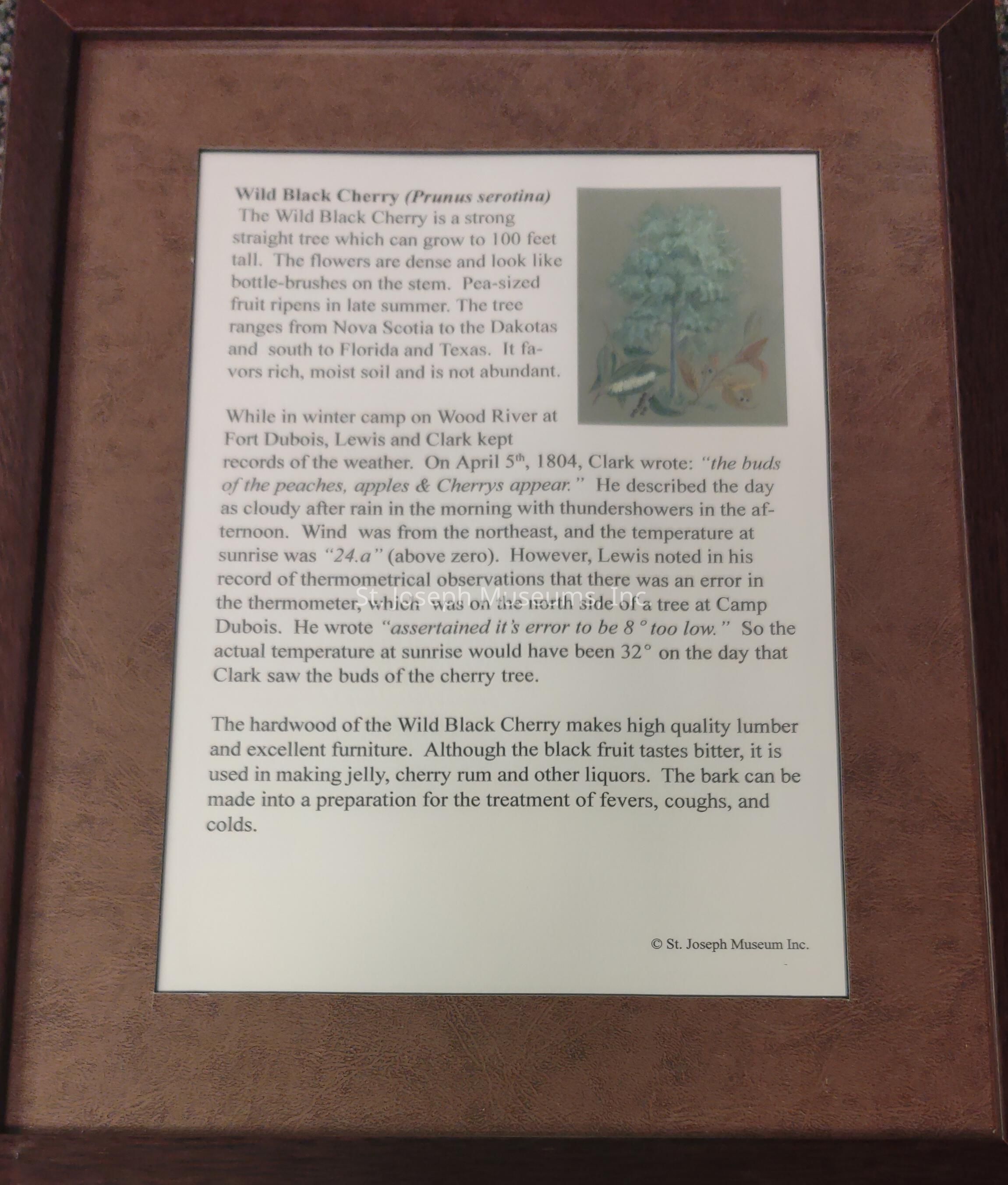
Wild Black Cherry (Orunus serotina) plant description, framed.
The Wild Black Cherry is a strong straight tree which can grow to 100 feet tall. The flowers are dense and look like bottle-brushes on the stem. Pea-sized fruit ripens in late summer. The tree ranges from Nova Scotia to the Dakotas and south to Florida and Texas. It favors rich, moist soil and is not abundant.
While in winter camp on Wood River at Fort Dubois, Lewis and Clark kept records of the weather. In April 5th, 1804, Clark wrote: "the buds of the peaches, apples & Cherrys appear." He described the day as cloudy after rain in the morning with thundershowers in the afternoon. Wind was from the northeast, and the temperature at sunrise was "24.a" (above zero). However, Lewis noted in his record of thermometrical observations taht there was an error in the thermometer, which was on the north side of a tree at Camp Dubois. He wrote "assertained it's error to be 0 [degrees] too low." So the actual temperature at sunrise would have been 32 [degrees] on the day that Clark saw the buds of the cherry tree.
The hardwood of the Wild Black Cherry makes high quality lumber and excellent furniture. Although the black fruit tastes bitter, it is used in making jelly, cherry rum and other liquors. The bark can be made into a preparation for the treatment of fevers, coughs, and colds.Context
Originally designed by the St. Joseph Museum in the fall of 2004. Titled "Botanical Wonders of the Uncharted West. The Recorded Flora of the Lewis & Clark Expedition."Collection
Lewis and ClarkLexicon
LOC Thesaurus for Graphic Materials
Botanical drawings, Expeditions & surveysArchive Items Details
Title
Wild Black Cherry (Orunus serotina) WatercolorCreator
Mary L. FletcherDate(s) of Creation
2004Subjects
Plants, Watercolor paintingsParts
Count
2Parts
Watercolor of plant and descriptive label, both framed.Condition
Overall Condition
Very GoodProvenance
Notes
"Botanical Wonders of the Uncharted West" visually depicts how well Lewis followed Jefferson's instructions. In recognition of this achievement, The S. Joseph Museums, Inc. commissioned accomplished artist Mary Fletcher to create fifty (50) selected paintings of flora documented by the Corps during their Journey. These framed watercolor originals are accompanied by similarly framed labels, generated by former Head of Research Jackie Lewin, which describe the corresponding plants with appropriate quotations from the Journals. This collection makes available for study and appreciation plants that were new to Lewis and Clark, but which Native Peoples already recognized as valuable sources of food, medicine, and tools. Some of these still remain a mystery to many, but all will enjoy their beauty, their diverse uses, and their accomplished renderings.