Name/Title
Woodson Children's UnitEntry/Object ID
2014.2.3362Scope and Content
Pages 12 through 18 of 'Plan Section III: Population. There is no associated exact date, nor location of the first 11 pages. This collection is contained in a manila file folder titled 'Woodson'.Context
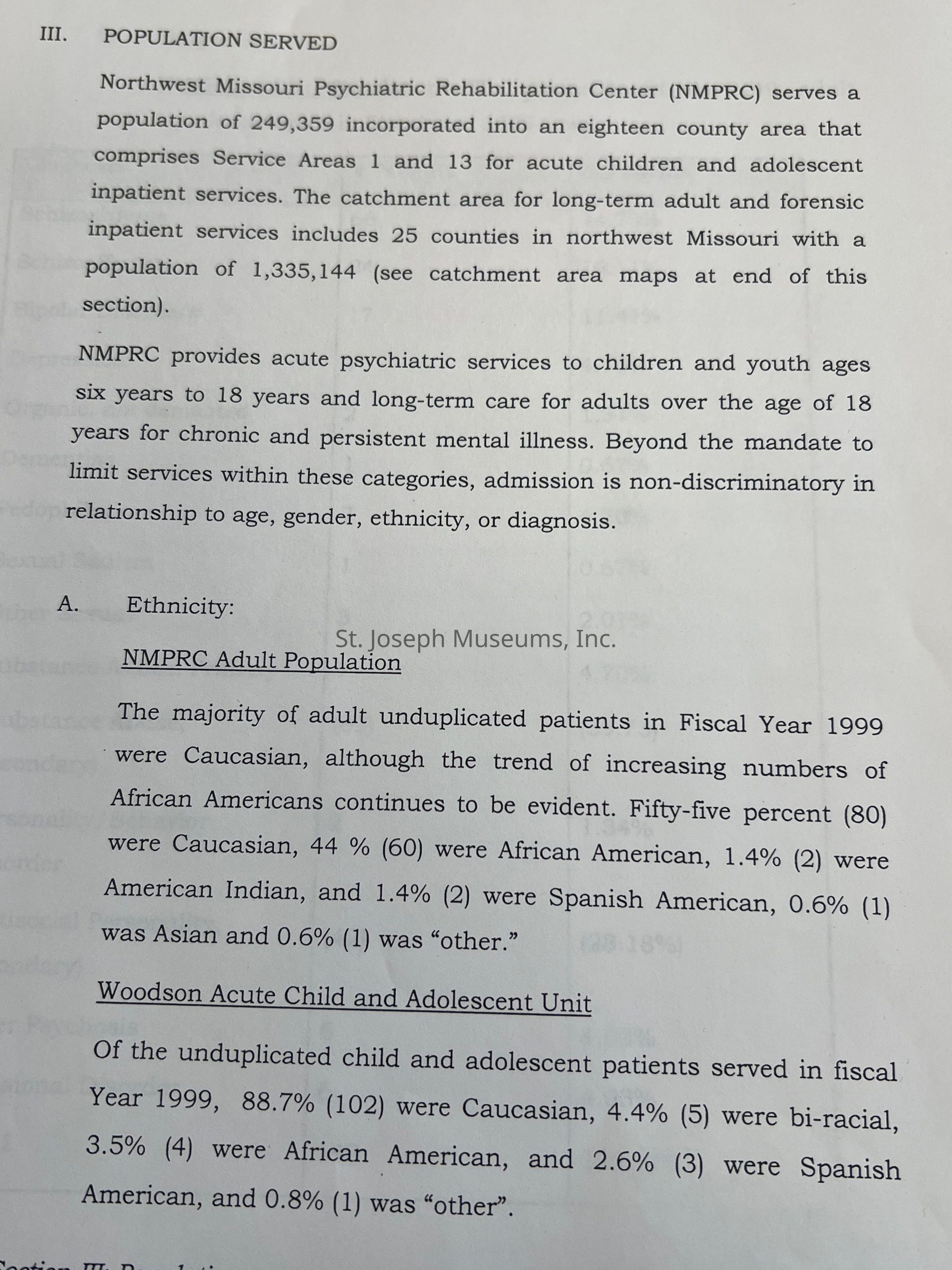
III POPULATION SERVED
Northwest Missouri Psychiatric Rehabilitation Center (NMPRC) serves a population of 249,359 incorporated into an
eighteen county area that comprises Service Areas 1 and 13 for acute children and adolescent inpatient services. . . . . . . .
NMPRC provides acute psychiatric services to children and youth ages six to 18 years and . . . . , admission is non-
discriminatory . . . . .
A. Ethnicity:
NMPRC Adult Population -
The majority of adult unduplicated patients in Fiscal Year 1999 were Caucasian . . . . . . Fifty-five percent (80). . .
Caucasian, 44% (60) . . . African American, 1.4% (2) . . American Indian, and 1.4% (2) . . Spanish American, 0.6% (1) . .
Asian and 0.6% (1) . . "other".
Woodson Acute Child and Adolescent Unit -
Of the unduplicated child and adolescent patients . . in fiscal year 1999, 88.7% (102) . . Caucasian, 4.4% (5) . . bi-racial,
3.5% (4) . . African American, and 2.6% (3) . . Spanish American, and .8% (1) . . "other".
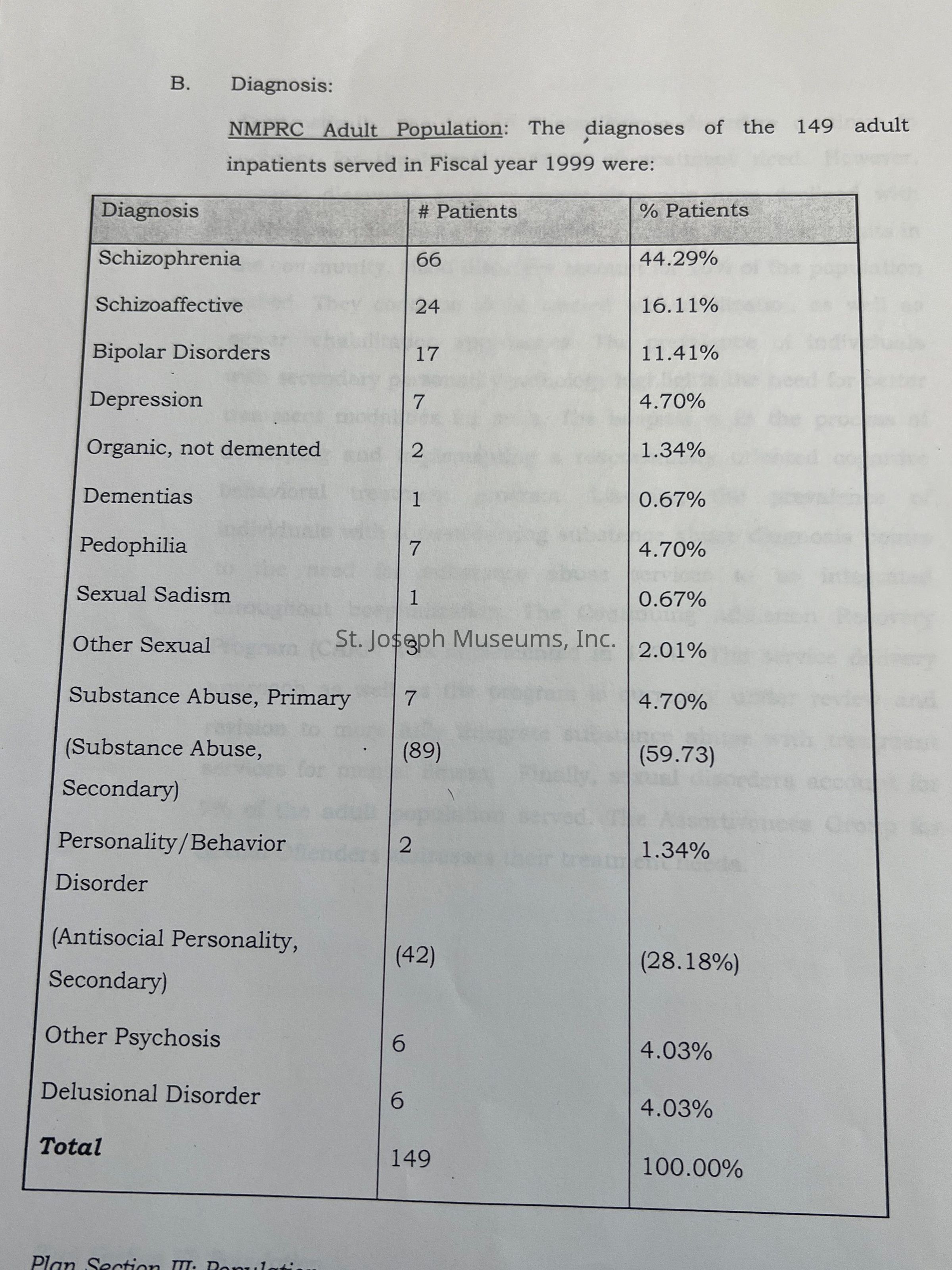
B. Diagnosis:
NMPRC Adult Population: The diagnosis of the 149 adult inpatients served in fiscal year 1999 were:
(A three column chart with the headings of 'Diagnosis - #Patients - %Patients' along the top. The list of mental disorders
range from 'Schizophrenia' to 'Delusional Disorder'.. Secondary diagnosis are also noted.)
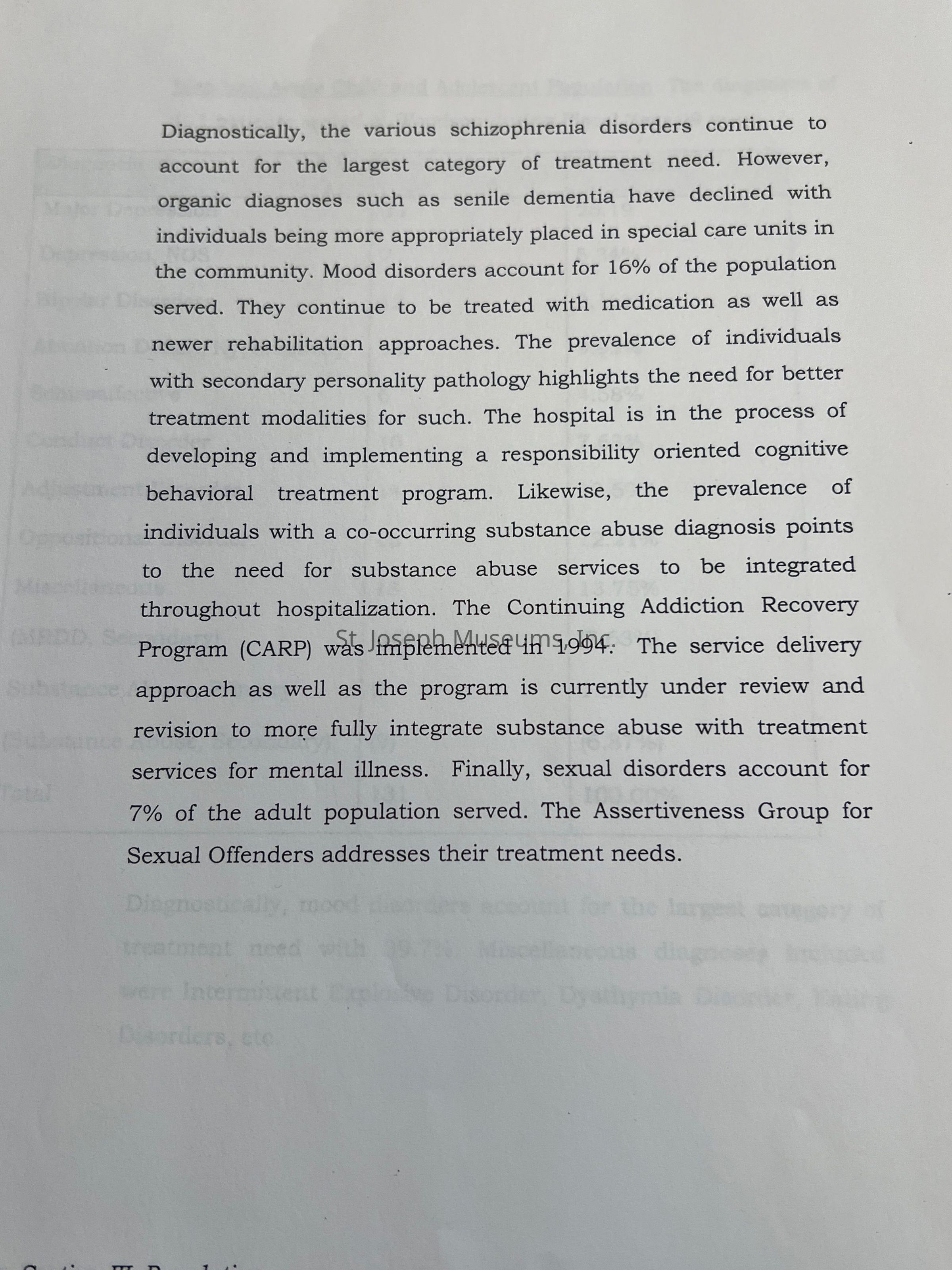
Diagnostically, . . . schizophrenia disorders (are) the largest category. . . . senile dementia have declined. . . . Mood
disorders account for 16% of the population served. . . . . . The hospital is in the process of developing and implementing a
responsibility orientated cognitive behavior treatment program. . . . . . The Continuing Addiction Recovery Program (CARP)
was implemented in 1994. . . . . review and revision to more fully integrate substance abuse with treatment services for
mental illness. . . . .
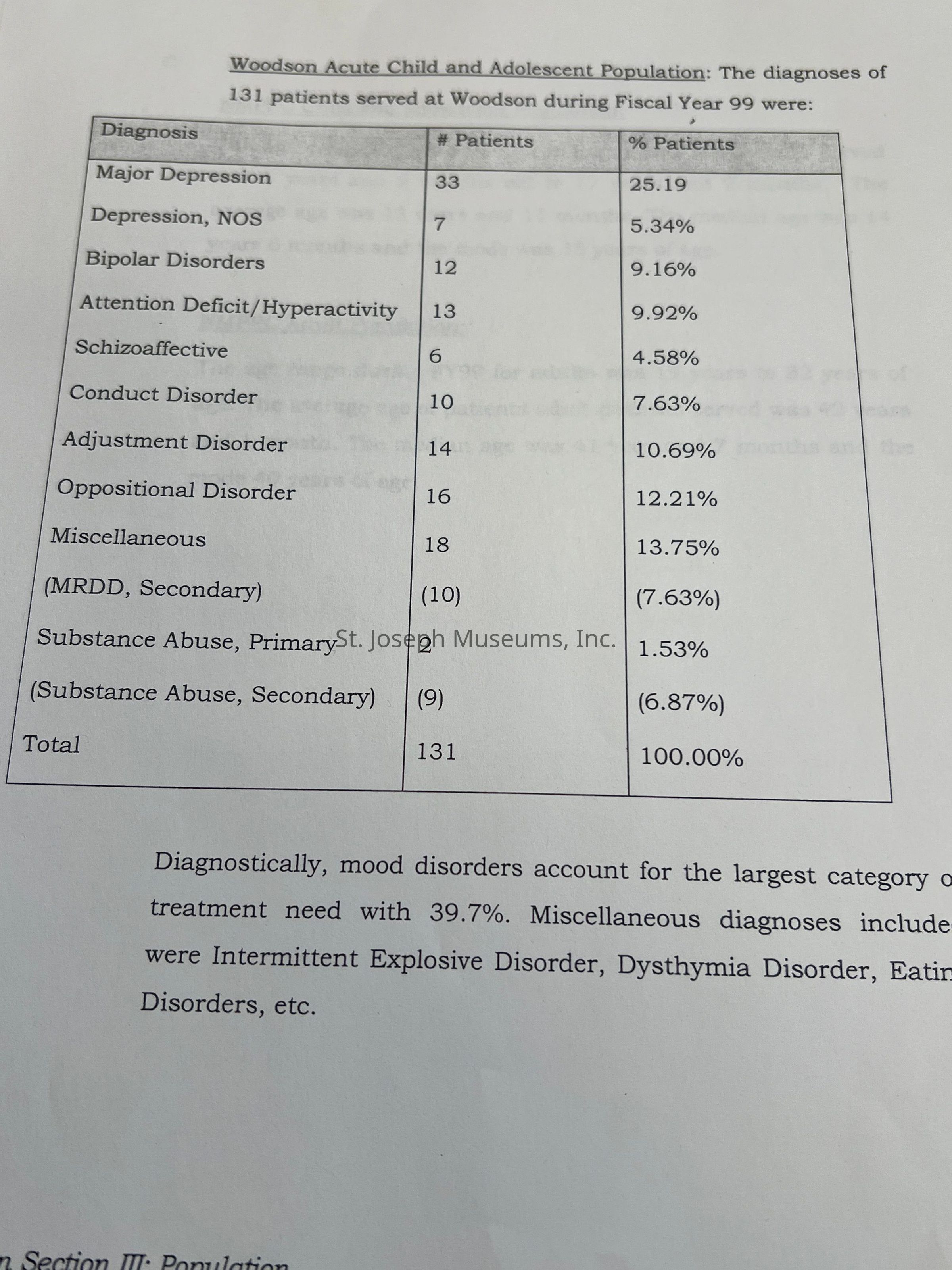
Woodson Acute Child and Adolescent Population: The diagnoses of
131 patients served at Woodson during Fiscal Year 99 were:
(A similar three column chart as with the NMPRC Adult Population with the same headings of 'Diagnosis - #Patients -
%Patients' is shown along the top. The list of mental disorders range from 'Major Depression' to 'Substance Abuse'. It also
shows secondary diagnoses.)
Diagnostically, mood disorders account for the largest category of treatment need with 39.7%. Miscellaneous diagnoses
included were Intermittent Explosive Disorder, . . . . . . . , etc.
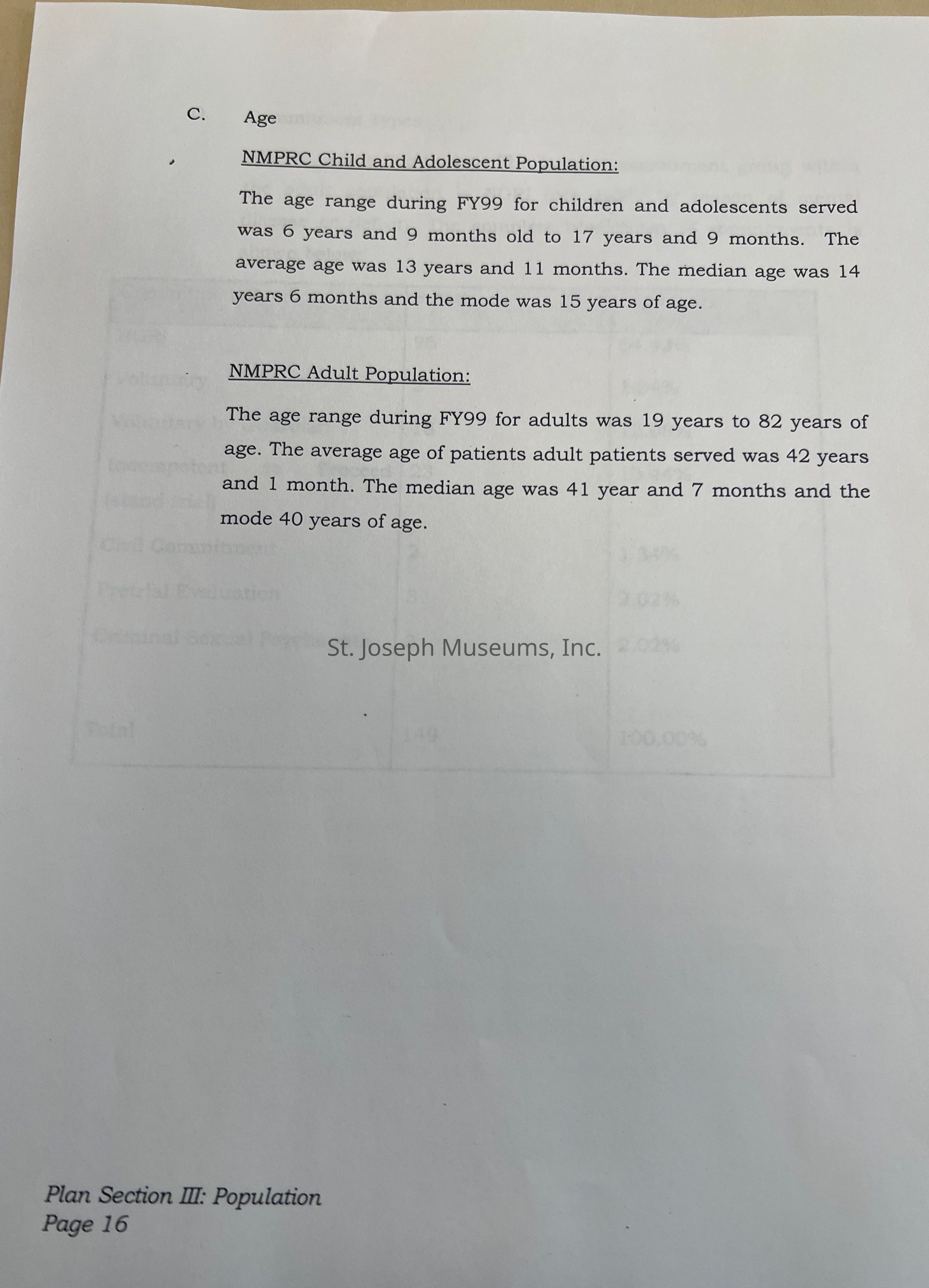
C. Age
NMPRC Child and Adolescent Population:
The age range during FY99 for children and adolescent served was 6 years and 9 months old to 17 years and 9 months.
The average age was 13 years and 11 months. The median age was 14 years 6 months and the mode was 15 years of
age.
NMPRC Adult Population:
The age range during FY99 for adults was 19 years to 82 years of age. The average age . . .. . was 42 years . . 1 month.
The median . . . 41 year . . 7 months . . . . mode 40 years of age.
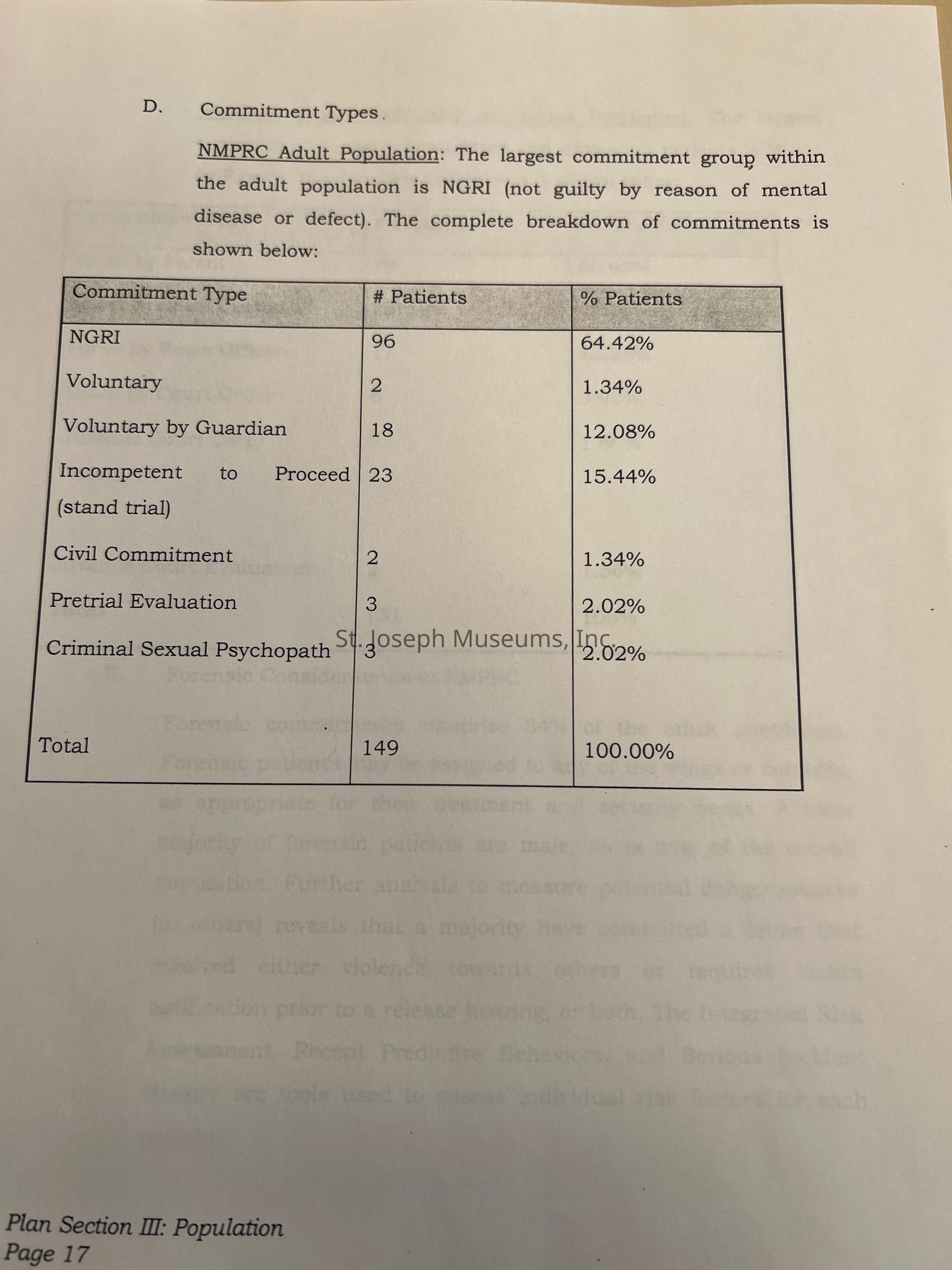
D. Commitment Types
NMPRC Adult Population: The largest commitment group . . . . is NGRI (not guilty by reason of mental disorder or defect).
The complete breakdown of commitments is shown below:
(A three column chart with headings of 'Commitment Type' # Patients' and '% Patients')
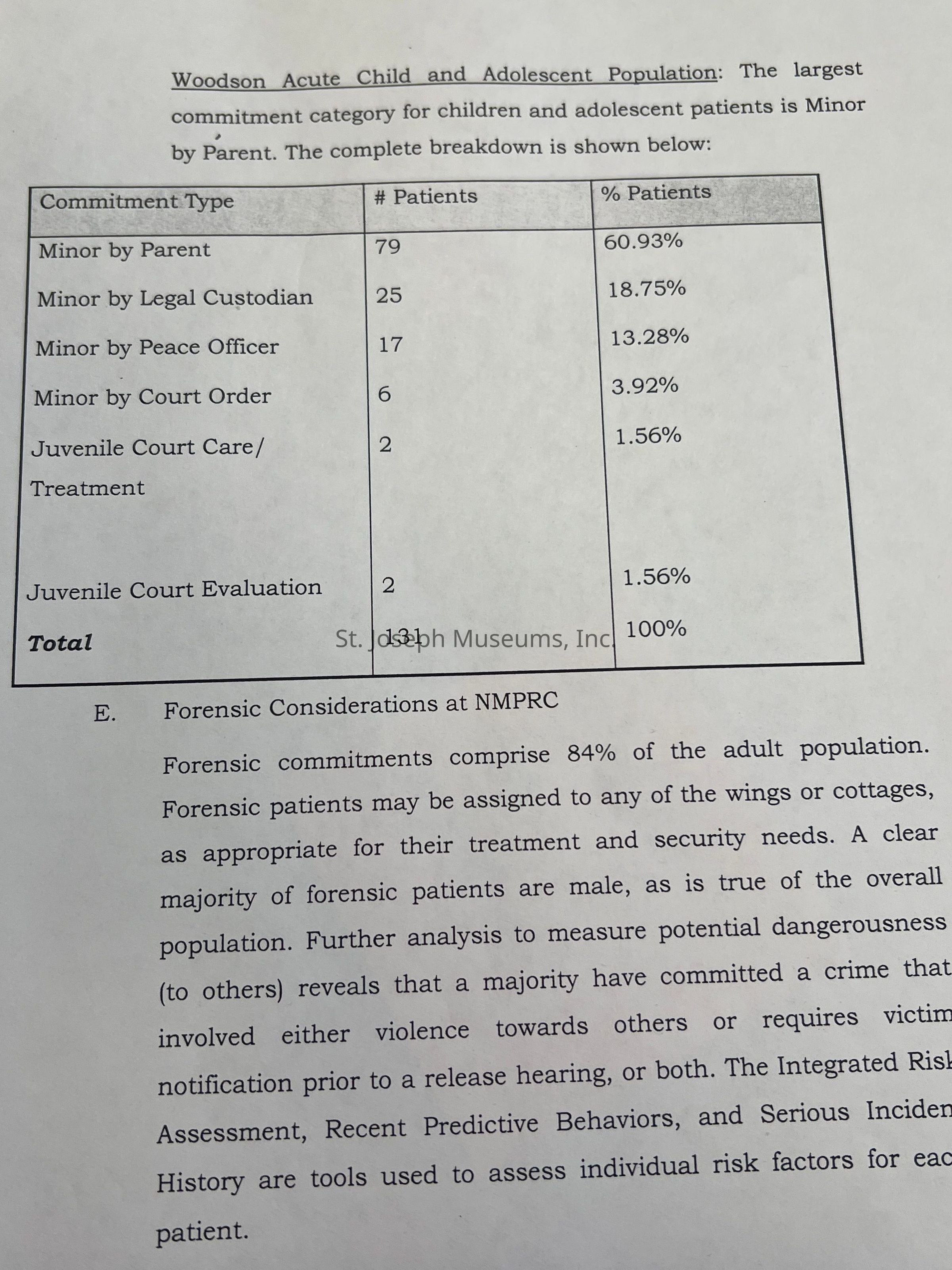
Woodson Acute Child and Adolescent Population: The largest commitment category for children and adolescent patients
is Minor by Parent. The complete breakdown is shown below.
(Again, a three column chart with headings of 'Commitment Type' # Patients' and '% Patients')
E. Forensic Considerations at NMPRC
Forensic commitments comprise 84% of the adult population. . . . . patients may be assigned to any of the wings or
cottages, . . .. for their treatment and security needs. A majority are male . . . . a majority have committed a crime that
involved . . . violence towards others or requires victim notification prior to release hearing, or both. The Integrated Risk
Assessment, Recent Predictive Behaviors, and Serious Incident History are tools used to assess individual risk factors for
each patient.Collection
WoodsonLexicon
Nomenclature 4.0
Nomenclature Sub-Class
Administrative RecordsNomenclature Class
Documentary ObjectsNomenclature Category
Category 08: Communication Objects