Name/Title
TeapotEntry/Object ID
A1982.14.146Description
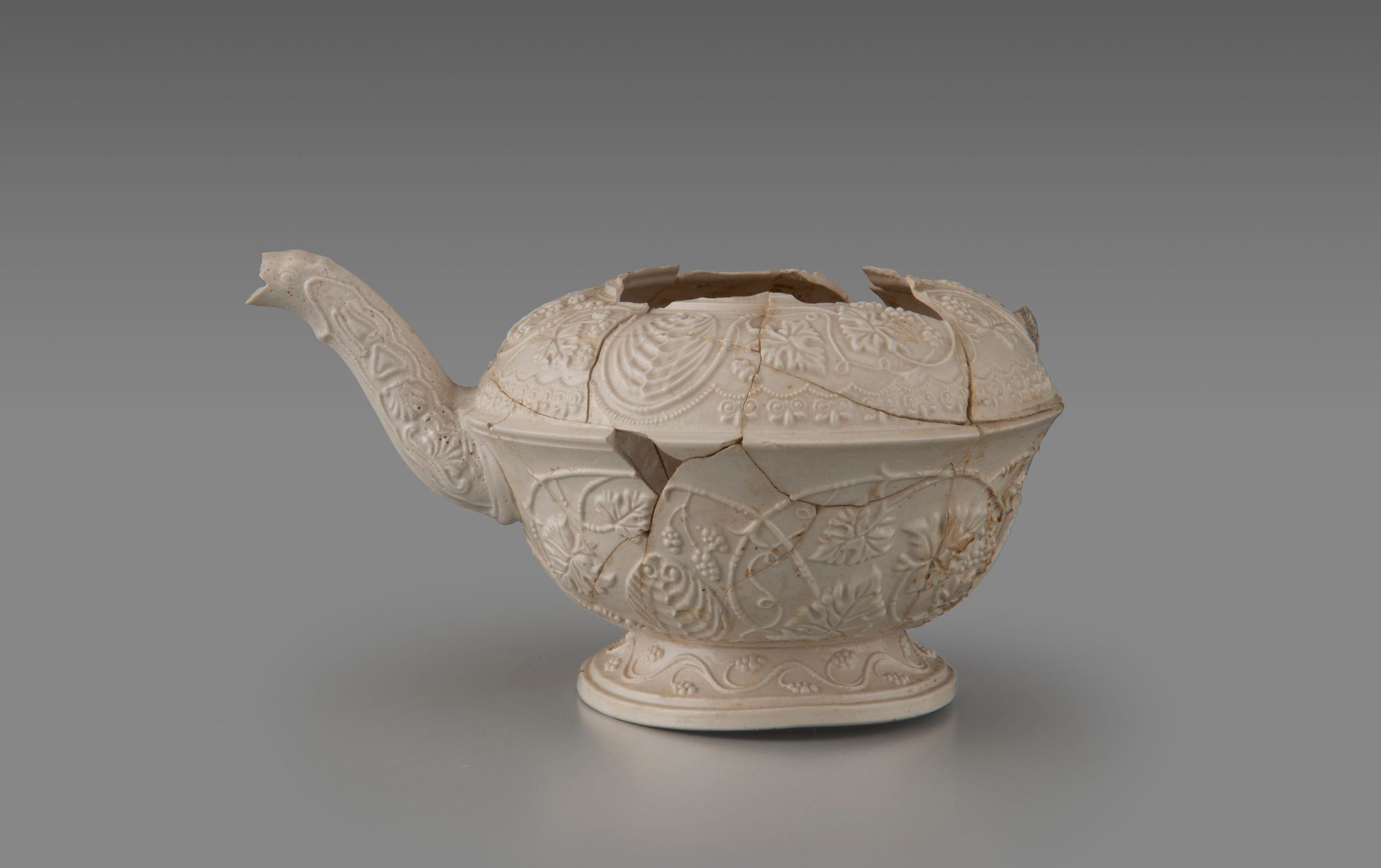
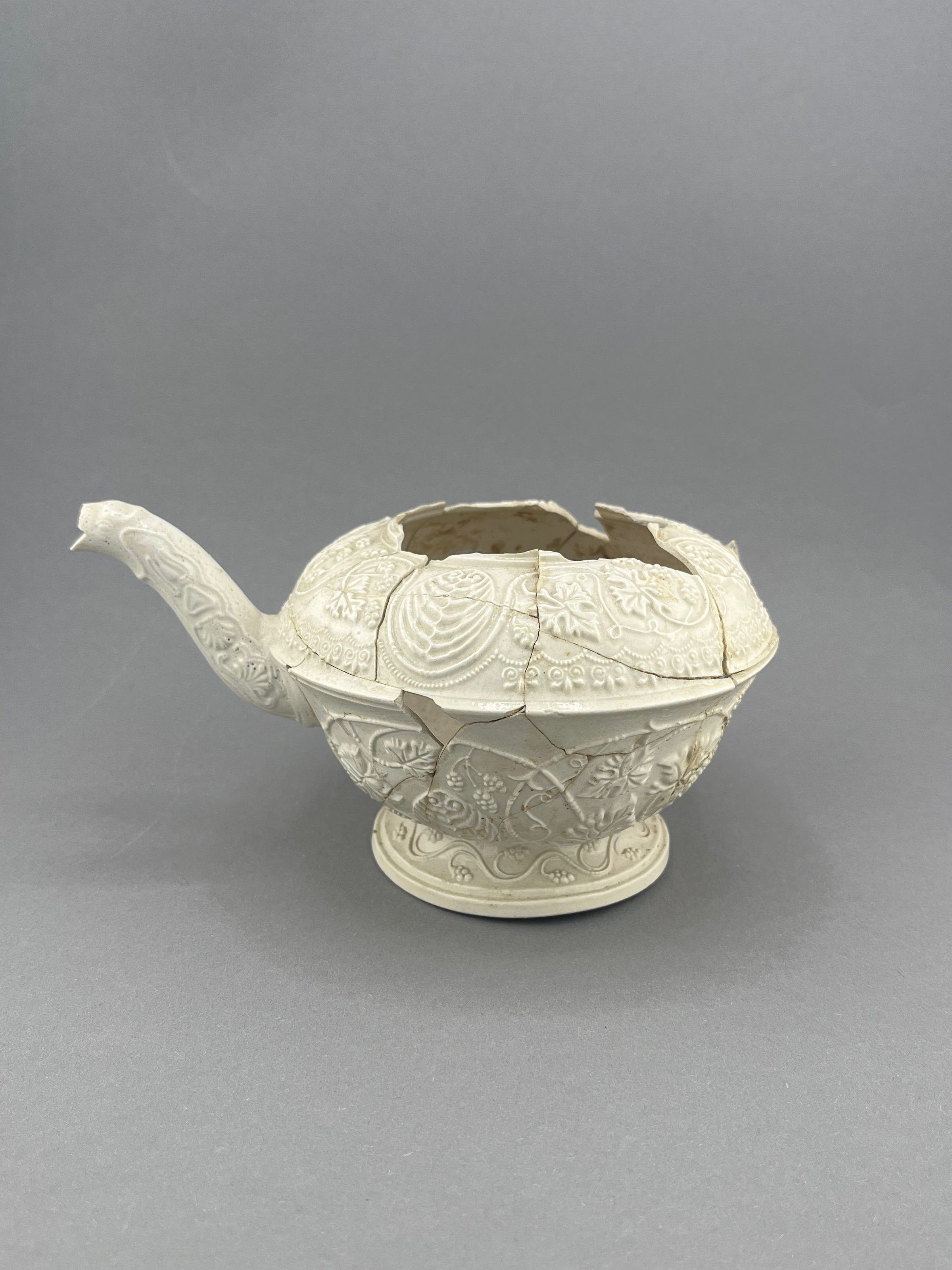
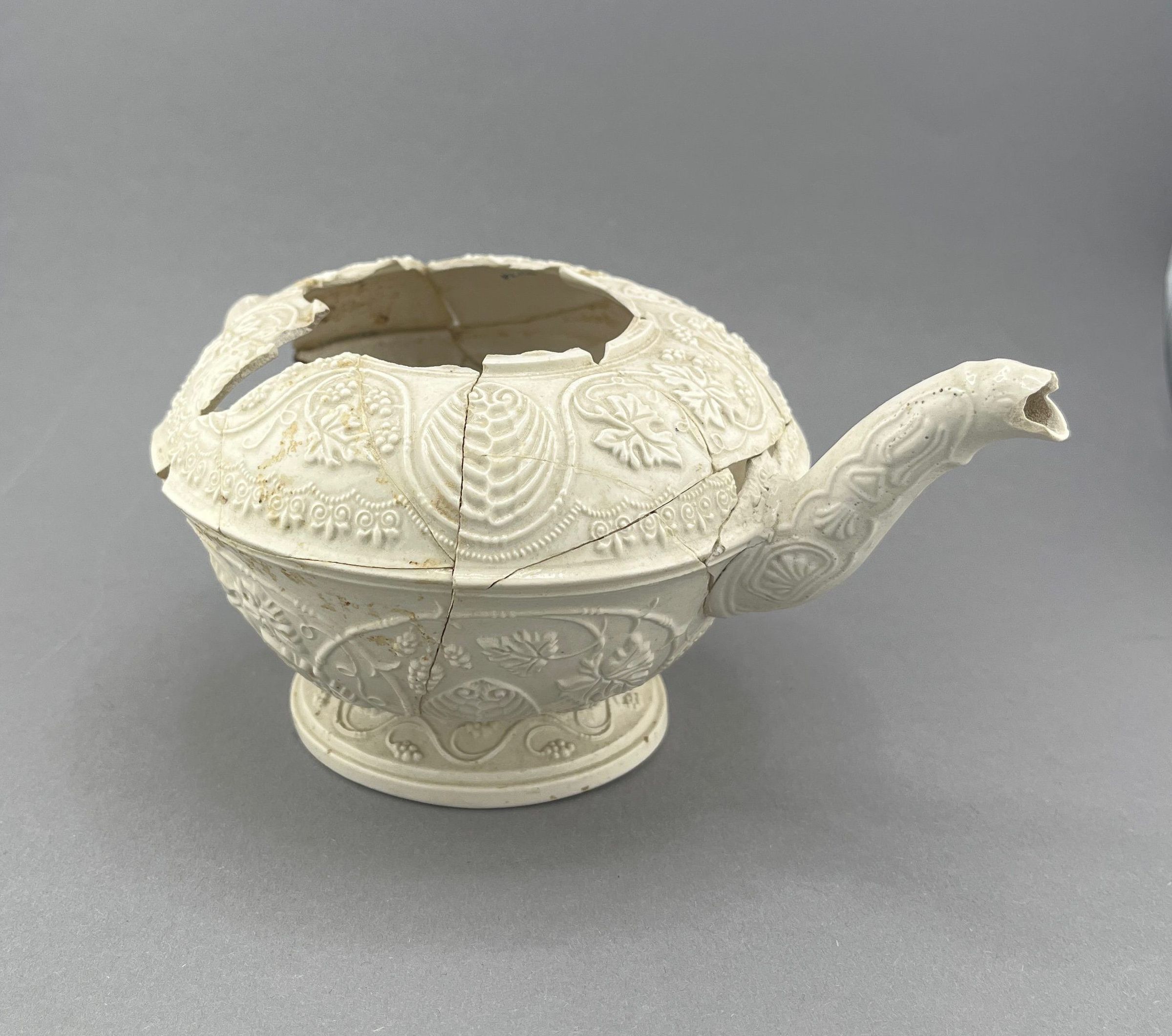
Slip-cast teapot having a compressed global body made of two halves joined at the waist, standing on a pedestal foot and having a molded s-curved spout (the handle, neck, and cover are missing). The body is molded with leafy vines and oval feathered medallions with a band of spearhead or fleur de lis motifs at the waist.
A pot with a similar molded body but on three pad feet is illustrated in Edwards and Hampson, White Salt-Glazed Stoneware (2005), 98.Context
The rich surface decoration of this teapot is a common feature of objects produced during the Rococo period. While the Rococo is often considered the final expression of Baroque aesthetics, the English Rococo was slow to develop, and begin to proliferate British design beginning in the 1740s. The combination of various natural motifs is common during this period, and the busy surface decoration was intended to produce a sense of surprise, wonder, and awe in the viewer.
The shape of the foot on this teapot is similar to designs seen in silver. It is also slightly warped, indicating that this teapot may have been sold as a factory second.Collection
CeramicsMade/Created
Date made
circa 1745 - circa 1755Time Period
18th CenturyPlace
County
StaffordshireCountry
EnglandRegion
Great Britain, British Isles, Western EuropeContinent
EuropeMaterial
Salt-glazed StonewareRelationships
Related Places
Place
Location
StentonCity
PhiladelphiaState/Province
PennsylvaniaCountry
United States of AmericaContinent
North AmericaRelated Events
Event
1982 Archeological Excavation