Name/Title
TeapotEntry/Object ID
A1982.14.139Description
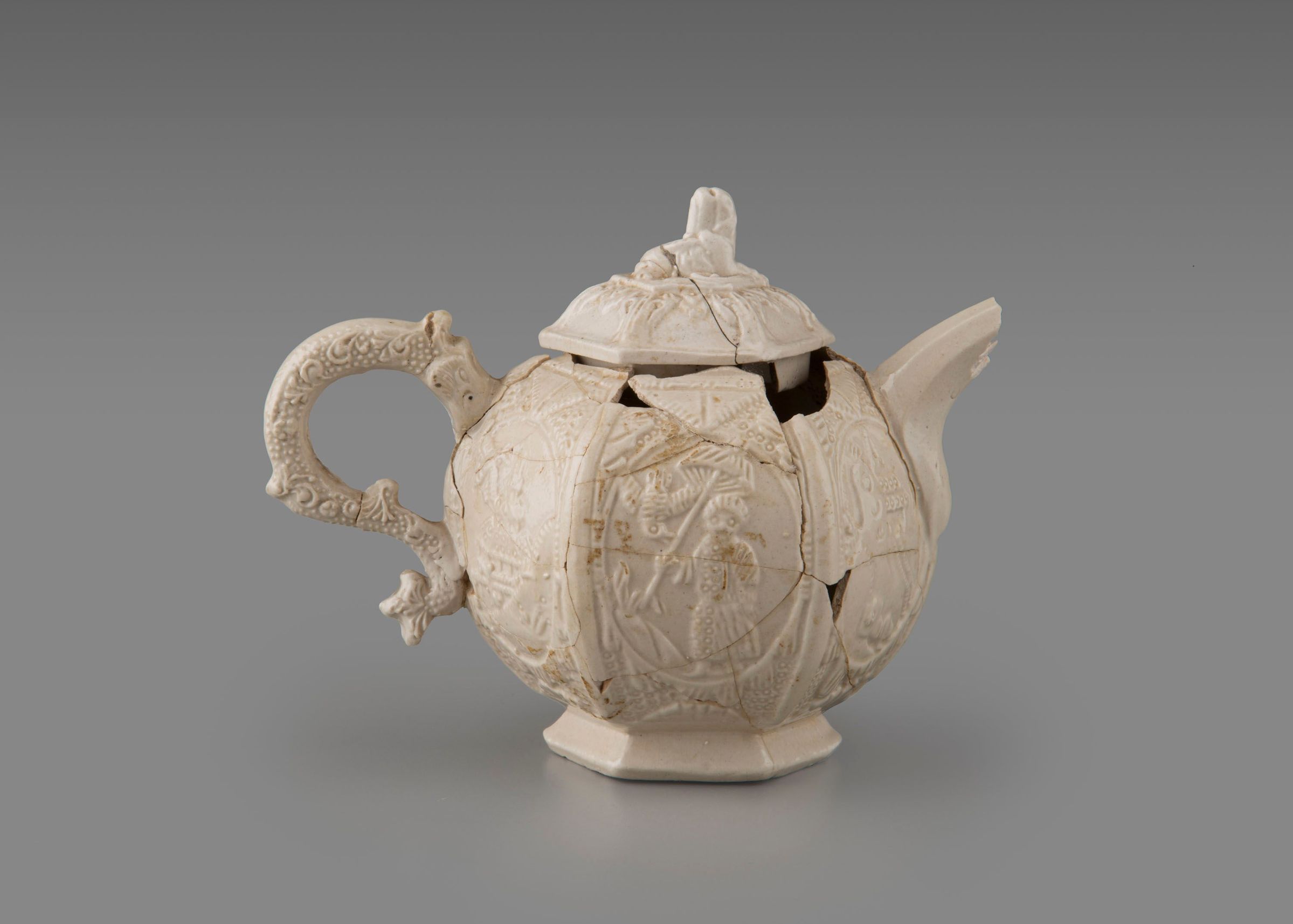
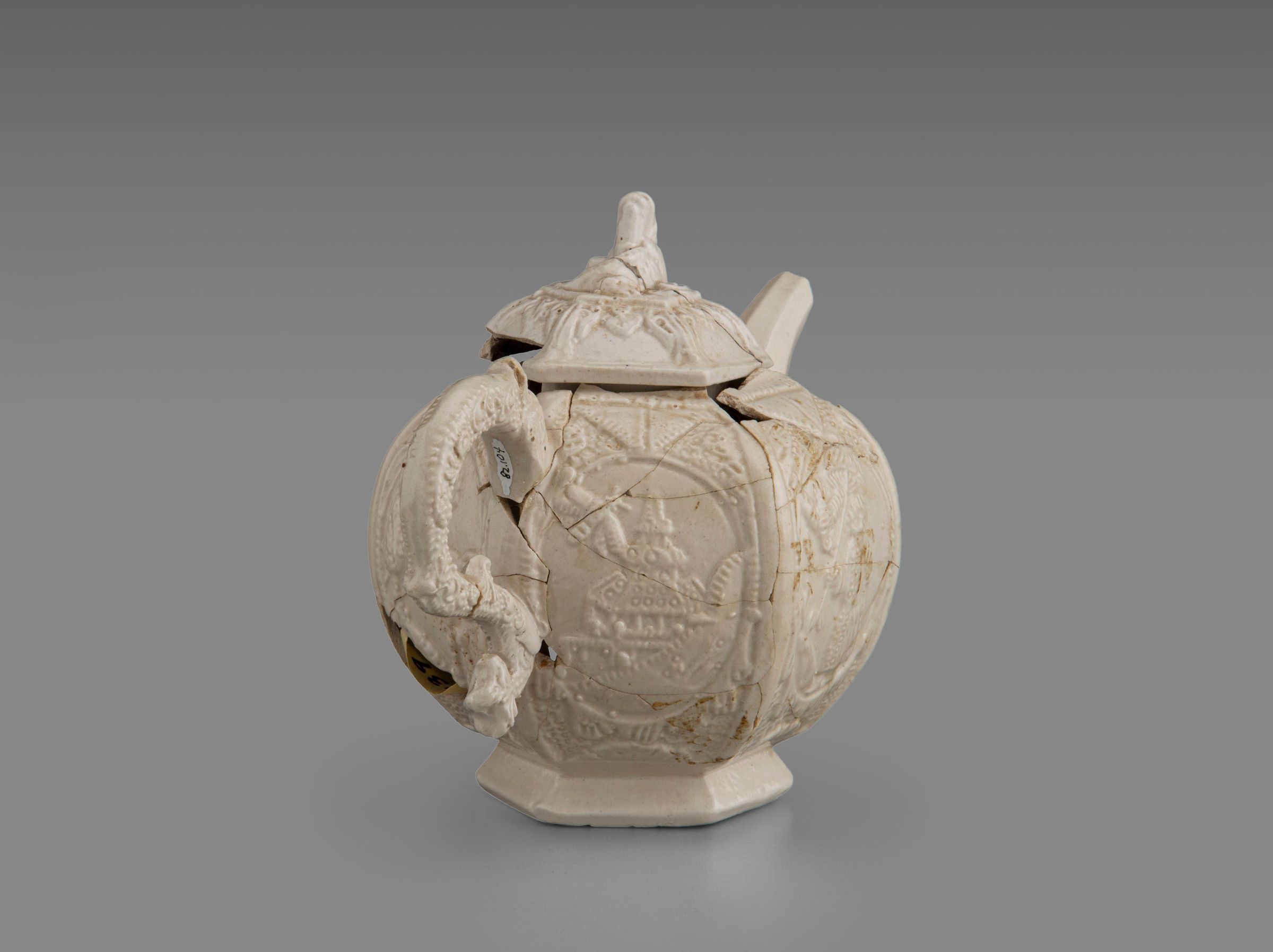
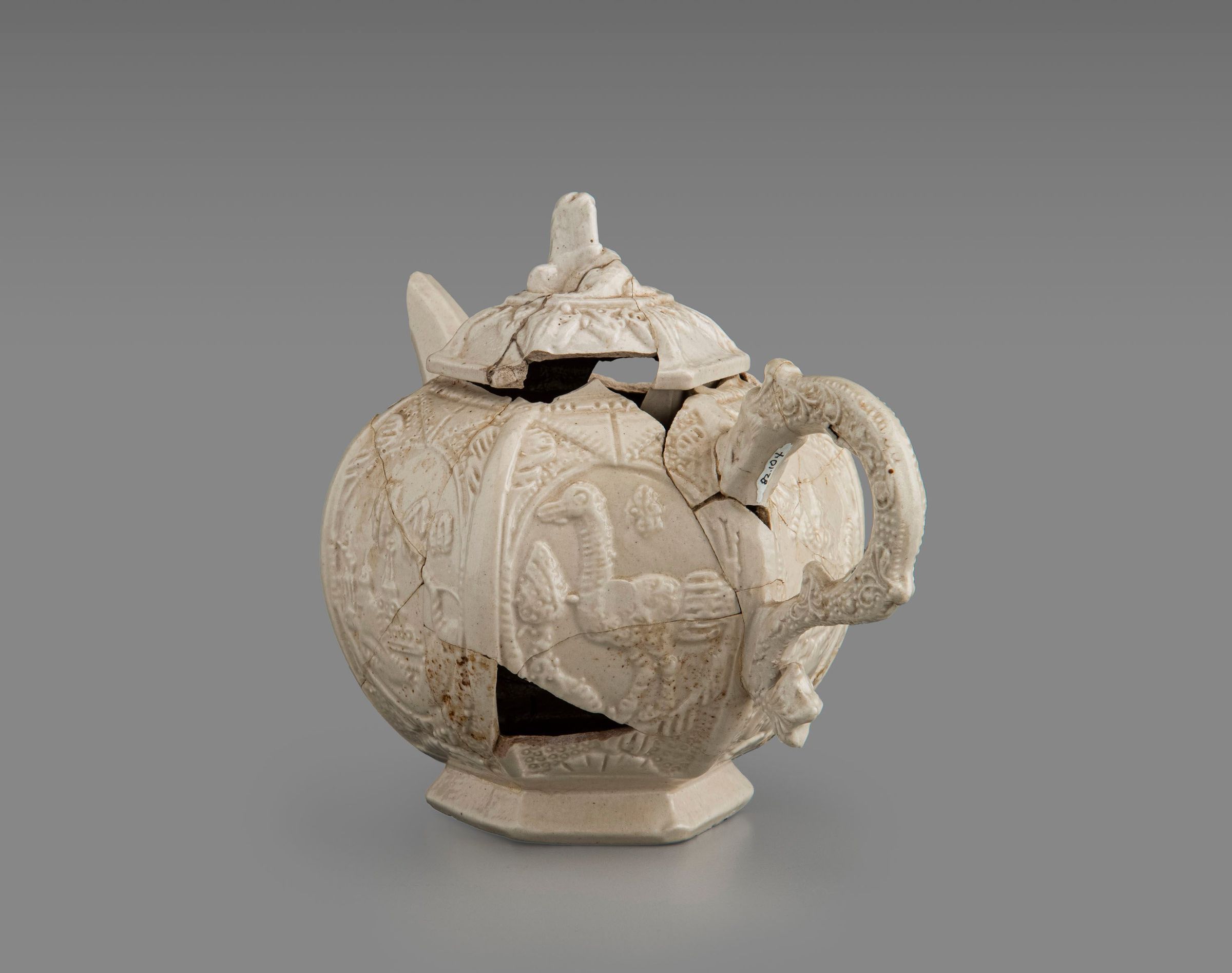
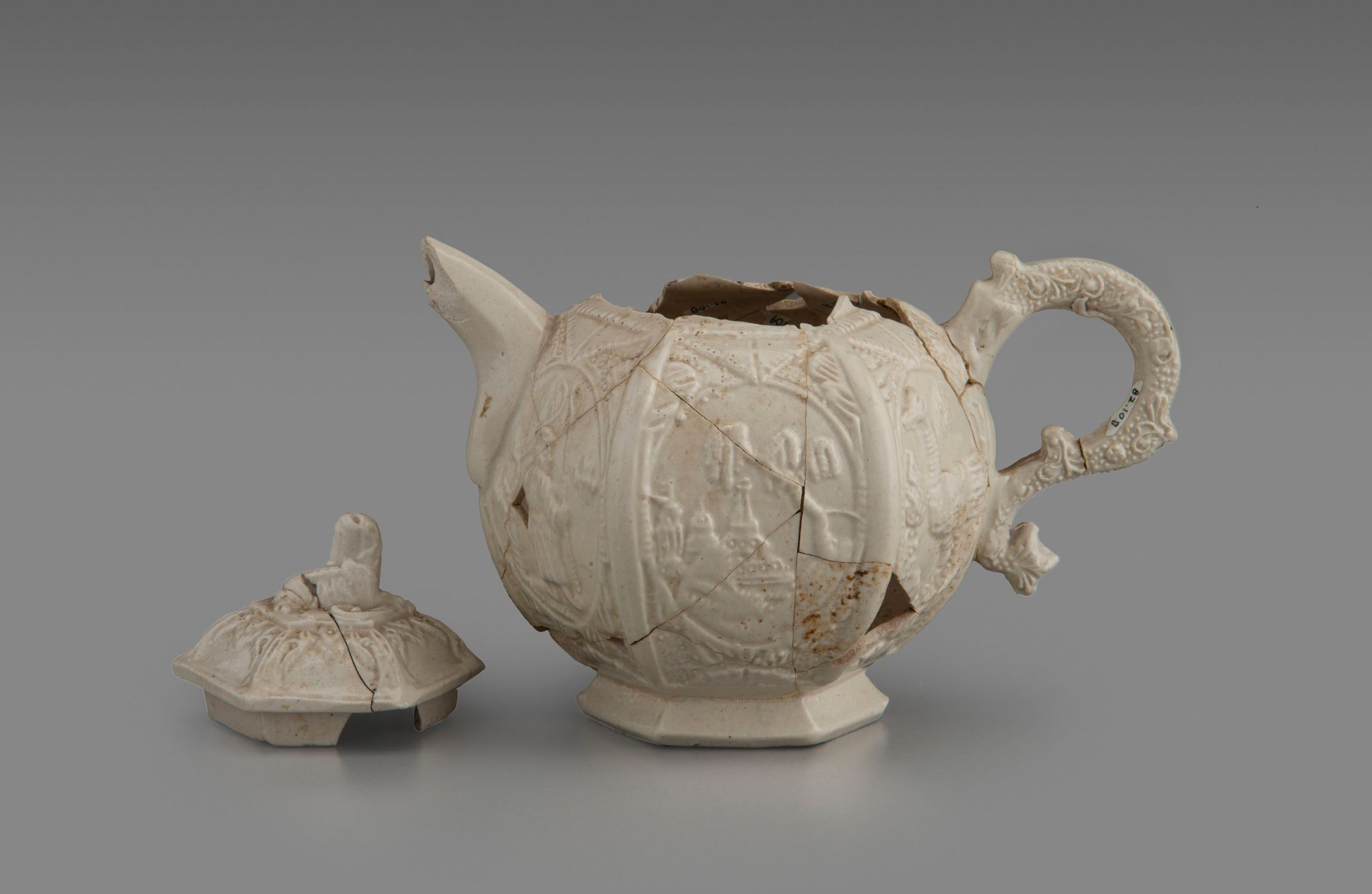
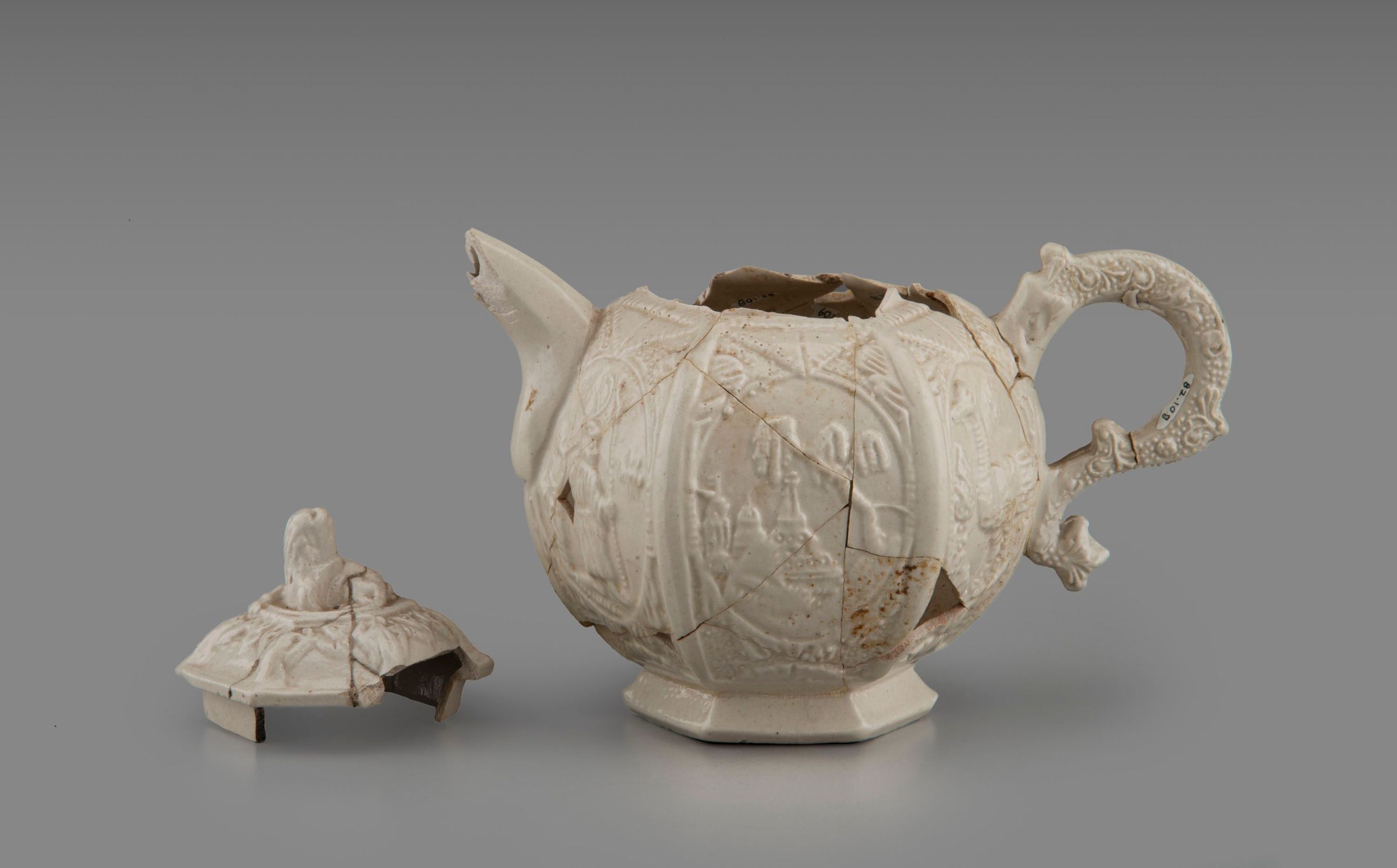
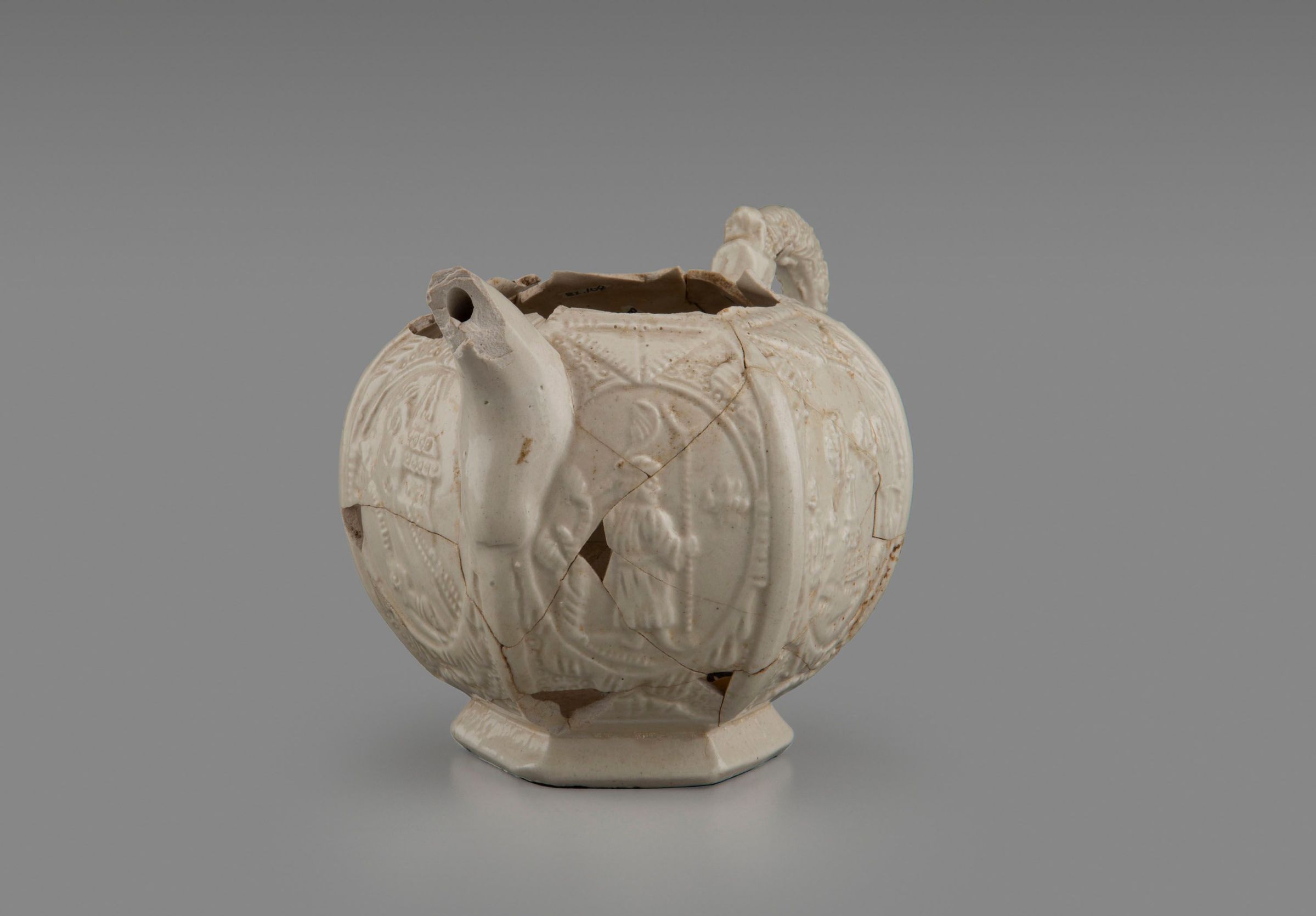
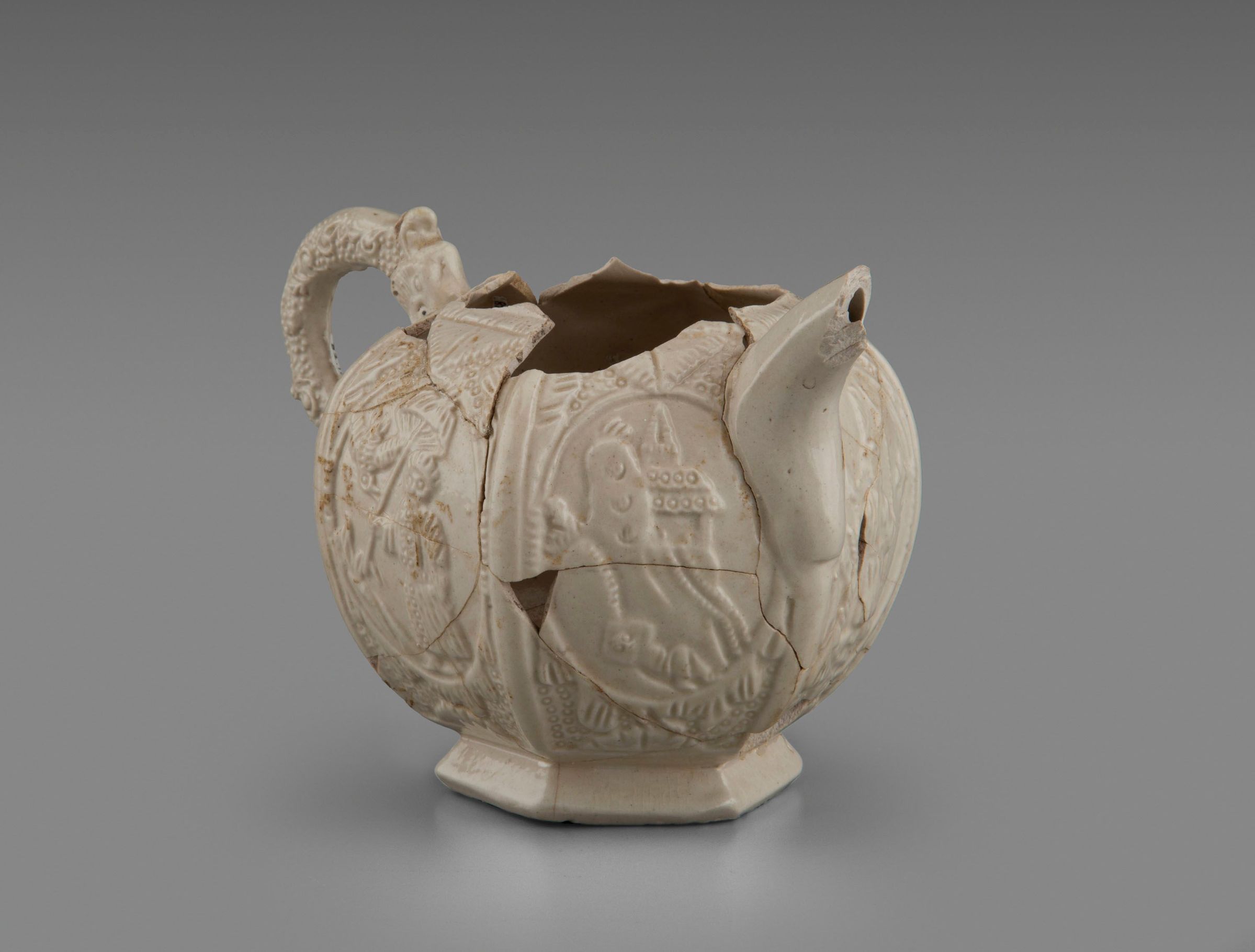
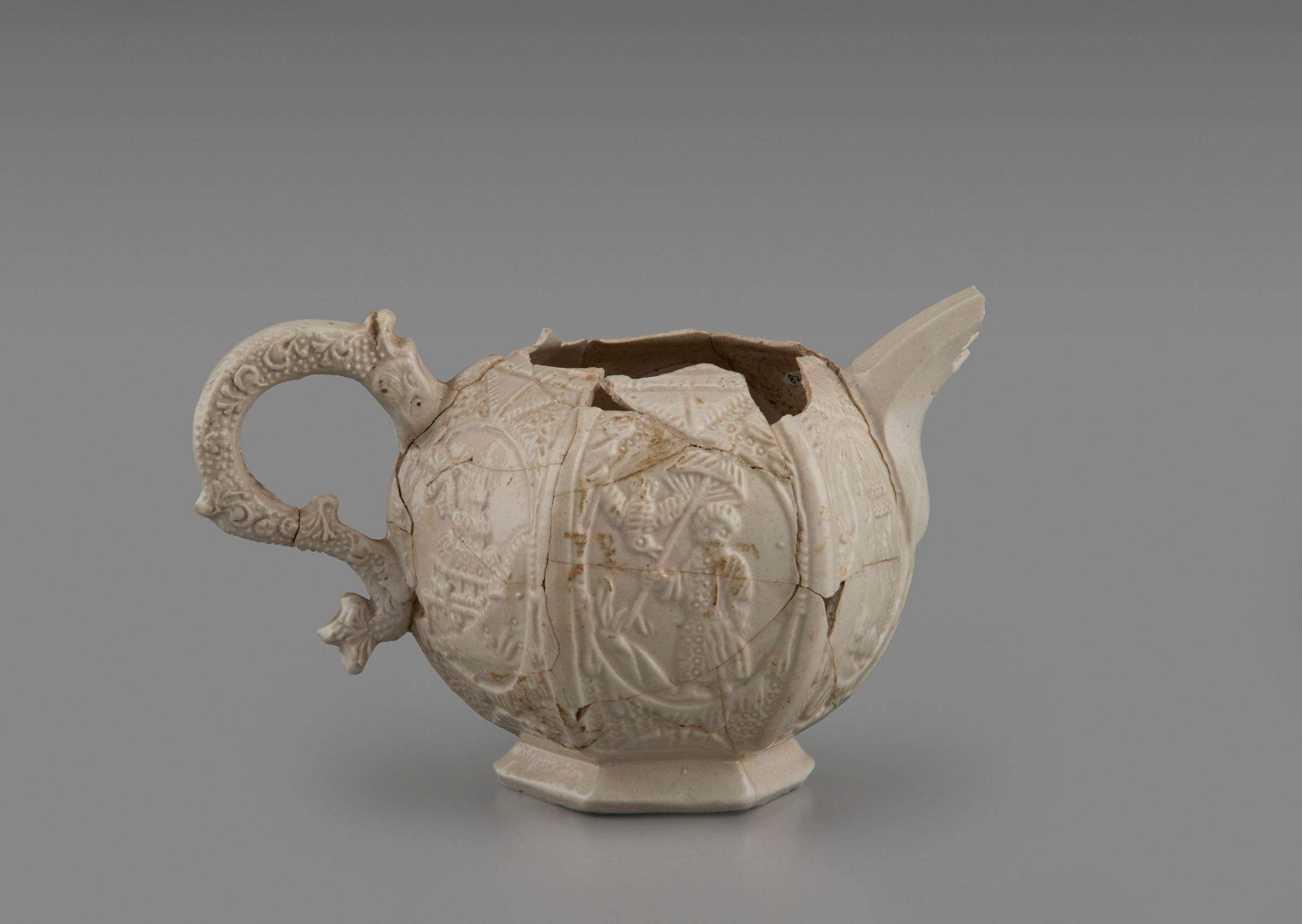
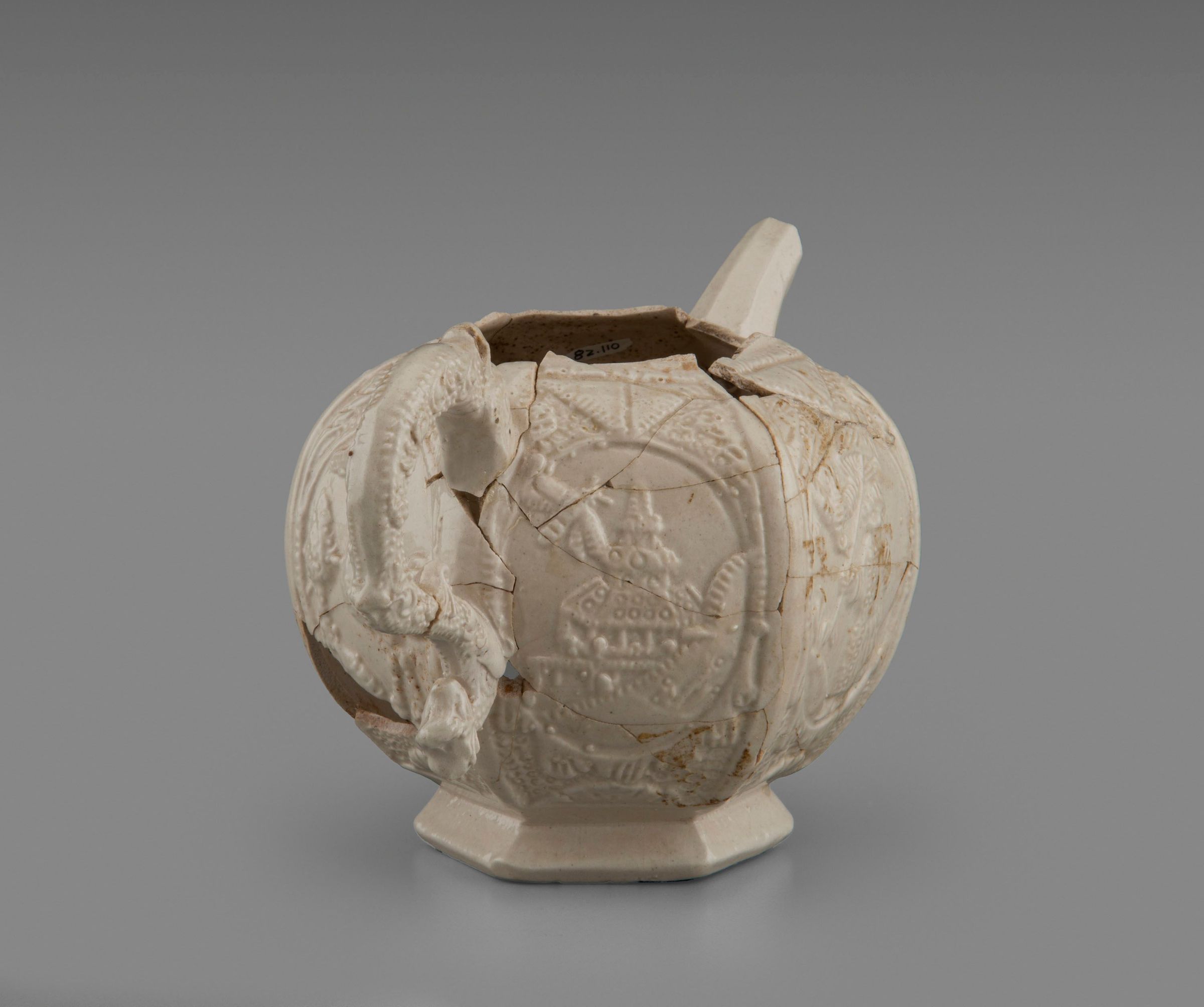
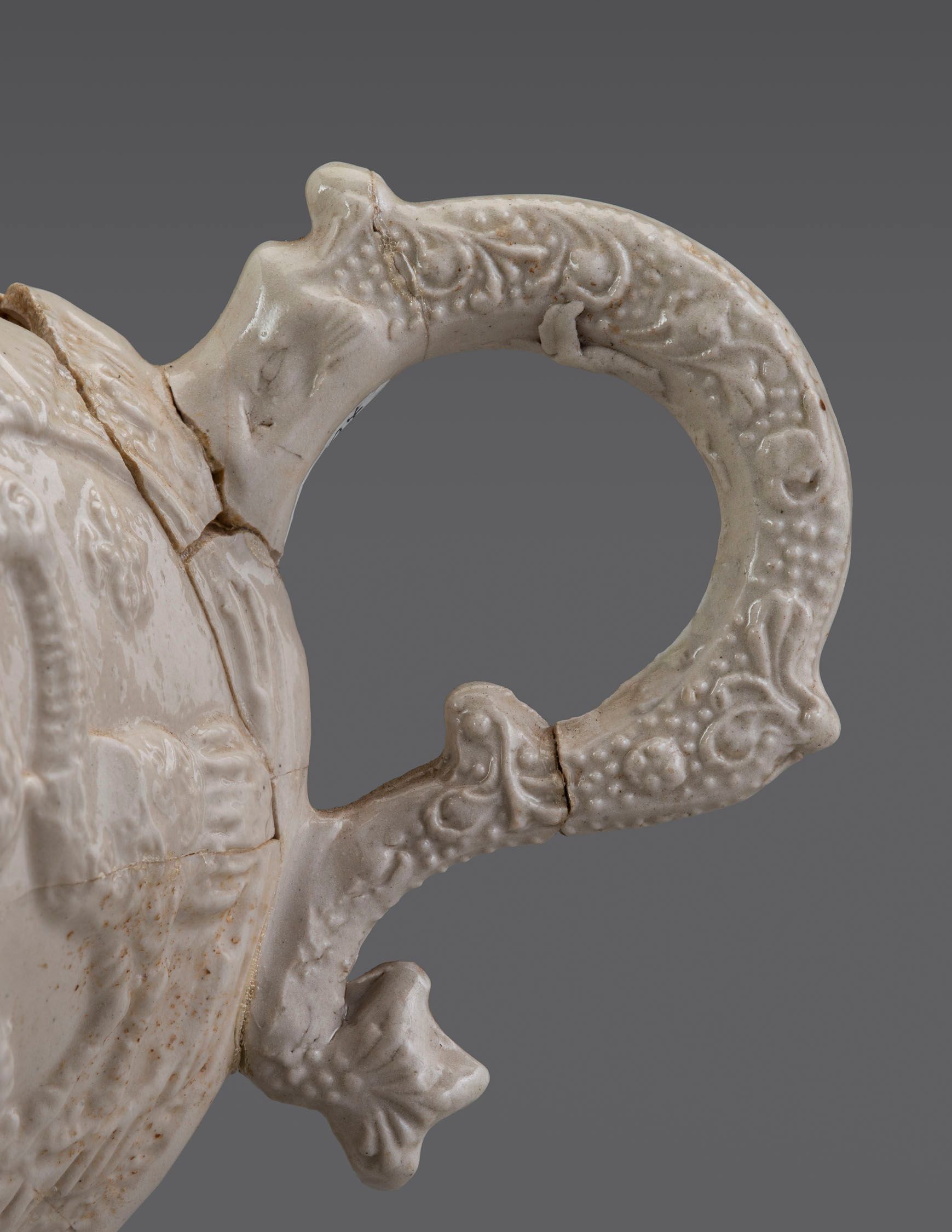
Slip-cast teapot having a hexagonal molded body; faceted spout; molded fish-shaped handle; and a hexagonal domed cover with a knob in the shape of a recumbent Buddha lion. The six panels of the body are molded in low relief with chinoiserie scenes, including a man under a parasol, a man with a staff, and ostrich, and three buildings.
The images of the two figures and the three buildings were copied from John Stalker and George Parker’s Treatise of Japaning and Varnishing, published in Oxford, England, in 1688. Full of images inspired by Chinese and Japanese lacquer work, porcelain, and other imported Asian objects, the book was designed to be used by makers of imitation lacquer but was also used by potters in Staffordshire between 1725 and 1765 for designs on lead-glazed red earthenware and white salt-glazed stoneware. The image of the ostrich might be taken from Olfert Dapper’s Gedenkwaerdig bedryf der Nederlandsche Oost-Indische Maetschappe, published in Amsterdam in 1670 (Leslie Grigsby, “John Stalker and George Parker’s Treatise: an Inspiration for relief decoration on English stoneware and earthenware” in The Magazine Antiques, June 1993, 886-893).
The case mold for the body of this teapot, which was used to make the negative mold in plaster of Paris to be used for slip-casting teapots, is in the collection of the Mint Museum (Gallagher, British Ceramics (2015), 127).Made/Created
Date made
circa 1725 - circa 1755Time Period
18th CenturyPlace
County
StaffordshireCountry
EnglandRegion
Great Britain, British Isles, Western EuropeContinent
EuropeMaterial
Salt-glazed StonewareRelationships
Related Places
Place
Location
StentonCity
PhiladelphiaState/Province
PennsylvaniaCountry
United States of AmericaContinent
North AmericaRelated Events
Event
1982 Archeological ExcavationRelated Entries
Notes
Lid is A1982.14.138 (CO138)