Name/Title
TeapotEntry/Object ID
A1982.14.140Description
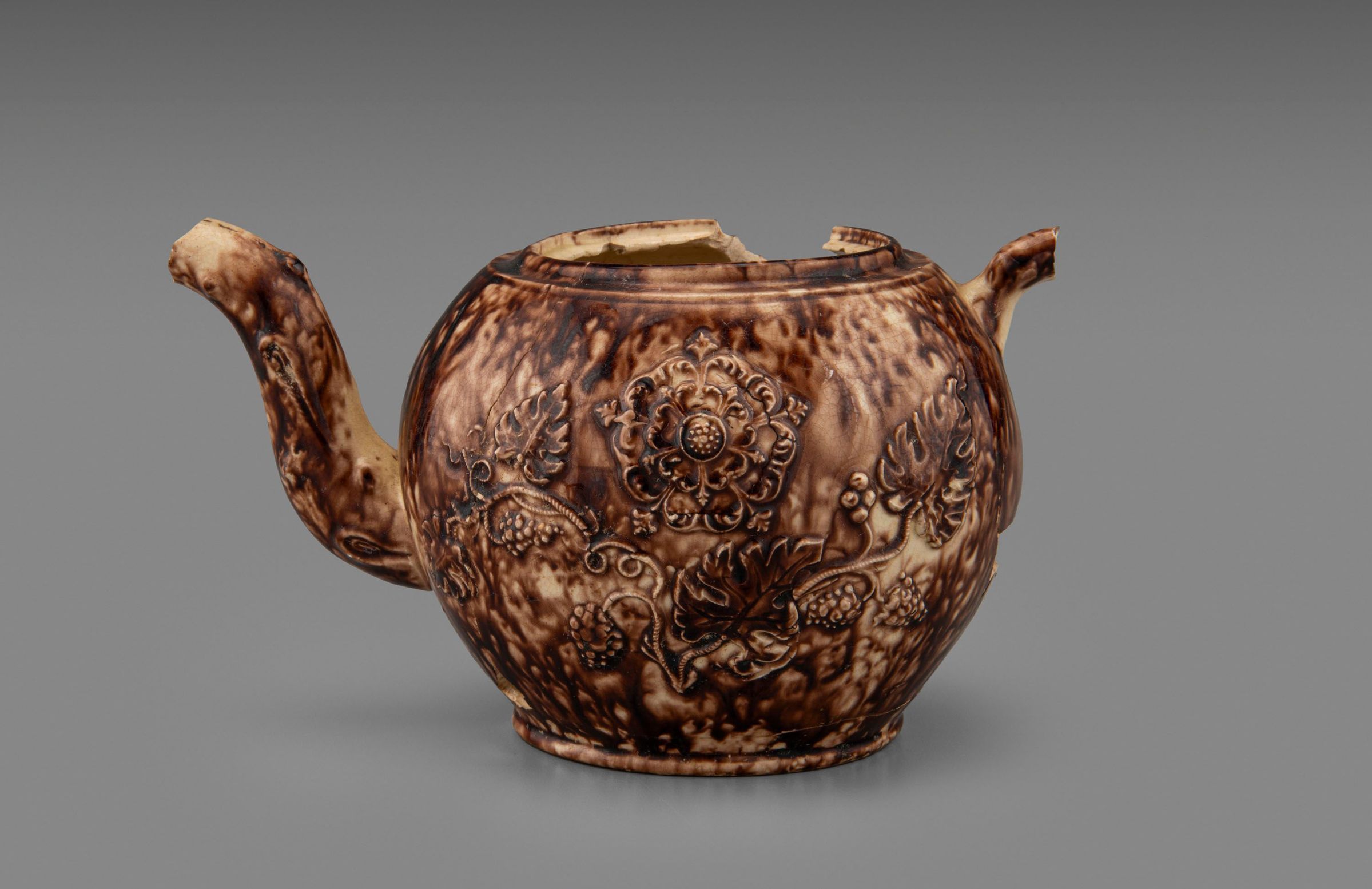
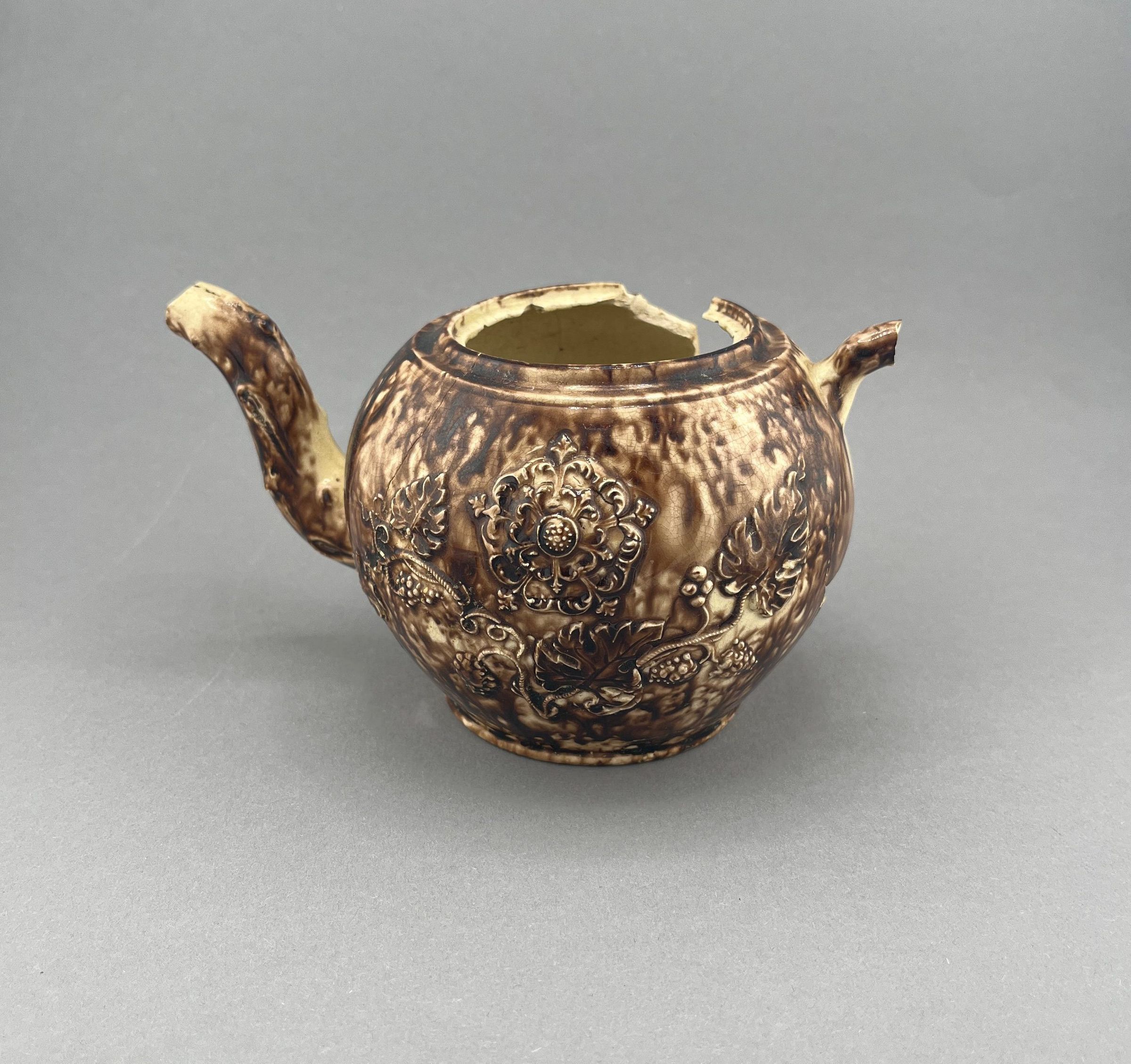
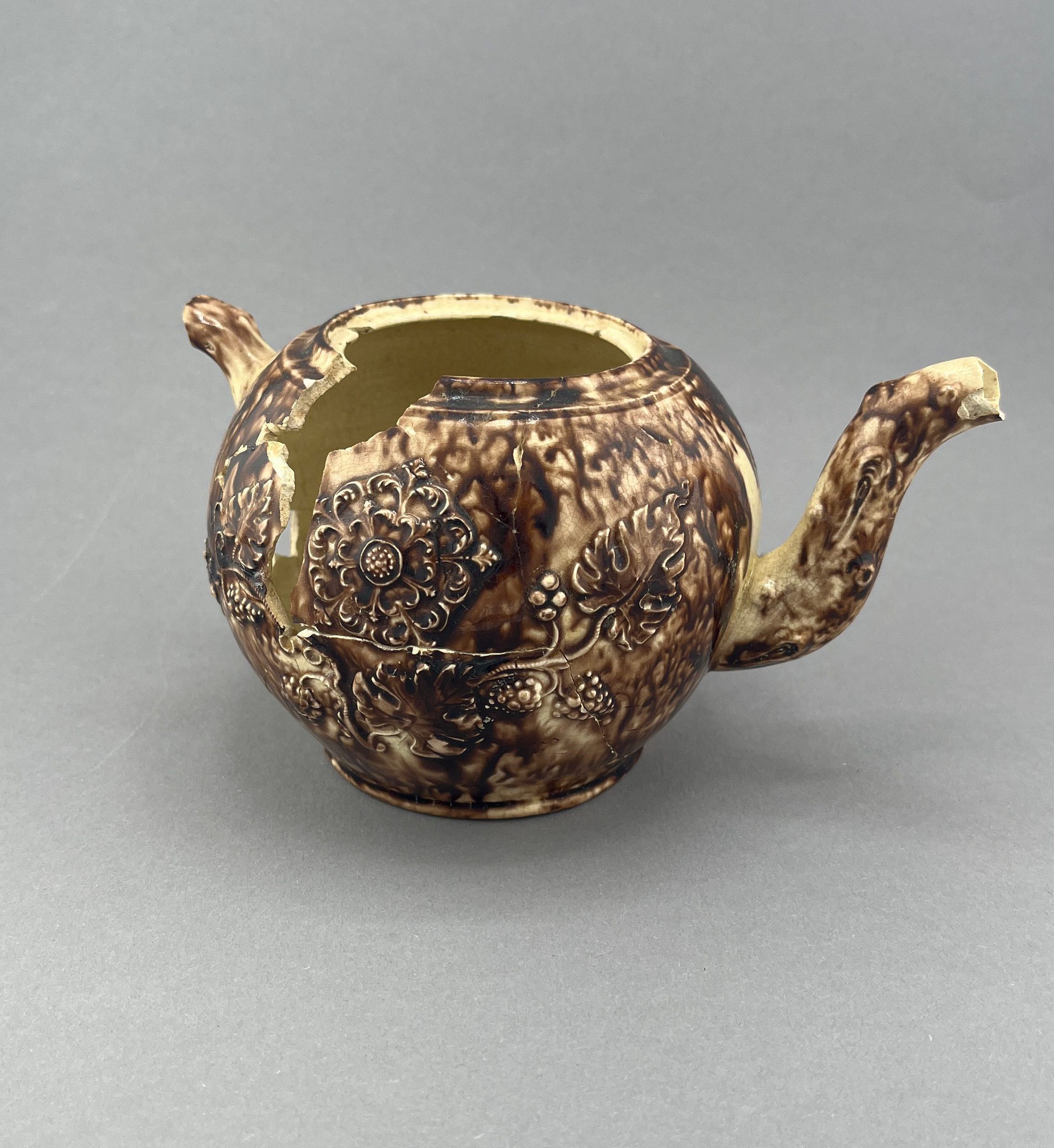
Teapot having a globular body, molded crabstock handle and spout, and slight shoulders and a short neck to support a cover, decorated with applied sprig-molded flowers and grape vines over the body and sponged iron brown metallic oxide over the surface creating a tortoiseshell-like effect.
Tortoiseshell or “clouded” decoration was created by sponging metallic oxides over the surface of a bisque fired pot which was then glazed and fired. During the glost firing the oxides ran and blurred, creating a mottled, tortoiseshell-like affect. First recorded in 1749, it was made until about 1770.Context
This teapot, alongside the vine and grape motifs, features the Tudor rose, the floral heraldic emblem of England. The presence of this motif on the colonial tea table at Stenton may have served as a reminder of British identity, loyalty, and rule in the American colonies. The American colonies were one of the largest export markets for English ceramics, and the manufacturers of the teapot may have taken that into consideration when devising the design of this object.Collection
CeramicsMade/Created
Date made
circa 1750 - circa 1760Time Period
18th CenturyPlace
County
StaffordshireCountry
EnglandRegion
Great Britain, British Isles, Western EuropeContinent
EuropeRelationships
Related Places
Place
Location
StentonCity
PhiladelphiaState/Province
PennsylvaniaCountry
United States of AmericaContinent
North AmericaRelated Events
Event
1982 Archeological Excavation