Name/Title
萬葉集詩歌拓本冊Entry/Object ID
TB-13Description
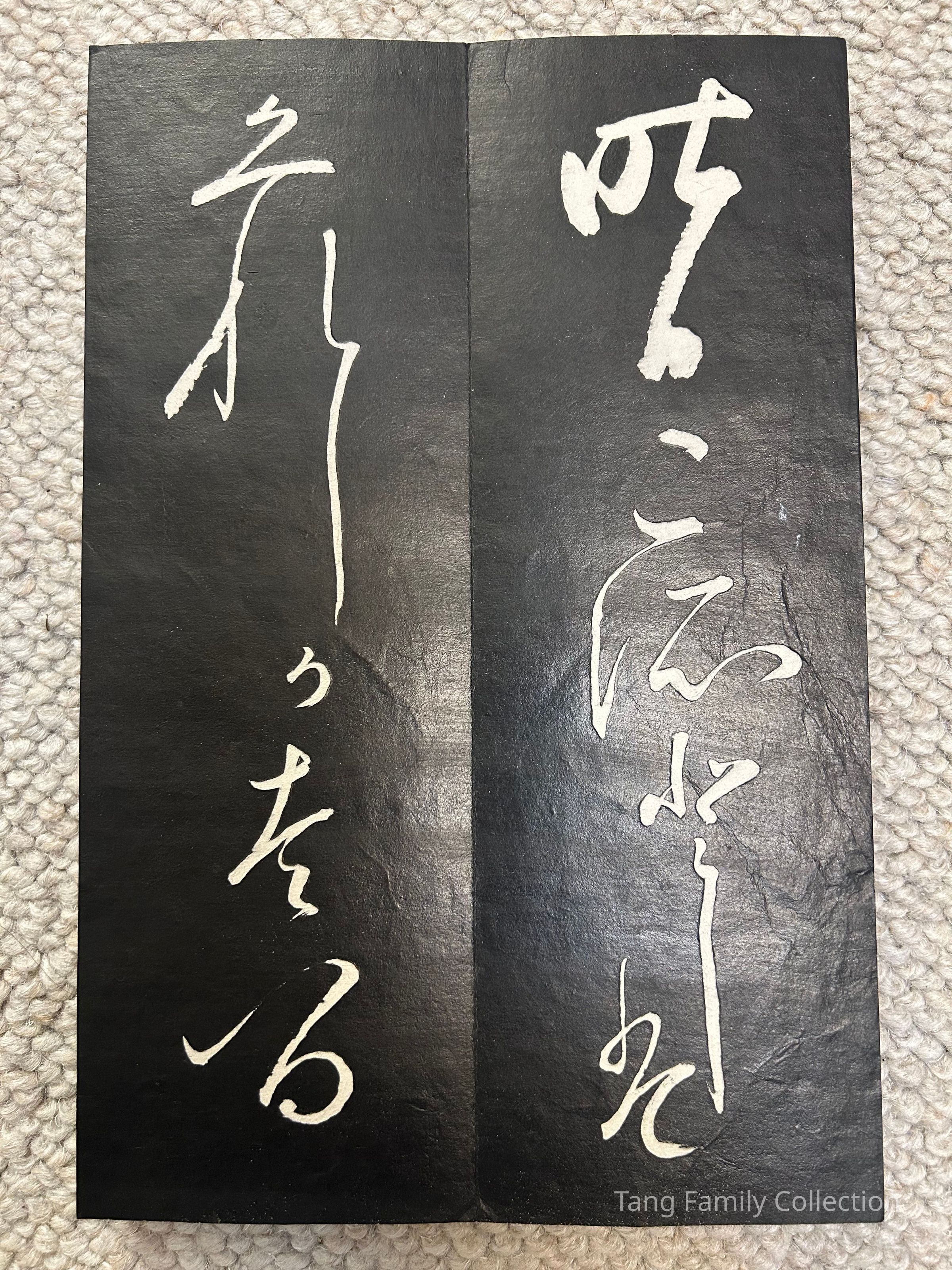
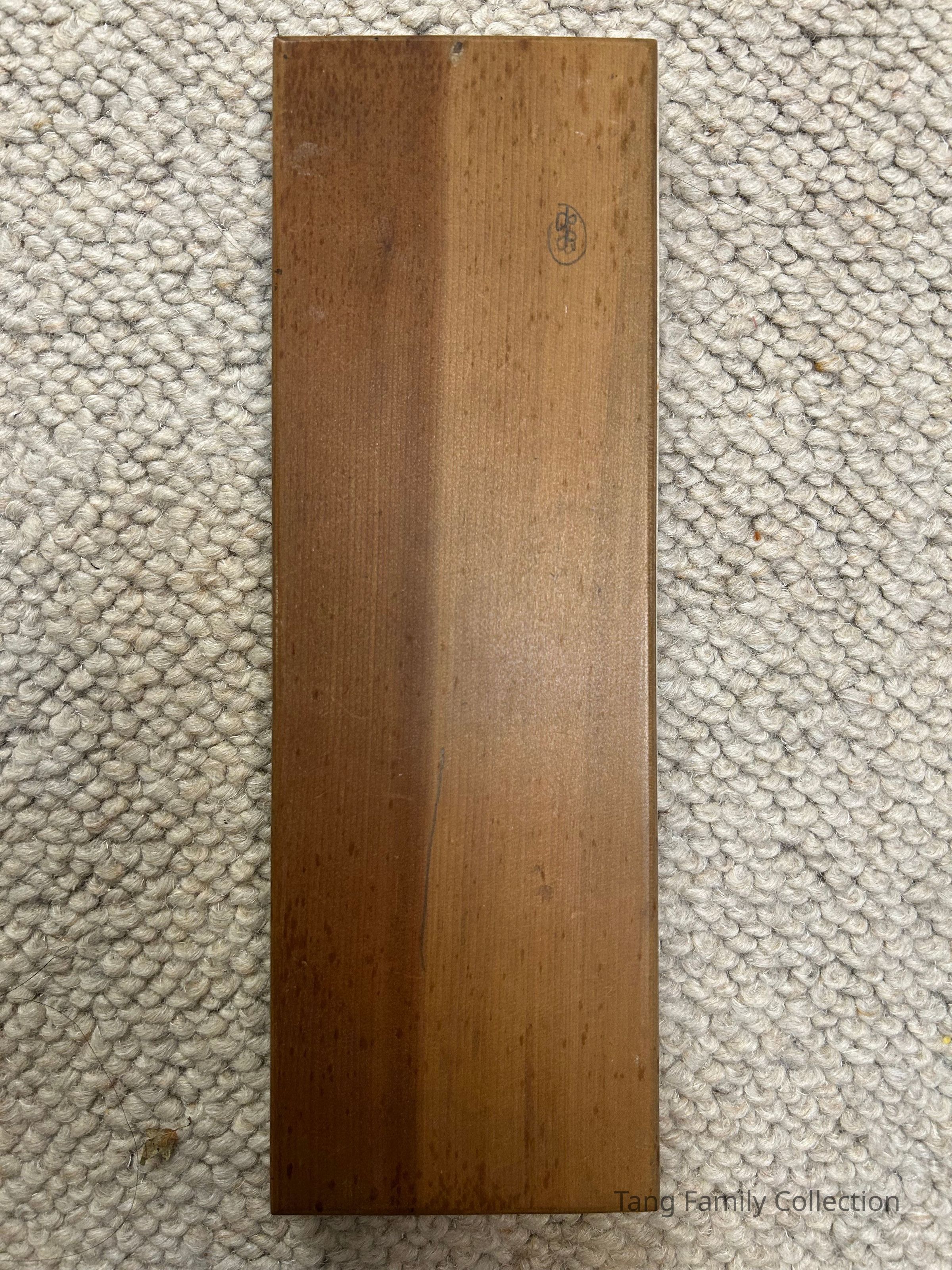
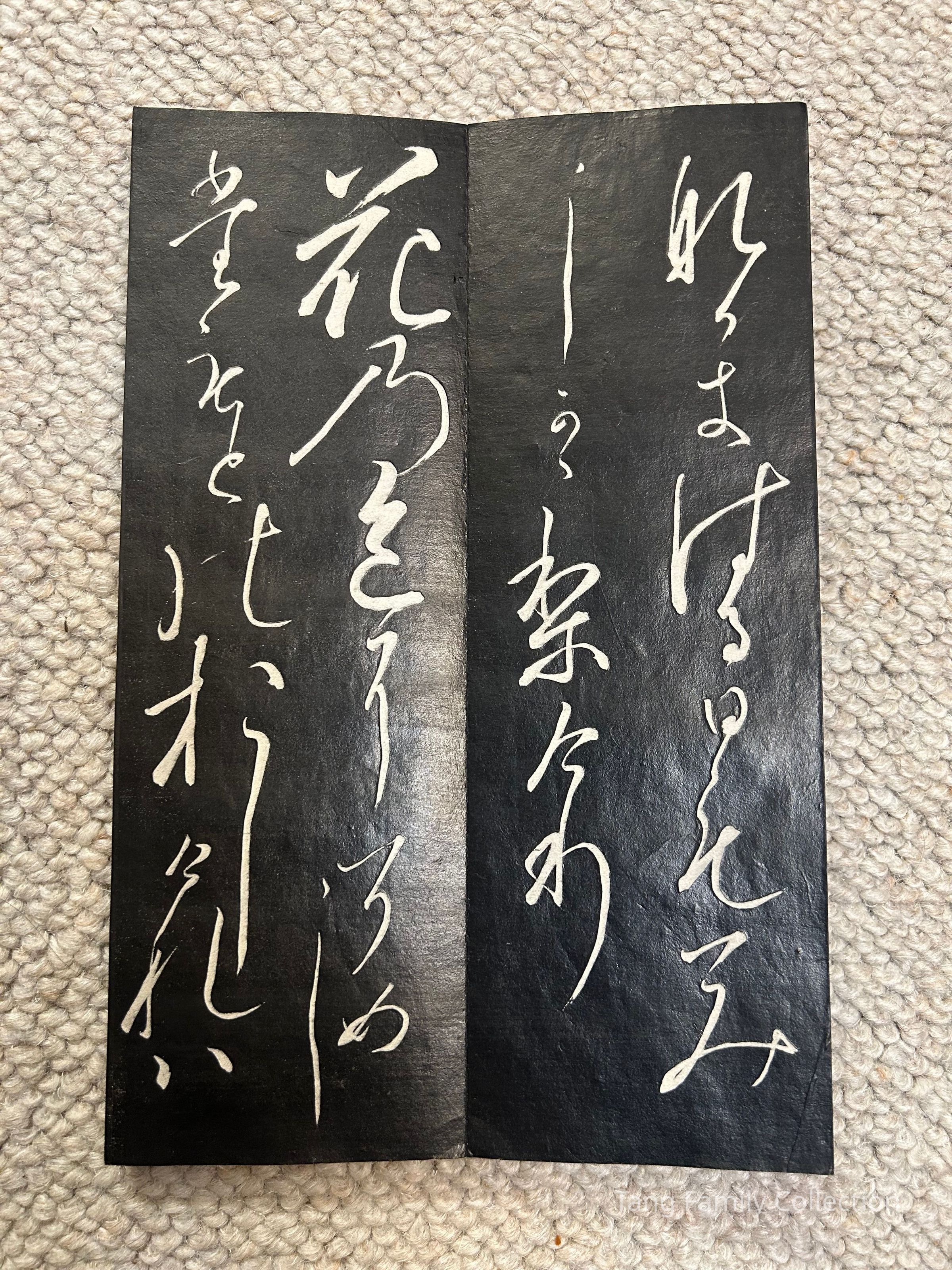
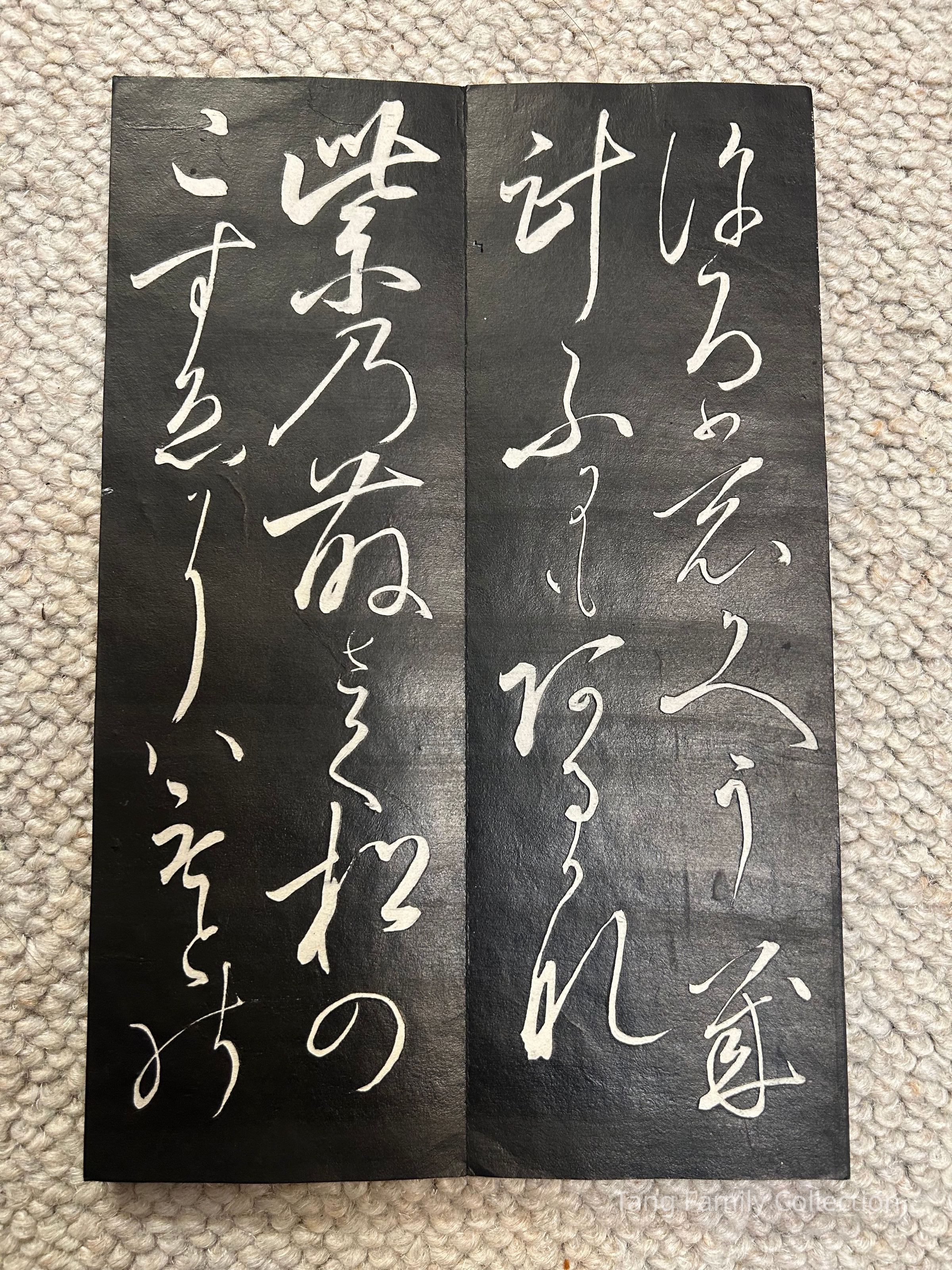
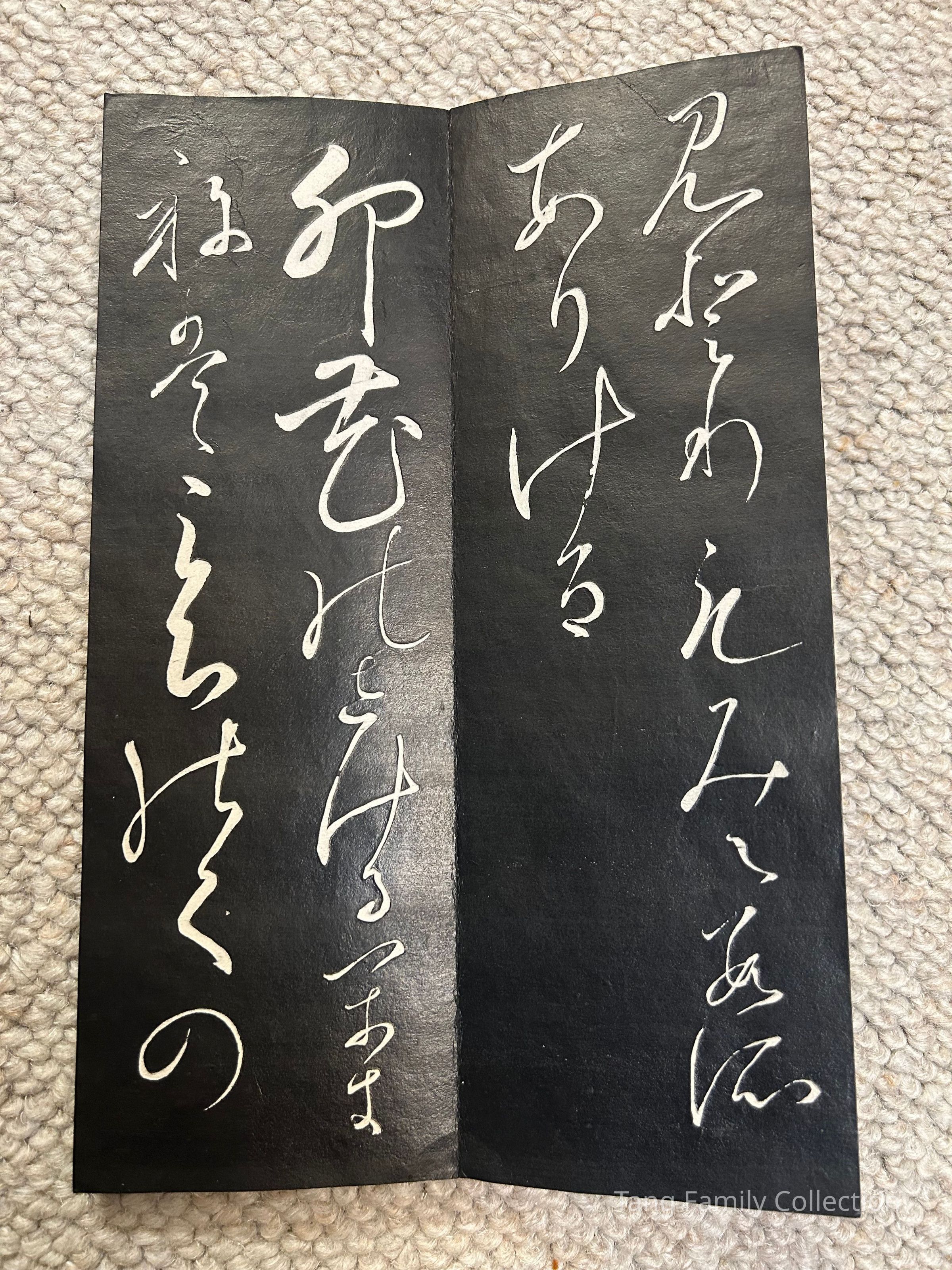
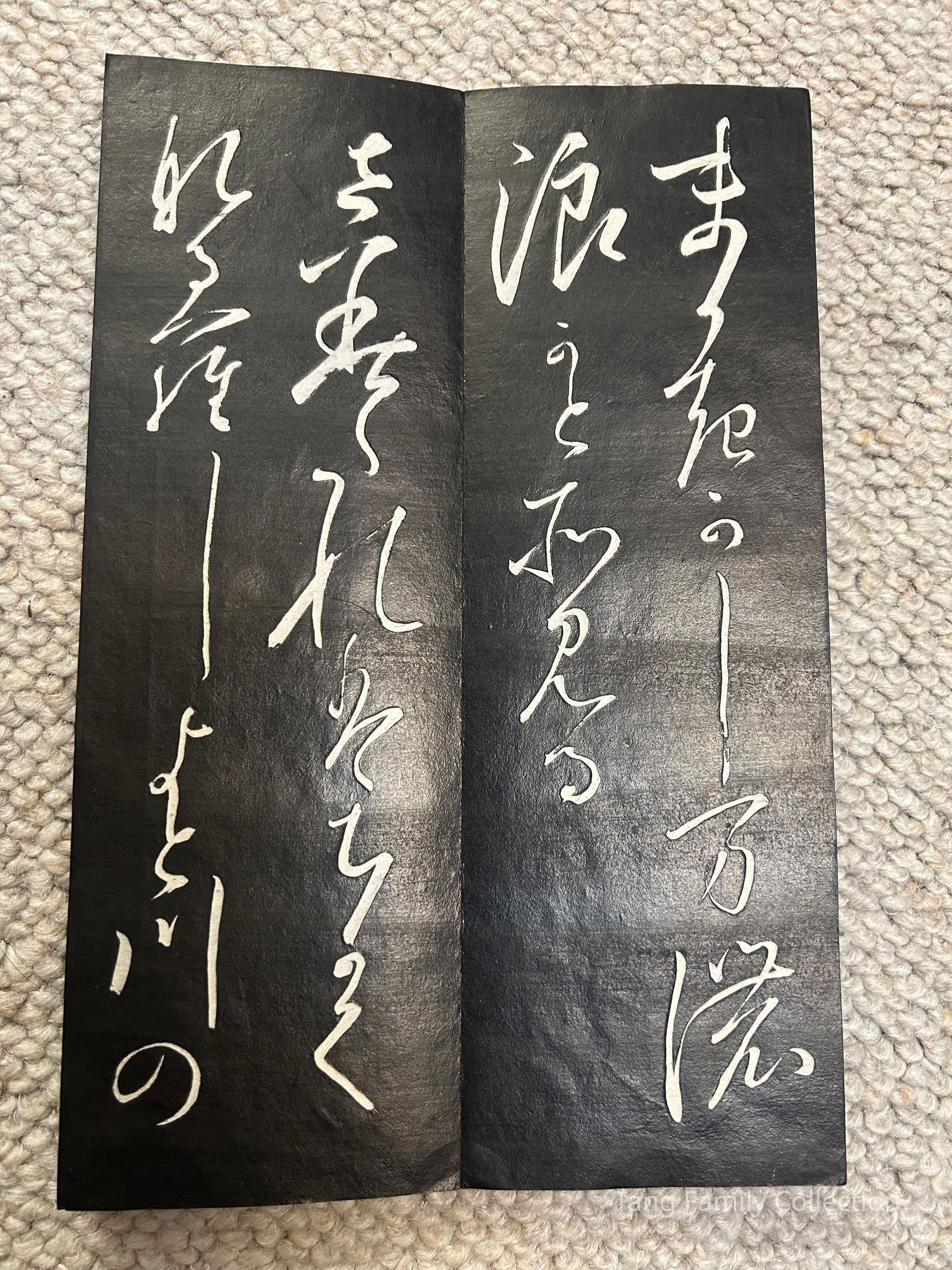
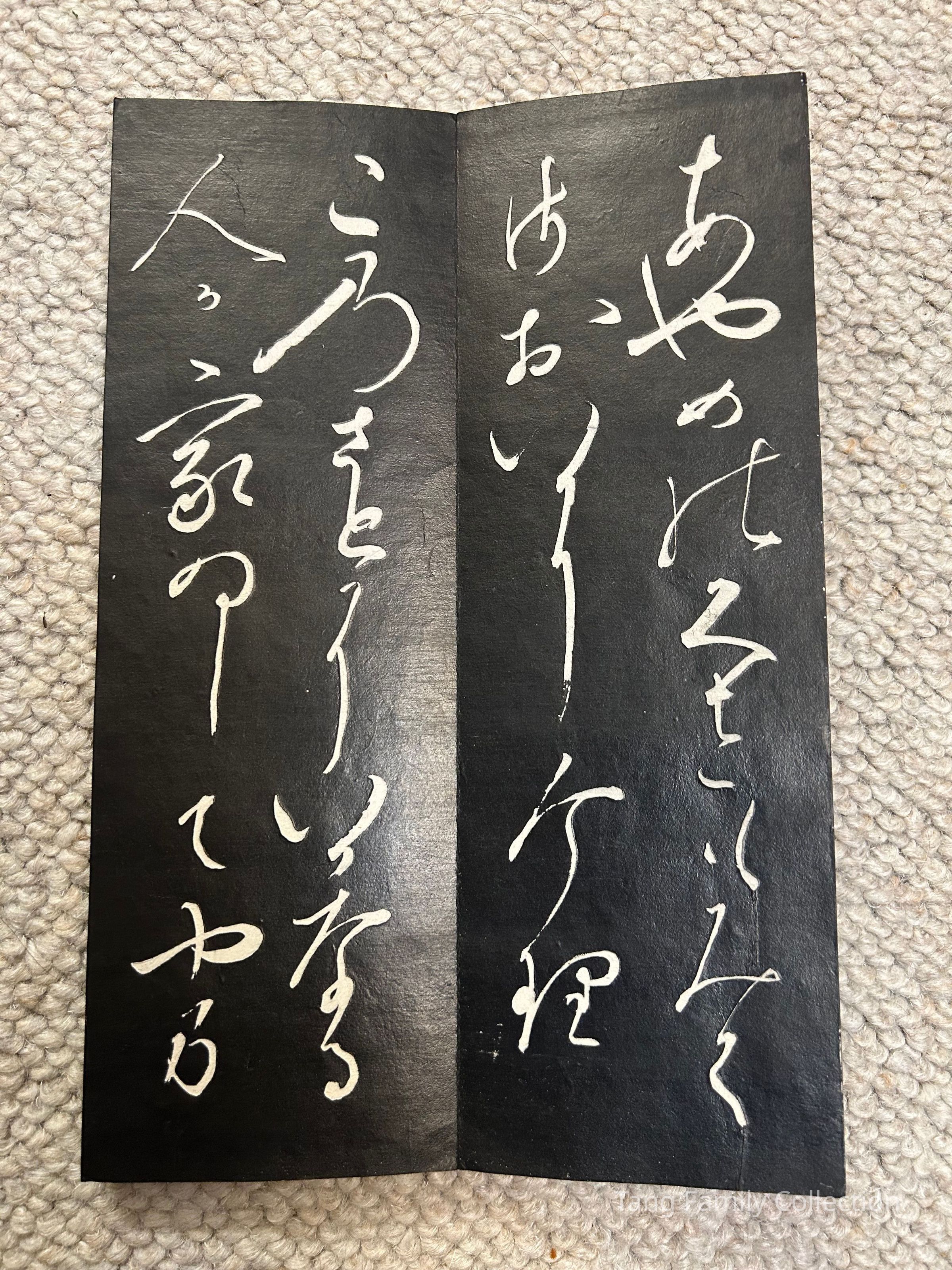
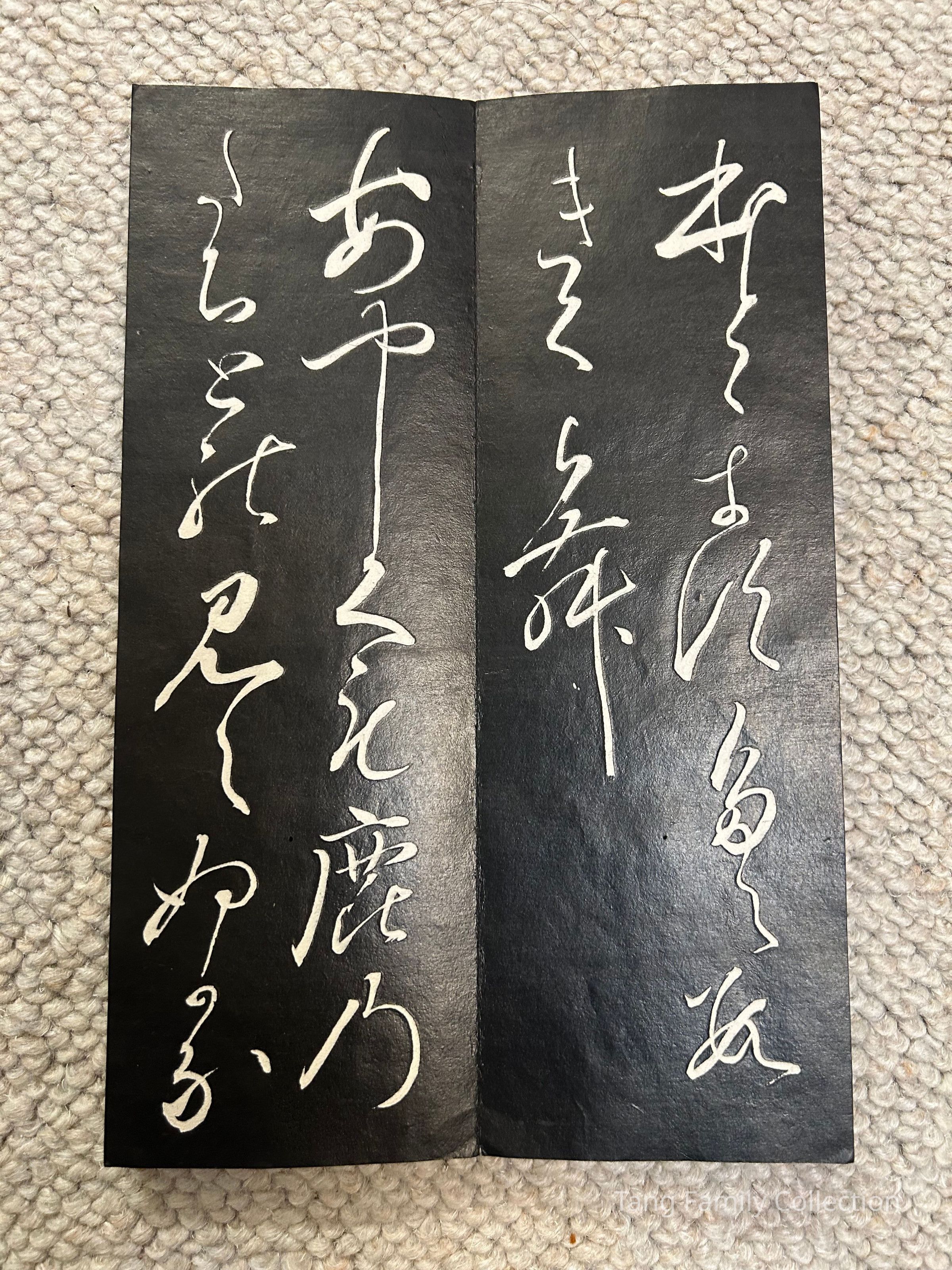
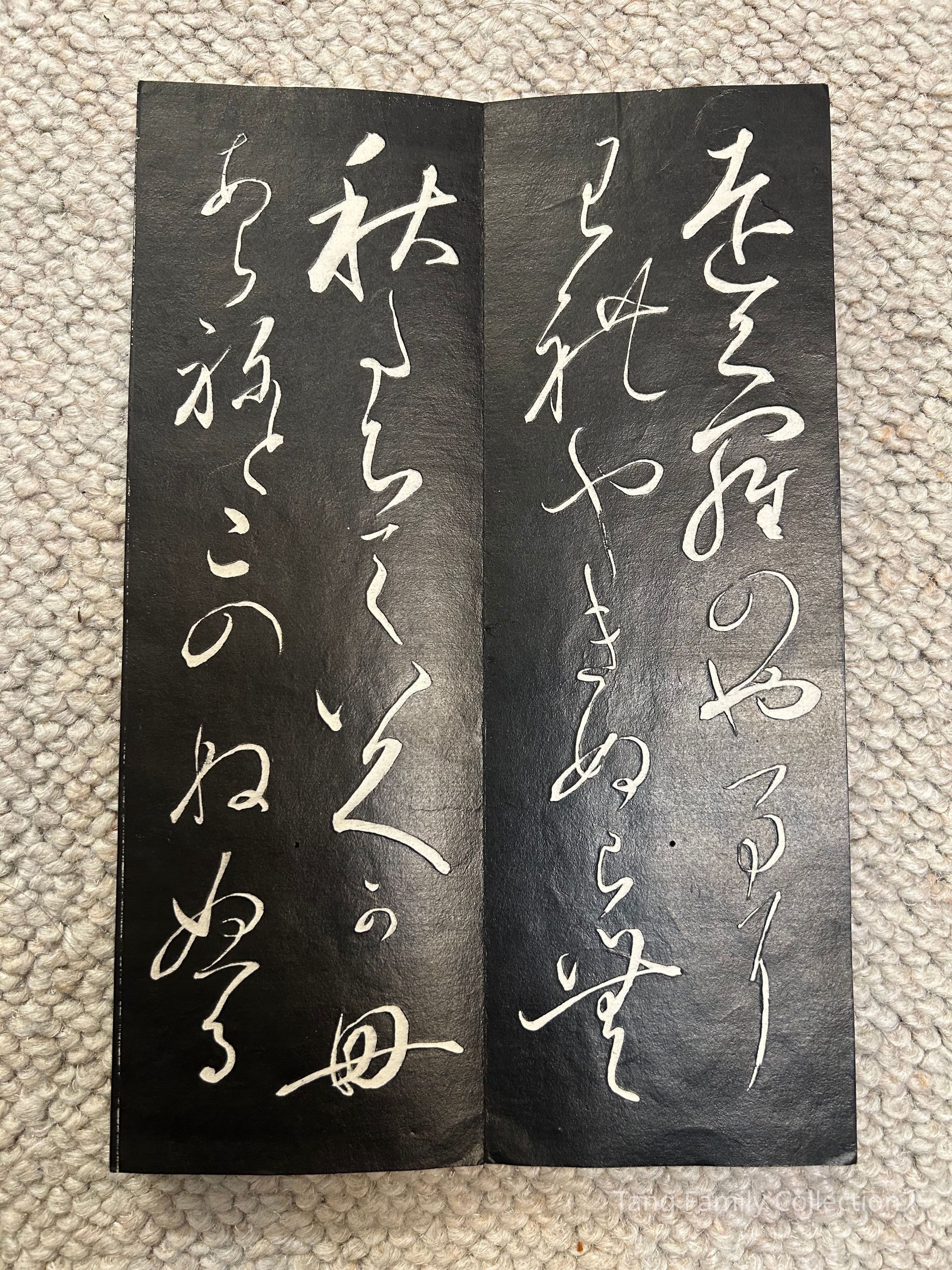
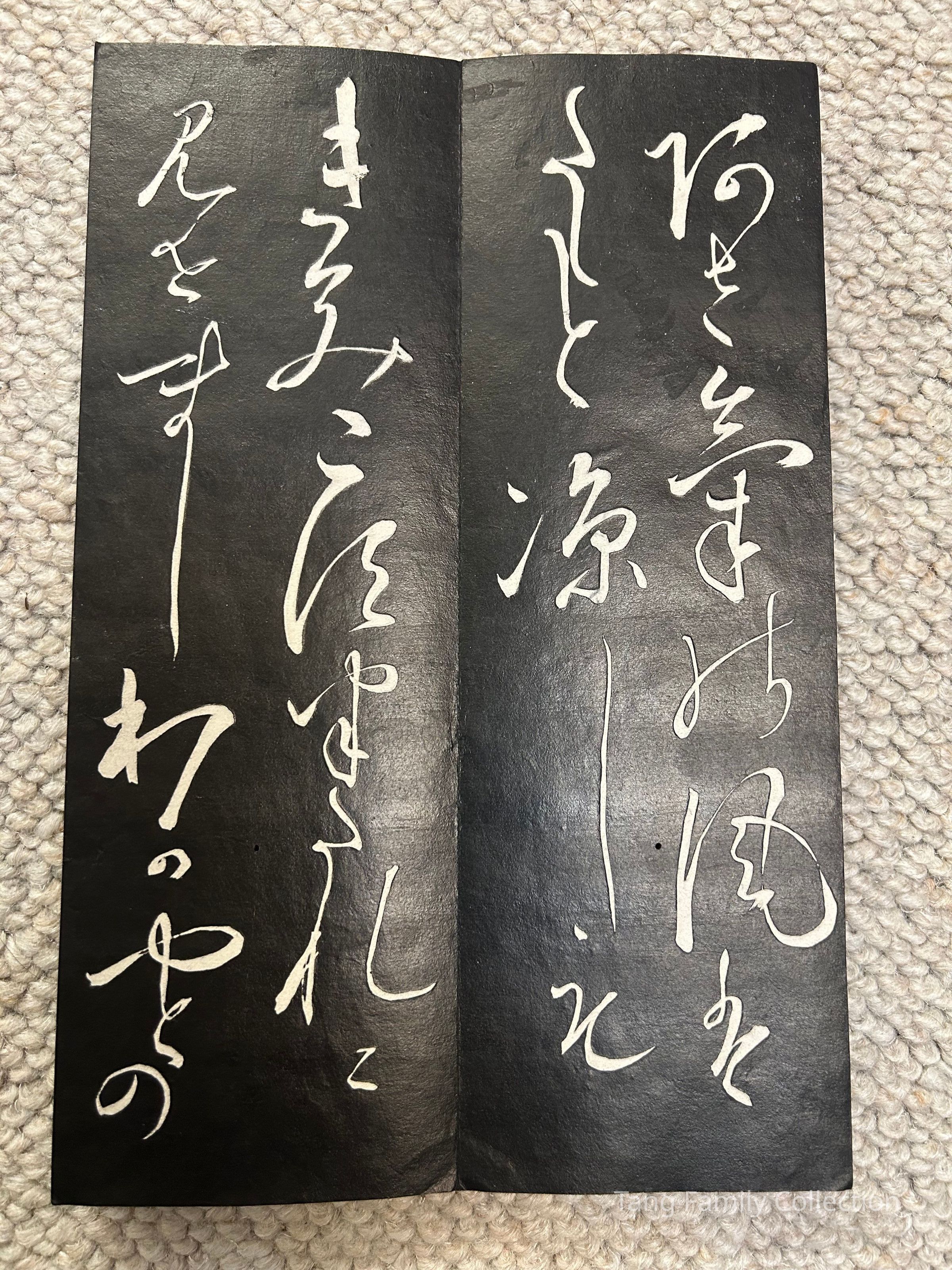
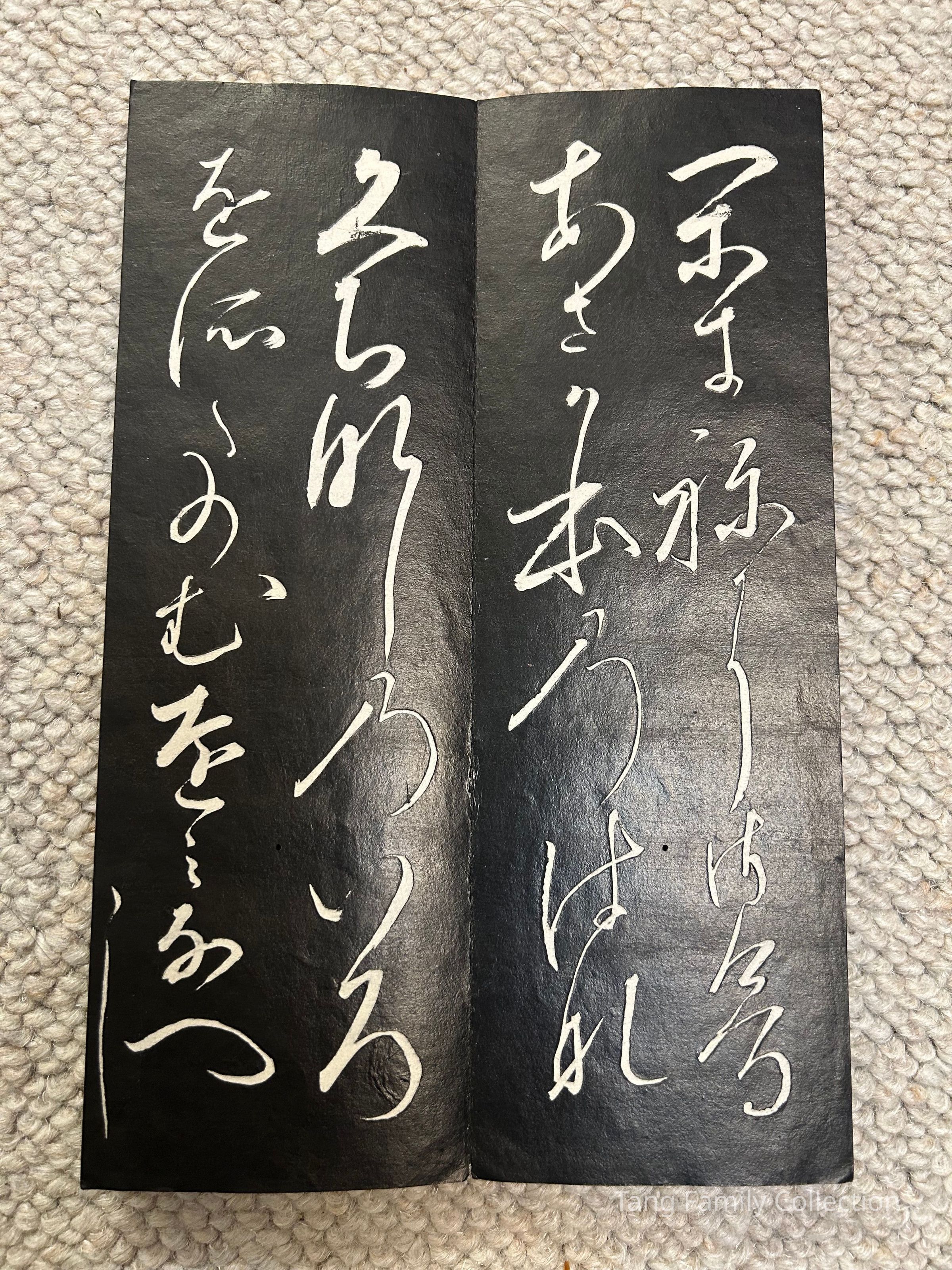
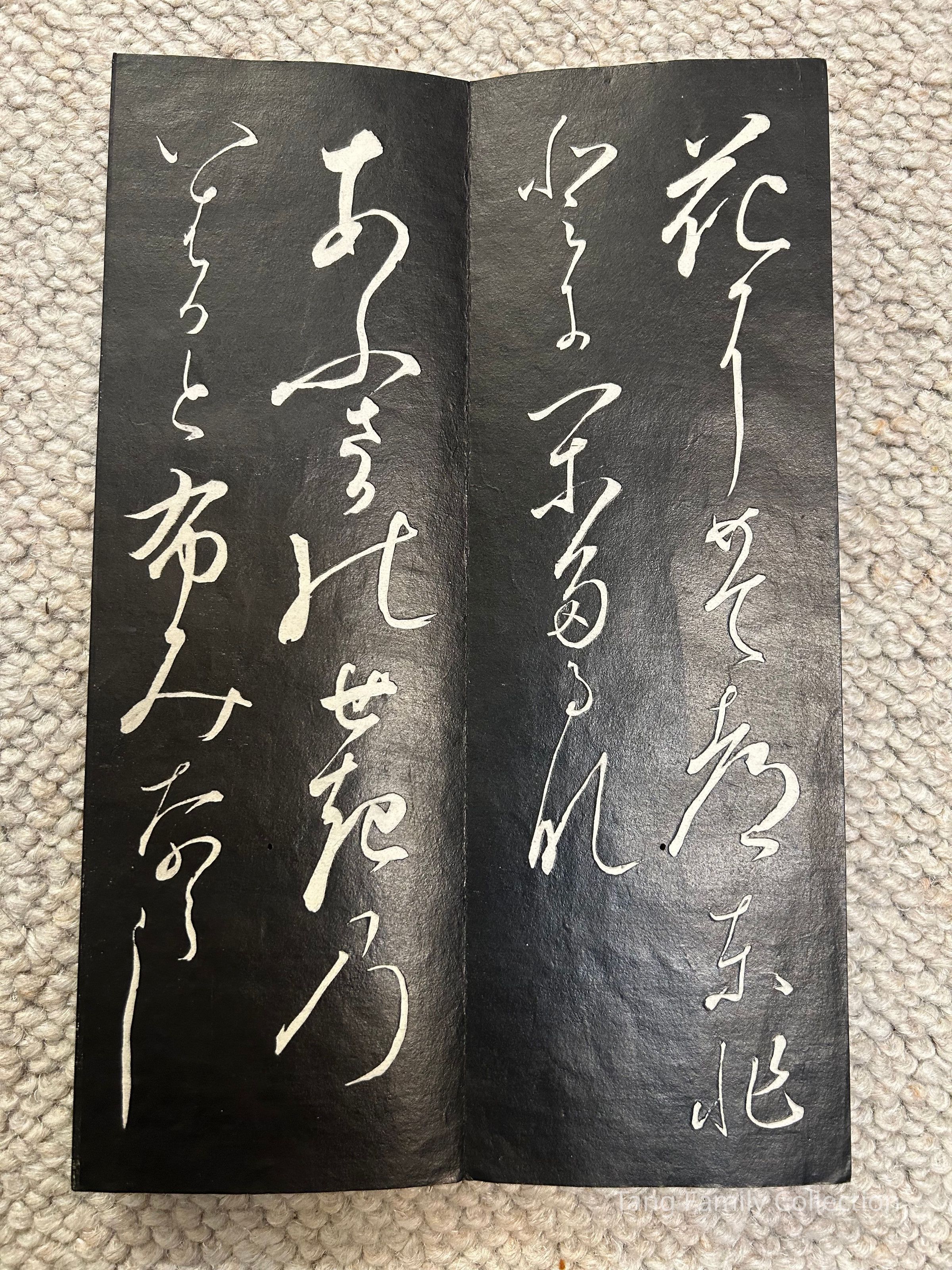
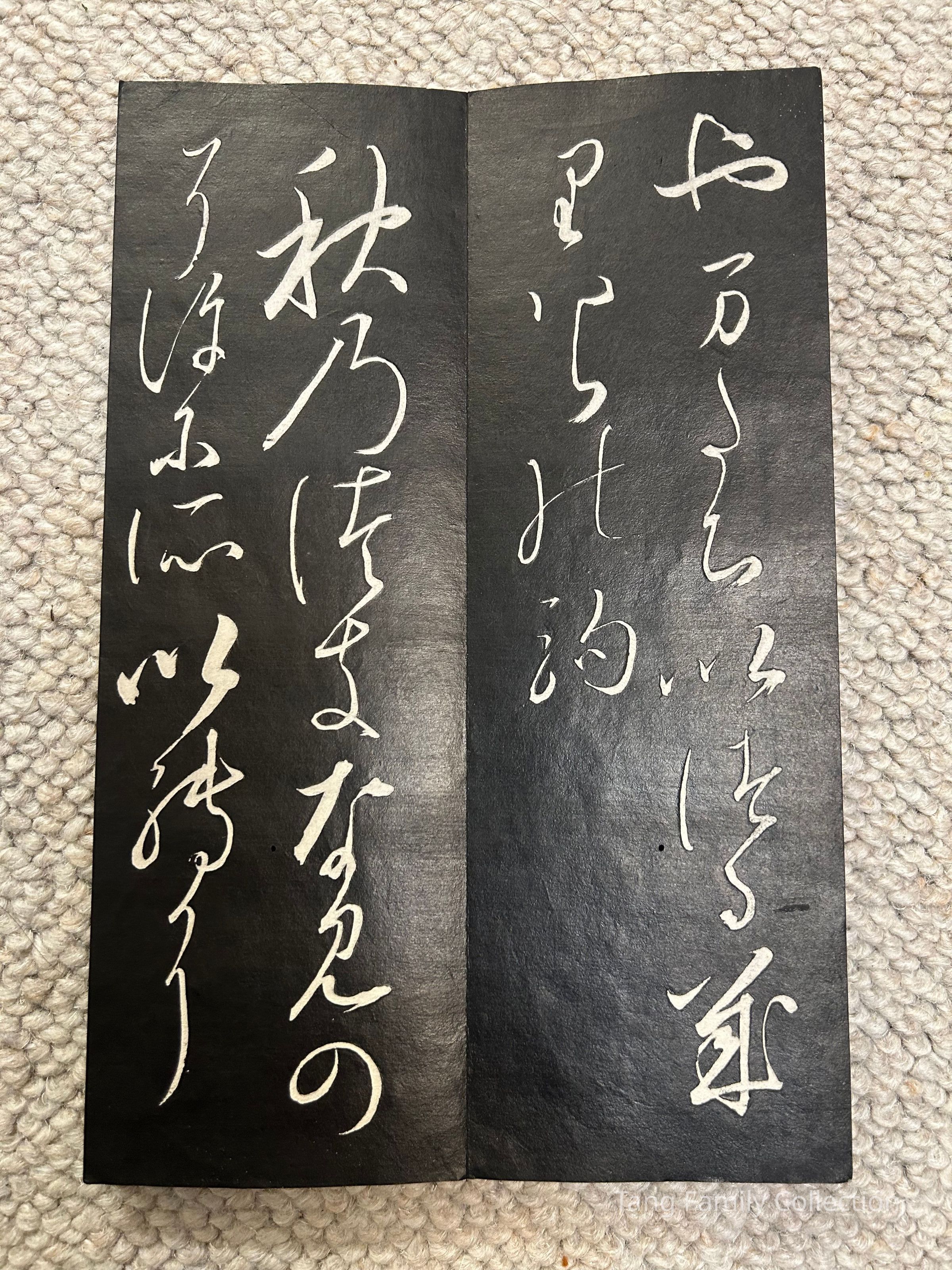
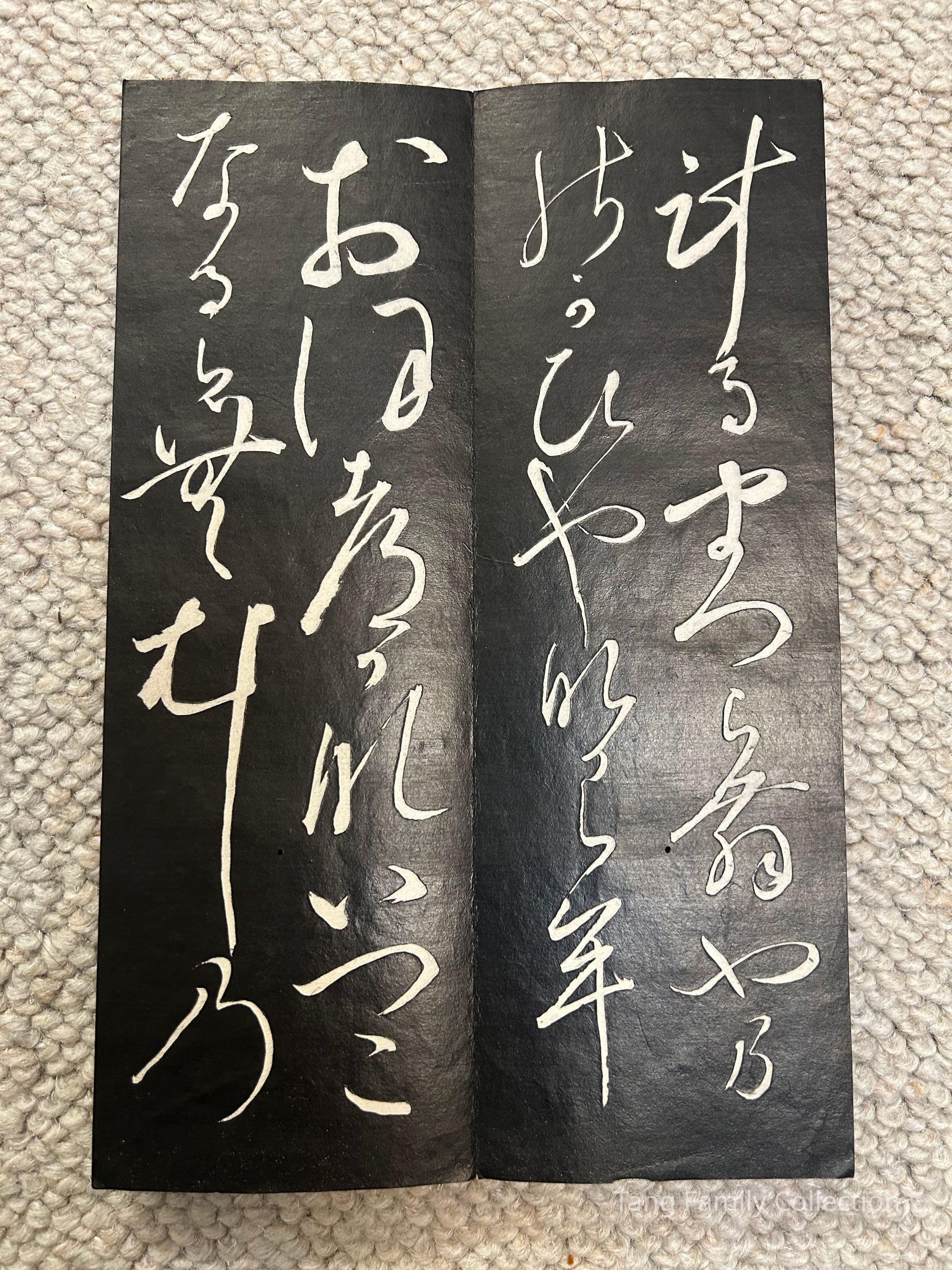
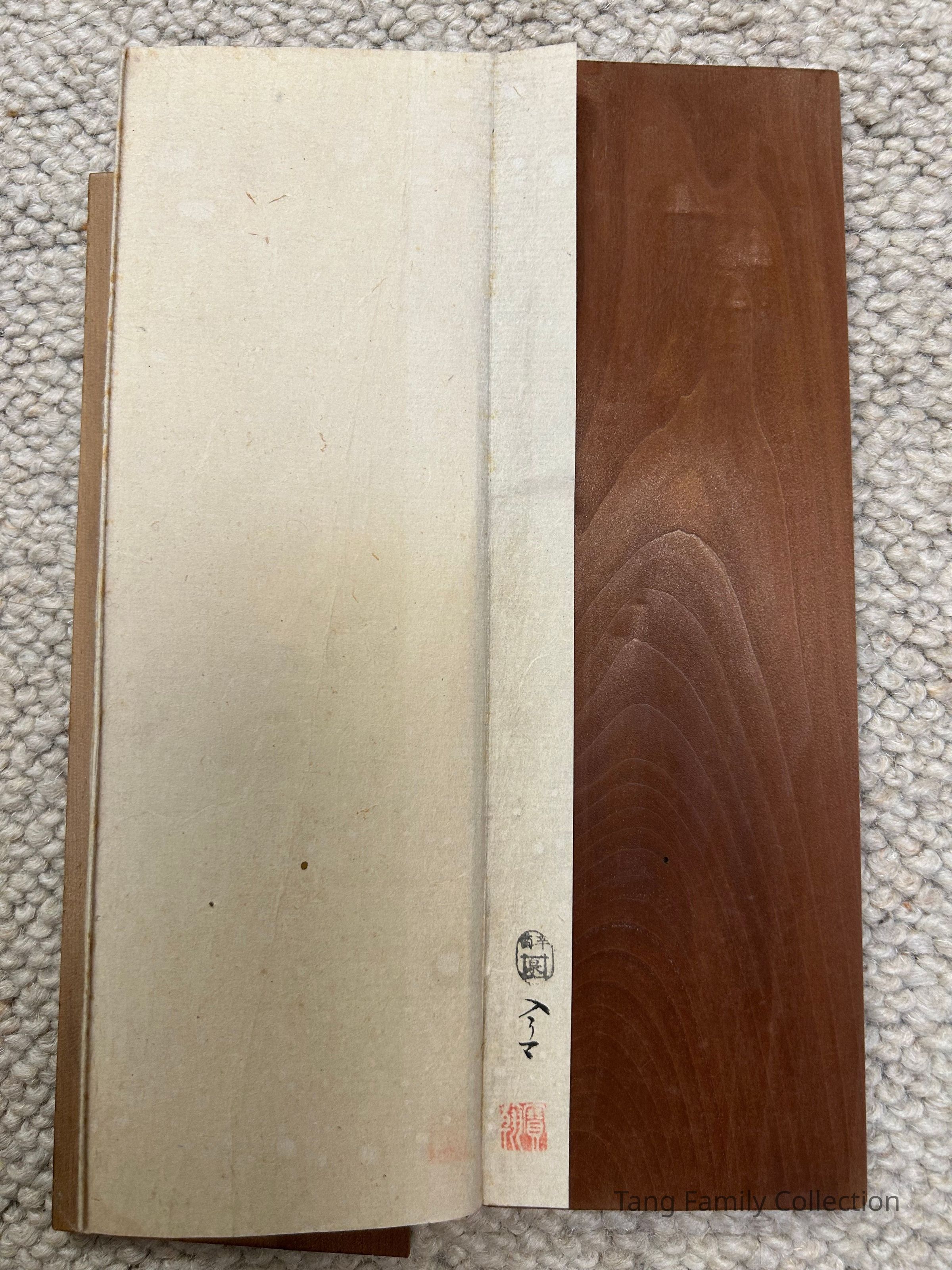
Stone Rubbing Book of a Man’yōshū Poem
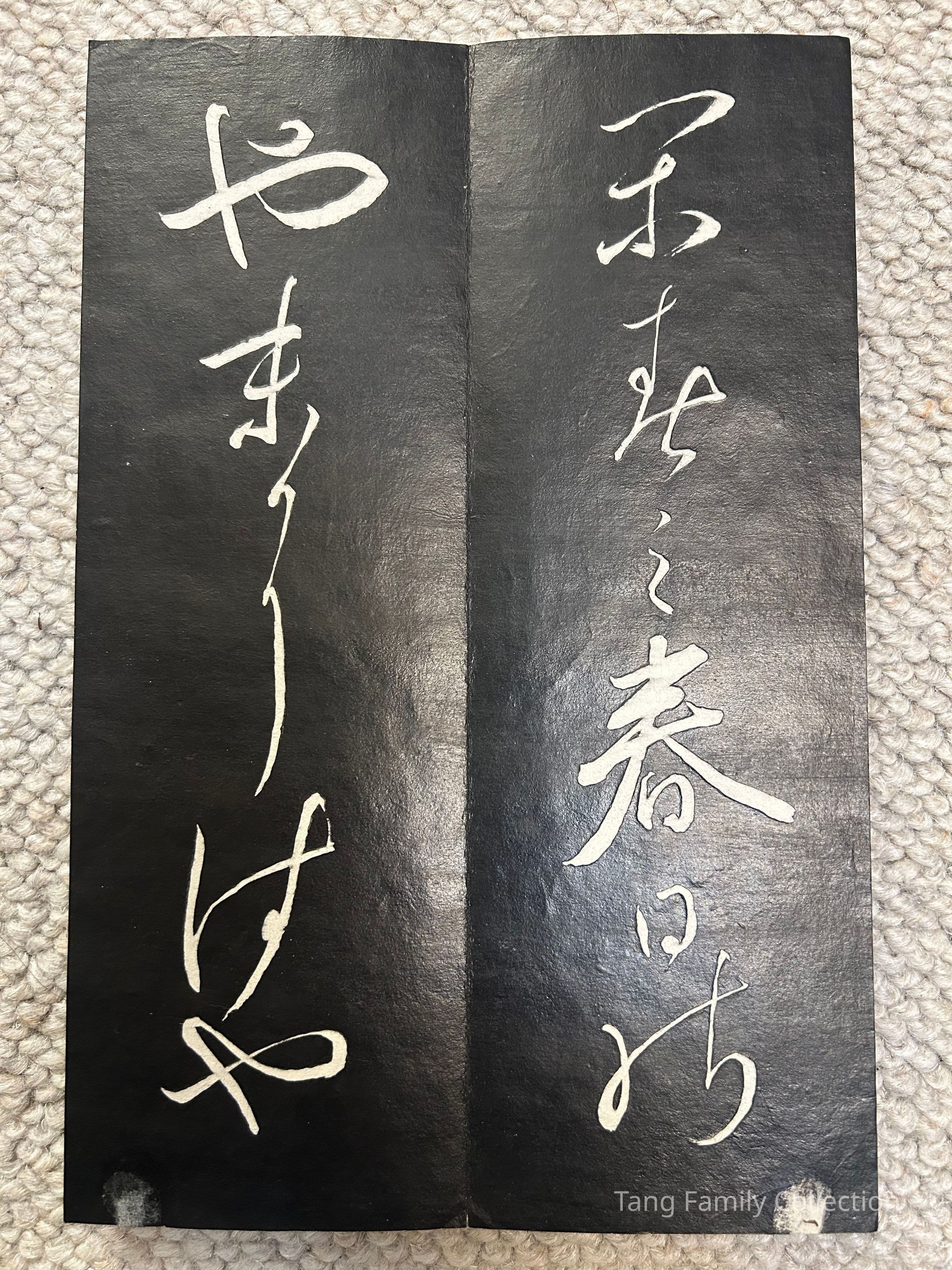
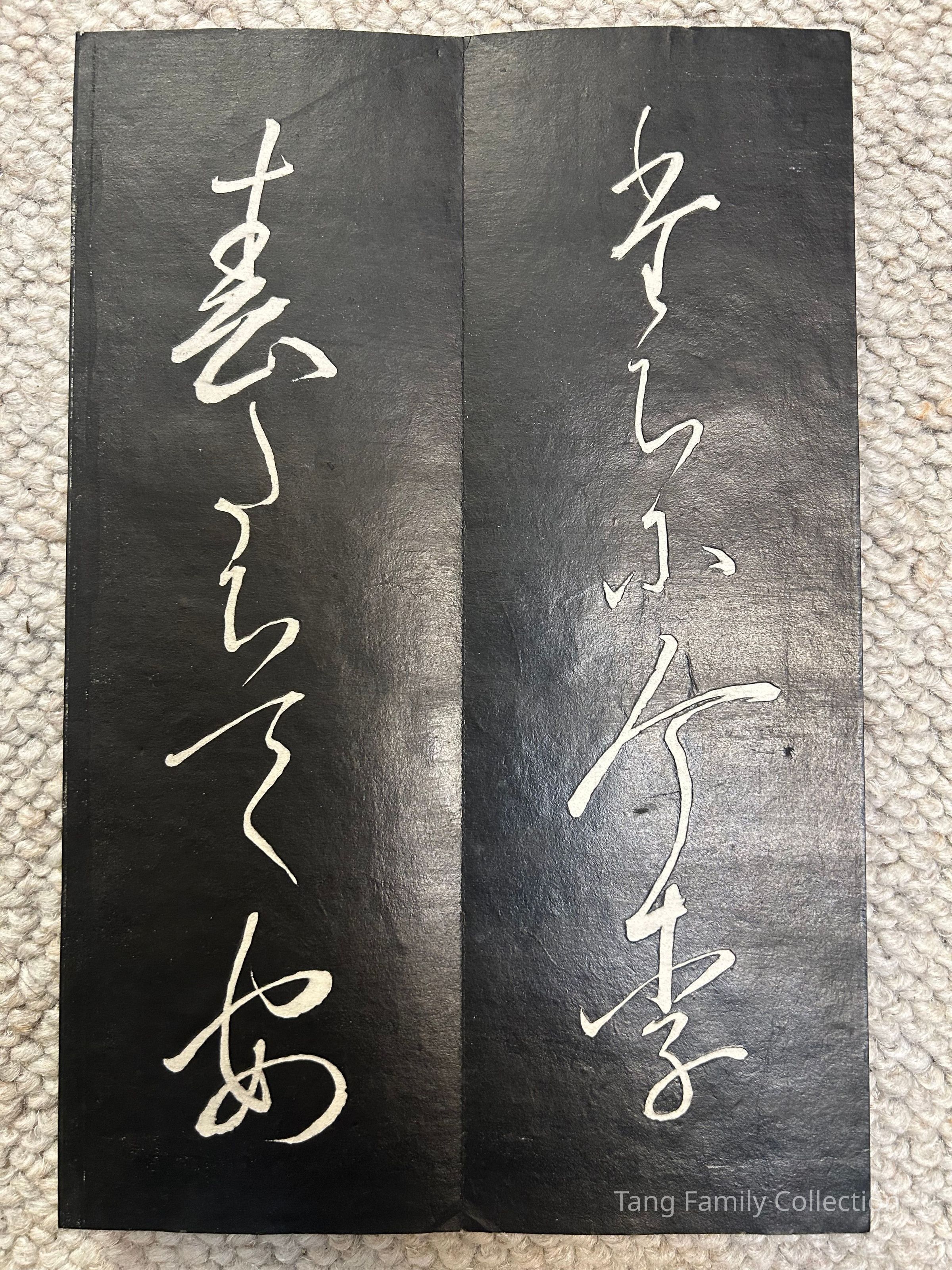
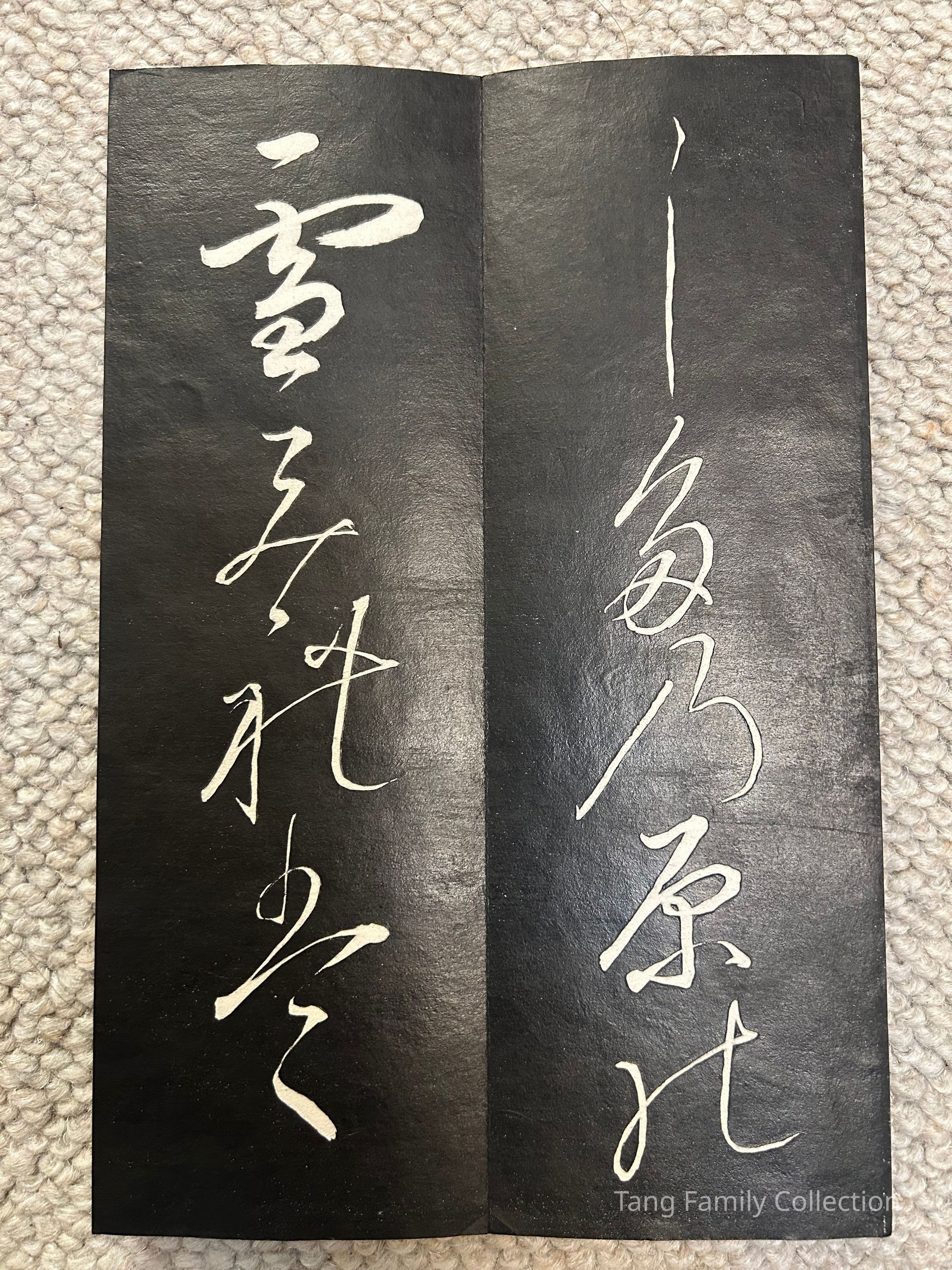
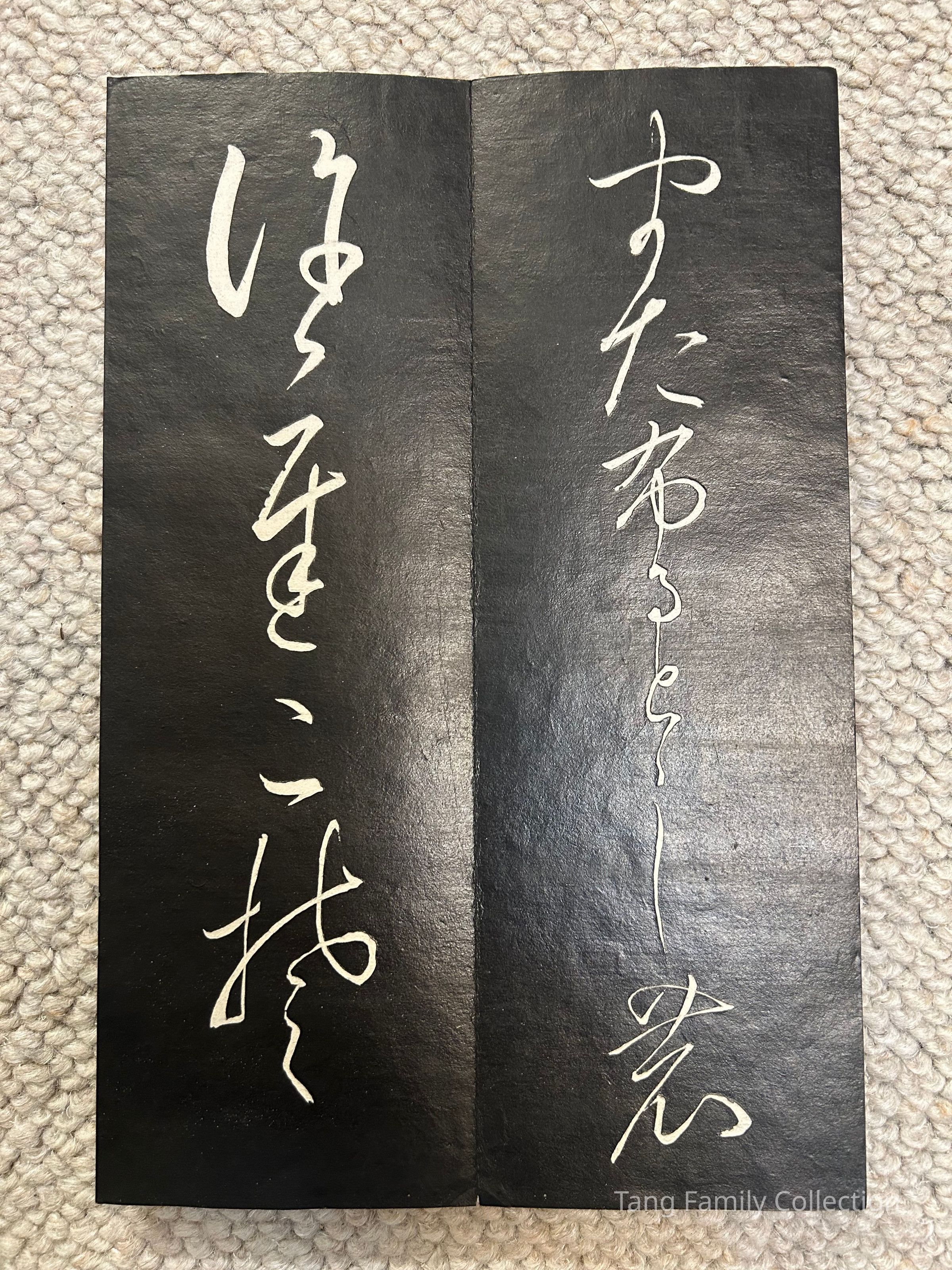
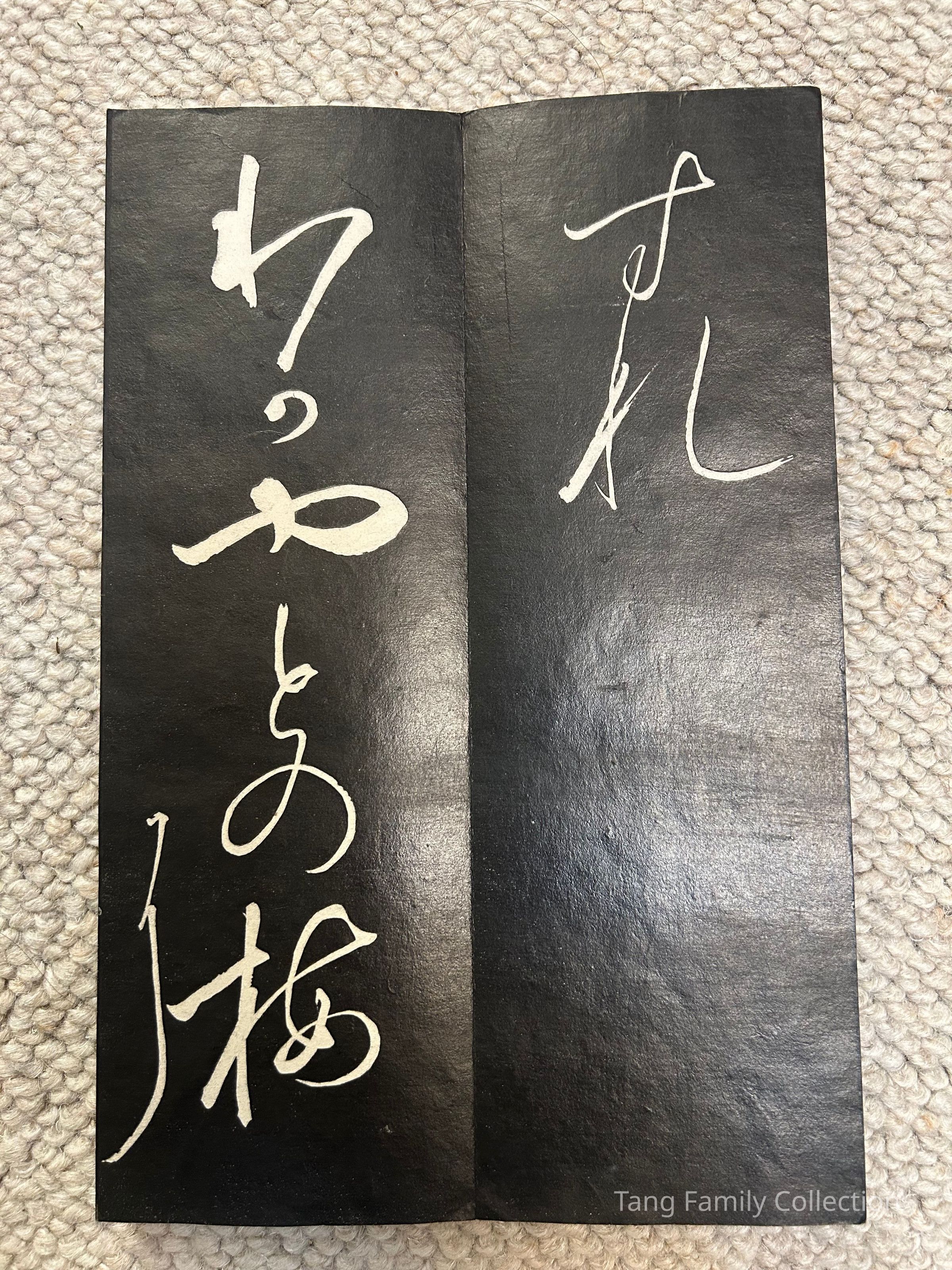
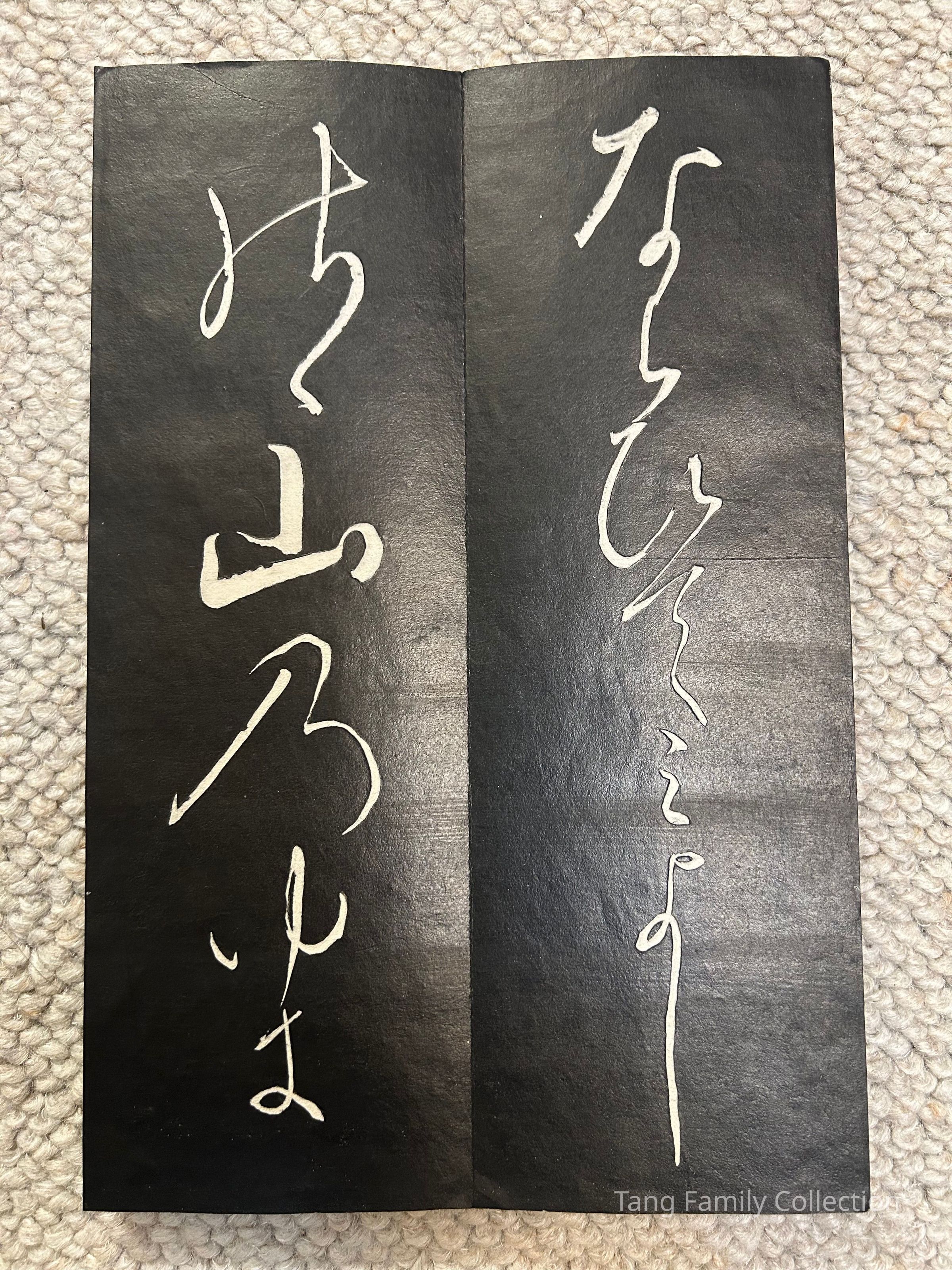
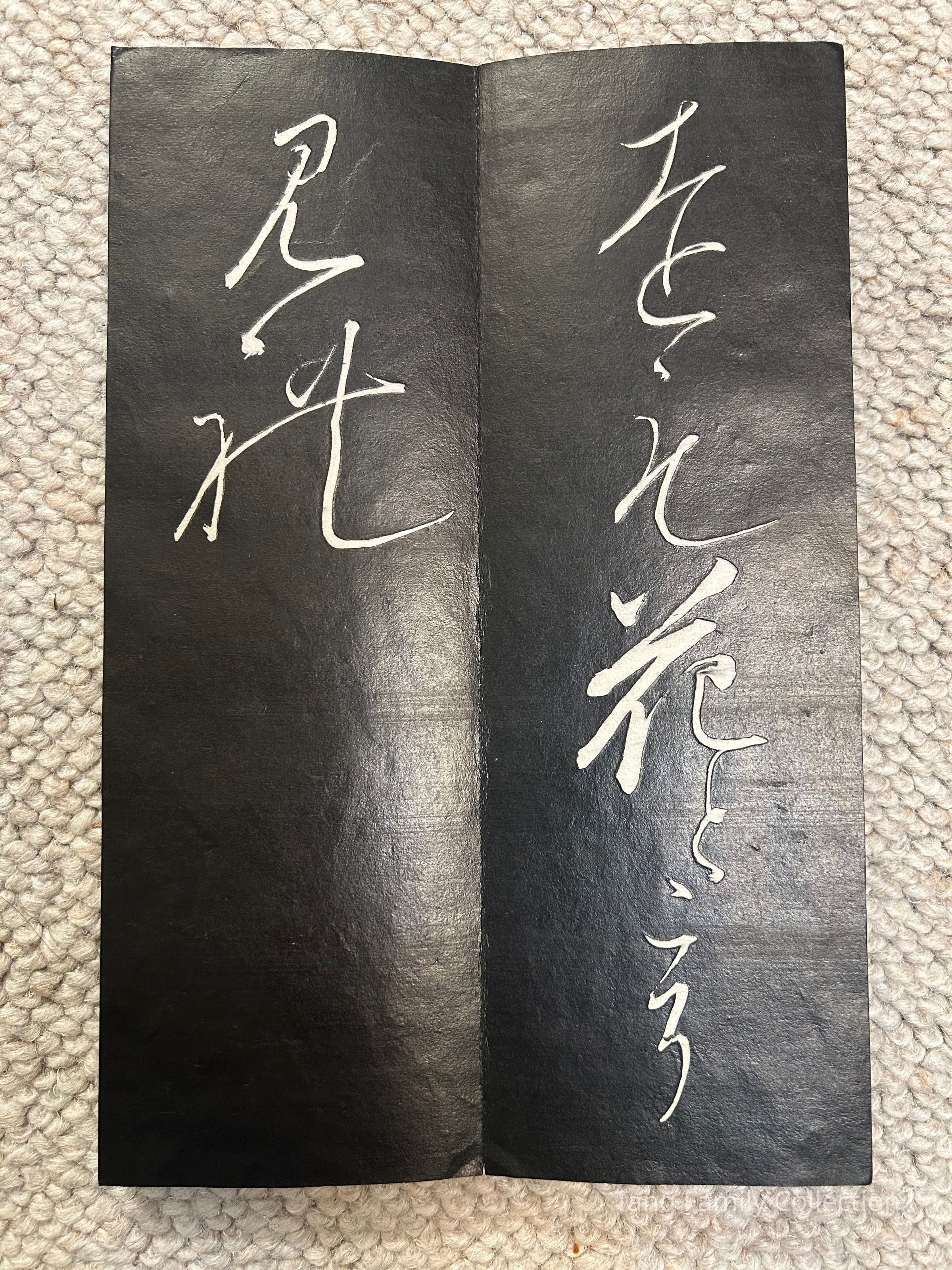
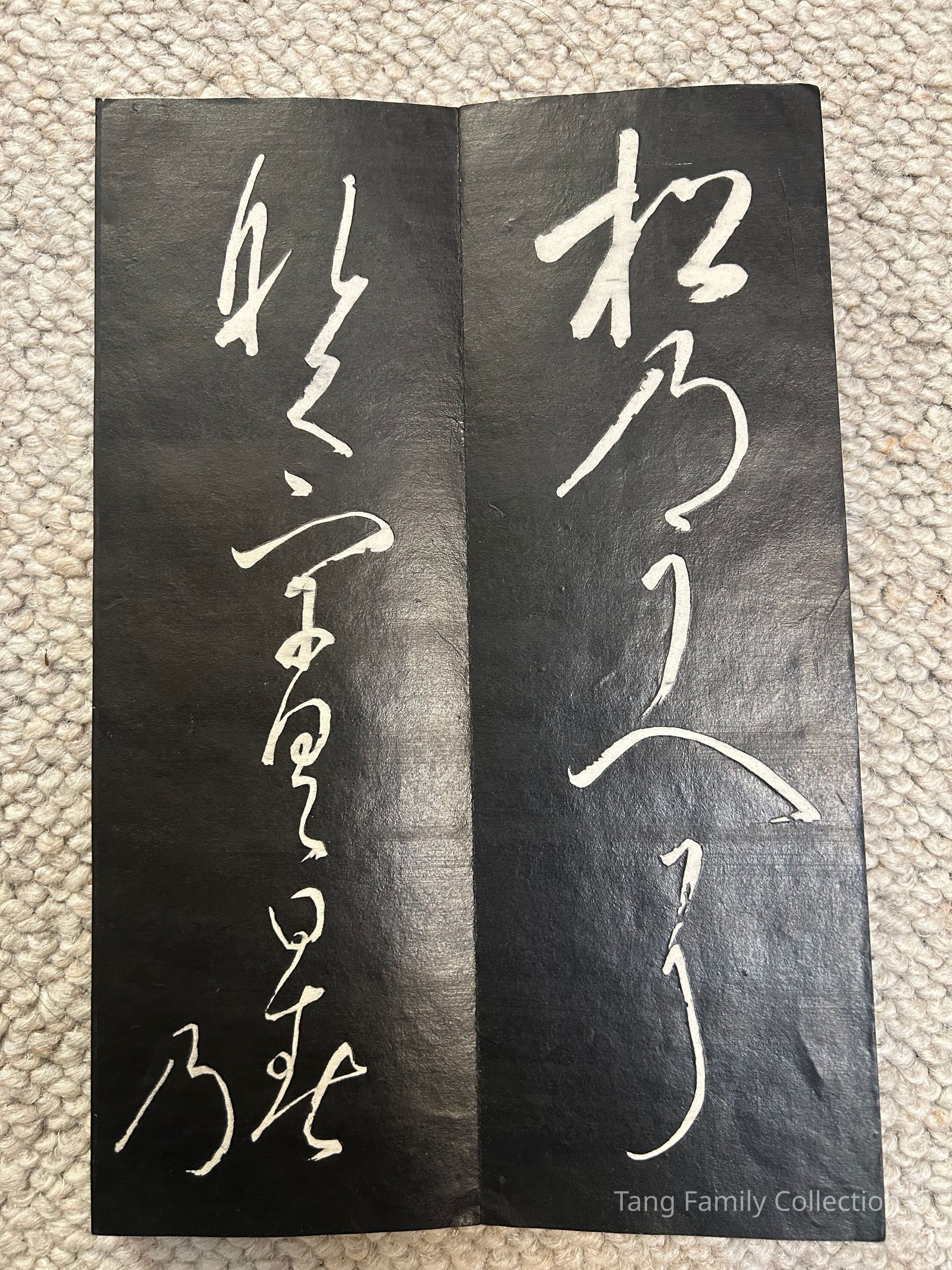
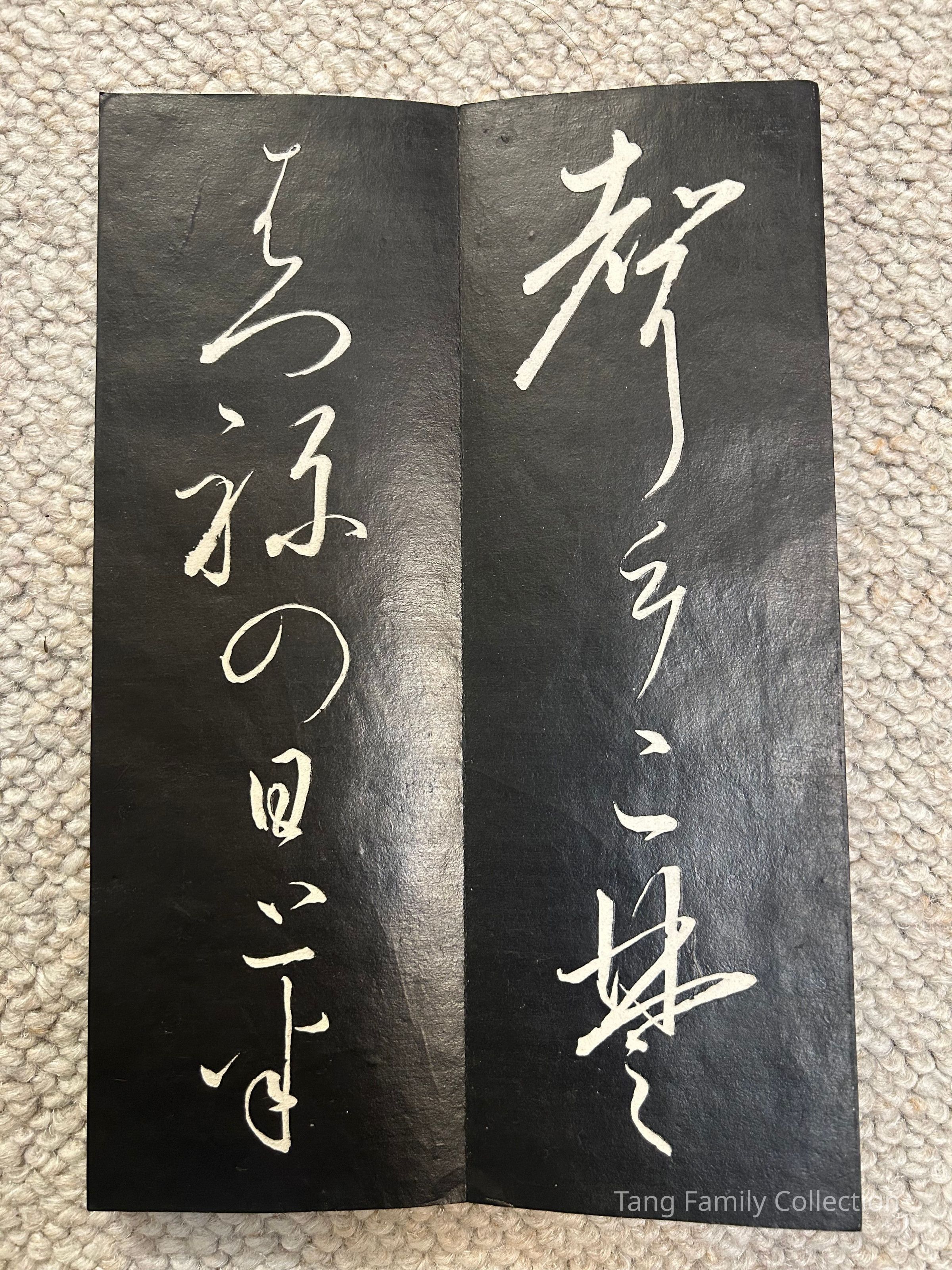
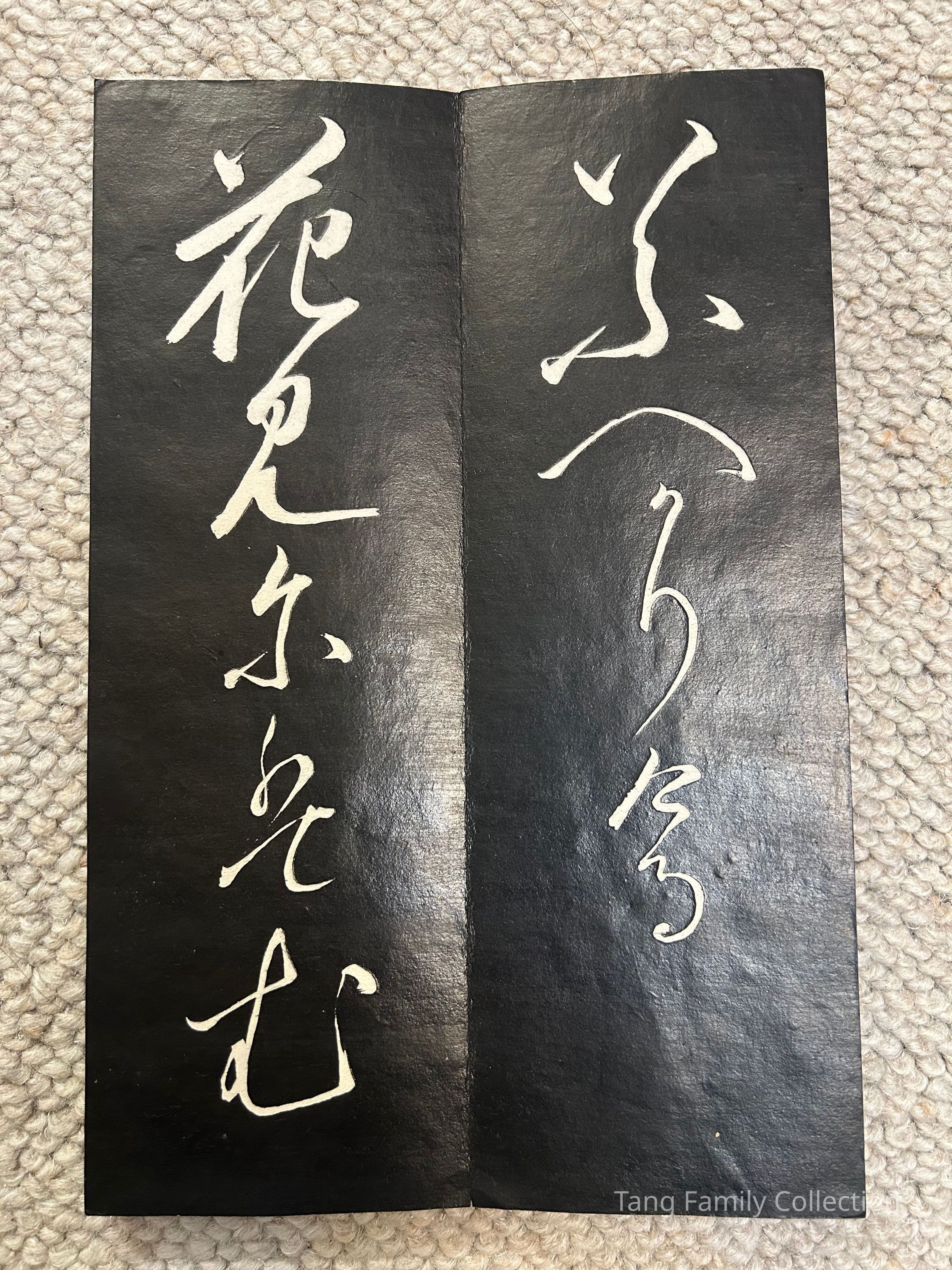
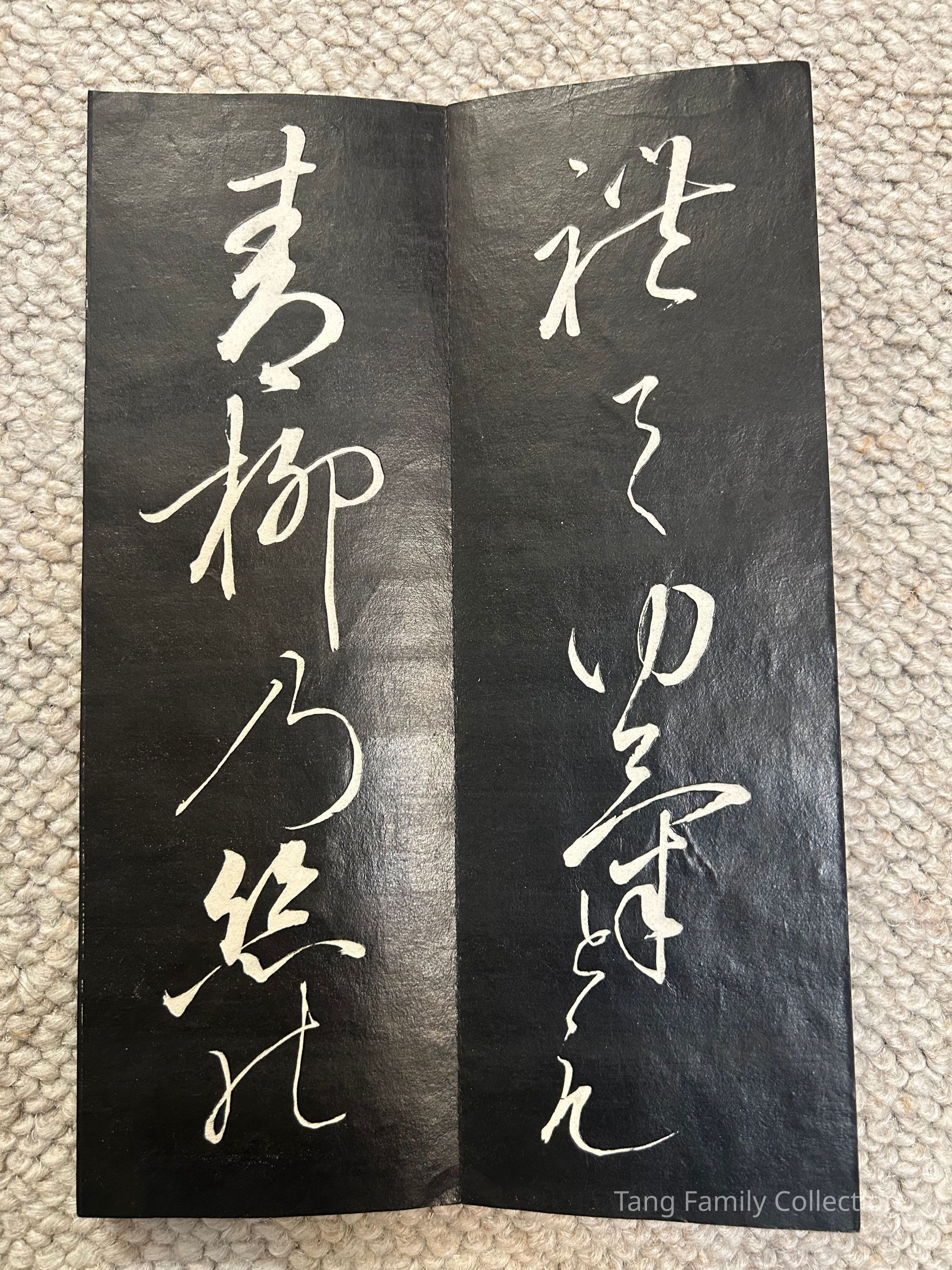
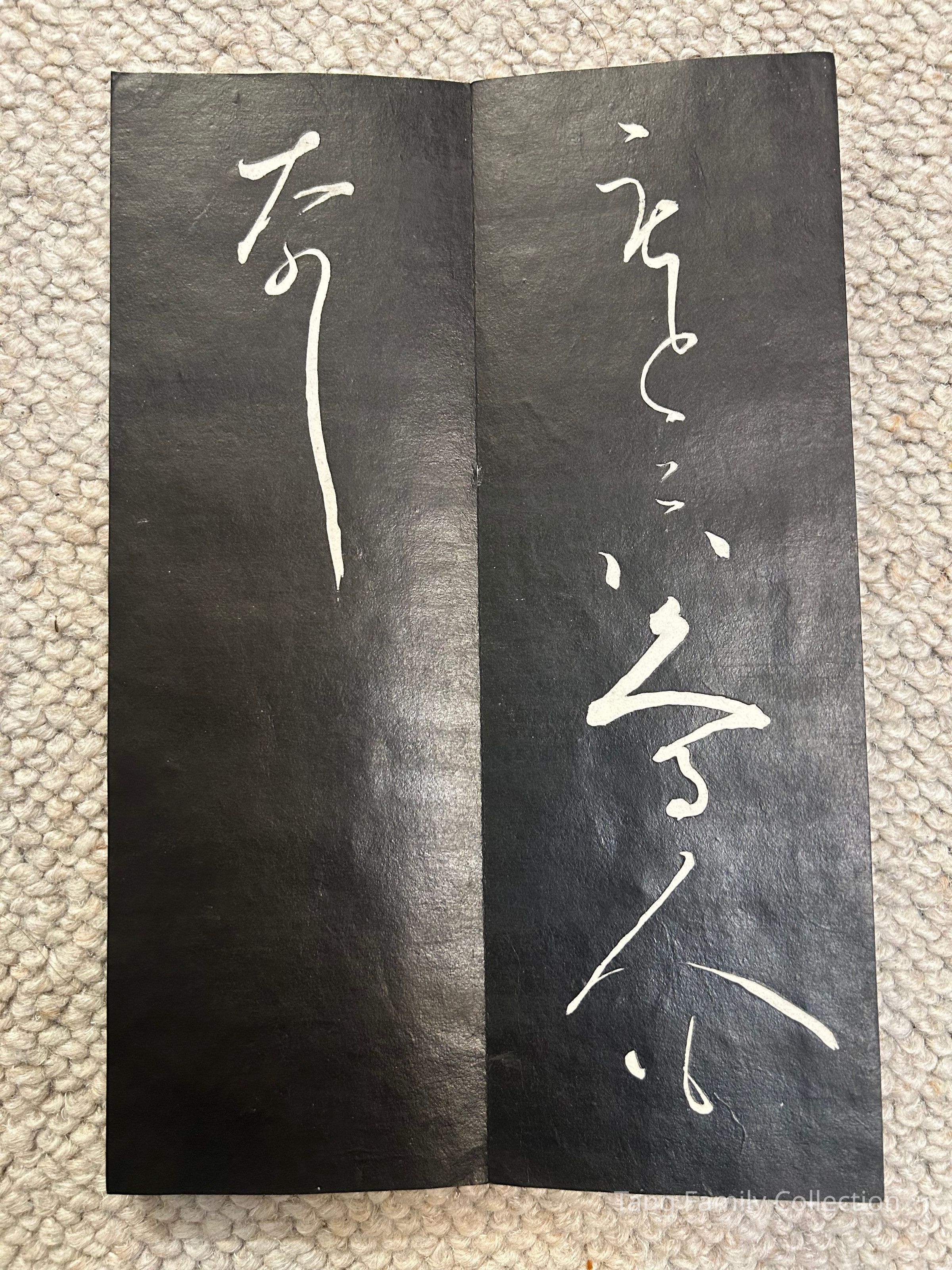
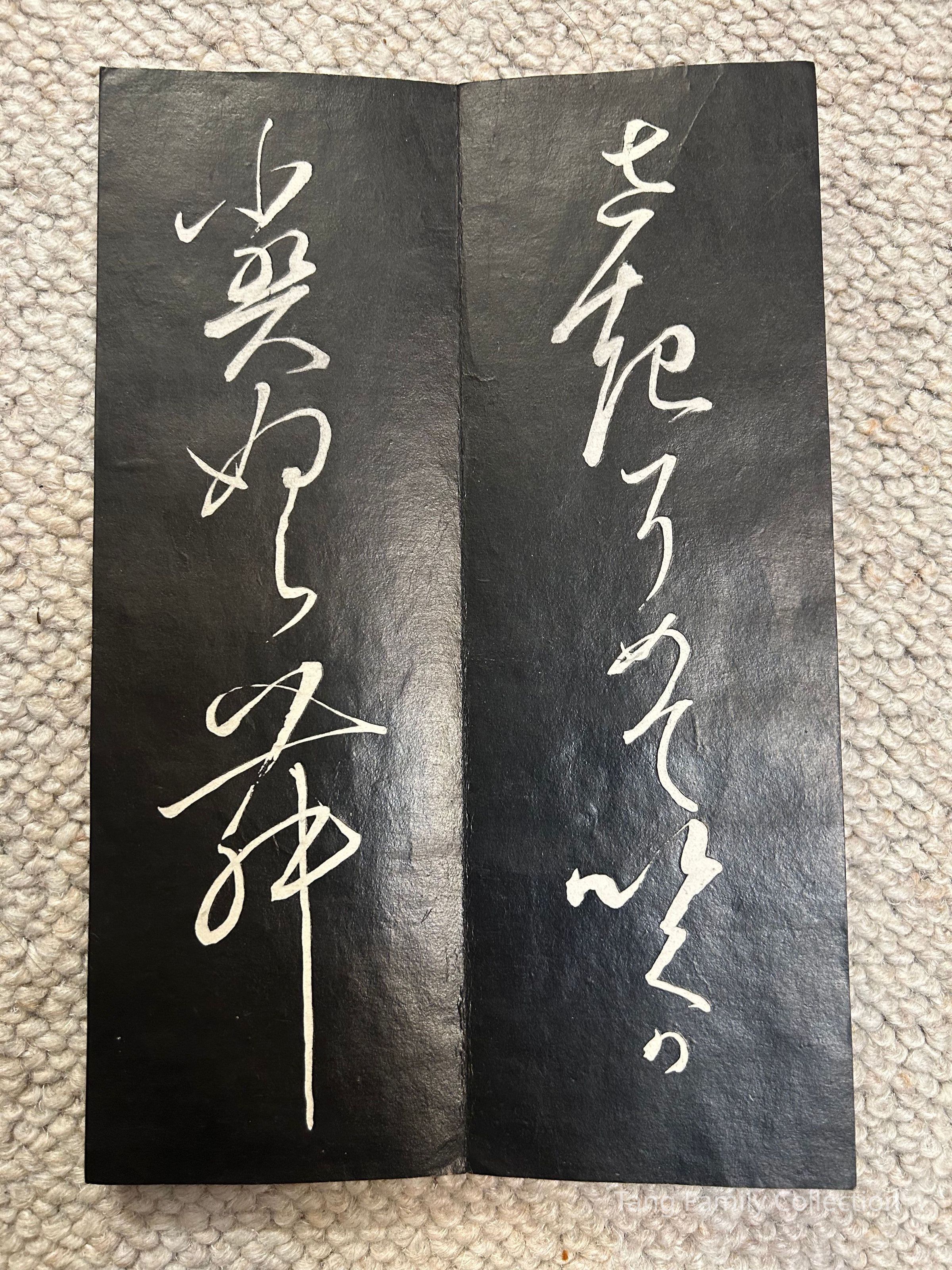
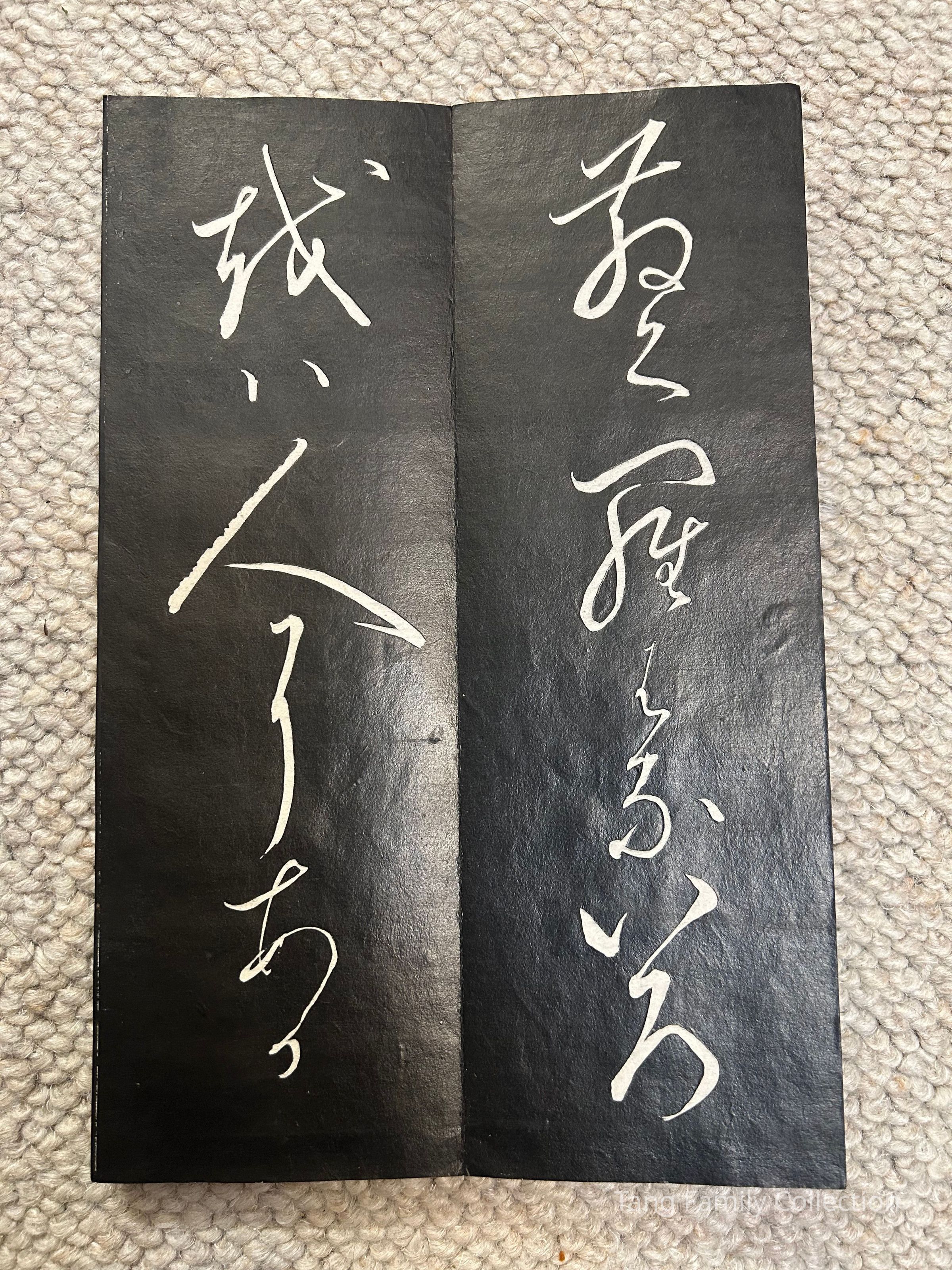
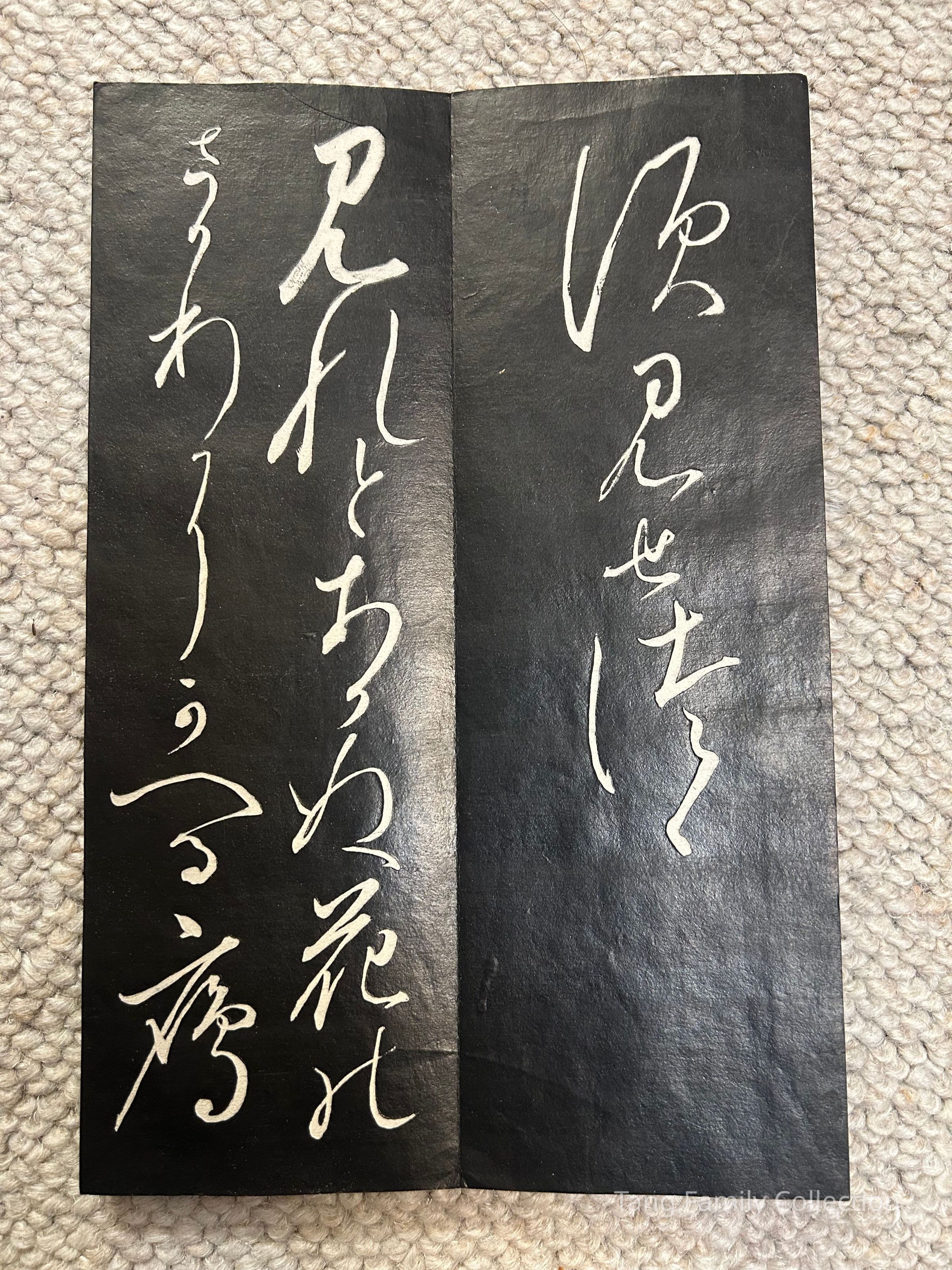
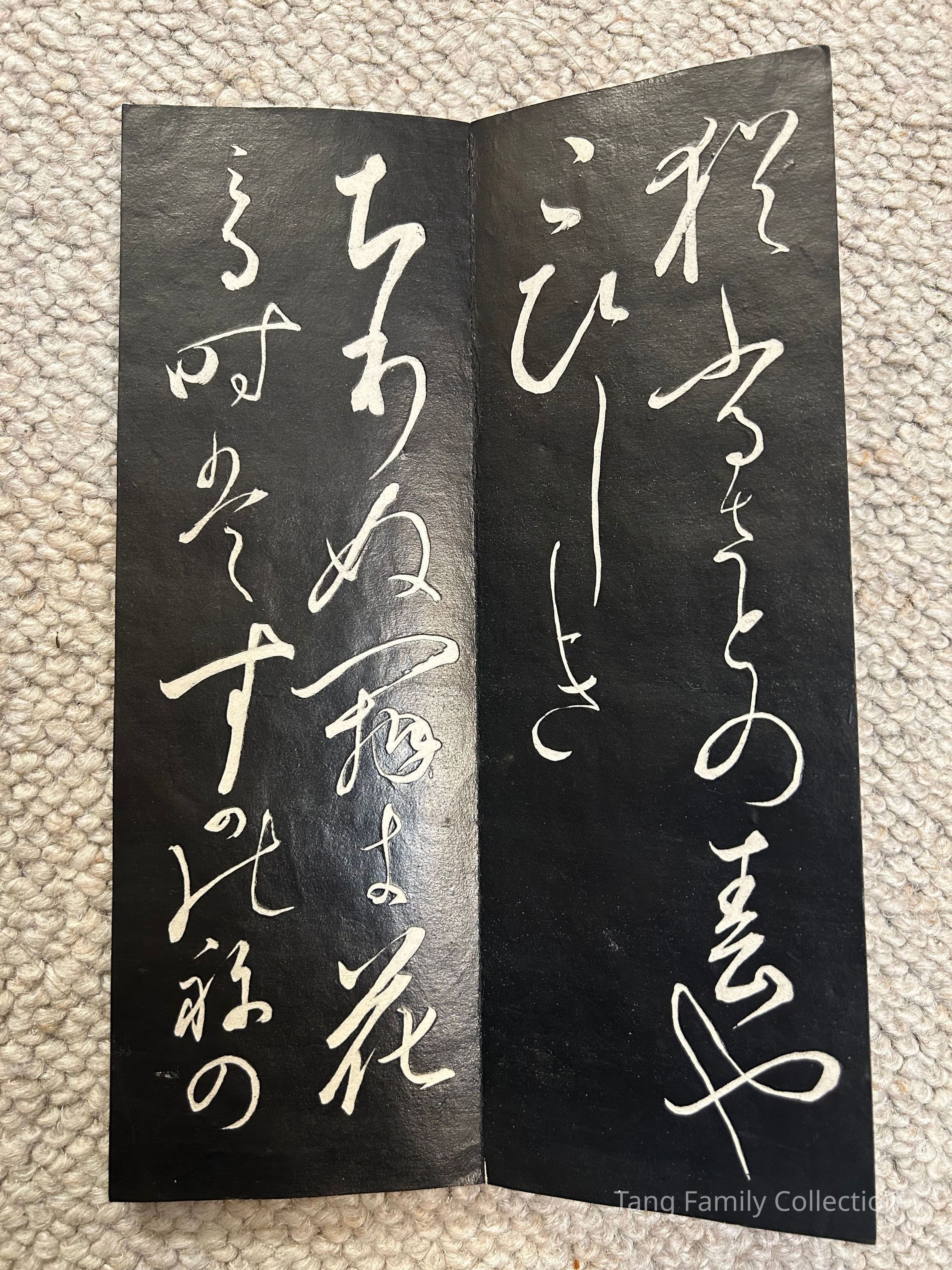
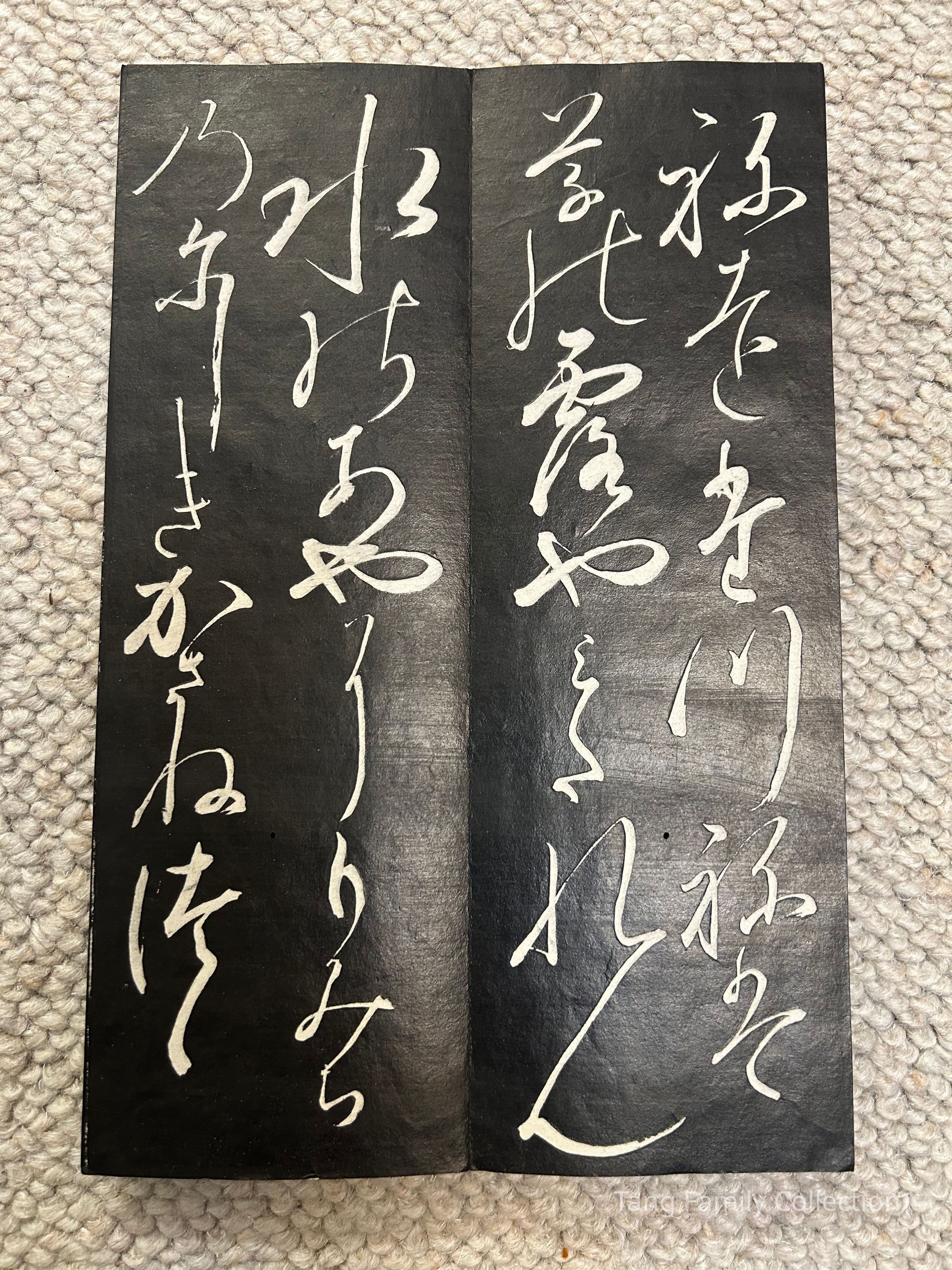
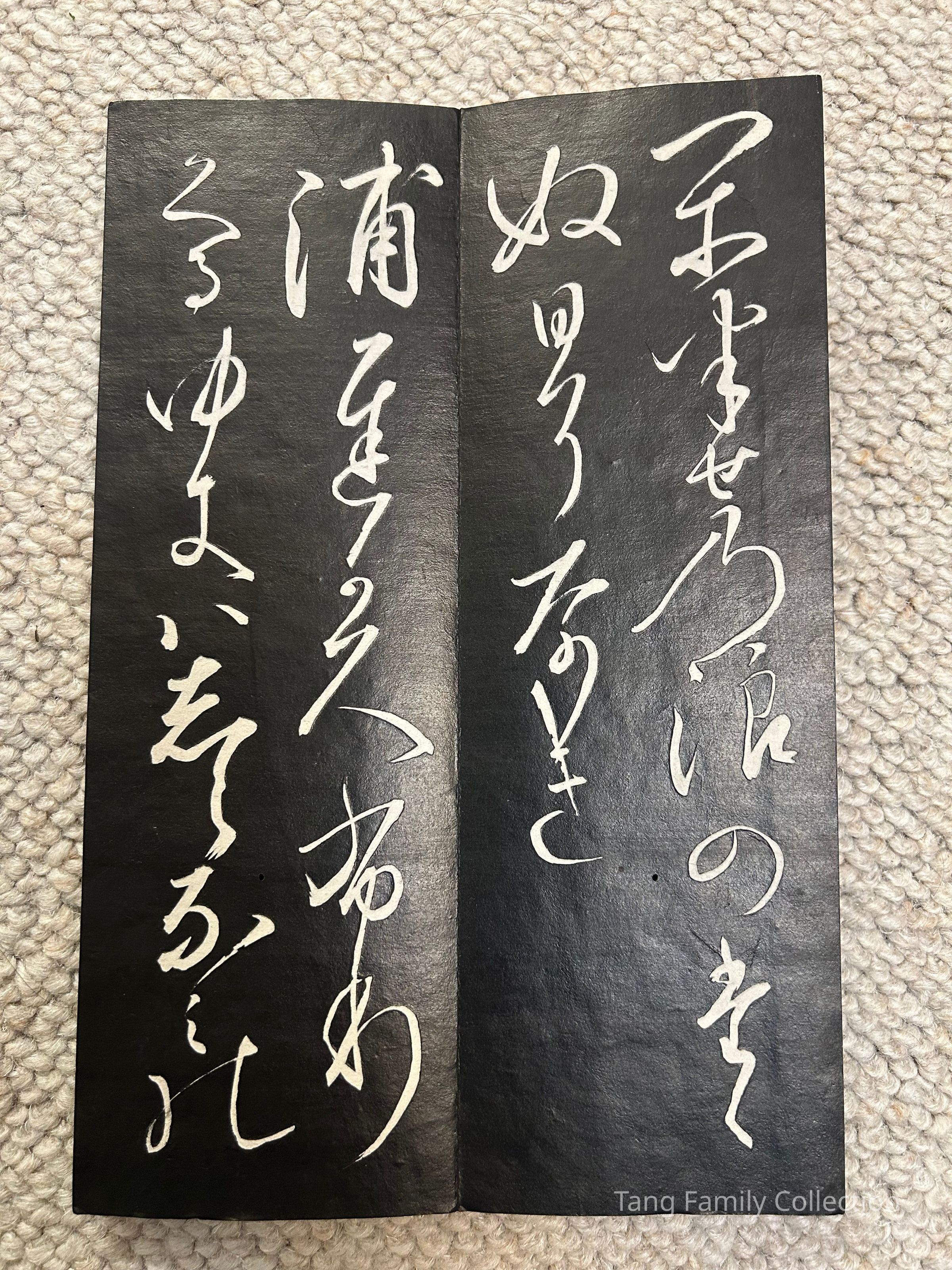
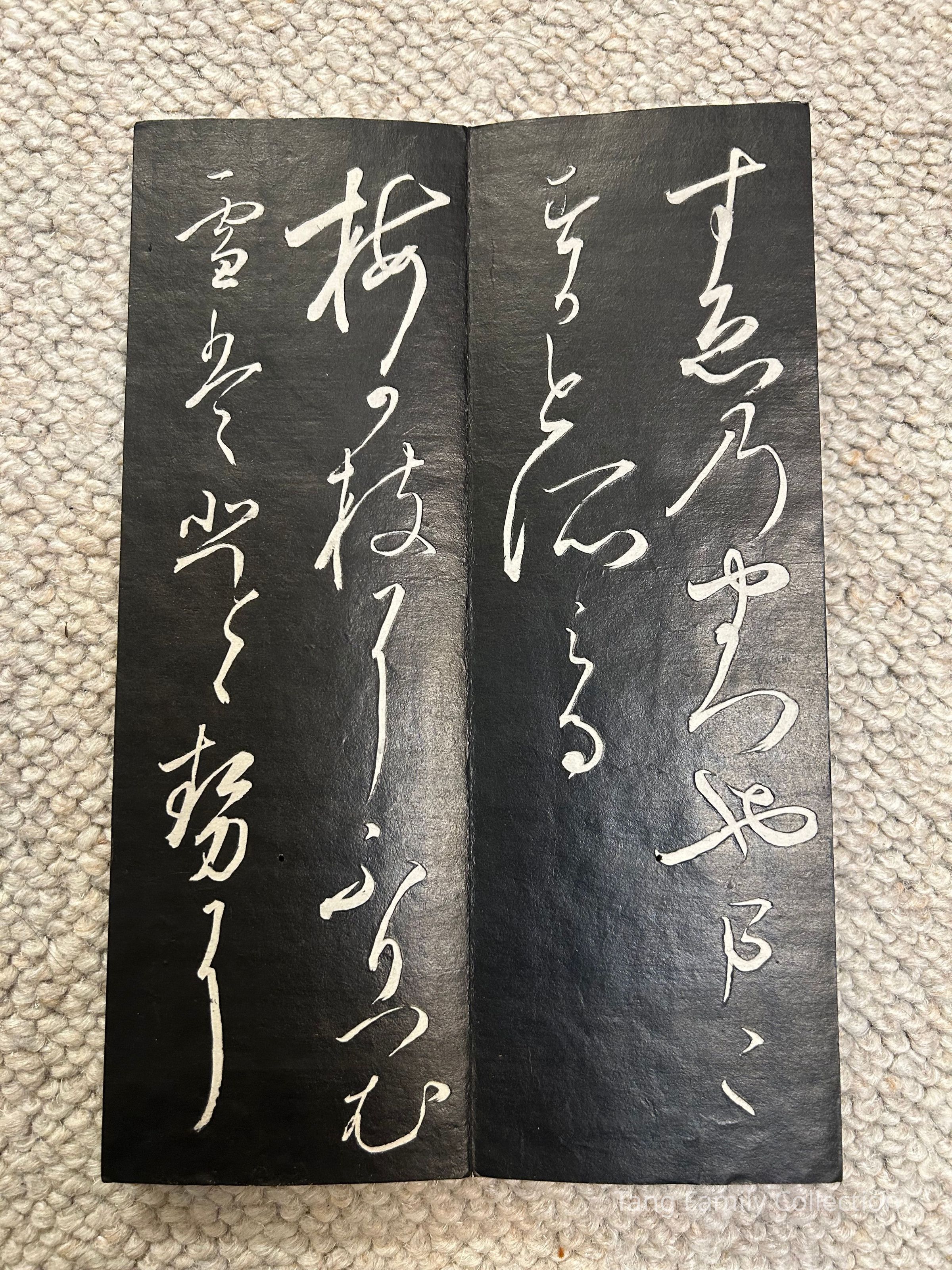
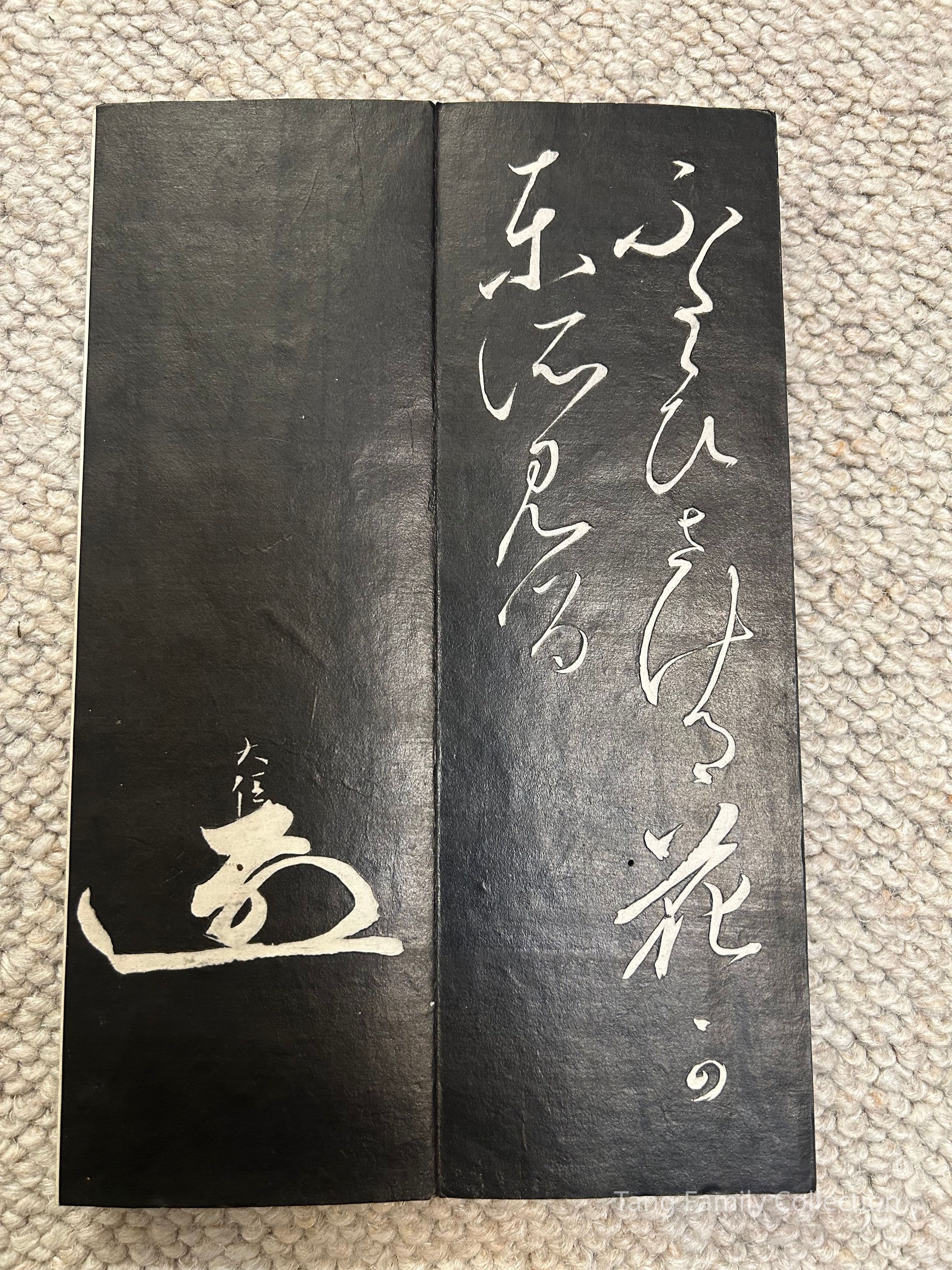
This slim volume consists of successive stone-rubbed impressions (takuhon) of a classical Japanese waka from the Man’yōshū collection, poem 11-2453, traditionally attributed to Kakinomoto no Hitomaro. The inscriptions are executed in highly cursive kana script (hentaigana / sōgana forms), arranged in two narrow vertical columns per opening. The smooth and uniform printing surface indicates that the impressions were taken not from a natural outdoor boulder but most likely from a finely prepared calligraphic stele or plate created specifically to reproduce this poem in an elegant ligatured style (renmentai).
The text references Mount Katsuragi in Nara Prefecture, a site closely tied to early Japanese court poetry. Several stone monuments of this poem exist in the region—most prominently at Kakinomoto Shrine (Katsuragi City)—but the calligraphic style here differs from known outdoor monuments. The book therefore probably derives from a studio-produced commemorative inscription, following the same poetic tradition but independent of the larger public stones.
Takuhon books of classical verse were commonly compiled as scholarly or aesthetic reproductions in the late Edo to early modern period, preserving both the poetic heritage and its calligraphic expression. This example reflects the enduring cultural significance of the Man’yōshū and the evolution of Japanese cursive kana forms.
《萬葉集詩歌拓本冊》
本冊為日本古典詩歌《萬葉集》卷十一第2453首(傳為柿本人麻呂作)之拓本,全文以高度草化之假名書法呈現,包含變體假名/草假名(hentaigana/sōgana)書體特徵。每開設兩條細長縱列,筆畫流暢連綿(連綿體),墨色均勻,顯示其母石表面平整光潔,非天然風化之巨石所能達成。
詩中提及奈良縣葛城山,為早期和歌傳統重要地理意象。地方上雖存多座刻有同詩之歌碑(如葛城市柿本神社),然本拓片之書風與戶外石碑所見之較為粗獷刻痕明顯不同,推測此冊應出自為書法欣賞與保存而製作之工藝精良的書法石板(或碑片),非公共露天碑刻之直接拓印。
以拓本方式保存古典詩文與書法形制,為江戶末期以降學術與審美活動之常見形式。本冊展現日本和樣假名書風與《萬葉集》文學傳統之延續與再現,具文獻與書藝研究價值。