Embroidered fragment
Name/Title
Embroidered fragmentEntry/Object ID
2025.10.42Description
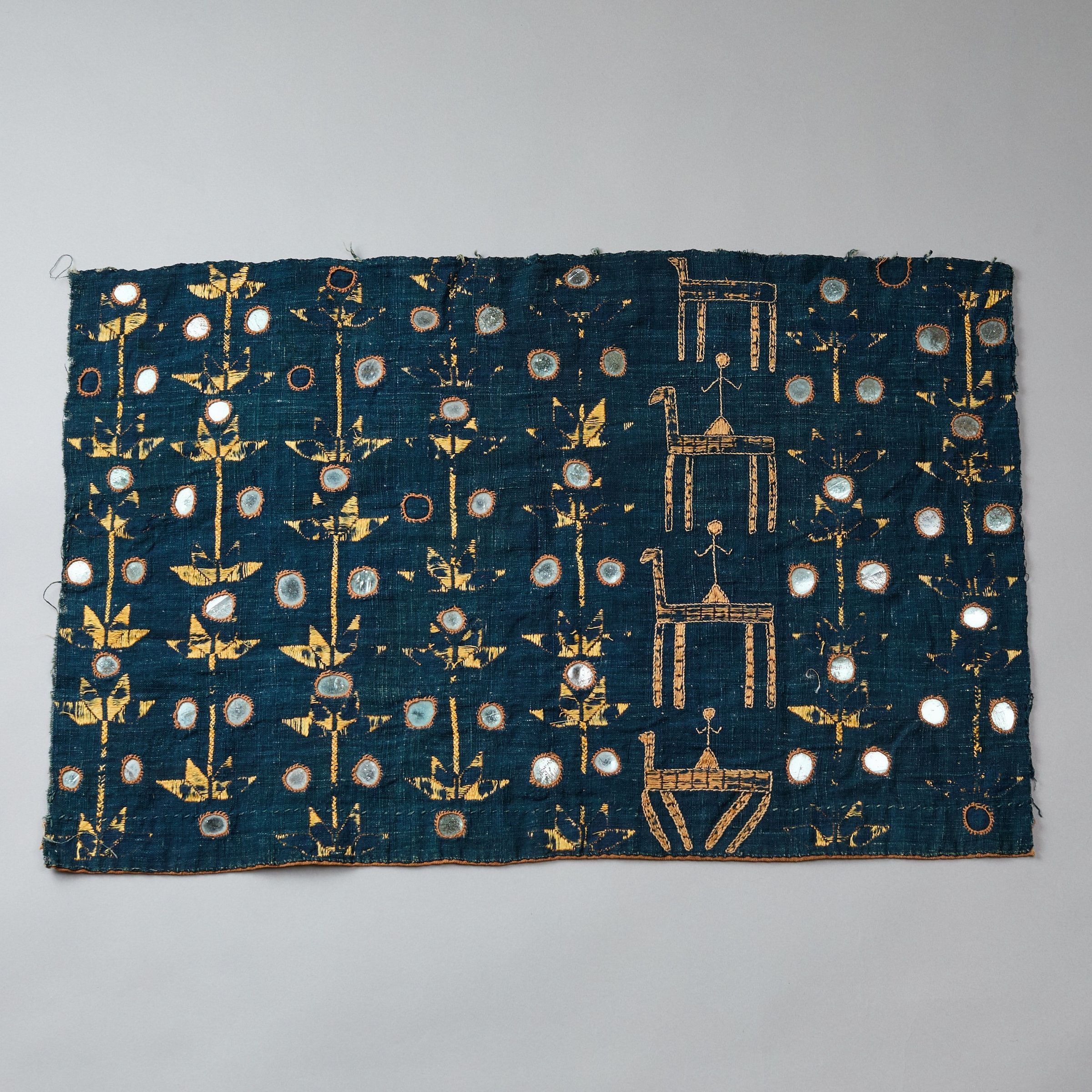
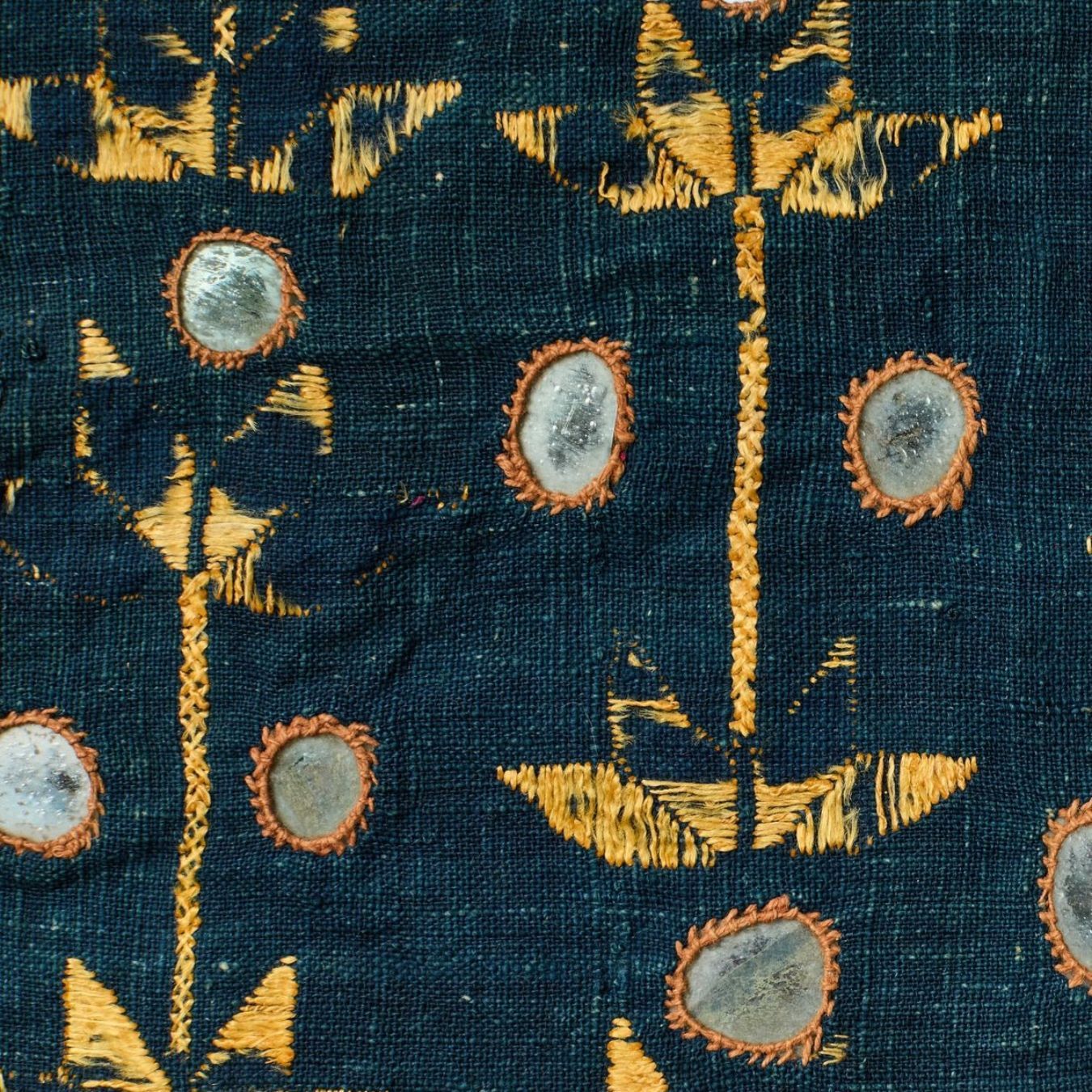
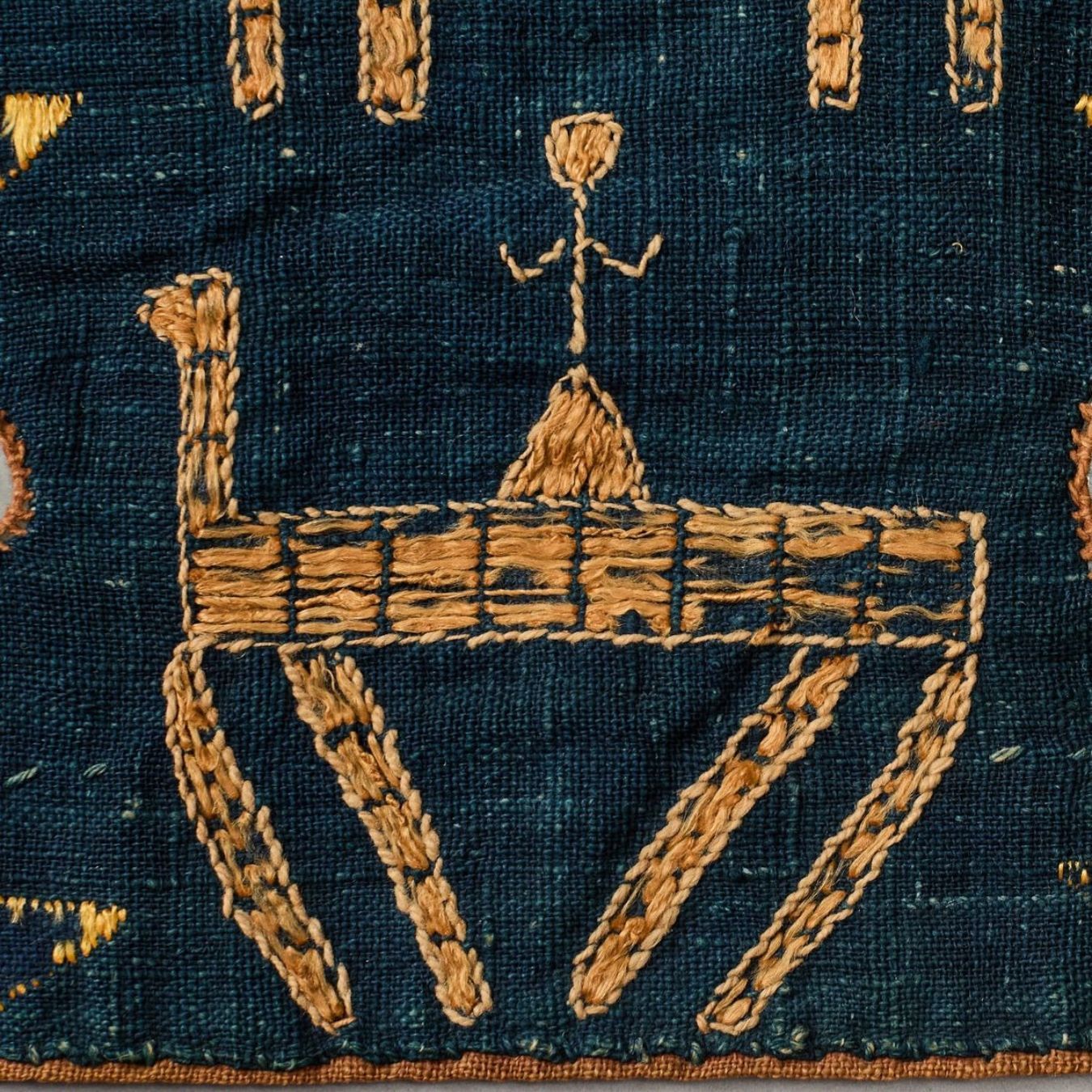
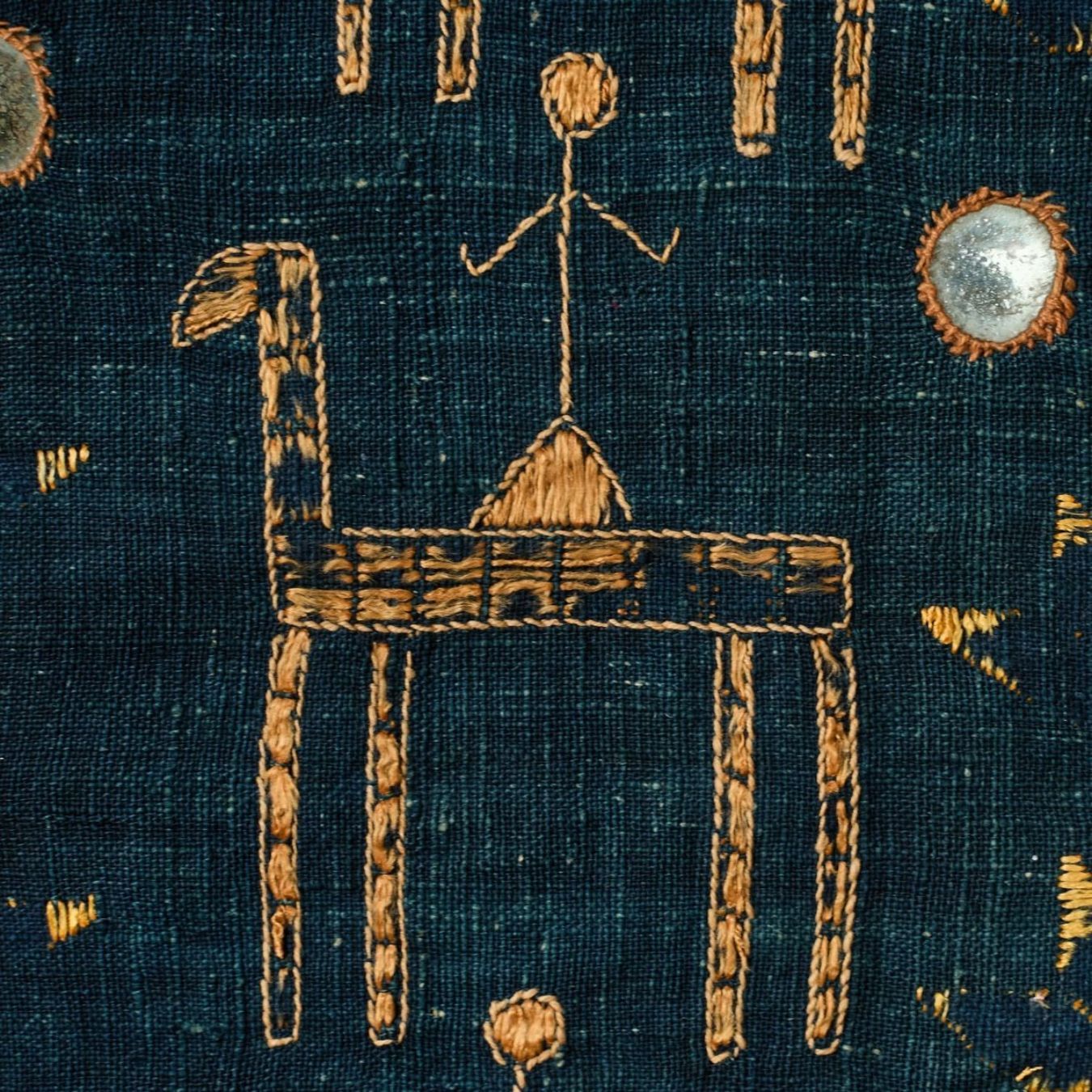
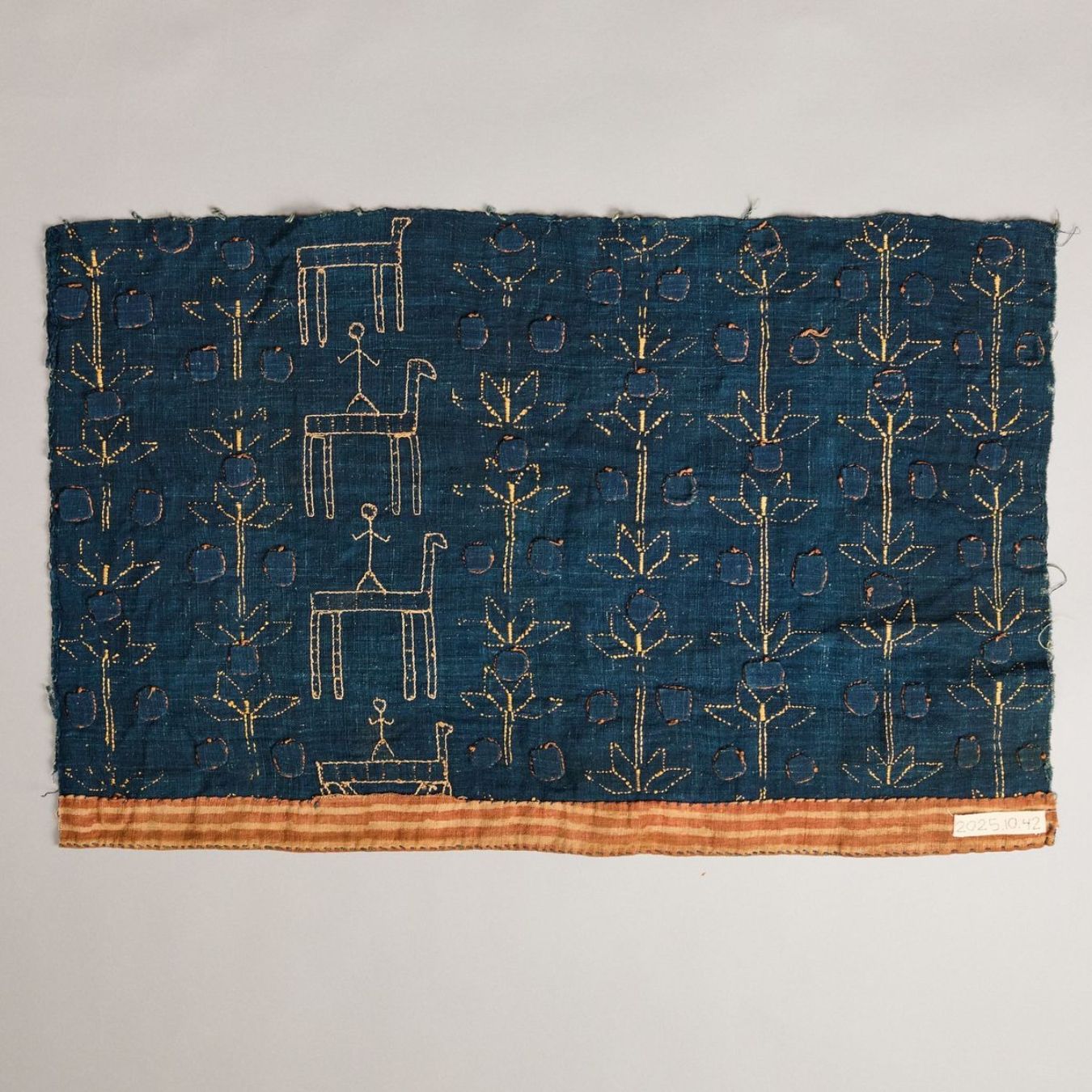
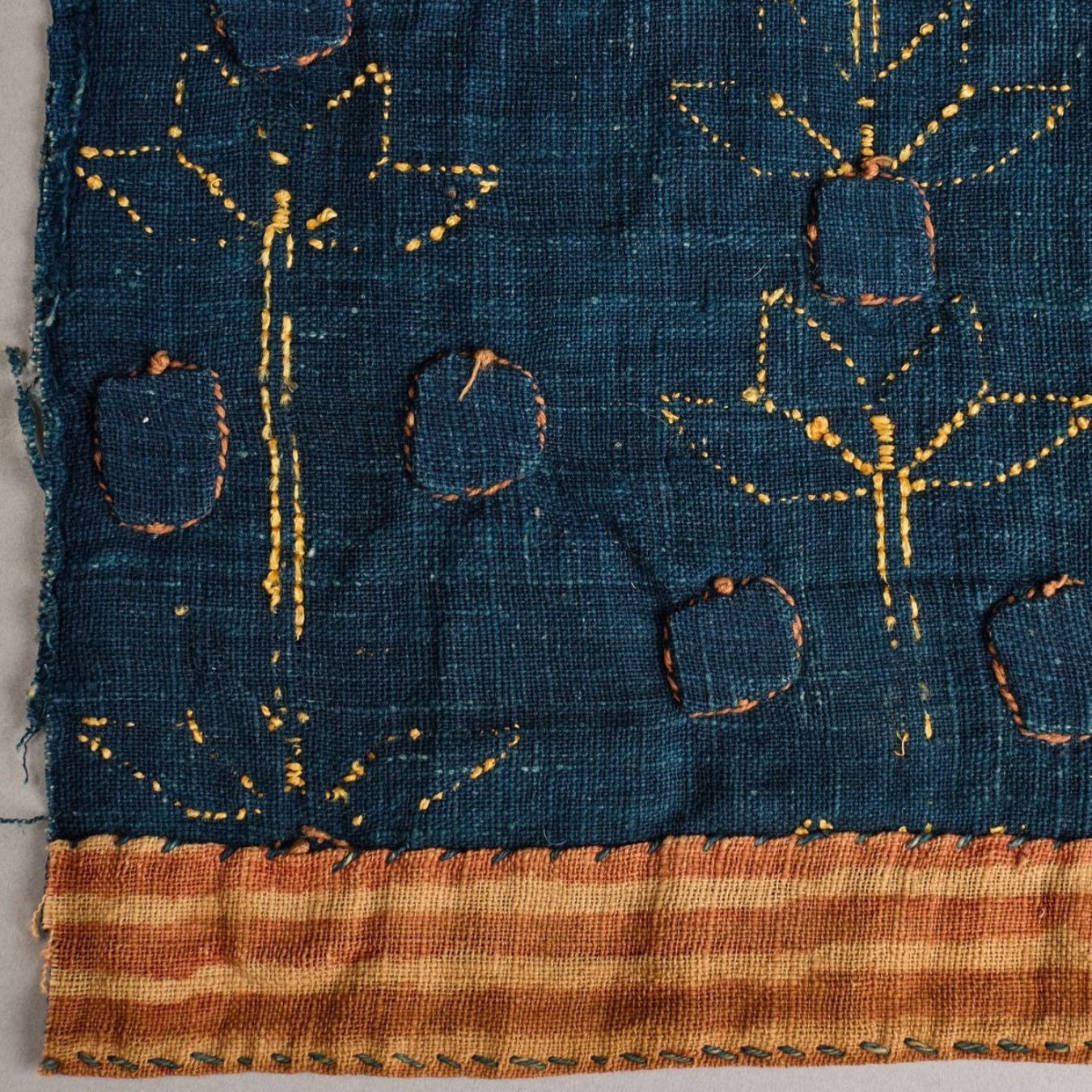
The vibrant yellow silk embroidery on this fragment of indigo-dyed cotton is phulkari, a technique that employs extensive short and long darning stitches on the back side of coarse cotton cloth. Phulkari is traditionally done by the women of the Punjab. The plain-weave cotton ground cloth used is traditionally homespun, handloomed, and locally dyed khaddar cloth. There are many stylistic variations of phulkari, typically classified according to motifs, compositions, or technical details. Here we see shishedar phulkari (shisha means “mirror”) and sainchi phulkari, known for its figurative imagery. Some of the most common motifs in phulkaris are wheat or barley stalks with ears, seen here along with embroidered mirrorwork and a column of figures standing on horses. Phulkari motifs are highly stylized due to the nature of darning stitches, which are characterized by straight lines rather than curves. Phulkari also refers to the simple and sparsely embroidered head-cloth known as odhini, as well as to shawls made for everyday use. The highly decorative nature and color scheme of this piece suggests that it was once part of a wedding shawl. These were often embroidered by the groom’s grandmother for his future bride and not part of her dowry.Textile Type
Embroidered PanelCategory
Cloth, Embroidery