Child's pants
Name/Title
Child's pantsEntry/Object ID
2024.9.50Description
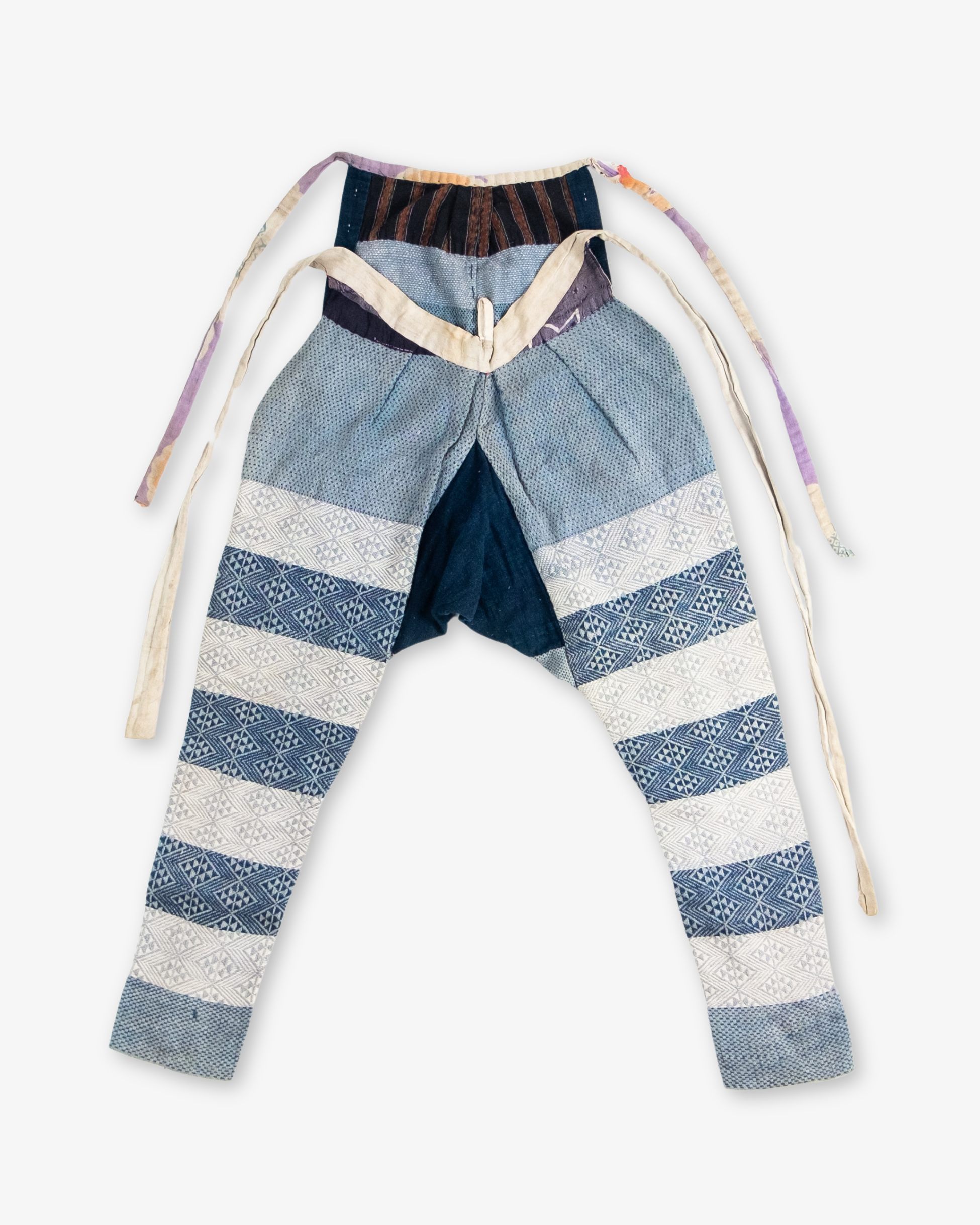
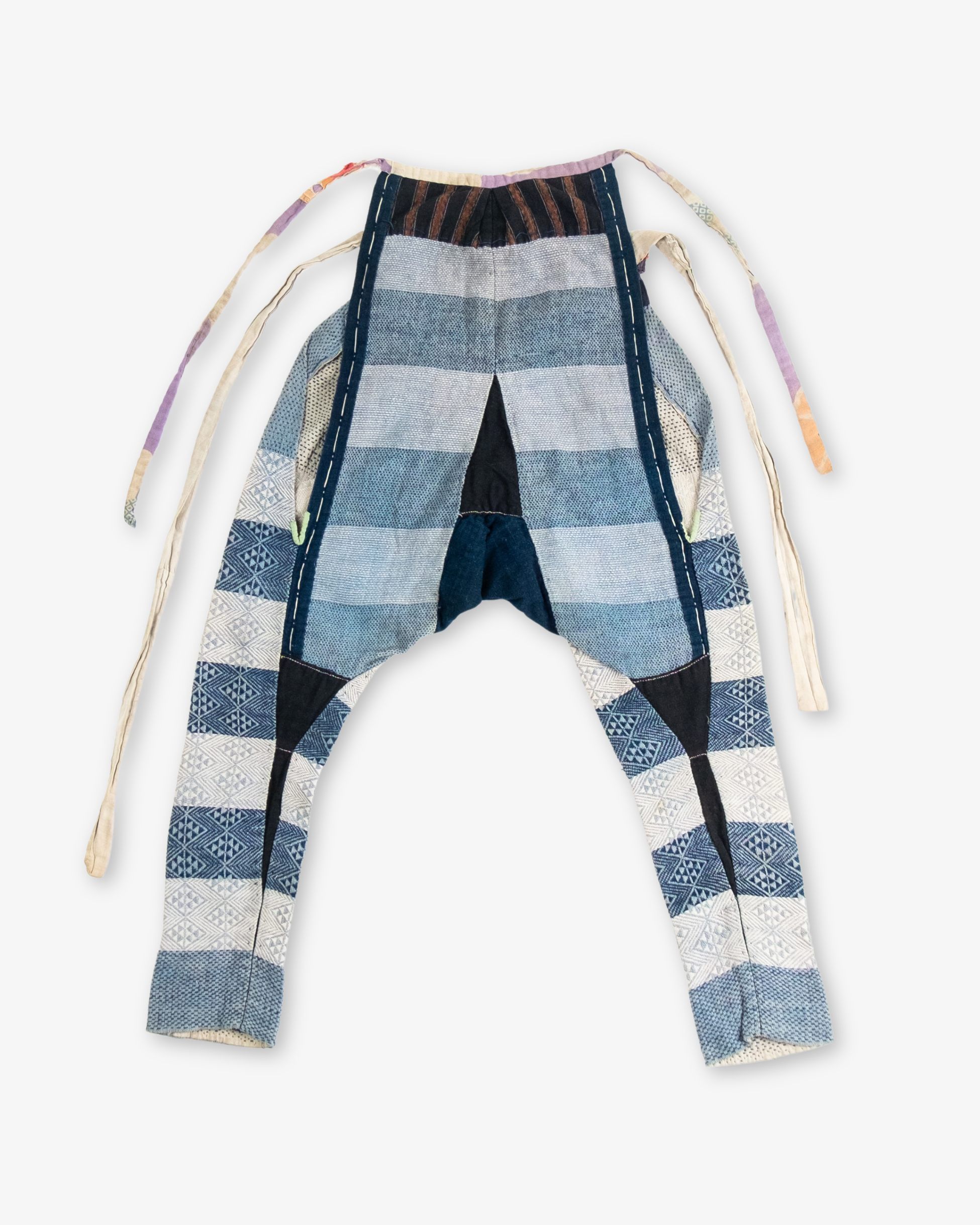
Boy's hakama pants. Legs made up of several indigo-dyed panels, decorated with sashiko style "hishi" embroidery. Back has a panel of black and red striped woven fabric at the top, with waistband and front "himo" ties made of plain white cotton. Small panel of purple patterned fabric at the top front of the pants, which is also used for the back "himo" ties.Context
Hishi embroidery is similar to kogin embroidery--both originated in the Aomori prefecture at the northern tip of the island of Honshu, Japan. Cotton plants didn't grow here, so people wove their textiles using coarse linen, which was poor at protecting from cold and wind. To solve this, women filled in the open spaces of the fabric with thread to make it more protective for the wearer. Hishi embroidery, seen on these pants, is two stitches shorter or longer than on the previous row, so Hishi-stitch patterns are lozenge shaped. Hishi stitches are most commonly found on pants. Though the legs of the pants may appear to be made up of panels of two different colors, a closer look reveals that each panel is the same light blue color with light and dark embroidery. The people of the Aomori area were largely poor farmers who couldn't afford to dye fabric to a dark shade of blue. To compensate for this, women used white and dark threads, alternating on each panel, creating the look of wide stripes.Category
Clothing