Kothali dowry bag
Name/Title
Kothali dowry bagEntry/Object ID
2024.9.3Description
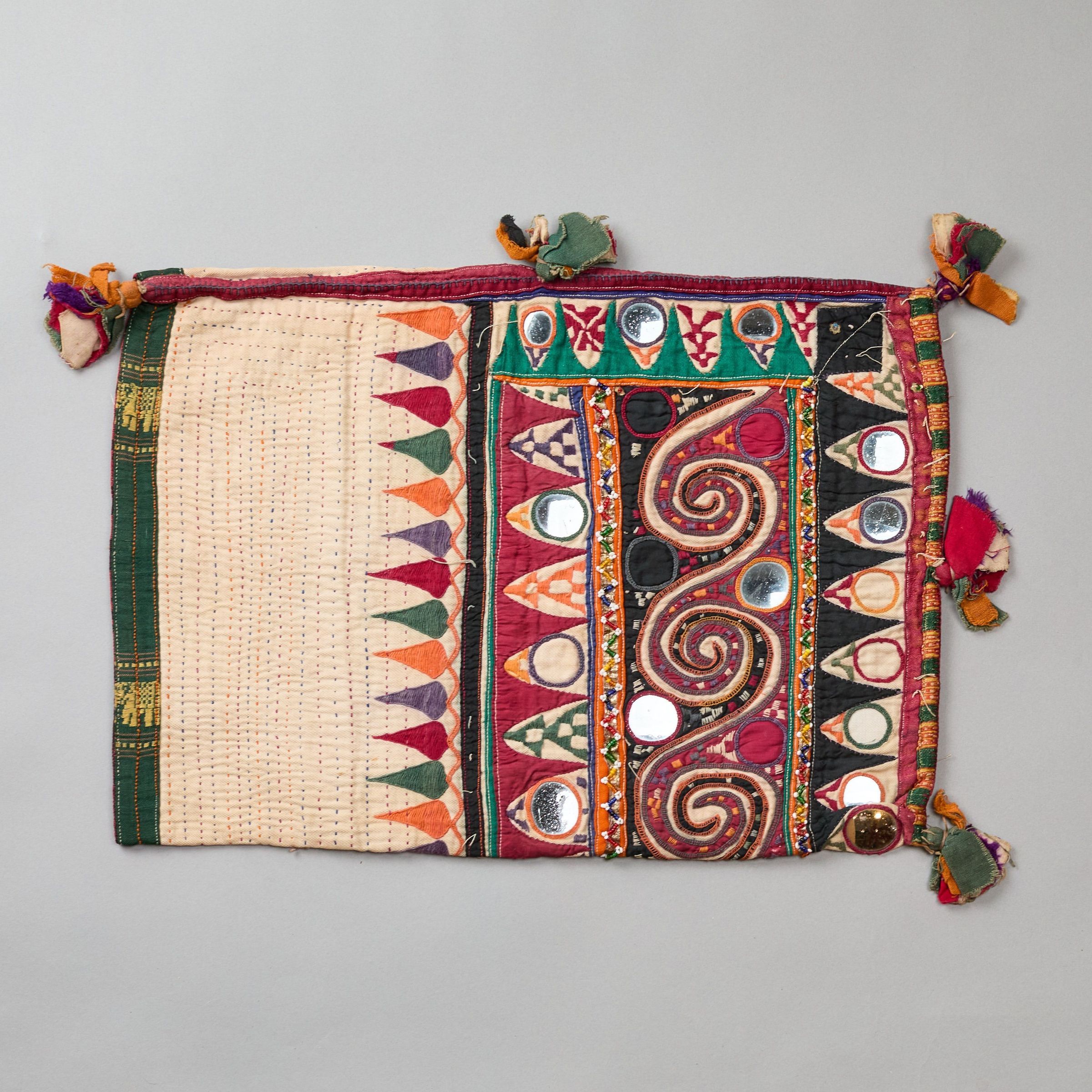
Small rectangular dowry bag with opening at top. Top half quilted with a basic running stitch and a row of colorful tear-drop shaped appliqués. There is a strip of decorative green fabric along the edge. Bottom half is more decorative, featuring several panels with various embroidery designs in multicolored threads, beadwork, cotton appliqués, and shisha mirror work throughout. There are 5 tassels along the left and bottom edge made of multicolored cotton fabric.Use
Kothali are small decorative bags used to deliver small dowry items to in-laws.Context
This Kothali is a smaller version of the Kothalo, a rectangular dowry sack which is elaborately embroidered and sometimes quilted at the top, and used to carry dowry items to in-laws. These bags were made by Rabari women, a culture of nomadic herders who now live scattered throughout the Kutch, Saurashtra, and North Gujarat regions of Gujarat State in India, and in western and southern Rajasthan State. Rabaris are divided into distinct territory-specific subgroups with distinguishable social and physical features, but share common beliefs and values, and have a common heritage and sense of identity. In Rabari marriage culture, both bride price and dowrys are required. The dowry is usually made up of livestock, kitchen utensils, cash, clothing, and embroidery, given to the groom's family in these bags. Rabari embroidery is characterized by chain stitches in bright colors. Embroideries made for marriage are particularly bright and sparkling, denoting marriage as a bright and celebratory moment. Embroidery styles vary from subgroup to subgroup, and motifs have specific meanings and related purposes, and together can be used to tell stories of the past and present. This particular bag appears to have motifs which are traditional to the Bhopa Rabaris. The large wave-like pattern is the appliquéd Vankla Vel motif, which is often seen on the walls of Bhopa homes, and the teardrop shapes are a Jarnar motif, which is also the name of a similarly shaped Bhopa necklace. The split triangle-shaped appliqués are known as Adadhiya, meaning half, and the two graphic flower shaped appliqués on the left border are called Phulru, meaning flower bud.Category
Bags, Embroidery
Acquisition
Accession
2024.9Acquisition Method
PurchaseNotes
Acquired via Material Culture auction house (Lot 290) on 7/31/24.Made/Created
Time Period
20th CenturyPlace
Country
IndiaContinent
AsiaEthnography
Cultural Region
Country
IndiaContinent
AsiaCulture/Tribe
Rabari