Palestinian thobe
Name/Title
Palestinian thobeEntry/Object ID
2025.8.5Description
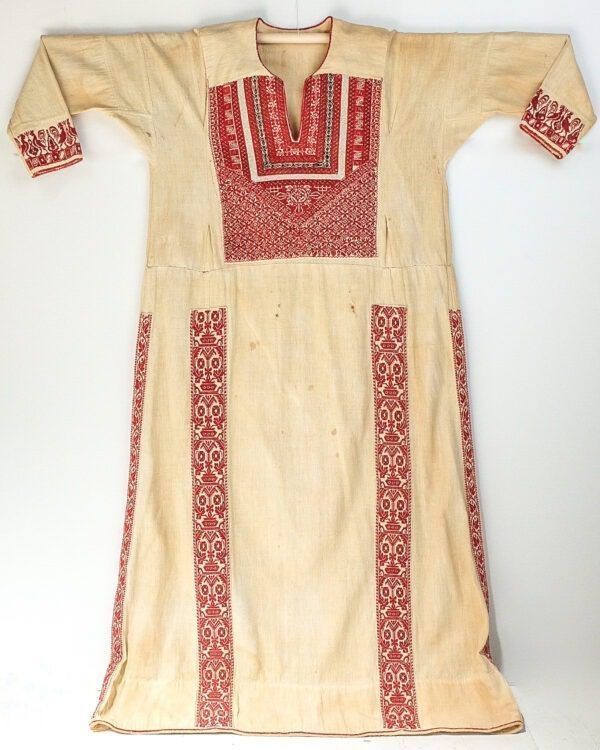
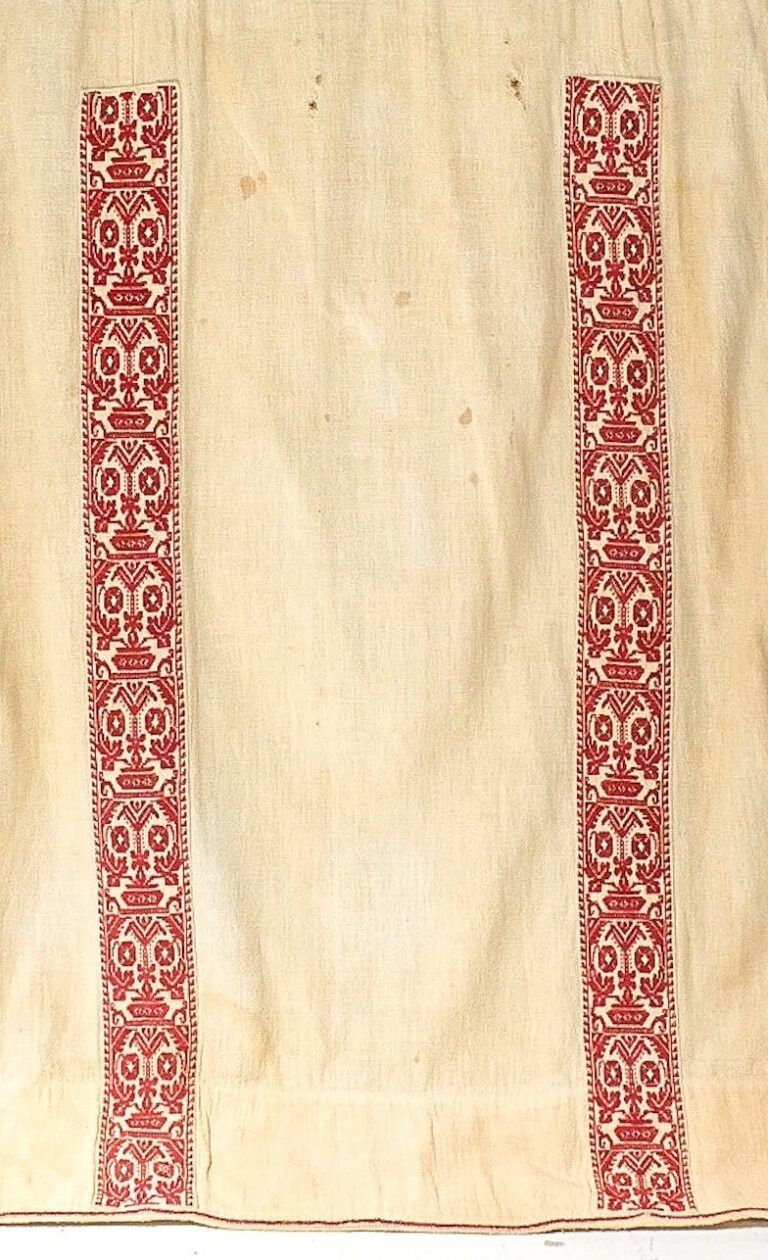
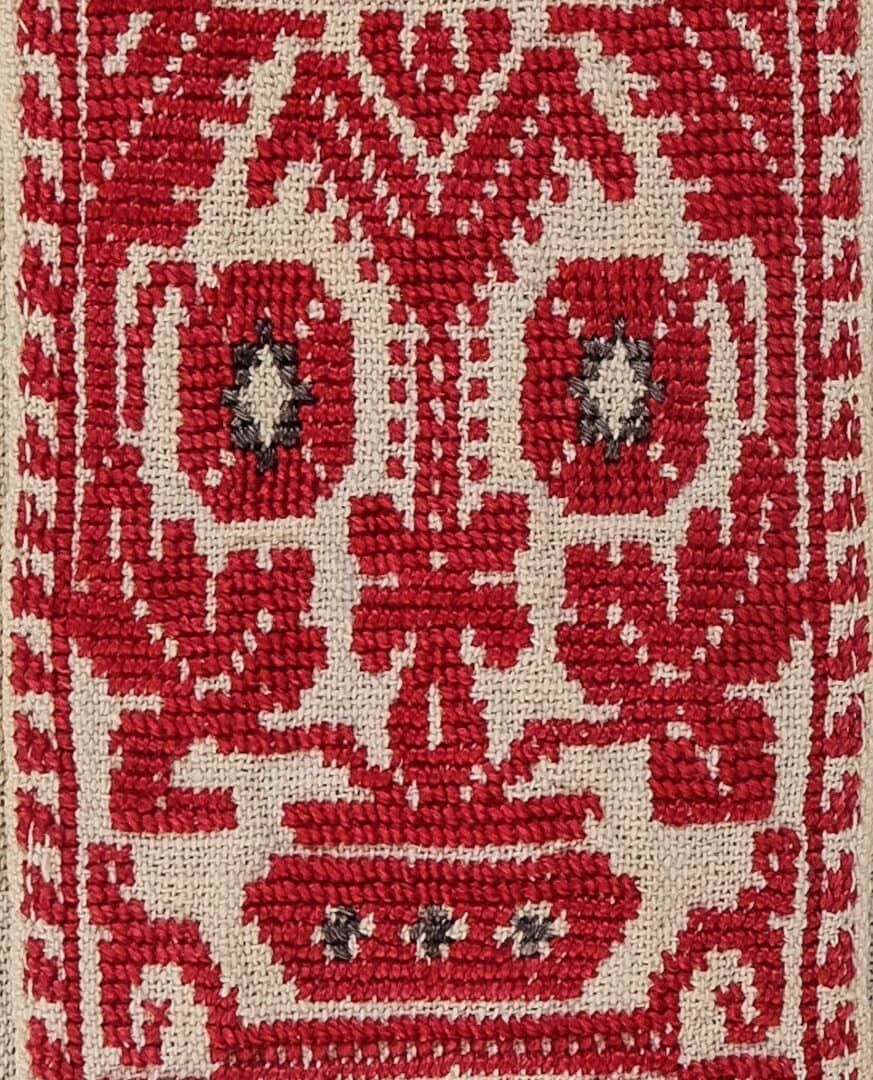
Beige canvas Palestinian thobe with cross-stitch embroidered patterns predominantly done in red embroidery floss, with some details in grey. Geometric patterns densely decorate rectangular chest panel. Front skirt features two strips of the Quwar (flower pot) motif, characteristic of embroidered textiles originating in Ramallah, a region well known for its flower fields. Sleeve cuffs have bands of embroidery featuring a rooster motif. Evidence of mending along interior bottom edge.Use
Traditional dress made and worn by Palestinian women for centuries, often constructed from waste canvas and heavily decorated with embroidery, known as tatreez in Arabic. Floral embroidery motifs traditionally represent beauty and celebration.Context
Since the 11th century, Palestinian artisans have showcased their skills in the production of embroidered textiles. Traditional dresses or "thobes," dating from the 19th-century onward, were made from lengths of handwoven linen, cut with a square or rectangular chest panel and sleeves that either fanned out or subtly tucked in at the wrist. Such dresses were ornamented with silk threads and embroidery, including cross-stitch, featuring a collection of motifs and designs unique to Palestine. Motifs, techniques, and their meanings are continually expanded by Palestinian embroiderers who live in diaspora, refugee camps, and under military occupation. Waste canvas is the most traditional material used to create the Palestinian thobe. Many dresses throughout time have been embellished with panels cut from older textiles, recycling the older handiwork to reflect new dress styles or replace tattered garments while preserving traditional designs. Held together with new cloth, these panels speak to the spirit of Palestinian resistance in response to cultural erasure. Over time, the thobe ultimately transitioned from the private and domestic domains into a nationalist narrative, a unifying symbol of cultural identity as Palestinian populations were put under duress following the wars of 1948 and 1967, known as Al Nakba and Al Naksa, respectively.Category
Clothing, Embroidery