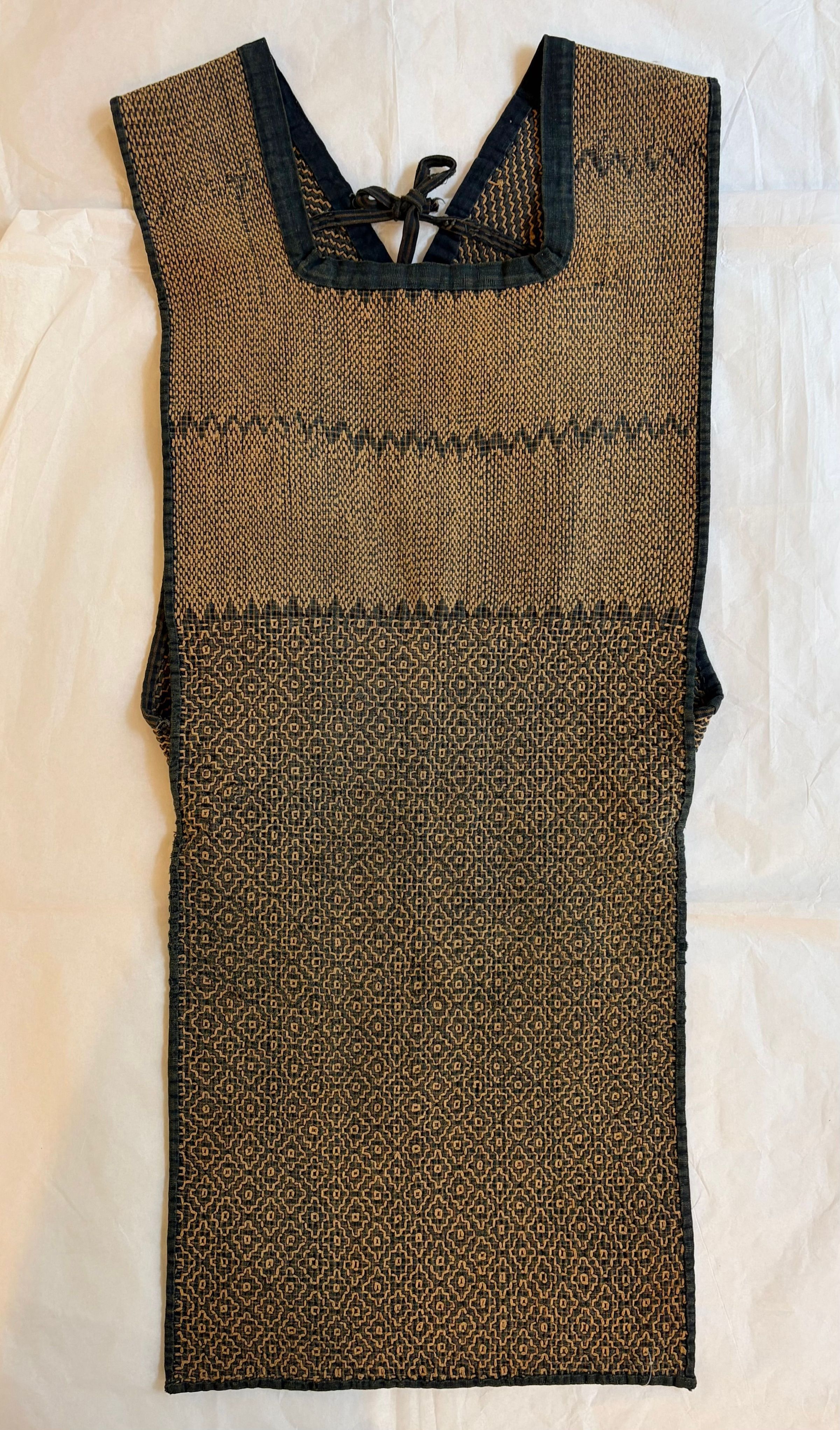
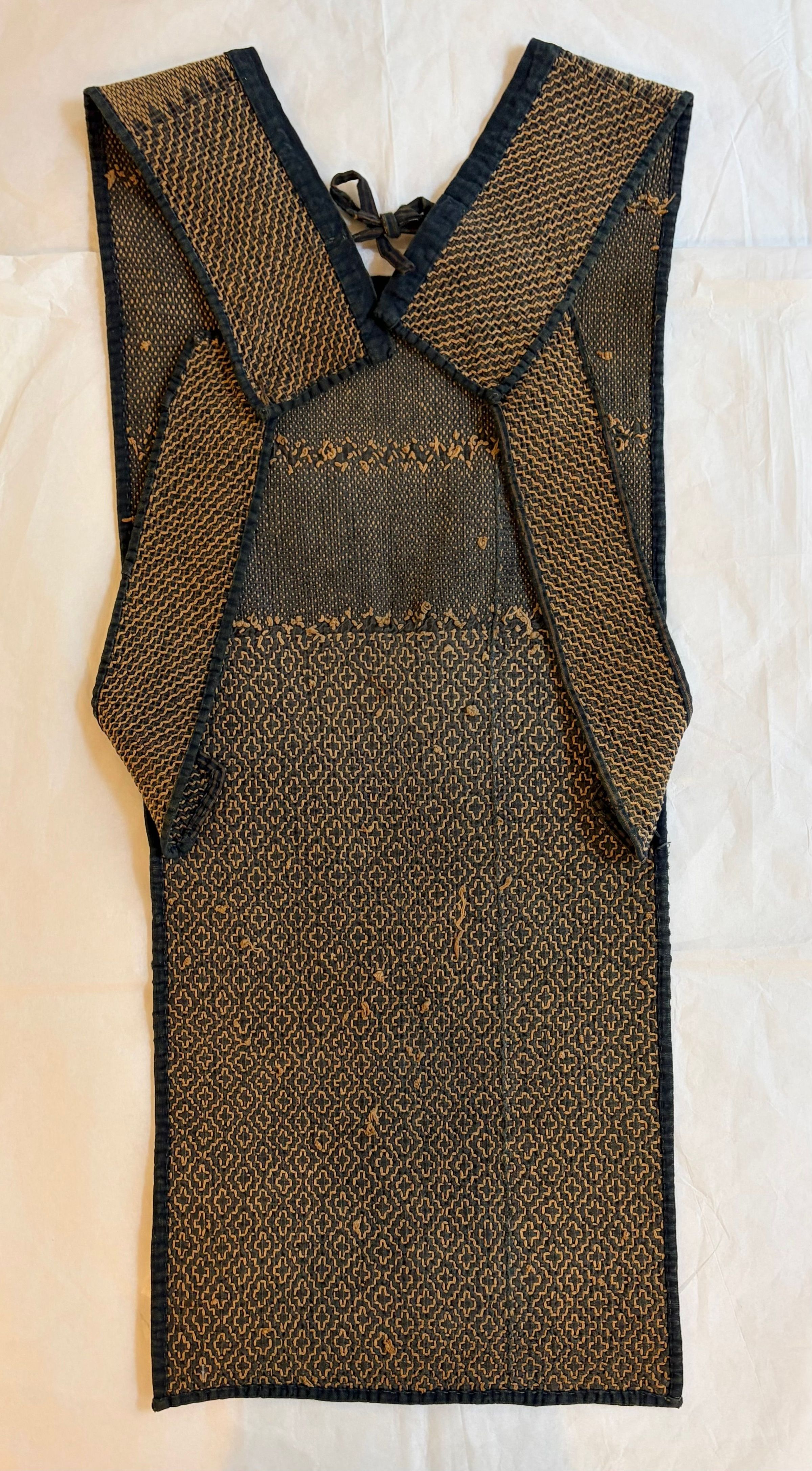
Sashiko Bandori apron
Name/Title
Sashiko Bandori apronEntry/Object ID
2025.2.13Description
Indigo and beige plaid-patterned cotton apron with beige sashiko stitching. Straps are connected at the back with hand-sewn stitches and a set of ties from a striped fabric.Use
WorkwearContext
This intricately stitched apron is made using the traditional Japanese embroidery and mending technique called Sashiko. Sashiko is a quilting technique that uses a running stitch to reinforce and prolong the life of a textile or to join together recycled pieces of cloth into a new garment. The technique originated during the Edo period (1603 – 1867 CE) when it was used by rural farmers out of a practical need to create and strengthen clothing that could be worn to protect against the cold. Due to the inexpensiveness of white cotton thread and the abundance of indigo-dyed fabric in Japan at the time, sashiko emerged with its distinct white-and-blue colourway, which it is associated with to this day. Out of practical mending, sashiko has taken on a decorative quality, where stitches of geometric, floral, and other natural motifs adorn a garment. On this apron, we can see a variety of stitches, including the persimmon flower stitch (kaki-no-hana) in a single-stitch grid (hitomezashi). Also during the Edo period, cotton made its way into Japan through China and Korea, but was treated as a luxury good and was still largely unavailable to the lower classes living in rural areas. Thus, any textiles were highly treasured and used well, until they could be recycled through practices such as boro (patchwork), sashiko, and sakiori, where rag yarn would be woven as a weft with a bast fiber or cotton as a warp. The recycling of fabrics and efforts to refurbish them for further use are connected to the cultural tenet of "mottainai," or "waste not"Category
Clothing