Senninbari prayer vest
Name/Title
Senninbari prayer vestEntry/Object ID
2024.9.37Description
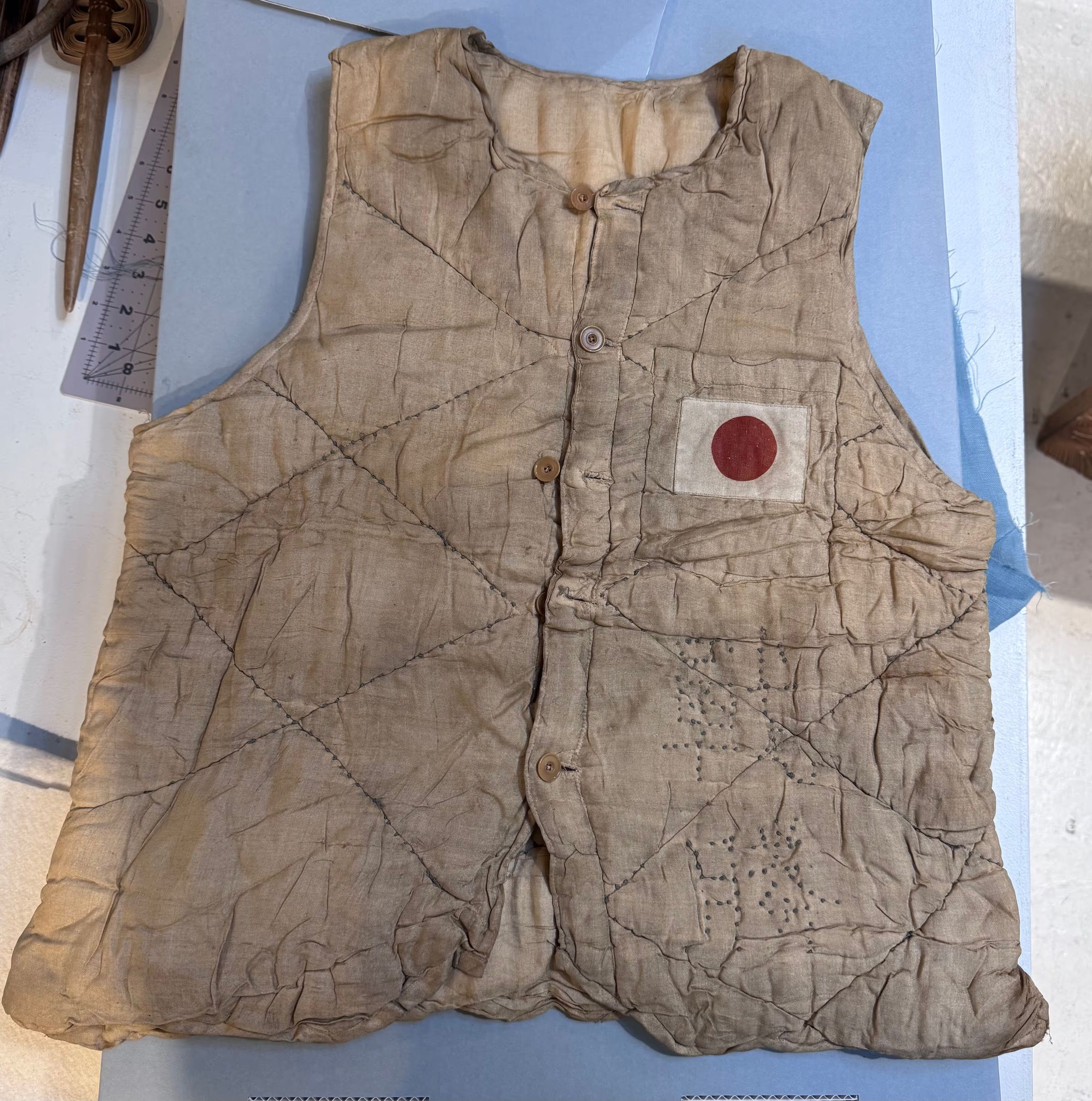
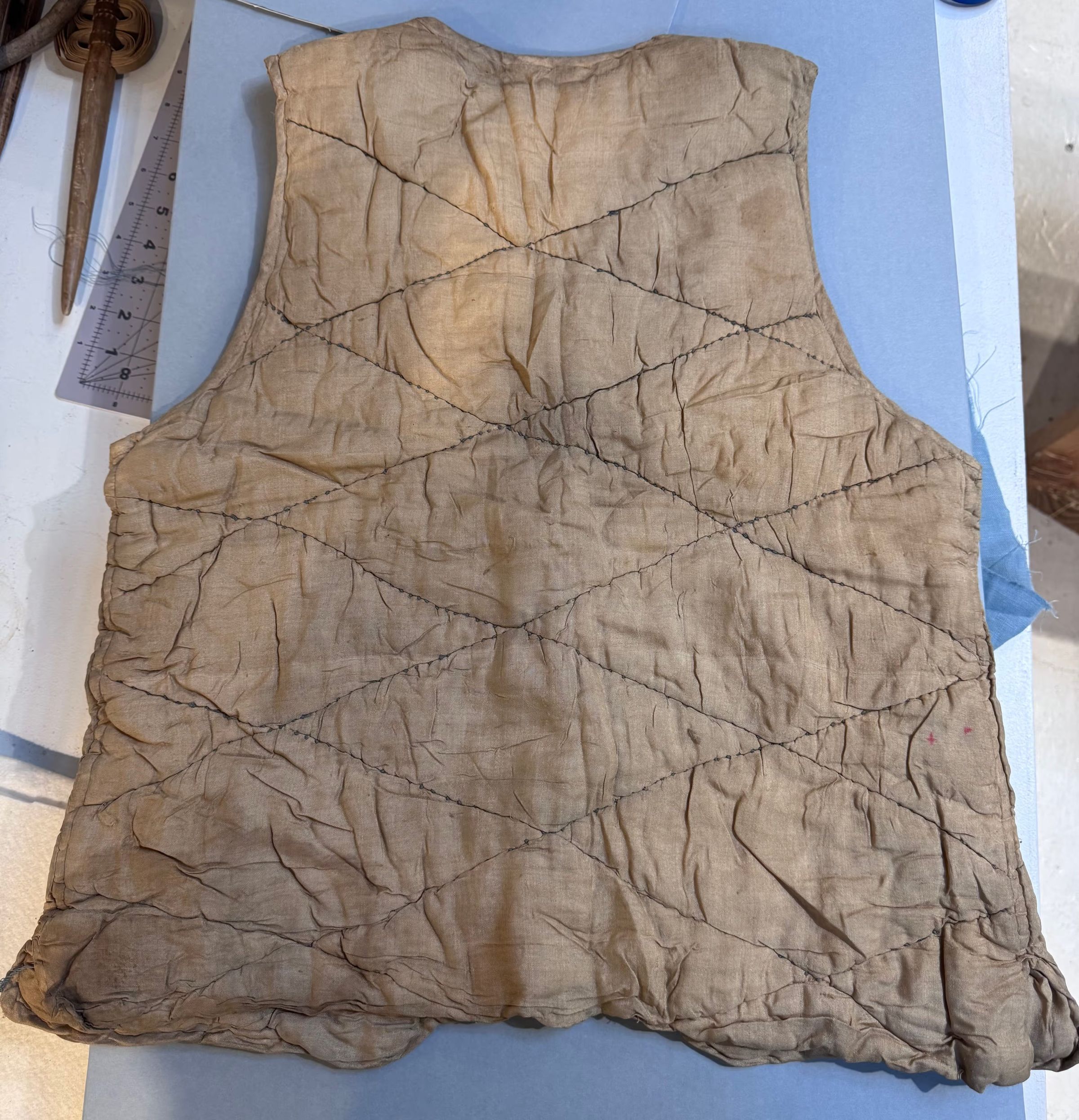
Quilted button-up vest with Japanese Hinomaru flag across chest on right side. Stitches create a diamond pattern, with French knots at lower right forming two Japanese figures that read "victory in battle." Senninbari (千人針, 'thousand person stitches') are typically belts stitched 1,000 times and given to soldiers for protection in battle. These objects are traditionally made by Japanese women and imperial subjects.Use
Protective amulet given by women to soldiers.Context
Senninbari originate from the Sino-Japanese War (1894-1895) and are associated with the Shinto culture of Imperial Japan, coming from the belief that collective stitching efforts imbue an amulitic quality of protection upon the garment. They most commonly came in the form of a sash called a 'senninbari haramaki' (bellyband) and were given to Japanese soldiers during WWII by women in their family or community before going to war. They would be tied around the waist for protection, luck, and courage in battle, and to specifically ward off enemy bullets. Thousand-stitch vests like this are more rare. Traditionally, each French knot stitch would have been made in red thread by a different woman in the community as a symbol of unity and collective effort, sending the wearer off with the well-wishes of a thousand people, though women born in the Year of The Tiger were considered to carry special strength and fortune and could add as many stitches as her own age. Women would often stand in public spaces like railway stations, shopping centers, or local temples to solicit stitches for their belts from other women, and women's patriotic organizations would frequently gather en mass for the purpose of contributing stitches to each others' work. Stitches were usually arranged in rows, but could also be done in patterns representing the Japanese flag, tigers, or patriotic slogans, and additional elements like coins or locks of women's hair could sometimes be sewn in for added protection.Category
Clothing