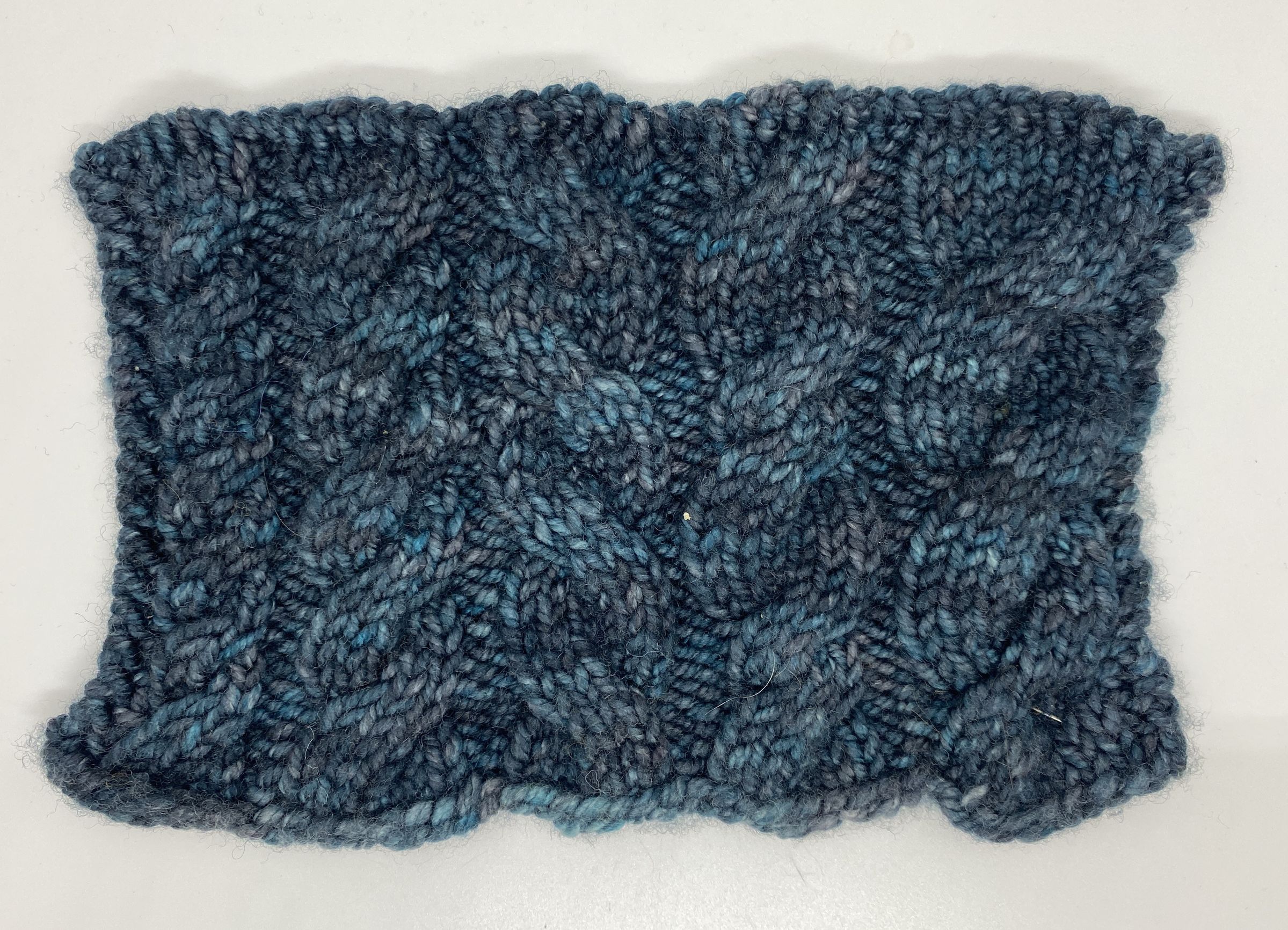
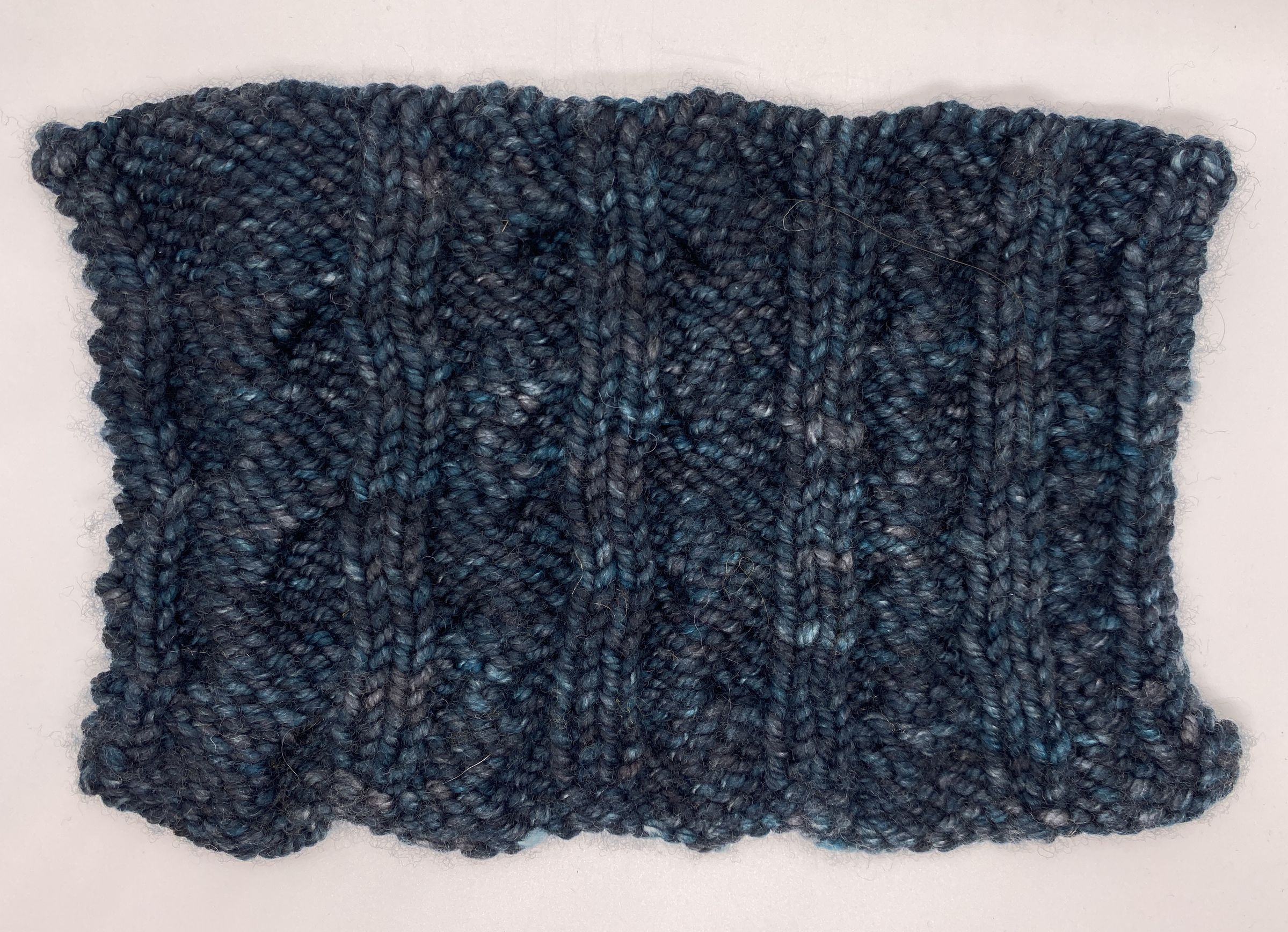
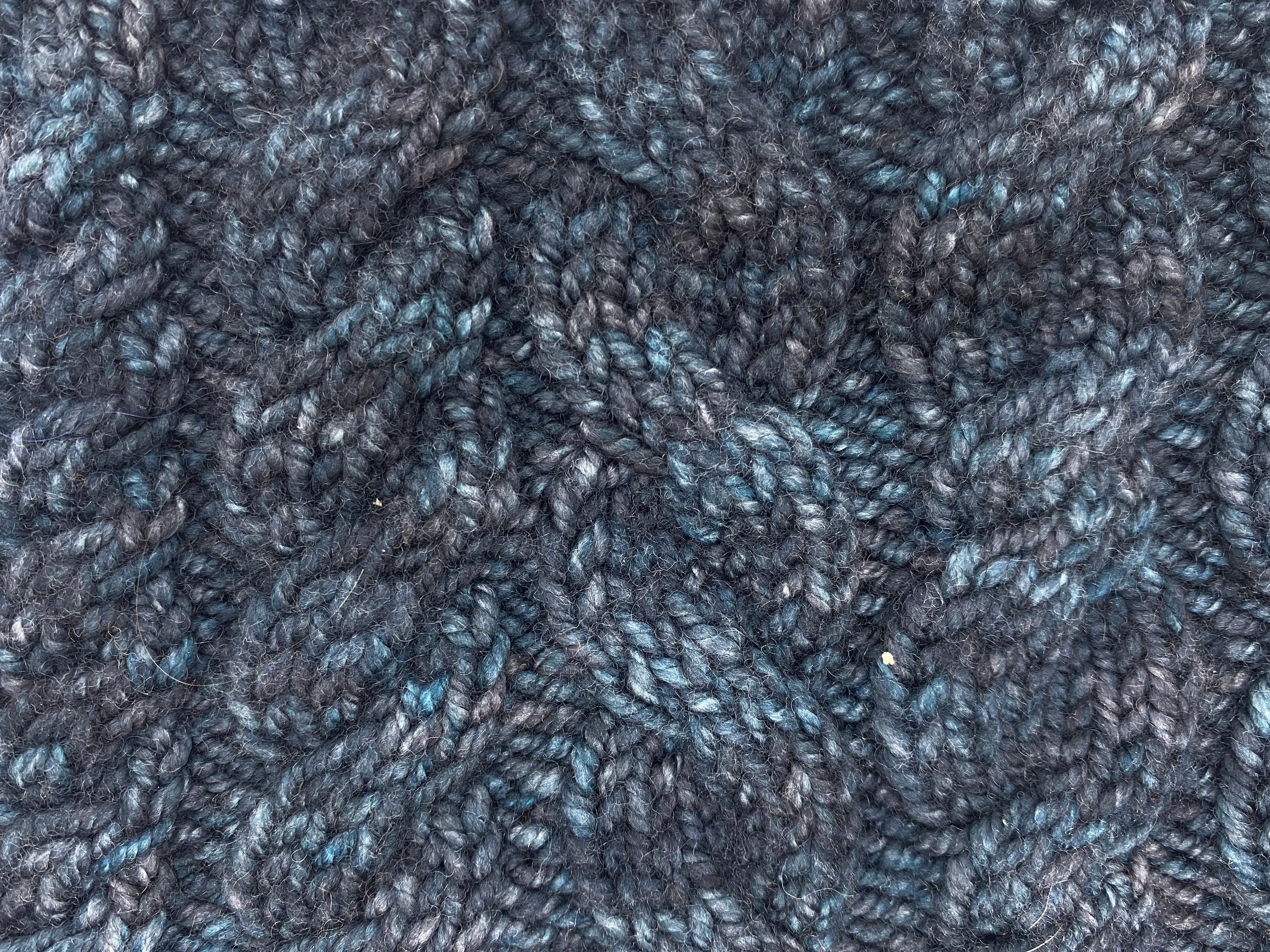
Simple cables
Name/Title
Simple cablesEntry/Object ID
2020.1.406Description
From the book: "Probably no pattern in knitting is capable of so much variation as the Simple Cable. But the cable action is always the same. It consists of taking half of the stitches composing the cable on a double-pointed needle, holding them in back or in front of the work, knitting the other half of the stitches, then knitting the first group from the double-pointed needle. This creates the cable twist. If the double-pointed needle with the slipped stitches is held in back of the work, the twist will be to the right (back cross); if the double-pointed needle is held in front of the work, the twist will be to the left (front cross). Whenever two Simple Cables are used on either side of a common center, one of them should be crossed in front and the other in back, to give symmetry and balance to the design. The variations depend upon the number of stitches composing the cable, and the number of rows between cabling rows. Generally speaking, the most shapely cables are created by having the same number of rows to the pattern as there are stitches in the cable (i.e., a six-stitch cable would be crossed every 6th row, etc.) But this is hardly a firm rule. Many knitters prefer the slightly looser cable made with two more rows than there are stitches. And the number of rows may vary in the same pattern (See Eccentric Cable, below). Five possible variations on the Simple Cable are given, but there are dozens more. How you arrange a Simple Cable is largely up to you."Collection
Barbara Walker Swatch ProjectCategory
Chapter 11 : Cables