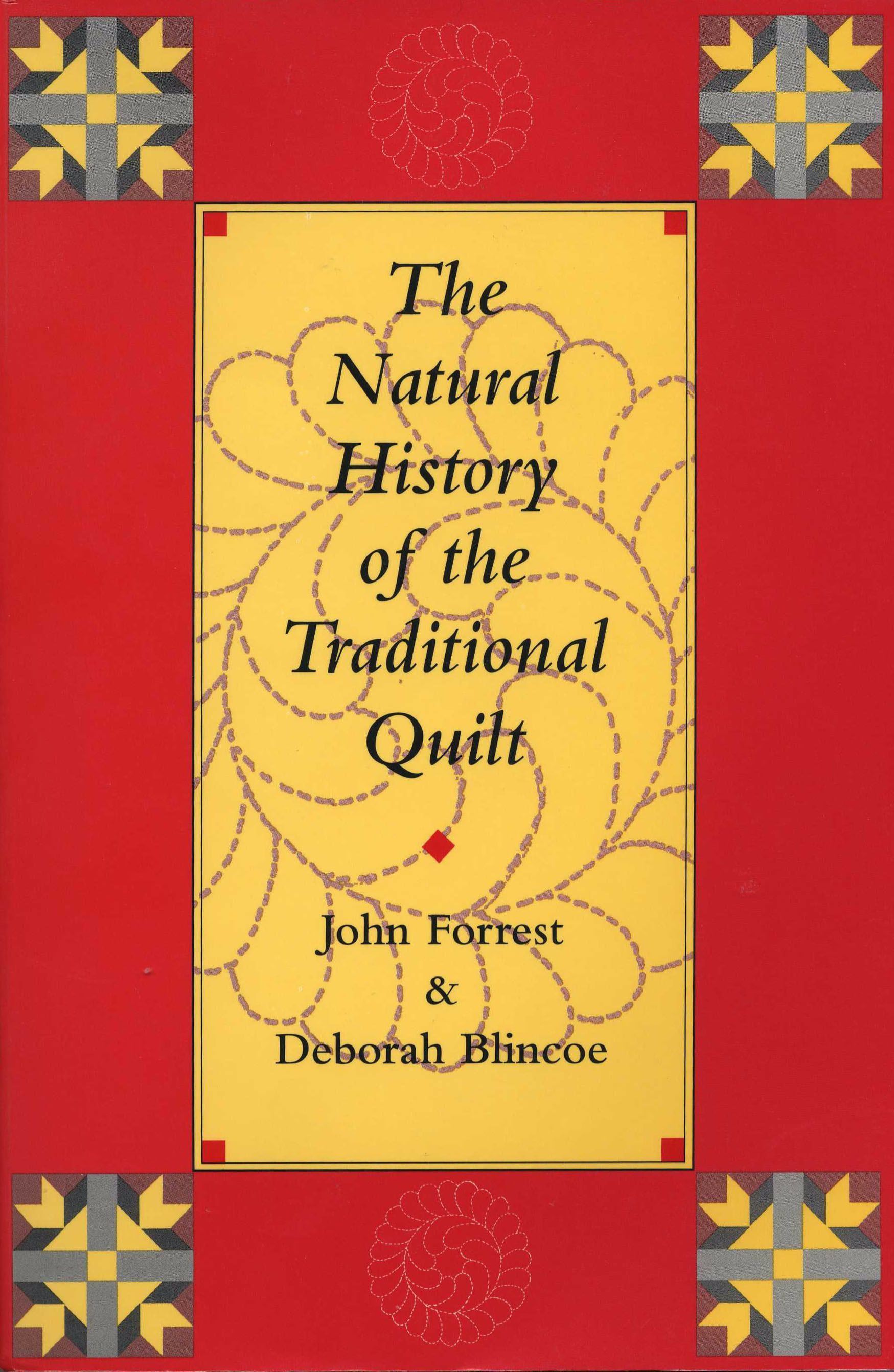
Name/Title
The natural history of the traditional quiltEntry/Object ID
NK9198.F77Description
Traditional quilts serve many purposes over the course of a useful life. Beginning as a beautiful bed covering, a quilt may later function as a ground cover at picnics until years of wear relegate it to someone's ragbag for scrap uses. Observing this life cycle led authors John Forrest and Deborah Blincoe to the idea that quilts, like living things, have a natural history that can be studied scientifically. They explore that natural history through an examination of the taxonomy, morphology, behavior, and ecology of quilts in their native environment -- the homes of humans who make, use, keep, and bestow them.T he taxonomy proposed by Forrest and Blincoe is rooted in the mechanics of replicating quilts so that it can be used to understand evolutionary and genetic relationships between quilt types. The morphology section anatomizes normal and abnormal physical features of quilts, while the section on conception and birth in the life cycle discusses how the underlying processes of replication intersect with environmental factors to produce tangible objects. This methodology is applicable to many kinds of crafts and will be of wide interest to students of folklore, anthropology, and art history. Case studies of traditional quilts and their makers in the Catskills and Appalachia add a warm, human dimension to the book.Lexicon
Search Terms
folk art--united states, quilting--technique, quiltmakers, quilts, quilts--designBook Details
Author
John Forrest, Deborah BlincoePublisher
University of TexasPlace Published
City
AustinState/Province
TexasCountry
United States of AmericaContinent
North AmericaDate Published
1995Call No.
NK9198.F77ISBN
292724977, 9780292724976Notes
Length: 348